Pool Inspection Near Me: How to Find and Vet an Inspector
How to find a pool safety inspector in California and vet one: where to look, why there is no state license, what a BPC §7195 report must contain, the questions to ask before booking, and the red flags.
To find a pool safety inspector in California, ask the agent or home inspector, search the CREIA and InterNACHI directories, and verify contractor licenses with the CSLB. California has no pool inspector license, so vet the person by the report: under Business and Professions Code section 7195 (BPC §7195) it must identify which of the seven Health and Safety Code section 115922 (HSC §115922) features the pool has.
This page is not a directory, and PoolVerify does not list, rate or refer inspectors; it makes the software inspectors use to produce the report. What follows is how to find one, what the law says the report must contain, the questions that separate a thorough inspector from a form-filler, and the red flags.
Who performs a pool safety inspection in California
Two kinds of professional do this work, and neither needs a state license to do it.
Home inspectors. At a property transfer, BPC §7195 defines a home inspection as a noninvasive physical examination of a one to four unit dwelling performed for a fee, and, where the property has a pool or spa, requires it to include an examination of the pool for the seven HSC §115922(a) drowning prevention safety features. BPC §7195(d) defines a home inspector as any individual who performs a home inspection. California has no home inspector license and no state certification; CREIA and InterNACHI are voluntary associations whose members work to a standards of practice.
Pool contractors and service companies. Contractors who build or repair pools hold a Contractors State License Board (CSLB) license, C-53 for swimming pool contractors, for the contracting work; the license is for building and repair, not for inspection. Many pool service companies offer a safety features inspection alongside service, and some specialize in it.
What this means for a buyer or seller: the credential to check is the report, not a certificate. An inspector who can show a recent report that names the seven features, states the count, records each feature's condition with a photo, and is signed, is doing the statutory job. One who advertises as a "state certified pool inspector" is describing a credential California does not issue.
Where to look
The transaction itself. If a home inspection is being ordered, the pool report is part of it under BPC §7195(a)(2). Ask the home inspection company whether they examine the seven features and produce the statement BPC §7195(c) requires, or whether they subcontract the pool.
The agent and escrow. Agents who handle pool homes have inspectors they have seen deliver on time and defend their findings. Ask which inspector's reports they have found reliable, and ask why.
Association directories.CREIA and InterNACHI publish member directories searchable by area.
Pool service companies. Ask whether they perform HSC §115922 safety features inspections and whether the report is a written PDF with photos.
The CSLB. If an inspector also describes themselves as a contractor, check the license on cslb.ca.gov. If they do not claim a license, there is nothing to check; inspection is not licensed.
Reviews. Read them for what they say about the report and the follow-up, not the star count. A review that says the report was in the agent's inbox the same day with photos of every gate tells you more than a rating.
What the report must contain
The report is the product, and California specifies its content. Under BPC §7195(c), a home inspection report on a property with a pool or spa must:
Requirement
What it looks like in a good report
Identify which, if any, of the seven HSC §115922(a) safety features the pool or spa has
A row per feature: enclosure, removable mesh fencing, safety cover, exit alarms, self-closing and self-latching door devices, pool alarm, other independently verified means
Specifically state if the pool has fewer than two
A sentence on page one, not buried in the notes
State whether each feature is in place, in good repair, operable as designed and, where applicable, appropriately labeled
A condition per feature, with the test performed (gate closed from three positions, latch height measured, alarm sounded)
Include a statement that a pool isolation fence meeting HSC §115923 is the most studied and effective drowning prevention safety feature, according to the American Academy of Pediatrics Policy Statement "Prevention of Drowning" (2019)
The statement, printed
BPC §7195(a)(2) also says what the inspection does not have to do: it does not require the inspector to determine whether a feature meets the ASTM or ASME specifications. An inspector who tells you the cover "is a safety cover" is reporting its presence and label, not certifying it. The BPC §7195 guide covers the report in full, and the HSC §115922 guide explains the seven features.
Ask every candidate for a recent sample report and check it against the table. Photos of each feature, measurements written down (the latch height, the barrier height, the bottom gap), and a signature are not in the statute, but they are what make the report usable when a buyer, a seller and two agents disagree about a gate.
A report that reads like the statute. PoolVerify's California checklist records each HSC §115922(a) feature with its condition, notes and photos, prints the BPC §7195 statements, captures the signature on screen and generates the PDF on-site. See the sample report.
Questions to ask before booking
What does your inspection cover? You want to hear the seven HSC §115922(a) features by name, and whether the shell, deck, equipment, electrical and plumbing are included or a separate service.
Will the report state which of the seven features the pool has and whether there are fewer than two? This is the statutory content; a yes should come without hesitation.
Can I see a sample report? Check it against the table above.
Do you photograph each feature and record measurements? Latch height, barrier height and the bottom gap are the numbers that get disputed.
Is the report signed and delivered as a PDF, and when? Same day is normal for an inspector working on-site; a week is a sign the report is being written up later from notes.
Do you carry insurance? General liability and errors and omissions. BPC §7198 voids any waiver of the inspector's duty of care, so a serious inspector carries coverage rather than relying on a disclaimer.
Do you or your company do repairs? BPC §7197 makes it an unfair practice for a home inspector to perform repairs on a property they inspected within twelve months, to inspect a property in which they have a financial interest, or to accept referral fees. An inspector who offers to fix what they find at the same visit has a conflict the statute names.
What is the fee, and what changes it? A spa, a second gate, travel. Get it in writing.
Red flags
A verbal report, or a one-page form with no photos. The statute requires written statements; a buyer needs the photos.
"State certified" or "licensed pool inspector." California issues neither. A CSLB license is for contracting; CREIA, InterNACHI and CPO are voluntary credentials.
The report does not name the seven features or say whether there are fewer than two. It is not a BPC §7195 report.
A latch "should be at 54 inches." The 54 inch figure is a house door release under HSC §115922(a)(5); an enclosure gate latch sits no lower than 60 inches under HSC §115923(a). An inspector who has them backwards will misreport the most common finding. See the gate latch guide.
An offer to fix the findings. See BPC §7197 above.
No sample report and no insurance certificate on request.
A promise that the pool will "pass." The report describes the pool; there is no pass certificate to issue, and PoolVerify does not issue one either.
What to expect on the day
A safety features inspection walks the seven items. The inspector confirms whether an enclosure isolates the pool from the home and measures its height, bottom gap and openings; tests each gate from several positions and measures the latch release from the ground; checks doors from the house for exit alarms or self-closing, self-latching devices with the release at 54 inches or higher; looks for a safety cover and its label; tests any pool alarm; and photographs each item. Findings are written against the feature they concern. A broader condition inspection adds the shell, deck, equipment pad, electrical bonding and plumbing, and takes correspondingly longer. The what to expect guide and what a pool inspector looks for cover the sequence in detail.
Cost
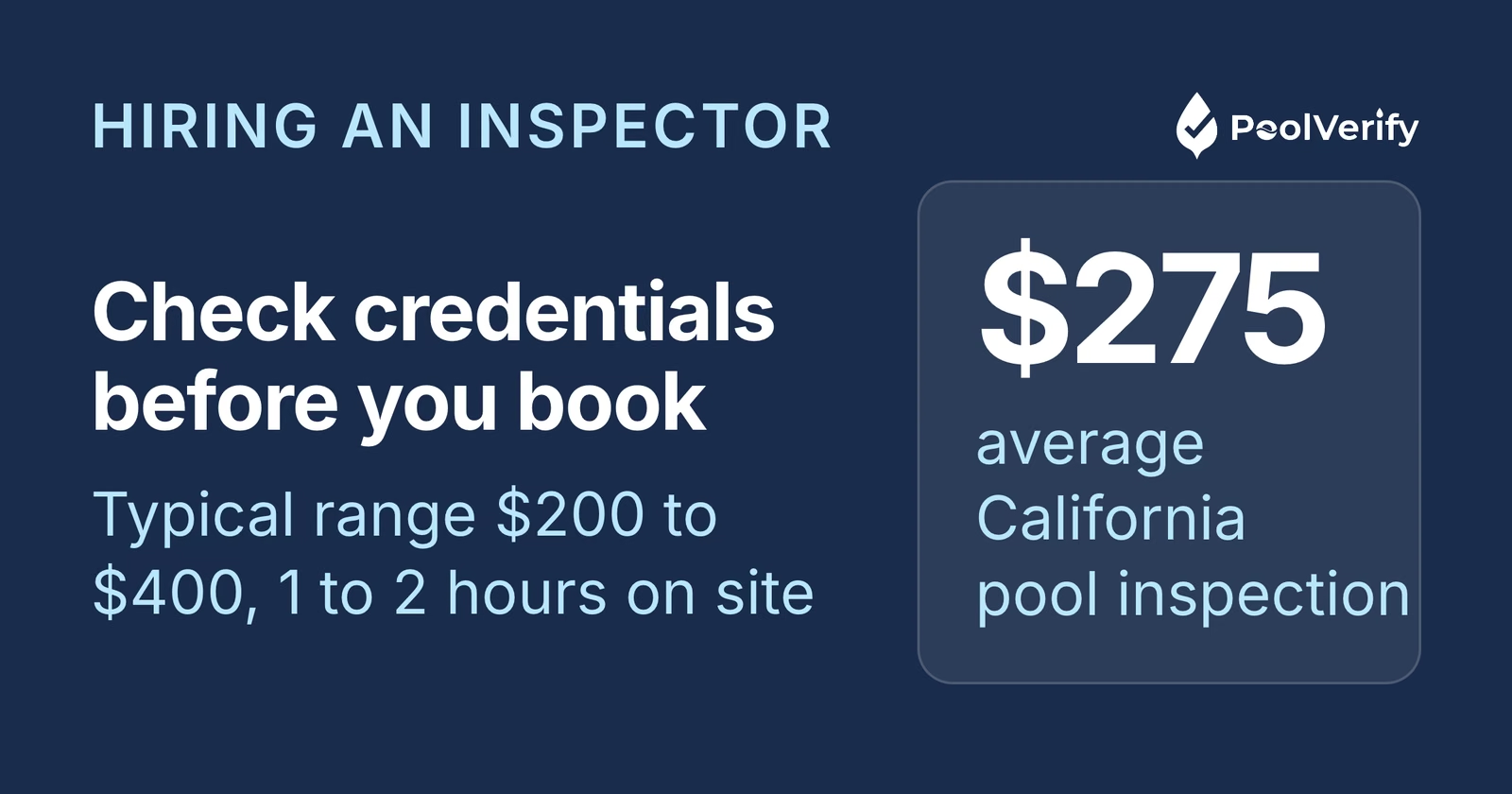
Fees are set by each inspector and follow scope, spa or water features, and travel; a BPC §7195 safety features report costs less than a full condition inspection, and a pool examination inside a home inspection is priced within that package. This page quotes no figures because they vary by inspector and area; ask for the fee and what it covers in writing, and read the pool inspection cost guide for the factors.
Limitations
This guide is general information about California law, not legal advice; the current text of BPC §7195 and HSC §115922 on leginfo.legislature.ca.gov controls, and local building departments add their own requirements at a permit. It is not a directory and names no inspectors. PoolVerify is inspection software for California residential pool safety inspections; it does not perform inspections, list or refer inspectors, certify inspectors, or issue compliance certificates.
Frequently asked questions
How do I find a pool inspector near me in California?
Ask the real estate agent or the home inspection company on the transaction, since the pool report is part of the BPC §7195 home inspection at a sale. Search the CREIA and InterNACHI member directories for home inspectors in your area, ask pool service companies whether they perform safety inspections, and check any contractor's license on the CSLB site. PoolVerify does not list or refer inspectors.
Does California license or certify pool inspectors?
No. California has no home inspector license, no pool inspector license and no state certification. Business and Professions Code section 7195 defines a home inspector as any individual who performs a home inspection and sets what the report must say about a pool; it imposes no training requirement. Anyone advertising as a "state certified" pool inspector is describing a credential the state does not issue.
What should a California pool inspection report include?
Under BPC §7195(c), which of the seven HSC §115922(a) drowning prevention safety features the pool or spa has, a specific statement if it has fewer than two, whether each feature is in place, in good repair, operable as designed and, where applicable, appropriately labeled, and a statement that a pool isolation fence is the most studied and effective safety feature according to the American Academy of Pediatrics. Photos and a signature make it usable.
How much does a pool inspection cost?
Each inspector sets the fee, and it follows the scope: a BPC §7195 safety features report costs less than a full condition inspection of the shell, deck, equipment, electrical and plumbing, and a pool inspection bundled into a home inspection is priced as part of that package. Ask for the fee and what it covers in writing before booking. The pool inspection cost guide covers the factors.
Do I need a pool inspection to sell a house with a pool in California?
BPC §7195 does not itself require an inspection. It defines what a paid home inspection at a transfer of a one to four unit dwelling must include when the property has a pool or spa: the seven HSC §115922(a) features, their condition, and whether there are fewer than two. If a home inspection is ordered, the pool report is part of it; buyers and lenders decide whether one is ordered.
Should I be present during the pool inspection?
It helps. You see each gate tested, each latch measured and each photo taken, and you can ask what a finding means and what the fix is while standing at it. If you cannot attend, ask the inspector to walk you through the report by phone and to send the PDF with the photos, not a summary.
Conclusion
Finding a pool inspector in California is less about a directory than about a document. Ask the people on the transaction and the association directories for names, then judge each name by a sample report: does it name the seven HSC §115922(a) features, state whether there are fewer than two, record each feature's condition with a photo and a measurement, and carry a signature? An inspector whose report does that is doing what BPC §7195 requires; no state certificate says more.
Inspectors who produce that report on-site use PoolVerify: the California checklist, photos on each item, the signature and the PDF before leaving the property. Start your 14-day free trial, no credit card to start.
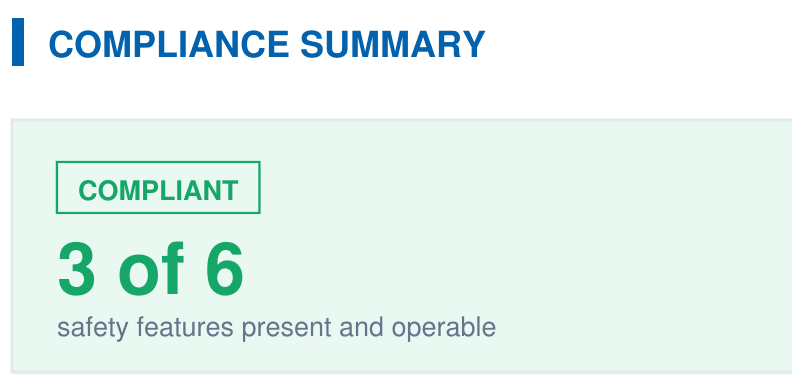
A branded PDF with the compliance summary, the feature table, each finding with its photos, and the signature, generated on‑site when the BPC §7195 and HSC §115922 checklist is complete.