Pool Inspection Failed? Here's Exactly What to Do Next
Failed your pool inspection? Don't panic. Learn the step-by-step process to address failed items, common reasons for failure, repair options, and how to pass your re-inspection.
A failed pool inspection can feel stressful, especially if you're in the middle of selling your home or need the pool for an upcoming event. But don't worry, most failed inspections involve fixable issues, and with the right approach, you can resolve them efficiently and pass your re-inspection.
Don't Panic, This Is Common
First, know that you're not alone. Studies show that 40-60% of pools fail their first inspection for at least one item. Many failures are minor issues that homeowners simply weren't aware of, such as:
Self-closing gates that need adjustment
Drain covers that don't meet current standards
Fence height that's slightly below code
Missing or expired safety equipment
The key is understanding exactly what failed and creating a clear plan to address each item.
Understanding Your Inspection Report
Your inspection report is your roadmap to compliance. Here's how to read it effectively:
Report Components:
Section
What It Contains
Your Action
Failed Items
Specific violations
Must be fixed
Warning Items
Concerns (not failures)
Should address
Passed Items
Compliant features
No action needed
Recommendations
Suggested improvements
Optional
For Each Failed Item, Note:
What specifically failed (exact issue)
Why it failed (code reference)
What's required (compliance standard)
Severity level (safety critical vs. minor)
Pro Tip: If anything in the report is unclear, contact your inspector immediately for clarification. Understanding the exact issue saves time and money on repairs.
Most Common Reasons for Failure
Barrier and Fence Violations
The #1 reason for failed inspections. Pool barriers are critical safety features, and any deficiency fails the entire inspection.
Common Barrier Failures:
Issue
Requirement
Typical Fix
Fence height
Minimum 48" (60" in some areas)
Add extension or replace
Gap at bottom
Max 2" clearance
Install barrier extension
Climbable features
No footholds within 45"
Remove or modify
Gate doesn't self-close
Must close from any position
Adjust or replace hardware
Gate doesn't self-latch
Must latch automatically
Replace latch mechanism
Latch height
54" from ground (outdoor)
Relocate latch
Most Common Fix: Self-closing gate hinges and latch adjustment, often takes less than an hour.
Drain Cover Non-Compliance
Drain covers must meet ASTM F1346 anti-entrapment standards. This is a critical safety issue following the Virginia Graeme Baker Act.
Why Drains Fail:
Old drain covers (pre-2007)
Damaged or cracked covers
Missing ASTM certification marking
Single drain systems without safety measures
Covers not securely attached
Compliance Requirements:
Must be ASTM F1346 certified
Must match or exceed drain flow rate
Must show manufacturing date
Must be securely fastened
Must not be damaged or modified
Typical Resolution: Replace with compliant drain cover ($50-200 per drain)
Missing Safety Equipment
Many jurisdictions require specific safety equipment to be present and accessible.
Commonly Required Equipment:
Item
Typical Requirement
Cost to Add
Life ring or shepherd's hook
Within 4 feet of pool
$30-100
CPR instructions sign
Posted at pool
$15-40
Emergency contact numbers
Posted at pool
$10-30
"No Diving" signs
Shallow areas
$15-50
Pool rules sign
At entrance
$25-75
Depth markers
Every 25 feet
$10-30 each
Step-by-Step Recovery Plan
Follow this process to efficiently resolve your failed inspection:
Step 1: Review Report Thoroughly (Day 1)
Read the entire report carefully
Highlight all failed items
Note any unclear items
Contact inspector with questions
Step 2: Prioritize Issues (Day 1-2)
Categorize by severity:
Critical Safety (Fix Immediately):
Barrier gaps allowing child access
Non-compliant drain covers
Electrical hazards
Broken glass or sharp edges
Code Compliance (Fix Before Re-Inspection):
Gate hardware issues
Fence height deficiencies
Missing safety equipment
Signage requirements
Recommendations (Optional):
Suggested improvements
Aesthetic concerns
Efficiency upgrades
Step 3: Get Repair Estimates (Days 2-5)
DIY items: Price materials
Professional items: Get 2-3 quotes
Prioritize based on timeline and budget
Consider bundling work for better pricing
Step 4: Complete Repairs (Days 5-14)
Order of operations:
Order any needed parts/materials
Complete DIY repairs first
Schedule professional work
Document everything with photos
Test all repairs (gates, alarms, etc.)
Step 5: Schedule Re-Inspection (After Repairs)
Confirm all items are resolved
Book re-inspection with same or new inspector
Have documentation ready
Be present for re-inspection
DIY vs. Professional Repairs
DIY-Appropriate Repairs:
Repair
Difficulty
Time
Cost
Install safety signs
Easy
30 min
$50-100
Replace drain covers
Moderate
1-2 hours
$100-300
Adjust self-closing hinges
Moderate
1 hour
$30-75
Add life ring/hook
Easy
15 min
$50-100
Install depth markers
Easy
1-2 hours
$50-150
Professional Repairs Recommended:
Repair
Why Professional
Typical Cost
Fence height extension
Structural integrity
$500-2,000
New fence installation
Code compliance, permits
$2,000-8,000
Drain system modification
Plumbing expertise
$500-3,000
Electrical repairs
Safety, permits required
$200-1,000
Pool alarm installation
Proper placement, testing
$150-500
Common Repair Costs
Budget Guide for Failed Inspection Repairs:
Issue Category
Low Estimate
High Estimate
Gate hardware only
$50
$200
Safety equipment/signs
$75
$250
Drain cover replacement
$100
$500
Fence repairs (minor)
$200
$800
Gate replacement
$300
$1,000
Fence extension
$500
$2,500
Full fence replacement
$2,000
$8,000
Alarm system installation
$150
$600
Average Total Cost to Remediate Failed Inspection: $300 to $1,500
Most homeowners spend $500-800 addressing typical failed inspection items.
Preparing for Re-Inspection
Re-Inspection Checklist:
Before the inspector arrives:
All failed items have been addressed
Documentation of repairs is ready
Receipts for materials/contractors available
Pool area is clean and accessible
All gates and barriers are functional
Safety equipment is in place
Water is clear (not required but helpful)
During Re-Inspection:
Walk through repairs with inspector
Demonstrate fixed items (gates, alarms)
Provide documentation of professional work
Ask questions about any remaining concerns
Request updated report/certification
Re-Inspection Fees: Most inspectors charge a reduced fee for re-inspections:
Same inspector: $75-150 (typically 50% of full inspection)
Different inspector: $150-250 (may do partial or full inspection)
Impact on Real Estate Transactions
A failed pool inspection during a home sale requires strategic handling:
Options for Sellers:
Option
Pros
Cons
Make all repairs
Clean offer, no negotiations
Upfront cost, time delay
Offer credit to buyer
No repair hassle
May request more than repair cost
Reduce price
Simple negotiation
Permanent price reduction
Sell as-is with disclosure
No repair obligation
May limit buyers
Negotiation Tips:
Get repair estimates before negotiating
Offer repair credit based on actual quotes
Consider buyer's financing requirements
Document all disclosures in writing
For Buyers:
Request copies of failed inspection report
Get independent repair estimates
Negotiate repair credit or completion before closing
Consider re-inspection contingency
Factor repair costs into offer price
Moving Forward Successfully
Key Takeaways:
Failed inspections are fixable: Most issues are common and have straightforward solutions
Prioritize safety-critical items: Address barrier and drain issues first
Document everything: Keep records of repairs for re-inspection
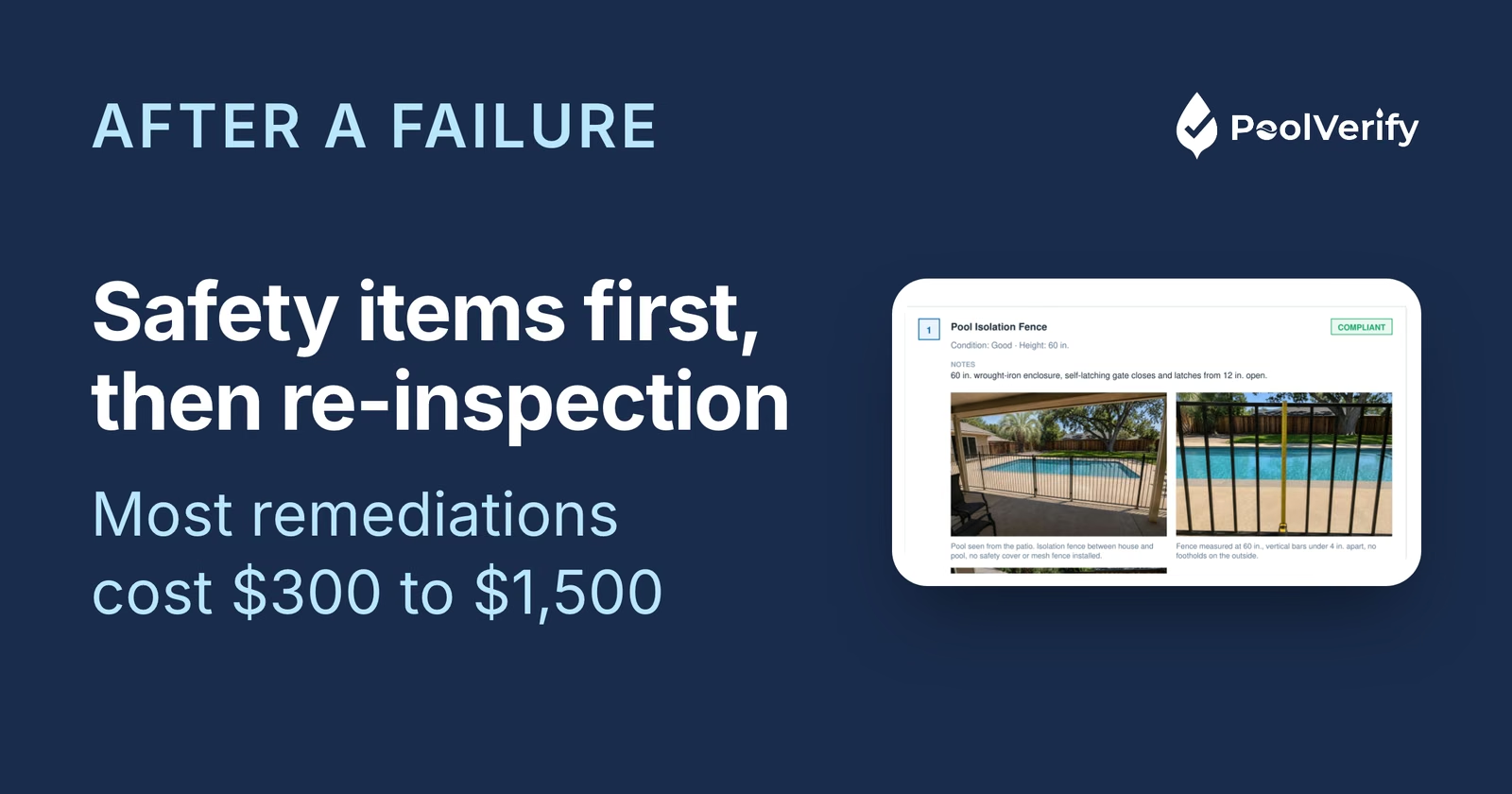
Budget appropriately: Most remediations cost $300-$1,500
Don't delay: Address issues promptly, especially for real estate transactions
Use the same inspector when possible: They know exactly what needs verification
Failed your inspection and need guidance? PoolVerify provides comprehensive inspection services and can help you understand exactly what's needed to achieve compliance.
Remember: A failed inspection isn't the end, it's the beginning of making your pool safer for everyone who uses it. Take it one step at a time, and you'll have a compliant, safe pool before you know it.
Limitations
This guide is general information about pool safety law, not legal advice; the current text of HSC §115922 and BPC §7195 on leginfo.legislature.ca.gov controls, and local building departments add their own requirements. PoolVerify is inspection software for California residential pool safety inspections; it does not perform inspections, certify inspectors, or issue compliance certificates.
Run this checklist on your next inspection
PoolVerify puts the HSC §115922(a) safety features on an on-site checklist with a photo on each item, collects the signature on screen, and generates the branded PDF report before you leave. Start your 14-day free trial, no credit card to start, or see pricing.
Last updated: September 9, 2026
What the client receives
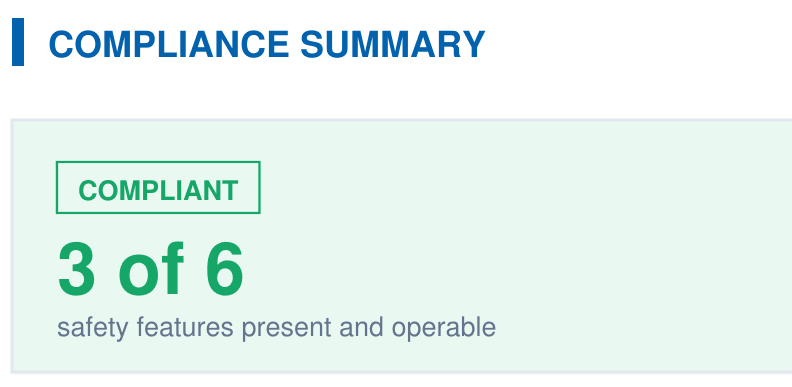
A branded PDF with the compliance summary, the feature table, each finding with its photos, and the signature, generated on‑site when the BPC §7195 and HSC §115922 checklist is complete.
If your pool fails inspection, you'll receive a detailed report listing all non-compliant items. You must address these issues and schedule a re-inspection. For real estate transactions, this typically means repairs before closing or negotiating credits. The pool cannot be certified as compliant until all issues are resolved.
How long do I have to fix pool inspection failures?
Timeline depends on your situation. For real estate transactions, you typically have until closing (often 30-60 days). For annual compliance, there's usually no strict deadline, but the pool shouldn't be used until safety issues are resolved. Commercial pools may face immediate closure until repairs are complete.
Can I sell my house if the pool fails inspection?
Yes, but you have options: (1) Make repairs before closing, (2) Offer buyer credit for repairs, (3) Reduce sale price, or (4) Sell as-is with full disclosure. California SB 442 requires disclosure of pool safety status, and buyers may request repairs or credits during negotiation.
How much does it cost to fix a failed pool inspection?
Costs vary widely by issue. Simple fixes like missing safety signs ($20-50) or self-closing gate hardware ($50-150) are affordable. Major issues like fence replacement ($1,500-5,000) or drain system upgrades ($500-3,000) cost more. The average failed inspection costs $300-$1,500 to remediate.
Do I need the same inspector for re-inspection?
Not necessarily, but using the same inspector offers advantages: they know exactly what failed, can verify specific items efficiently, and may offer reduced re-inspection fees. If you're unhappy with the original inspector, you can hire a different qualified inspector for the re-inspection.