PoolVerify
FeaturesPricingResourcesCompanyLoginStart Free Trial
  1. Home
  2. Resources
  3. Commercial Pool Inspection Requirements California [HOA, Hotel, Apartment Guide 2026]
Pool-compliance

Commercial Pool Inspection Requirements California [HOA, Hotel, Apartment Guide 2026]

Complete guide to California commercial pool inspection requirements. Covers HSC §116025-116068, inspection frequency, Title 22 compliance, and documentation requirements for HOAs, hotels, and apartments.

Commercial swimming pool at California apartment complex with inspector checking compliance
December 2, 2025
14 min read

# Commercial Pool Inspection Requirements California [HOA, Hotel, Apartment Guide 2026]

If you manage a pool at a hotel, apartment complex, HOA community, fitness center, or any other commercial property in California, you're subject to strict state health codes that differ significantly from residential pool requirements.

This comprehensive guide covers everything property managers and pool inspectors need to know about California's commercial pool regulations, inspection frequencies, and compliance documentation.

Commercial pool at California apartment complex

Commercial pool at California apartment complex

What Qualifies as a "Public Pool" in California?

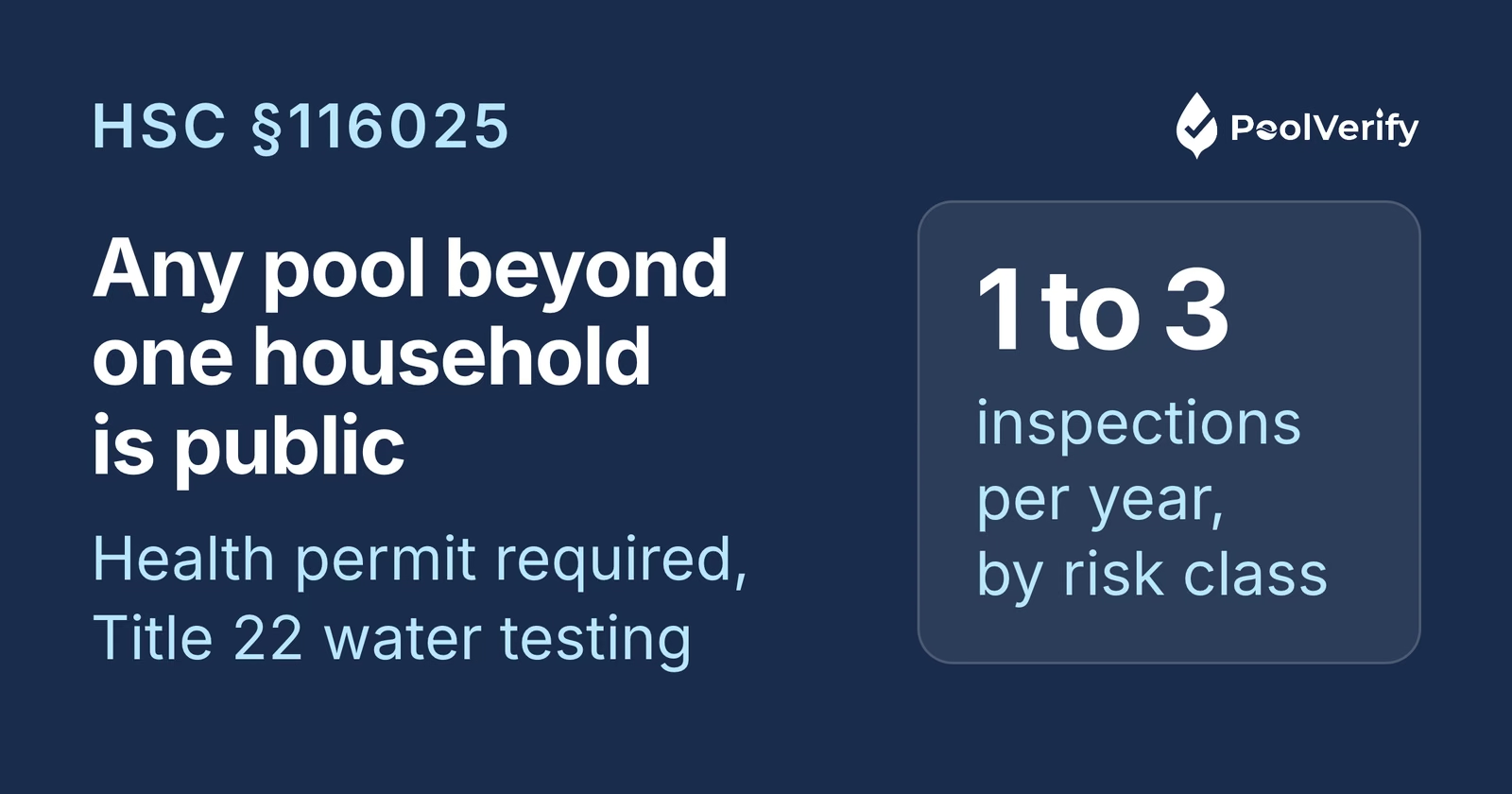
Under California Health and Safety Code §116025-116068, a "public swimming pool" is defined broadly to include pools that serve more than a single-family residence.

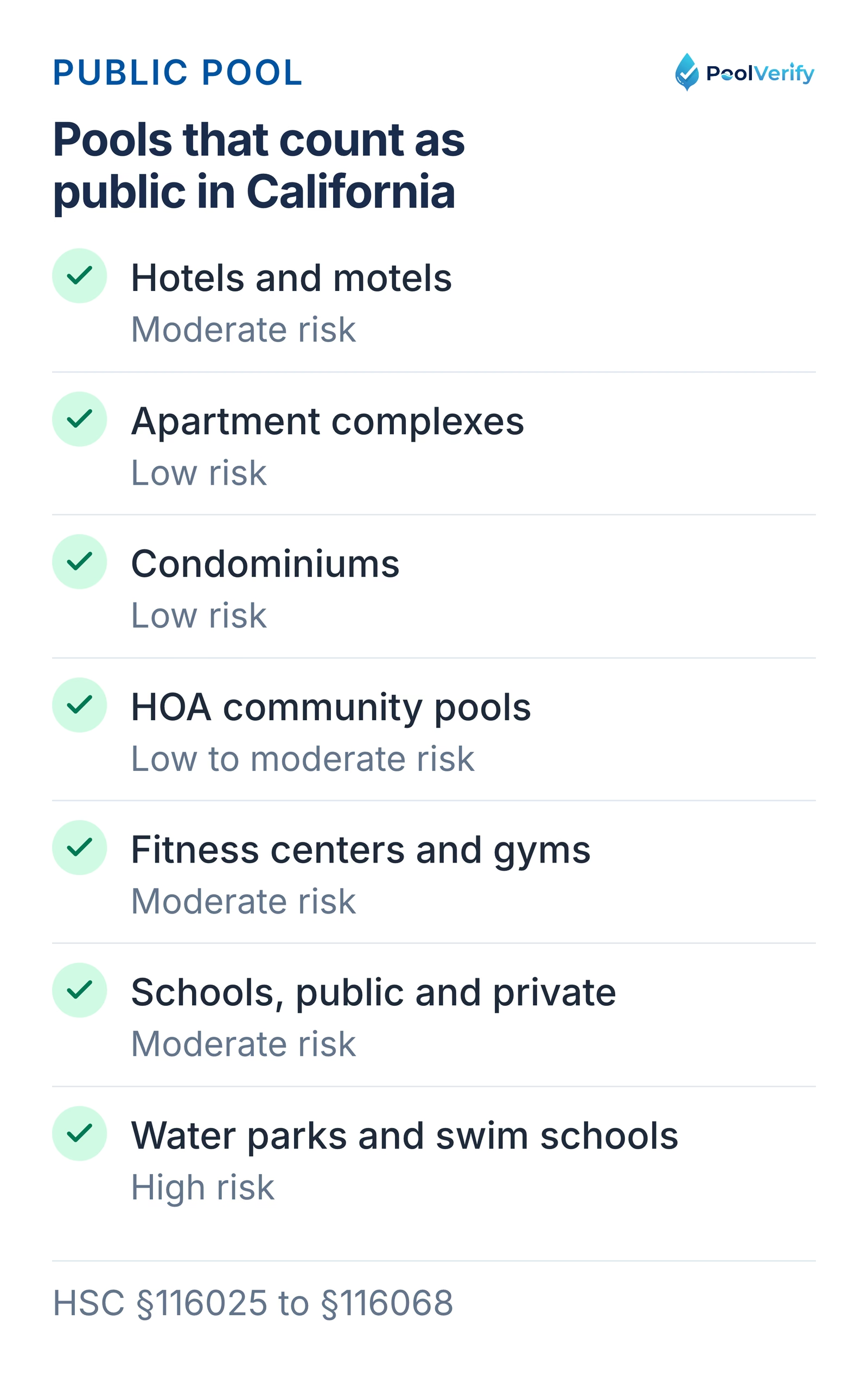
Properties That Must Comply with Commercial Pool Regulations

Property TypeClassificationInspection Frequency
Hotels & MotelsModerate Risk2x per year
Apartment ComplexesLow Risk1x per year
CondominiumsLow Risk1x per year
HOA Community PoolsLow-Moderate Risk1-2x per year
Mobile Home ParksLow Risk1x per year
Fitness Centers & GymsModerate Risk2x per year
Schools (Public & Private)Moderate Risk2x per year
Water ParksHigh Risk3x per year
Swim SchoolsHigh Risk3x per year
Medical FacilitiesModerate Risk2x per year
RV Parks & CampgroundsLow Risk1x per year
Country ClubsModerate Risk2x per year
Municipal PoolsModerate Risk2x per year

Key Point: If your pool serves anyone beyond a single-family household, it's likely classified as a public pool under California law.

California commercial pool classification chart

California commercial pool classification chart

California Health Code Requirements Overview

Primary Regulations

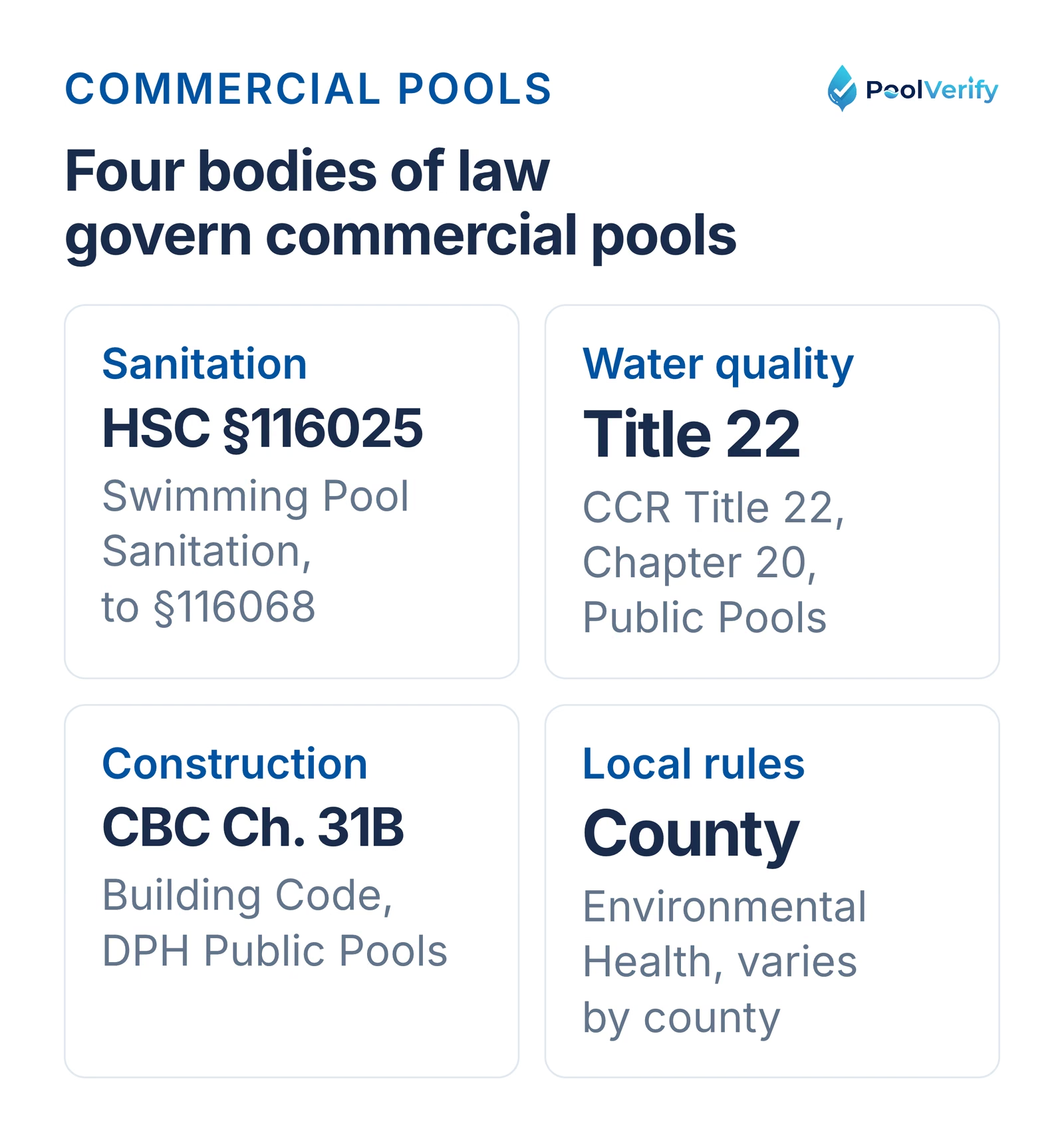
California commercial pools are governed by several overlapping regulations:

  1. Health and Safety Code §116025-116068 - Swimming Pool Sanitation
  2. California Code of Regulations, Title 22, Chapter 20 - Public Swimming Pools
  3. California Building Code Chapter 31B - DPH Public Pools
  4. Local County Health Department Regulations - Varies by jurisdiction

Health Permit Requirements

Per California Health and Safety Code, all public swimming pools require a health permit from the local Environmental Health Department.

Permit Requirements:

  • Annual renewal required
  • Fees vary by county ($200-$800+ annually)
  • Inspection required before permit issuance
  • Must be displayed publicly at the pool

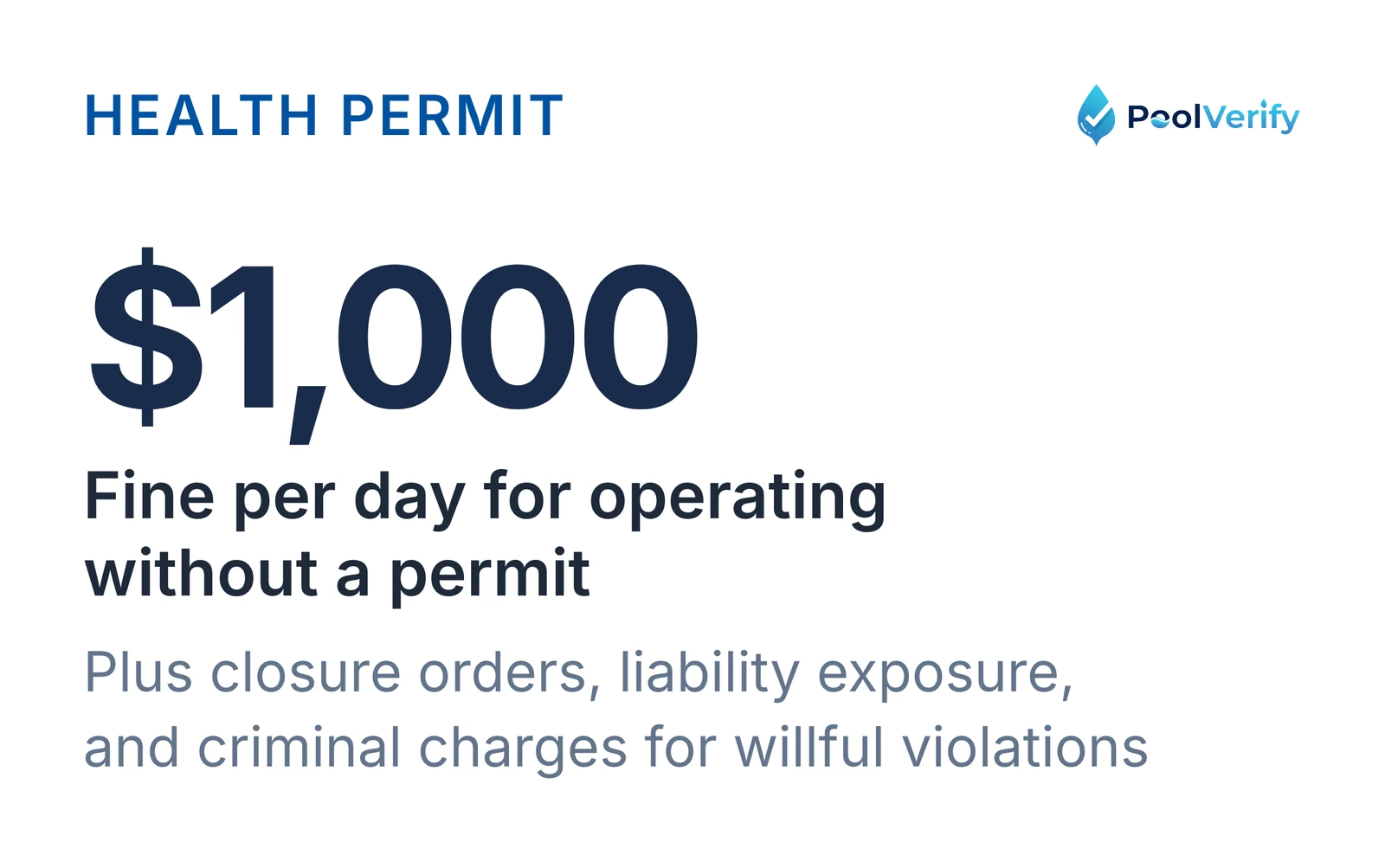
Penalties for Non-Compliance:

  • Fines up to $1,000 per day
  • Immediate pool closure orders
  • Liability exposure in case of injuries
  • Criminal charges for willful violations
Health permit posted at commercial pool

Health permit posted at commercial pool

Inspection Frequency by Risk Category

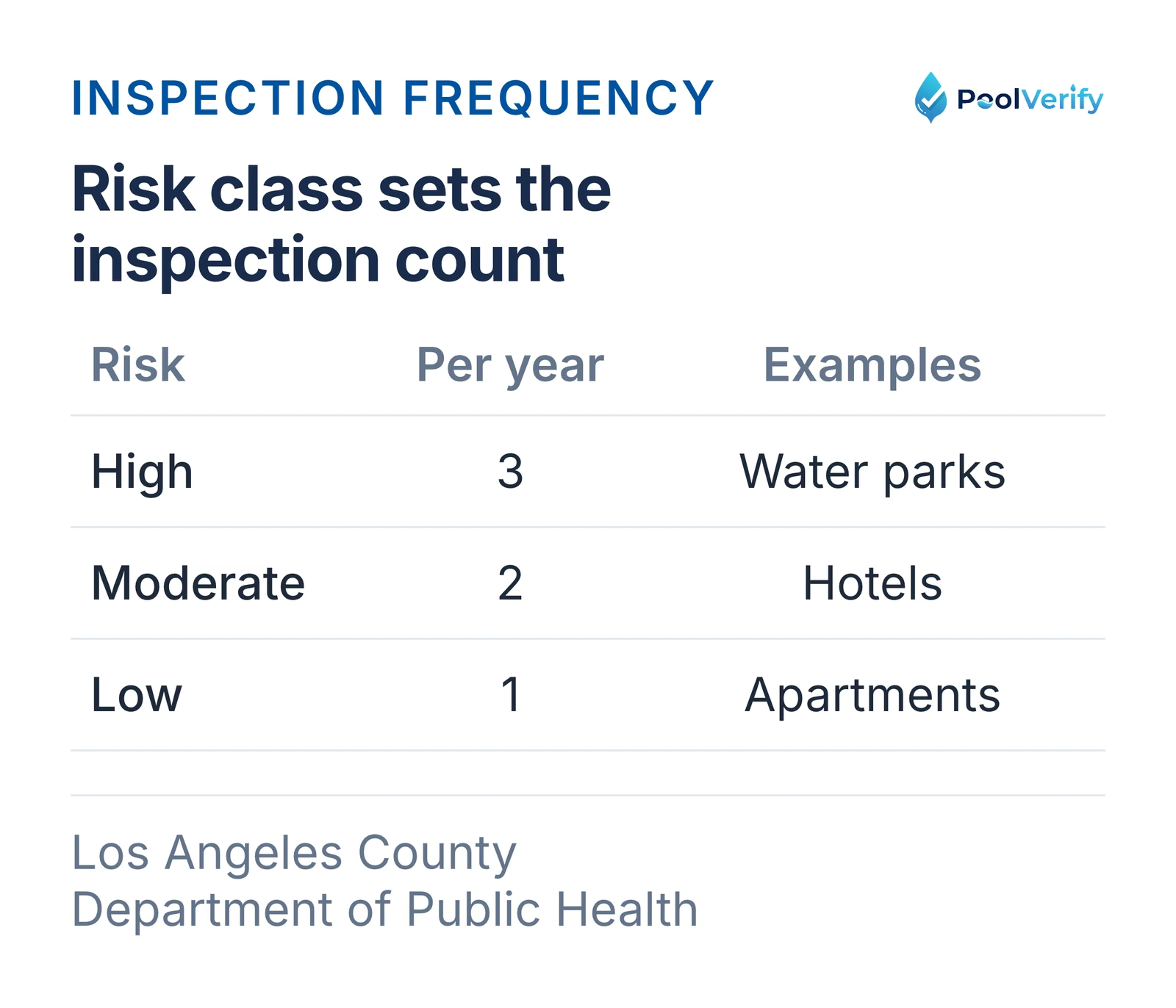
California county health departments classify pools by risk level, which determines inspection frequency. Based on Los Angeles County Department of Public Health guidelines:

High-Risk Pools (3 Inspections Per Year)

Characteristics:

  • High daily usage
  • Serves vulnerable populations
  • Complex water features
  • History of violations

Examples:

  • Water parks
  • Swim schools
  • Public municipal pools
  • Pools with diving boards/slides

Moderate-Risk Pools (2 Inspections Per Year)

Characteristics:

  • Moderate to high daily usage
  • General public access
  • Standard pool configurations

Examples:

  • Hotels and resorts
  • Schools and camps
  • Swim clubs
  • Medical facilities
  • Parks and recreation pools
  • Spray grounds/splash pads

Low-Risk Pools (1 Inspection Per Year)

Characteristics:

  • Limited user population
  • Restricted access
  • Lower daily usage

Examples:

  • Apartment complexes
  • Condominiums
  • Mobile home parks
  • Small HOA pools
Pool risk classification pyramid

Pool risk classification pyramid

Water Quality Testing Requirements

Title 22 Testing Requirements

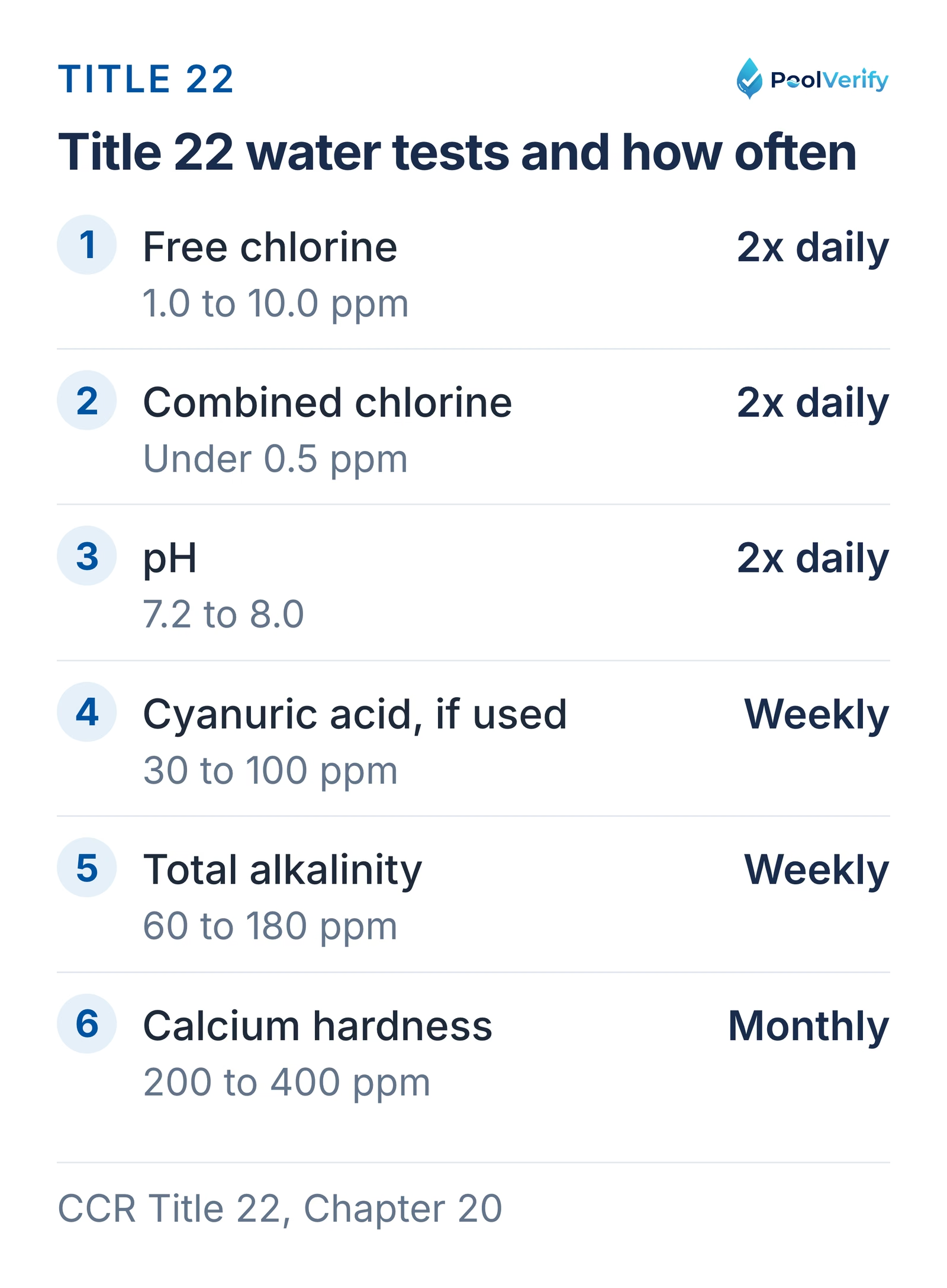
Under California Code of Regulations, Title 22, commercial pool operators must maintain strict water quality standards:

ParameterRequired RangeTesting Frequency
Free Chlorine1.0 - 10.0 ppm2x daily minimum
Combined Chlorine< 0.5 ppm2x daily minimum
pH Level7.2 - 8.02x daily minimum
Cyanuric Acid (if used)30 - 100 ppmWeekly
Total Alkalinity60 - 180 ppmWeekly
Calcium Hardness200 - 400 ppmMonthly
Water Temperature< 104°F (spas)Continuous

Testing Frequency for HOAs

Per HSC §116048, HOAs with fewer than 25 separate interests must perform water testing:

"At least two times per week at intervals of no greater than four days apart"

For larger HOAs (25+ units): Daily testing is recommended and may be required by local jurisdictions.

Required Testing Equipment

Every commercial pool must have on-site:

  • DPD test kit (free and total chlorine)
  • pH test strips or electronic meter
  • Cyanuric acid test kit (if stabilizer used)
  • Thermometer (for spas)
  • Backup testing supplies
Pool water testing equipment commercial

Pool water testing equipment commercial

Record Keeping Requirements

What Records Must Be Maintained

Under Title 22 §65523, commercial pool operators must maintain:

Daily Records:

  • Water chemistry readings (chlorine, pH)
  • Pool temperature (for spas)
  • Bather load counts
  • Chemical additions
  • Filter backwash dates
  • Any unusual incidents

Equipment Records:

  • Maintenance logs
  • Repair documentation
  • Equipment replacement dates
  • Inspection reports

Compliance Records:

  • Health department inspection reports
  • Permit certificates
  • Staff training certifications
  • Emergency procedure documentation

Retention Period

All records must be kept for a minimum of 2 years and must be available for inspection upon request by:

  • Health department officials
  • Pool users/residents
  • Property management
  • Insurance auditors

Sample Daily Log Template

DateTimeFree ClpHTempBathersChemicals AddedStaff
12/19AM2.5 ppm7.482°F0NoneJ.S.
12/15PM2.0 ppm7.684°F121 gal chlorineM.R.

PoolVerify Tip: Our digital inspection platform includes built-in logging features that automatically maintain compliance records. Property managers can access historical data anytime and generate reports for health department audits.

Structural and Safety Requirements

Pool Barrier Requirements

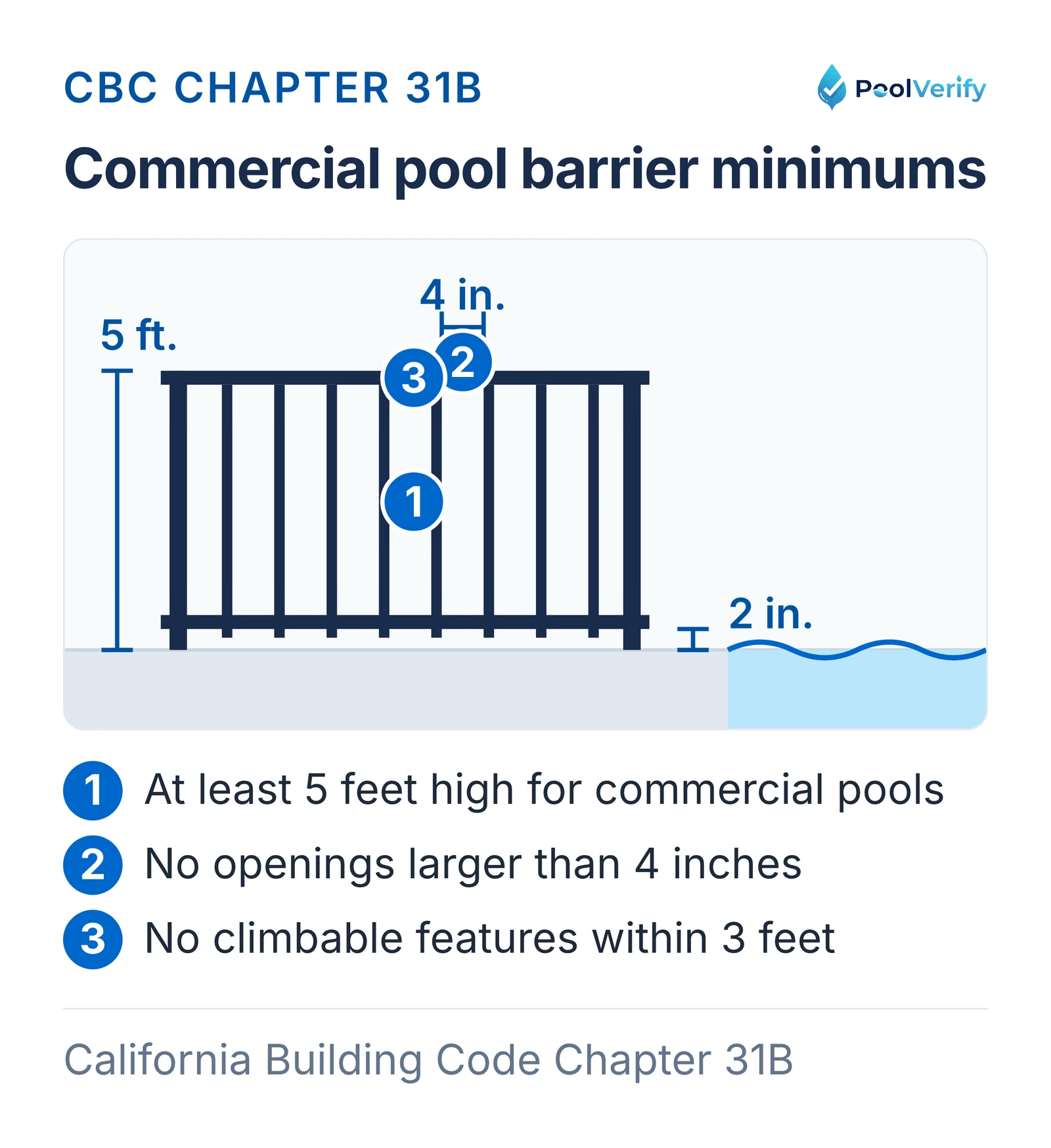
Commercial pools must meet California Building Code Chapter 31B barrier requirements:

Fencing Requirements:

  • Minimum 5 feet high (residential is 4 feet)
  • No openings larger than 4 inches
  • Self-closing, self-latching gates
  • Gate latches 54 inches from ground (or key operated)
  • No climbable features within 3 feet

Additional Commercial Requirements:

  • Emergency phone within 200 feet
  • Posted pool rules and capacity
  • Depth markers every 25 feet and at transitions
  • "No Diving" signs where depth < 6 feet
  • Safety equipment (ring buoy, shepherd's hook)

For detailed barrier requirements, see our California Pool Barrier Requirements Guide.

Commercial pool safety equipment layout

Commercial pool safety equipment layout

Drain Safety and VGB Act Compliance

The federal Virginia Graeme Baker Pool and Spa Safety Act (VGB Act) requires:

  • Anti-entrapment drain covers on all public pools
  • Dual drains OR safety vacuum release systems
  • Covers must be VGB-compliant (ASME/ANSI A112.19.8)
  • Regular inspection of drain covers for damage/compliance

Violation Penalties: Up to $100,000 per violation under federal law

ADA Accessibility Requirements

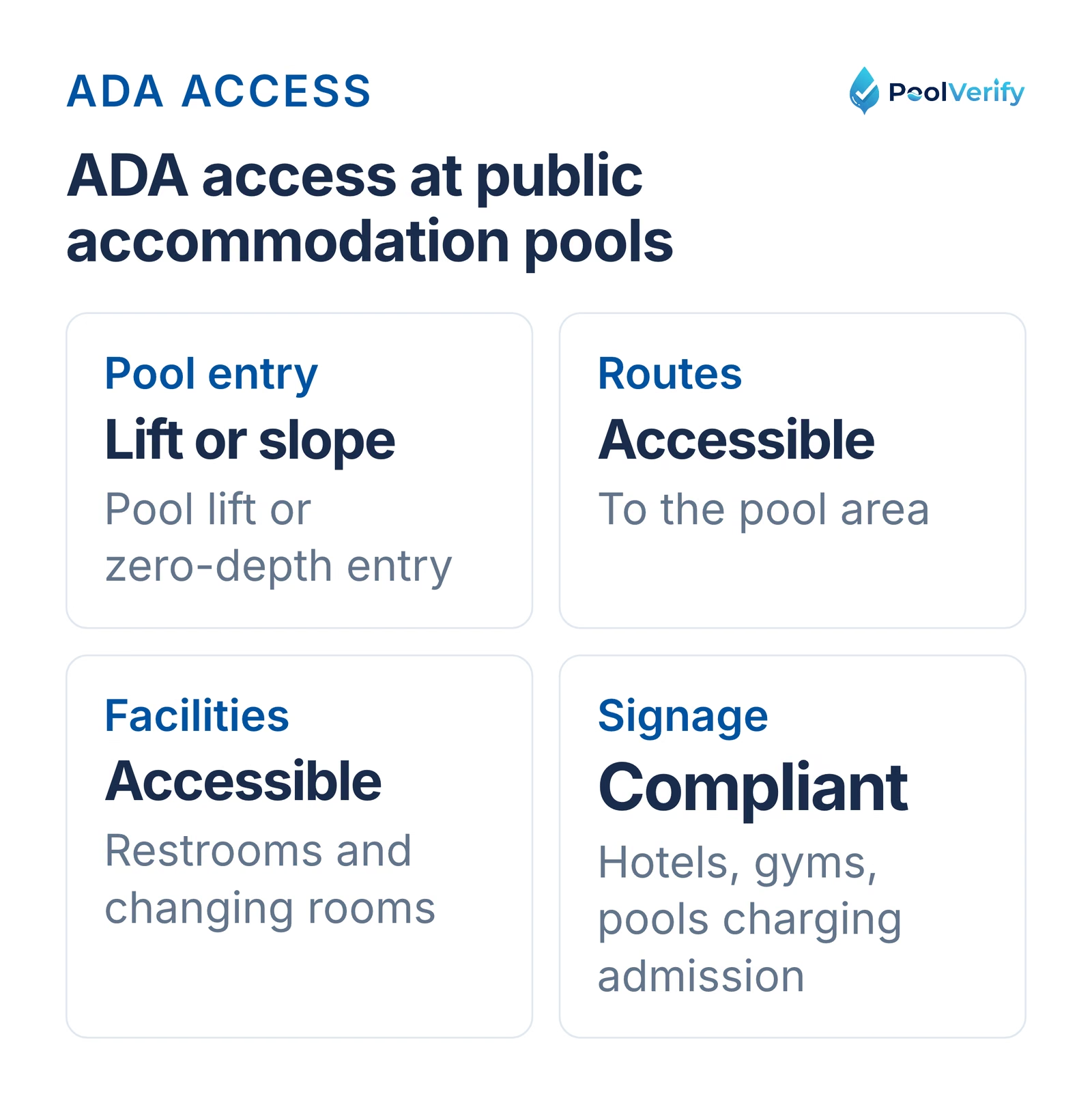
Public accommodation pools must comply with ADA requirements:

  • Pool lift OR sloped entry (zero-depth)
  • Accessible routes to pool area
  • Accessible restrooms/changing facilities
  • Compliant signage

Applies To: Hotels, motels, fitness centers, municipal pools, and any pool charging admission

ADA compliant pool lift installation

ADA compliant pool lift installation

Lifeguard Requirements

When Lifeguards Are Required

Under California law, trained lifeguards must be present when a pool:

  • Charges direct fees for use
  • Is classified as a "public swimming pool" open to the general public
  • Operates swim lessons or organized activities
  • Local ordinances require lifeguard coverage

Properties Typically Exempt

  • Apartment complex pools (residents-only)
  • HOA community pools (members-only, no fees)
  • Hotel pools (guests-only, no additional charge)
  • Private club pools (members-only)

Note: Even exempt pools should have trained staff and emergency procedures.

Inspection Process: What to Expect

Pre-Inspection Preparation

Before your scheduled health department inspection:

  1. Review previous inspection reports - Address any prior violations
  2. Test water chemistry - Ensure all parameters are in range
  3. Check all safety equipment - Ring buoys, hooks, first aid kits
  4. Organize records - 2 years of logs accessible
  5. Verify permits - Current and properly displayed
  6. Inspect barriers - Gates, fences, locks functional
  7. Clean and maintain - Pool, deck, equipment areas

Common Inspection Violations

Based on county health department data, the most frequently cited violations include:

ViolationCitation RateTypical Fine
Water chemistry out of range35%$100-$500
Incomplete record keeping28%$100-$300
Missing/damaged safety equipment22%$100-$500
Barrier/gate deficiencies18%$200-$1,000
Expired permits12%$300-$1,000
Drain cover issues8%$500-$5,000
ADA violations5%$500-$10,000+

Inspection Scoring

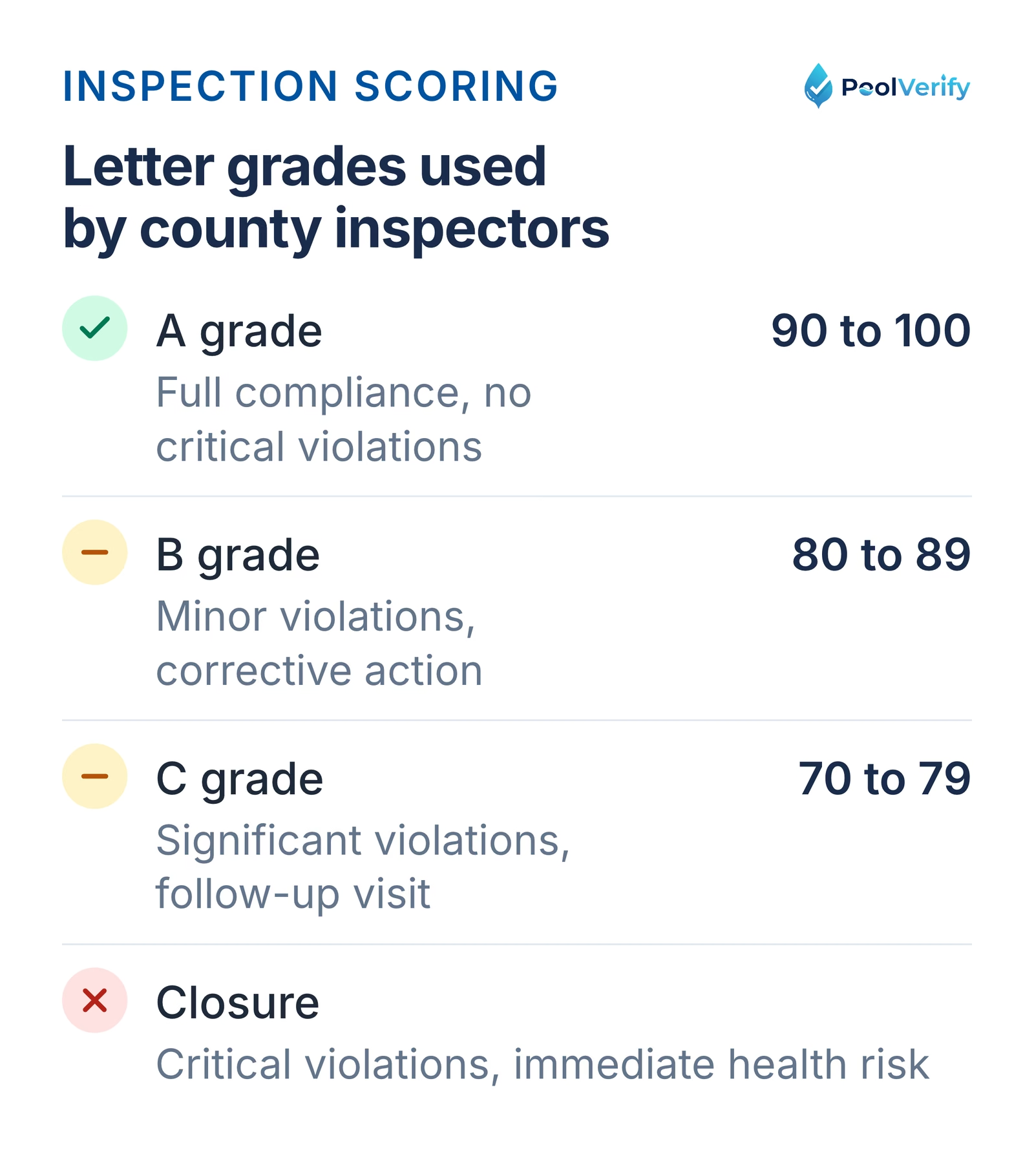
Many California counties use a letter-grade or point-based scoring system:

  • A (90-100): Full compliance, no critical violations
  • B (80-89): Minor violations, corrective action required
  • C (70-79): Significant violations, follow-up inspection scheduled
  • Closure: Critical violations posing immediate health risk
Health inspection score card posted at pool

Health inspection score card posted at pool

HOA-Specific Compliance Guide

Board Responsibilities

HOA boards have fiduciary duties regarding pool safety:

  1. Maintain adequate insurance - Liability coverage of $1M+ recommended
  2. Hire qualified service providers - Licensed, insured pool maintenance
  3. Ensure compliance - Health codes, building codes, safety regulations
  4. Document everything - Meeting minutes, maintenance records, incidents
  5. Respond to complaints - Timely investigation and resolution

Common HOA Pool Issues

IssueLiability RiskRecommended Action
Broken gate latchHighRepair within 24 hours
Chemical imbalanceModerate-HighClose pool until corrected
Cracked deckModerateDocument, schedule repair
Faded depth markersLow-ModerateRepaint within 30 days
Missing pool rules signLowReplace immediately

HOA Pool Budget Planning

Annual budget items for HOA pool compliance:

ItemEstimated Cost
Health permit renewal$300-$800
Professional inspections$1,200-$2,400
Chemical supplies$2,000-$5,000
Equipment maintenance$1,500-$3,000
Safety equipment replacement$200-$500
Insurance premiums$3,000-$10,000+
Repairs reserve$2,000-$5,000
Total Annual Budget$10,200-$26,700+

Hotel and Resort Compliance

Guest Safety Requirements

Hotels have additional obligations under hospitality regulations:

  • Posted pool hours - Clearly displayed
  • Depth information - Visible from all entries
  • Emergency procedures - Posted and staff-trained
  • Room keys/fobs - Controlled access after hours
  • Towel service - Cannot obstruct safety equipment

Liability Considerations

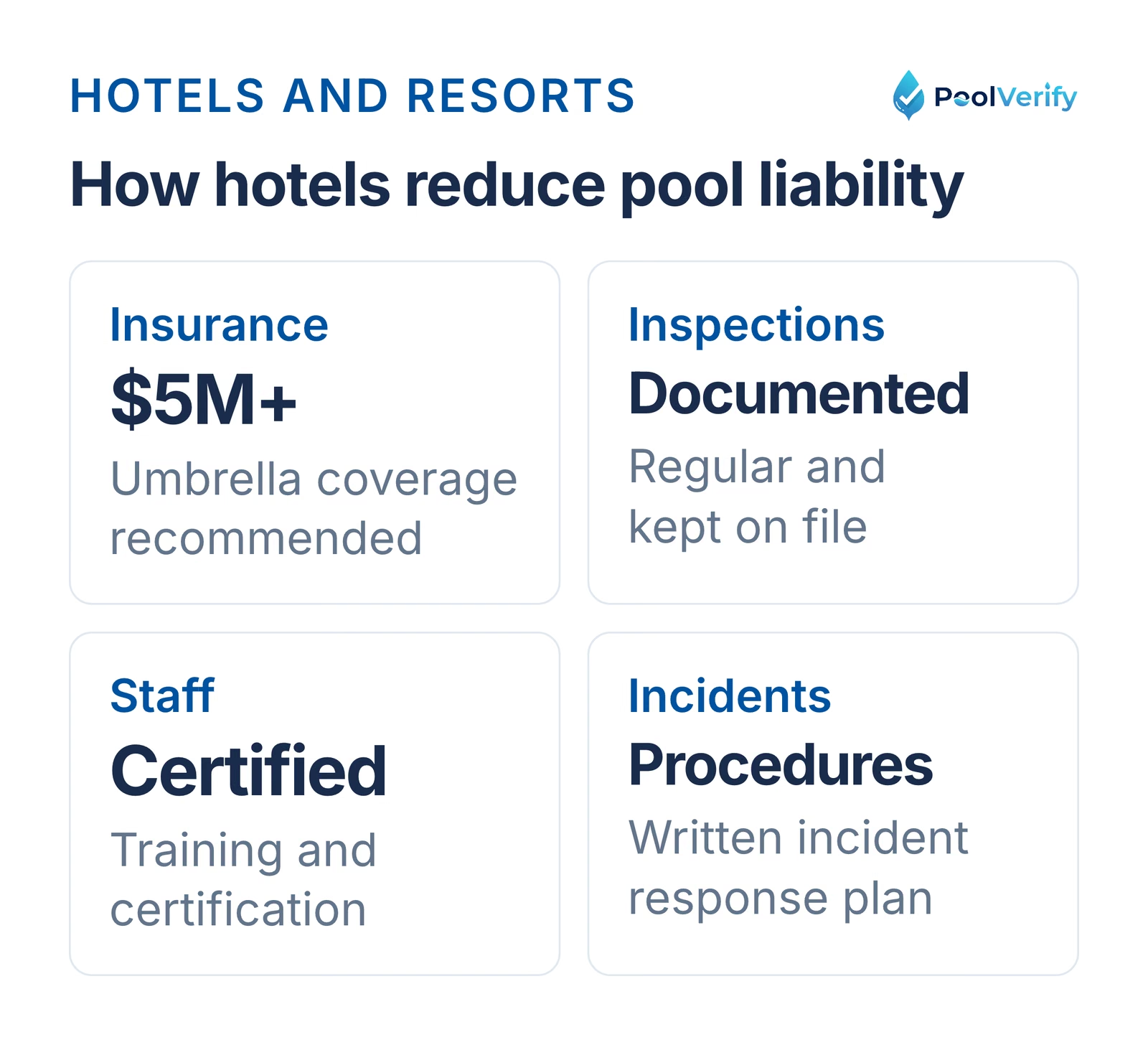
Hotels face significant liability exposure from pool incidents:

  • Attractive nuisance doctrine - Higher duty of care
  • Business invitee status - Guests owed highest duty
  • Dram shop liability - Alcohol near pools increases risk
  • Negligent security - Inadequate access control

Risk Mitigation:

  • Regular documented inspections
  • Staff training and certification
  • Incident response procedures
  • Adequate insurance coverage ($5M+ umbrella recommended)
Hotel pool safety signage and equipment

Hotel pool safety signage and equipment

Apartment Complex Requirements

Landlord Obligations

California landlords with pools must:

  1. Maintain safe conditions - Civil Code §1941
  2. Provide proper warnings - Hazard disclosure
  3. Ensure barrier compliance - Building code requirements
  4. Obtain required permits - Health department compliance
  5. Maintain insurance - Liability coverage

Tenant Communication

Recommended pool policies for apartment complexes:

  • Written pool rules in lease agreement
  • Annual safety reminders to all tenants
  • Incident reporting procedures
  • Guest policies and liability waivers
  • Emergency contact information

Working with Professional Pool Inspectors

When to Hire a Professional

Property managers should engage professional pool inspectors for:

  • Pre-purchase due diligence - Buying properties with pools
  • Annual compliance audits - Beyond health department inspections
  • Equipment assessments - Lifespan and replacement planning
  • Incident investigations - After accidents or complaints
  • Renovation planning - Code compliance verification

What to Look For in a Commercial Pool Inspector

Qualifications:

  • NSPF Certified Pool Operator (CPO) certification
  • Experience with commercial properties
  • Knowledge of California HSC and Title 22
  • E&O insurance coverage
  • References from similar properties

Questions to Ask:

  1. How many commercial pools do you inspect annually?
  2. Are you familiar with [county name] health department requirements?
  3. What's included in your inspection report?
  4. How quickly can you provide documentation?
  5. Do you offer ongoing compliance monitoring?

Commercial Inspection Pricing

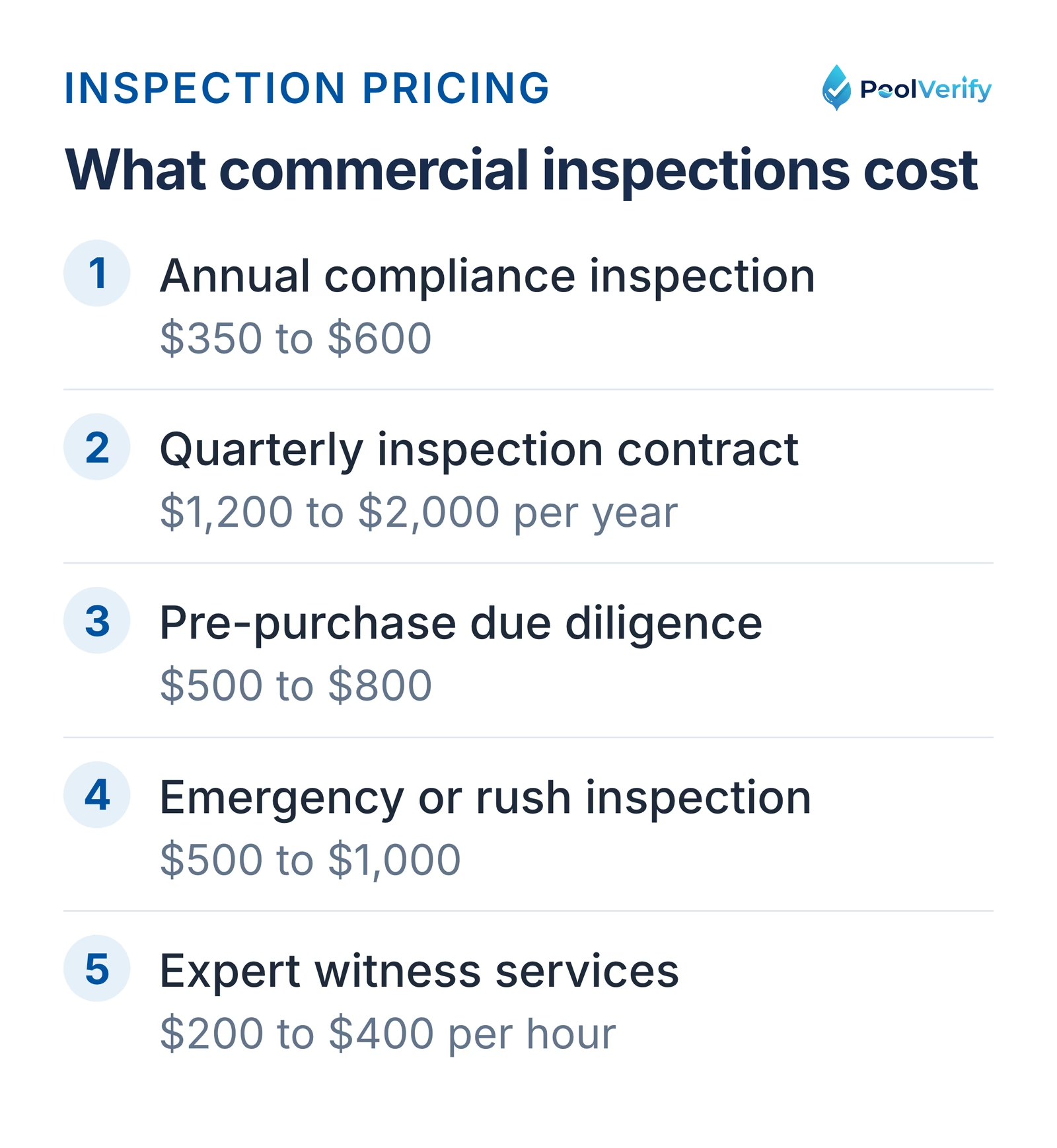
Professional commercial pool inspections typically cost:

ServicePrice Range
Annual compliance inspection$350-$600
Quarterly inspection contract$1,200-$2,000/year
Pre-purchase due diligence$500-$800
Emergency/rush inspection$500-$1,000
Expert witness services$200-$400/hour

For detailed pricing strategies, see our Pool Inspection Pricing Guide.

Professional inspector at commercial pool

Professional inspector at commercial pool

Compliance Management with PoolVerify

Managing compliance across multiple commercial properties is complex. PoolVerify helps property managers and pool inspectors:

✅ Digital inspection checklists aligned with California HSC requirements

✅ Automated record keeping that satisfies Title 22 documentation requirements

✅ Multi-property dashboards for portfolio management

✅ Instant report generation for health department audits

✅ Compliance tracking with expiration alerts for permits and certifications

✅ Photo documentation with timestamps for liability protection

Property managers using PoolVerify report:

  • 60% reduction in compliance documentation time
  • Faster health department audit responses
  • Improved inspection scores
  • Better communication with pool service providers

Schedule a Demo →


Key Takeaways

  1. Any pool serving more than a single-family home is a "public pool" under California law
  2. Health permits are required for all commercial pools - no exceptions
  3. Inspection frequency depends on risk classification (1-3x per year)
  4. Water testing must occur at least twice weekly for most properties
  5. Records must be maintained for 2+ years and available upon request
  6. Violations carry significant fines and potential closure orders
  7. Professional inspections supplement (don't replace) health department oversight

Related Resources

  • California Pool Barrier Requirements
  • California AB 3205 Pool Inspection Requirements
  • How to Price Pool Inspections
  • Pool Safety Checklist: Complete Guide
  • Best Pool Inspection Software in California

In this article

What Qualifies as a "Public Pool" in California?California Health Code Requirements OverviewInspection Frequency by Risk CategoryWater Quality Testing RequirementsRecord Keeping RequirementsStructural and Safety RequirementsLifeguard RequirementsInspection Process: What to ExpectHOA-Specific Compliance GuideHotel and Resort ComplianceApartment Complex RequirementsWorking with Professional Pool Inspectors+ more sections below

Share

TwitterLinkedIn

Streamline inspections?

Professional reports in minutes.

Start Free Trial
Previous
California Pool Barrier Requirements: Complete 2025 Compliance Guide
Next
How to Price Pool Inspections: Complete Guide for Inspectors [2026]

Streamline Your Pool Inspections

Join thousands of pool inspectors using PoolVerify to create professional reports in minutes.

Start Free TrialBrowse More Resources
PoolVerify - Pool Inspection Software

Professional pool inspection software built for California inspectors. Complete inspections faster with mobile access, instant PDF reports, and full compliance.

support@poolverify.io
Bank-Grade Security
California Compliant

Product

  • Features
  • Pricing
  • Resources

Resources

  • Pool Inspection Report Guide
  • California AB 3205 Guide
  • Pool Safety Checklist
  • Pool Inspection Cost

Company

  • About
  • Security
  • Contact

Legal

  • Privacy Policy
  • Terms of Service
  • Do Not Sell My Personal Information

© 2025 PoolVerify. All rights reserved.

Built with dedication for California Pool Inspectors