California Pool Barrier Requirements: Compliance Guide
Complete guide to California pool barrier requirements for 2026. Learn BPC §7195 and HSC §115922 specifications for height, spacing, gates, and materials.
California pool barrier requirements protect children from drowning accidents through strict specifications for fencing height, spacing, gate mechanisms, and safety features. Whether you're a pool inspector, homeowner, real estate agent, or pool contractor, understanding these requirements is essential for legal compliance and child safety.
In this comprehensive guide, we'll cover every aspect of California pool barrier requirements under BPC §7195 and HSC §115922, including exact measurements, acceptable materials, gate specifications, and common violations that fail inspections.
Why California has strict pool barrier requirements
California leads the nation in drowning prevention legislation due to the state's high number of residential pools and tragic drowning statistics. According to the California Swimming Pool Safety Act, drowning is the leading cause of accidental death for children ages 1-4 in California.
Pool barriers serve as the first line of defense against accidental drowning by preventing unsupervised access to swimming pools and spas. Research shows that proper barriers reduce childhood drowning risk by up to 80% when correctly installed and maintained.
California's pool barrier requirements are codified in multiple laws:
Health and Safety Code (HSC) §115922: The Swimming Pool Safety Act establishing drowning prevention safety features
Business and Professions Code (BPC) §7195: Pool safety inspection requirements for property transfers
Local building codes: Additional requirements that may exceed state minimums
Legal requirements: BPC §7195 and HSC §115922
HSC §115922: The Swimming Pool Safety Act
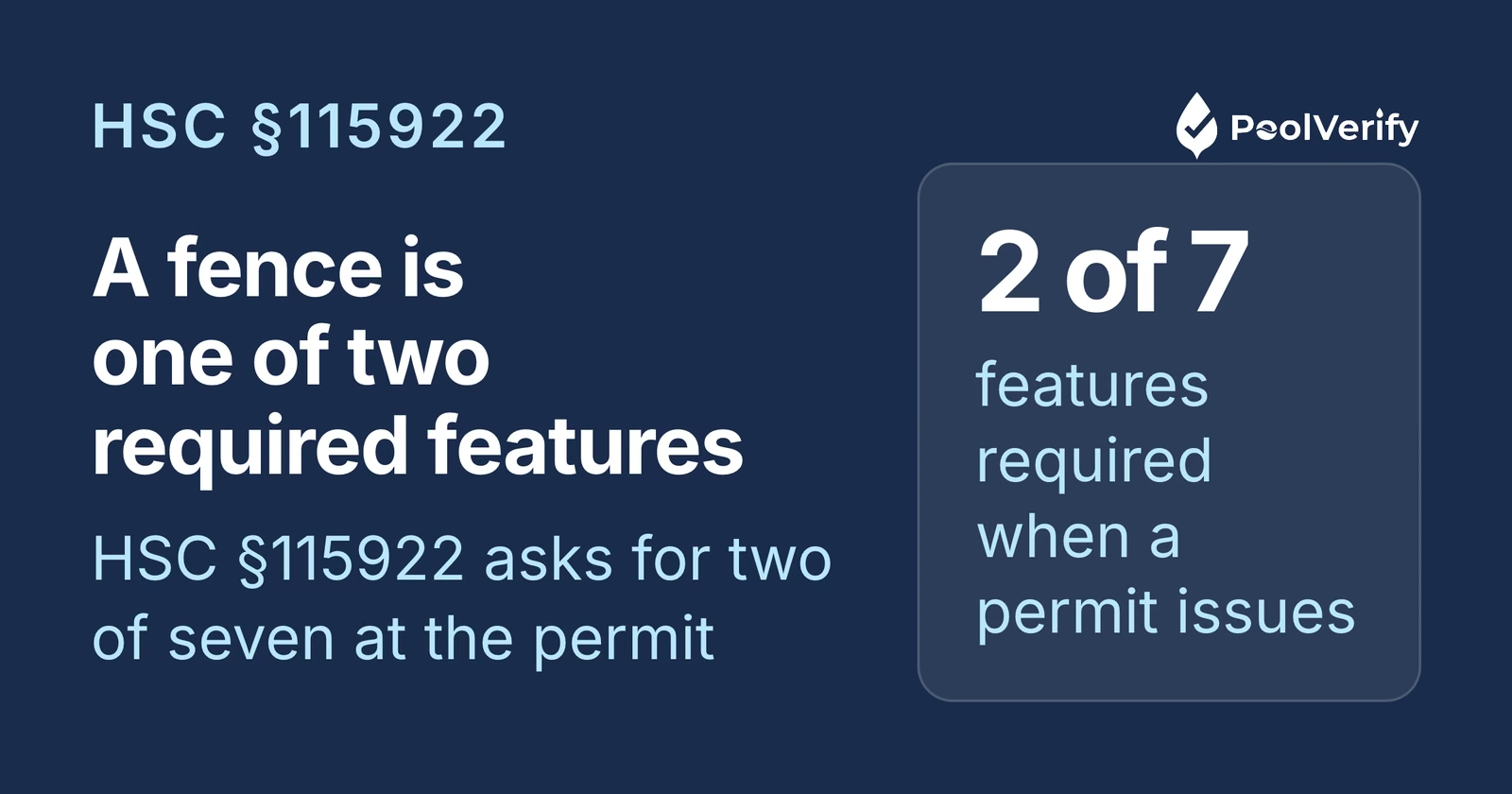
Health and Safety Code Section 115922 requires that when a building permit is issued for new pool construction or pool remodeling at a private single-family home, the pool must be equipped with at least two of seven drowning prevention safety features.
One of these seven qualifying features is "an enclosure that isolates the swimming pool or spa from the private single-family home." This enclosure must meet the barrier specifications outlined in HSC §115923.
Important: As of January 1, 2018, California pools require two safety features (increased from one by Senate Bill 442). This requirement was further updated January 1, 2026.
BPC §7195: Pool safety inspections
Business and Professions Code Section 7195 mandates that pool safety inspections during property transfers identify which drowning prevention safety features are present, in good repair, and operable as designed.
Inspectors must specifically state if the pool has fewer than two of the seven required safety features listed in HSC §115922.
When do pool barrier requirements apply?
California pool barrier requirements apply to:
New pool construction: All new swimming pools and spas built with permits issued after January 1, 2018
Pool remodeling: Existing pools undergoing permitted remodeling work
Property transfers: Pools inspected during real estate transactions (compliance verification)
Important exception: The Swimming Pool Safety Act does NOT retroactively require existing pools built before 2018 to add safety features, unless remodeling work triggers permit requirements.
Pool barrier height requirements
California requires pool barriers to meet specific minimum heights measured from different reference points.
Minimum barrier height: 60 inches (5 feet)
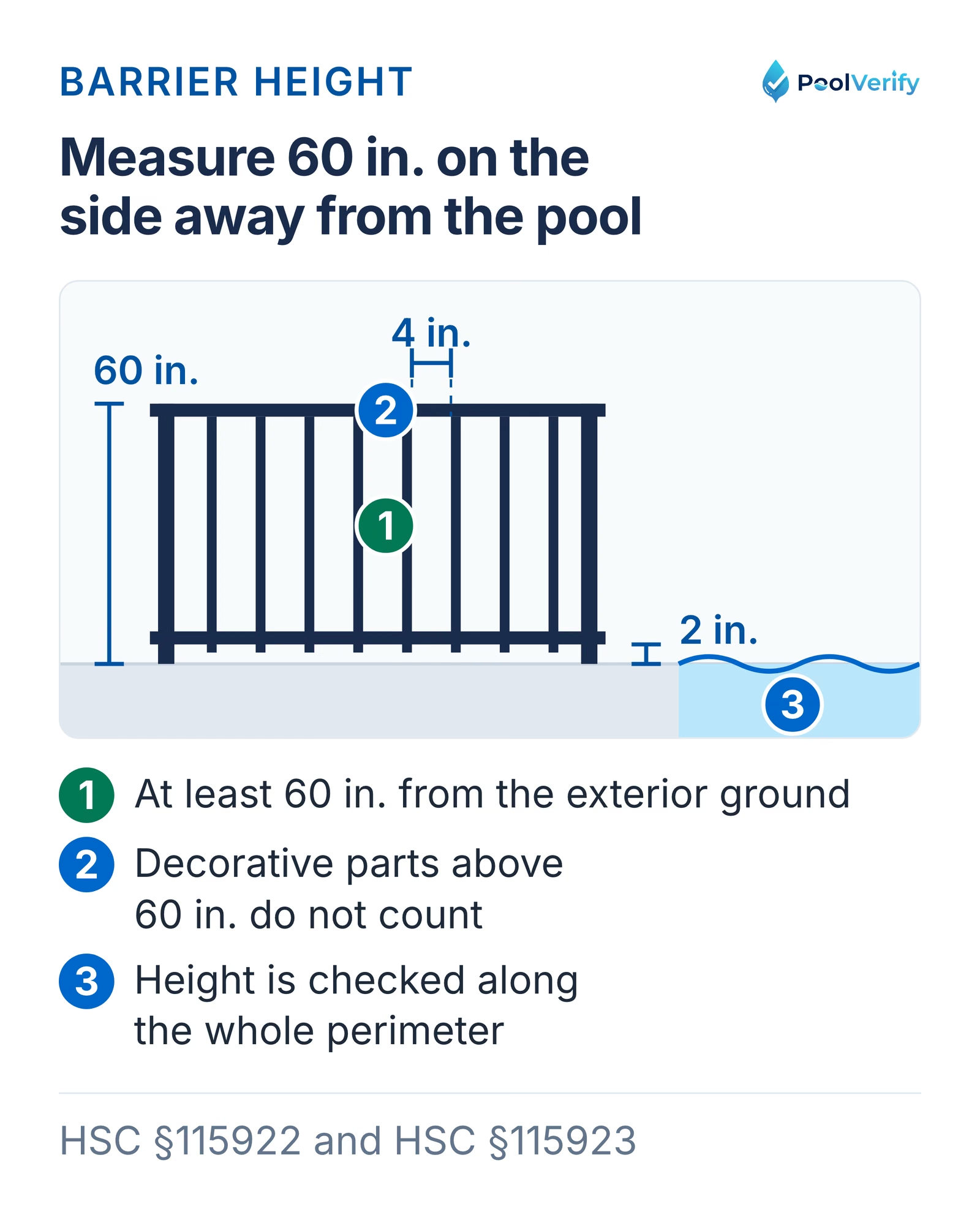
According to California pool fence laws, the minimum required height for a pool barrier is 60 inches (5 feet), measured from the exterior side facing away from the pool.
Measurement method:
Measure from the ground level on the side away from the pool
The 60-inch height must be maintained along the entire barrier perimeter
Decorative elements above 60 inches do not count toward compliance
A pool barrier measured from the ground on the side away from the pool must reach at least 60 inches.
Why 60 inches specifically?
The 60-inch height prevents most children under age 5 from climbing over barriers. Research on childhood drowning prevention shows that barriers below 48 inches are easily scaled, while 60-inch barriers present a significant climbing obstacle.
Local requirements may exceed 60 inches
Some California cities and counties require barriers taller than the state minimum:
Los Angeles: Minimum 60 inches
San Diego: Minimum 60 inches
San Francisco: May require taller barriers depending on specific circumstances
Always verify local building code requirements with your city or county building department before installing pool barriers.
Pool barrier spacing and opening requirements
Barrier spacing prevents children from squeezing through or getting trapped in openings.
Maximum opening size: 4-inch sphere test
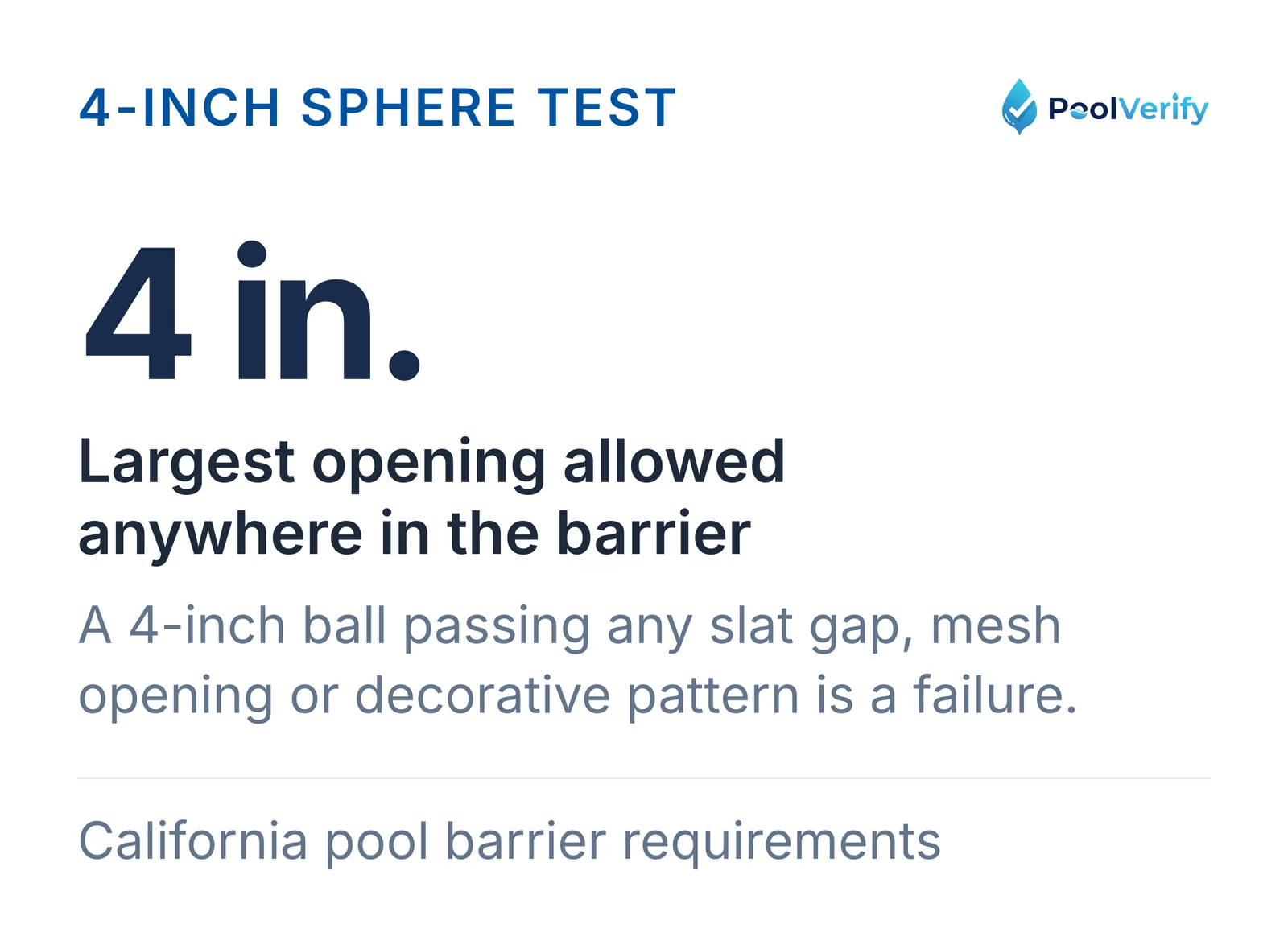
California pool barriers must not have openings that allow passage of a 4-inch sphere. This means:
Vertical slats must be spaced no more than 4 inches apart
Mesh fencing must have openings smaller than 4 inches in any dimension
Decorative patterns cannot create gaps larger than 4 inches
Testing method: If a 4-inch diameter ball can pass through any opening in your barrier, it fails California requirements.
A 4 inch sphere must not pass through any opening in a California pool barrier.
Maximum ground clearance: 2 inches
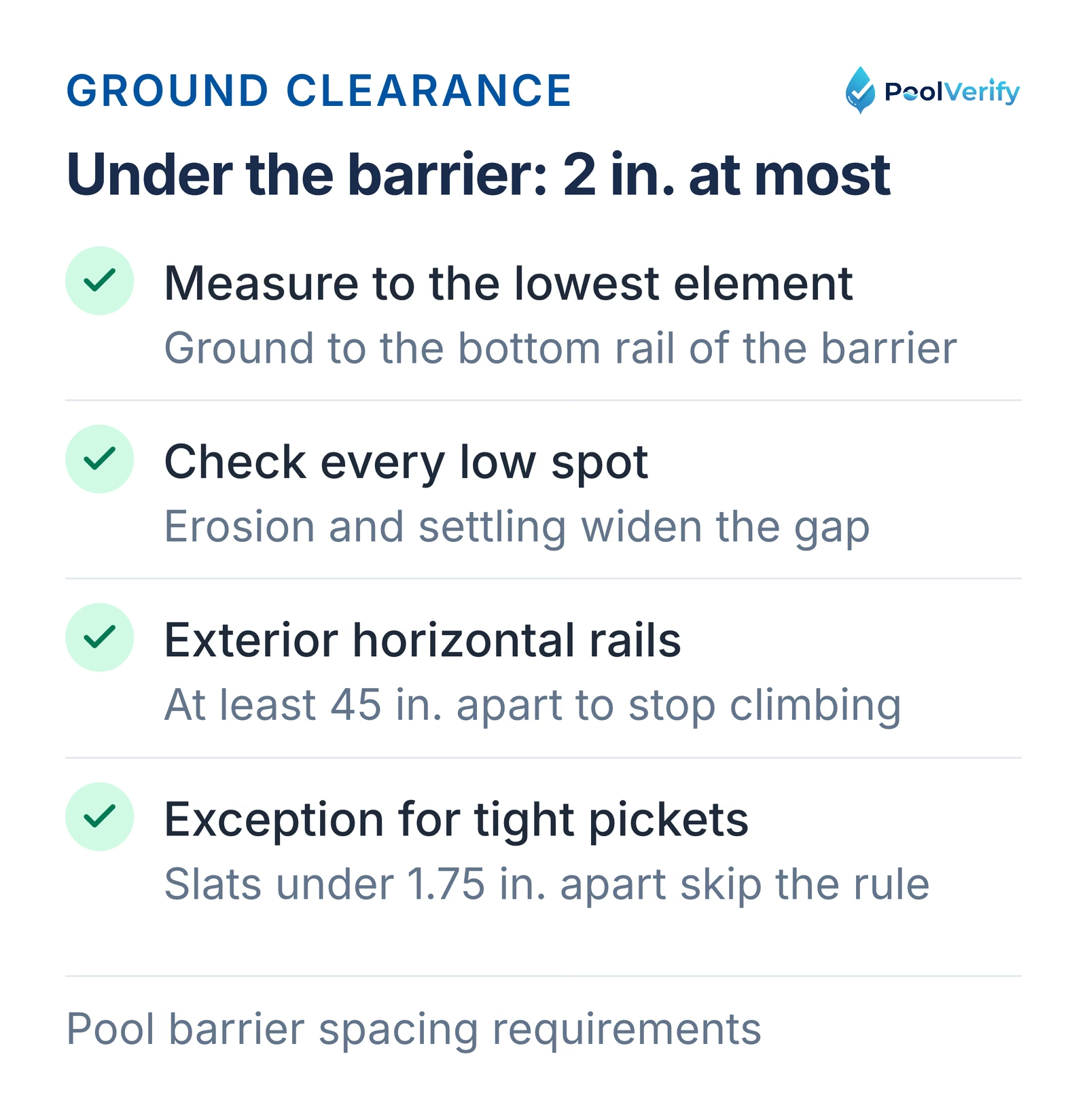
The bottom of pool barriers must maintain no more than 2 inches clearance from the ground surface.
Why this matters: Young children can attempt to crawl under barriers. The 2-inch maximum clearance prevents children from sliding underneath while still allowing minor ground irregularities.
Measurement: Measure from the ground to the bottom rail or lowest horizontal element of the barrier.
Ground clearance under a pool barrier is limited to 2 inches, measured to the lowest horizontal element.
Horizontal member spacing
If your barrier includes horizontal rails or members (elements that run parallel to the ground), additional spacing requirements apply:
Horizontal members on the exterior side (away from pool) must be spaced at least 45 inches apart
This prevents children from using horizontal elements as climbing footholds
Chain-link fencing typically meets this requirement with minimal horizontal elements
Exception: Barriers with vertical slats less than 1.75 inches apart are exempt from horizontal spacing requirements, as the narrow spacing prevents climbing.
Acceptable pool barrier materials
California allows multiple barrier materials, provided they meet height, spacing, and structural requirements.
Approved materials include:
1. Wood fencing
Solid wood panels or vertical pickets
Must maintain 60-inch minimum height
Vertical slats spaced no more than 4 inches apart
Treated lumber recommended for longevity
2. Vinyl fencing
Solid vinyl panels or picket-style
UV-resistant materials to prevent degradation
Must meet structural strength requirements
Popular for low maintenance
3. Wrought iron and ornamental metal
Vertical bars spaced no more than 4 inches apart
Powder-coated for rust resistance
Requires self-closing, self-latching gates
Aesthetic option for upscale properties
4. Chain-link fencing
Minimum 9-gauge wire
Mesh openings no larger than 2.25 inches
Vinyl-coated chain-link recommended
Must maintain proper height
5. Removable mesh fencing
Must meet ASTM International F2286 standard
Transparent mesh with small openings
Self-closing, self-latching gate required
Temporary barrier option
6. Glass barriers
Tempered safety glass panels
Must be structurally sound with proper framing
No gaps larger than 4 inches
Premium aesthetic option
7. Masonry walls
Brick, block, or stucco walls
Must maintain 60-inch minimum height
Requires self-closing, self-latching gate for access
Provides privacy and noise reduction
Materials that do NOT meet requirements:
Lattice with openings larger than 4 inches
Shrubs or hedges (not a qualifying barrier)
Rope barriers or decorative fencing
Wire mesh with openings exceeding code limits
Self-closing and self-latching gate requirements
California pool barrier gates must be both self-closing and self-latching: meaning gates automatically swing shut and securely latch without manual assistance.
Self-closing mechanism requirements
Definition: Self-closing means the gate automatically swings closed from any open position without user intervention.
Specifications:
Gate must close completely from any angle
Closing mechanism must function reliably after 50,000 cycles (approximately 10 years)
Spring hinges or hydraulic closers are acceptable
Mechanism must work in all weather conditions
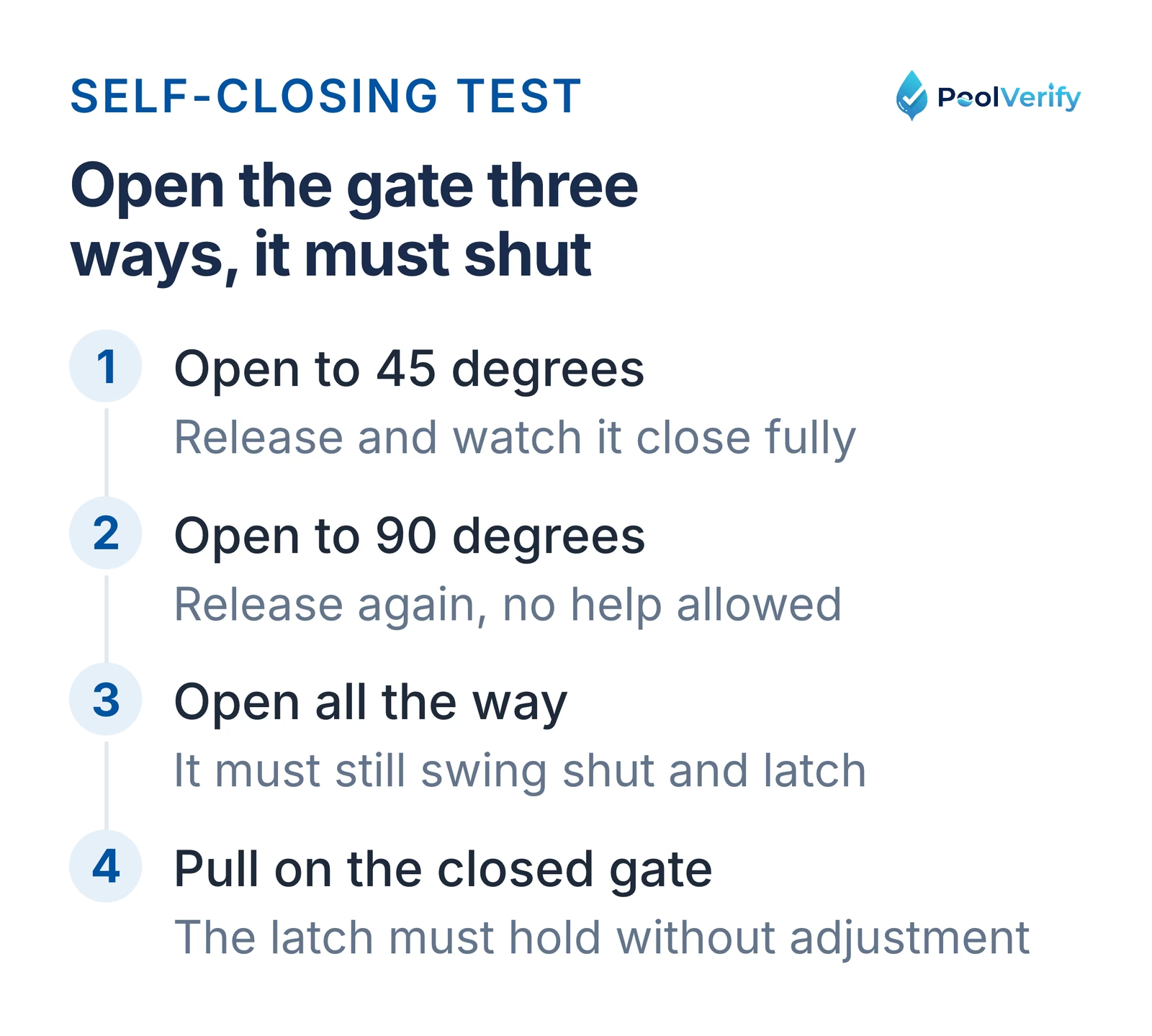
Testing: Open the gate to various positions (45°, 90°, fully open) and verify it closes completely each time without assistance.
A self-closing pool gate is tested from 45 degrees, 90 degrees and fully open, then pulled to confirm the latch holds.
Self-latching mechanism requirements
Definition: Self-latching means the gate latch engages automatically when the gate closes, securing the gate without user action.
Specifications:
Latch must engage automatically when gate closes
Latch must be strong enough to resist casual opening by children
Magnetic latches, gravity latches, and spring-loaded latches are acceptable
Latch must remain engaged in windy conditions
Testing: Close the gate and verify the latch engages without manually moving the latch mechanism. Pull on the gate to confirm it's secured.
Gate opening direction
California requires pool gates to open away from the pool area (outward).
Why: Outward-opening gates prevent children from accidentally entering the pool area by pushing through partially latched gates. If a child leans on an inward-opening gate, the gate might swing open even with a latch.
Exception: Gates serving as emergency exits may open inward if they meet alternative safety specifications.
Latch positioning and release mechanisms
Gate latch positioning prevents young children from reaching and operating the release mechanism.
Minimum latch height: 60 inches from ground
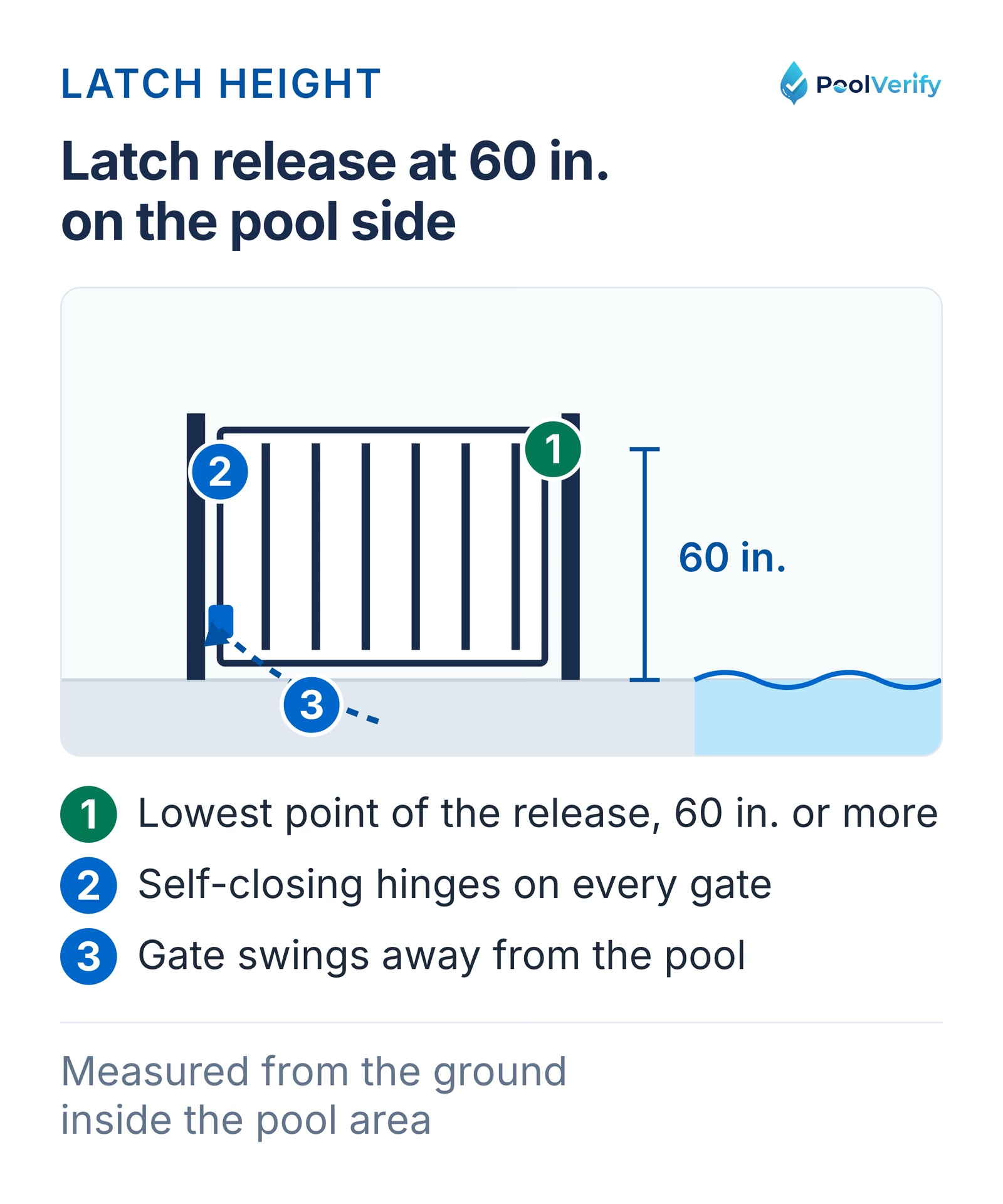
California requires gate latches to be positioned at least 60 inches (5 feet) from the ground measured on the pool side of the gate.
Why 60 inches: This height places the latch beyond the reach of most children under age 5. Research shows that children under 48 inches tall (roughly age 5) cannot easily access latches at 60-inch height.
Measuring latch height
Correct measurement:
Measure from the ground surface inside the pool area (pool side of gate)
Measure to the lowest point of the latch release mechanism
If the latch has a handle, measure to the lowest part of the handle that must be manipulated to unlatch
A compliant pool gate latch release sits at least 60 inches above the ground on the pool side and the gate opens outward.
No lower-latch alternative
HSC §115923(a) contains no guard or shield alternative: the self-latching device is placed no lower than 60 inches above the ground, full stop. Model building codes describe a lower pool-side release for other jurisdictions; in California a latch below 60 inches on an enclosure gate is a finding until it is moved. See the pool gate latch requirements guide.
Key-lockable latches
Many pool owners install key-lockable mechanisms in addition to standard latches for enhanced security:
Issue: Openings between vertical slats or in decorative patterns exceed 4 inches.
Why it fails: Children can squeeze through or get trapped in oversized openings.
Fix: Add intermediate vertical members, replace with compliant fencing, or install mesh backing.
Common causes:
Decorative wrought iron with artistic gaps
Horizontal rail fencing with wide spacing
Deteriorated fencing with broken slats
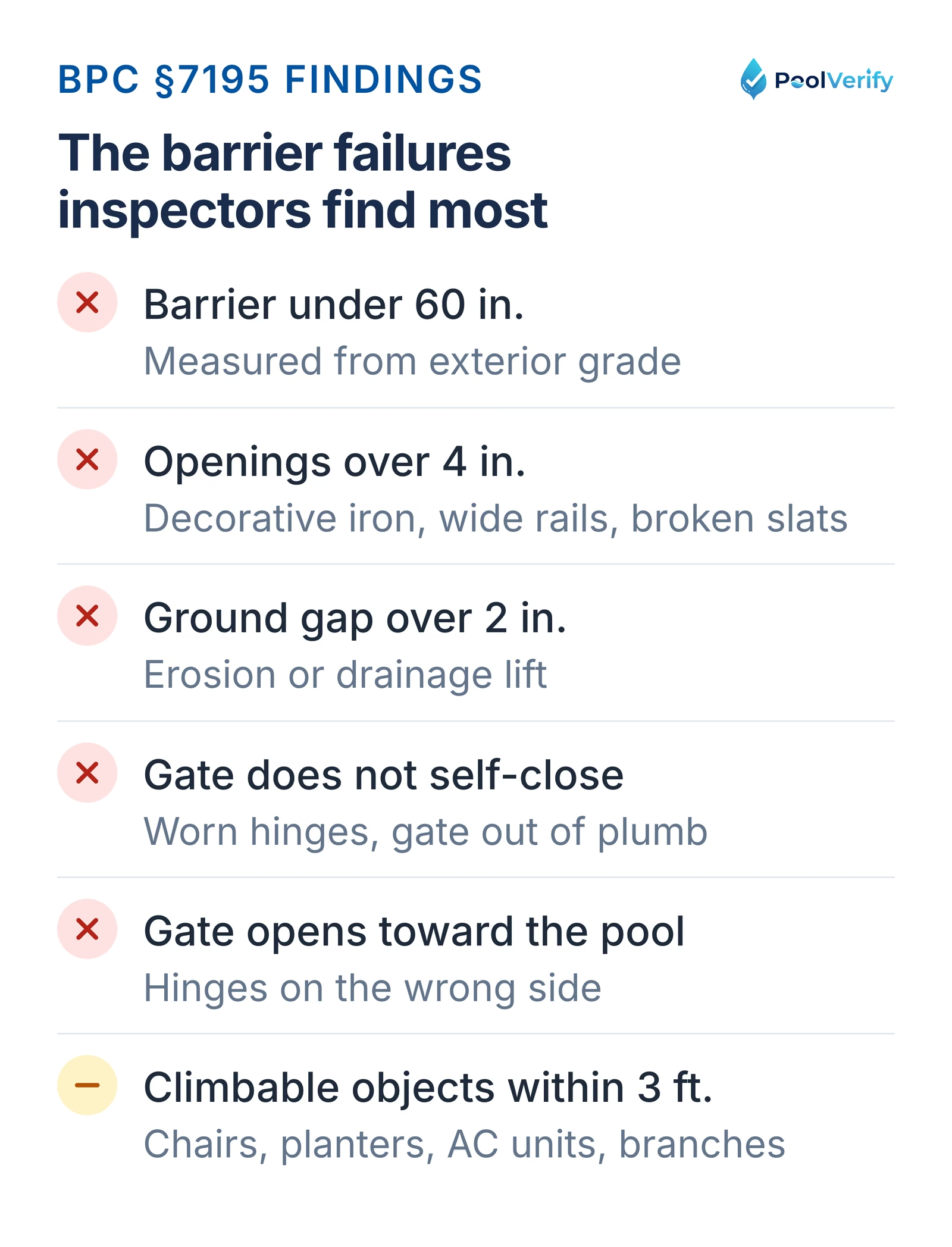
The most common California pool barrier violations, from insufficient height to climbable objects within 3 feet.
Violation #3: Excessive ground clearance
Issue: Bottom of barrier is more than 2 inches from ground.
Why it fails: Children can crawl underneath barrier.
Fix: Lower fence panels, add bottom rail or gravel board, or adjust grade.
Common causes:
Uneven ground with low spots
Fence installed above ground for drainage
Ground erosion under existing fence
Violation #4: Gate does not self-close
Issue: Gate remains open after release or closes partially.
Why it fails: Gate must automatically close completely to prevent unsupervised access.
Fix: Adjust or replace spring hinges, install hydraulic closer, or repair binding issues.
Common causes:
Worn spring hinges after years of use
Gate out of plumb (not hanging properly)
Ground obstruction preventing full closure
Violation #5: Gate does not self-latch
Issue: Latch does not engage automatically when gate closes.
Why it fails: Gate can be pushed open even after closing.
Fix: Adjust latch alignment, replace latch mechanism, or install magnetic latch.
Common causes:
Gate sagging out of alignment with latch strike
Worn latch mechanism
Latch installed incorrectly
Violation #6: Latch positioned too low
Issue: Latch release mechanism is lower than 60 inches above the ground.
Why it fails: Young children can reach and operate latch.
Fix: Relocate the latch to 60 inches or higher above the ground.
Common causes:
Standard fence gate latch not repositioned for pool use
Homeowner installed convenient but non-compliant latch height
Violation #7: Gate opens toward pool (inward)
Issue: Gate swings into pool area rather than away from pool.
Why it fails: Allows accidental entry if child leans on partially latched gate.
Fix: Reverse gate swing direction by relocating hinges to opposite side.
Common causes:
Contractor installed gate for convenience rather than compliance
Existing gate from before 2018 code changes
Violation #8: Climbable obstacles near barrier
Issue: Objects within 3 feet of barrier exterior provide climbing assistance (chairs, planters, AC units, tree branches).
Why it fails: Negates barrier height protection by providing climbing footholds.
Fix: Relocate movable objects, trim tree branches, or extend barrier height in affected area.
Common causes:
Landscaping placed too close to fence
Trees growing near barrier over time
Outdoor furniture stored against fence
Inspection checklist for pool barriers
Use this checklist when evaluating pool barrier compliance for BPC §7195 inspections:
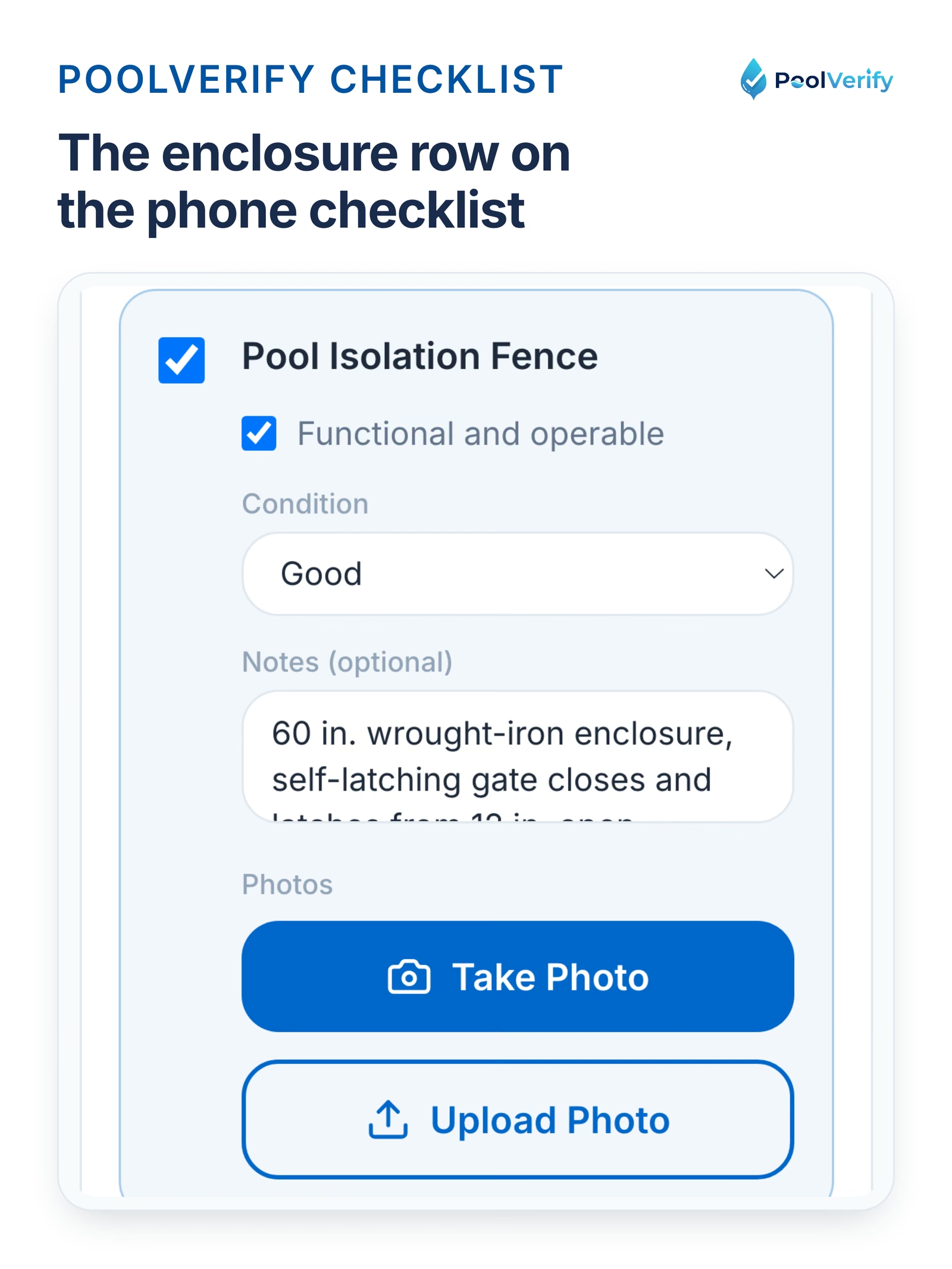
The HSC §115922 enclosure row in PoolVerify records present, operable, condition, notes and photos on the phone.
Height verification
Measure barrier height from exterior ground level (away from pool)
Verify 60-inch minimum along entire perimeter
Check for low spots where settling may have reduced effective height
Confirm decorative elements don't compromise structural height
Spacing verification
Test openings with 4-inch sphere (ball or measuring device)
Verify sphere cannot pass through anywhere in barrier
Check ground clearance with 2-inch gauge
Measure horizontal rail spacing if present (minimum 45 inches on exterior)
Gate mechanism verification
Test self-closing from multiple positions (45°, 90°, fully open)
Verify gate closes completely without assistance
Test self-latching mechanism engages automatically
Confirm latch holds gate securely closed
Gate direction and latch height
Verify gate opens away from pool (outward)
Measure latch height from pool-side ground
Confirm latch at 60+ inches above the ground
Test that latch cannot be easily reached by young child
Materials and structural condition
Verify acceptable barrier material (wood, vinyl, metal, chain-link, glass, masonry)
Check for structural damage (broken slats, rust, cracks)
Confirm barrier is securely anchored and cannot be easily displaced
Verify no deterioration compromising spacing or height requirements
Climbable obstacles
Check for furniture, equipment, or objects within 3 feet of barrier exterior
Identify tree branches or vegetation providing climbing assistance
Note any decorative elements that facilitate climbing
Verify no horizontal elements on exterior side below 45-inch spacing requirement
Access points
Identify all gates and access points
Verify each access point has compliant gate with self-closing/latching mechanisms
If house serves as barrier, verify door alarms or self-closing devices at 54+ inches
Check for unauthorized access points (gaps, holes, or informal entry)
Pool barrier requirements for new construction vs existing pools
California's pool barrier requirements apply differently to new construction versus existing pools built before current regulations.
New pools (permitted after January 1, 2018)
Requirements: Must comply with at least two of the seven drowning prevention safety features listed in HSC §115922, including barrier requirements if chosen as a safety feature.
Enforcement: Building department inspects compliance before issuing final approval.
Inspection timing: Pre-construction permit review, mid-construction inspections, and final inspection before pool use authorization.
Pool remodeling projects
When requirements apply: Any permitted remodeling work that alters pool structure triggers compliance with current safety standards.
Routine maintenance (cleaning, chemical balancing, minor repairs)
Non-structural equipment repair
Landscaping changes not affecting pool structure
Existing pools built before 2018
Requirements: Not required to retroactively install safety features unless:
Property transfer occurs (BPC §7195 inspection identifies deficiencies)
Permitted remodeling work triggers compliance
Local ordinance requires safety upgrades
Property transfer inspections: While not required to upgrade, inspectors must report which safety features are present and whether fewer than two features exist.
Important: Buyers and sellers can negotiate safety upgrades during real estate transactions, even though retrofitting isn't legally mandated.
Local requirements may be stricter
Some California cities mandate pool barrier compliance regardless of construction date:
Los Angeles: May require safety upgrades during property transfers in some cases
San Diego: Follows state law with additional local enforcement
Sacramento: Check local building department for specific requirements
Always verify local requirements with your city or county building department.
Limitations
This guide is general information about pool safety law, not legal advice; the current text of HSC §115922 and BPC §7195 on leginfo.legislature.ca.gov controls, and local building departments add their own requirements. PoolVerify is inspection software for California residential pool safety inspections; it does not perform inspections, certify inspectors, or issue compliance certificates.
Frequently asked questions
What is the minimum height for a pool fence in California?
The minimum height for a pool fence in California is 60 inches (5 feet), measured from the ground level on the side away from the pool. This requirement applies to all barrier types including fences, walls, and enclosures that isolate the pool from the home and yard. Local building codes may require taller barriers, so verify requirements with your city or county.
How far apart can pool fence slats be in California?
Pool fence slats in California can be no more than 4 inches apart. This spacing requirement is tested using the "4-inch sphere test", if a 4-inch diameter ball can pass through any opening in the fence, it does not meet California requirements. This spacing prevents children from squeezing through or getting trapped between fence elements.
Do I need a fence around my pool in California?
California requires new pools (permitted after January 1, 2018) to have at least two of seven drowning prevention safety features, which can include a barrier fence. Existing pools built before 2018 are not required to add fencing retroactively unless remodeling work triggers permit requirements. During property transfers, inspections must identify which safety features are present and report if fewer than two exist.
How much does it cost to install a California-compliant pool fence?
California-compliant pool fence costs vary by material and perimeter length:
Mesh fencing: $1,500-$3,000 for typical residential pool
Costs include compliant self-closing, self-latching gates. Installation complexity, property terrain, and local labor rates affect final pricing.
Can I use my house wall as part of the pool barrier?
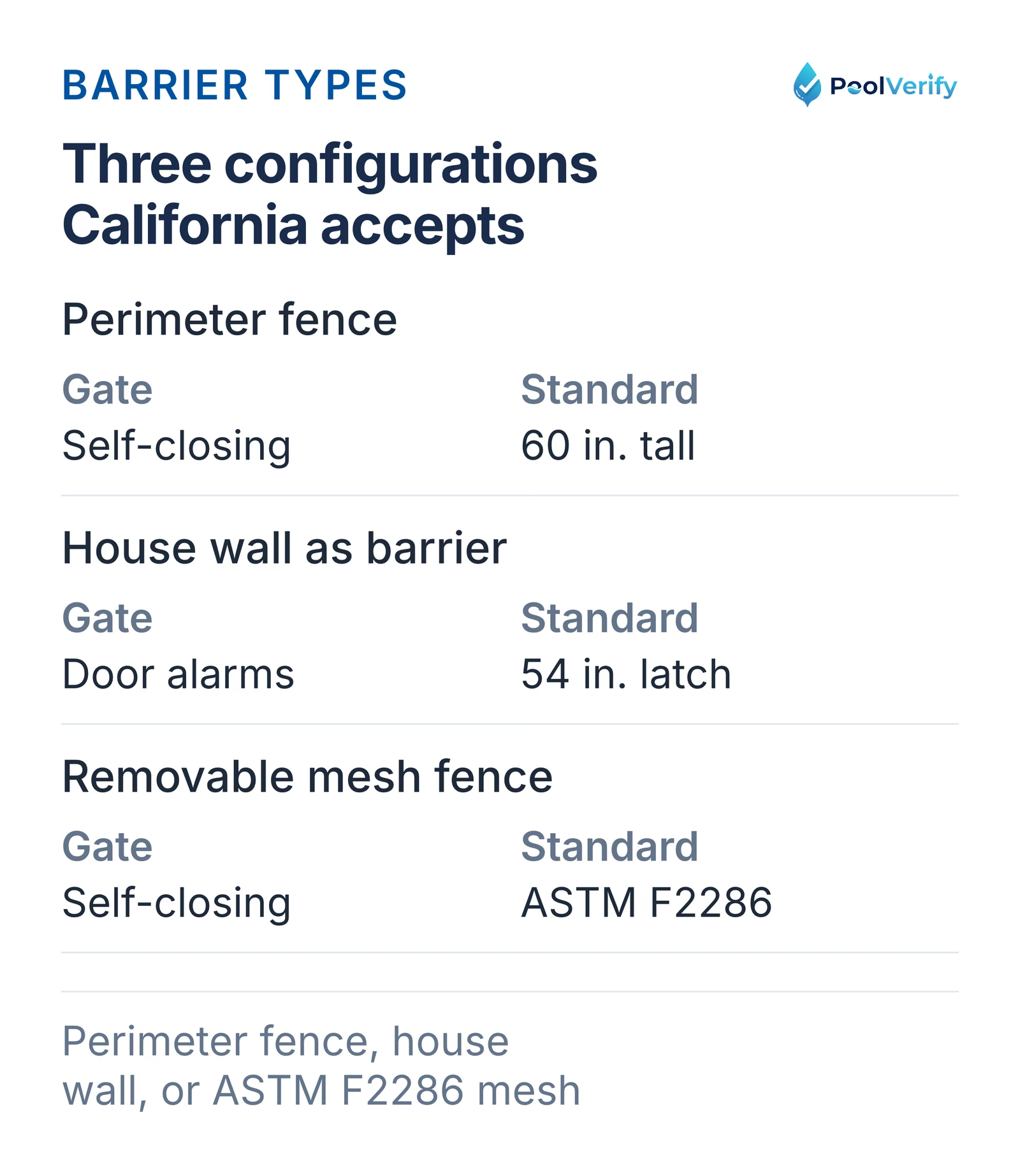
Yes, California allows the house wall to serve as part of the pool barrier perimeter. However, all doors from the house to the pool area must be equipped with either (1) exit alarms or (2) self-closing, self-latching devices with release mechanisms positioned at least 54 inches above the floor. Windows must not provide pool access. The remaining perimeter requires compliant fencing with self-closing, self-latching gates.
What happens if my pool fence doesn't meet California requirements?
If your pool fence doesn't meet California requirements during a BPC §7195 inspection (property transfer), the inspector will identify specific deficiencies in the inspection report. While existing pools aren't legally required to retrofit barriers (unless remodeling), buyers often request repairs as a condition of sale. For new pools or remodeling projects, building inspectors will not issue final approval until barriers meet code requirements.
How often should I inspect my pool barrier?
Pool owners should inspect barriers monthly for:
Gate self-closing and self-latching function
Structural damage (broken slats, rust, cracks)
Ground clearance changes from erosion or settling
Vegetation or objects creating climbing hazards
Latch alignment and function
Professional BPC §7195 inspections are required during property transfers and recommended every 3-5 years to verify ongoing compliance.
Can I install a pool gate that opens inward?
California requires pool gates to open away from the pool area (outward) to prevent accidental entry by children leaning on partially latched gates. Inward-opening gates generally do not meet requirements unless they serve as emergency exits with alternative safety specifications approved by the building department.
Ready to ensure your pool barrier compliance?
California pool barrier requirements protect children while ensuring legal compliance for homeowners, inspectors, and pool professionals. Proper barriers reduce drowning risk by up to 80% when correctly installed and maintained.
Key takeaways:
Minimum 60-inch height measured from exterior ground level
Maximum 4-inch openings (sphere test)
Self-closing, self-latching gates opening away from pool
Whether you're installing a new pool, buying a home with an existing pool, or conducting BPC §7195 inspections, understanding these requirements ensures child safety and legal compliance.
Conduct California-compliant pool barrier inspections in minutes PoolVerify includes built-in BPC §7195 and HSC §115922 checklists with all required barrier specifications. Complete inspections on any device and generate instant PDF reports. Start Your Free Trial
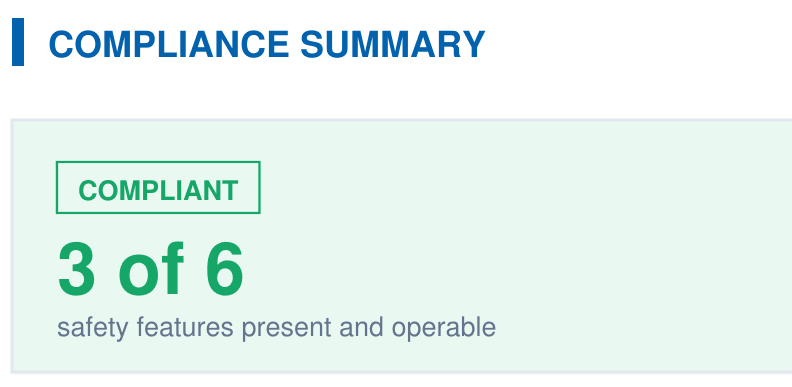
A branded PDF with the compliance summary, the feature table, each finding with its photos, and the signature, generated on‑site when the BPC §7195 and HSC §115922 checklist is complete.