California pool alarm requirements explained. Learn ASTM F2208 standards, alarm types, installation, costs, and how to choose the right pool alarm for HSC 115922 compliance.
Your pool passes the barrier inspection, 60-inch fence, self-closing gate, proper latch height. Then the inspector asks: "What's your second safety feature?" Under California's updated HSC 115922, new and remodeled pools need two drowning prevention features, not just one. A pool alarm is often the most practical second layer of protection.
This guide covers everything you need to know about California pool alarm requirements: what the law actually requires, the different alarm types available, which models meet ASTM F2208 certification, costs, installation, and how inspectors verify compliance.
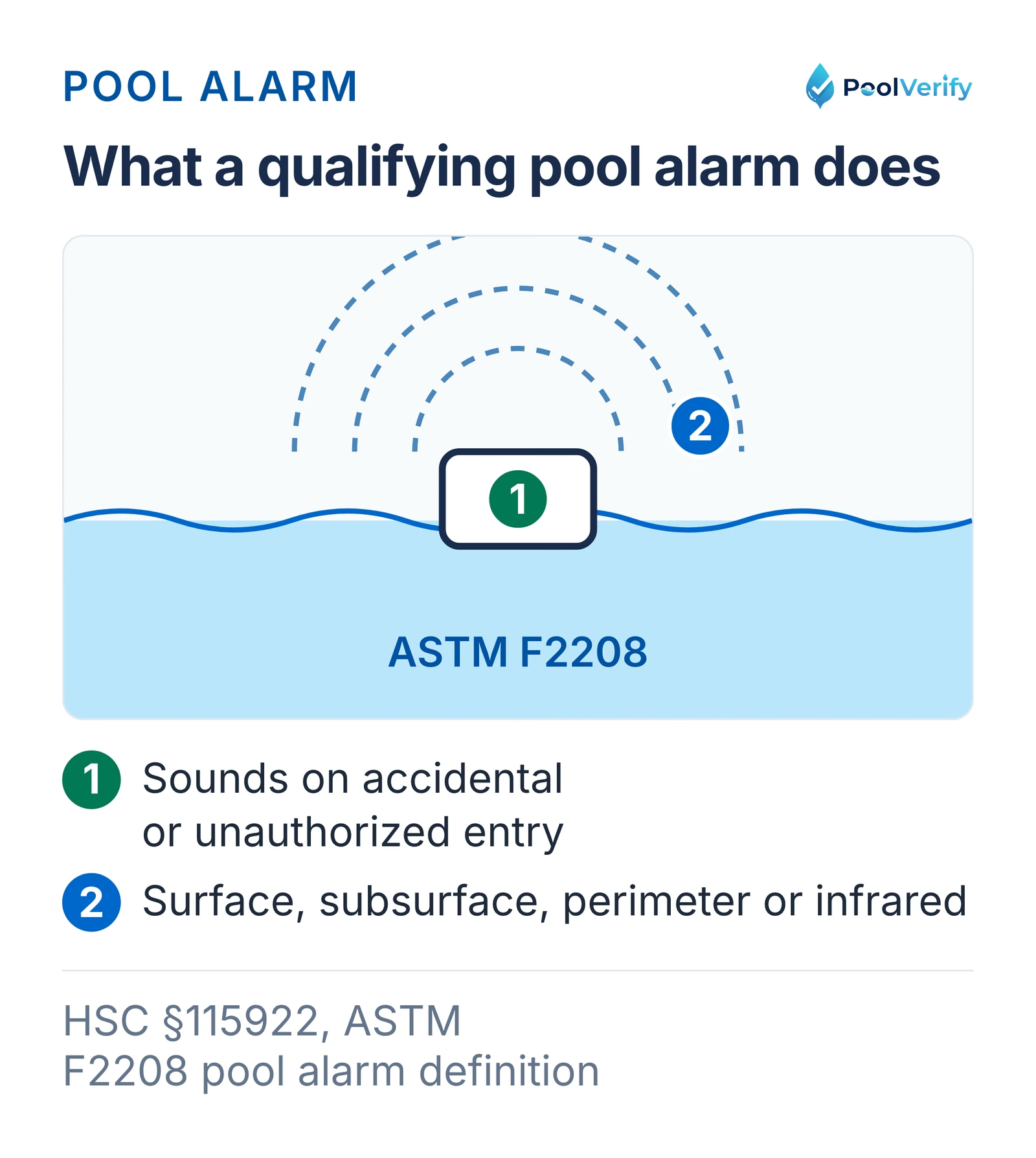
A pool alarm in the water sounds on accidental or unauthorized entry and must be independently certified to ASTM F2208.
California Pool Alarm Law: HSC 115922 Explained
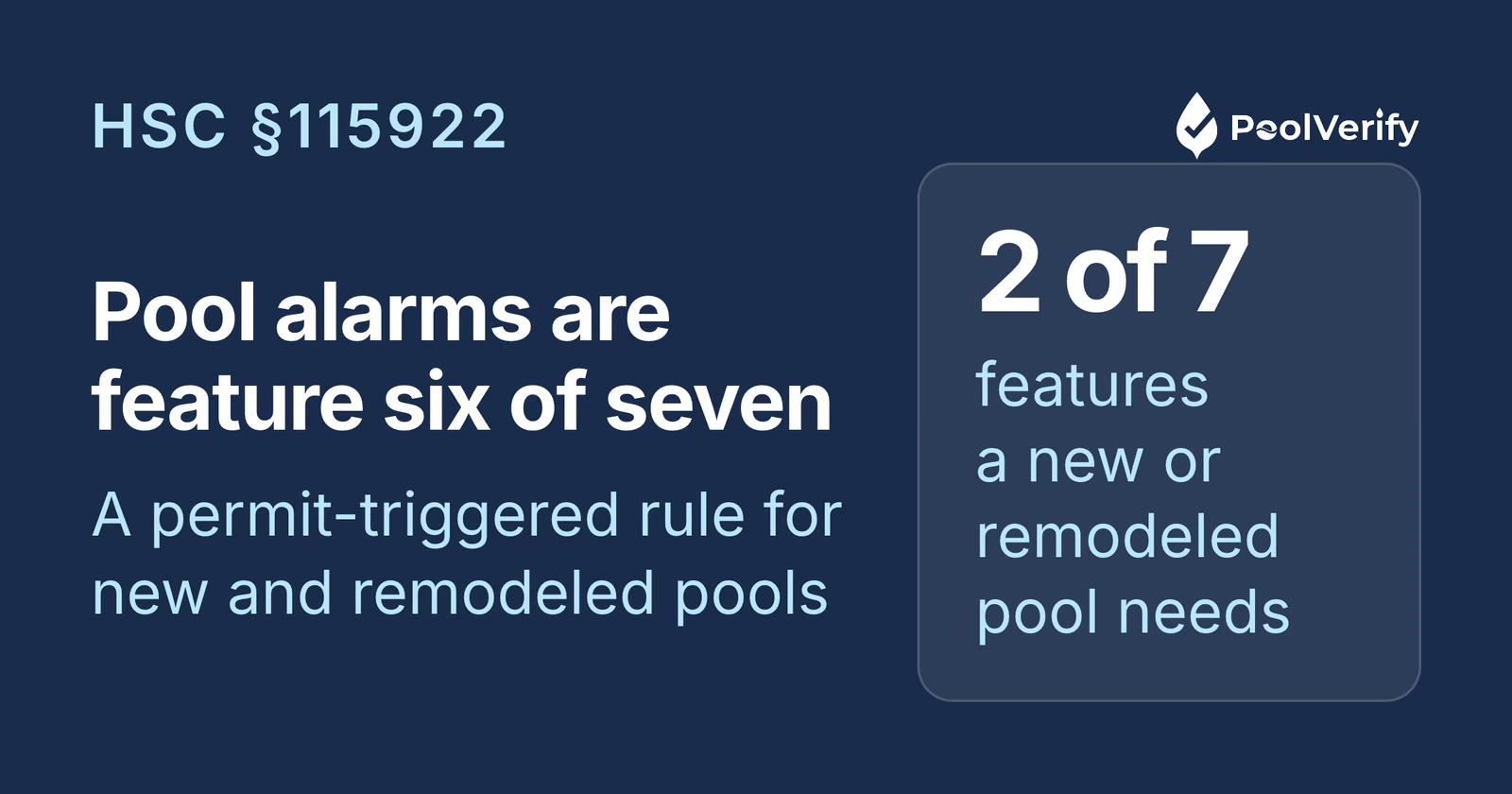
California Health and Safety Code Section 115922 establishes seven approved drowning prevention safety features for residential swimming pools and spas. Pool alarms are Feature #6 on this list.
The Seven Drowning Prevention Features
Under HSC 115922, California pools must have at least two of these safety features (increased from one after SB 442):
Pool enclosure meeting Section 115923 requirements (60-inch minimum fence)
"An alarm that, when placed in a swimming pool or spa, will sound upon detection of accidental or unauthorized entrance into the water. The alarm shall meet and be independently certified to the ASTM International Standard F2208, entitled 'Standard Safety Specification for Residential Pool Alarms,' which includes surface wave detection alarms, subsurface detection alarms, pool perimeter alarms, and infrared detection alarms."
Important: What Does NOT Qualify
California law specifically excludes wearable alarms:
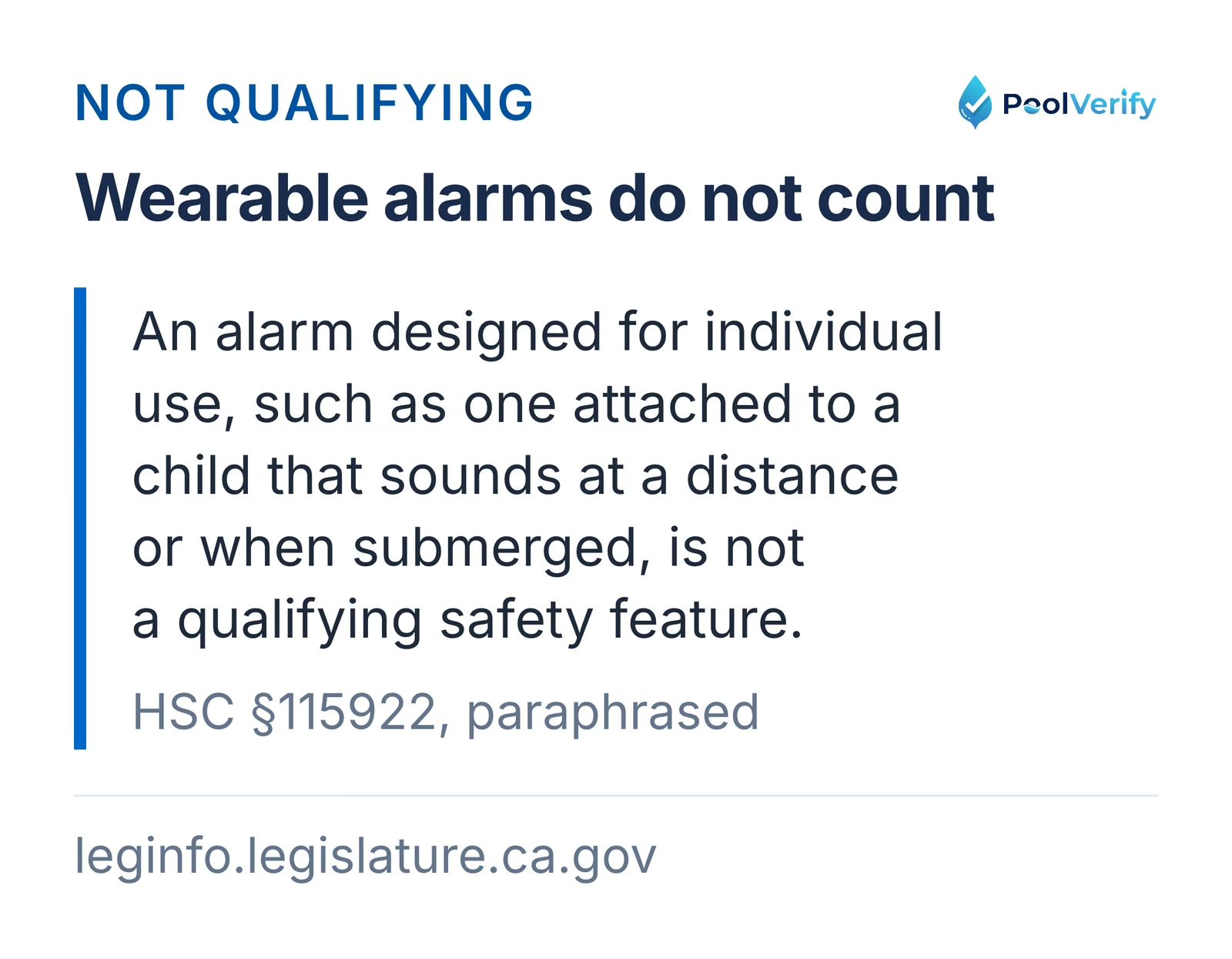
"A swimming protection alarm feature designed for individual use, including an alarm attached to a child that sounds when the child exceeds a certain distance or becomes submerged in water, is not a qualifying drowning prevention safety feature."
This means wristband alarms, clip-on sensors, and similar personal devices cannot be used for HSC 115922 compliance, even if they're ASTM certified.
HSC §115922 excludes alarms made for individual use, such as a wristband on a child, from the qualifying safety features.
ASTM F2208: The Certification Standard
ASTM F2208 is the gold standard for residential pool alarms in the United States. California requires pool alarms to be "independently certified" to this specification for legal compliance.
What ASTM F2208 Requires
The standard establishes performance requirements including:
Requirement
Specification
Detection weight
Must detect 15-pound object entering water
Alarm volume
Minimum 50 dB at pool edge
Response time
Alarm must sound within specified timeframes
Remote receiver
Must have in-home alarm audible inside residence
Power backup
Battery backup or low-battery indicator required
False alarm resistance
Must minimize triggers from wind, rain, debris
ASTM F2208 Alarm Types
The standard covers four categories:
Type A (Surface): Floating alarms that detect surface wave disturbances
Type B (Subsurface): Underwater sensors detecting pressure changes
Type C (Perimeter): Infrared or laser beams around pool edge
Type D (Wearable): Personal alarms (NOT valid for California compliance)
How to Verify ASTM F2208 Certification
When purchasing a pool alarm, look for:
ASTM F2208 certification label on packaging or device
Independent testing documentation from certified lab
Manufacturer certification statement in product specifications
Inspector Tip: During California pool inspections, we verify ASTM certification by checking the device label, manufacturer documentation, or product registration. Keep your purchase receipt and certification documents accessible.
Types of Pool Alarms
Not all pool alarms work the same way. Understanding the differences helps you choose the right option for your pool, budget, and compliance needs.
Surface Wave Detection Alarms
How they work: Float on the pool surface and detect ripples, waves, or water displacement when someone enters the pool.
Pros:
Easy installation (just place in water)
Portable between pools
Works with any pool type (in-ground, above-ground, inflatable)
Most affordable option ($50-$150)
Cons:
More prone to false alarms from wind, rain, or pool equipment
May not detect slow, gradual entry
Can be removed by children
Single unit may not cover large pools
Best for: Smaller pools, budget-conscious homeowners, temporary installations
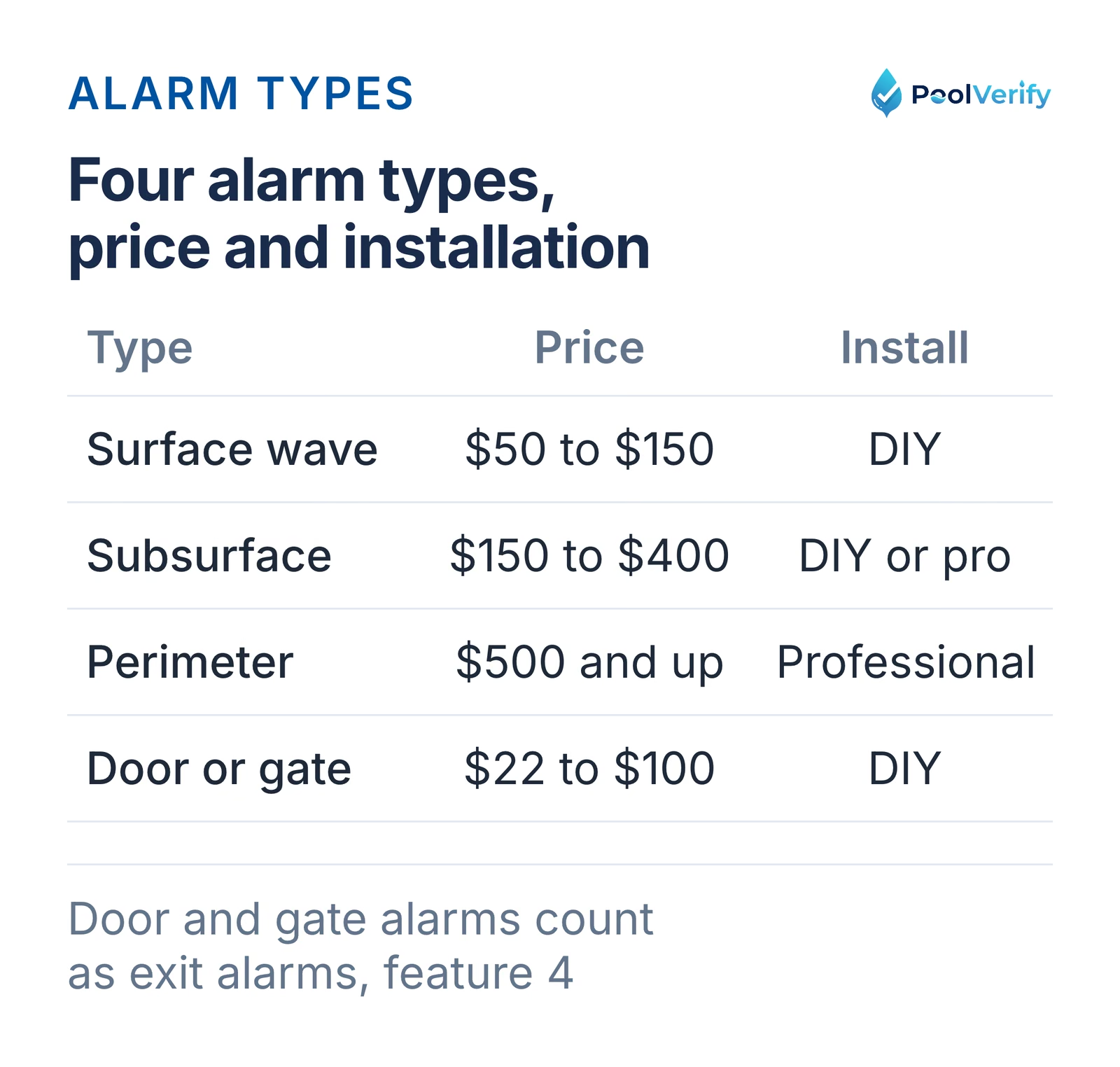
Pool alarm prices: surface wave $50 to $150, subsurface $150 to $400, perimeter $500 and up, door or gate $22 to $100.
Subsurface Detection Alarms
How they work: Mount below the waterline and use sonar or pressure sensors to detect underwater disturbances and movement patterns.
Best for: Permanent pool installations, larger pools, homeowners prioritizing reliability
Perimeter/Infrared Alarms
How they work: Create an invisible barrier around the pool using infrared beams or laser technology. Alarm sounds when the beam is broken.
Pros:
Alerts before entry (not after)
No contact with pool water
Works regardless of pool activity
Can cover entire pool perimeter
Cons:
Most expensive option ($500-$2,000+)
Requires professional installation
Can trigger from animals, debris, or guests
Needs clear line of sight around pool
Best for: High-security needs, pools with frequent use, commercial applications
Door and Gate Alarms
How they work: Mount on doors, windows, or gates leading to the pool area. Alarm sounds when opened.
Pros:
Most affordable ($22-$100)
Alerts before pool access
Easy DIY installation
Works with any pool type
Cons:
Only monitors access points, not the pool itself
Can be disabled or bypassed
Multiple units needed for full coverage
Qualifies as "exit alarm" (Feature #4), not "pool alarm" (Feature #6)
Best for: Supplementing other safety features, indoor pool access points
Compliance Note: Door and gate alarms are classified as "exit alarms" under HSC 115922 Feature #4, not "pool alarms" under Feature #6. If you need a pool alarm specifically, choose a surface, subsurface, or perimeter model.
Best Pool Alarms for California Compliance
Based on ASTM F2208 certification, testing performance, and user reviews, here are the top pool alarms for California homeowners:
ASTM F2208 Certified Models
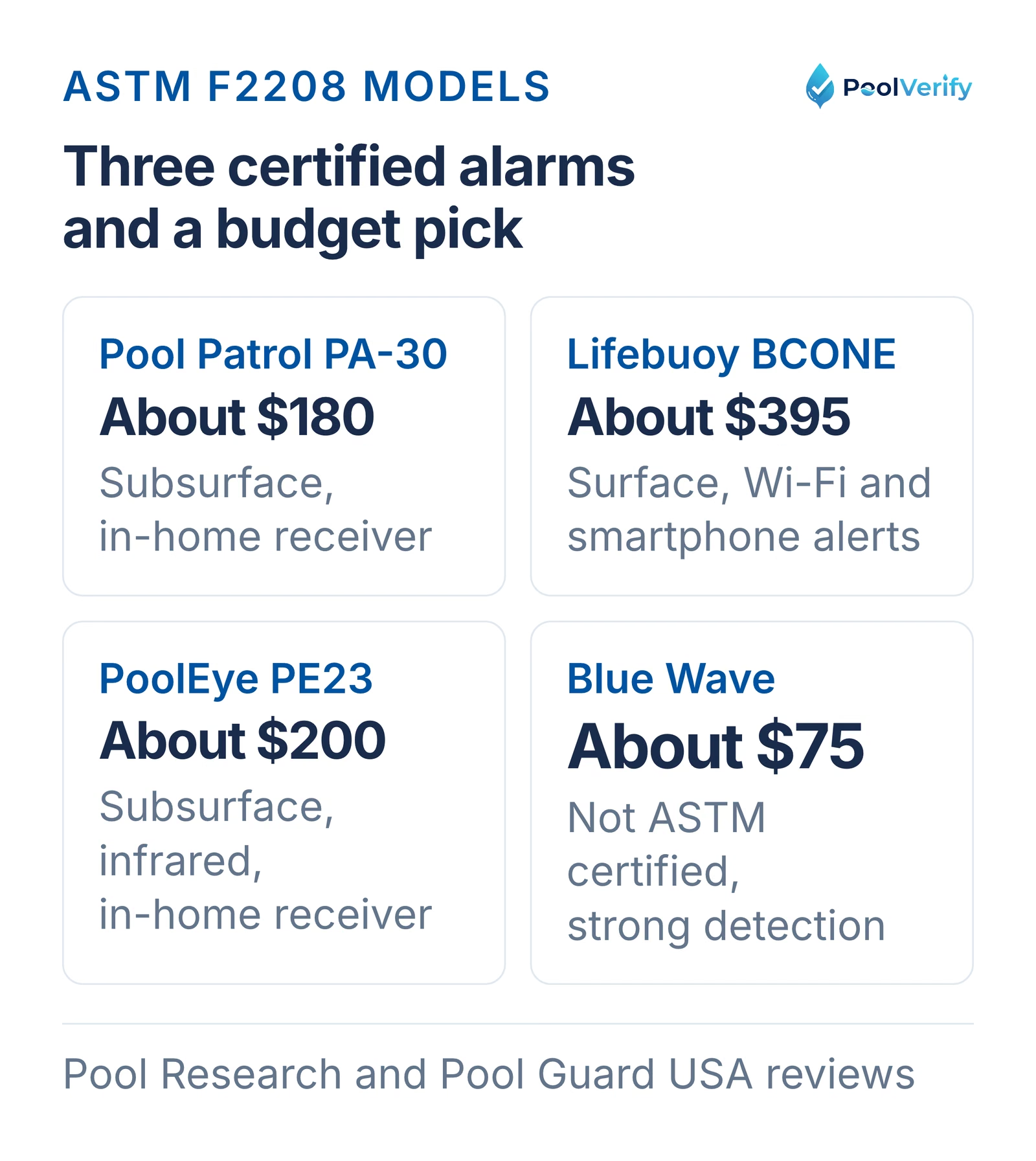
Only three pool alarms currently carry full ASTM F2208 certification:
Three ASTM F2208 certified alarms, Pool Patrol PA-30, Lifebuoy BCONE and PoolEye PE23, and the uncertified Blue Wave.
Ready to document pool alarm compliance during inspections? PoolVerify includes built-in HSC 115922 checklists with the drowning prevention safety features, including pool alarm verification. Start Your Free Trial
Pool Alarm Costs and Installation
Pool Alarm Pricing by Type
Alarm Type
Price Range
Installation
Door/Gate Alarms
$22-$100
DIY
Surface Wave Alarms
$50-$150
DIY
Subsurface Alarms
$150-$400
DIY or Professional
Smart/Connected Alarms
$300-$500
DIY
Perimeter Systems
$500-$2,000+
Professional Required
Installation Costs
Service
Cost Range
DIY Installation
$0
Basic Professional Install
$100-$200
Complex Subsurface Install
$200-$300
Full Perimeter System
$300-$500+
Total Cost Examples
Budget Setup:
Blue Wave Poolwatch: $75
DIY installation: $0
Total: $75
Mid-Range Setup:
Pool Patrol PA-30: $180
Professional installation: $150
Total: $330
Premium Setup:
Lifebuoy BCONE: $395
DIY installation: $0
Total: $395
Installation Tips
For Surface Alarms:
Place alarm in center of pool or away from return jets
Solution: Contact manufacturer for certification letter
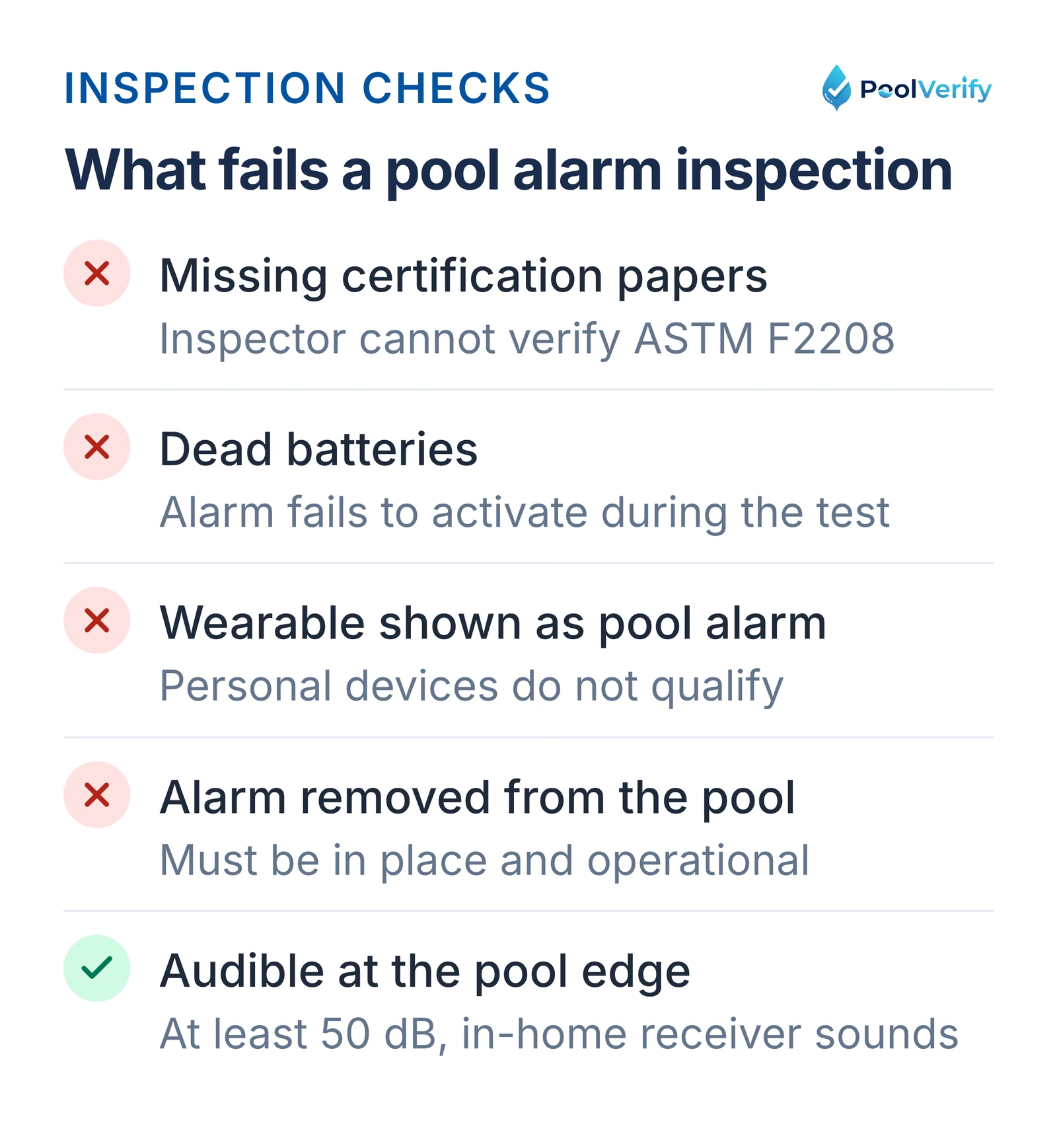
2. Dead batteries/non-functional alarm
Alarm doesn't activate during test
Solution: Replace batteries, test monthly
3. Wearable alarm presented as pool alarm
Personal devices don't qualify
Solution: Install qualifying pool-mounted alarm
4. Alarm removed from pool
Must be in place and operational
Solution: Keep alarm installed year-round
Pool alarm inspection failures: missing ASTM F2208 papers, dead batteries, a wearable offered as the alarm, alarm removed.
Common Pool Alarm Mistakes
Mistake #1: Buying Non-Certified Alarms
Many pool alarms sold online don't carry ASTM F2208 certification. These may work fine but won't satisfy California compliance requirements.
Solution: Verify ASTM F2208 certification before purchase. Stick to certified models like Pool Patrol PA-30, Lifebuoy BCONE, or PoolEye PE23.
Mistake #2: Using Wearable Alarms for Compliance
Wristband and clip-on alarms are explicitly excluded from HSC 115922. They're great supplemental safety devices but cannot count as your required pool alarm.
Solution: Use wearable alarms in addition to (not instead of) a qualifying pool alarm.
Mistake #3: Removing Alarm During Winter
Some homeowners remove pool alarms when the pool isn't in use. If an inspector visits, the alarm must be present and functional.
Solution: Keep the alarm installed year-round or ensure it's reinstalled before any inspection.
Mistake #4: Ignoring False Alarms by Disabling Sensitivity
Frequent false alarms lead some homeowners to reduce sensitivity to minimum levels, which can prevent detection of actual entries.
Solution: Adjust sensitivity properly, address root causes of false alarms (pool equipment, wind exposure), or upgrade to a subsurface alarm with better false alarm resistance.
Mistake #5: Not Testing Monthly
Pool alarms require regular testing to ensure batteries and sensors function correctly. Dead batteries are a common inspection failure.
Solution: Test your alarm monthly using the built-in test button. Log each test date.
Pool Alarm vs Other Safety Features
How does a pool alarm compare to other HSC 115922 safety features? Here's a practical comparison:
Feature Comparison
Feature
Initial Cost
Maintenance
Reliability
Before/After Entry
Pool Barrier (fence)
$2,000-$8,000
Low
High
Before
Self-closing Gate
$100-$500
Medium
High
Before
Pool Cover
$500-$3,000
Medium
High
Before
Exit Alarms
$50-$200
Low
Medium
Before
Pool Alarm
$75-$500
Low
Medium-High
After
Pool Safety Cover
$1,500-$5,000
Low
Very High
Before
When to Choose a Pool Alarm
A pool alarm makes sense as your second safety feature when:
Yes You already have a compliant barrier/fence (most common scenario)
Yes Budget is a concern (more affordable than pool covers)
Yes You want electronic monitoring in addition to physical barriers
Yes Your pool layout makes other features impractical
Yes You prefer minimal maintenance requirements
When to Consider Alternatives
A pool alarm might not be the best choice if:
No Your pool is frequently used (constant false alarms)
No You have automatic pool cleaners running daily
No Pool is in a very windy location (surface alarms)
No You prefer prevention before entry (consider pool cover)
Not sure which safety features to recommend?PoolVerify's inspection platform helps inspectors document the HSC 115922 safety features and identify compliance gaps.
Maintaining Your Pool Alarm
Monthly Maintenance Checklist
Test alarm using built-in test button
Verify in-home receiver activates
Check battery indicator (if applicable)
Inspect for physical damage
Clean sensor (subsurface models)
Log test date for records
Seasonal Considerations
Spring:
Test alarm before pool season begins
Replace batteries if indicator shows low
Recalibrate sensitivity if needed
Summer:
Test weekly during heavy use periods
Temporarily disable during pool parties (remember to re-enable!)
Monitor for false alarms from pool toys
Fall:
Test before closing pool for winter
Decide whether to leave installed or store
Clean and inspect sensors
Winter:
If leaving installed, ensure freeze protection
If storing, keep in dry location
Note reinstallation date for spring
Battery Replacement
Most pool alarms require battery replacement every 1-2 years. Replace immediately when:
Low battery indicator activates
Alarm fails to sound during test
Response time seems delayed
Limitations
This guide is general information about pool safety law, not legal advice; the current text of HSC §115922 and BPC §7195 on leginfo.legislature.ca.gov controls, and local building departments add their own requirements. PoolVerify is inspection software for California residential pool safety inspections; it does not perform inspections, certify inspectors, or issue compliance certificates.
Frequently Asked Questions
Are pool alarms required in California?
Pool alarms are one of seven approved drowning prevention safety features under California HSC 115922. New or remodeled pools must have at least two of these seven features. While pool alarms aren't mandatory by themselves, they satisfy one of the compliance requirements when combined with another safety feature.
What is ASTM F2208 certification for pool alarms?
ASTM F2208 is the safety specification for residential pool alarms established by ASTM International. It requires devices to detect a 15-pound weight entering the water within specific timeframes. California law requires pool alarms to meet this standard for HSC 115922 compliance.
How much does a pool alarm cost in California?
Pool alarm prices range from $22 for basic door/gate alarms to $500+ for advanced perimeter systems. Surface wave alarms cost $50-$150, subsurface alarms $150-$400, and smart-enabled alarms like the Lifebuoy BCONE cost around $395. Professional installation adds $100-$300.
What type of pool alarm is best for California compliance?
Subsurface pool alarms are generally considered more reliable and less prone to false alarms according to CPSC testing. For California HSC 115922 compliance, any ASTM F2208-certified alarm qualifies. Top certified options include Pool Patrol PA-30, Lifebuoy BCONE, and PoolEye PE23.
Do wearable pool alarms count for California compliance?
No. California HSC 115922 specifically states that "a swimming protection alarm feature designed for individual use, including an alarm attached to a child that sounds when the child exceeds a certain distance or becomes submerged in water, is not a qualifying drowning prevention safety feature."
How often should pool alarms be tested?
Pool alarms should be tested monthly to ensure proper function. Most models include a test button for this purpose. During pool inspections, inspectors verify that the alarm activates within the required timeframe and produces an audible signal of at least 50 decibels at the pool edge.
Key Takeaways
YesPool alarms are Feature #6 under California HSC 115922's seven drowning prevention safety features
YesASTM F2208 certification is required for California compliance, verify before purchasing
YesThree certified models currently available: Pool Patrol PA-30, Lifebuoy BCONE, PoolEye PE23
YesSubsurface alarms are most reliable according to CPSC testing, with fewer false alarms
YesWearable alarms don't qualify: California specifically excludes personal alarm devices
YesTest monthly to ensure proper function and avoid inspection failures
YesKeep documentation including receipt, certification, and installation instructions
Streamline Your Pool Safety Inspections
Verifying pool alarm compliance is just one part of a complete California pool safety inspection. PoolVerify helps inspectors document the HSC 115922 drowning prevention features efficiently.
Why California pool inspectors choose PoolVerify:
Yes Built-in HSC 115922 compliance checklists
Yes Photo documentation with timestamps
Yes Instant PDF reports with digital signatures
Yes Works on any device, tablet, phone, or computer
Yes 14-day free trial with the full limits of the plan you choose
A branded PDF with the compliance summary, the feature table, each finding with its photos, and the signature, generated on‑site when the BPC §7195 and HSC §115922 checklist is complete.