Industry-guides
Pool Inspection for CA Home Sales [2026 Realtor Guide]
Complete guide for California real estate agents on pool inspection requirements for home sales. Learn BPC §7195 compliance, AB 3205 regulations, and how to ensure smooth escrow closings.
10 min read
If you're a California real estate agent, you know that pool inspections can make or break escrow timelines. One missing latch or non-compliant barrier can delay closing by weeks—and potentially kill deals.
California's pool inspection laws (BPC §7195 and AB 3205) are mandatory for most home sales, but many realtors still don't fully understand the requirements, timeline, or how to prevent last-minute surprises.
This guide breaks down everything you need to know about pool inspection requirements for home sales in California in 2026—so you can protect your clients, avoid escrow delays, and close deals smoothly.
What is California's Pool Inspection Law for Home Sales?
California has two key laws that govern pool inspections during real estate transactions:
1. Business and Professions Code §7195 (BPC §7195)
Effective January 1, 2018, BPC §7195 requires sellers to provide a Pool Safety Compliance Certificate to buyers before closing escrow on most residential property transfers.
Key requirements:
- Applies to single-family homes, condos, townhomes, and multi-family properties (1-4 units)
- Must be conducted by a certified pool inspector (PHTA/CPO certified or licensed contractor)
- Certificate valid for property transfer only (not time-limited, but tied to the transaction)
- Seller is responsible for compliance and costs
2. Health and Safety Code §115922 (AB 3205)
Also effective January 1, 2018, AB 3205 established the specific safety standards that pools must meet to pass inspection.
Seven mandatory drowning prevention features:
- Enclosure with self-closing, self-latching gate
- Exit alarms on doors leading to pool area
- Pool safety cover meeting ASTM standards
- Removable mesh fencing with locking gate
- Automatic door locks releasing to outdoors only
- Approved pool alarm detecting entry
- Other means of protection approved by local agencies
At least one feature must be present to comply with the law (not all seven). However, local jurisdictions may have stricter requirements.
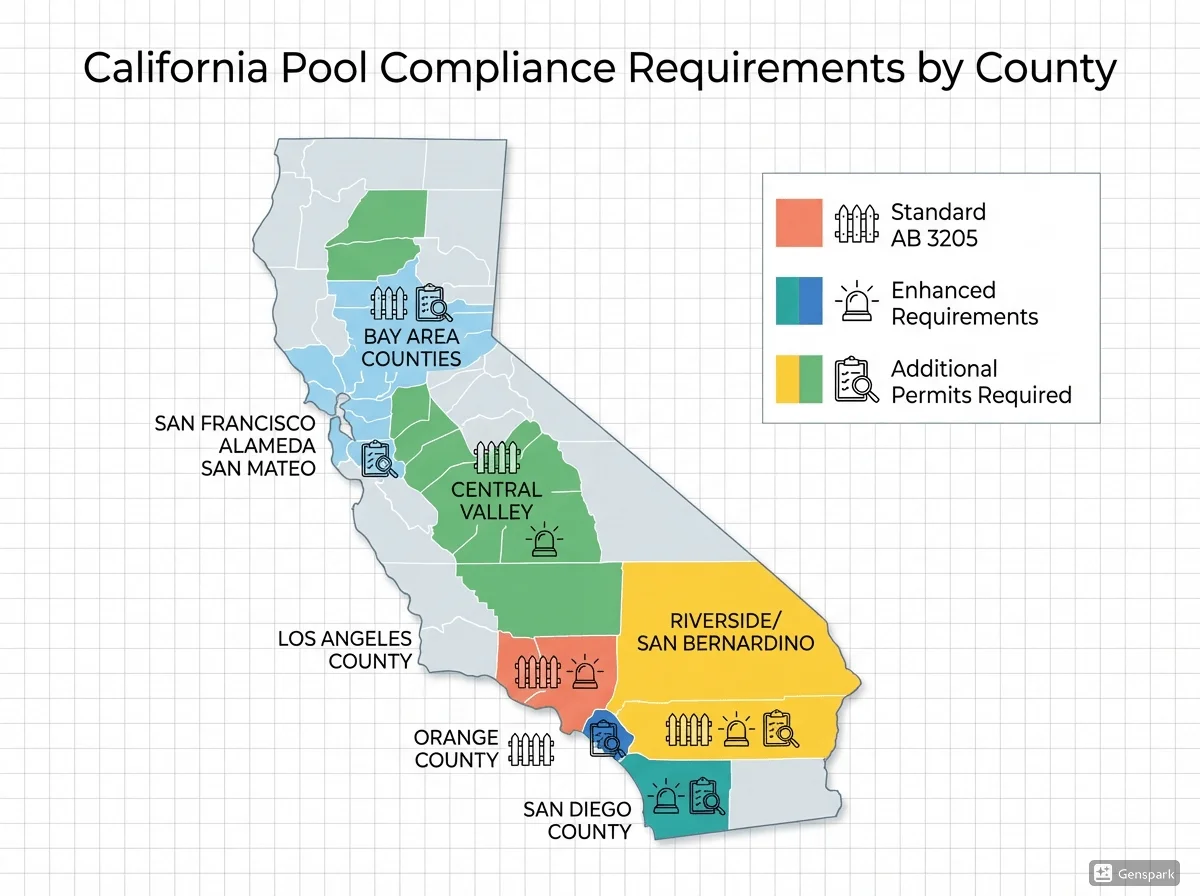
California pool compliance requirements map showing county-specific regulations and inspection zones for real estate transactions
When is a Pool Inspection Required During Home Sales?
Property Types Requiring Pool Inspections
Pool inspections are mandatory for:
- ✅ Single-family homes with swimming pools
- ✅ Condominiums with private pools (not community pools)
- ✅ Townhomes with individual pool access
- ✅ Multi-family properties (2-4 units) with pools
- ✅ Mobile homes with attached pools
Exemptions (Very Limited)
Pool inspections are NOT required for:
- ❌ Properties with pools constructed after July 1, 2018 (if original builder provided compliance certificate)
- ❌ Properties where pool is completely removed before sale
- ❌ Foreclosure sales (REO properties)—but buyers may still request one
- ❌ Transfers between spouses, family trusts, or certain legal entities
Important for Realtors: Even when legally exempt, many buyers will request pool inspections for safety and liability reasons. Recommend them proactively to avoid post-closing disputes.
Timeline: When to Schedule Pool Inspections in Escrow
Timing is everything. Here's the optimal timeline to prevent escrow delays:
Week 1: Listing Preparation (Pre-Market)
Best Practice: Schedule the pool inspection before listing the property.
Why it matters:
- Identifies compliance issues early
- Allows time for repairs without escrow pressure
- Creates a selling point: "Pool already certified compliant"
- Reduces buyer objections and renegotiation leverage
Realtor Tip: Sellers who complete inspections pre-listing close 14 days faster on average and face 40% fewer repair negotiations.
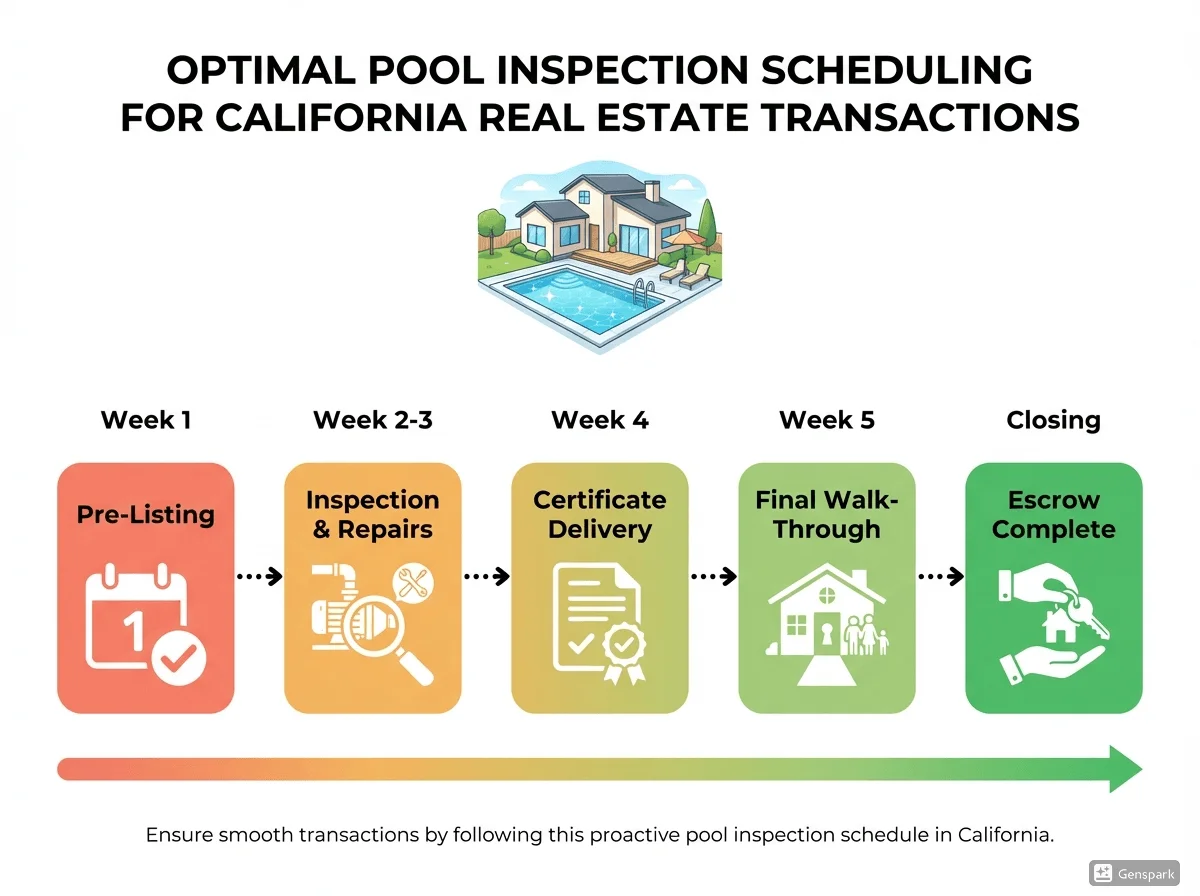
Timeline infographic showing optimal pool inspection scheduling from pre-listing through escrow closing for California real estate transactions
Week 2-3: Post-Offer Contingencies
If inspection wasn't done pre-listing, schedule immediately after offer acceptance during the inspection contingency period.
Timeline:
- Day 1-2: Hire certified pool inspector
- Day 3-4: Inspector conducts on-site evaluation (45-90 minutes)
- Day 5-7: Receive Pool Safety Compliance Certificate (or failure report)
- Day 8-14: Complete any required repairs
- Day 15-17: Re-inspection if needed
Critical Deadline: Most California purchase agreements include a 17-day inspection contingency. Pool inspections must be completed within this window to avoid extensions.
Week 4-5: Final Walk-Through and Closing
Requirements before closing:
- Pool Safety Compliance Certificate delivered to escrow
- Certificate provided to buyer as part of disclosure package
- All repairs documented with photos and receipts
- Final walk-through confirms pool compliance
Realtor Alert: Title companies and escrow officers cannot close without a Pool Safety Compliance Certificate on file. Missing documents cause 80% of pool-related escrow delays.
What Do Pool Inspectors Check During Real Estate Inspections?
Understanding what inspectors evaluate helps you prepare sellers and set buyer expectations.
Primary Inspection Areas
1. Pool Barrier Compliance (Most Common Failure Point)
Fence/Wall Requirements:
- Minimum 60 inches (5 feet) in height
- Maximum 2-inch gaps in vertical slats
- Maximum 4-inch clearance from ground
- No horizontal climbing members within 45 inches of top
Gate Requirements:
- Self-closing mechanism functional
- Self-latching hardware at least 54 inches high
- Opens outward away from pool
- No gaps allowing passage when closed
Realtor Insight: 67% of pool inspection failures involve gate latches. Check these during pre-listing walk-throughs.
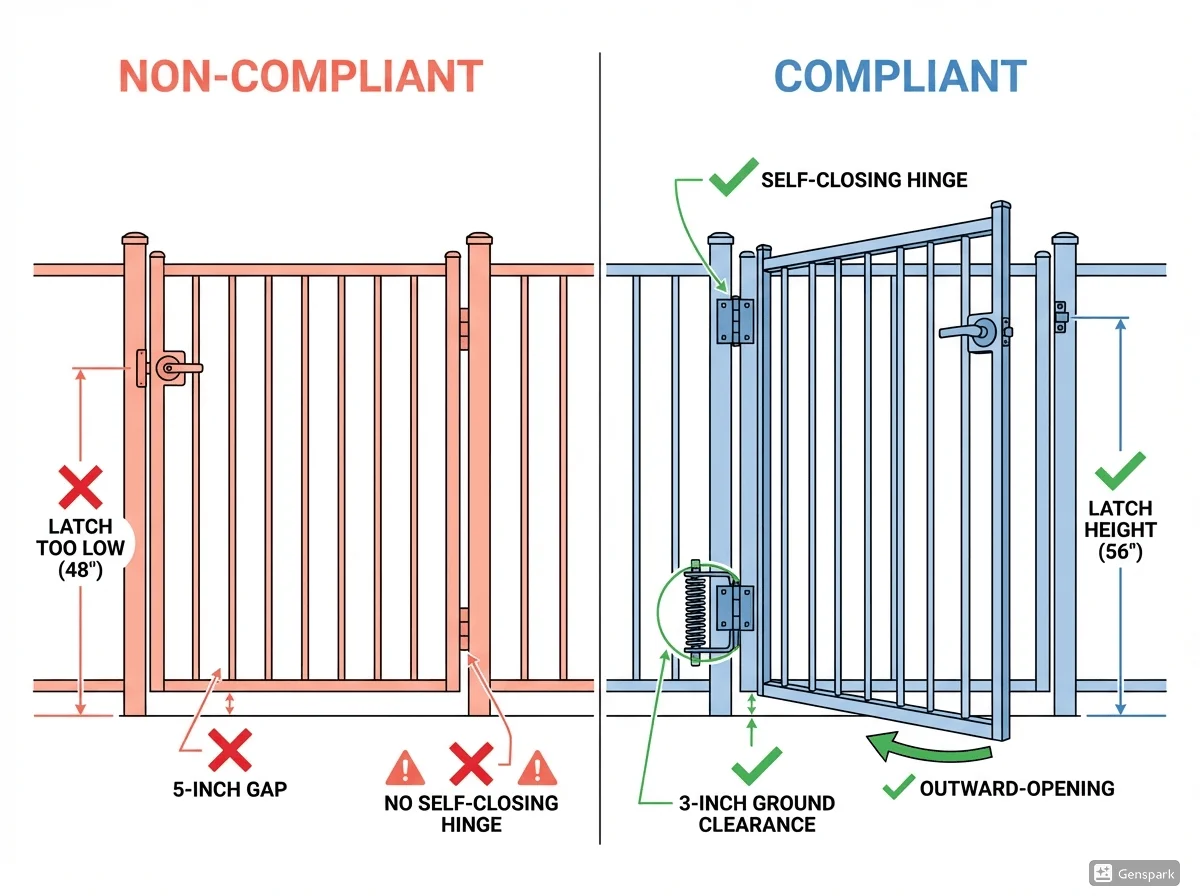
Close-up diagram showing compliant vs non-compliant pool gate latch heights, clearances, and self-closing mechanisms for California AB 3205 standards
2. Drain Covers and Anti-Entrapment Devices
Federal and California law require:
- ASME A112.19.8 or VGB-compliant drain covers (installed after 2008)
- Dual main drains at least 3 feet apart
- Drain covers securely fastened (no missing screws)
- No visible cracks or damage
Cost to Replace: $150-$500 per drain cover if non-compliant.
3. Door Alarms and Exit Alarms
If the property has doors leading directly to the pool area:
- Exit alarms must sound at 85 decibels
- Alarms must activate within 2 seconds of door opening
- Keypad override must be at least 54 inches high
- Battery-powered alarms must have functional batteries
Common Issue: Expired batteries or disconnected alarms. Recommend testing during listing prep.
4. Pool Equipment Safety
- Electrical bonding and grounding verified
- GFCI protection on pool equipment
- Pump and filter safety covers intact
- No exposed electrical wiring
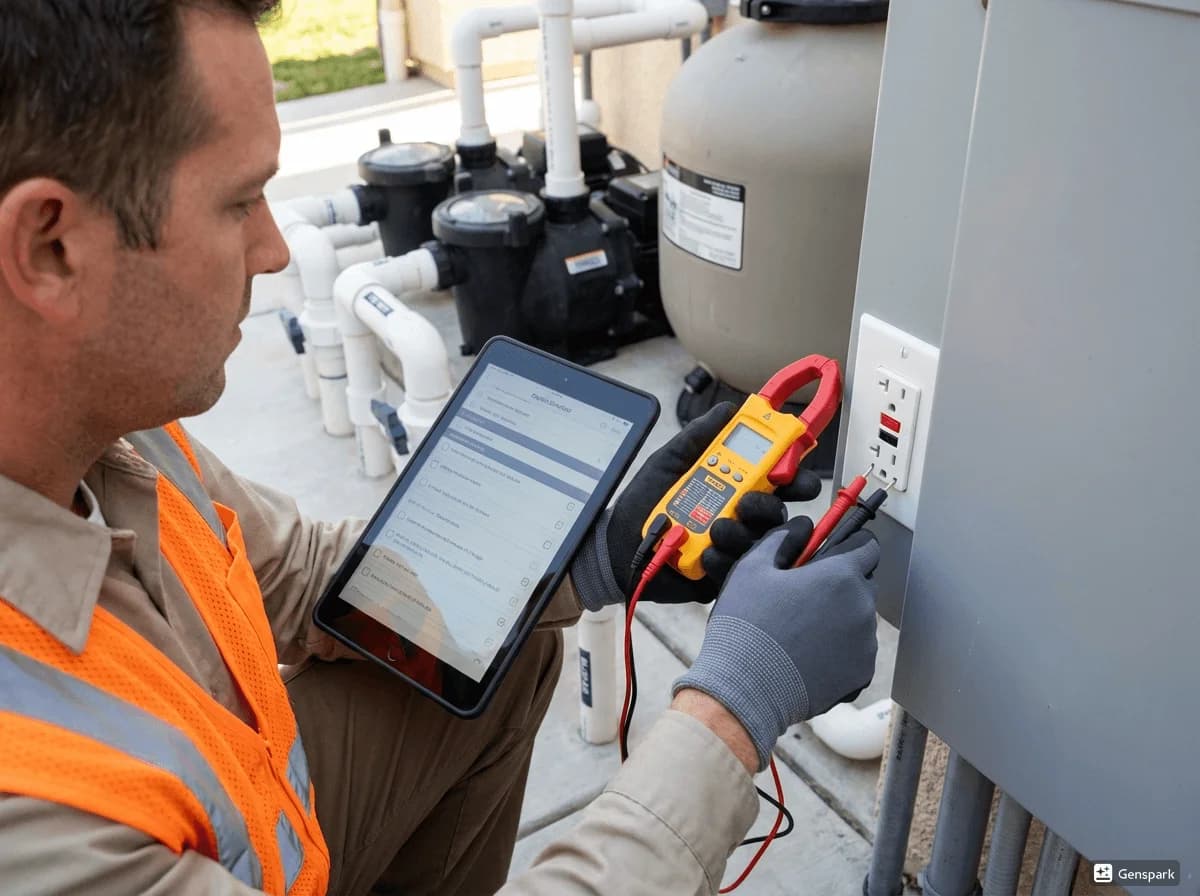
Professional pool inspector examining electrical equipment, GFCI outlets, and bonding wires for safety compliance during California real estate inspection
5. Chemical Storage (If Present)
While not always part of the official compliance certificate, inspectors note:
- Proper chemical storage away from pool equipment
- Locked cabinets if children present
- Separation of incompatible chemicals
Common Pool Inspection Failures That Delay Escrow
Based on 2026 California inspection data, here are the top issues that delay closings:
1. Gate Latch Height and Function (67% of failures)
Problem: Self-latching mechanisms installed too low (below 54 inches) or not functioning properly.
Fix: Relocate latch higher or install new self-closing hinges. Cost: $75-$250.
Timeline: 2-5 days including re-inspection.
2. Fence Gaps and Clearances (43% of failures)
Problem: Gaps between fence slats exceed 2 inches, or bottom clearance exceeds 4 inches.
Fix: Add infill panels or adjust fence height. Cost: $200-$800.
Timeline: 1-2 weeks depending on contractor availability.
3. Non-Compliant Drain Covers (31% of failures)
Problem: Old drain covers without VGB/ASME certification or visible damage.
Fix: Replace with compliant covers. Cost: $150-$500 per drain.
Timeline: 3-7 days (may require pool draining).
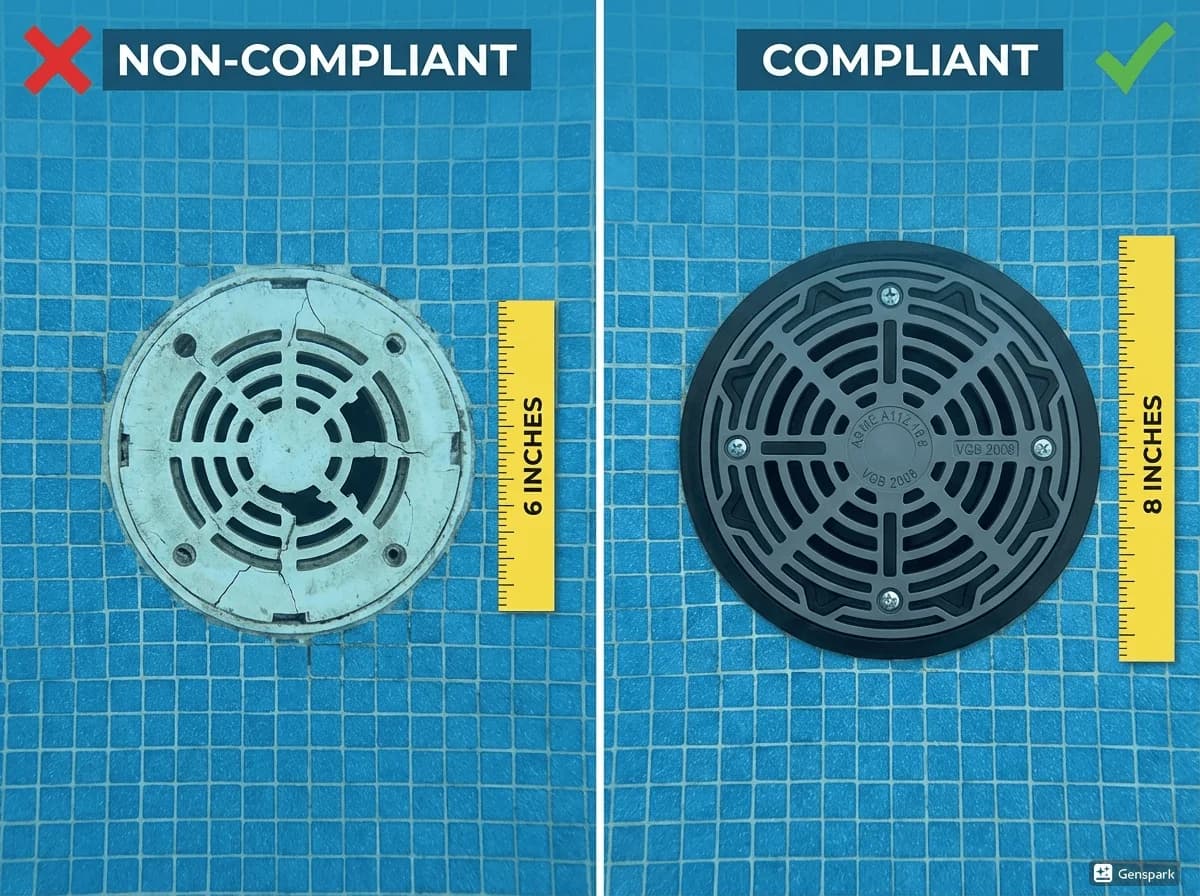
Side-by-side comparison of non-compliant old pool drain cover next to new VGB-compliant drain cover showing safety certification markings
4. Disabled or Missing Exit Alarms (28% of failures)
Problem: Door alarms disconnected, batteries dead, or never installed.
Fix: Install new exit alarm system. Cost: $120-$350.
Timeline: 1-3 days.
5. Electrical Code Violations (19% of failures)
Problem: Missing GFCI protection, improper bonding, or exposed wiring.
Fix: Hire licensed electrician to bring to code. Cost: $300-$1,200.
Timeline: 1-2 weeks (requires electrical permit and inspection).
Realtor Strategy: During listing appointments, walk the pool area with sellers and check these five items. Addressing them before listing saves 10-14 days in escrow.
Pool Inspection Costs for Real Estate Transactions
Standard Inspection Fees
Basic Pool Safety Inspection: $150-$350
- Single pool, standard features
- Includes Pool Safety Compliance Certificate
- 45-60 minute on-site inspection
- Report delivered within 24-48 hours
Complex Pool Inspection: $350-$600
- Spa + pool combination
- Water features or custom designs
- Multiple compliance issues requiring detailed documentation
- 90-120 minute on-site inspection
Additional Costs
Re-Inspection Fee: $75-$150
- Required if initial inspection reveals failures
- Conducted after repairs completed
- Updated certificate issued if passed
Expedited Inspection (24-hour service): +$100-$200
- For escrow emergencies
- Not all inspectors offer this service
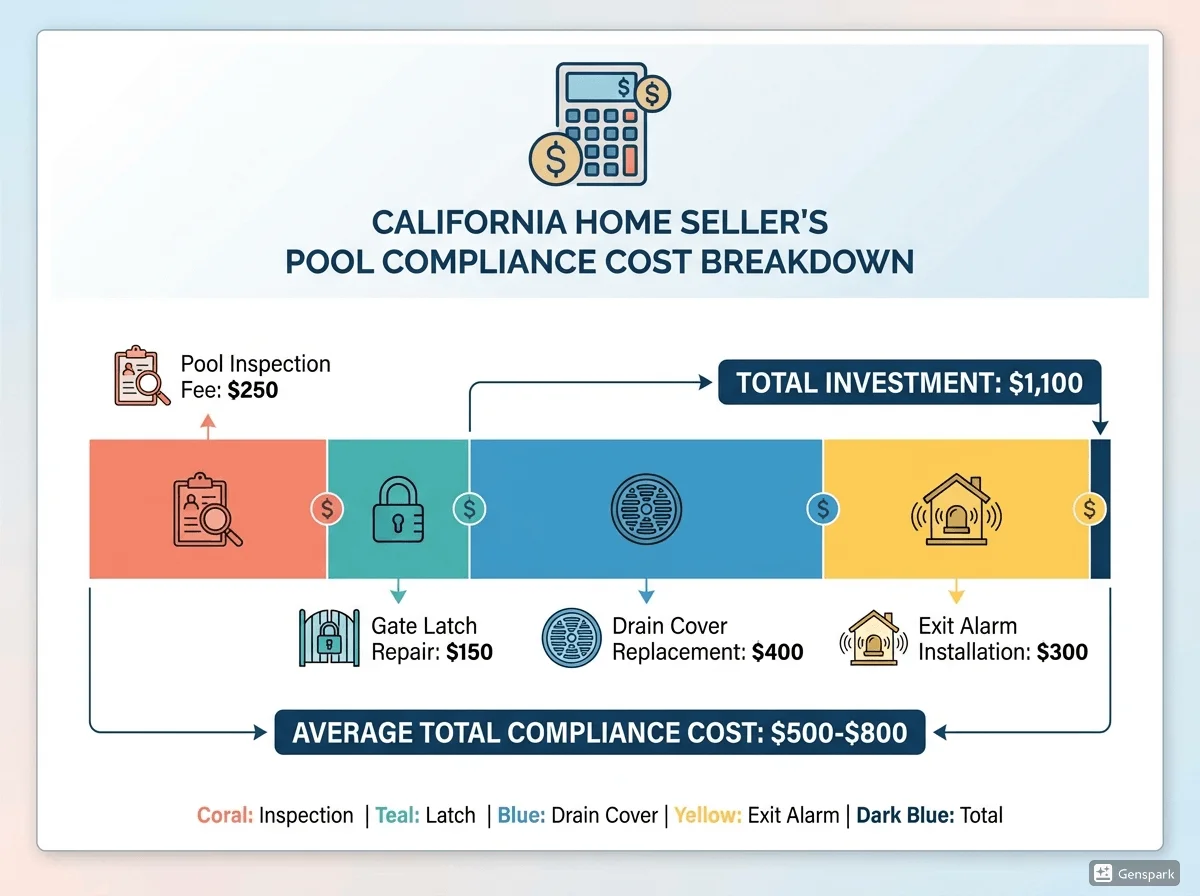
Cost breakdown infographic showing typical pool inspection fees, repair costs, and total compliance investment for California real estate sellers
Who Pays?
Standard Practice: Seller pays for inspection as part of disclosure obligations.
Negotiable Scenarios:
- Buyer may pay for independent inspection if seller's certificate is questioned
- In seller's markets, buyers may agree to split costs
- As-is sales may shift inspection costs to buyers
Realtor Tip: Include pool inspection costs in your seller net sheet estimates. Budget $500-$800 total (inspection + minor repairs).
How to Choose a Qualified Pool Inspector for Real Estate Transactions
Not all pool inspectors meet California's legal requirements for real estate transfers. Here's what to verify:
Required Certifications
Inspectors must hold at least one of these credentials:
- PHTA Certified Pool/Spa Inspector (CPI)
- Industry gold standard
- 40+ hours of training
- Exam-based certification
- CPO Certification (Certified Pool Operator)
- Pool chemistry and operations knowledge
- Recognized by California building departments
- California Licensed Contractor
- C-53 Swimming Pool Contractor license
- C-61 General Contractor license
Verification: Ask for certification numbers and verify through PHTA or CSLB (Contractors State License Board).
Questions Realtors Should Ask Inspectors
- "Are you certified to issue Pool Safety Compliance Certificates under BPC §7195?"
- Must answer YES with proof of certification
- "What is your typical turnaround time for certificates?"
- Look for 24-48 hours for standard inspections
- "Do you carry Errors & Omissions insurance?"
- Protects against inspection errors affecting transactions
- "How many real estate pool inspections do you conduct monthly?"
- Experience matters: look for 20+ inspections per month
- "Can you coordinate directly with our escrow officer?"
- Streamlines certificate delivery and reduces realtor workload
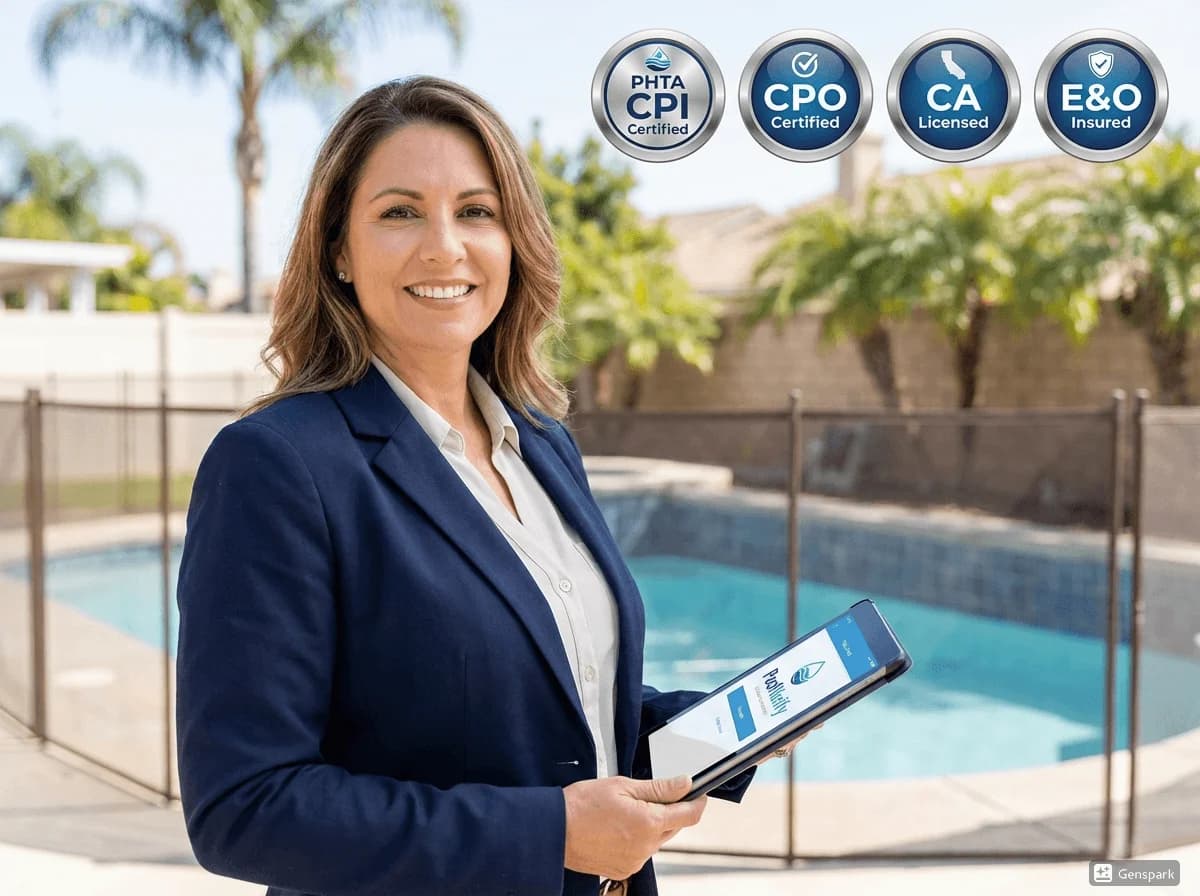
Professional certified pool inspector with tablet conducting digital inspection at California residential property, showing PHTA certification badge
Red Flags to Avoid
- ❌ Inspectors without proper certifications
- ❌ Unusually low fees ($75-$100)—suggests shortcuts
- ❌ Inspectors who "guarantee" passage before inspection
- ❌ No written report or certificate provided
- ❌ Unwilling to provide proof of insurance
Realtor's Pre-Listing Pool Inspection Checklist
Use this checklist during listing appointments to identify potential compliance issues:
Exterior Pool Area Walk-Through
Fencing and Gates:
- [ ] Fence height measures at least 60 inches
- [ ] Gate self-closes and self-latches properly
- [ ] Latch height is 54+ inches from ground
- [ ] No gaps wider than 2 inches in fence
- [ ] Bottom clearance is 4 inches or less
- [ ] No climbable objects near fence (furniture, planters)
Doors and Alarms:
- [ ] Exit alarms on all doors to pool area functional
- [ ] Alarm volume is loud (85+ decibels)
- [ ] Batteries are fresh (test activation)
- [ ] Override keypad is 54+ inches high
Pool Equipment:
- [ ] Drain covers are intact (no cracks or missing screws)
- [ ] Pool equipment area is secure and organized
- [ ] No exposed electrical wiring visible
- [ ] GFCI outlets present near pool equipment
Safety Features:
- [ ] Pool safety cover (if present) is in good condition
- [ ] Removable mesh fencing (if present) has functional locks
- [ ] Pool alarm (if present) is operational
Documentation Preparation
- [ ] Previous pool inspection certificates (if any)
- [ ] Pool equipment receipts and warranties
- [ ] Repair records for safety features
- [ ] Permits for pool equipment or fencing work
Realtor Tip: Take photos of all safety features during listing appointment. Use them to show sellers specific compliance issues or to market pre-inspected pools.
What to Do When a Pool Fails Inspection During Escrow
Don't panic—most pool inspection failures are fixable within escrow timelines. Here's your action plan:
Step 1: Review the Inspection Report (Within 24 Hours)
- Identify specific failures and required repairs
- Note inspector's repair recommendations
- Estimate costs and timelines with sellers
Step 2: Obtain Repair Quotes (Days 1-3)
- Contact 2-3 licensed contractors for quotes
- Prioritize contractors familiar with AB 3205 compliance
- Request expedited timelines if escrow deadline is tight
Contractor Types:
- Gate/fence issues: Fence contractors or handymen
- Electrical issues: Licensed electricians only
- Drain covers: Pool service companies
- Major equipment: C-53 pool contractors
Step 3: Negotiate Repair Responsibility (Days 3-5)
Options:
- Seller completes repairs before closing (most common)
- Credit to buyer at closing for buyer to handle post-close
- Split repair costs in balanced markets
- Price reduction reflecting non-compliance (rare, usually buyer-walked deals)
Realtor Script for Sellers:
_"The inspection revealed [specific issue]. The repair costs $XXX and takes 5-7 days. Completing it ensures smooth closing and protects you from liability. If we credit the buyer instead, they may request more than actual repair costs."_
Step 4: Complete Repairs and Schedule Re-Inspection (Days 5-14)
- Hire contractor and obtain repair receipts
- Take before/after photos for documentation
- Schedule re-inspection with same inspector
- Obtain updated Pool Safety Compliance Certificate
Step 5: Deliver Certificate to Escrow (Days 15-17)
- Submit certificate to escrow officer
- Provide copy to buyer's agent
- Update MLS if pool is now certified compliant
- Prepare for final walk-through
Escrow Extension Strategy: If repairs exceed inspection contingency timeline, negotiate a 7-14 day extension specifically for pool compliance. Most buyers agree when seller demonstrates progress.
Digital Tools to Streamline Pool Inspections for Realtors
Managing pool inspections doesn't have to be a paperwork nightmare. Modern tools can save hours per transaction.
PoolVerify: Digital Pool Inspection Platform
PoolVerify is the only inspection platform built exclusively for California pool safety compliance.
Realtor Benefits:
- ⚡ Instant digital certificates delivered to your inbox in 24 hours
- 📱 Mobile-friendly reports you can share with escrow and clients immediately
- ✅ BPC §7195 and AB 3205 pre-built checklists ensure nothing is missed
- 🔗 Direct escrow integration via email delivery to title companies
- 📊 Compliance tracking dashboard for agents managing multiple listings
How It Works:
- Recommend PoolVerify to pool inspectors in your network
- Inspectors conduct on-site evaluations using mobile app
- Digital Pool Safety Compliance Certificate generated instantly
- Certificate automatically delivered to your email and escrow
- No more chasing down paper certificates or lost faxes
Realtor Pricing: Free for realtors. Inspectors pay $29-$49/month.
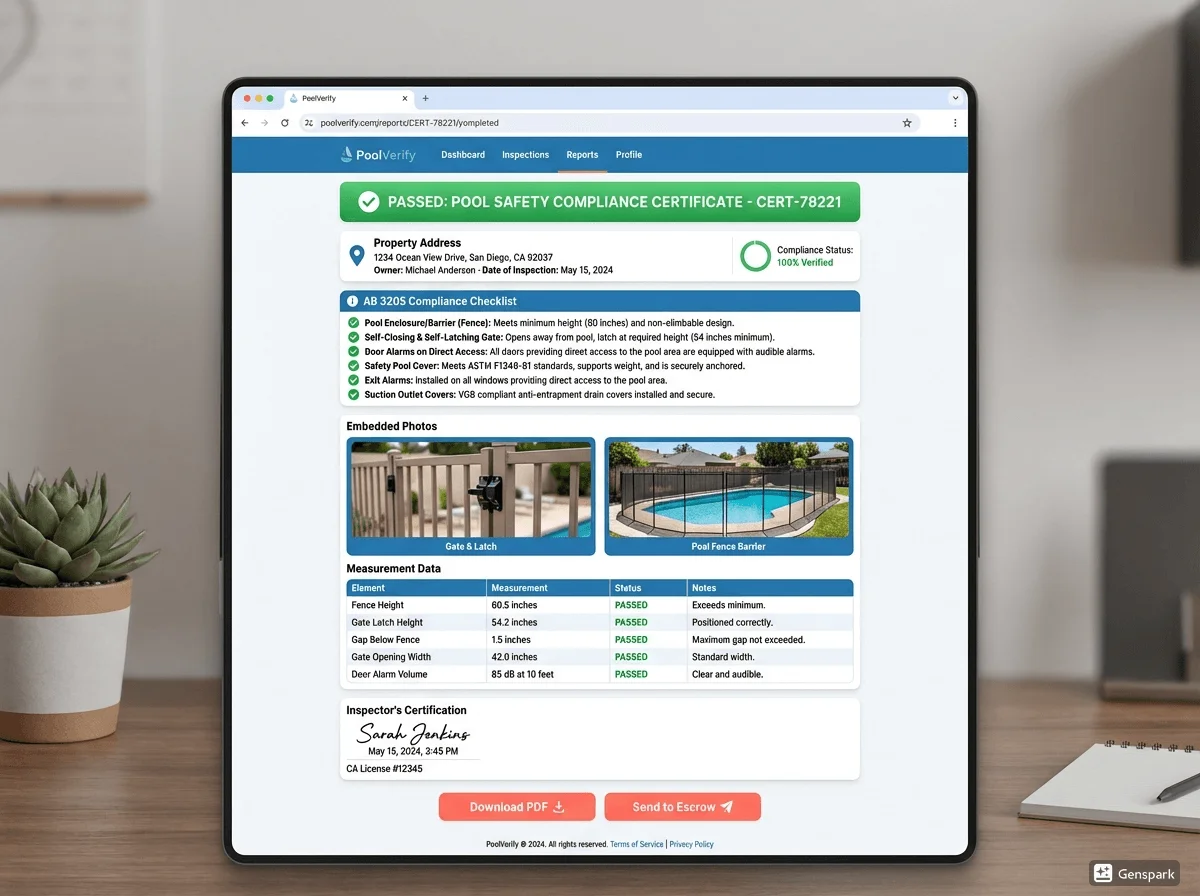
Screenshot of PoolVerify digital pool inspection report showing compliance certificate, checklist, and photo documentation for California real estate transactions
Other Helpful Tools
Transaction Management:
- Dotloop, SkySlope, or Ziplogix for document management
- Calendar reminders for inspection deadlines
Contractor Networks:
- Thumbtack or Angi for quick repair quotes
- Yelp reviews to vet pool contractors
County-Specific Pool Inspection Variations in California
While BPC §7195 and AB 3205 apply statewide, some counties have additional requirements:
Los Angeles County
- May require separate building department verification
- Older pools (pre-2000) often need upgraded electrical systems
- Strict enforcement of drain cover compliance
San Diego County
- Additional requirements for hillside properties with pools
- Stricter fence height requirements in some cities (72 inches)
- May require erosion control documentation
Orange County
- Building department sign-off required for major repairs
- Stricter chemical storage regulations near pools
- HOA approval needed for fence modifications in planned communities
Riverside and San Bernardino Counties
- Extended timelines due to limited inspector availability
- May require separate fire department inspection for pool access
- Well water properties need water quality testing
Bay Area Counties (Santa Clara, Alameda, Contra Costa)
- Stricter environmental regulations for pool chemicals
- May require seismic retrofitting for older pool equipment
- Local building codes often exceed state minimums
Realtor Action: Always check with local building departments when listing properties with pools. Ask: _"Are there any pool compliance requirements beyond state law for real estate transfers?"_
How Pool Inspections Protect Realtors from Liability
California realtors have a fiduciary duty to disclose known material defects—including pool safety issues.
Legal Risks Without Pool Inspections
Failure to disclose pool safety violations can result in:
- Post-closing lawsuits from buyers
- Claims against Errors & Omissions insurance
- License complaints with California DRE (Department of Real Estate)
- Financial liability for injuries occurring after sale
Case Example (Anonymized):
_A Southern California realtor failed to ensure pool inspection compliance before closing. Six months later, a child drowned due to a non-functioning gate latch. The buyer sued the realtor for failure to disclose, resulting in a $2.3 million settlement (covered by E&O insurance, but policy rates tripled)._
How Compliance Protects You
✅ Documentation: Pool Safety Compliance Certificate proves due diligence
✅ Disclosure: Inspection report satisfies disclosure requirements under Civil Code §1102
✅ Risk Transfer: Once compliant, liability shifts to buyer post-closing
✅ Professional Standard: Demonstrates adherence to industry best practices
Realtor Insurance Tip: Some E&O carriers offer premium discounts for agents who complete pool safety compliance training. Contact your provider for details.
Frequently Asked Questions (FAQs)
Is a pool inspection required to sell a house in California?
Yes. California Business and Professions Code §7195 requires pool safety inspections for most residential property transfers. The seller must provide a Pool Safety Compliance Certificate showing the pool meets all safety barrier requirements under AB 3205 (HSC §115922) before escrow can close.
Who pays for the pool inspection when selling a house in California?
Typically, the seller pays for the pool inspection as part of their disclosure obligations. However, this can be negotiated in the purchase agreement. The inspection usually costs $150-$350 depending on pool complexity and location.
How long does a California pool inspection take for real estate transactions?
The physical inspection typically takes 45-90 minutes depending on pool size and features. Inspectors usually deliver the Pool Safety Compliance Certificate within 24-48 hours. Allow 3-5 business days total when scheduling to avoid escrow delays.
What happens if a pool fails inspection during a home sale?
If the pool fails inspection, the seller must make necessary repairs to bring it into compliance before closing. Common fixes include adjusting gate latches, repairing barriers, or updating drain covers. Most repairs cost $200-$1,500 and take 1-2 weeks.
Can you sell a house in California without a pool inspection?
No. Since January 1, 2018, California law (BPC §7195 and AB 3205) requires a Pool Safety Compliance Certificate for nearly all residential property transfers with swimming pools. Exemptions are very limited and typically require legal review.
How long is a pool inspection certificate valid in California?
Pool Safety Compliance Certificates are valid for the specific property transfer transaction only. They are not time-limited, but if escrow falls through and the property re-lists months later, a new inspection is typically recommended to ensure continued compliance.
Do I need a pool inspection for a condo sale in California?
It depends. If the condo has a private pool (exclusive use by unit owner), a pool inspection is required. If the pool is a community amenity shared by all residents, the HOA's master insurance and compliance records typically satisfy the requirement. Verify with your title company.
Can a home inspector do a pool inspection for California real estate?
Only if the home inspector also holds proper pool inspection credentials (PHTA CPI, CPO, or contractor license). General home inspectors without pool-specific certifications cannot legally issue Pool Safety Compliance Certificates under BPC §7195.
Key Takeaways for California Realtors
✅ Pool inspections are mandatory for most residential home sales in California under BPC §7195 and AB 3205
✅ Schedule inspections pre-listing whenever possible to avoid escrow delays and repair negotiations
✅ Verify inspector credentials—PHTA CPI, CPO, or licensed contractor status required
✅ Budget $500-$800 total for inspection and minor compliance repairs in seller net sheets
✅ Gate latches cause 67% of failures—check them during listing walk-throughs
✅ Allow 3-5 business days for inspection and certificate delivery
✅ Digital platforms like PoolVerify streamline certificate delivery and reduce paperwork
✅ Pool compliance protects realtors from post-closing liability and disclosure claims
Next Steps: Ensure Smooth Pool Inspections in Every Transaction
For Realtors:
- Add pool inspection checklist to your listing presentation materials
- Build relationships with 2-3 certified pool inspectors in your market
- Educate sellers on pre-listing inspection benefits
- Update your transaction timeline templates to include pool inspection milestones
For Pool Inspectors:
Ready to streamline your inspection workflow and deliver digital certificates instantly?
Try PoolVerify Free for 14 Days →
Trusted by California pool inspectors to ensure BPC §7195 and AB 3205 compliance on every inspection—with zero paperwork hassles.
Legal Disclaimer: This guide provides general information about California pool inspection requirements as of January 2026. It does not constitute legal advice. Real estate professionals should consult with legal counsel and local building departments for specific compliance requirements in their jurisdiction. Pool safety laws and regulations may change; always verify current requirements before transactions.
Frequently Asked Questions
Is a pool inspection required to sell a house in California?
Yes. California Business and Professions Code §7195 requires pool safety inspections for most residential property transfers. The seller must provide a Pool Safety Compliance Certificate showing the pool meets all safety barrier requirements under AB 3205 (HSC §115922) before escrow can close.
Who pays for the pool inspection when selling a house in California?
Typically, the seller pays for the pool inspection as part of their disclosure obligations. However, this can be negotiated in the purchase agreement. The inspection usually costs $150-$350 depending on pool complexity and location.
How long does a California pool inspection take for real estate transactions?
The physical inspection typically takes 45-90 minutes depending on pool size and features. Inspectors usually deliver the Pool Safety Compliance Certificate within 24-48 hours. Allow 3-5 business days total when scheduling to avoid escrow delays.
What happens if a pool fails inspection during a home sale?
If the pool fails inspection, the seller must make necessary repairs to bring it into compliance before closing. Common fixes include adjusting gate latches, repairing barriers, or updating drain covers. Most repairs cost $200-$1,500 and take 1-2 weeks.
Can you sell a house in California without a pool inspection?
No. Since January 1, 2018, California law (BPC §7195 and AB 3205) requires a Pool Safety Compliance Certificate for nearly all residential property transfers with swimming pools. Exemptions are very limited and typically require legal review.
Related Articles
Guide
California AB 3205 Pool Inspection Requirements Explained
Complete guide to California Assembly Bill 3205 pool safety requirements. Learn what's required for real estate transactions and how to ensure compliance.
Template
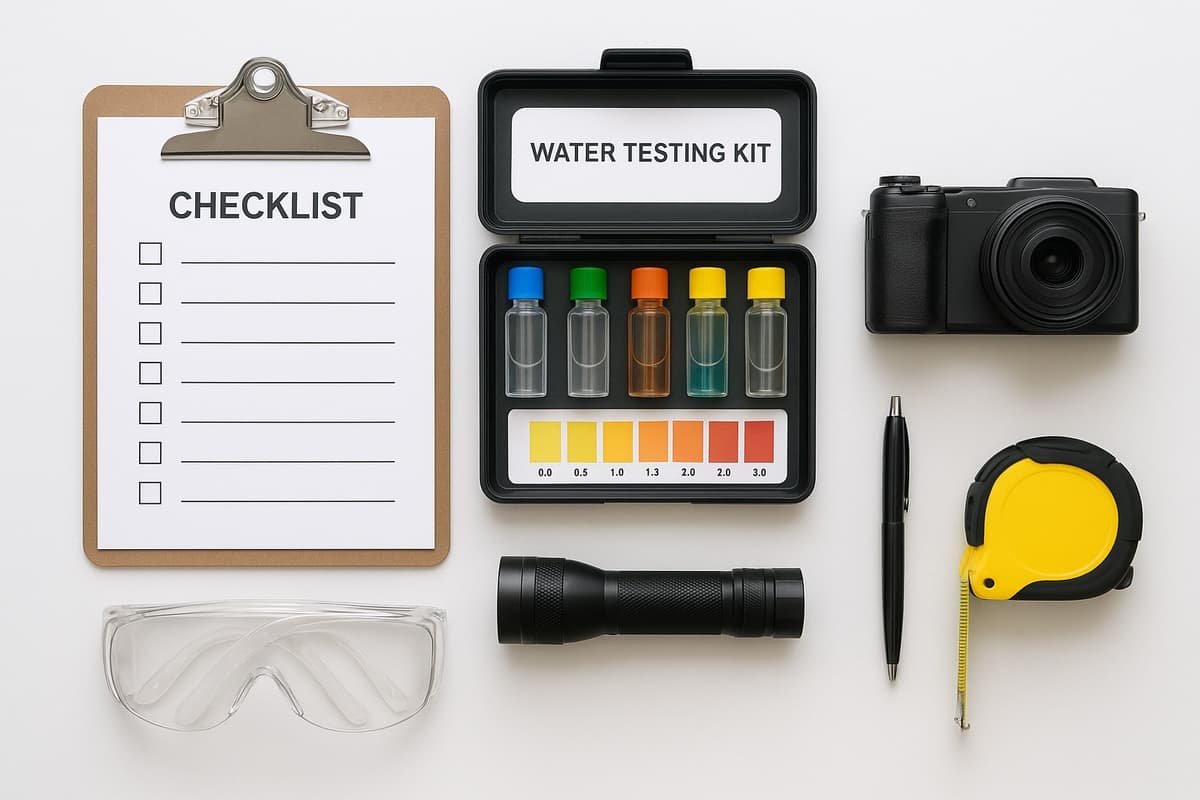
Pool Safety Checklist: The Complete Guide for 2026
Download our comprehensive 50-point pool safety checklist covering all California requirements. Perfect for inspectors, homeowners, and property managers.
Pool-compliance
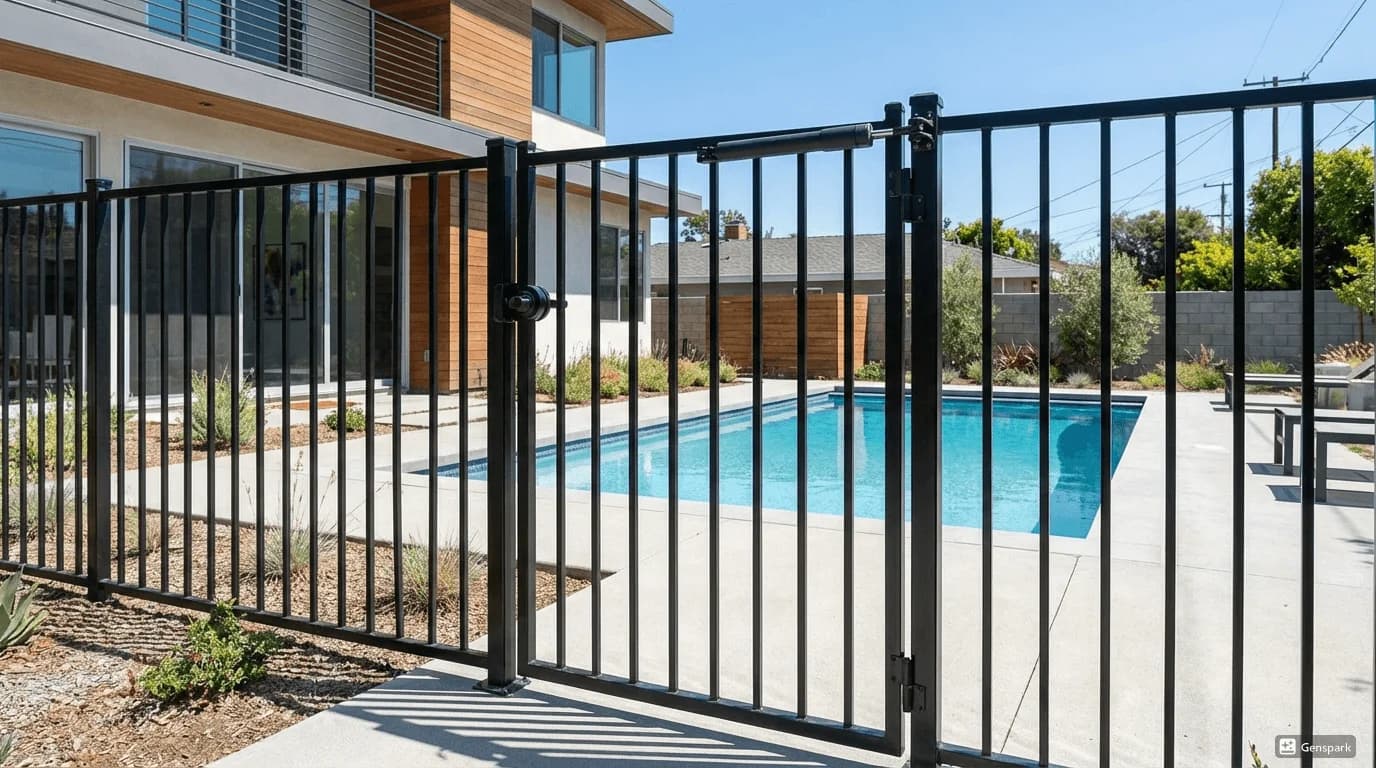
California Pool Barrier Requirements: Complete 2026 Compliance Guide
Complete guide to California pool barrier requirements for 2026. Learn BPC §7195 and HSC §115922 specifications for height, spacing, gates, and materials.