PoolDial vs PoolVerify for California Pool Inspections
Compare PoolDial vs PoolVerify for California pool inspections. Pricing, BPC §7195 compliance, service vs inspection focus, and which fits solo inspectors vs pool service companies.
PoolDial and PoolVerify both serve pool professionals, but they solve different jobs. PoolDial is pool service software with an inspection module bundled in, priced at $2 per pool per month with a $40 monthly minimum. PoolVerify is California-only pool safety inspection software with BPC §7195 and HSC §115922 templates pre-loaded as defaults, starting at $39/month annual for solo inspectors. Choosing between them comes down to whether your primary job is recurring pool service or California pool compliance inspection.
This comparison covers pricing, California compliance defaults, mobile architecture, and the specific use cases where each platform wins. Pool service companies and California-licensed pool inspectors face different operational pressures, and the right tool depends on which pressure dominates your week. According to the California Energy Commission, California has roughly 1.4 million residential pools, the largest count of any state, and the Consumer Product Safety Commission reports drowning is the leading cause of unintentional injury death for children ages 1 to 4. Both platforms serve this market; they just solve different parts of it.
Quick comparison: PoolDial vs PoolVerify
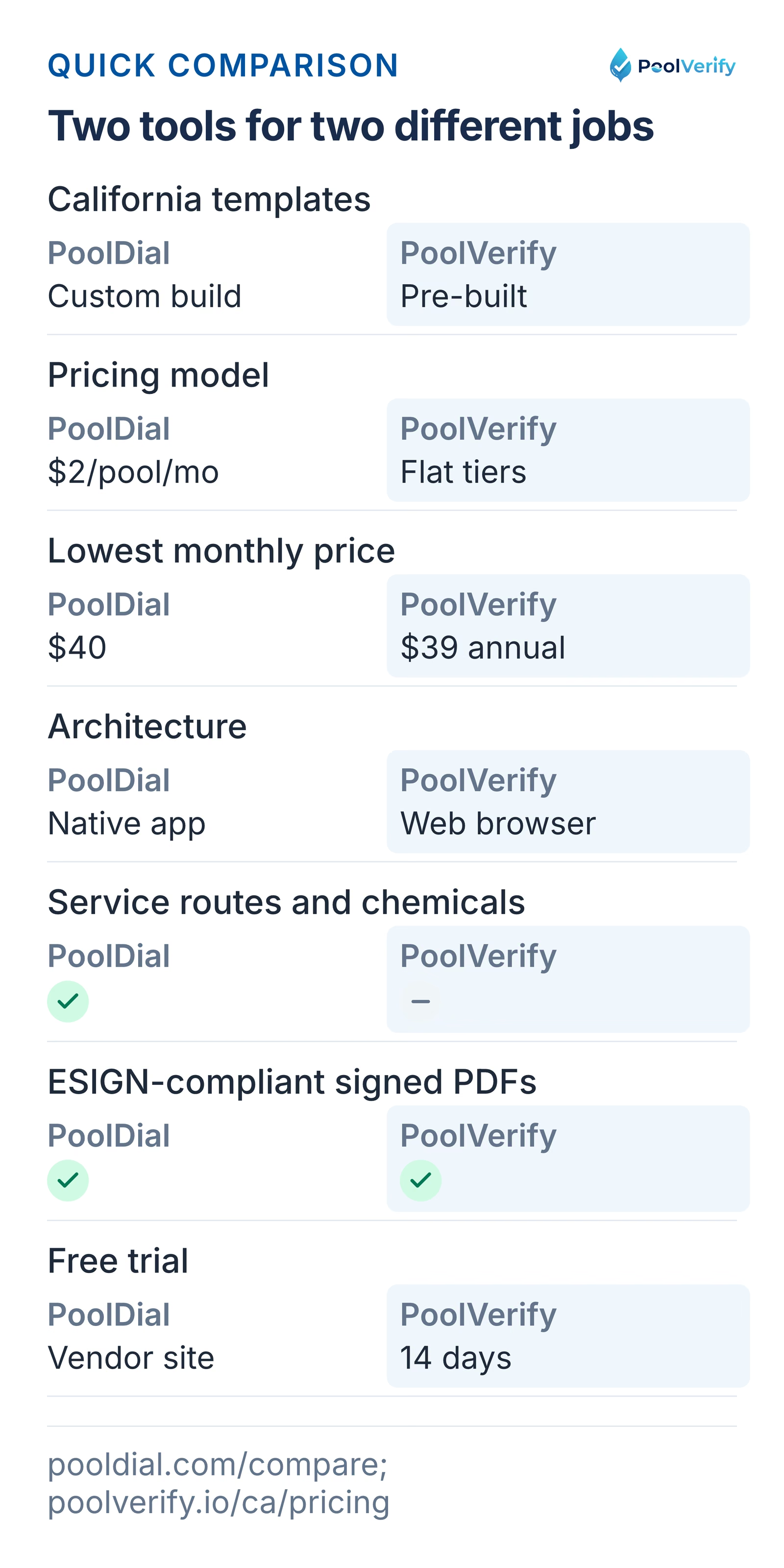
PoolDial charges $2 per pool with a $40 minimum in a native app; PoolVerify ships California templates from $39 a month.
PoolDial and PoolVerify map to different jobs in the pool industry, which makes the feature comparison more useful when grouped by user persona than by feature parity. PoolDial is built for pool service operators running recurring routes who also handle inspections. PoolVerify is built for California pool safety inspectors whose main job is BPC §7195 disclosure inspections at residential property transfer or HSC §115922 verification at building permit issuance.
Feature
PoolDial
PoolVerify
Primary focus
Pool service operations + inspection
California pool safety inspection
CA BPC §7195 default template
Generic, custom build
Pre-built
CA HSC §115922 default template
Generic, custom build
Pre-built
Pricing model
$2/pool/month, $40/month minimum
Flat tier: $39/$79/$159 annual
Architecture
Native mobile app
Responsive web (any browser)
Service routes / chemical readings
Yes
No
AI phone receptionist
Yes (included)
No
ESIGN-compliant signed PDFs
Yes
Yes
Trial
Per vendor site
14 days, no credit card to start
Best for
Pool service companies
Solo California pool inspectors
The comparison reveals two distinct positions rather than a head-to-head feature race. PoolDial's per-pool pricing and bundled service tools fit operators who manage recurring pool routes; PoolVerify's flat-tier pricing and California-only compliance defaults fit inspectors whose entire revenue comes from BPC §7195 work.
Pricing breakdown for solo and small-team operators
PoolDial charges $2 per pool per month with a $40 monthly minimum, sourced from pooldial.com/compare. The pricing is structured around the number of pools an operator manages on recurring service routes, which is the natural unit for pool service companies. The minimum applies regardless of pool count, so an operator managing 5 pools pays the same $40/month as one managing 20.
PoolVerify uses a tiered flat-rate model. The Starter plan is $39/month on annual billing or $49/month monthly, covering 25 inspections per month with 500 MB storage, BPC §7195 template, PDF report generation, ESIGN-compliant signatures, and analytics dashboard. The Professional plan is $79/month annual or $99/month monthly, removing the inspection cap and adding 10 GB storage, custom checklist fields, in-platform scheduling, and viewer roles. The Business plan is $159/month annual or $199/month monthly, adding unlimited team members, role-based permissions, 100 GB storage, and priority support response. Source: poolverify.io/ca/pricing.
For a solo California pool inspector running 15-25 inspections a month, PoolVerify Starter at $39/month is the cheaper option. For a pool service company managing 30+ recurring service pools and adding inspections as a secondary service, PoolDial's $2/pool/month model can come in lower depending on pool count.
Comparing California-specific compliance software? PoolVerify is the only platform that ships BPC §7195 and HSC §115922 templates pre-loaded as defaults. Solo inspectors start at $39/month annual ($468/year). 14-day free trial, no credit card to start. Start your free trial
California BPC §7195 and HSC §115922 compliance defaults
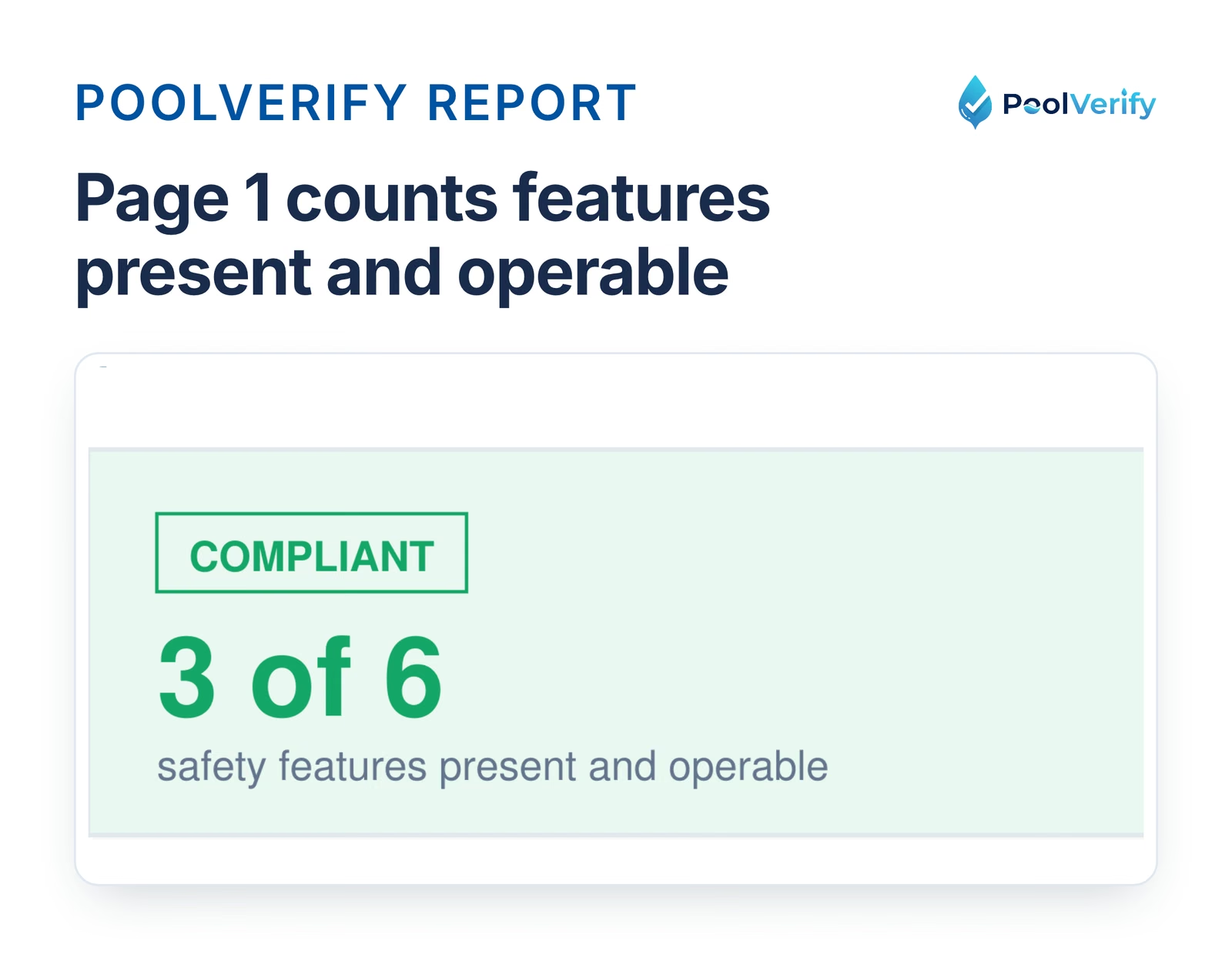
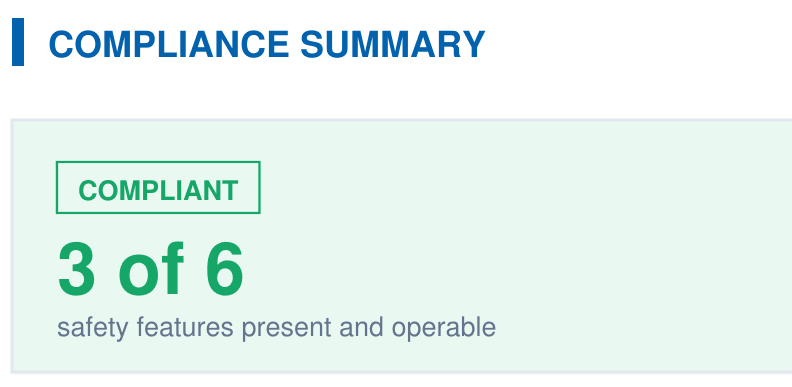
The compliance summary on page 1 of a PoolVerify report counts the HSC §115922 features present and operable.
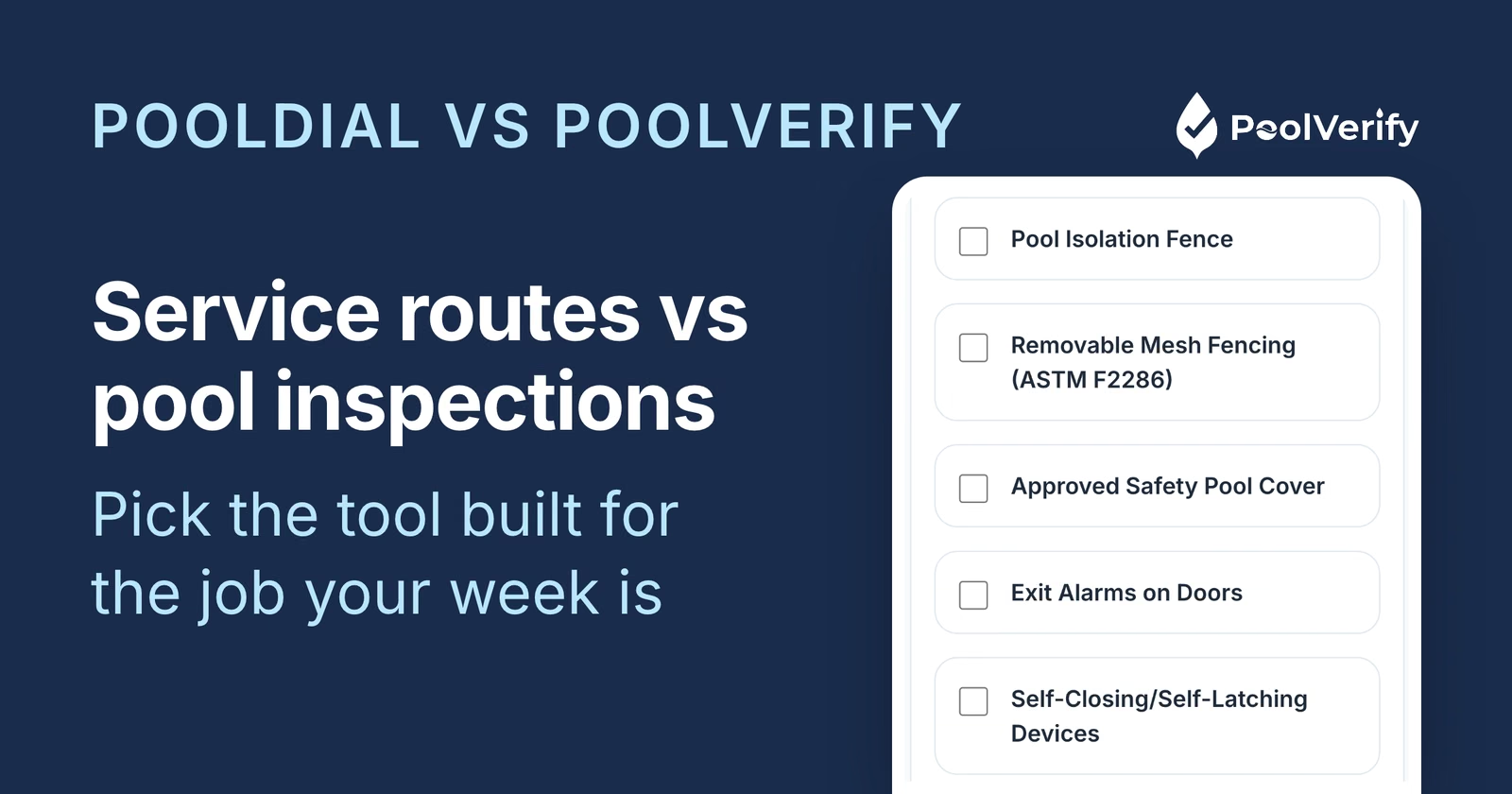
This is the largest functional difference between the two platforms. PoolVerify's BPC §7195 template covers the six physical safety features listed in HSC §115922(a), isolating fence (HSC §115923), removable mesh fencing (ASTM F2286), approved safety pool cover (ASTM F1346), exit alarms on doors and windows, self-closing/self-latching home-to-pool doors, pool alarms (ASTM F2208), with any approved alternative documented in notes. Each feature includes condition rating, photo capture (up to 10 per item), and notes. The compliance engine flags inspections in real time when fewer than two functional features are present, per the HSC §115922 minimum.
PoolDial's inspection module covers 18+ pool safety sections with 70+ items using a Pass/Concern/Safety Hazard severity rating system, but the templates are generic, not California-specific. A pool inspector using PoolDial as a primary inspection tool has to configure BPC §7195 and HSC §115922 fields manually, adding terminology, ASTM standard references, and the seven-feature framework. This is the same setup tax that Spectora, HomeGauge, and ISN charge California inspectors.
California SB 552, effective January 1, 2025, amended both BPC §7195 and HSC §115922. PoolVerify's templates updated to reflect SB 552 within 5 days of the effective date because California is the codebase, not a state-specific configuration of a multi-state product. Generic inspection tools required user-side template updates to reflect the same changes.
Service workflow vs inspection workflow
PoolDial's strongest features are pool service operational tools the platform calls out on its site: service routes with stop optimization, chemical readings and dosage tracking, customer records, billing, and an AI-powered phone receptionist included in the subscription. These features fit pool service companies whose technicians visit the same pools weekly or monthly for cleaning and chemical balance. The inspection module is one of several capabilities, not the central focus.
PoolVerify is the opposite: pool safety inspection is the entire product. The workflow is one inspection per visit, scheduled in advance, paid per inspection, with an ESIGN-compliant signed PDF report delivered same-day to the homeowner, listing agent, or building department. There are no service routes, no chemical readings, no recurring-customer dashboards. Every feature in the platform supports the inspection-disclosure-report cycle.
For pool service companies that occasionally do compliance inspections, PoolDial is the right choice because the inspections fit alongside the service work in one tool. For California pool inspectors whose primary revenue is per-inspection compliance work, PoolVerify is the right choice because the platform's defaults remove setup time on every job.
Mobile architecture: native app vs responsive web
PoolDial uses native mobile apps requiring App Store install on iOS and Play Store install on Android. Native apps perform well offline, support push notifications for next-job alerts, and integrate with iOS or Android OS features. The trade-off is App Store review delays when onboarding a new technician and auto-update risk during an active session.
PoolVerify is a responsive web app. It runs in Safari, Chrome, Firefox, and Edge on iPad, iPhone, Android tablet, and desktop. There is no App Store or Play Store install. New California pool inspectors sign in at poolverify.io on their existing iPad and start a BPC §7195 inspection within minutes. The same URL produces the same inspection record on a phone, on a desktop in the office, and on a tablet at the next site.
For pool service technicians spending hours out of cellular coverage on multi-stop routes, native mobile is the correct architecture. For pool inspectors completing one site at a time during scheduled appointments with same-day report delivery, responsive web is the correct architecture. The choice maps to job shape, not to vendor preference.
Which platform fits which user
A short decision framework that maps each user type to the right platform:
Pool service company managing 30+ recurring service pools, adding inspections as a secondary line: PoolDial. Per-pool pricing fits the pool count, native mobile fits multi-stop routes, the bundled service tools justify the platform.
Solo California pool inspector running 8-25 BPC §7195 inspections per month: PoolVerify. Starter at $39/month annual covers the workflow, California templates ship pre-loaded, responsive web fits the one-site-at-a-time pattern.
Mid-size California inspection firm with 3-5 inspectors: PoolVerify Professional or Business. Unlimited inspections, custom checklists, team management with role-based permissions, all California-specific by default.
Multi-state pool service operator that sometimes inspects: PoolDial. The California specialization in PoolVerify is wasted on out-of-state work.
Real estate agent or property manager who refers inspectors: Neither directly. Refer to a California-licensed pool inspector who uses PoolVerify or PoolDial.
The decision is short on purpose. Most pool professionals don't need to evaluate both platforms in depth, they need to identify which job their week is built around and pick the platform aligned to that job. For California pool inspectors specifically, PoolVerify's pre-loaded BPC §7195 and HSC §115922 templates remove enough setup friction that the trial can be productive on day one. See our California pool inspection software comparison for a wider view across all 7 leading tools, our PoolVerify vs Spectora comparison, and the Spectora pricing breakdown.
Limitations
This guide is general information about pool safety law, not legal advice; the current text of HSC §115922 and BPC §7195 on leginfo.legislature.ca.gov controls, and local building departments add their own requirements. PoolVerify is inspection software for California residential pool safety inspections; it does not perform inspections, certify inspectors, or issue compliance certificates.
Frequently Asked Questions
What's the main difference between PoolDial and PoolVerify?
PoolDial is pool service software with an inspection module bundled in, priced at $2 per pool per month with a $40/month minimum. PoolVerify is California-only pool safety inspection software with BPC §7195 and HSC §115922 templates pre-loaded as defaults, priced at $39/month annual for solo inspectors.
Does PoolDial have California BPC §7195 templates pre-built?
No. PoolDial's inspection module includes 18+ generic safety sections covering 70+ items, but California-specific BPC §7195 and HSC §115922 templates require manual setup by the user. PoolVerify ships these templates pre-loaded as the default California compliance workflow.
Which is cheaper for a solo California pool inspector?
PoolVerify Starter at $39/month annual ($468/year) is generally cheaper than PoolDial for solo inspectors managing fewer than ~20 pools, since PoolDial's $40/month minimum applies regardless of pool count. PoolDial becomes cost-effective when an operator manages 20+ recurring service pools alongside inspections.
Can I use PoolDial for California pool safety disclosure inspections?
Yes, but it requires manual template configuration. PoolDial's inspection module supports California pool safety inspections after the inspector configures BPC §7195 and HSC §115922 fields. PoolVerify ships these as defaults, eliminating the setup time for California-only pool inspectors.
Which works better on iPad?
Both work on iPad. PoolDial uses a native mobile app requiring App Store install, while PoolVerify is a responsive web app that runs in any iPad browser without an install. PoolVerify also works identically on iPhone, Android, and desktop browsers using one URL.
Summary
PoolDial and PoolVerify both serve pool professionals, but they don't compete head-to-head. PoolDial wins for pool service companies running recurring routes who add inspections as a secondary service. PoolVerify wins for California pool inspectors whose primary work is BPC §7195 disclosure or HSC §115922 verification, where pre-loaded California compliance and ESIGN-compliant PDF reports are the load-bearing features.
If you do California pool safety inspections as your main job, PoolVerify ships with the templates already in place. The 14-day free trial needs no credit card to start and gives you the full limits of the plan you choose, enough to run real BPC §7195 jobs end-to-end before deciding. If you run pool service routes with inspections as one of several capabilities, PoolDial's bundled platform fits that job better.
A branded PDF with the compliance summary, the feature table, each finding with its photos, and the signature, generated on‑site when the BPC §7195 and HSC §115922 checklist is complete.