California SB 442 Pool Safety Law: What Changed in 2018
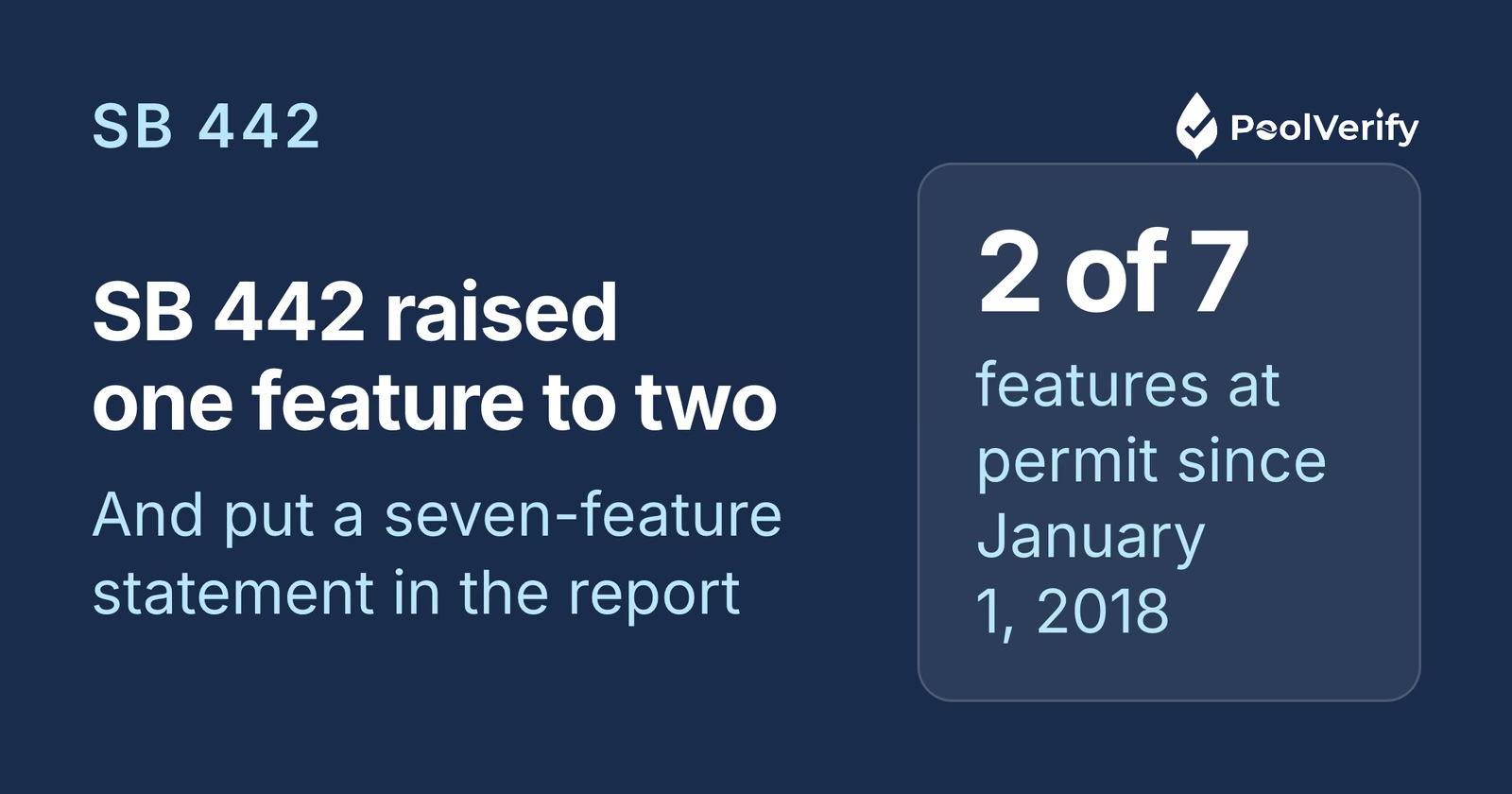
SB 442 (2017) amended California's Swimming Pool Safety Act and BPC §7195: two of seven safety features at permit, and a seven-feature statement in every home inspection report.
Senate Bill 442 is the California law that, effective January 1, 2018, raised the drowning prevention requirement for residential pools and spas from one safety feature to two of seven, and put a pool safety statement into every home inspection report at the sale of a 1 to 4 unit residence. It did this by amending two statutes: Health and Safety Code section 115922 (the Swimming Pool Safety Act) and Business and Professions Code section 7195 (the home inspection statute).
This guide explains what SB 442 changed, who it affects, the seven features it refers to, and what a home inspection report has to say as a result. It also clears up a common error: the pool law is SB 442, not "AB 3205", which is a school facilities bill.
What SB 442 is
SB 442 (Newman), "Public health: pools: drownings", is Chapter 670 of the Statutes of 2017. It was approved by the Governor on October 11, 2017 and took effect on January 1, 2018. The bill text is on leginfo.legislature.ca.gov.
Definition of a home inspection and a home inspection report
A home inspection of a dwelling with a pool or spa must identify which of the seven features are present, and the report must state them
The Swimming Pool Safety Act was amended again by SB 552, effective January 1, 2025. The statute text on leginfo is always the current version; this guide describes the SB 442 changes and the rules as they stand in 2026.
The two-of-seven rule (HSC §115922)
When a building permit is issued for the construction of a new swimming pool or spa, or for the remodel of an existing one, at a single-family home, the pool or spa must be equipped with at least two of the seven drowning prevention safety features in HSC §115922(a). SB 442 raised this from one feature to two.
The trigger is the permit. The rule does not require an existing, unpermitted pool to add features because the house is being sold, and it does not apply to every pool in the state. A pool built in 1995 that has never been remodeled is not out of compliance with HSC §115922 for having one feature; the home inspection report will simply say which features it has.
Local building departments enforce the two-of-seven rule at permit final. Several counties add local requirements on top of it; the county guide lists what is known.
The seven drowning prevention safety features
HSC §115922(a) lists seven features. A pool or spa needs two of them at permit, and a home inspection report identifies which of the seven are present.
Feature
Standard referenced
What an inspector checks
1. Enclosure that isolates the pool or spa from the home
HSC §115923
At least 60 inches high, gaps between vertical members no more than 4 inches, gate self-closing and self-latching, no climbable features
2. Removable mesh fencing with a self-closing, self-latching gate
ASTM F2286
Fence is installed and intact, gate closes and latches on its own
3. Approved safety pool cover
ASTM F1346
Cover is present, anchored at all points, and operable
4. Exit alarms on doors and windows with direct pool access
HSC §115922(a)(4)
Alarm sounds when the door or window opens
5. Self-closing, self-latching devices on home-to-pool doors
Release at least 54 inches above the floor
Doors close and latch on their own from any open position
6. Pool alarm
ASTM F2208
Alarm is installed and sounds when the water surface is disturbed
7. Other means of protection
Independently verified as equal or greater protection
Documentation of the alternative and its verification
PoolVerify's checklist lists the six physical features as items with a pass, fail, or not present result and a photo on each; an alternative means of protection under item 7 is documented in the inspector's notes. Feature by feature detail is in the barrier guide, the gate guide, and the alarm guide.
What changed in home inspections (BPC §7195)
Since January 1, 2018, a home inspection performed in connection with the transfer of a residential property of 1 to 4 units that has a pool or spa must include a noninvasive physical examination of the pool or spa and the dwelling to identify which, if any, of the seven HSC §115922(a) features are present, and the home inspection report must identify them.
Three things follow from the statute's wording:
The duty sits with the home inspection report. SB 442 did not create a "pool safety compliance certificate", a seller certification form, or an escrow document. The seven-feature statement is part of the home inspection report, delivered with the rest of the inspection findings.
A home inspection is not mandatory. California does not require a seller or buyer to order one. If a home inspection is performed, BPC §7195 governs what it must cover; if none is performed, nothing in SB 442 forces one. Sellers still owe their ordinary disclosure duties under the Transfer Disclosure Statement (Civil Code §1102), which cover known conditions, including the pool.
The statement is descriptive, not pass or fail. The report says which features exist. A pool with one feature does not "fail" the home inspection; the buyer learns it has one feature and negotiates accordingly.
For inspectors, this is the reason a pool checklist that mirrors the seven features matters: the report has to name each one. The BPC §7195 guide covers the report itself.
Before and after SB 442
Question
Before January 1, 2018
Since January 1, 2018
Features required at permit for a new or remodeled residential pool or spa
At least one of seven
At least two of seven
Pool safety in a home inspection report
Not addressed by BPC §7195
Report must identify which of the seven features are present
Who the inspection duty falls on
No one
The home inspector, when a home inspection is performed
Existing pool being sold without a permit
No requirement
No new feature requirement; the report describes what is there
Who SB 442 affects
Home inspectors examining a 1 to 4 unit residence with a pool or spa: the pool and dwelling examination and the seven-feature statement are now part of the job and the report.
Pool and general contractors (C-53 and B licenses) pulling permits for a new or remodeled pool or spa: the pool must have two of the seven features at final.
Sellers and their agents: the home inspection report the buyer receives will state the pool's features, and a pool with one or zero features is likely to come up in negotiation. A pre-listing pool inspection shows the position before the buyer's inspector does.
Buyers: the report tells you which features exist so you can budget for the ones you want added.
Homeowners not selling or permitting work: SB 442 imposes no new duty, but the seven features are the recognized drowning prevention measures and most insurers and the CPSC recommend more than the minimum.
Who can perform the pool examination
BPC §7195 describes what a home inspection must cover; it does not create a pool inspector license. California has no state license for home inspectors. In practice the seven-feature examination is done by the home inspector, or by a pool specialist the inspector or the parties bring in, most often a C-53 swimming pool contractor or a B general contractor. Property managers and agents usually ask for one of those credentials plus liability insurance. The licensing guide explains the options.
The common mistake: "AB 3205"
Many websites, and this one until September 2026, described the 2018 pool safety changes as "AB 3205". That is wrong. The AB 3205 in the 2017 to 2018 session is "School facilities: modernization projects: door locks" and adds Education Code §17583; it has nothing to do with pools. The pool safety bill is SB 442. If a report, contract, or website cites "AB 3205" for pool safety, read it as SB 442 and check the current text of HSC §115922 and BPC §7195.
How the rule shows up in a PoolVerify report
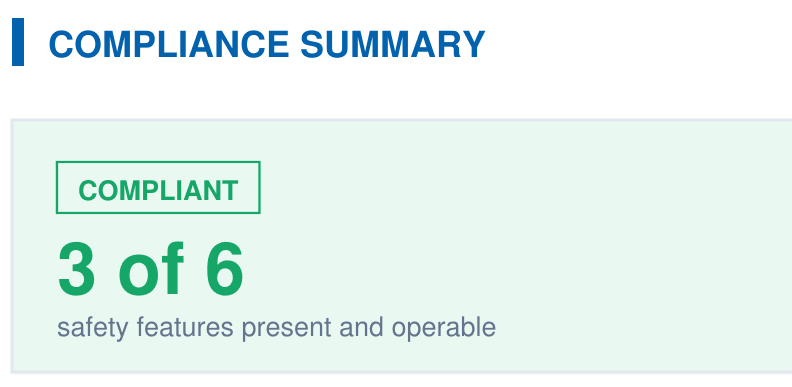
PoolVerify's California checklist lists the HSC §115922(a) features as checklist items. On-site, the inspector marks each one present, not present, or not applicable, attaches photos, and records notes for an alternative means of protection. The generated PDF report opens with a compliance summary that states how many of the seven features are present and lists each one, which is the statement BPC §7195 requires the home inspection report to make. The sample report shows the summary on page 1.
Limitations
This guide is general information about California law, not legal advice; the current statute text on leginfo.legislature.ca.gov controls, and a building department or attorney should be consulted for a specific property. PoolVerify is inspection software for California residential pool safety inspections; it does not perform inspections, certify inspectors, or issue compliance certificates.
Frequently asked questions
What is California SB 442?
SB 442 (Newman) is the 2017 California bill, Chapter 670 of the Statutes of 2017, that amended the Swimming Pool Safety Act (HSC §115922) and the home inspection statute (BPC §7195). It raised the requirement from one to two of seven drowning prevention safety features when a permit is issued for a new or remodeled residential pool or spa, and it made the home inspection report identify which of the seven features a pool has.
When did SB 442 go into effect?
SB 442 was approved by the Governor on October 11, 2017 and took effect on January 1, 2018. The Swimming Pool Safety Act has since been amended again by SB 552, effective January 1, 2025, so always read the current text of HSC §115922 and BPC §7195 on leginfo.legislature.ca.gov.
Do I need a pool inspection to sell my house in California?
California law does not require a seller to order a pool inspection. What SB 442 requires is that when a home inspection is performed at the sale of a 1 to 4 unit residence with a pool or spa, the inspector examines the pool and dwelling and the report identifies which, if any, of the seven HSC §115922(a) safety features are present. There is no separate compliance certificate.
What are the seven safety features under SB 442?
HSC §115922(a) lists: an enclosure isolating the pool from the home per HSC §115923, removable mesh fencing meeting ASTM F2286 with a self-closing self-latching gate, an approved safety pool cover meeting ASTM F1346, exit alarms on doors and windows with direct pool access, self-closing self-latching devices on home-to-pool doors with the release at least 54 inches high, a pool alarm certified to ASTM F2208, and another independently verified means of equal or greater protection.
How many of the seven features does a pool need?
Two. Before SB 442 the Swimming Pool Safety Act required at least one; since January 1, 2018 a residential pool or spa must have at least two of the seven features when a building permit is issued for its construction or remodel. An existing pool that is not being permitted is not required to add features at sale, but the home inspection report must say which ones it has.
Is AB 3205 the California pool inspection law?
No. AB 3205 in the 2017 to 2018 session concerns school door locks (Education Code §17583). The pool safety changes that took effect on January 1, 2018 came from SB 442. Many websites, including this one until September 2026, cited the wrong bill number.
Run the seven-feature checklist on-site
PoolVerify's California template lists the HSC §115922(a) features, takes a photo on each item, collects the signature on screen, and generates the branded PDF report with the seven-feature summary on page 1 before you leave the property. Start your 14-day free trial, no credit card to start, or see pricing.
Last updated: September 5, 2026
What the client receives
A branded PDF with the compliance summary, the feature table, each finding with its photos, and the signature, generated on‑site when the BPC §7195 and HSC §115922 checklist is complete.