PoolVerify
FeaturesPricingResourcesCompanyLoginStart Free Trial
  1. Home
  2. Resources
  3. Pool Equipment Inspection: Pumps, Filters & Systems Checklist [2026]
Inspection-best-practices

Pool Equipment Inspection: Pumps, Filters & Systems Checklist [2026]

Complete pool equipment inspection guide covering pumps, filters, automation, chlorinators, and all pool systems. Learn what inspectors check, common problems, maintenance needs, and lifespan expectations.

Pool inspector examining pump, filter, and equipment pad with comprehensive checklist
February 9, 2026
9 min read

Pool equipment represents a significant investment ($3,000-$12,000 for complete systems) and is the mechanical heart that keeps your pool clean, safe, and functional. When equipment fails, pools quickly become unusable—green water within days, inadequate sanitization creating health hazards, and potential structural damage from poor circulation.

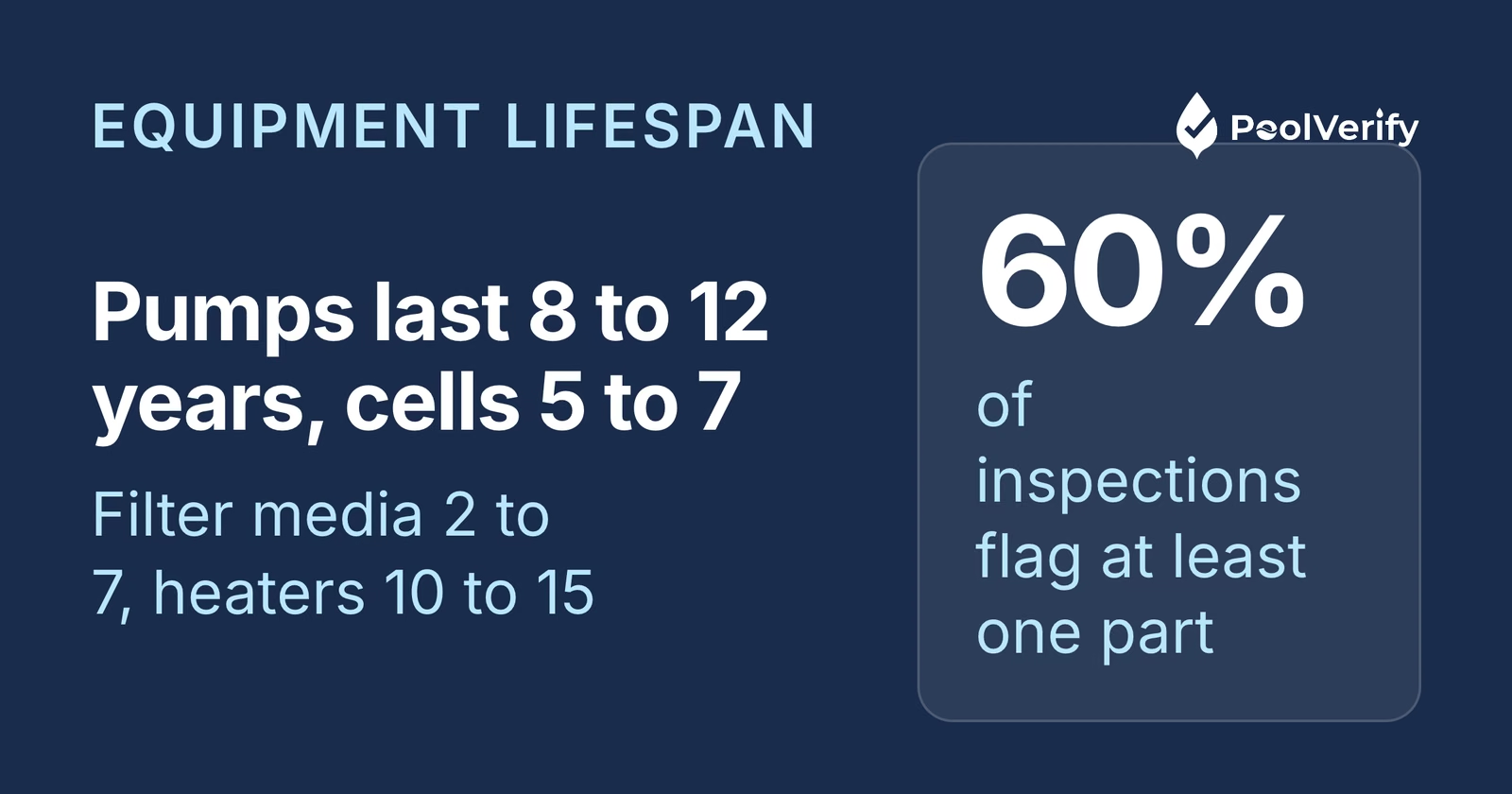
Professional pool equipment inspection identifies failing components before catastrophic failure, verifies proper operation, and helps plan for replacement based on actual equipment condition rather than emergency breakdowns. Approximately 60% of pool equipment inspections reveal at least one component needing attention or nearing end of service life.

This comprehensive guide covers pool equipment inspection for pumps, filters, automation systems, salt chlorinators, chemical feeders, and all supporting equipment—what inspectors check, performance testing, common issues, expected lifespans, and maintenance requirements.

Pool equipment inspection checklist

1. Pool pump inspection

Purpose: Circulates water through filter and heating system; most critical equipment component

Visual inspection

  • [ ] Pump housing intact (no cracks or damage)
  • [ ] Strainer lid secure with good O-ring seal
  • [ ] No visible leaks from pump body or seals
  • [ ] Pump securely mounted on pad
  • [ ] Electrical connections weatherproof
  • [ ] No excessive corrosion on pump body

Performance testing

  • [ ] Pump primes properly (fills with water)
  • [ ] Runs smoothly without excessive vibration
  • [ ] No unusual noises (grinding, squealing, humming)
  • [ ] Motor doesn't overheat during operation
  • [ ] Proper amp draw (compare to motor nameplate)
  • [ ] Adequate water flow (visually check returns)

Common pump problems

Loud noises (28% of inspections):

  • Worn bearings (most common)
  • Cavitation (insufficient water flow to pump)
  • Loose mounting bolts

Leaks (35% of inspections):

  • Shaft seal failure (water leaks from motor area)
  • Strainer lid O-ring deteriorated
  • Housing crack (impact damage or freeze)

Won't prime (22% of inspections):

  • Clogged strainer basket
  • Air leaks in suction line
  • Failed check valve
  • Pump seal drawing air

Overheating (15% of inspections):

  • Undersized pump for application
  • Poor ventilation around motor
  • Failed capacitor (single-speed motors)

Pump lifespan

  • Single-speed pumps: 8-12 years
  • Variable-speed pumps: 10-15 years
  • Factors affecting life: Run time, maintenance, water chemistry, climate

Replacement cost: $800-$2,500 depending on type and horsepower

2. Pool filter inspection

Purpose: Removes debris and contaminants from pool water

Filter types and specific checks

Sand filters (most common):

  • [ ] Tank structurally sound (no cracks)
  • [ ] Multi-port valve operates smoothly
  • [ ] Pressure gauge functional and accurate
  • [ ] Filter media (sand) not channeling or calcified
  • [ ] Laterals intact (no sand in pool)
  • [ ] Proper backwashing demonstrated

Cartridge filters:

  • [ ] Tank or housing intact
  • [ ] Cartridges clean or need replacement
  • [ ] End caps and bands secure
  • [ ] O-rings in good condition
  • [ ] Proper cartridge size for tank

DE (Diatomaceous Earth) filters:

  • [ ] Tank intact with no leaks
  • [ ] Grids or fingers in good condition
  • [ ] No tears or damage allowing DE bypass
  • [ ] Proper DE powder amount used
  • [ ] Backwash cycle operational

Filter performance testing

Pressure test:

  • Clean pressure: 8-15 PSI (varies by system)
  • Dirty pressure: 8-10 PSI above clean baseline
  • Backwash/clean when pressure rises 8-10 PSI
  • Pressure gauge reads accurately

Water clarity test:

  • Return water clear (no cloudiness)
  • No debris passing through filter
  • Pool maintains clarity between cleanings

Flow rate verification:

  • Compare actual flow to design flow rate
  • Undersized filters can't keep up with pool volume

Common filter problems

High pressure (30% of inspections):

  • Dirty filter media (needs backwash/cleaning)
  • Clogged cartridges
  • Calcified sand or DE

Low pressure (18% of inspections):

  • Pump not generating adequate flow
  • Air in system
  • Valve partially closed

Sand in pool (8% of inspections):

  • Broken laterals in sand filter
  • Damaged standpipe
  • Sand too old and breaking down

Poor filtration (25% of inspections):

  • Filter media exhausted (needs replacement)
  • Undersized filter for pool volume
  • Short filter cycles
  • Channeling in sand filter

Filter media lifespan

  • Sand: Replace every 5-7 years
  • Cartridges: Replace every 2-3 years (clean quarterly)
  • DE powder: Add fresh after each backwash (grids last 5-10 years)

Replacement cost:

  • Sand filter media: $50-$150
  • Cartridges: $40-$120 per cartridge
  • Complete filter: $400-$1,800 depending on type/size

3. Salt chlorine generator inspection (if present)

Purpose: Converts salt into chlorine through electrolysis

Visual and functional checks

  • [ ] Cell housing intact, no calcium buildup visible
  • [ ] Control board displays properly
  • [ ] Proper salt level (3,000-3,200 ppm typical)
  • [ ] Cell polarity reverses correctly
  • [ ] No error messages or warning lights
  • [ ] Adequate chlorine production
  • [ ] Flow switch operational

Cell condition assessment

Scale buildup inspection:

  • Remove cell and visually inspect plates
  • Heavy white scaling reduces output
  • Clean cell with acid wash if >20% scale coverage

Plate condition:

  • Plates intact, no flaking or deterioration
  • Proper spacing between plates
  • No bent or damaged plates

Common salt system problems

Low chlorine production (40% of inspections):

  • Cell scaling (most common)
  • Salt level too low
  • Cell nearing end of life (5,000+ hours)
  • Water temperature too cold (<60°F)

Error codes (25% of inspections):

  • Low salt warning
  • No flow detection
  • Check cell message
  • High salt warning (uncommon)

Cell failure (15% of inspections):

  • Plates eroded or flaking
  • Insufficient chlorine despite cleaning
  • Cell exceeds rated hours (5-7 years typical)

Replacement cost:

  • Salt cell: $400-$900
  • Complete system: $800-$2,500

4. Pool automation and control systems

Purpose: Automated control of pump, heater, lights, cleaning systems, and chemical feeders

System functionality testing

  • [ ] Controller powers on and displays correctly
  • [ ] Automated schedules execute properly
  • [ ] Manual overrides function
  • [ ] Remote access works (app/web interface)
  • [ ] Sensors accurate (temperature, flow, chemical)
  • [ ] Valve actuators operate smoothly

Common automation issues

Communication failures (35%):

  • Wireless connectivity problems
  • Sensor wiring issues
  • Control board failures

Incorrect scheduling (20%):

  • Clock drift or incorrect time
  • Programs not executing
  • Overrides not clearing

Valve actuator problems (18%):

  • Stuck or jammed actuators
  • Motor failures
  • Incorrect valve positioning

Sensor inaccuracies (12%):

  • Temperature sensor drift
  • Flow sensor malfunction
  • Chemical sensor calibration needed

Replacement cost: Automation controllers $800-$3,500

5. Chemical feeder inspection

Purpose: Automatic dosing of chlorine, pH adjusters, or other chemicals

Inline chlorinator/brominator

  • [ ] Feeder housing intact, no cracks
  • [ ] Lid/cap secure with good O-ring
  • [ ] Erosion feeder flow control operational
  • [ ] No excessive corrosion from chemical contact
  • [ ] Proper chemical level maintained

Liquid chemical pumps (peristaltic)

  • [ ] Pump operates on schedule
  • [ ] Tubing not cracked or brittle
  • [ ] Chemical levels adequate in tanks
  • [ ] Injection points not clogged
  • [ ] Proper calibration for dosing

Common feeder problems

Inconsistent chemical levels (40%):

  • Feeder adjustment incorrect
  • Clogged feeder inlet
  • Pump tubing worn out

Leaks (25%):

  • O-rings deteriorated
  • Housing cracked
  • Connection fittings loose

Feeder not dispensing (20%):

  • Air locked
  • Chemical tablets stuck
  • Pump motor failed

6. Pool cleaner equipment

Purpose: Automated pool surface and floor cleaning

Suction-side cleaners

  • [ ] Hoses in good condition (no cracks, splits)
  • [ ] Cleaner head parts intact
  • [ ] Proper suction generated
  • [ ] Cleaner covers entire pool
  • [ ] No excessive wear on parts

Pressure-side cleaners

  • [ ] Booster pump operational (if required)
  • [ ] Cleaner propels properly
  • [ ] Bag collects debris
  • [ ] Wheels and tracks intact
  • [ ] No leaks in cleaner body

Robotic cleaners

  • [ ] Power supply functional
  • [ ] Cable not tangled or damaged
  • [ ] Drive motors operate
  • [ ] Filter canister clean
  • [ ] Brushes not excessively worn

Replacement costs:

  • Suction cleaner: $200-$500
  • Pressure cleaner: $400-$900
  • Robotic cleaner: $600-$2,500

7. Equipment pad and housing

Overall equipment area inspection:

  • [ ] Adequate ventilation for equipment
  • [ ] Proper drainage (no standing water)
  • [ ] Equipment pad level and stable
  • [ ] No trip hazards
  • [ ] Gate/door secure and lockable
  • [ ] Adequate space for service access

Pool equipment performance testing

Flow rate testing

Purpose: Verify adequate water circulation

Method:

  1. Measure time to fill 5-gallon bucket from return
  2. Calculate GPM (gallons per minute)
  3. Compare to design flow rate (typically 1x pool volume in 8 hours)

Typical residential pool flow rates:

  • 15,000-gallon pool: 30-40 GPM minimum
  • 25,000-gallon pool: 50-60 GPM minimum

Low flow indicators:

  • Weak return jets
  • Poor skimming performance
  • Water clarity issues despite proper chemicals

Pressure testing

Importance: Pressure readings indicate system health

Key pressure points:

  • Filter pressure: Should match manufacturer baseline
  • Pump inlet vacuum: Typically -2 to -10 PSI (suction)
  • System pressure: After filter, before returns

Diagnostic pressure readings:

  • High filter pressure = dirty filter
  • Low pressure everywhere = pump issue or leak
  • High vacuum on inlet = suction line blockage or leak

Amp draw testing

Purpose: Verify motor operating within specifications

Process:

  1. Use clamp meter on motor power wire
  2. Compare reading to motor nameplate rating
  3. Higher amps = motor struggling (bearings, impeller issues)
  4. Lower amps = motor not fully loaded (might be acceptable)

Typical ranges:

  • 1 HP single-speed: 8-10 amps at 240V
  • 1.5 HP single-speed: 12-14 amps at 240V
  • Variable-speed: Varies by speed setting

Pool equipment lifespan guide

Expected service life (with proper maintenance):

EquipmentTypical LifespanReplacement Cost
Pool pump8-12 years$800-$2,500
Sand filter (tank)15-25 years$400-$1,200
Cartridge filter (tank)15-20 years$400-$1,000
DE filter (tank)15-25 years$600-$1,800
Filter media2-7 years$40-$150
Salt chlorine cell5-7 years$400-$900
Pool heater10-15 years$2,500-$5,000
Automation controller8-12 years$800-$3,500
Chemical feeders5-10 years$150-$800
Pool cleaner3-8 years$200-$2,500

Factors reducing equipment life:

  • Poor water chemistry (corrosive or scaling water)
  • Inadequate maintenance
  • Oversizing or undersizing equipment
  • Extreme weather exposure
  • Electrical issues (voltage spikes, improper grounding)

Common pool equipment problems by age

0-3 years (warranty period)

Typical issues:

  • Installation defects
  • Manufacturer defects
  • Improper sizing for pool

Action: File warranty claims promptly

4-7 years (mid-life)

Typical issues:

  • Salt cells need replacement
  • Filter media exhaustion
  • Pump seals beginning to leak
  • Automation sensor failures

Action: Plan for component replacements

8-12 years (nearing end of life)

Typical issues:

  • Pump motors failing
  • Heater heat exchangers corroding
  • Automation controllers failing
  • Multiple component failures

Action: Budget for major equipment replacement

12+ years (geriatric equipment)

Typical issues:

  • Everything potentially failing
  • Parts availability declining
  • Energy efficiency poor compared to modern equipment

Action: Proactive replacement before multiple simultaneous failures

When to get pool equipment inspection

Annual inspection recommended: Beginning of pool season

Required scenarios:

  • Real estate transactions (comprehensive pool inspection)
  • After major equipment installation
  • For pool service contract initiation
  • Insurance documentation

Immediate inspection needed if:

  • Equipment making unusual noises
  • Visible leaks from equipment
  • Circuit breakers tripping frequently
  • Poor pool water circulation or clarity
  • Equipment not starting or cycling incorrectly
  • After severe weather events

Pool equipment inspection with PoolVerify

PoolVerify inspection software helps inspectors document equipment thoroughly:

Features:

  • Comprehensive equipment checklists (pumps, filters, heaters, automation)
  • Performance testing result logging
  • Equipment age and lifespan tracking
  • Photo documentation of all equipment
  • Instant PDF reports with equipment section

For homeowners: Find qualified inspectors using PoolVerify

For inspectors: Streamline equipment inspections with structured checklists

Learn more about PoolVerify →

Frequently asked questions

What equipment is checked in a pool inspection?

Comprehensive pool equipment inspection covers: pool pump (motor, seals, performance), filter (media condition, pressure), heater (operation, safety), salt chlorinator (if present), automation systems, chemical feeders, pool cleaner equipment, plumbing connections, electrical components, and overall equipment pad condition.

How much does pool equipment inspection cost?

Pool equipment inspection is typically included in comprehensive pool safety inspections costing $150-$350. Standalone equipment assessment without safety compliance checks may cost $100-$250. Costs vary by region, equipment complexity, and inspection depth.

How often should pool equipment be inspected?

Annual professional inspection recommended at beginning of pool season. More frequent inspection needed for: commercial pools (monthly), heavily used residential pools (semi-annual), older equipment (8+ years), or when performance issues observed.

What are signs pool equipment needs inspection?

  • Equipment making unusual noises
  • Visible water leaks
  • Poor water circulation or clarity
  • Frequent breaker trips or electrical issues
  • Equipment cycling on/off repeatedly
  • Reduced heating performance
  • High energy bills
  • Equipment over 8 years old

Can I inspect pool equipment myself?

Basic visual inspection is possible (check for leaks, listen for unusual sounds, verify equipment operates). However, comprehensive inspection requires: pressure testing, amp draw measurements, performance testing, safety compliance verification—best performed by qualified pool professionals with proper equipment.

When should I replace vs repair pool equipment?

Repair if: Under 8 years old, single component failure, repair cost <50% of replacement, parts readily available.

Replace if: Over 10 years old, multiple component failures, repair cost >60% of replacement, poor energy efficiency, parts availability limited.

Major component failures (pump motor, heater heat exchanger, filter tank cracks) often warrant complete unit replacement.


Related posts

  • Pool Plumbing Inspection Guide
  • Pool Electrical Inspection Requirements
  • Pool Heater Inspection Guide
  • Best Pool Inspection Software

Sources:

  • InterNACHI Pool and Spa Inspection Standards
  • Swimming Pool Inspection Checklist (Halogen Supply)
  • Pool Inspection Requirements

In this article

Pool equipment inspection checklistPool equipment performance testingPool equipment lifespan guideCommon pool equipment problems by ageWhen to get pool equipment inspectionPool equipment inspection with PoolVerifyFrequently asked questionsRelated posts

Share

TwitterLinkedIn

Streamline inspections?

Professional reports in minutes.

Start Free Trial

Frequently Asked Questions

What equipment is checked in a pool inspection?

Comprehensive pool equipment inspection covers the pool pump (motor, seals, performance), filter (media condition, pressure), heater operation and safety, salt chlorinator if present, automation systems, chemical feeders, pool cleaner equipment, plumbing connections, electrical components, and overall equipment pad condition.

How much does pool equipment inspection cost?

Pool equipment inspection is typically included in comprehensive pool safety inspections costing $150-$350. Standalone equipment assessment without safety compliance checks may cost $100-$250. Costs vary by region, equipment complexity, and inspection depth required for the specific pool system.

How often should pool equipment be inspected?

Annual professional inspection is recommended at the beginning of pool season. More frequent inspection is needed for commercial pools (monthly), heavily used residential pools (semi-annual), older equipment over 8 years old, or when performance issues like unusual noises, leaks, or poor water clarity are observed.

When should I replace versus repair pool equipment?

Repair if equipment is under 8 years old with a single component failure and repair cost is under 50% of replacement. Replace if equipment is over 10 years old with multiple failures, repair cost exceeds 60% of replacement, or parts availability is limited. Major failures often warrant complete unit replacement.

How long does pool equipment typically last?

Pool pumps last 8-12 years, filter tanks 15-25 years, salt chlorine cells 5-7 years, heaters 10-15 years, and automation controllers 8-12 years. Factors reducing lifespan include poor water chemistry, inadequate maintenance, improper equipment sizing, extreme weather exposure, and electrical issues like voltage spikes.

Related Articles

Licensed electrician performing comprehensive pool electrical inspection with testing equipment at California swimming pool
Pool-compliance

Pool Electrical Inspection: Code Requirements [California 2026]

Complete guide to pool electrical inspection requirements under NEC Article 680 and California amendments. GFCI protection, bonding, grounding, and safety standards for 2026.

Professional pool inspector examining pool plumbing system with pressure testing equipment
Pool-safety

Pool Plumbing Inspection: Complete Safety Guide [2026]

Expert guide to pool plumbing inspection covering leak detection, pressure testing, PVC vs copper piping, main drain requirements, and California building code compliance for pool plumbing systems.

Professional pool inspector examining pool safety features with inspection checklist and tablet
Inspection-best-practices

Pool Inspection: Complete Guide for Homeowners & Inspectors [2026]

Complete guide to pool inspections: what they are, what inspectors check, California requirements, costs, and how to prepare. Expert insights for homeowners and inspectors.

Previous
Pool Electrical Inspection: Code Requirements [California 2026]
Next
Pool Fence Inspection: California Barrier Requirements [2026]
500+ Inspectors
5+ Hrs Saved/Week

Ready to Transform YourPool Inspection Business?

Join California's fastest-growing inspection platform. Create professional reports in minutes, not hours.

Start Free Trial
14-day free trialFull feature accessCancel anytime
PoolVerify

The modern pool inspection platform built for California professionals. Complete BPC §7195 compliance, built in.

support@poolverify.io

256-bit SSL

Encrypted

CA Compliant

BPC §7195

Product

  • Features
  • Pricing
  • Resources

Free Tools

  • Compliance Checker
  • Cost Calculator
  • Salary Estimator

Compare

  • vs Spectora
  • vs HappyCo
  • vs HomeGauge
  • vs ISN
  • vs Pool Inspector App
  • vs Pro Pool Inspectors
  • vs SafetyCulture

Solutions

  • Pool Inspection Software
  • For Real Estate
  • For Property Managers
  • Free Trial

Resources

  • Pool Report Writing
  • CA AB 3205 Guide
  • Free Checklist Download
  • ROI Calculator
  • Case Studies

Locations

  • Fresno
  • Anaheim
  • Oakland
  • San Jose
  • San Diego
  • Sacramento
  • Long Beach
  • Los Angeles
  • Orange County
  • San Francisco Bay Area

Company

  • About
  • Security
  • Contact

Legal

  • Privacy
  • Terms
  • Do Not Sell

© 2026 PoolVerify, Inc. All rights reserved.

Built for California Pool Inspectors