PoolVerify
FeaturesPricingResourcesCompanyLoginStart Free Trial
  1. Home
  2. Resources
  3. Pool Plumbing Inspection: Complete Safety Guide [2026]
Pool-safety

Pool Plumbing Inspection: Complete Safety Guide [2026]

Expert guide to pool plumbing inspection covering leak detection, pressure testing, PVC vs copper piping, main drain requirements, and California building code compliance for pool plumbing systems.

Professional pool inspector examining pool plumbing system with pressure testing equipment
February 9, 2026
11 min read

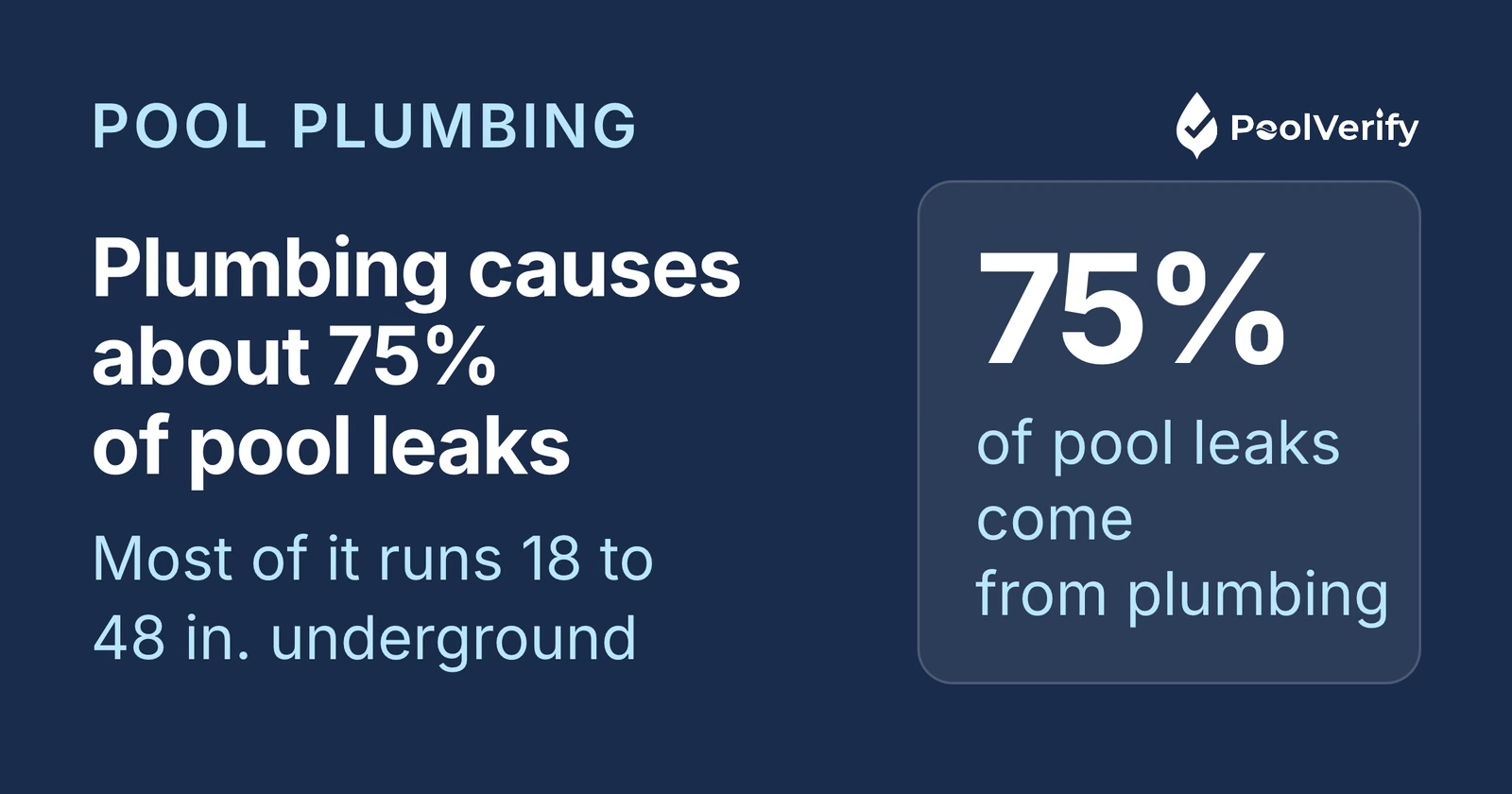
Pool plumbing failures account for approximately 75% of all pool leaks, costing homeowners thousands in water loss, structural damage, and expensive excavation repairs. A leaking pool can lose 2-3 inches of water daily, wasting over 5,000 gallons monthly—yet many plumbing problems remain hidden underground until they become catastrophic failures.

Professional pool plumbing inspection identifies leaks, assesses pipe condition, verifies code compliance, and evaluates main drain safety before minor issues escalate into major problems. According to California Building Code requirements effective January 2026, all pool plumbing must meet strict standards for materials, installation, and anti-entrapment protection.

This comprehensive guide covers everything you need to know about pool plumbing inspection—what inspectors check, common plumbing issues, leak detection methods, pressure testing protocols, PVC versus copper piping, main drain requirements, repair costs, and 2026 California code compliance.

Table of contents

  • Why pool plumbing inspection is essential
  • What inspectors check in pool plumbing systems
  • Pool plumbing system components
  • Common pool plumbing problems
  • Pool leak detection methods
  • Pressure testing procedures
  • PVC vs copper pool piping
  • Skimmer and return line inspection
  • Main drain anti-entrapment requirements
  • California Building Code requirements for pool plumbing
  • Pool plumbing lifespan and replacement
  • Pool plumbing repair costs
  • When to get pool plumbing inspection
  • Frequently asked questions

Why pool plumbing inspection is essential

Hidden underground failures

The challenge: 95% of pool plumbing runs underground—buried 18-48 inches beneath decks and landscaping where problems remain invisible until significant damage occurs.

Common scenarios:

  • Slow leaks waste water for months before detection
  • Tree roots penetrate underground pipes
  • Soil settlement crushes or shifts plumbing lines
  • Chemical damage weakens pipes from inside
  • Freeze-thaw cycles crack lines in cold climates

Cost of delayed detection: Minor leak detected early costs $300-$800 to repair; same leak left undetected for 6-12 months costs $3,000-$8,000 due to excavation, deck removal, and structural damage repairs.

Water loss and utility costs

Statistics:

  • Small plumbing leak (1/8" crack): Loses 150-300 gallons daily
  • Medium leak (1/4" crack): Loses 500-1,000 gallons daily
  • Major leak (1" break): Loses 5,000-15,000 gallons daily

Annual cost impact (California rates):

  • Small leak: $800-$1,600/year in water costs
  • Medium leak: $2,500-$5,000/year
  • Major leak: $25,000-$75,000/year

Beyond water bills, leaks cause:

  • Soil erosion and sinkholes under pool decks
  • Structural damage to pool shell and deck
  • Chemical imbalance from constant fresh water dilution
  • Increased pump run-time and energy costs

Safety concerns

Suction entrapment hazards: The Virginia Graeme Baker Act requires anti-entrapment drain covers on all pools due to tragic drowning deaths from suction entrapment.

Plumbing-related safety issues:

  • Single main drain creating dangerous suction
  • Non-compliant drain covers (pre-2008 installations)
  • Broken or missing drain covers exposing suction openings
  • Undersized suction lines creating excessive flow velocity
  • Poor plumbing design allowing entrapment risks

California requirements: HSC §115922 mandates specific suction entrapment protection for all California pools.

Residential pool plumbing system diagram showing suction and return lines

Residential pool plumbing system diagram showing suction and return lines

What inspectors check in pool plumbing systems

Professional pool plumbing inspections evaluate seven critical areas:

1. Visual assessment of exposed plumbing

Equipment pad inspection:

  • [ ] Pipe condition: Cracks, deterioration, UV damage on exposed PVC
  • [ ] Joint integrity: Properly glued joints, no separation or gaps
  • [ ] Support and mounting: Proper pipe hangers, no sagging or stress
  • [ ] Unions and connections: Accessible unions for equipment service
  • [ ] Valve operation: All valves functional, no leaking packing glands

Pool-side plumbing:

  • [ ] Skimmer throat: Cracks in plumbing connection to skimmer
  • [ ] Return fittings: Secure mounting, proper sealing in pool wall
  • [ ] Main drain covers: VGB-compliant covers, proper fastening
  • [ ] Cleaner line connection: Dedicated suction line if present

Common visible issues:

  • Sun-damaged PVC (chalky, brittle surface)
  • Leaking valve stems
  • Cracked skimmer throats
  • Loose return fittings in pool wall

2. Pressure testing underground lines

Purpose: Identifies leaks in buried plumbing that cannot be visually inspected.

Testing protocol:

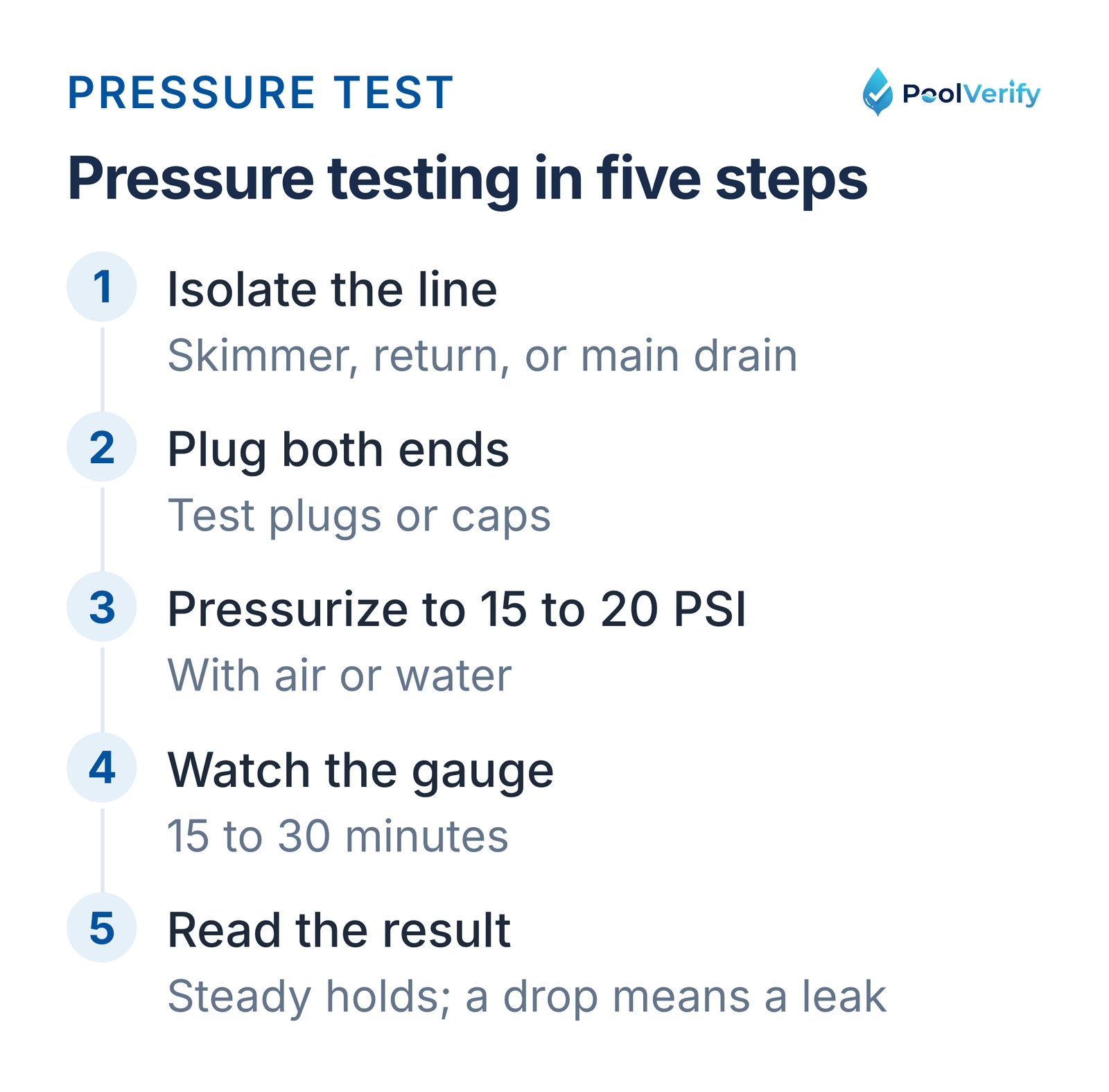
  1. Isolate line to be tested (skimmer line, return line, main drain line)
  2. Install test plugs or caps on both ends
  3. Pressurize line to 15-20 PSI with air or water
  4. Monitor pressure gauge for 15-30 minutes
  5. Pass: Pressure holds steady; Fail: Pressure drops (leak present)

What it reveals:

  • Underground leaks in buried piping
  • Joint failures not visible from surface
  • Cracks from soil settlement or roots
  • Compromised pipe integrity

Cost: Pressure testing typically costs $150-$500 depending on pool size and number of lines tested.

3. Leak detection inspection

Methods used:

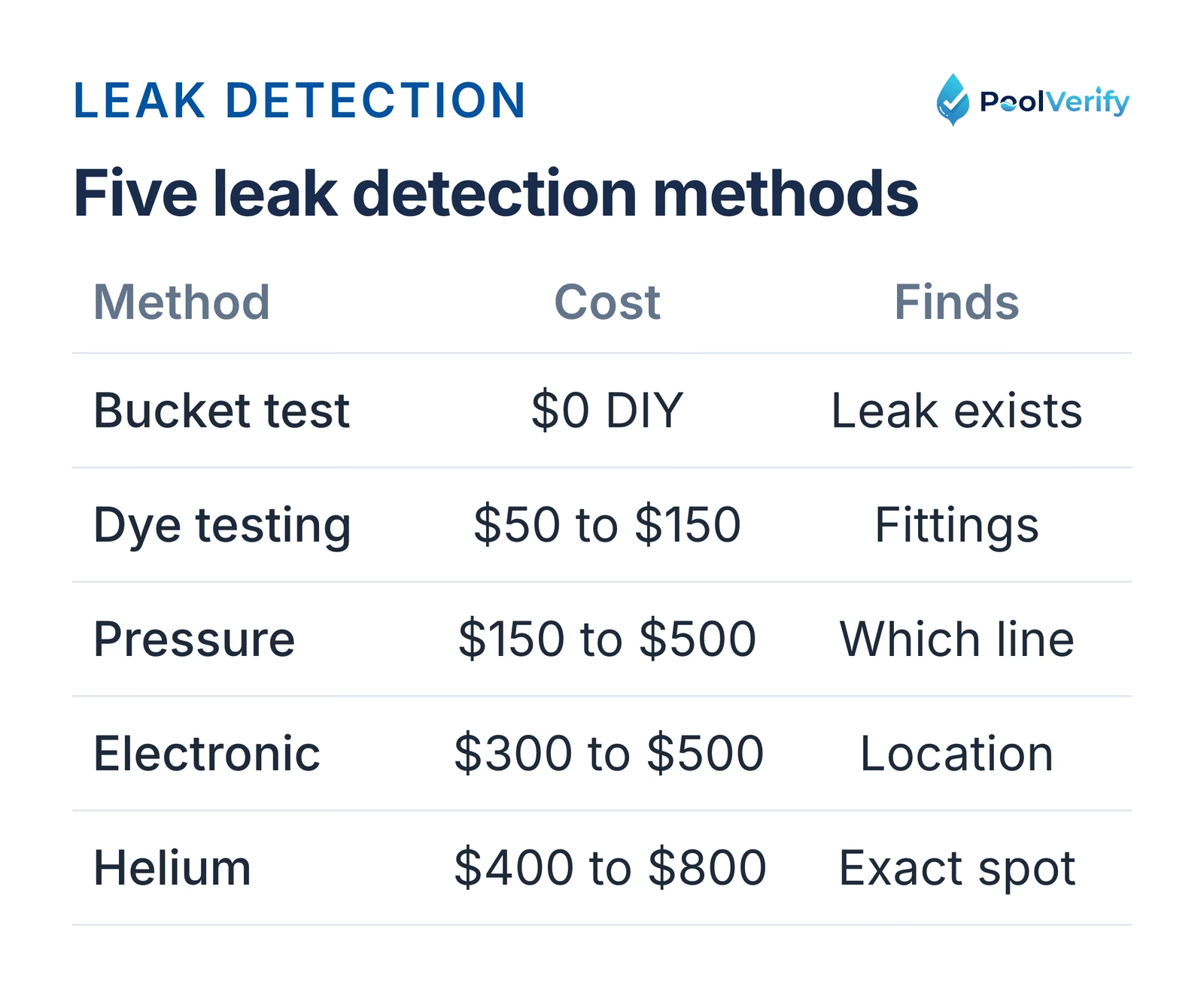
Bucket test (confirms pool is actually leaking):

  • Place bucket filled with water on pool step
  • Mark water level in bucket and in pool
  • Wait 24 hours
  • If pool loses more water than bucket: leak present
  • Cost: DIY, $0

Dye testing (pinpoints visible leak locations):

  • Inject colored dye near suspected leak
  • Dye drawn toward leak location
  • Effective for skimmers, lights, fittings
  • Cost: $50-$150

Electronic leak detection (locates underground leaks):

  • Acoustic listening devices detect water flow sounds
  • Ground microphones pinpoint leak location
  • Thermal imaging identifies temperature differentials
  • Cost: $300-$500 professional service

Statistical data: According to pool leak detection cost data, comprehensive leak detection averages $150-$500, with most homeowners paying around $300.

4. Flow rate and circulation assessment

Purpose: Verify adequate water circulation for filtration and chemical distribution.

Testing:

  • Measure flow rate at pump (GPM - gallons per minute)
  • Compare to design specifications for pool volume
  • Calculate turnover rate (time to circulate entire pool volume)

Standards:

  • Residential pools: Complete turnover every 8-10 hours
  • Commercial pools: Every 6 hours minimum
  • Flow restrictions indicate plumbing blockages or restrictions

Common flow problems:

  • Undersized plumbing (1.5" instead of 2" for larger pumps)
  • Clogged lines from debris or scale buildup
  • Excessive friction from too many turns/elbows
  • Pump undersized for plumbing system

5. Main drain inspection and compliance

Virginia Graeme Baker Act requirements (Federal law effective 2008):

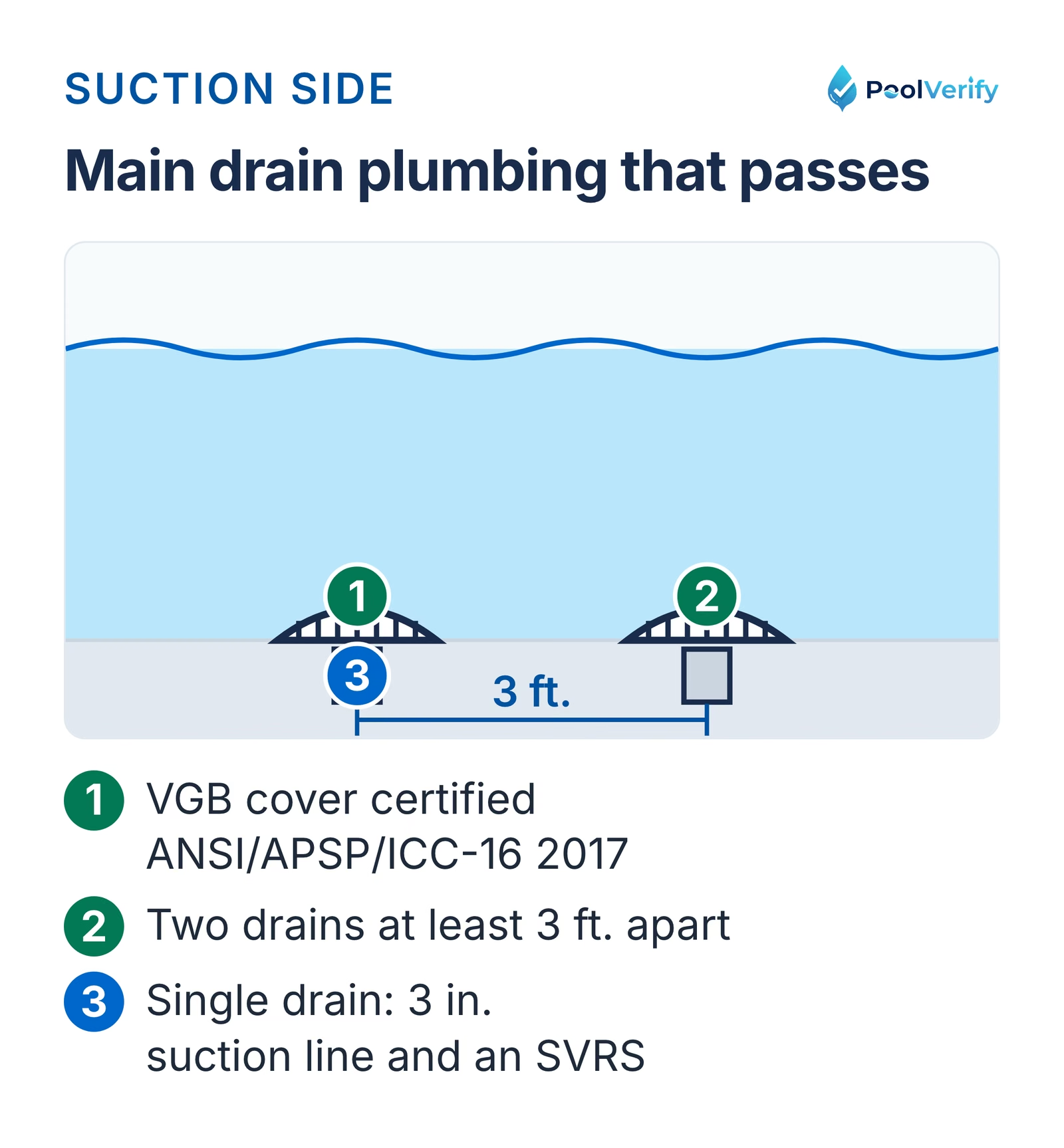
  • [ ] VGB-compliant drain covers with ANSI/ASME A112.19.8 or ANSI/APSP/ICC-16 2017 certification
  • [ ] Properly secured covers with all screws or fasteners intact
  • [ ] Multiple drains (two or more) when single main drain present, OR
  • [ ] Anti-entrapment device such as Safety Vacuum Release System (SVRS), OR
  • [ ] Unblockable drain design that cannot create suction seal

Inspection checklist:

  • [ ] Drain cover displays visible certification mark
  • [ ] All screws/fasteners secure (none missing)
  • [ ] Cover in good condition (no cracks or damage)
  • [ ] Grate spacing compliant (prevents body entrapment)
  • [ ] Installation date post-2008 (pre-2008 likely non-compliant)

Why critical: According to Texas DSHS, single main drains without proper protection have caused numerous drowning deaths from suction entrapment.

6. Suction line sizing and configuration

Code requirements: Suction lines must be properly sized to prevent excessive flow velocity that increases entrapment risk.

Sizing standards:

  • Single drain: Minimum 3-inch diameter suction line
  • Dual drains: Minimum 2-inch diameter per drain
  • Maximum flow velocity: 6 feet per second (residential)
  • Maximum flow velocity: 8 feet per second (commercial)

Inspection verification:

  • Measure suction line diameter
  • Calculate flow velocity based on pump capacity
  • Verify dual drain installation if required
  • Check for velocity limiters if installed

Common violations:

  • Undersized suction lines (1.5" on single main drain)
  • Single drain without secondary protection
  • Excessive pump capacity for plumbing system

7. Drainage and waste connections

Backwash line inspection:

  • Proper routing to sewer or drainage area
  • Adequate pipe sizing (2" minimum for typical systems)
  • Backflow prevention devices where required
  • No cross-connections to potable water

California backflow requirements: Starting July 1, 2026, all backflow testers must hold certification from a California-recognized organization to ensure pool plumbing doesn't contaminate drinking water.

Pool plumbing pressure testing procedure with equipment

Pool plumbing pressure testing procedure with equipment

Pool plumbing system components

Understanding pool plumbing components helps identify potential failure points:

Suction side (from pool to pump)

Main drain line:

  • Originates at pool floor drain(s)
  • Typically 2-3 inch diameter
  • Runs underground to equipment pad
  • Most critical for safety (VGB compliance)

Skimmer line(s):

  • Originates at pool surface skimmer(s)
  • Usually 1.5-2 inch diameter
  • May have multiple skimmers on large pools
  • Common leak location at skimmer throat connection

Skimmer valve: Allows switching between skimmer and main drain suction sources

Suction cleaner line (if applicable): Dedicated line for automatic pool cleaner, typically 1.5" diameter

Pressure side (from pump to pool)

Return lines:

  • Carry filtered water back to pool
  • Typically 1.5-2 inch diameter
  • Multiple return ports (2-4 typical in residential pools)
  • Lower pressure than suction side (leak less likely but still occurs)

Return fittings:

  • Wall-mounted pop-in fittings
  • Adjustable directional eyeballs
  • Must be watertight through pool wall

Heater bypass (if heater installed): Allows circulation without heating

Equipment connections

Pump connections:

  • Suction side union (allows pump removal)
  • Pressure side union
  • Typically threaded connections with O-rings

Filter connections:

  • Inlet from pump
  • Outlet to heater/returns
  • Multi-port valve on sand/DE filters

Heater connections:

  • Inlet from filter
  • Outlet to return lines
  • Bypass valve for non-heating mode

Chemical feeder connections: Inline chlorinators, salt systems, or other feeders

Common pool plumbing failure points illustrated

Common pool plumbing failure points illustrated

Common pool plumbing problems

Based on thousands of inspections, these are the most frequent plumbing issues:

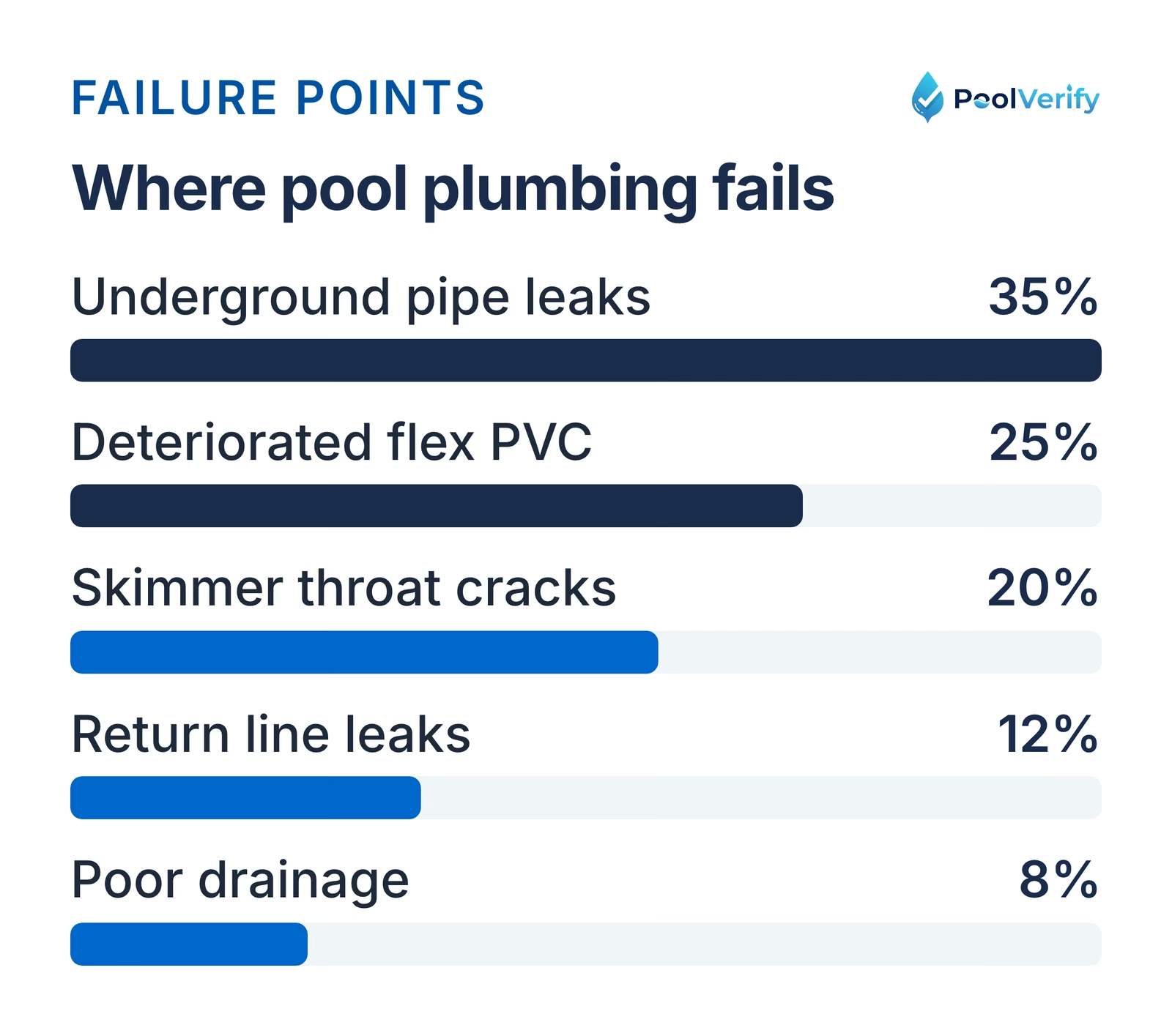
1. Underground pipe leaks (35% of issues)

Causes:

  • Glued joint failure (improper installation, chemical degradation)
  • Pipe cracking from soil settlement or earth movement
  • Root intrusion through pipe walls or joints
  • Freeze damage in cold climates
  • Chemical corrosion from inside

Symptoms:

  • Persistent water loss (1/4 to 2+ inches daily)
  • Wet spots in yard near pool
  • Sinkholes or soft ground around pool
  • Air bubbles in return jets (suction-side leak drawing air)
  • Difficulty maintaining chemical balance

Diagnosis: Pressure testing isolates which line is leaking

Repair: $800-$3,500 depending on location, depth, and deck removal required

Prevention: Use Schedule 40 PVC (not flex pipe underground), proper installation techniques, avoid chemical overdosing

2. Skimmer throat cracks (20% of issues)

Causes:

  • Freeze damage (water expands in skimmer throat)
  • Structural movement between pool shell and deck
  • Age deterioration of plastic skimmer body
  • Impact damage during pool cleaning

Symptoms:

  • Water loss when skimmer valve is open
  • Wet area behind skimmer in equipment area
  • Visible crack in skimmer throat area
  • Loss stops when using main drain only

Diagnosis: Visual inspection, dye testing confirms leak location

Repair options:

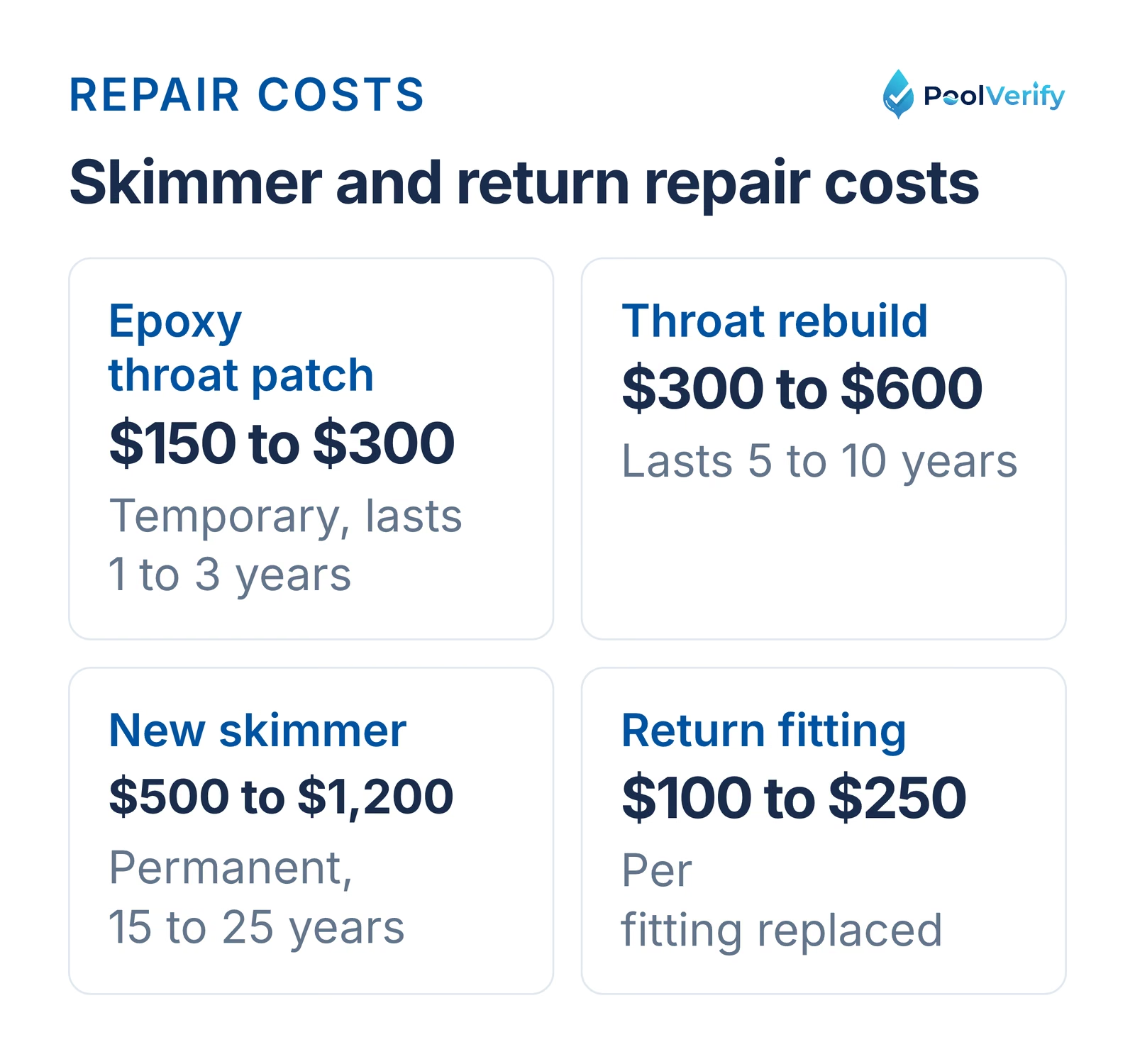
  • Epoxy patch: $150-$300 (temporary, lasts 1-3 years)
  • Skimmer replacement: $500-$1,200 (permanent solution)

Prevention: Winterize properly in cold climates, maintain proper water level year-round

3. Deteriorated flex PVC pipe (25% in older pools)

The problem: Flexible PVC pipe used in 1980s-1990s pool installations degrades over time, becoming brittle and developing leaks.

Why it fails:

  • Not designed for underground burial
  • Chemical breakdown from pool chemicals
  • Compression from soil weight
  • Kinking during installation

Replacement: $2,500-$6,000 to replace entire flex pipe system with rigid Schedule 40 PVC

Identification: Flex pipe issues are common in 30+ year old pools and should be replaced proactively

4. Return line leaks (12% of issues)

Common failure points:

  • Return fitting seal through pool wall
  • Underground return line joints
  • Return line manifold connections (where multiple returns branch)

Why less common: Pressure side operates at lower pressure than suction side, reducing stress on joints

Symptoms:

  • Water loss continues even with pump off (structural leak)
  • Wet area near return lines underground
  • Visible leak at return fitting in pool

Repair: $400-$1,800 depending on accessibility

5. Poor drainage and standing water (8% of issues)

Causes:

  • Improper slope in piping (should slope toward pool for drainage)
  • Low spots in underground piping where water collects
  • Inadequate winterization allowing freeze damage

Problems caused:

  • Algae growth in trapped water
  • Freeze damage from water not draining
  • Chemical residue accumulation
  • Reduced flow efficiency

Solution: Proper installation with continuous slope, low-point drains where needed

Pool leak detection methods comparison

Pool leak detection methods comparison

Pool leak detection methods

Professional inspectors use multiple methods to locate leaks:

Method 1: Bucket test (confirms leak presence)

Purpose: Determines if pool is actually leaking versus evaporation

Procedure:

  1. Fill bucket 3/4 full of pool water
  2. Place on pool step (bucket water level with pool level)
  3. Mark water level inside bucket and pool water level outside bucket
  4. Wait 24 hours (no swimming, turn off auto-fill)
  5. Compare water loss in pool vs bucket

Results:

  • Same loss: Evaporation only (normal)
  • Pool loses more: Leak present
  • Accuracy: ±0.25 inches

Cost: Free DIY test

Method 2: Dye testing (pinpoints visible leaks)

Purpose: Locates leaks at skimmers, lights, return fittings, steps

Procedure:

  1. Shut off pump (water must be still)
  2. Apply dye from squeeze bottle near suspected leak
  3. Watch dye movement
  4. Dye drawn into leak = leak confirmed

Best for: Skimmer leaks, light conduit leaks, return fitting leaks, step leaks

Cost: $50-$150 professional service, $10-30 DIY with dye kit

Limitations: Only works on accessible leaks, not underground piping

Method 3: Pressure testing (isolates underground leaks)

Purpose: Determines which underground line is leaking

Detailed procedure:

  1. Isolate each line: Close valves to test one line at a time
  2. Install test plugs: Plug both ends of isolated line
  3. Pressurize: Use air compressor or water to reach 15-20 PSI
  4. Monitor: Watch pressure gauge for 15-30 minutes
  5. Pass criteria: Pressure drop less than 1 PSI = no leak
  6. Fail criteria: Pressure drop 2+ PSI = leak present

What it reveals:

  • Which line has leak (skimmer vs return vs main drain)
  • Approximate leak severity (faster pressure drop = larger leak)
  • Confirms repair effectiveness after fixing

Professional equipment:

  • Test plugs (various sizes for different pipes)
  • Air compressor with regulator
  • Precision pressure gauge
  • Timer

Cost: Pressure testing costs $150-$500 depending on system complexity

Method 4: Electronic leak detection (pinpoints underground leaks)

Purpose: Locates exact position of underground leak without excavation

Technologies used:

Acoustic listening:

  • Amplifies sound of water escaping under pressure
  • Inspector walks pool perimeter with headphones
  • Leak creates distinct rushing sound
  • Accurate within 1-2 feet

Ground microphones:

  • Placed on ground surface
  • Detects vibration from water movement
  • Triangulation determines leak position

Thermal imaging:

  • Infrared camera detects temperature differences
  • Leaking water creates cool spots in ground
  • Works best in warm weather

Professional equipment cost: $5,000-$15,000 (reason for professional service)

Service cost: $300-$500 for complete electronic detection

Success rate: 85-95% accurate location on accessible lines

Method 5: Helium testing (advanced technique)

Purpose: Most precise leak location method

Procedure:

  1. Pressurize line with helium gas
  2. Use sensitive helium detector at ground surface
  3. Helium escapes through leak and rises through soil
  4. Detector pinpoints exact leak location

Advantages:

  • Extremely accurate (within inches)
  • Works through concrete and hard surfaces
  • Can detect very small leaks

Cost: $400-$800 (specialized technique)

Skimmer and return line inspection procedures

Skimmer and return line inspection procedures

Pressure testing procedures

Detailed pressure testing protocol for pool plumbing inspection:

Preparing for pressure testing

Safety precautions:

  • Never exceed 20 PSI on residential PVC (risk of rupture)
  • Wear safety glasses when pressurizing lines
  • Ensure all test plugs properly secured
  • Clear area of personnel before pressurizing

Required equipment:

  • Test plugs or caps (sized for pipe diameter)
  • Air compressor with regulator or hand pump
  • Pressure gauge (0-30 PSI range, calibrated)
  • Timer or stopwatch
  • Clipboard and data sheet

Step-by-step testing protocol

Step 1: Isolate line to test

  • Close valves to separate skimmer, main drain, and return lines
  • If no isolation valves present, may need to install test plugs at equipment pad

Step 2: Install test equipment

  • Install threaded test plug at pump suction port (for suction line testing)
  • Install test plug at skimmer or main drain opening (opposite end)
  • For return lines: plug at return ports and at equipment outlet
  • Ensure all plugs tight and secure

Step 3: Pressurize slowly

  • Connect air source to test fitting
  • Pressurize gradually to 15 PSI (residential standard)
  • Monitor pressure buildup on gauge
  • Watch for immediate drops (indicates major leak)

Step 4: Monitor test period

  • Start timer when reaching test pressure (15 PSI)
  • Record pressure reading every 5 minutes for 30 minutes
  • Note ambient temperature (affects air pressure slightly)
  • Watch for water pooling near pool (indicates leak location)

Step 5: Evaluate results

Pass criteria:

  • Pressure drop: 0-1 PSI over 30 minutes
  • Result: Line is sound, no significant leaks

Marginal criteria:

  • Pressure drop: 1-2 PSI over 30 minutes
  • Result: Very small leak or fitting weep, monitor and retest

Fail criteria:

  • Pressure drop: 2+ PSI over 30 minutes
  • Result: Leak present, proceed to leak location identification

Immediate fail:

  • Cannot achieve test pressure (won't pressurize)
  • Result: Major leak or line break

Interpreting pressure test results

Pressure drop rate indicates leak severity:

Pressure Drop (30 min)Leak SizeGallons Lost DailyUrgency
0-1 PSINone/minimal0-50Routine monitoring
1-2 PSISmall leak50-200Repair recommended
2-5 PSIMedium leak200-500Repair soon
5-10 PSILarge leak500-1,500Repair immediately
Won't pressurizeMajor break2,000+Emergency repair

Next steps after failed test:

  1. Electronic leak detection to pinpoint location
  2. Excavation planning (minimize deck damage)
  3. Repair methodology determination
  4. Retest after repair to verify fix

Cost-benefit of pressure testing

Testing investment: $150-$500

Value provided:

  • Confirms which line is leaking (prevents unnecessary excavation)
  • Quantifies leak severity (prioritizes repair urgency)
  • Verifies repair success (saves repeated excavation)
  • Prevents $2,000-$5,000 in wasted excavation at wrong location

ROI: Pressure testing before excavation saves 3-10x its cost by ensuring accurate repair location.

PVC vs copper pool piping

Pool plumbing uses two primary materials, each with distinct characteristics:

PVC (Polyvinyl Chloride) piping

Standard specification: Schedule 40 PVC, NSF-certified for pool use

Advantages:

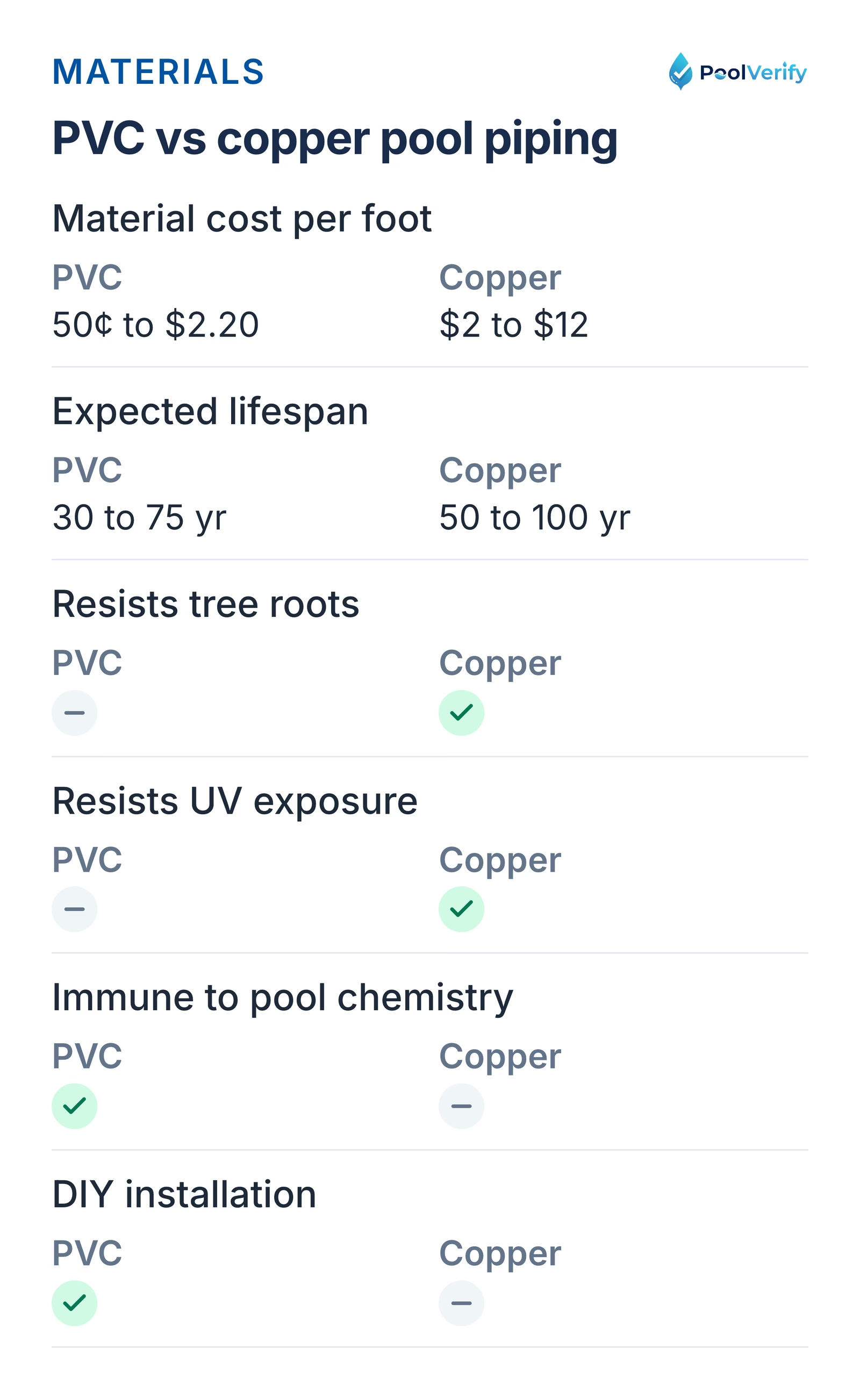
  • Cost-effective: $0.50-$2.20 per linear foot (material only)
  • Corrosion-resistant: Immune to chemical corrosion from pool water
  • Lightweight: Easy installation, reduced labor costs
  • DIY-friendly: Solvent welding doesn't require specialized skills
  • Flexible routing: Elbows and fittings allow complex layouts

Disadvantages:

  • UV sensitivity: Exposed PVC degrades from sunlight (chalking, brittleness)
  • Temperature limits: Softens above 140°F (issue with some heaters)
  • Impact vulnerability: Can crack from physical impact when cold
  • Lifespan variability: 30-75 years depending on installation quality

Installation requirements:

  • Purple primer and PVC solvent cement required
  • Proper cure time (24 hours before pressurizing)
  • UV protection (paint or insulation) for exposed pipes
  • Proper support spacing (every 4 feet horizontal)

Cost factors:

  • Schedule 40 vs Schedule 80 (80 is thicker, stronger, more expensive)
  • Diameter: 1.5" ($0.50/ft), 2" ($0.90/ft), 2.5" ($1.50/ft), 3" ($2.20/ft)
  • Fittings: $1-$15 each depending on size and type

Best for: Residential pools, standard installations, homeowner repairs

Copper pool piping

Standard specification: Type L copper (thicker wall than Type M)

Advantages:

  • Extreme durability: 50-100+ year lifespan
  • Root resistance: Tree roots cannot penetrate copper
  • Temperature tolerance: Handles very high temperatures
  • No UV degradation: Can remain exposed indefinitely
  • Professional appearance: Premium installation aesthetic

Disadvantages:

  • High cost: $2-$12 per linear foot (material only)
  • Specialized installation: Requires soldering skills and equipment
  • Corrosion potential: Some water chemistry can cause pinhole leaks
  • Thermal expansion: Requires expansion accommodation
  • Difficult repairs: Requires cutting, soldering, skilled labor

Installation requirements:

  • Soldering torch and solder
  • Proper flux application
  • Joint cleaning and preparation
  • Support every 6 feet horizontal
  • Expansion loops on long runs

Chemical compatibility concerns:

  • Low pH water accelerates copper corrosion
  • High chlorine can cause pitting
  • Requires careful water balance maintenance

Cost factors:

  • Labor cost significantly higher than PVC
  • Fittings: $3-$25 each
  • Installation time: 3-4x longer than PVC
  • Repair costs: $200-$400 per joint vs $50-$150 for PVC

Best for: Commercial pools, high-end residential installations, areas with aggressive root systems, hot water applications

PVC versus copper pool piping comparison

PVC versus copper pool piping comparison

PVC vs copper: Decision matrix

FactorPVC WinnerCopper WinnerNotes
Cost✓PVC costs 50-80% less installed
Durability✓Copper lasts longer (but PVC sufficient)
DIY Installation✓PVC much easier for homeowners
Root Resistance✓Copper immune to root penetration
Chemical Resistance✓PVC unaffected by pool chemistry
Temperature Tolerance✓Important for hot water applications
Repair Ease✓PVC repairs simpler and cheaper
Professional Appearance✓Copper looks more premium

Recommendation for residential pools: PVC Schedule 40 provides excellent performance at reasonable cost. Reserve copper for commercial applications or where specific conditions warrant the investment.

Hybrid installations

Some pools use both materials strategically:

  • PVC underground: Cost-effective for buried lines
  • Copper above ground: Exposed equipment pad piping for durability and appearance
  • Transition fittings: Special PVC-to-copper adapters required

Skimmer and return line inspection

Detailed inspection of critical pool plumbing entry points:

Skimmer inspection checklist

Skimmer throat assessment:

  • [ ] Structural integrity: No cracks in throat area where pipe connects
  • [ ] Connection seal: Watertight connection between throat and pipe
  • [ ] Freeze damage: Look for expansion cracks (common failure point)
  • [ ] Material condition: Check for brittleness or deterioration

Testing procedure:

  1. Lower water level below skimmer opening
  2. Visual inspection with flashlight
  3. Dye test around throat connection with pump off
  4. Look for water staining or mineral deposits indicating leak
  5. Check structural connection to pool wall

Skimmer weir inspection:

  • [ ] Weir door operates freely
  • [ ] Hinge not broken or missing
  • [ ] Weir creates proper seal when pump off

Common skimmer problems:

  • Cracked throat: Most common failure, requires repair or replacement
  • Separated connection: Pipe pulled away from skimmer body
  • Broken mounting: Skimmer loose in pool wall opening
  • Clogged line: Debris blockage in skimmer pipe

Repair costs:

  • Epoxy throat repair: $150-$300 (temporary, 1-3 years)
  • Skimmer replacement: $500-$1,200 (permanent solution)
  • Skimmer rebuilding: $300-$600 (recement existing skimmer)

Return line inspection checklist

Return fitting assessment:

  • [ ] Secure mounting: Fitting tight in pool wall (not loose or leaking)
  • [ ] Gasket condition: O-ring or gasket creating watertight seal
  • [ ] Thread condition: Threads not stripped or damaged
  • [ ] Eyeball operation: Directional fitting rotates and adjusts freely

Testing procedure:

  1. Operate pump and verify flow from each return
  2. Check for water leaking around fitting edge
  3. Adjust directional eyeball to verify free operation
  4. Look for bubbles or suction around fitting (indicates leak)
  5. Check for uneven flow (indicates partial blockage)

Return flow requirements:

  • All returns should have roughly equal flow
  • Flow should be strong and steady (not pulsing)
  • No air bubbles in return flow (indicates suction-side air leak)
  • Adjustable eyeballs should rotate freely

Underground return line assessment:

  • Pressure test individual return lines
  • Check manifold connections where returns branch
  • Verify proper pitch (no low spots trapping water)

Common return line problems:

  • Loose fitting: Vibration or water pressure loosened fitting
  • Cracked fitting: Impact damage or freeze damage
  • Underground leak: Joint failure or pipe crack
  • Flow restriction: Partial blockage or undersized piping

Repair costs:

  • Return fitting replacement: $100-$250 per fitting
  • Underground return line repair: $500-$1,500 per line
  • Return line manifold repair: $600-$1,800

Suction line inspection

Main drain line evaluation:

  • [ ] VGB-compliant drain cover properly installed
  • [ ] Adequate suction line sizing (minimum 2" for single drain, 3" preferred)
  • [ ] No excessive suction force at drain
  • [ ] Dual drain configuration if required
  • [ ] SVRS or other anti-entrapment device if equipped

Inspection challenges: Main drain lines typically cannot be visually inspected, requiring:

  • Pressure testing to verify integrity
  • Flow measurement to ensure proper operation
  • Camera inspection (if accessible through cleanout)

Main drain anti-entrapment requirements

Federal law mandates specific safety requirements for pool main drains:

Virginia Graeme Baker Act (VGB Act) requirements

Federal law: Public Law 110-140 enacted December 2007, effective December 2008

Purpose: Prevent suction entrapment drownings by requiring multiple layers of protection

Scope: Applies to all public pools and spas; California requires compliance on residential pools during property transfers

Core requirement: Pools with single main drain must have anti-entrapment protection

VGB-compliant drain covers

Certification required: All drain covers must meet ANSI/APSP/ICC-16 2017 standard (successor to ANSI/ASME A112.19.8)

Identification: Compliant covers display visible certification mark:

  • Manufacturer name
  • Model number
  • Flow rating (GPM)
  • Date of manufacture
  • ANSI/APSP/ICC-16 2017 mark

Design features:

  • Large surface area (reduces suction force per square inch)
  • Anti-entrapment grate design (prevents body seal)
  • Proper flow rating (must match or exceed pump capacity)
  • Tamper-resistant fasteners

Inspection verification:

  1. Photograph drain cover showing certification mark
  2. Verify all screws/fasteners present and secure
  3. Check cover for cracks, damage, or deterioration
  4. Confirm no makeshift repairs or modifications
  5. Measure drain cover against ANSI standard dimensions

Replacement requirement: Drain covers manufactured before 2008 presumed non-compliant and must be replaced

Cost: VGB-compliant drain cover replacement $200-$500 including installation

Dual drain configuration

Alternative to SVRS: Installing two or more main drains spaced adequately apart

Design requirements:

  • Minimum spacing: 3 feet apart (measured from nearest edges)
  • Piping configuration: Prevents both drains from being blocked simultaneously
  • Each drain: Must have VGB-compliant cover

Safety principle: If one drain blocked, second drain breaks suction seal, preventing entrapment

Advantage: No mechanical device to maintain (unlike SVRS)

Cost: Retrofitting dual drain system $2,500-$6,000 (requires pool structural modification)

Safety Vacuum Release System (SVRS)

What it is: Mechanical or electronic device that detects blockage and automatically shuts off pump

How it works:

  • Monitors suction pressure continuously
  • Detects sudden pressure spike (indicating blockage)
  • Automatically releases vacuum within 2 seconds
  • Shuts off pump to eliminate entrapment

Types:

  • Pressure-sensing SVRS: Mechanical valve responds to vacuum spike
  • Electronic SVRS: Electronic sensor triggers pump shutdown
  • Gravity-based SVRS: Atmospheric vent opens when vacuum detected

Inspection requirements:

  • [ ] SVRS label present showing compliance
  • [ ] Annual testing documented (required by manufacturer)
  • [ ] Device operational (test function verified)
  • [ ] No modifications or bypasses

Cost: SVRS installation $800-$2,000

Maintenance: Annual inspection and testing required ($100-$200)

Suction line sizing requirements

Purpose: Adequate pipe diameter prevents excessive flow velocity that increases entrapment force

Minimum sizing:

ConfigurationMinimum Pipe DiameterMaximum Flow Velocity
Single main drain3 inches6 ft/sec (residential)
Dual main drains2 inches per drain6 ft/sec each
Commercial poolsPer hydraulic calculation8 ft/sec maximum

Flow velocity calculation:

  • Velocity (ft/sec) = GPM × 0.408 ÷ (pipe diameter in inches)²
  • Example: 50 GPM through 2" pipe = 50 × 0.408 ÷ 4 = 5.1 ft/sec (compliant)
  • Example: 50 GPM through 1.5" pipe = 50 × 0.408 ÷ 2.25 = 9.1 ft/sec (violation)

Common violations:

  • 1.5" main drain line on single drain pool
  • Oversized pump creating excessive velocity
  • Retrofit high-capacity pump on undersized plumbing

Correction: Replace undersized suction line ($2,000-$5,000) or downsize pump capacity

California HSC §115922 requirements

State law: California Health and Safety Code Section 115922 mandates suction entrapment protection

Requirements parallel VGB Act:

  • VGB-compliant drain covers on all pools
  • Anti-entrapment protection on pools with single main drain
  • Applies during property transfers (inspection requirement)

Enforcement: Local health departments and building departments enforce compliance

Penalties: Non-compliance can delay property transfers and trigger mandatory corrections before sale completion

California Building Code requirements for pool plumbing

Effective January 1, 2026, California Building Standards Code (Title 24) updated plumbing requirements:

2025 California Plumbing Code provisions

Based on: Uniform Plumbing Code (UPC) 2024 with California amendments

Key pool plumbing requirements:

Water supply and fill lines:

  • Backflow prevention required (air gap or approved device)
  • Minimum 3/4" supply line for pool fill
  • No direct connection to pool (must have air gap)
  • Compliance with backflow testing requirements starting July 2026

Drainage connections:

  • Backwash line properly sized (2" minimum typical)
  • Must discharge to approved drainage point
  • Cannot discharge to storm drain without treatment
  • Cannot create cross-connection with potable water

Material standards:

  • PVC: Schedule 40 NSF-certified for pool use
  • Copper: Type L minimum for pool plumbing
  • Flexible PVC: Not approved for underground burial
  • All materials must have NSF/ANSI 14 certification

Installation standards:

  • Underground piping: 18" minimum depth (24" preferred)
  • Pipe bedding: Sand or fine gravel (no rocks)
  • Slope requirements: 1/4" per foot minimum toward drain points
  • Expansion accommodation: Required on long copper runs

Permit requirements

When permits required:

  • New pool construction (comprehensive permit)
  • Pool replumbing or major repairs
  • Equipment replacement requiring plumbing modifications
  • Addition of heater, sanitizer, or automation system

Permit exemptions (verify locally):

  • Minor repairs (replacing gaskets, seals)
  • Drain cover replacement
  • Filter cleaning or cartridge replacement
  • Chemical balancing equipment

Inspection requirements:

  • Rough-in inspection (before covering underground lines)
  • Pressure testing verification
  • Final inspection before pool fill

Non-compliance consequences:

  • Failed inspection (real estate transactions)
  • Required corrections before sale
  • Fines and penalties
  • Liability issues if injury occurs

Water conservation requirements

California drought provisions:

  • Pool covers recommended (reduce evaporation)
  • Efficient circulation equipment
  • Leak detection and prompt repair
  • Proper water level maintenance

Restrictions during drought emergencies:

  • New pool construction may be restricted
  • Pool filling limitations may be imposed
  • Mandatory leak repair within specified timeframe

Pool plumbing lifespan and replacement

Understanding component lifespans helps plan maintenance and replacements:

PVC pipe lifespan

Expected lifespan: 30-75+ years depending on installation quality and conditions

Factors affecting longevity:

  • Installation quality: Proper priming, gluing, and curing (major factor)
  • Chemical exposure: Aggressive chemical dosing accelerates degradation
  • UV exposure: Exposed pipes degrade faster (5-15 years without protection)
  • Water chemistry: Sustained low pH or high chlorine weakens pipes
  • Soil conditions: Aggressive soils or groundwater shorten lifespan

Signs of aging PVC:

  • Brittleness (pipe cracks easily when handled)
  • Discoloration (yellowing or darkening)
  • Surface crazing (fine cracks in surface)
  • Joint deterioration (separation at glued joints)

Proactive replacement recommendation: Consider replacement at 40-50 years even if no leaks present

Flex PVC pipe lifespan

Expected lifespan: 15-30 years maximum (often less)

Why shorter: Flex PVC not designed for burial, vulnerable to compression, chemical attack, and collapse

Replacement urgency: Pools with original flex pipe from 1980s-1990s should prioritize replacement before failures occur

Cost to replace: $2,500-$6,000 for complete flex pipe replacement with rigid PVC

Copper pipe lifespan

Expected lifespan: 50-100+ years with proper water chemistry

Factors affecting longevity:

  • Water chemistry: Low pH accelerates corrosion (maintain 7.2-7.8)
  • Water hardness: Soft water more aggressive to copper
  • Chlorine levels: Excessive chlorine causes pitting
  • Installation quality: Proper soldering and support

Signs of aging copper:

  • Pinhole leaks (corrosion through pipe wall)
  • Green patina (normal, protective in outdoor environments)
  • Thin spots visible in pipe wall

Advantage: Even 50-year-old copper often in excellent condition

Component-specific lifespans

ComponentExpected LifespanReplacement Indicators
PVC Schedule 40 pipe30-75 yearsBrittleness, cracks, leaks
Flex PVC pipe15-30 yearsCollapse, leaks, age >25 years
Copper pipe50-100+ yearsPinhole leaks, corrosion
PVC unions10-20 yearsO-ring hardening, leaking
Ball valves10-25 yearsDifficult operation, leaking
Check valves5-15 yearsFailed check, rattling
Skimmer body15-30 yearsCracks, structural failure
Return fittings20-40 yearsLoose, leaking gaskets
Main drain coversReplace every 10 years or when damaged

Replacement vs repair decision

When to repair:

  • Single isolated leak in otherwise sound system
  • Recent installation (<15 years old)
  • Accessible repair location (no major excavation)
  • Cost less than 30% of full replacement

When to replace:

  • Multiple leaks or repeat failures
  • Original installation >30-40 years old
  • Flex pipe present (proactive replacement)
  • Extensive excavation required for repair (replace while open)
  • System upgrade desired (larger pipe, better layout)

Cost comparison:

  • Single leak repair: $500-$1,500
  • Multiple repairs over time: $2,000-$5,000+
  • Complete system replacement: $3,000-$8,000
  • Replacement ROI: Prevents repeated excavation and water loss

Pool plumbing repair costs

Comprehensive cost guide for common pool plumbing repairs (2026 California pricing):

Leak detection and testing

ServiceCost RangeNotes
Bucket testDIY - $0Confirms leak presence
Dye testing$50-$150Professional service
Pressure testing$150-$500Per line tested
Electronic leak detection$300-$500Complete inspection
Helium leak detection$400-$800Most precise method

Underground pipe repairs

Factors affecting cost:

  • Pipe depth (18" vs 36")
  • Location accessibility
  • Deck material (concrete, pavers, etc.)
  • Extent of damage
Repair TypeCost RangeTypical Scenario
Single joint repair$500-$1,200Accessible location, no deck removal
Pipe section replacement$800-$2,0003-5 feet of pipe, minor excavation
Under deck repair$1,500-$3,500Concrete deck removal and replacement
Complex excavation$2,500-$5,000Deep burial, extensive deck work
Complete line replacement$2,000-$4,000Replace entire run (skimmer to equipment)

Skimmer repairs

Repair TypeCost RangeLifespan After Repair
Epoxy throat patch$150-$3001-3 years (temporary)
Throat rebuild$300-$6005-10 years
Complete skimmer replacement$500-$1,20015-25 years
Skimmer line replacement$800-$2,50030+ years

Return line repairs

Repair TypeCost RangeComplexity
Return fitting replacement$100-$250Simple (per fitting)
Fitting reseal$75-$150Basic (per fitting)
Underground return repair$600-$1,800Moderate (excavation required)
Return manifold repair$800-$2,200Complex (multiple connections)

Main drain work

ServiceCost RangeNotes
VGB drain cover replacement$200-$500Includes cover and installation
Dual drain retrofit$2,500-$6,000Major structural work
SVRS installation$800-$2,000Anti-entrapment device
Main drain line repair$1,500-$4,000Requires pool draining
Main drain line replacement$2,500-$6,000Complete line replacement

Equipment pad plumbing

ServiceCost RangeTimeline
Union replacement$75-$15030-60 minutes
Valve replacement$150-$4001-2 hours
Re-plumb equipment pad$800-$2,0001-2 days
Add isolation valves$300-$800Half day
Heater bypass installation$400-$900Half day

Complete system replacement

ScopeCost RangeTimeline
All underground lines$4,000-$8,0003-5 days
Equipment pad replumb$1,500-$3,5001-2 days
Complete system (underground + pad)$6,000-$12,0005-7 days
Includes: Excavation, new PVC, deck restoration, testing

Additional costs to consider

Associated expenses:

  • Pool draining (if required): $100-$300
  • Deck removal: $500-$2,000 depending on material
  • Deck restoration: $800-$3,000 depending on extent
  • Landscaping repair: $200-$1,000
  • Water refill: $80-$200 (20,000-30,000 gallons)
  • Chemical startup: $100-$200

Cost-saving strategies:

  • Bundle multiple repairs in one excavation
  • Replace aging components while area is open
  • Consider complete replacement vs repeated repairs
  • Schedule during off-season for better contractor availability

When to get pool plumbing inspection

Required inspections

New pool construction: Building department requires plumbing inspection before pool approval

Major plumbing work: After underground repairs, replumbing, or system upgrades

Real estate transactions: Pre-purchase inspection identifies plumbing issues before closing

BPC §7195 compliance inspection: California law requires pool safety inspection for property transfers including plumbing safety verification

Recommended inspections

Every 5-7 years: Routine inspection for early problem detection

Persistent water loss: Losing more than 1/4 inch daily (beyond evaporation)

Before major deck renovation: Verify plumbing integrity before covering with new deck

Older pools (15+ years): Identify aging components before failures

After severe weather: Freeze events, earthquakes, or soil shifting

When purchasing home: Comprehensive pre-purchase inspection

Warning signs requiring immediate inspection

Visible symptoms:

  • Losing water daily (more than 1/4 inch)
  • Wet spots near pool or equipment area
  • Sinkholes or soft ground around pool
  • Air bubbles from return jets
  • Difficulty maintaining chemical balance
  • Pump struggling or cavitating
  • Pool water level drops faster with pump running

Cost of early detection: $300-$800 for inspection vs $3,000-$8,000 for emergency repair of undetected leak

Frequently asked questions

How much does pool plumbing inspection cost?

Professional pool plumbing inspection costs $200-$500 depending on inspection scope. Basic visual inspection costs $100-$200. Comprehensive inspection including pressure testing costs $300-$500. Electronic leak detection adds $300-$500. Complete assessment with leak location costs $400-$800 total.

How long does PVC pool plumbing last?

Schedule 40 PVC pool plumbing typically lasts 30-75 years depending on installation quality and maintenance. Properly installed PVC with good water chemistry can last 50+ years. Flex PVC (used in older pools) lasts only 15-30 years and should be replaced proactively. Chemical abuse, UV exposure, and poor installation reduce lifespan significantly.

What causes pool plumbing leaks?

Common causes include: failed glued joints (35%), skimmer throat cracks from freeze damage (20%), deteriorated flex PVC pipe in older pools (25%), underground pipe cracks from soil settlement (12%), and root intrusion (5%). Poor installation, aggressive water chemistry, freeze-thaw cycles, and age all contribute to plumbing failures.

Can I repair pool plumbing leaks myself?

Simple above-ground repairs (replacing unions, fittings, or valves) are DIY-appropriate for handy homeowners. Underground leak repairs require excavation, proper PVC joining techniques, and pressure testing—best left to professionals. Incorrect repairs risk worse leaks and code violations. DIY repairs cost $50-$200 in materials; professional repairs cost $500-$2,000 but include warranty and proper techniques.

What is VGB compliance for pool main drains?

VGB compliance refers to Virginia Graeme Baker Act requirements for anti-entrapment protection. All pool main drains must have VGB-compliant drain covers certified to ANSI/APSP/ICC-16 2017 standard. Single main drains also require secondary protection: dual drain configuration, Safety Vacuum Release System (SVRS), or gravity drain design. California requires VGB compliance during property transfers.

How do I know if my pool has a plumbing leak?

Perform bucket test: fill bucket with pool water, place on pool step, mark levels inside and outside bucket, wait 24 hours. If pool loses more water than bucket, leak present. Other indicators: water loss exceeding 1/4 inch daily, wet spots near pool, sinkholes, air in pump basket, difficulty maintaining chemical balance, or continuous auto-fill operation.

What is the difference between PVC Schedule 40 and Schedule 80?

Schedule numbers indicate wall thickness. Schedule 40 is standard for residential pools—adequate strength at reasonable cost. Schedule 80 has thicker walls (50% stronger), costs 30-40% more, handles higher pressure, and resists impact better. Schedule 80 recommended for commercial applications, areas prone to impact, or installations requiring extra durability. Schedule 40 sufficient for typical residential pools.

How often should pool main drain covers be replaced?

Replace main drain covers every 10 years regardless of appearance, or immediately if damaged, cracked, or missing screws. VGB-compliant covers have finite lifespan—material fatigue and UV exposure degrade anti-entrapment protection over time. All pre-2008 drain covers should be replaced immediately with current VGB-compliant models. Cost: $200-$500 including installation.


Related posts

  • Pool Electrical Inspection Guide
  • Pool Equipment Inspection: Complete Checklist
  • California BPC §7195 Pool Inspection Guide
  • Virginia Graeme Baker Act: Complete Safety Guide
  • Pool Safety Inspection Checklist

Pool plumbing inspection with PoolVerify: Professional pool inspectors use PoolVerify software to document plumbing systems, record pressure test results, photograph drain covers, and generate comprehensive inspection reports. Complete your BPC §7195 inspections faster with digital checklists, instant PDF reports, and photo documentation.

Learn more about PoolVerify for California pool inspections →


Sources:

  • Pool Leak Detection Cost (Angi)
  • Pool Leak Detection Cost Guide (HomeGuide)
  • California Plumbing Code 2025 (UpCodes)
  • California Building Standards Code (DGS)
  • Virginia Graeme Baker Pool and Spa Safety Act (CPSC)
  • VGB-Compliant Drain Covers (CPSC Pool Safely)
  • California Backflow Testing Requirements 2026 Update (Pacific Backflow)
  • California HSC §115922 (CA Legislature)
  • How Much Does It Cost to Replace Pool Pipes? (Stanton Pools)
  • Copper Pipe Lifespan Discussion (Trouble Free Pool)
  • Fixing/Replacing Underground Pool Line Discussion (Bogleheads)

In this article

Table of contentsWhy pool plumbing inspection is essentialWhat inspectors check in pool plumbing systemsPool plumbing system componentsCommon pool plumbing problemsPool leak detection methodsPressure testing proceduresPVC vs copper pool pipingSkimmer and return line inspectionMain drain anti-entrapment requirementsCalifornia Building Code requirements for pool plumbingPool plumbing lifespan and replacement+ more sections below

Share

TwitterLinkedIn

Streamline inspections?

Professional reports in minutes.

Start Free Trial

Frequently Asked Questions

How much does a pool plumbing inspection cost?

Professional pool plumbing inspection costs $200-$500 depending on scope. Basic visual inspection runs $100-$200, comprehensive pressure testing costs $300-$500, and electronic leak detection adds $300-$500. A complete assessment with leak location typically totals $400-$800.

How long does PVC pool plumbing last?

Schedule 40 PVC pool plumbing typically lasts 30-75 years depending on installation quality and water chemistry maintenance. Properly installed PVC with balanced water chemistry can exceed 50 years. Flex PVC in older pools lasts only 15-30 years and should be replaced proactively.

What causes pool plumbing leaks?

Common causes include failed glued joints (35% of issues), skimmer throat cracks from freeze damage (20%), deteriorated flex PVC pipe in older pools (25%), underground pipe cracks from soil settlement (12%), and root intrusion (5%). Poor installation and aggressive water chemistry accelerate failures.

How do I know if my pool has a plumbing leak?

Perform a bucket test by placing a water-filled bucket on the pool step, marking levels, and waiting 24 hours. If the pool loses more water than the bucket, a leak is present. Other signs include water loss exceeding one-quarter inch daily, wet spots near the pool, and air bubbles in the pump basket.

What is VGB compliance for pool main drains?

VGB compliance refers to Virginia Graeme Baker Act requirements for anti-entrapment protection. All pool main drains must have certified drain covers meeting ANSI/APSP/ICC-16 2017 standards. Single main drains also require secondary protection such as dual drain configuration or a Safety Vacuum Release System.

Related Articles

Pool inspector examining pump, filter, and equipment pad with comprehensive checklist
Inspection-best-practices

Pool Equipment Inspection: Pumps, Filters & Systems Checklist [2026]

Complete pool equipment inspection guide covering pumps, filters, automation, chlorinators, and all pool systems. Learn what inspectors check, common problems, maintenance needs, and lifespan expectations.

Licensed electrician performing comprehensive pool electrical inspection with testing equipment at California swimming pool
Pool-compliance

Pool Electrical Inspection: Code Requirements [California 2026]

Complete guide to pool electrical inspection requirements under NEC Article 680 and California amendments. GFCI protection, bonding, grounding, and safety standards for 2026.

Professional pool inspector examining pool safety features with inspection checklist and tablet
Inspection-best-practices

Pool Inspection: Complete Guide for Homeowners & Inspectors [2026]

Complete guide to pool inspections: what they are, what inspectors check, California requirements, costs, and how to prepare. Expert insights for homeowners and inspectors.

Previous
Pool Inspector Training: Certification Programs [2026]
Next
Pool Route Software: Best Options for Pool Service Companies [2026]
500+ Inspectors
5+ Hrs Saved/Week

Ready to Transform YourPool Inspection Business?

Join California's fastest-growing inspection platform. Create professional reports in minutes, not hours.

Start Free Trial
14-day free trialFull feature accessCancel anytime
PoolVerify

The modern pool inspection platform built for California professionals. Complete BPC §7195 compliance, built in.

support@poolverify.io

256-bit SSL

Encrypted

CA Compliant

BPC §7195

Product

  • Features
  • Pricing
  • Resources

Free Tools

  • Compliance Checker
  • Cost Calculator
  • Salary Estimator

Compare

  • vs Spectora
  • vs HappyCo
  • vs HomeGauge
  • vs ISN
  • vs Pool Inspector App
  • vs Pro Pool Inspectors
  • vs SafetyCulture

Solutions

  • Pool Inspection Software
  • For Real Estate
  • For Property Managers
  • Free Trial

Resources

  • Pool Report Writing
  • CA AB 3205 Guide
  • Free Checklist Download
  • ROI Calculator
  • Case Studies

Locations

  • Fresno
  • Anaheim
  • Oakland
  • San Jose
  • San Diego
  • Sacramento
  • Long Beach
  • Los Angeles
  • Orange County
  • San Francisco Bay Area

Company

  • About
  • Security
  • Contact

Legal

  • Privacy
  • Terms
  • Do Not Sell

© 2026 PoolVerify, Inc. All rights reserved.

Built for California Pool Inspectors