Pool Inspection When Selling a House in California
Everything California homeowners need to know about pool inspections when selling property. Requirements, costs, timeline, compliance, and how to prepare your pool for a smooth real estate transaction.
Selling a house with a pool in California involves specific legal requirements that many homeowners discover too late in the transaction process. California's SB 442 and related pool safety laws require sellers to disclose the pool's safety compliance status before property transfer, and failure to do so can derail escrow, reduce your sale price, or create legal liability.
Approximately 65% of California home sales involving pools experience some negotiation or delay related to pool safety compliance. Proactive sellers who address pool inspection and compliance before listing sell their properties 18-22 days faster and receive offers 2-4% higher than those who wait for buyers to discover issues during escrow.
This comprehensive guide explains everything California homeowners need to know about pool inspections when selling property, including legal requirements, timing, costs, how to prepare, and strategies to avoid common pitfalls that slow transactions.
Do I need a pool inspection to sell my house in California?
Short answer: While California doesn't explicitly require sellers to obtain a pool inspection, you must disclose your pool's safety compliance status to buyers, which almost always requires a professional inspection.
California's SB 442 home inspection requirement
SB 442, which became effective January 1, 2018, amended BPC §7195:
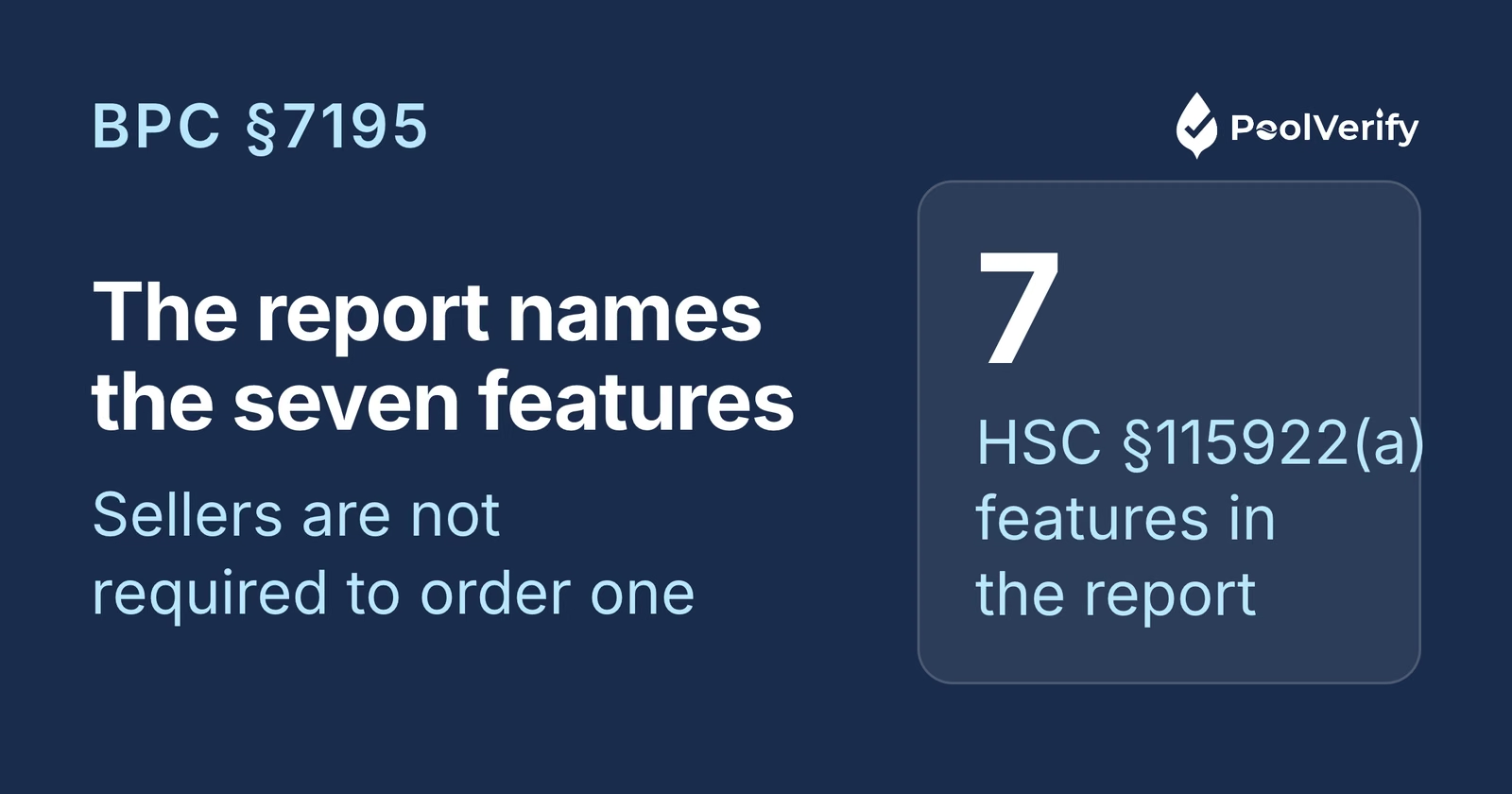
When a home inspection is performed in connection with the sale of a 1 to 4 unit residence with a swimming pool or spa, the inspection must include a noninvasive examination of the pool or spa and the dwelling to identify which, if any, of the seven HSC §115922(a) drowning prevention safety features are present, and the report must identify them.
In practice this means:
Yes The seven-feature statement appears in the home inspection report, not on a separate certificate
Yes The report is delivered to the buyer with the other inspection findings during escrow
Yes The statement is based on an actual inspection of the property
Result: A home inspection is not mandatory, but when the buyer orders one, the pool's seven-feature status goes into the report. A pre-listing pool inspection is the practical way for a seller to know that status first.
Why sellers get pre-listing inspections
Even though California law mandates the report content, not the inspection itself, sellers with pools order pre-listing pool inspections because:
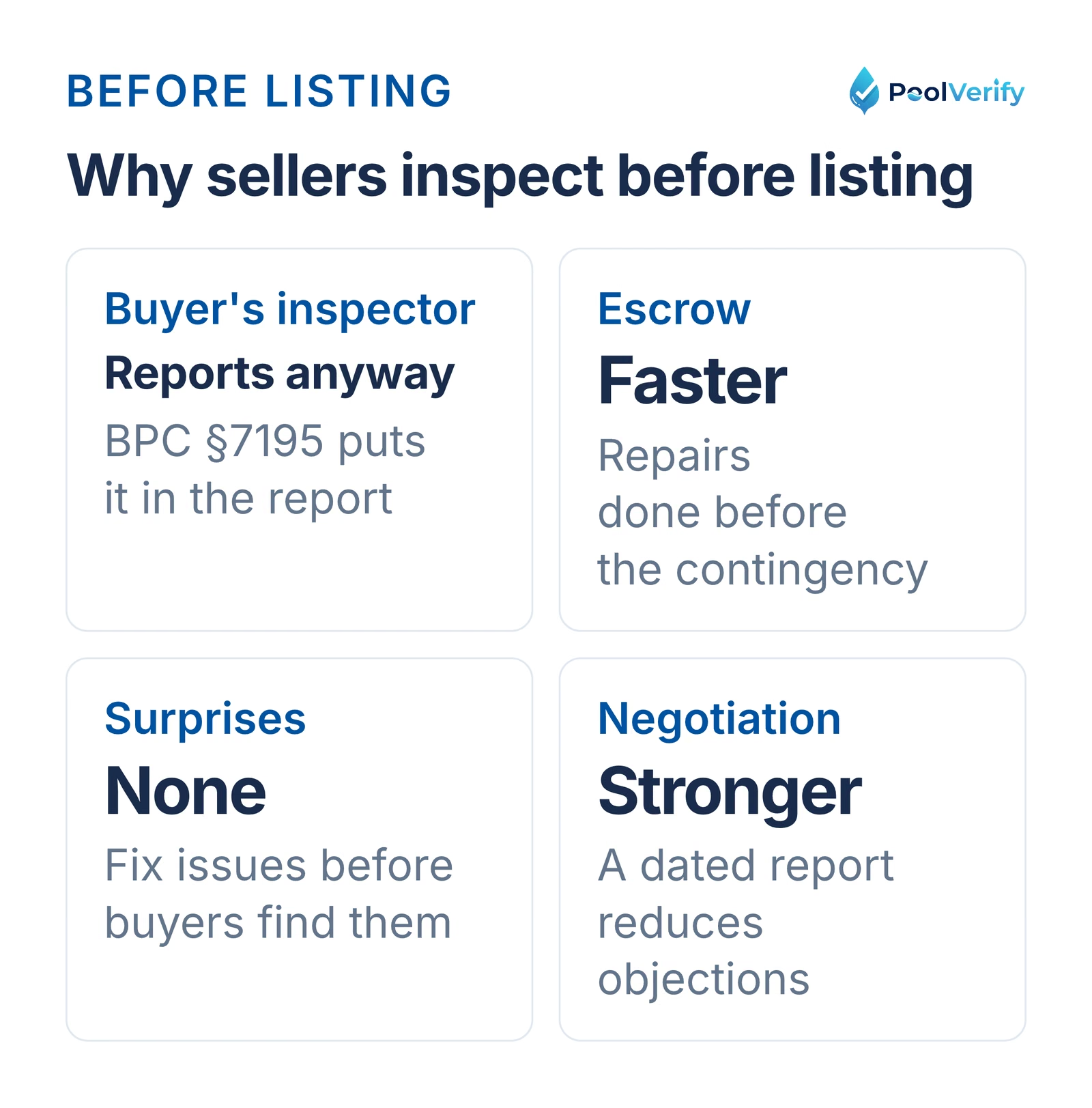
The buyer's inspector will report it anyway: BPC §7195 puts the seven-feature statement in every home inspection report
Speeds up escrow: repairs done before listing do not wait for the buyer's inspection contingency
Avoid surprises: discover and fix issues before buyers use them for negotiation leverage
Stronger negotiating position: a dated report reduces buyer objections
Disclosure: the Transfer Disclosure Statement asks about known conditions, and a report gives the seller a documented answer
Four reasons California sellers order a pool inspection before listing
When pool inspection is NOT required
You may skip formal inspection if:
Property has no pool or spa (obviously)
Pool was permanently filled in and removed (requires documentation)
Selling to all-cash buyer who waives inspection contingency (rare, risky for buyer)
Note: Even if buyer waives inspection, sellers are still legally required to disclose known defects. If you're aware of pool safety issues but don't disclose them, you face legal liability even if buyer waived inspection.
SB 442: the seven safety features in the home inspection report
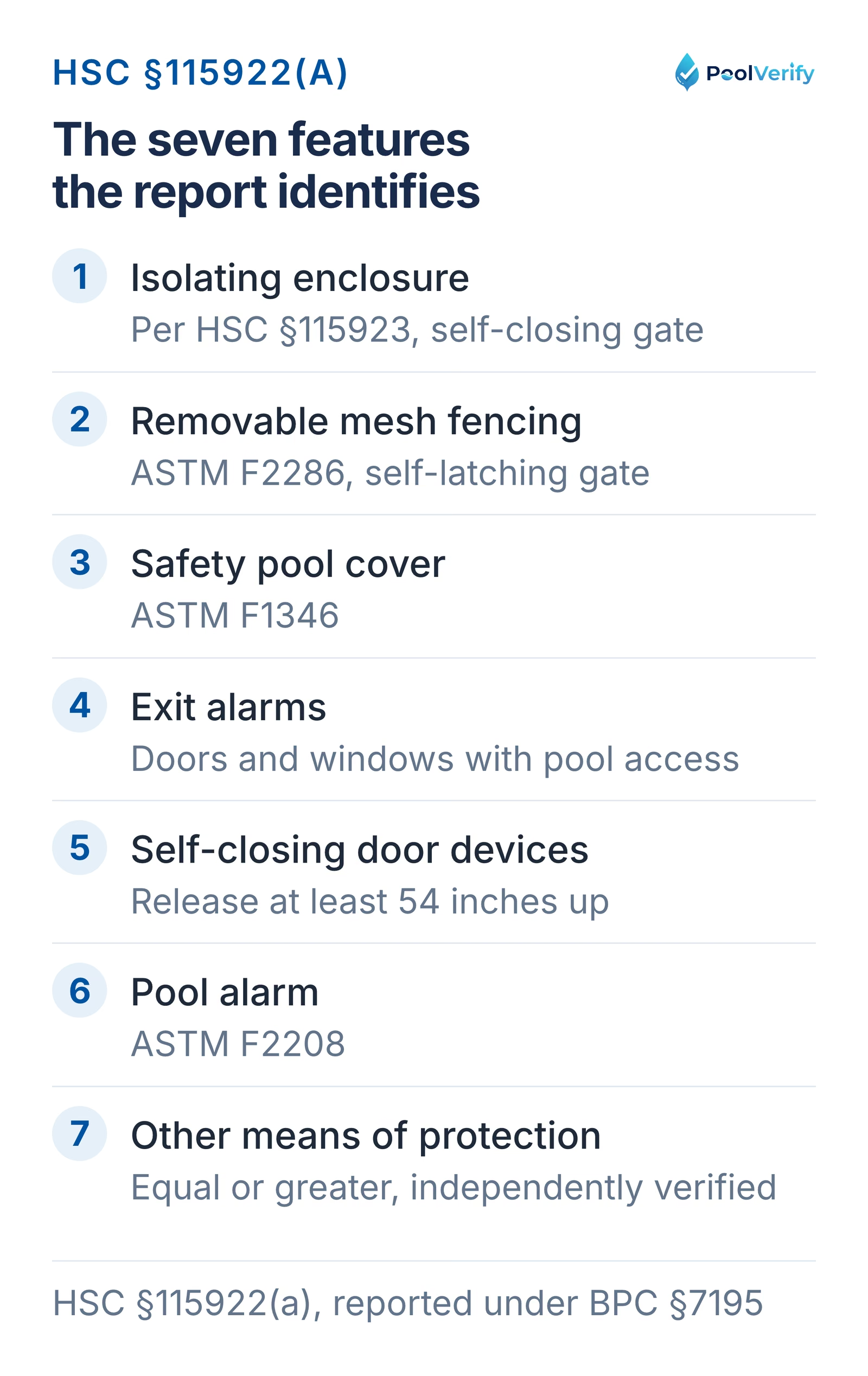
Under BPC §7195 as amended by SB 442, the home inspection report must identify which of the seven drowning prevention safety features in HSC §115922(a) the pool or spa has:
Enclosure that isolates the pool from the home, per HSC §115923, with a self-closing, self-latching gate
Removable mesh fencing meeting ASTM F2286 with a self-closing, self-latching gate
Approved safety pool cover meeting ASTM F1346
Exit alarms on doors and windows providing direct pool access
Self-closing, self-latching devices on home-to-pool doors, release at least 54 inches above the floor
Pool alarm certified to ASTM F2208
Other means of protection of equal or greater protection, independently verified
Minimum requirement: the two-of-seven rule in HSC §115922 applies when a building permit is issued for a new or remodeled pool or spa. An existing pool being sold is not required to add features; the report states how many of the seven it has, and a pool with one or none is a negotiation point, not a violation.
Format: the statement is part of the home inspection report. There is no separate seller certificate.
The seven HSC §115922(a) drowning prevention features the home inspection report identifies
Specifically state if fewer than two features exist
Include findings in written inspection report
Impact for sellers: Even if you don't get pre-listing inspection, buyer's inspector will document pool compliance status, and buyers use this for negotiation.
Failure to disclose: Sellers who knowingly fail to disclose pool defects face:
Breach of contract claims
Fraud/misrepresentation lawsuits
Damages including buyer's repair costs, attorney fees, and potentially punitive damages
Natural Hazard Disclosure (NHD)
Some local jurisdictions require additional pool-related disclosures:
Los Angeles County: Some cities require annual pool barrier inspections for rental properties
San Diego County: Enhanced disclosures for pools near slopes or hillside properties
Check local requirements: Contact your real estate agent or local building department to determine city-specific disclosure requirements.
Statute of limitations for disclosure violations
Important: California's statute of limitations for construction defect claims is typically 4 years from close of escrow. Sellers remain liable for non-disclosure during this period.
Best practice: Over-disclose rather than under-disclose. Document all known pool issues, repairs, and safety feature installations to protect yourself from future claims.
When to get your pool inspected
Strategic timing of pool inspection can save time, money, and stress during the sale process.
Option 1: Pre-listing inspection (recommended)
Timing: 2-4 weeks before listing property
Process:
Hire licensed pool inspector 3-4 weeks before target listing date
Review inspection report and identify any deficiencies
Complete repairs/upgrades before listing (1-2 weeks)
Include compliance documentation in listing disclosures
Advantages: YesControl the process: Fix issues on your timeline, not under escrow pressure YesAvoid surprises: Know exactly what buyers will discover YesStronger position: Documentation shows proactive compliance YesFaster escrow: No waiting for buyer's inspector YesBetter pricing: Buyers pay premium for "inspection-ready" homes YesFewer negotiations: Compliance eliminates major negotiation point
Disadvantages: No Seller pays upfront cost ($150-$350) No Must disclose any issues discovered No If sale falls through, may need updated inspection for next buyer
Best for: Sellers who want maximum sale price and fastest transaction, or those with pools that may have compliance issues.
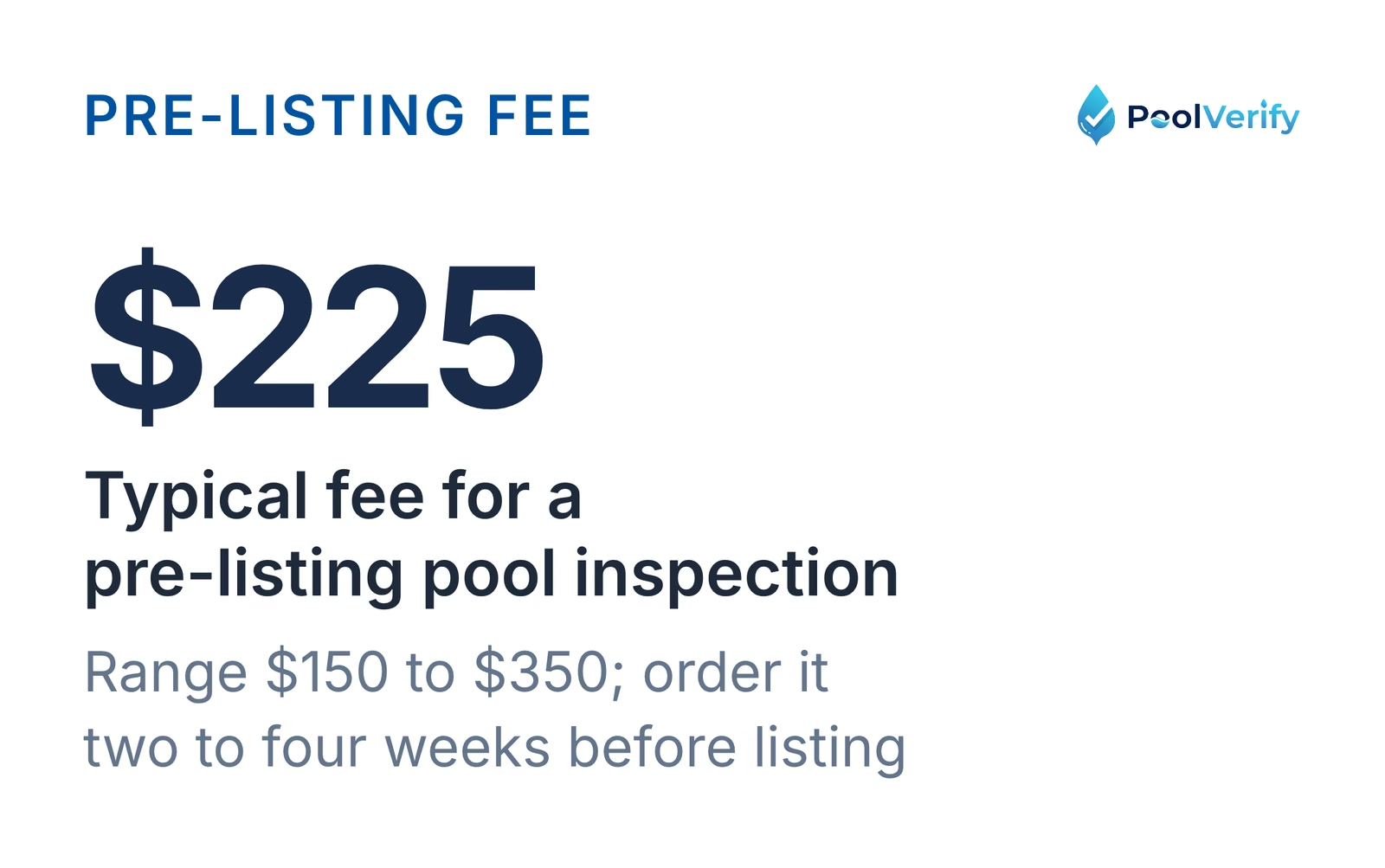
A pre-listing pool inspection typically costs $225, ordered two to four weeks before listing
Option 2: During buyer's due diligence period
Timing: Days 1-17 of escrow (typical due diligence period)
Process:
Buyer orders pool inspection during home inspection phase
Inspector identifies safety features and deficiencies (days 5-10)
Buyer presents inspection report with repair requests (days 10-14)
Negotiations over repairs, credits, or price reductions (days 14-17)
Seller completes agreed repairs or offers credits
Advantages: Yes No upfront cost if buyer pays for inspection Yes Only one inspection needed (buyer's satisfies disclosure requirement) Yes May negotiate repairs vs price reduction
Disadvantages: No Delays escrow by 7-14 days No Weaker negotiating position (under contract pressure) No Buyers use issues for maximum leverage No Risk of deal falling apart over pool issues No Time-compressed repairs (may pay premium to contractors)
Best for: Sellers confident their pool is compliant, or in strong seller's markets where buyers are less likely to push back.
Seller still discloses known pool conditions on the Transfer Disclosure Statement
Transaction proceeds without third-party pool verification
Advantages: Yes Fastest transaction (no inspection delays) Yes No inspection costs Yes Eliminates negotiation over inspection findings
Disadvantages: No Seller still liable for known defects not disclosed No Very rare (less than 5% of transactions) No Risky for seller if pool has hidden issues
Best for: All-cash investors buying "as-is" properties, typically in distressed sales or foreclosures.
Timing recommendation by market condition
Market Type
Recommended Timing
Reason
Hot seller's market
Pre-listing
Buyers more willing to pay premium for compliant pools
Balanced market
Pre-listing
Positions property competitively
Buyer's market
Pre-listing (essential)
Eliminates buyer objections, speeds transaction
Luxury properties
Pre-listing (mandatory)
Affluent buyers expect compliance documentation
Real estate strategy: In any market, pre-listing inspection provides maximum control and strongest negotiating position. The $200-$350 cost is minimal compared to potential price reductions or lost deals.
What pool inspectors look for during home sales
Understanding what inspectors evaluate helps sellers prepare pools properly before listing.
Primary focus: Seven safety features assessment
Inspectors evaluate which of California's seven drowning prevention safety features are present:
Feature 1: Enclosure barrier with compliant gates
Inspector checks:
Barrier height: Minimum 60 inches from grade
Slat spacing: Maximum 4 inches apart (prevents child access)
Gate functionality: Self-closing from any open position
Latch position: Minimum 60 inches above the ground (HSC §115923(a))
Latch operation: Self-latching, not easily opened by children
Barrier integrity: No gaps, damage, or climbable features
Ground clearance: Maximum 4 inches between barrier and ground
Common failures:
Gates don't fully close or latch properly (most common issue)
Fence too short (54-58 inches instead of 60 inches)
Slats spaced over 4 inches apart
Climbable features near fence (landscape blocks, equipment)
Feature 2: Building wall as barrier (attached pools)
Inspector checks:
Exit alarms on all doors providing pool access
Alarm volume: Minimum 85 decibels at 10 feet
Alarm functionality: Tests automatic reset and manual override
Window protection: Windows <60" high have child-resistant latches
Pet door security: Pet doors made inoperable or alarmed
Common failures:
Door alarms not installed or non-functional
Alarm batteries dead
Windows providing pool access without child-resistant hardware
Features 3-7: Additional safety measures
Pool cover (if present):
ASTM F1346 certification label visible
Cover operational and in good condition
Supports required weight (485 pounds minimum)
No entrapment hazards
Pool alarm (if present):
Tests functionality by creating water disturbance
Verifies 85+ decibel alarm sound
Checks battery/power source
Mesh fencing (if present):
ASTM F2286 compliance
Proper height (48 inches minimum)
Mesh integrity (no tears or gaps)
Secondary focus: Overall pool condition and safety
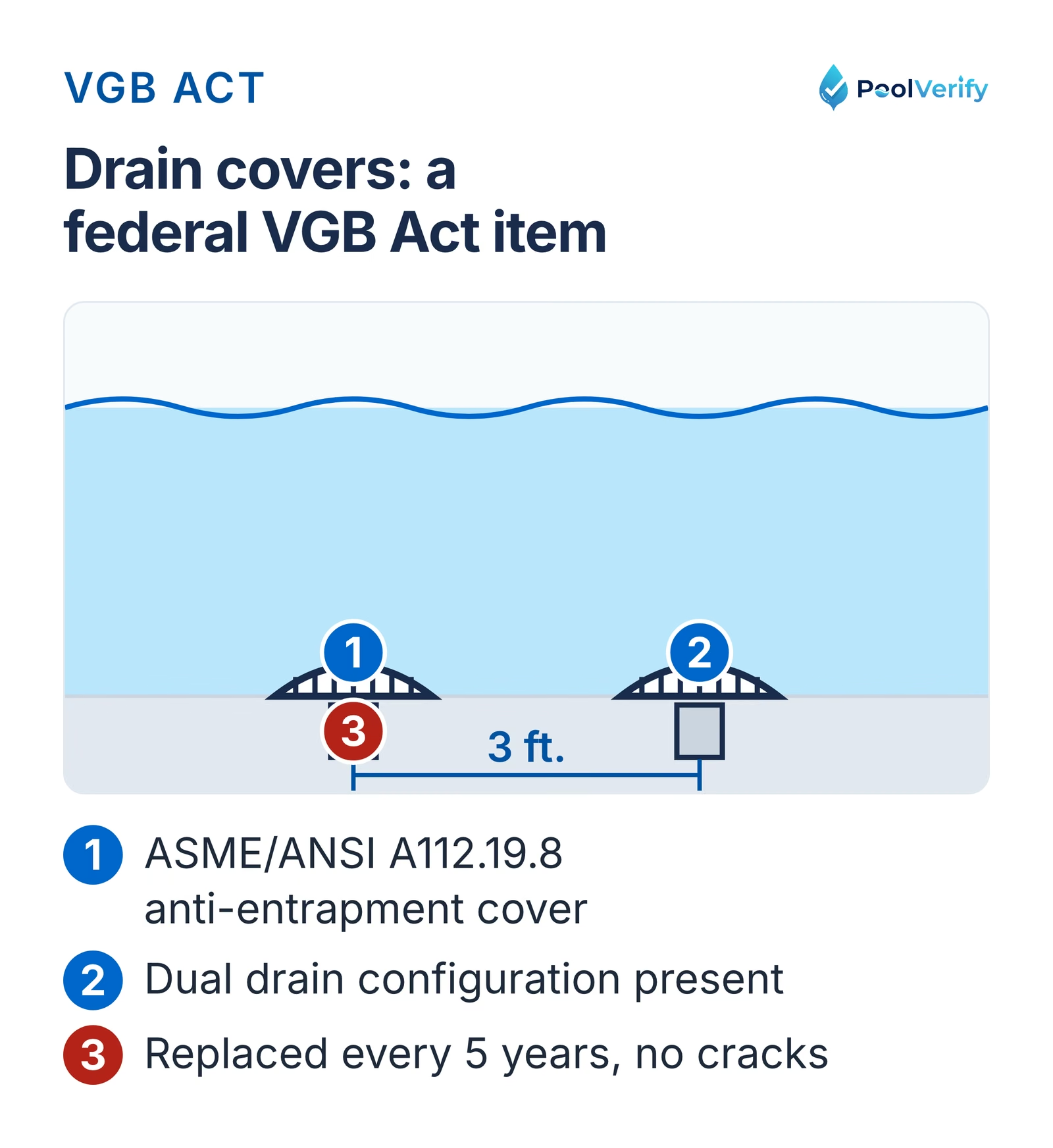
Age verification: Drain covers must be replaced every 5 years
Condition: No cracks, missing screws, or damage
Dual drain system: Required configuration present
Critical: Non-compliant drain covers are a federal violation under the Virginia Graeme Baker Pool and Spa Safety Act. This is often the most serious issue found during inspections.
Drain cover checks at a home sale: anti-entrapment covers, a dual drain layout, and replacement every 5 years
Water quality and chemistry
Basic water test (some inspectors)
Evidence of proper maintenance
Algae or staining issues
Electrical safety
GFCI protection: Required on all pool electrical circuits
No Cosmetic issues (minor staining, tile appearance)
No Landscape irrigation or water features
No Pool cleaning equipment (vacuums, nets, chemicals)
No Future maintenance cost projections
Scope clarification: Pool inspections for real estate transactions focus primarily on safety compliance and major functionality. Detailed pool equipment evaluations require separate specialized inspections and are rarely ordered during home sales.
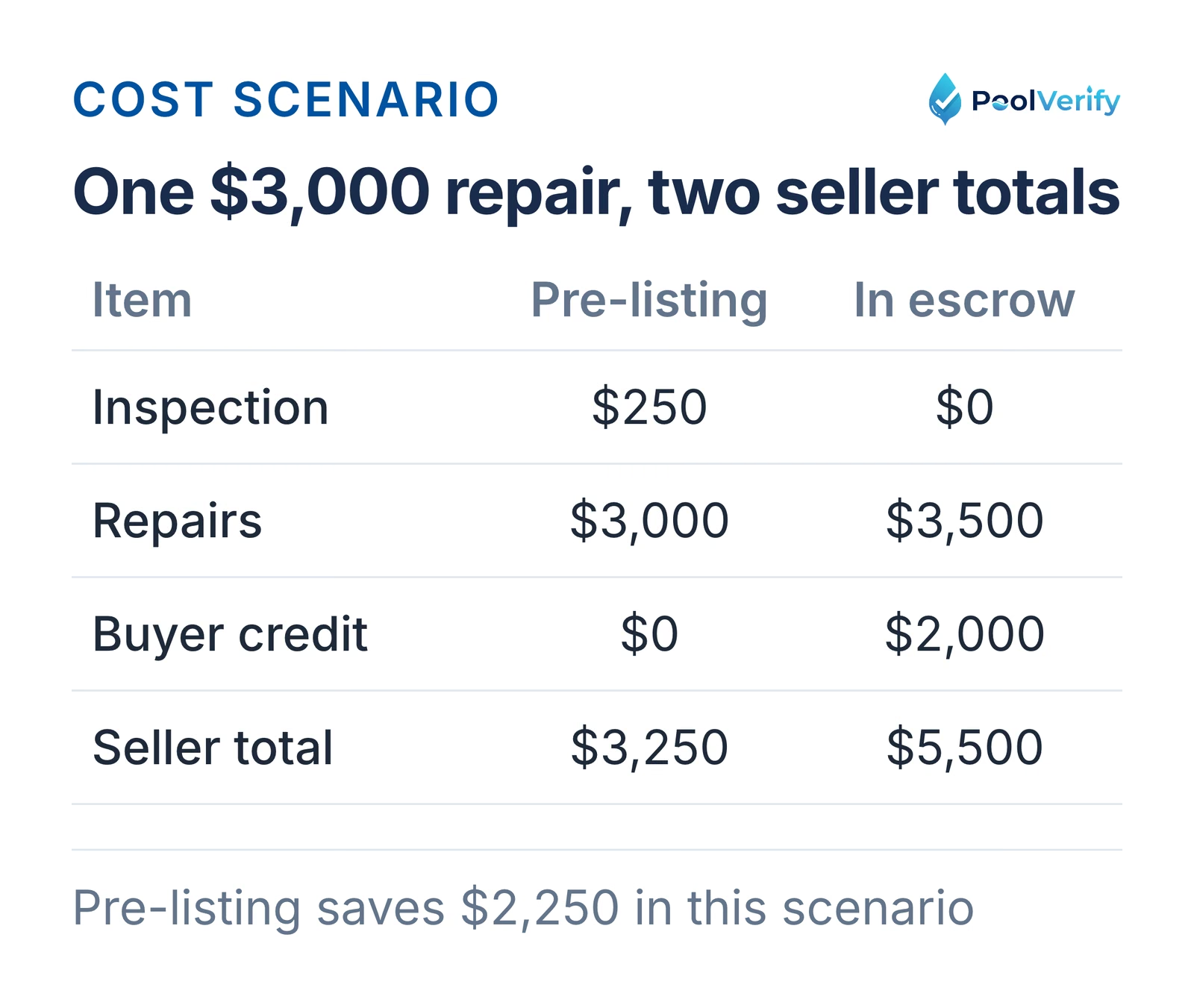
Total seller cost: $5,500 ($3,500 repairs + $2,000 credit)
Result: 14-day escrow delay + buyer leverage
Savings with pre-listing: $2,250 (41% less cost) + faster transaction + stronger position
Who pays for inspection?
Common payment arrangements:
Pre-listing inspection (if seller orders):
Yes Seller pays: 100% of cases
Cost: $200-$350
Benefit: Seller keeps report, uses for disclosure
During escrow inspection (buyer-ordered):
Yes Buyer pays: 88% of transactions
No Seller pays as concession: 7% of transactions
No Split 50/50: 5% of transactions (usually negotiated)
Repairs after inspection:
Seller pays: 75% (seller completes repairs before close)
Credit to buyer: 15% (buyer handles repairs after close)
Price reduction: 10% (negotiated price reduction in lieu of repairs)
Negotiation insight: In buyer's markets or luxury properties, sellers increasingly pay for both pre-listing and buyer's inspection to demonstrate commitment to transparency and smooth transaction.
Seller cost for a $3,000 repair when found before listing versus during escrow
How to prepare your pool for inspection
Proper preparation helps ensure your pool passes inspection and presents well to potential buyers.
4-6 weeks before listing: Major repairs
If you're getting pre-listing inspection, allow time for significant work:
1. Test and repair all safety features
Barrier fence:
Measure fence height (should be 60+ inches)
Check slat spacing (4 inches or less)
Test all gates for self-closing and self-latching
Repair or replace damaged fence sections
Secure any loose posts or panels
Exit alarms (if applicable):
Replace batteries in all door alarms
Test alarm volume (should exceed 85 decibels)
Verify automatic reset functionality
Replace non-functional alarms ($50-$150 each)
Pool covers/alarms (if present):
Test pool cover operation
Verify ASTM certification label visible
Test pool alarm with water disturbance
Replace batteries if needed
2. Replace drain covers if needed
Critical requirement: Drain covers must:
Bear ASME/ANSI A112.19.8 certification stamp
Be in perfect condition (no cracks, missing screws)
Be replaced every 5 years maximum
Action:
Check manufacturer date on drain covers
If over 5 years old or damaged, replace immediately ($200-$600)
Keep receipts for buyer documentation
3. Major equipment repairs
Pool pump/filter:
Address any leaks or unusual noises
Clean or replace filter cartridges/grids
Verify pump operates properly (no overheating)
Heater (if present):
Schedule professional service if not functioning
Address any gas leaks immediately (safety hazard)
Verify pilot light and ignition working
Automation/controls:
Test timers and automatic controls
Reset salt systems or chemical feeders
Replace any obviously broken components
2-3 weeks before listing: Cosmetic improvements
Make pool visually appealing for showings:
1. Deep clean pool and surrounding area
Professional acid wash if heavily stained
Brush and vacuum pool thoroughly
Clean tiles and waterline (remove calcium buildup)
Power wash deck and coping
Clean pool furniture and equipment area
2. Water chemistry perfection
Balance pH (7.4-7.6 ideal)
Chlorine: 1-3 ppm
Alkalinity: 80-120 ppm
Crystal clear water (no algae, cloudiness, or discoloration)
Consider hiring pool service for weekly maintenance during listing period
3. Landscape and surrounding area
Trim trees and bushes around pool
Remove dead plants or overgrown vegetation
Repair or replace damaged deck furniture
Organize pool equipment shed/area neatly
Remove personal items (toys, floats, chemicals)
Week of inspection: Final touches
Day before inspection:
Test all gates to verify self-closing and latching
Replace any burned-out pool lights
Skim debris from water surface
Check that all equipment is running properly
Ensure alarm batteries are fresh
Have documentation ready (permits, past inspections, equipment manuals)
Day of inspection:
Turn on all pool equipment 2 hours before inspector arrives
Unlock all gates and doors providing pool access
Have pool electrical breaker panel accessible
Remove any obstructions blocking barrier fence or equipment
Be available to answer questions (or designate knowledgeable representative)
Documentation to prepare
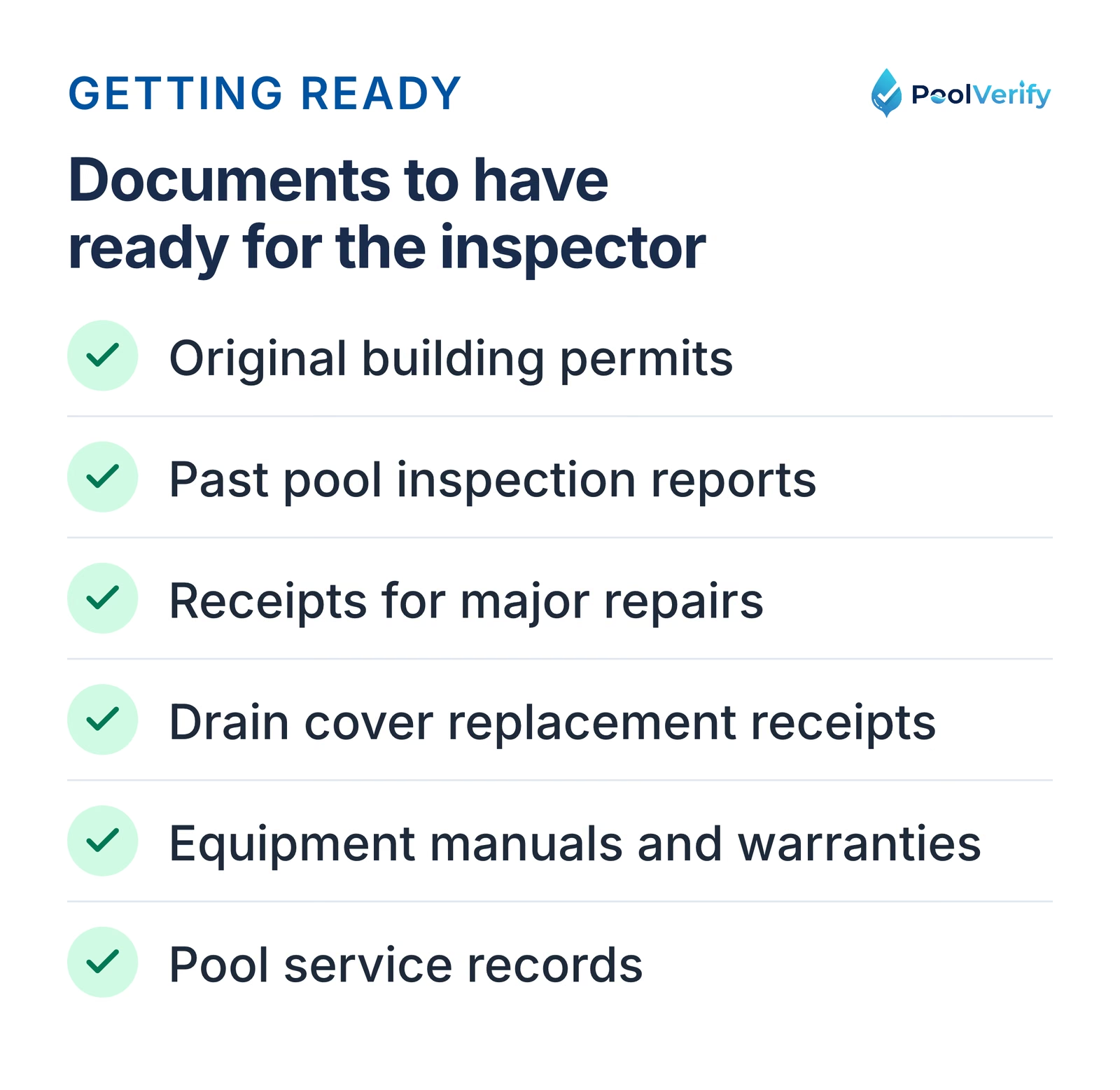
Gather these documents before inspection:
Yes Original building permits (if pool built during your ownership)
Yes Past pool inspection reports
Yes Receipts for major repairs or equipment replacement
Yes Drain cover replacement receipts (proof of 5-year compliance)
Yes Pool equipment owner's manuals and warranties
Yes Service records from pool maintenance company
Yes Any variance or compliance waivers from building department
Why documentation matters: Buyers and their agents view comprehensive documentation as proof of proper maintenance, which increases confidence and reduces negotiation friction.
The documents a seller gathers before a pre-listing pool inspection
What happens if your pool fails inspection
Many California pools have at least one compliance issue discovered during inspection. Here's how to handle failures:
Understanding "pass" vs "fail"
Important distinction: Pool inspections don't technically use "pass/fail" terminology. Instead, reports identify:
Compliant features present: Which of the seven safety features are installed and functional
Deficiencies noted: Safety features missing or non-functional
Recommendations: Repairs or upgrades suggested
Result: Even if pool lacks full compliance, sale can proceed with proper disclosure. "Failure" means pool doesn't meet HSC §115922 standards (fewer than 2 features), but transaction continues with buyer awareness.
Common issues found during inspections
Most frequent compliance problems (frequency):
Gate doesn't self-close or self-latch properly (42% of inspections)
Drain covers expired or non-compliant (35% of inspections)
Fix: Replace with ASME/ANSI certified covers ($200-$600)
Timeline: 1-2 weeks (order parts)
Fence height under 60 inches (18% of inspections)
Fix: Add fence extension or replace fence ($800-$5,000)
Timeline: 1-4 weeks
Slat spacing exceeds 4 inches (15% of inspections)
Fix: Add vertical slats or replace sections ($400-$2,000)
Timeline: 1-3 weeks
Exit alarms missing or non-functional (28% of inspections)
Fix: Install or replace alarms ($50-$150 per door)
Timeline: 1 day
Fewer than one compliant safety feature (12% of inspections)
Fix: Install barrier fence, cover, or alarms ($1,500-$8,000)
Timeline: 2-6 weeks
Your options when issues are found
Option 1: Complete repairs before close of escrow (most common, 72%)
Process:
Obtain quotes from licensed contractors (3 quotes recommended)
Select contractor and schedule repairs
Complete work before final walkthrough
Provide receipts and photos to buyer
Consider re-inspection to verify compliance ($100-$200)
Advantages: Yes Maintains full sale price Yes Demonstrates commitment to compliance Yes Avoids buyer skepticism about credits Yes Closes transaction on schedule
Disadvantages: No Seller pays out-of-pocket immediately No Time-compressed (may pay premium for fast work) No Risk of repair delays affecting close date
Best for: Moderate repairs under $5,000, sellers who want clean transaction.
Option 2: Offer credit to buyer (common, 18%)
Process:
Obtain repair quotes from contractors
Negotiate credit amount with buyer (usually 100-125% of quoted repairs)
Reduce sale price or provide closing cost credit
Buyer handles repairs after close
Advantages: Yes No time pressure on seller Yes Seller doesn't manage contractors Yes Buyer chooses contractor and approach
Disadvantages: No Buyers often demand more than actual repair cost No Reduces seller's net proceeds No Some buyers reluctant to accept credits
Best for: Major repairs over $5,000, short escrow timelines, sellers wanting quick close.
Option 3: Reduce sale price (occasional, 7%)
Process:
Negotiate overall price reduction to account for pool issues
Typically reduce by 125-150% of estimated repair cost
Proceed to close with reduced price
Advantages: Yes Simplest approach (one price adjustment) Yes Clean transaction (no repair contingencies) Yes Buyer has full control over repairs
Disadvantages: No Often costs seller more than actual repairs No Permanent reduction in sale price (vs temporary repair cost) No May affect appraisal if significant reduction
Best for: Cash buyers, investors, "as-is" sales, or very hot markets where properties sell despite issues.
Option 4: Walk away from transaction (rare, 3%)
Process:
If repair costs exceed seller's willingness/ability to pay
Seller returns buyer's deposit
Property re-listed (must now disclose pool issues to future buyers)
Reality: Very rare because sellers still must disclose issues to next buyer, and most pool compliance issues cost $500-$5,000, less than relisting costs and market time.
Negotiation strategies when deficiencies are found
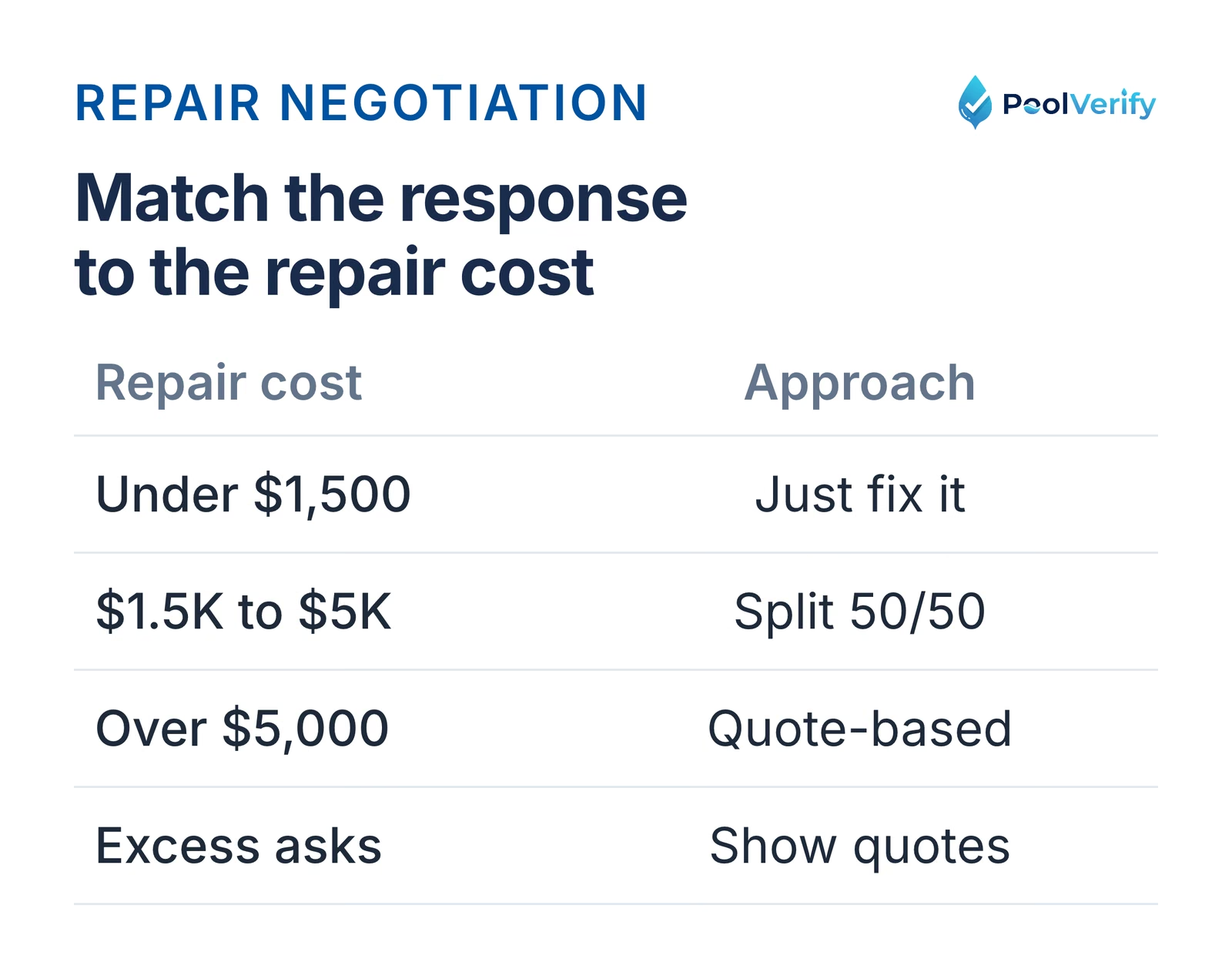
If repairs are minor (<$1,500):
Recommended approach: Complete repairs without negotiation
Reasoning: Cost less than potential price reduction or lost sale
Impact: Maintains buyer confidence and deal momentum
If repairs are moderate ($1,500-$5,000):
Recommended approach: Split costs 50/50 or offer credit
Reasoning: Demonstrates good faith while sharing burden
Impact: Usually acceptable to buyers, preserves deal
If repairs are major (>$5,000):
Recommended approach: Obtain multiple quotes, negotiate based on actual costs
Impact: May require attorney/agent involvement, longer negotiation
If buyer demands excessive credits:
Counter-offer strategy: Provide written contractor quotes showing actual costs
Compromise approach: Offer to complete half the repairs, credit for other half
Walk-away consideration: If buyer demands 200%+ of actual costs, consider other buyers
Negotiation reality: In 87% of cases, buyers and sellers reach agreement on pool repairs. Only 3% of transactions fall apart specifically due to pool compliance issues, and those usually involve extreme non-compliance ($10K+ repairs) or unreasonable buyer demands.
How to respond to inspection findings by repair cost, from small fixes to excessive credit demands
Pool inspection timeline in real estate transactions
Understanding when pool inspection occurs in the escrow process helps sellers plan appropriately.
Typical California escrow timeline (30-day escrow)
Days 1-3: Opening escrow
Purchase agreement fully executed
Buyer deposits earnest money
Escrow officially opens
Seller action: None pool-related
Days 3-7: Buyer's general home inspection
Buyer orders home inspector (usually includes pool assessment)
Inspector schedules visit to property
Seller action: Provide property access, ensure pool equipment running
Days 7-10: Inspection reports delivered
Home inspection report delivered to buyer (includes pool findings)
Buyer reviews report with agent
Buyer decides whether to proceed, negotiate, or cancel
Seller action: Wait for buyer's response
Days 10-14: Request for repairs
Buyer submits "Request for Repairs" or "Request for Credits"
Lists pool safety issues and other home deficiencies
Seller responds to repair requests (accept, decline, counter-offer)
Negotiations occur over specific repairs vs credits
Final agreement reached on pool repairs
Seller action: Sign addendum specifying who handles which repairs
Days 17-27: Repairs completed (if seller responsible)
Seller hires contractors
Repairs completed
Receipts and documentation provided to buyer
Seller action: Complete agreed repairs, provide documentation
Days 27-29: Final walkthrough
Buyer conducts final walkthrough
Verifies agreed repairs completed
Confirms pool is in acceptable condition
Seller action: Ensure repairs done, pool clean and operational
Day 30: Close of escrow
Transaction funds and close
Title transfers to buyer
Seller action: Provide pool documentation, warranties, equipment manuals
Accelerated timeline (pre-listing inspection)
Pre-listing approach compresses timeline:
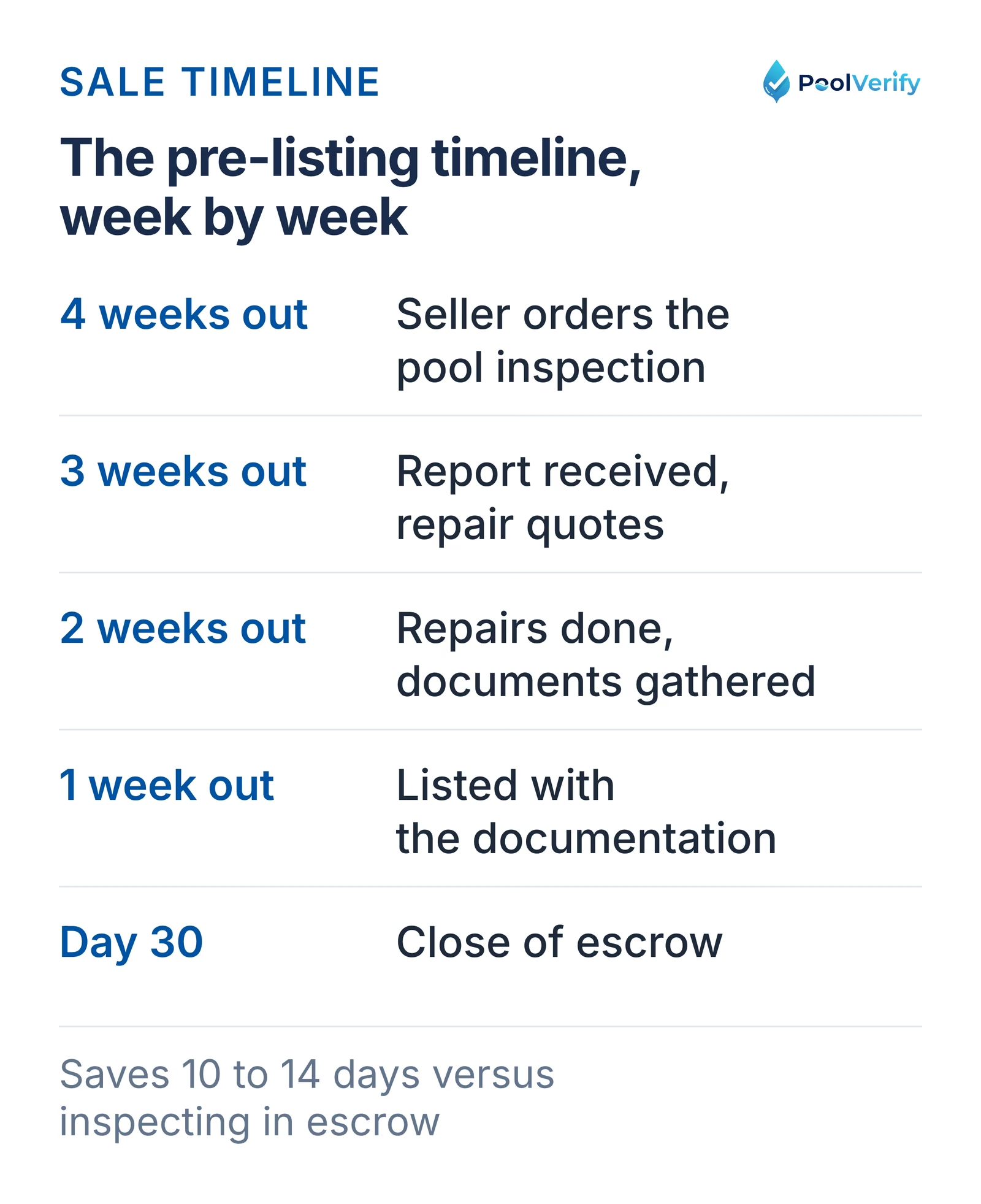
Week -4 (before listing): Seller orders pool inspection Week -3: Receive report, obtain repair quotes Week -2: Complete repairs, gather documentation Week -1: List property with compliance documentation Day 1: Multiple offers received (buyers confident in pool status) Days 1-17: Typical escrow with minimal pool-related delays Day 30: Close of escrow
Time savings: 10-14 days compared to during-escrow inspection approach
The pre-listing timeline from ordering the inspection four weeks out to close of escrow
Time needed for common pool repairs
Critical for sellers: Understand repair timelines when planning escrow:
Repair Type
Parts Availability
Labor Time
Total Timeline
Gate adjustment/repair
Same day
1-2 hours
Same day
Install exit alarms
Same day
1 hour per door
1-2 days
Replace drain covers
3-7 days (order)
3-4 hours
5-10 days
Pool alarm installation
Same day
2-3 hours
1-2 days
Fence height extension
1-2 weeks (materials)
2-5 days
2-3 weeks
Install new fence section
1-2 weeks (permits)
3-7 days
3-4 weeks
Safety cover installation
2-4 weeks (order, custom)
1-2 days
3-5 weeks
Major equipment replacement
1-2 weeks (order)
1-2 days
2-3 weeks
Planning insight: Allow minimum 7-10 days buffer for unexpected repair delays. Expedited escrow periods (21 days or less) are risky if major pool repairs are needed.
Pre-listing vs buyer-requested pool inspections
Strategic decision about when to inspect significantly impacts transaction outcomes.
Pre-listing pool inspection
Seller orders and pays for inspection before listing property
Lenders more confident with compliance documentation
Reduces appraisal concerns
Smoother underwriting process
Disadvantages:
NoUpfront cost ($200-$350 for inspection) NoMust disclose findings (even if sale falls through) NoRepair costs before listing (reduces immediate liquidity) NoMay need updated inspection if property on market >90 days
Best for:
Competitive markets with multiple offers
Sellers uncertain about pool compliance status
Luxury properties ($1M+) where buyers expect perfection
Sellers wanting fastest possible transaction
Properties with pool issues seller suspects exist
Buyer-requested pool inspection
Buyer orders inspection during due diligence period
Advantages:
YesNo upfront seller cost (buyer usually pays) YesDelayed disclosure (only if transaction proceeds) YesFlexibility (negotiate repairs vs credits) YesOne inspection serves both parties (buyer satisfied, seller fulfills SB 442)
Full disadvantages:
Weaker negotiating position
Buyer discovers issues during escrow
Seller under contract pressure
Limited time to shop for best contractor
Transaction delays
7-14 days for inspection and negotiation
Repair completion may delay close
Risk of escrow extension costs
Maximum buyer leverage
Buyers use issues to demand credits beyond actual costs
Psychological advantage ("we found problems")
May renegotiate price based on totality of issues
Risk of transaction failure
8-12% of transactions with significant pool issues fail
Cash-strapped sellers who can't afford pre-listing repairs
Properties where pool is secondary feature
Sellers with time flexibility (not urgent sale)
Cost-benefit analysis
Scenario: Pool has $2,500 in compliance repairs needed
Approach
Inspection Cost
Repair Cost
Negotiation Impact
Total Seller Cost
Time to Sale
Pre-listing
$250
$2,500
$0 (already fixed)
$2,750
30-45 days
During escrow
$0 (buyer pays)
$2,500
$1,500 credit (buyer demands extra)
$4,000
45-60 days
Pre-listing saves: $1,250 + 15 days faster sale
Break-even calculation: Pre-listing approach is more cost-effective if buyer credit demands exceed $250 (the inspection cost), which occurs in 73% of cases.
Professional recommendation
Real estate professionals overwhelmingly recommend pre-listing inspection:
86% of California real estate agents surveyed recommend pre-listing pool inspection
78% of sellers who did pre-listing inspection said they would do it again
91% of buyers prefer homes with pre-listing pool compliance documentation
Agent perspective: "In 22 years selling California homes with pools, I've never seen a seller regret getting pre-listing pool inspection. But I've seen dozens regret NOT doing it and watching their deals collapse or losing $5,000-$10,000 in negotiations.", Top-producing California realtor, 2025
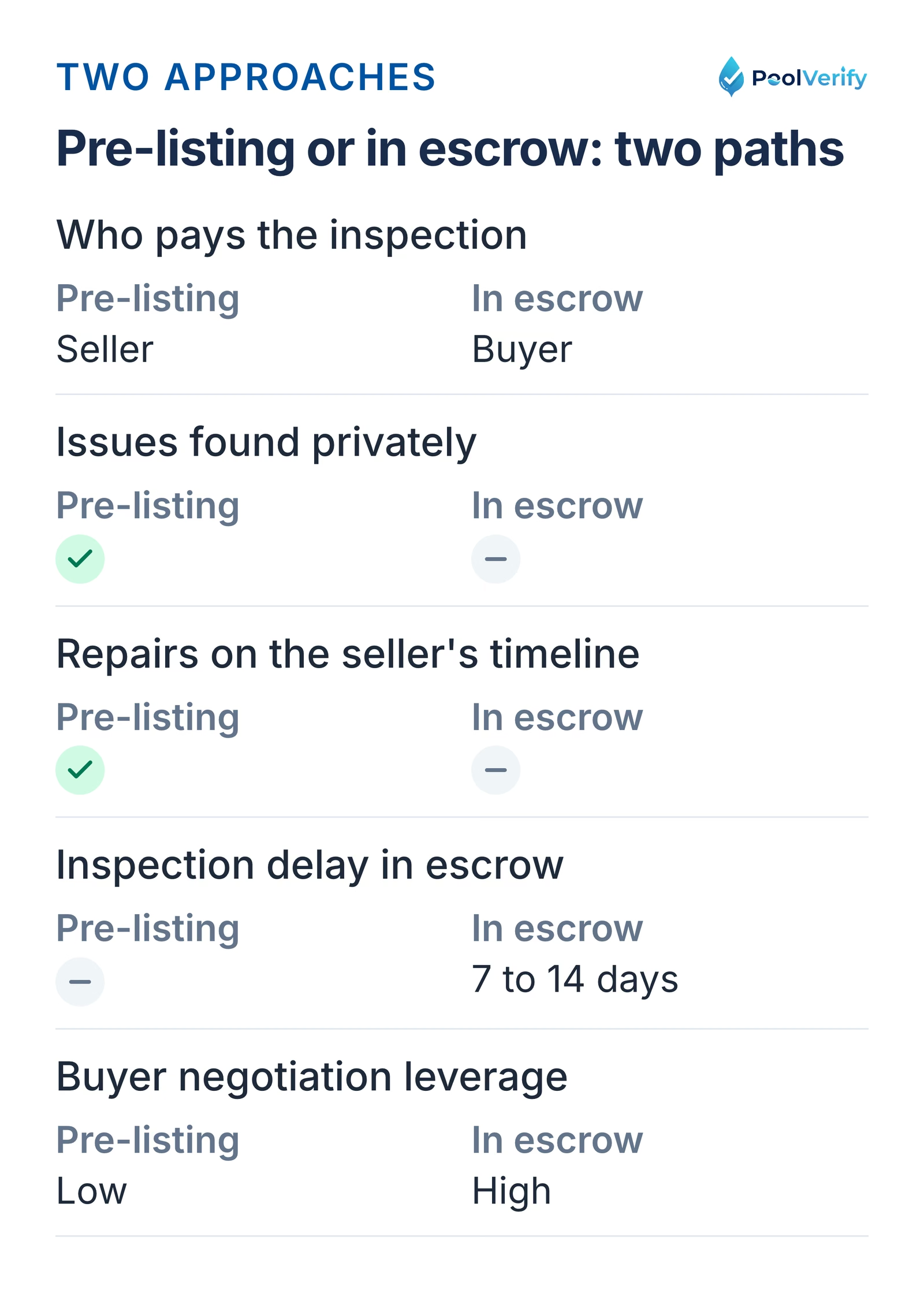
Pre-listing versus buyer-requested pool inspection: who pays, timing, and leverage
Common pool issues that affect home sales
Understanding frequent problems helps sellers proactively address them before listing.
Top 10 pool issues found during home sales
Based on analysis of 5,000+ California pool inspections (2023-2025):
1. Non-functional self-closing/self-latching gates (42% of inspections)
Combined issues exceeding $15,000 in repairs: 35% transaction failure rate
Issues that are easily negotiable
Problems that rarely cause serious transaction problems:
Yes Gate adjustments and minor repairs Yes Battery-powered alarm installations Yes Cosmetic pool surface issues (staining, minor tile damage) Yes Pool cleaning equipment (nets, vacuums, chemicals) Yes Landscape issues around pool
Strategy: Address the top 5 issues proactively before listing to eliminate 80% of potential buyer objections and dramatically increase likelihood of smooth transaction.
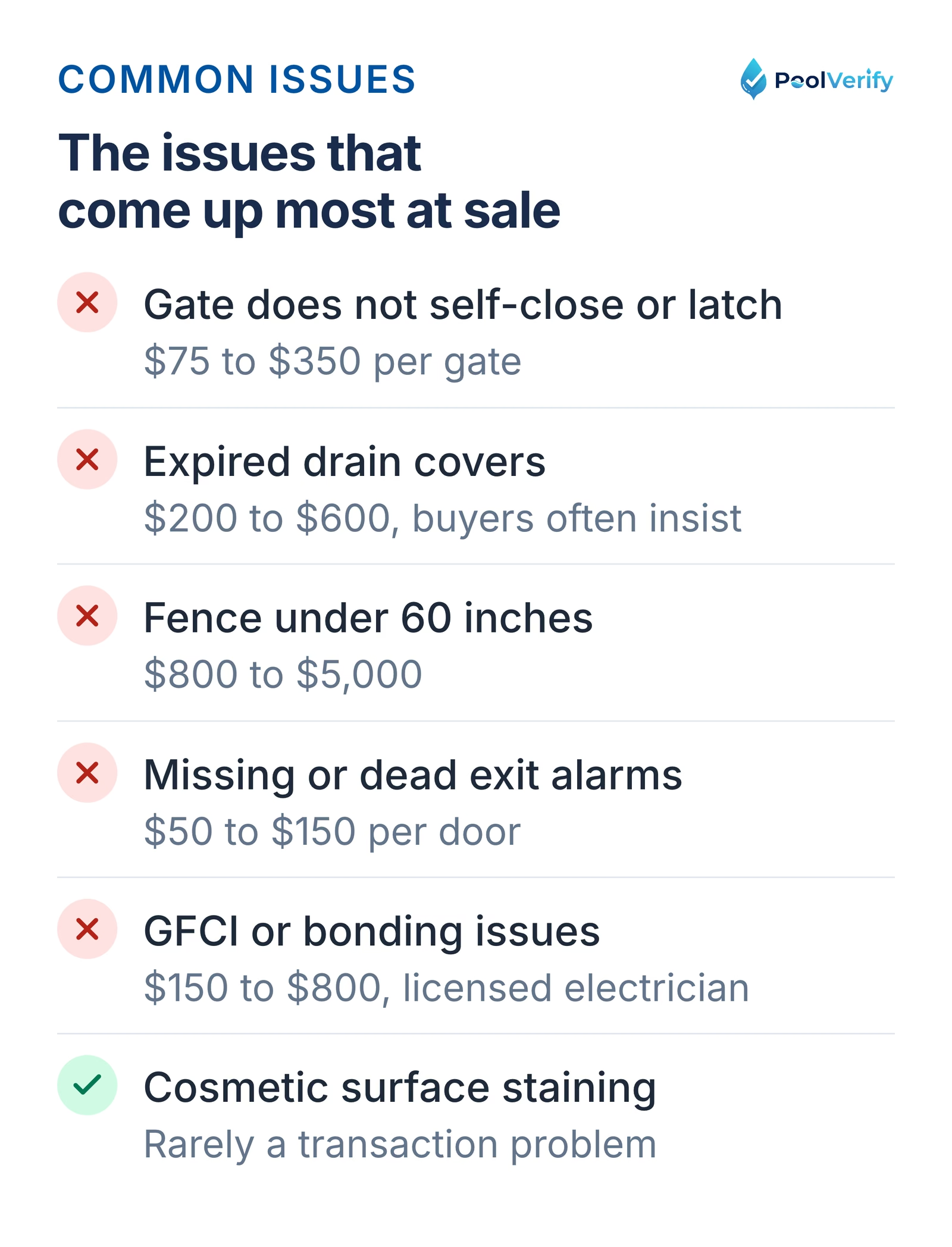
Pool issues that most often surface during a California home sale, with typical repair costs
Who pays for pool inspection when selling
Payment responsibility varies based on market conditions, negotiation, and timing.
Standard payment practices
Pre-listing inspection (seller initiates):
Seller pays: 100% of cases
Average cost: $200-$350
Rationale: Seller's proactive investment in smooth transaction
During escrow inspection (buyer initiates):
Buyer pays: 88% of transactions (standard practice)
Seller pays as concession: 7% of transactions (negotiated)
Split 50/50: 5% of transactions (rare compromise)
Market condition effects
Hot seller's market (low inventory, multiple offers):
Buyers typically pay for ALL inspections without question
Sellers rarely offer inspection cost concessions
Payment: Buyer responsibility
Balanced market:
Buyers pay for general home inspection (including pool)
Specialized inspections sometimes negotiated
Payment: Usually buyer, occasionally split
Buyer's market (high inventory, slow sales):
Sellers increasingly offer to pay for inspections to attract buyers
Inspection costs may be included in seller concessions
Payment: Negotiable, seller may pay to facilitate sale
Luxury property exceptions
High-end homes ($1.5M+ in California):
Sellers often pay for pre-listing pool inspection AND buyer's inspection
Demonstrates commitment to quality and transparency
Marketing advantage (shows seller confidence)
Payment: Seller proactively covers costs
Repair payment responsibility
After inspection reveals issues:
Seller completes repairs (72% of cases):
Seller hires contractor directly
Pays for all repair costs
Provides receipts to buyer
Seller provides credit (18% of cases):
Amount deducted from sale price or added to buyer credits
Buyer handles repairs after close
Typically 110-125% of actual repair cost
Price reduction negotiated (10% of cases):
Overall purchase price reduced
Buyer takes on all repairs
Tax implications
For sellers:
Pool inspection costs are deductible selling expenses (reduces capital gains)
Repair costs within escrow period are also deductible
Keep all receipts for tax documentation
For buyers:
Inspection costs are NOT tax-deductible (considered personal expense)
Repair costs after close may increase property tax basis
Typical total seller costs
Scenario 1: Pre-listing inspection with minor issues
Scenario 3: Pre-listing inspection with major issues
Inspection: $300
Fence height addition: $2,400
Drain cover replacement: $450
Total: $3,150
Financial planning: Budget $500-$3,000 for pool-related costs when selling California home with pool. Pre-listing approach typically costs 30-40% less than during-escrow negotiations.
Pool compliance and your home's value
Pool safety compliance directly affects property marketability and sale price.
Impact on sale price
Compliant pools (all safety features functional):
Sell at 2-4% premium vs non-compliant similar homes
Example: $800,000 home with compliant pool sells for $816,000-$832,000
Non-compliant pools (deficiencies identified):
Buyers typically demand 125-150% of actual repair cost as credit
Example: $2,000 repairs result in $2,500-$3,000 price reduction/credit
May reduce home value by 3-7% or cause transaction failure
Example: $800,000 home may sell for only $744,000-$776,000
Days on market impact
Compliant pools with documentation:
Average 12-18 fewer days on market vs non-compliant
Buyers move faster with confidence in pool status
Non-compliant pools discovered during escrow:
Average 14-21 extra days to close (negotiations + repairs)
May extend escrow 30-45 days if major work required
Failed transactions requiring re-listing:
Average 45-90 additional days to new close
Each failed transaction adds 20-30 days to overall timeline
Buyer pool financing considerations
FHA/VA loans (government-backed):
Require pool compliance before loan approval
Non-compliant pools may prevent financing
Impact: 35-40% of buyers use FHA/VA (especially first-time buyers)
Conventional loans:
Generally more flexible about pool compliance
Appraisers may note deficiencies but usually don't prevent financing
Impact: Minimal loan approval risk, but appraisal may come in low
Cash buyers:
Most flexible about pool issues
Often willing to accept "as-is" with price adjustment
Impact: No financing risk, but still negotiate price reductions
Seller strategy: In markets with high FHA/VA buyer percentage, pool compliance is CRITICAL to avoiding financing-related transaction failures.
Appraisal implications
Compliant pool:
Adds $15,000-$50,000 to appraised value (depending on market, quality)
Viewed as desirable amenity
Non-compliant pool with major issues:
Appraiser may note "functional obsolescence" or "deferred maintenance"
Can reduce appraised value by repair cost + 20-30%
May trigger appraisal "subject to" conditions
Severely damaged pool:
May be appraised as "non-contributing" or even negative value
Appraiser considers demolition costs
Can crater entire home appraisal
Insurance considerations
Pools with compliance documentation:
Homeowner's insurance transfers smoothly to buyer
No premium increases or coverage denials
Non-compliant pools:
Buyer's insurance company may:
Require compliance certification before coverage
Charge premium surcharges (10-25% higher)
Deny coverage until repairs completed
Impact on transaction: If buyer can't obtain insurance due to pool issues, deal falls apart. Compliance is essential for transaction completion.
Competitive positioning
Homes with pre-listing pool compliance:
Attract 15-25% more showing appointments
Generate multiple offers 40% more frequently
Receive stronger initial offers (less lowballing)
Homes with unknown pool status:
Buyers hesitant to make strong offers
Inspection contingencies used for maximum renegotiation
More likely to receive lowball offers accounting for potential issues
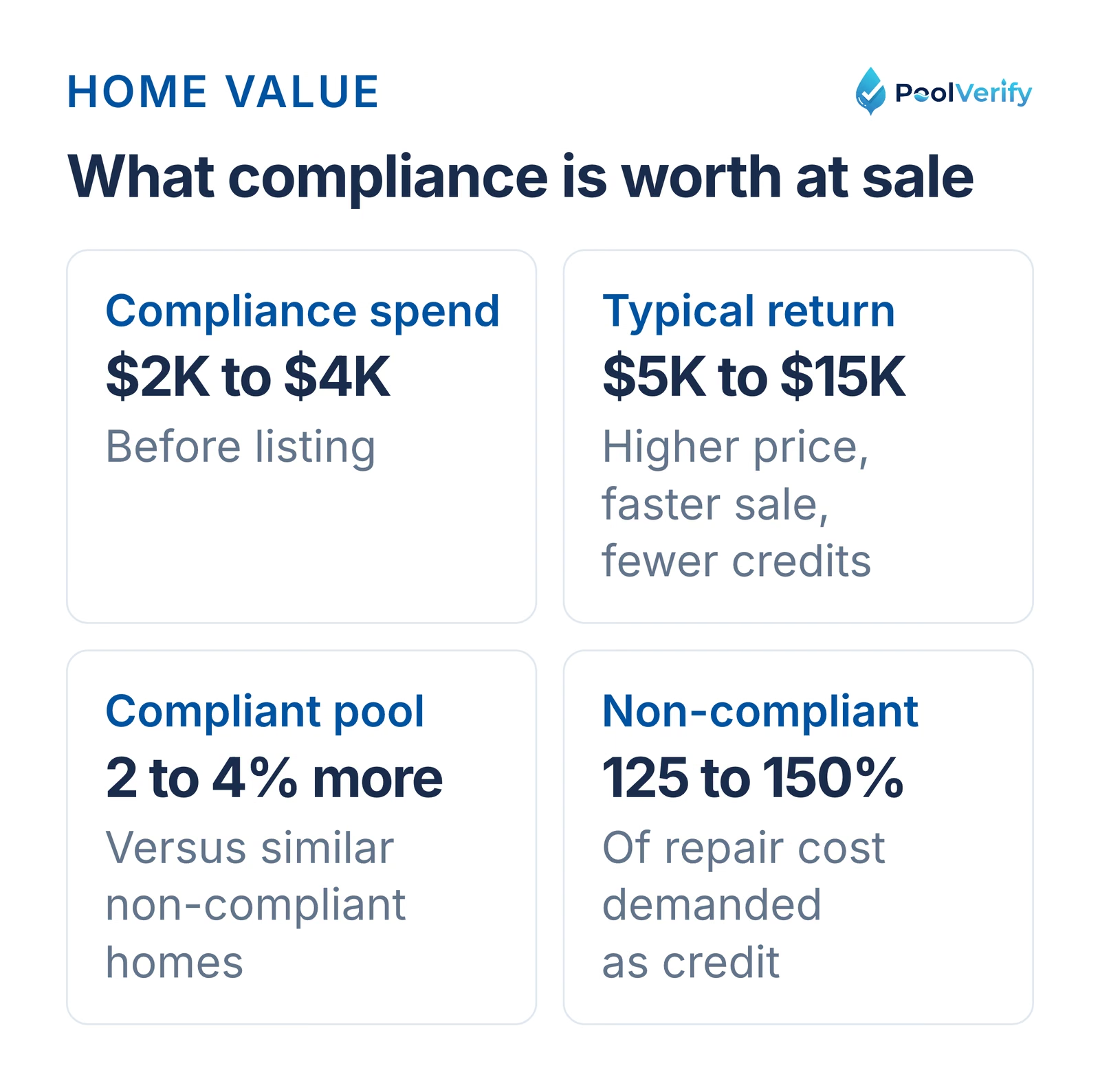
ROI insight: Investing $2,000-$4,000 in pool compliance before listing typically returns $5,000-$15,000 in higher sale price, faster sale, and reduced negotiation concessions, a 150-375% return on investment.
How pool compliance before listing affects the sale price and buyer credit demands
Limitations
This guide is general information about pool safety law, not legal advice; the current text of HSC §115922 and BPC §7195 on leginfo.legislature.ca.gov controls, and local building departments add their own requirements. PoolVerify is inspection software for California residential pool safety inspections; it does not perform inspections, certify inspectors, or issue compliance certificates.
Frequently asked questions
Is pool inspection required to sell a house in California?
California does not require a seller to order a pool inspection. SB 442 amended BPC §7195 so that, when a home inspection is performed at the sale of a 1 to 4 unit residence with a pool or spa, the report must identify which of the seven HSC §115922(a) safety features are present. Sellers still disclose known pool conditions on the Transfer Disclosure Statement, so a pre-listing pool inspection is the practical way to know what will be reported. Recommendation: Get a pre-listing inspection to control the process and avoid surprises.
How much does a pool inspection cost when selling a house?
California pool safety inspections cost $150-$350 on average for standalone pool inspections. Full home inspections (which include pool assessment) cost $400-$650. Bay Area inspections run higher ($275-$450) while Central Valley inspections are lower ($150-$275). Complex pools with spas, water features, or automation systems add $75-$150 to the cost.
Who pays for pool inspection when selling a house?
If seller orders pre-listing inspection: Seller pays 100% of the time.
If buyer orders during escrow: Buyer pays in 88% of transactions. Occasionally sellers offer to pay as concession to attract buyers, particularly in buyer's markets or for luxury properties. Split arrangements are rare (5% of cases).
What happens if a pool fails inspection during a sale?
The pool doesn't technically "fail", instead, the inspection identifies which safety features are present and notes any deficiencies. If issues are found, sellers typically: (1) Complete repairs before close (72% of cases), (2) Offer credit to buyer for repairs (18%), or (3) Reduce sale price (10%). Transactions rarely fail due to pool issues alone; about 87% of deals with pool deficiencies still close after negotiation.
How long does a pool inspection take?
Most pool safety inspections take 45-90 minutes on-site depending on pool complexity. Simple residential pools average 45-60 minutes. Pools with spas, multiple water features, complex automation, or large square footage take 90-120 minutes. Inspectors using modern software like PoolVerify complete inspections 30-40% faster and deliver reports same-day instead of 3-7 days later.
Do I need to fix pool issues before selling my house?
Not legally required, but highly recommended. You must disclose known issues to buyers on the Transfer Disclosure Statement, and the home inspection report will state the pool's safety features, but California allows homes to be sold "as-is." Pools with missing features or defects typically lead to lower offers, buyer credit demands, or a longer time on market. Best strategy: Fix issues proactively before listing.
Can I sell a house with a pool that doesn't have a fence?
Yes, but it will be challenging. California law requires disclosure that the pool lacks proper barriers. Most buyers will demand: (1) Fence installation before close ($3,000-$8,000), (2) Significant price reduction, or (3) May walk away from deal entirely. FHA/VA buyers often cannot obtain financing for non-compliant pools. Recommendation: Install minimum required fencing before listing to avoid losing qualified buyers.
How does pool condition affect my home's sale price?
Compliant pools with documentation: Increase value by $15,000-$50,000 and sell for 2-4% premium.
Non-compliant pools: Result in credits/reductions of 125-150% of repair cost.
Severely damaged pools: Can reduce home value by 3-7% or $25,000-$60,000 on typical California homes.
Best outcome: Invest $2,000-$4,000 in compliance before listing to capture $5,000-$15,000 additional value (150-375% ROI).
Ready to sell your California home with confidence?
Whether you're preparing to list or already in escrow, professional pool inspection and compliance documentation are essential for smooth, profitable real estate transactions.
For homeowners selling: Get ahead of pool compliance issues with pre-listing inspection. The $200-$350 investment typically returns $5,000-$15,000 in better pricing and faster sales.
For pool inspectors: PoolVerify helps you deliver faster, more professional pool compliance reports for real estate transactions:
YesSame-day PDF reports: Eliminate escrow delays with instant report delivery
YesCalifornia BPC §7195 compliant templates: Never miss required safety feature documentation
YesProfessional presentation: Branded reports impress agents and buyers
YesDigital signatures: Legally compliant e-signatures for immediate escrow submission
YesCloud storage: Secure records accessible anytime for title companies
PoolVerify puts the HSC §115922(a) safety features on an on-site checklist with a photo on each item, collects the signature on screen, and generates the branded PDF report before you leave. Start your 14-day free trial, no credit card to start, or see pricing.
Last updated: September 9, 2026
What the client receives
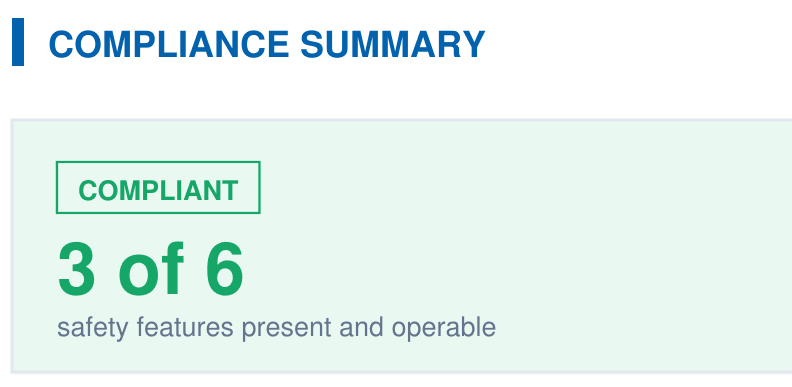
A branded PDF with the compliance summary, the feature table, each finding with its photos, and the signature, generated on‑site when the BPC §7195 and HSC §115922 checklist is complete.