California Pool Laws: Complete 2026 Compliance Guide
Complete guide to California pool laws including BPC §7195, HSC §115922, SB 442, and SB 552. Learn requirements for new construction, existing pools, rental properties, enforcement, and penalties.
California has some of the most comprehensive pool safety laws in the United States, designed to prevent child drowning deaths and protect public safety. Understanding these regulations is essential for pool owners, property sellers and buyers, real estate agents, pool contractors, and home inspectors navigating California's complex regulatory landscape.
With Senate Bill 552 taking effect January 1, 2025, and enhanced enforcement mechanisms now in place, California pool law compliance is more critical than ever. This comprehensive guide covers every aspect of California pool regulations, from the four major statutes (BPC §7195, HSC §115922, SB 442, SB 552) to county-level variations, enforcement procedures, and practical compliance strategies for 2026.
Overview of California pool laws
California's pool safety regulatory framework is built on a foundation of preventing accidental drownings, particularly among young children. The state's approach combines building code requirements for new construction, disclosure obligations for property transfers, and professional inspection standards to create comprehensive protection.
The drowning prevention imperative
California's legislative focus on pool safety stems from sobering statistics:
30-50 children drown in California pools annually, according to California Department of Public Health data
Drowning is the #1 cause of accidental death for children ages 1-4 in California
87% reduction in drowning incidents when pools have two or more safety features
Private residential pools account for 75% of child drowning deaths
These statistics have driven California to establish the nation's most comprehensive pool safety laws, with requirements that exceed federal standards and serve as models for other states.
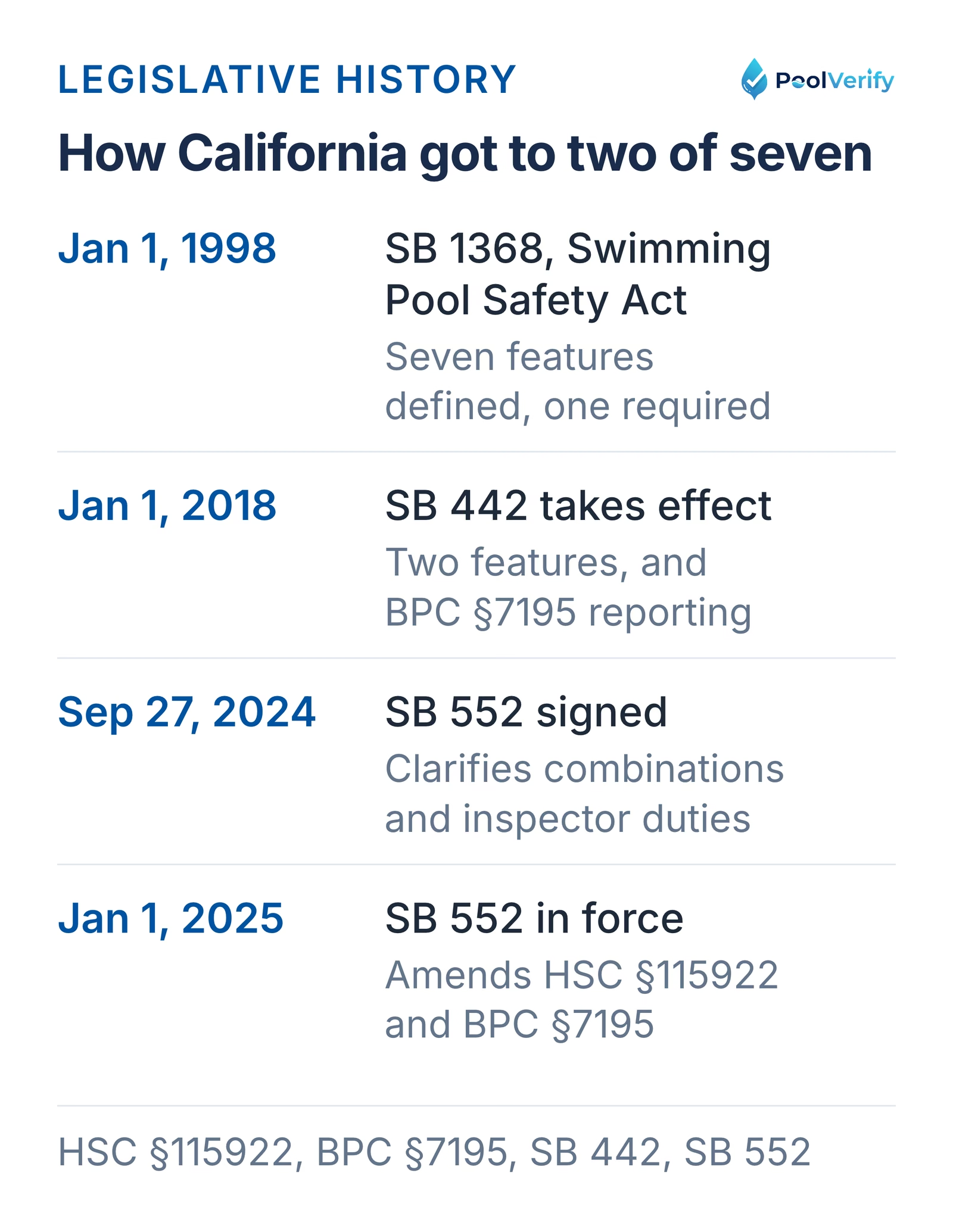
California pool law milestones from the 1998 Swimming Pool Safety Act to SB 552 taking effect on January 1, 2025.
California's multi-layered regulatory approach
California pool laws operate on multiple levels:
State statutes: Core requirements applicable statewide through the Business and Professions Code (BPC) and Health and Safety Code (HSC)
County ordinances: Additional requirements imposed by county building departments beyond state minimums
Municipal codes: City-specific regulations adding supplemental safety measures or aesthetic requirements
HOA regulations: Homeowners association CC&Rs and architectural guidelines creating community-specific standards
This layered approach means pool owners must comply with all applicable levels of regulation, state law sets the floor, not the ceiling, for pool safety requirements.
The four major California pool statutes
California's pool safety framework consists of four interconnected statutes that work together to ensure comprehensive compliance. Understanding each statute's purpose, requirements, and how they interact is essential for navigating California pool law.
HSC §115922: The Swimming Pool Safety Act (foundational statute)
Original enactment: January 1, 1998 (Senate Bill 1368)
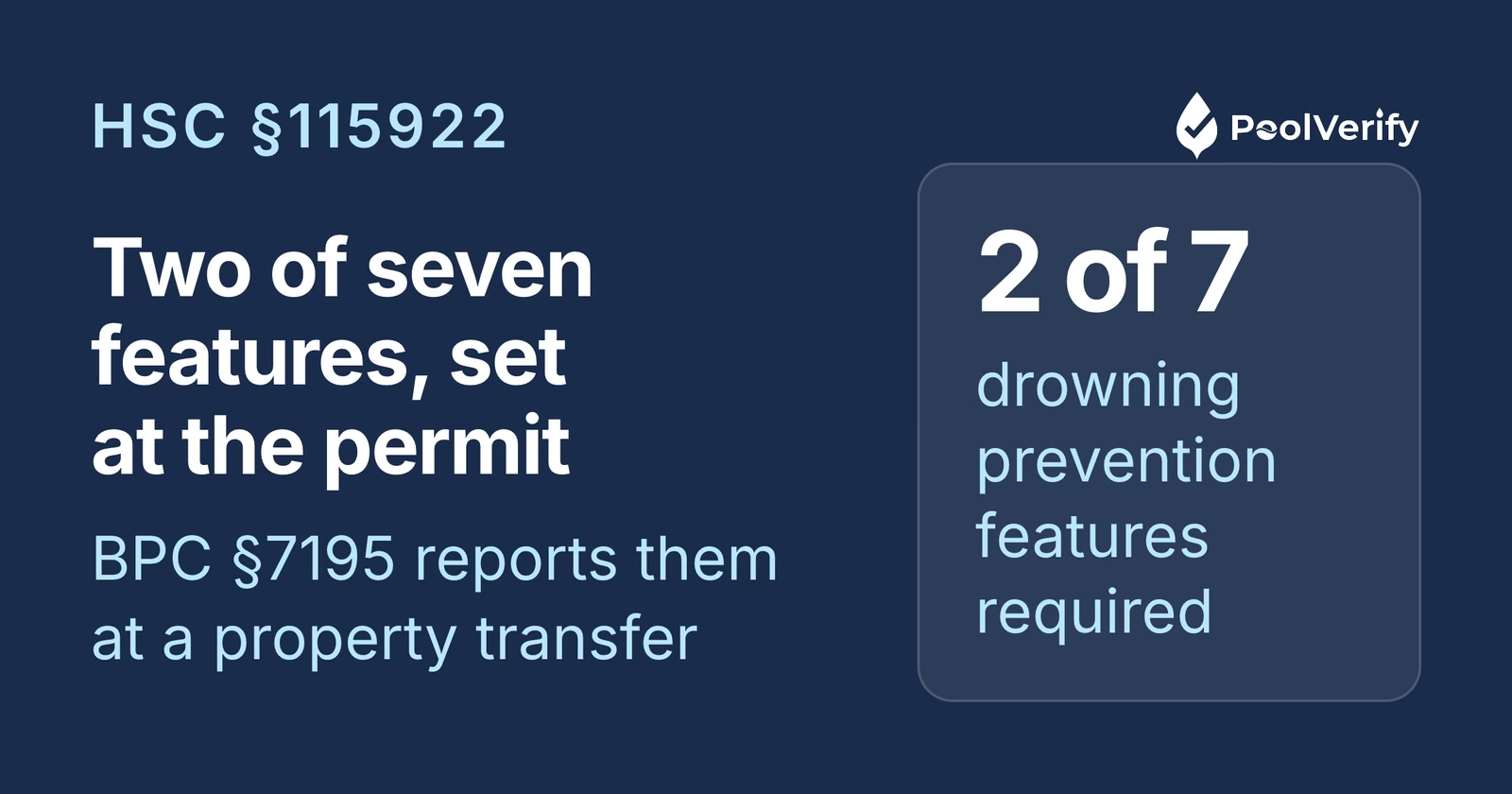
Core requirement: Upon issuance of a building permit for construction of a new swimming pool or spa, or remodeling of an existing pool or spa at a private single-family home, the pool or spa must be equipped with at least two of seven specified drowning prevention safety features.
Scope: Applies to private residential properties with 1-4 dwelling units (single-family homes, condos, townhomes, duplexes, triplexes, fourplexes)
Key provisions:
Establishes the seven approved drowning prevention safety features
Requires compliance for new construction and remodeling projects requiring permits
Defines technical specifications for each safety feature
Exempts pools at apartment complexes (5+ units) and commercial properties
Enforcement: Through local building departments during permit and inspection processes
Original enactment: January 1, 2018 (Senate Bill 442)
Core requirement: When a home inspection is performed on a property with a pool or spa, the inspection must identify which of the seven drowning prevention safety features the pool or spa is equipped with, and specifically state if the pool has fewer than two required features.
Scope: Applies to home inspections conducted during property transfers of residential dwellings (1-4 units)
Key provisions:
Mandates pool safety assessment in all home inspections
Requires identification of present safety features
Requires explicit disclosure if fewer than two features exist
Mandates inclusion of pool isolation fence effectiveness statement
Establishes training requirements for inspectors (effective January 1, 2024)
Enforcement: Through professional liability, inspector associations, and contractor license boards
Assembly Bill 3205 amended HSC §115922 to create seller disclosure obligations during property transfers involving pools.
Effective date: January 1, 2018
Core requirement: Property sellers must provide buyers with written certification identifying which drowning prevention safety features the pool or spa possesses.
Scope: All property transfers involving residential pools, regardless of when the pool was constructed
Key provisions:
Requires written safety feature certification from seller to buyer
Certification typically satisfied through professional inspection reports
Creates documentation trail for pool compliance status
No expiration, applies to all transfers regardless of prior inspections
Enforcement: Through real estate transaction mechanisms (buyer contingencies, escrow requirements, title company scrutiny)
SB 552: Enhanced Enforcement and Clarifications
Senate Bill 552, signed by Governor Newsom on September 27, 2024, further refined California pool safety laws with enhanced specificity and enforcement provisions.
Effective date: January 1, 2025
Key amendments:
Clarified feature combinations: Explicitly identifies which safety feature combinations are acceptable vs. unsafe pairings
Prohibited unsafe combinations: Restricts certain barrier combinations that don't provide adequate protection
Strengthened inspector duties: Enhanced requirements for documenting operational status and feature condition
Building department authority: Clearer enforcement powers for local building officials
Technical standard updates: Aligns requirements with current ASTM and ANSI specifications
Educational focus: Reinforces importance of pool isolation fencing as most effective drowning prevention
Impact: Creates more detailed compliance requirements and enhances enforcement mechanisms for existing regulations
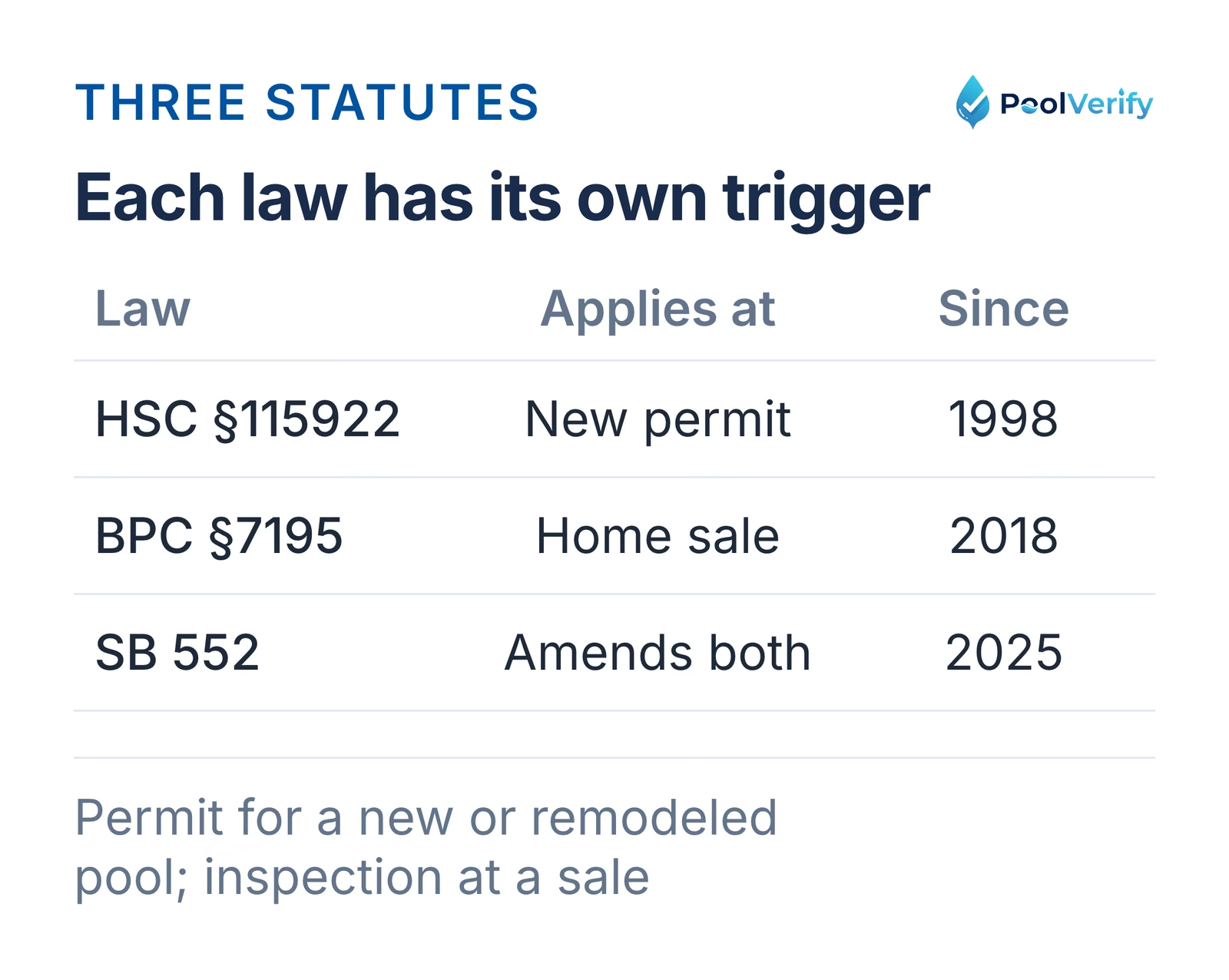
HSC §115922 applies when a pool permit issues, BPC §7195 at a home sale inspection, and SB 552 amended both in 2025.
How the four statutes work together
Example scenario: Homeowner builds pool in 2022, sells property in 2026
HSC §115922 (2022): When pool was built, building permit required installation of at least 2 of 7 safety features (e.g., barrier fence + exit alarms)
BPC §7195 (2026): During property sale, buyer orders home inspection. Inspector conducts BPC §7195-compliant pool inspection documenting which features are present
SB 442 (2026): Seller provides buyer with inspection report certifying which safety features pool has
SB 552 (2026): Inspector must verify operational status of features and confirm acceptable feature combinations per SB 552 requirements
Result: Comprehensive compliance framework ensuring pools built to safety standards are verified and disclosed during transfers.
Timeline of California pool legislation
Understanding the evolution of California pool safety laws provides context for current requirements and demonstrates the state's ongoing commitment to drowning prevention.
Pre-1996: Limited regulation era
Before the mid-1990s, California had minimal statewide pool safety requirements. Regulation was primarily at the local level, creating inconsistent standards across jurisdictions and leaving many pools without adequate safety features.
1996: Federal VGBA Foundation
The Virginia Graeme Baker Pool and Spa Safety Act was spurred by tragic drowning deaths, leading to federal suction entrapment prevention requirements that California later incorporated into state law.
1998: Swimming Pool Safety Act (SB 1368)
Milestone: First comprehensive statewide pool safety law
Key provisions:
Established seven drowning prevention safety features
Required one safety feature for new pools
Created baseline statewide standards
Limitation: Single feature requirement proved insufficient for preventing drownings
2007: Enhanced requirements (SB 442 amendments)
Key change: Increased requirement from one safety feature to two safety features for new construction
Rationale: Research demonstrated two features provide significantly better protection than single features
2018: Inspection and disclosure requirements (SB 442 & SB 442)
Milestone: Property transfer compliance verification
Key provisions:
BPC §7195 created home inspector reporting requirements
SB 442 established seller disclosure obligations
Connected construction standards to property transfer verification
Impact: Ensured older pools are brought to compliance during property transfers
2021-2022: Inspector training mandate (SB 736)
Key change: Required home inspectors complete continuing education training every three years for pool inspection certification (effective January 1, 2024)
Rationale: Standardize inspector competency in identifying safety features and assessing compliance
2024-2025: Enhanced enforcement and clarification (SB 552)
Milestone: Most recent comprehensive update
Key provisions:
Clarified acceptable safety feature combinations
Prohibited unsafe barrier pairings
Enhanced inspector reporting requirements
Strengthened building department enforcement authority
Emphasized pool isolation fencing effectiveness
Effective date: January 1, 2025
2026 and beyond: Anticipated developments
Pending legislation:
Pool alarm technology upgrades (smart system integration)
Enhanced suction entrapment prevention standards
Mandatory buyer education requirements
Periodic re-inspection requirements for rental properties
California continues refining pool safety laws based on drowning statistics, technological advances, and real-world enforcement experience.
Who must comply with California pool laws
California pool laws create compliance obligations for multiple parties across different scenarios. Understanding who must comply, and when, is essential for avoiding violations and penalties.
Pool owners (primary obligation for existing pools)
Single-family homeowners: Must maintain pools in compliance with applicable laws based on when pool was constructed and whether property is being transferred
Multi-family property owners (2-4 units): Same requirements as single-family for each individual unit's pool
Rental property owners: Additional obligations for ongoing maintenance and periodic verification of safety features
Compliance obligations:
Maintain safety features in good working order
Replace damaged or non-functional features promptly
Upgrade pools to current standards during remodeling (if building permits required)
Provide safety feature certification to buyers during property sales
Ensure compliance with local county and municipal requirements beyond state minimums
Pool contractors and builders (new construction)
Licensed pool contractors (C-53 license holders) constructing or remodeling pools bear responsibility for:
Installing required safety features (minimum two of seven) during new construction
Ensuring features meet ASTM and ANSI specifications
Obtaining proper building permits
Passing building department final inspections
Providing homeowners with documentation of installed safety features
Complying with enhanced SB 552 requirements for feature combinations
Provide buyers with written certification of pool safety features (SB 442 requirement)
Disclose if pool has fewer than two required safety features
Include pool compliance information in standard property disclosures
Typically obtain professional inspection to satisfy certification requirement
Provide inspection reports to buyers before close of escrow
Enforcement: Through buyer contingency rights, escrow requirements, and post-sale liability for non-disclosure
Real estate agents (facilitation duty)
Licensed real estate agents representing both sides of transactions must:
Advise sellers about pool inspection and disclosure requirements
Recommend qualified inspectors with proper training certification
Review inspection reports for BPC §7195 compliance elements
Ensure sellers provide required pool safety certifications to buyers
Advise buyers about pool compliance status and potential upgrade costs
Professional liability: Failure to ensure proper pool compliance can result in Department of Real Estate complaints, E&O insurance claims, and civil liability
Building departments (enforcement authority)
Local building departments enforce pool laws through:
Building permit review for new construction and remodeling
Plan review ensuring proposed pools include required safety features
Code compliance investigations (complaint-based or proactive)
Stop-work orders and permit revocations for non-compliance
County health departments (public pool oversight)
County health departments regulate public and semi-public pools (HOAs with 25+ units, apartment complexes, hotels, commercial facilities) separately from residential pool laws covered in this guide.
Property buyers (beneficiaries)
Buyers are beneficiaries of California pool laws, receiving:
Disclosure about pool safety feature status before purchase
Information to negotiate repairs or price reductions for non-compliant pools
Opportunity to make informed decisions about pool safety risks
Contingency rights to cancel purchase if pool compliance inadequate
The seven drowning prevention safety features explained
California law recognizes seven specific drowning prevention safety features. Pools must have at least two of these seven features to meet compliance. Understanding each feature's requirements, specifications, and proper installation is essential for compliance.
Feature 1: Enclosure barrier with compliant gates
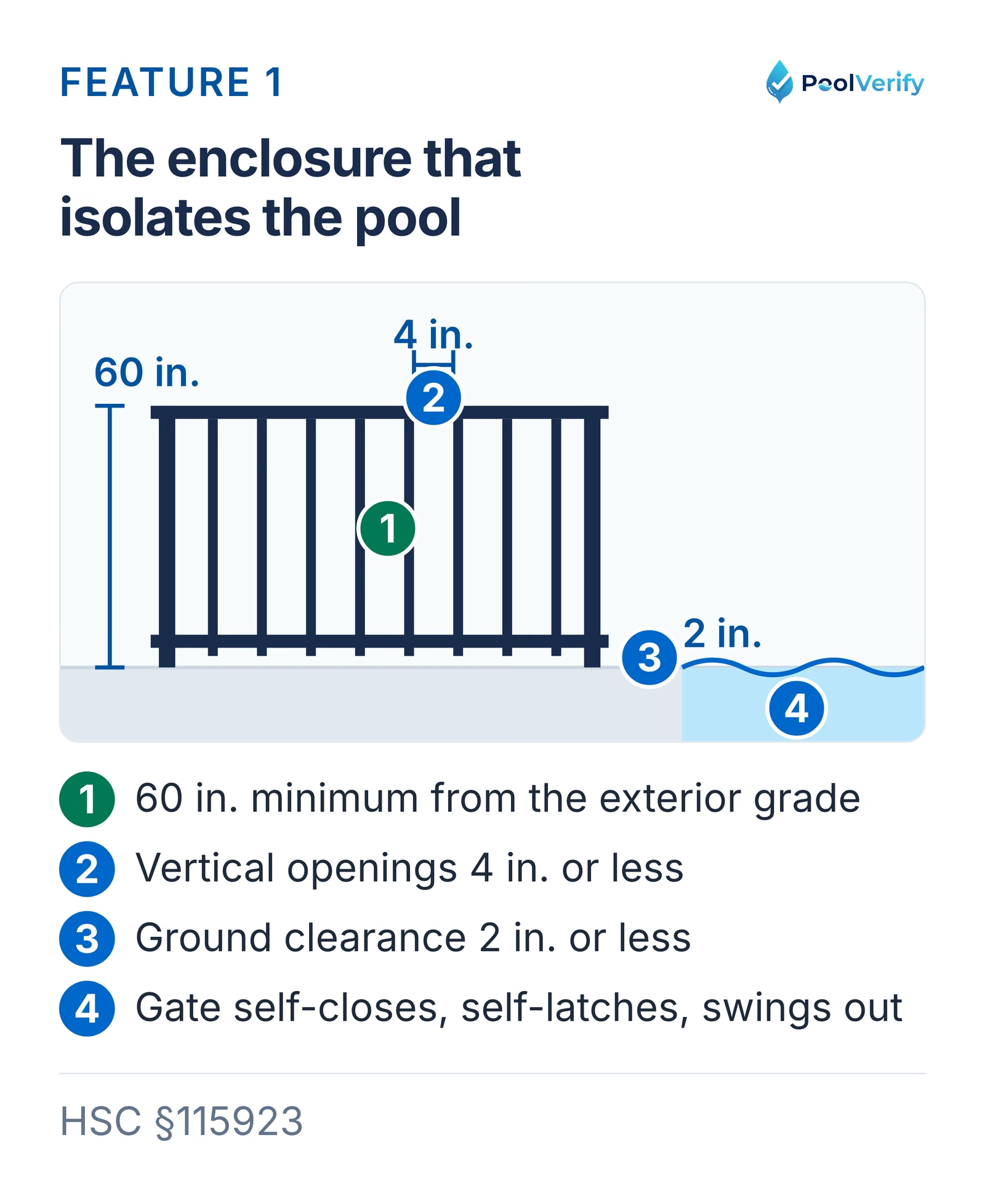
A physical barrier (fence or wall) that completely isolates the pool from the residence and surrounding property, with self-closing, self-latching gates meeting specific height and spacing requirements.
Compliance specifications:
Height requirements:
Minimum 60 inches (5 feet) measured from grade on exterior side facing away from pool
Must maintain minimum height at all points (check low spots and grade variations)
California pool barrier height requirements are strictly enforced
Spacing requirements:
Vertical openings maximum 4 inches between components
Horizontal spacing in chainlink/woven fencing maximum 1¾ inches
Ground clearance maximum 2 inches between barrier bottom and grade
Gate requirements:
Must self-close from any position (fully open and partially open)
Must self-latch when released without manual assistance
Self-latching device placed no lower than 60 inches above the ground (HSC §115923(a))
Gates must swing away from pool (outward opening)
No gaps allowing child passage when gate closed
Prohibited configurations:
Horizontal rails or crossbars on pool side creating "ladder effect"
Decorative elements providing footholds for climbing
Gaps in barrier corners or at posts allowing child passage
An isolation enclosure stands at least 60 inches above exterior grade, with openings of 4 inches or less and 2 inches under.
Feature 2: Building wall as barrier with protected openings
When the residence structure forms part of the pool barrier, all doors and windows providing pool access must be secured with approved alarms or protective measures.
Compliance specifications:
Exit alarm requirements (doors providing pool access):
Minimum 85 decibels at 10 feet distance
Automatic reset when door closes
Temporary disabling capability (maximum 15 seconds) for adult use via manual override
Audible throughout dwelling
Battery backup or hardwired power source
Must sound immediately when door opens
Window protection requirements:
Windows within 60 inches of grade providing pool access must have:
Child-resistant mechanisms (key locks, latches)
Window sills positioned above 60 inches from grade, or
Security bars or guards preventing child passage
Window screens alone are insufficient protection
Pet door security:
Pet doors large enough for child passage must be:
Made inoperable (locked/blocked), or
Equipped with exit alarms meeting 85-decibel requirement
Continuous protection requirement: NO unalarmed access points from dwelling to pool area
Cost range: $35-150 per exit alarm; $200-600 for professional installation of multiple alarms
A temporary barrier system meeting ASTM F2286 specifications, typically used for seasonal protection or properties where permanent fencing is impractical.
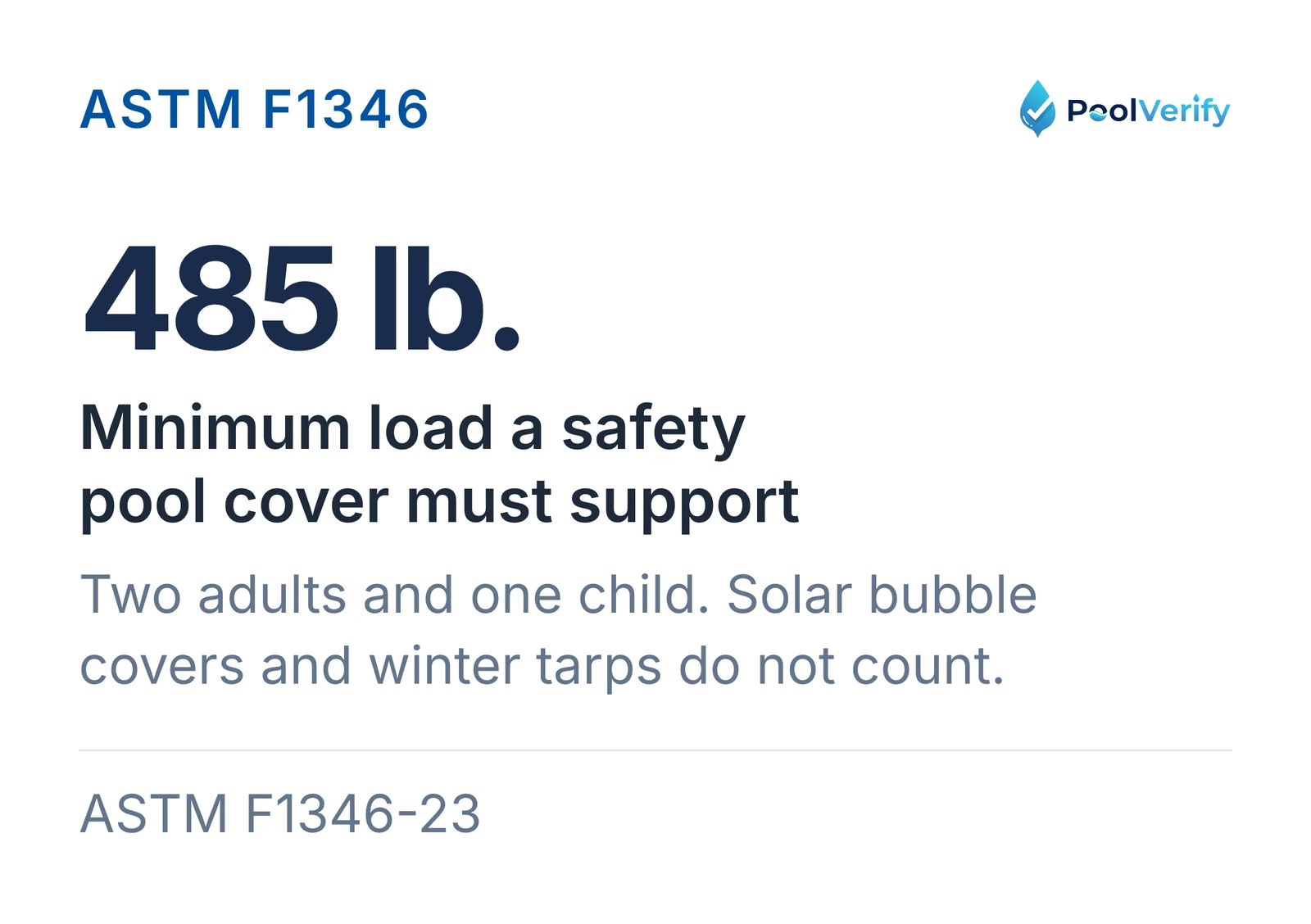
Weight capacity: Minimum 485 pounds (two adults and one child)
Coverage: Complete coverage without gaps allowing child entry
Operation: Can be operated by one adult without special tools
Types:
Automatic safety covers:
Motor-driven systems with key-switch control
Track-mounted systems retracting into deck housing
Must be fully deployed to count as safety feature
Regular maintenance required for motor and track system
Manual safety covers:
Anchored to deck at multiple points around perimeter
Requires manual deployment and securing after each use
Spring-loaded anchors for secure attachment
Must be properly tensioned across entire pool surface
A safety pool cover under ASTM F1346 must support at least 485 pounds; solar covers and winter tarps do not qualify.
Non-compliant covers (do NOT satisfy requirements):
Solar covers (bubble covers)
Winter tarps
Decorative covers without ASTM F1346 certification
Cost range:
Manual covers: $1,200-3,000 installed
Automatic covers: $8,000-15,000 installed
Feature 5: Exit alarms on access doors
Approved audible alarms on all doors providing direct access to pool area from dwelling (same specifications as Feature 2 door alarms).
Compliance specifications:
Minimum 85 decibels at 10 feet
Automatic reset
Temporary manual override (maximum 15 seconds)
Battery backup or hardwired power
Must be installed on all doors with pool access
Key distinction from Feature 2: Feature 5 is standalone door alarms without building wall serving as barrier. Feature 2 is building wall as primary barrier with alarmed doors.
Common products: Poolguard Door Alarm (DAPT-2), Safety Turtle Pool Alarm Kit, GE Personal Security Window/Door Alarm
Cost range: $35-150 per alarm; $200-600 for multi-door installation
Feature 6: Pool surface disturbance alarm (ASTM F2208)
A pool-mounted or perimeter alarm that detects when someone enters the water and sounds an alarm.
Compliance specifications:
Detection standard: Must detect entry of 18-pound child-sized object within 30 seconds
Tamper resistance: Cannot be easily deactivated by child
Reset: Automatic reset after alarm event
Alarm types:
Surface wave detection alarms:
Float on pool surface or mount at pool edge
Detect surface waves caused by entry into water
Can be removed when pool in use
Subsurface detection alarms:
Mount below water surface
Detect pressure changes when object enters water
Remain in place continuously
Perimeter detection alarms:
Create infrared beams around pool perimeter
Detect when beam is broken by person approaching pool
Require careful positioning to avoid false alarms
Common brands: Pool Patrol PA-30, Poolguard PGRM-SB, Safety Turtle 2.0, PoolEye PE23
Limitations: Subject to false alarms from wind, rain, debris, animals; require regular testing and maintenance
Cost range: $150-400 for surface wave alarms; $400-800 for subsurface systems
Feature 7: Other approved means of protection
Local building officials may approve alternative safety features providing equivalent or superior protection to the six standard features.
Approval process:
Property owner submits alternative safety feature proposal to local building department
Building official evaluates whether protection is equivalent or superior
May require engineering analysis or testing laboratory certification
Building department issues written approval
Examples of approved alternatives:
Advanced smart pool monitoring systems with video surveillance and AI detection
Automatic pool cover systems exceeding ASTM standards
Integrated security systems with pool-specific monitoring and alerts
Custom engineered solutions for unique properties (hillside pools, infinity edges)
Pool enclosure structures (screened pool cages in some jurisdictions)
Documentation: Must have building department approval documentation to count as compliant feature
Inspection consideration: Inspector should verify approval documentation exists and feature provides stated protection level
New construction pool requirements
Pools being constructed with new building permits face the most stringent compliance requirements under California HSC §115922. Understanding new construction requirements ensures compliance from the outset and avoids costly corrections.
When requirements apply
HSC §115922 requirements are triggered upon issuance of a building permit for:
New swimming pool or spa construction at private single-family homes
Pool or spa remodeling that requires building permits
Substantial renovation altering pool structure or configuration
Definition of "remodeling": Projects requiring building permits for structural changes, equipment alterations, or significant renovations beyond routine maintenance and resurfacing.
Minimum safety feature requirement
Core requirement: Pool or spa must be equipped with at least two of the seven drowning prevention safety features before building department final inspection approval.
Selection flexibility: Property owner chooses which two (or more) features to install based on:
Property configuration and layout
Budget considerations
Aesthetic preferences
Practical maintenance requirements
Common combinations:
Most effective combination (recommended by American Academy of Pediatrics):
Pool isolation fence (Feature 1), Most studied and effective feature
Exit alarms on doors (Feature 2 or 5), Secondary protection layer
Cost-effective combination:
Pool isolation fence (Feature 1)
Pool surface alarm (Feature 6), Lower installation cost than automatic covers
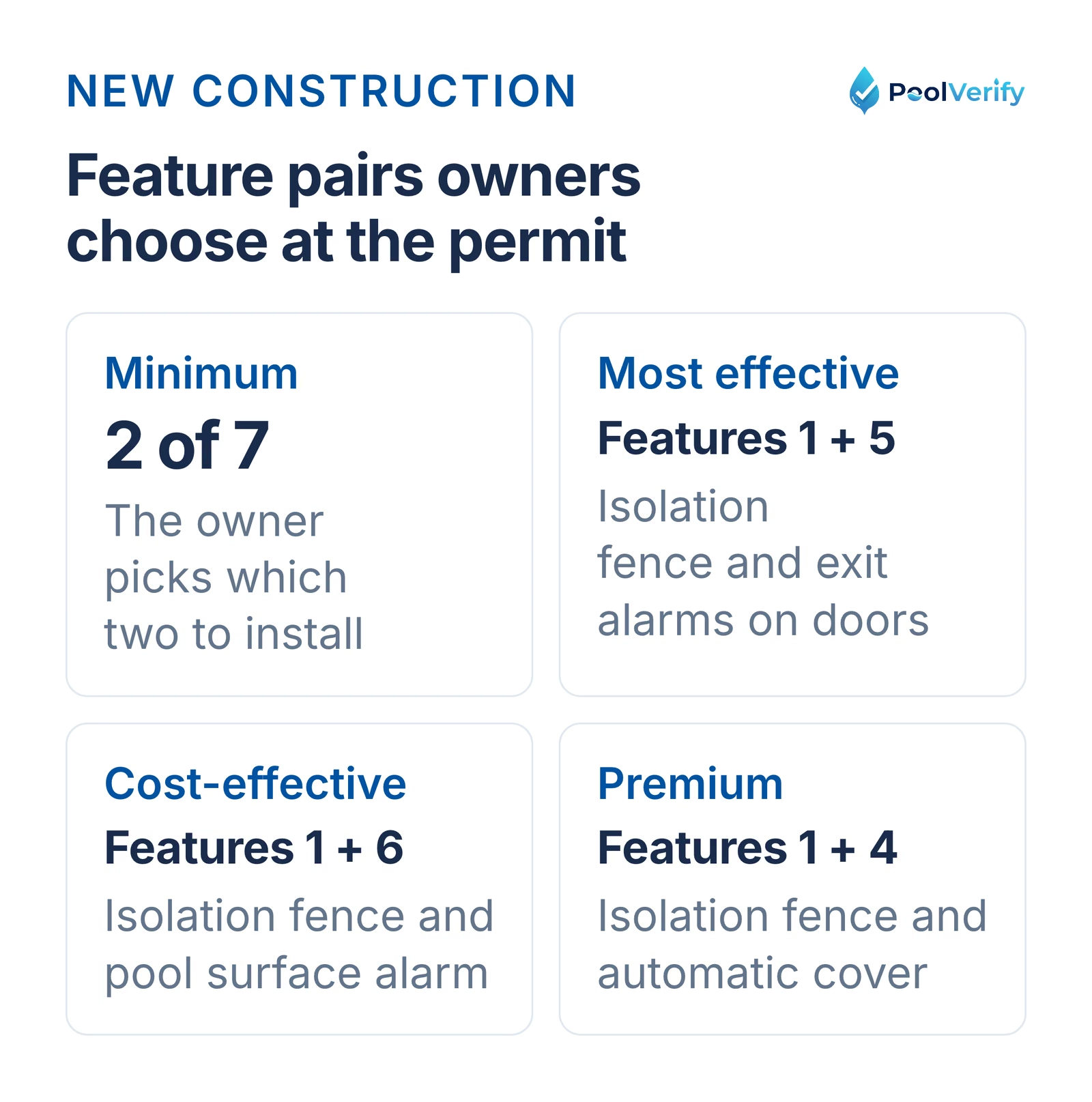
Two-feature pairs for a new California pool: an isolation fence with door alarms, a pool alarm, or an automatic cover.
SB 552 prohibited combinations
Senate Bill 552 (effective January 1, 2025) prohibits certain safety feature combinations that don't provide adequate protection:
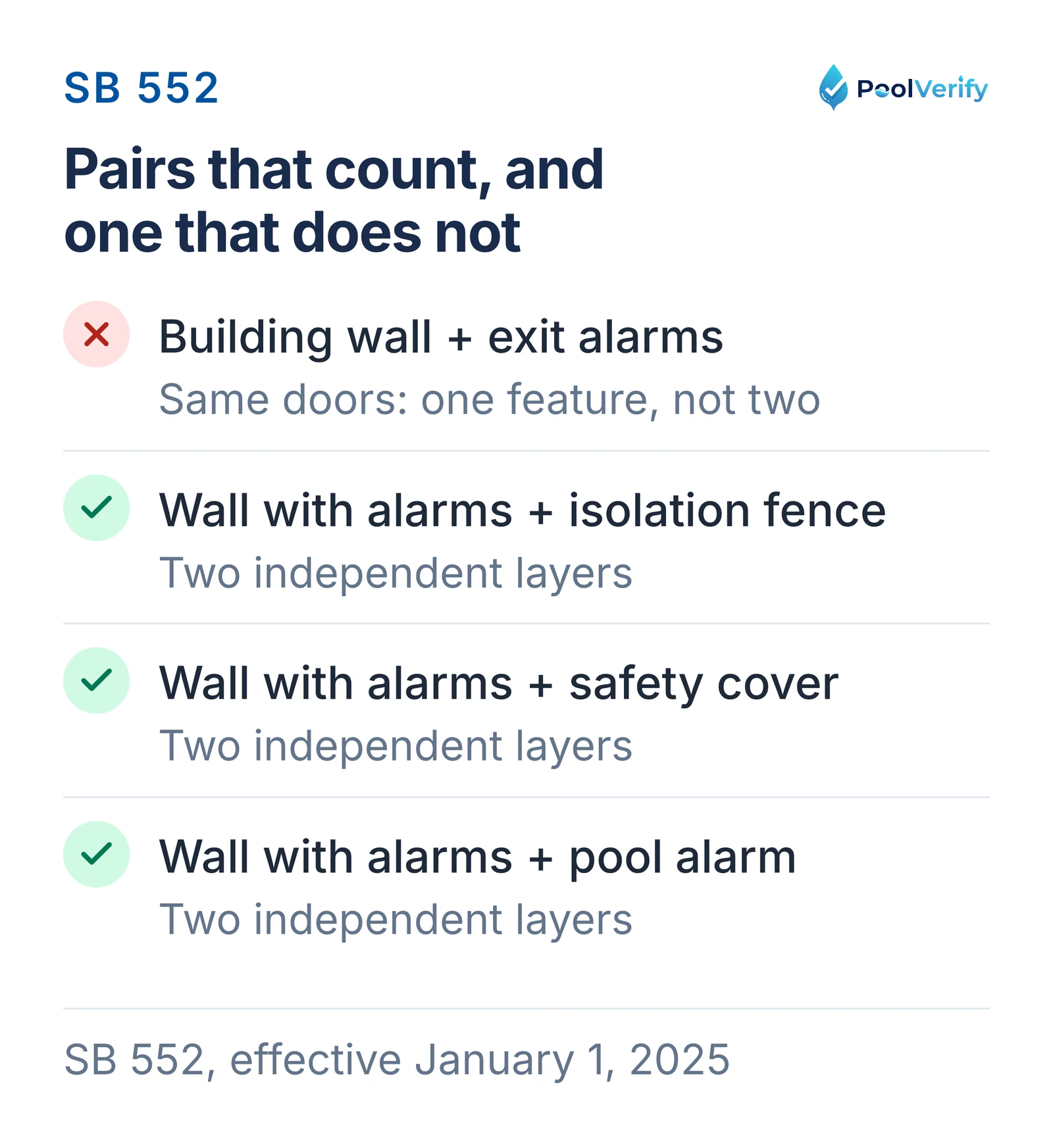
Prohibited: Building wall as barrier (Feature 2) combined with exit alarms on same doors (Feature 5)
Rationale: This combination provides only one layer of protection (alarms), not two independent features. Building wall with alarmed doors counts as single feature (Feature 2), and standalone door alarms are the same protection.
Acceptable alternative: Building wall with alarmed doors (Feature 2) PLUS pool fence (Feature 1), OR safety cover (Feature 4), OR pool alarm (Feature 6)
Building permit and inspection process
Step 1: Permit application
Submit detailed pool plans showing dimensions, equipment, and location
Identify which two safety features will be installed
Provide specifications for safety features (ASTM certifications, product details)
Pay permit fees (typically $500-1,500 depending on jurisdiction)
Step 2: Plan review
Building department reviews plans for code compliance
Verifies two safety features meet HSC §115922 requirements
May request corrections or additional information
Issues approved permit for construction
Step 3: Construction and inspections
Multiple inspections during construction (electrical, plumbing, structural)
Safety feature installation must occur before final inspection
Building inspector verifies features meet specifications
Step 4: Final inspection
Building inspector verifies pool construction completion
Confirms two required safety features installed and operational
Pools constructed before current safety laws or without recent building permits face different compliance requirements than new construction. Understanding when existing pools must be upgraded prevents surprise expenses during property transfers.
Grandfather provisions
General rule: Pools built before January 1, 1998 (when HSC §115922 became effective) were not required to have two safety features at construction and are "grandfathered" regarding initial installation requirements.
Important limitation: Grandfathering applies only to initial construction requirements. Existing pools must still comply with:
BPC §7195 inspection and disclosure requirements during property transfers
SB 442 seller certification requirements
Local county and municipal requirements that may exceed state standards
Triggering events for existing pool upgrades
Property transfer/sale: While existing pools aren't automatically required to be upgraded, buyers typically demand compliance as condition of purchase, and lenders may require safety features as loan condition.
Remodeling requiring permits: If existing pool undergoes remodeling requiring building permits (structural changes, equipment replacement beyond routine maintenance), pool must be brought to current standards with two safety features before permit final inspection.
Code enforcement complaints: If building department receives complaint about unsafe pool, code enforcement may require safety feature installation regardless of when pool was built.
Rental property requirements: Some jurisdictions require periodic safety inspections and compliance verification for rental properties with pools.
Practical reality of existing pool compliance
De facto requirement during sales: While California law doesn't mandate existing pool upgrades outside remodeling contexts, property transfer dynamics create effective requirement:
Buyer inspection contingencies: Most buyers order home inspections identifying pool compliance status
Lender requirements: Many mortgage lenders require minimum pool safety standards
Buyer negotiations: Buyers demand seller credits or installations before close of escrow
Marketability: Properties with compliant pools sell faster and for higher prices
Cost-effective compliance strategies for existing pools
Pre-listing inspection: Schedule professional pool inspection before listing property to identify required upgrades and install proactively without transaction pressure.
Phased installation: If multiple features needed, prioritize most cost-effective and impactful (barrier fence first, then alarms or pool alarm).
Professional installation: Use licensed C-53 pool contractors for safety feature installation to ensure proper specifications and function.
Documentation: Maintain records of safety feature installation, testing, and maintenance to demonstrate compliance history.
Rental properties with pools face ongoing compliance obligations beyond one-time property transfer requirements. Understanding rental property standards prevents liability and ensures tenant safety.
Single-family rental properties
Same standards as owner-occupied: The Swimming Pool Safety Act does not distinguish between owner-occupied and rental single-family homes. All requirements apply equally.
Ongoing obligations for landlords:
Safety feature maintenance: Landlords must maintain pool safety features in good working order throughout tenancy:
Test gates monthly for self-closing and self-latching function
Replace alarm batteries annually or as needed
Repair damaged barriers promptly
Maintain safety covers in operational condition
Periodic inspection: While California doesn't mandate periodic rental pool inspections statewide, best practice is professional inspection annually to verify:
Safety features remain operational
No deterioration or damage compromising protection
Different regulatory framework: Apartment complexes, condo associations, and multi-family properties with 5 or more units are regulated as public or semi-public pools under different Health and Safety Code sections.
County health department oversight: These pools are inspected and regulated by county environmental health departments, not building departments.
Enhanced requirements:
Weekly water quality testing and daily chemical monitoring
Certified pool operator on staff
Safety equipment (life rings, reaching poles, first aid kit)
Posted rules and depth markers
Different barrier and enclosure standards
Not covered by this guide: See county health department requirements for multi-family pool compliance.
Daycare and childcare facility pools
Enhanced requirements under AB 2866 (effective 2024):
Licensed family daycare homes with in-ground pools must have:
Pool enclosure or fence (Feature 1)
Pool cover OR pool alarm (Feature 4 or 6)
Redundant second feature preventing unattended child entry
Licensed daycare centers with pools must have:
Mesh fence, enclosure, or self-closing door (Features 1, 2, or 3)
Second redundant feature preventing child access
Posted emergency procedures and supervision plan
Rationale: Higher safety standards justified by presence of multiple young children and elevated supervision challenges in childcare settings.
Vacation rentals and short-term rentals
Same requirements as traditional rentals: Short-term vacation rentals (Airbnb, VRBO) are subject to same pool safety requirements as long-term rentals.
Additional considerations:
Guest education materials about pool safety features and operation
Clear posted pool rules and emergency contact information
More frequent safety feature testing due to higher turnover
Enhanced liability insurance coverage
Local ordinances: Some municipalities impose additional requirements for short-term rental pools (quarterly inspections, specific safety signage, etc.)
Landlord liability for pool incidents
Legal exposure: Landlords face significant liability if tenants or guests are injured in rental property pools, particularly if:
Required safety features absent or non-functional
Known deficiencies not repaired promptly
Inadequate maintenance records
Failure to warn tenants of known hazards
Typical damages in pool drowning cases: $500,000-$5 million+ depending on circumstances, victim age, and negligence severity
Protection strategies:
Maintain comprehensive documentation of safety feature installations, testing, and maintenance
Conduct professional inspections annually
Respond immediately to tenant maintenance requests
Professional property managers overseeing rental pools benefit from digital inspection tools streamlining compliance verification and documentation. PoolVerify inspection software enables:
Scheduled recurring inspections for rental properties
Comprehensive safety feature documentation with photos
Maintenance request tracking and resolution documentation
Compliance reporting for property owner liability protection
Tenant communication records
County-level variations in California pool laws
While California state law establishes minimum pool safety requirements, many counties impose additional requirements beyond state standards. Understanding county-level variations is essential for full compliance.
How county regulations work
State law as floor, not ceiling: HSC §115922 and related statutes establish minimum requirements applicable statewide. Counties may impose more stringent requirements but cannot weaken state standards.
County building departments: Enforce both state pool laws and supplemental county ordinances through permit and inspection processes.
Sources of county requirements:
County building codes adopting California Building Code with amendments
County ordinances addressing local safety concerns
Administrative policies of building departments
Board of Supervisors resolutions
Major California counties with enhanced requirements
Los Angeles County
Enhanced barrier requirements:
Strictly enforces 60-inch minimum barrier height with minimal tolerance
Requires professional barrier inspections for building permit final approval
Stringent enforcement of spacing requirements (4-inch maximum)
Additional alarm requirements:
Some jurisdictions within LA County require interconnected alarm systems
May require alarms with smartphone notification capability
Permit fees: Higher than state average ($800-2,000 for typical pool permits)
San Diego County
Coastal zone additional requirements:
Properties in coastal zones face additional California Coastal Commission requirements
May require specific barrier materials or configurations for coastal aesthetics
Enhanced drainage and erosion control requirements
Water efficiency mandates:
Required pool covers for all new pools (for water conservation, not safety)
Limits on pool water features and fountains in drought-prone areas
Hillside properties:
Enhanced structural requirements for pools on slopes
Additional retaining wall and soil stability engineering
Orange County
Barrier material requirements:
Specific approved materials list for pool barriers
May prohibit certain decorative fencing styles in some jurisdictions
Enhanced standards for tempered glass barriers
Electrical requirements:
Stringent electrical code enforcement for pool equipment
May require additional GFCI protection beyond state standards
Sacramento County
Inspection frequency:
Multiple required inspections during construction (more than state minimum)
Pre-pour inspection, steel inspection, electrical inspection, final inspection
Barrier inspection requirements:
Separate dedicated barrier inspection before pool use approval
Detailed gate mechanism testing and documentation
Riverside County
Desert climate considerations:
Enhanced UV resistance requirements for removable mesh fencing
Specific cover material standards for high temperature exposure
Additional water chemistry monitoring requirements
Rural property requirements:
Different setback requirements for properties on larger lots
May allow alternative barrier configurations for acreage properties
San Bernardino County
High desert requirements:
Wind resistance standards for removable fencing and covers
Enhanced structural requirements for mountain and hillside properties
Specific requirements for properties in fire hazard zones
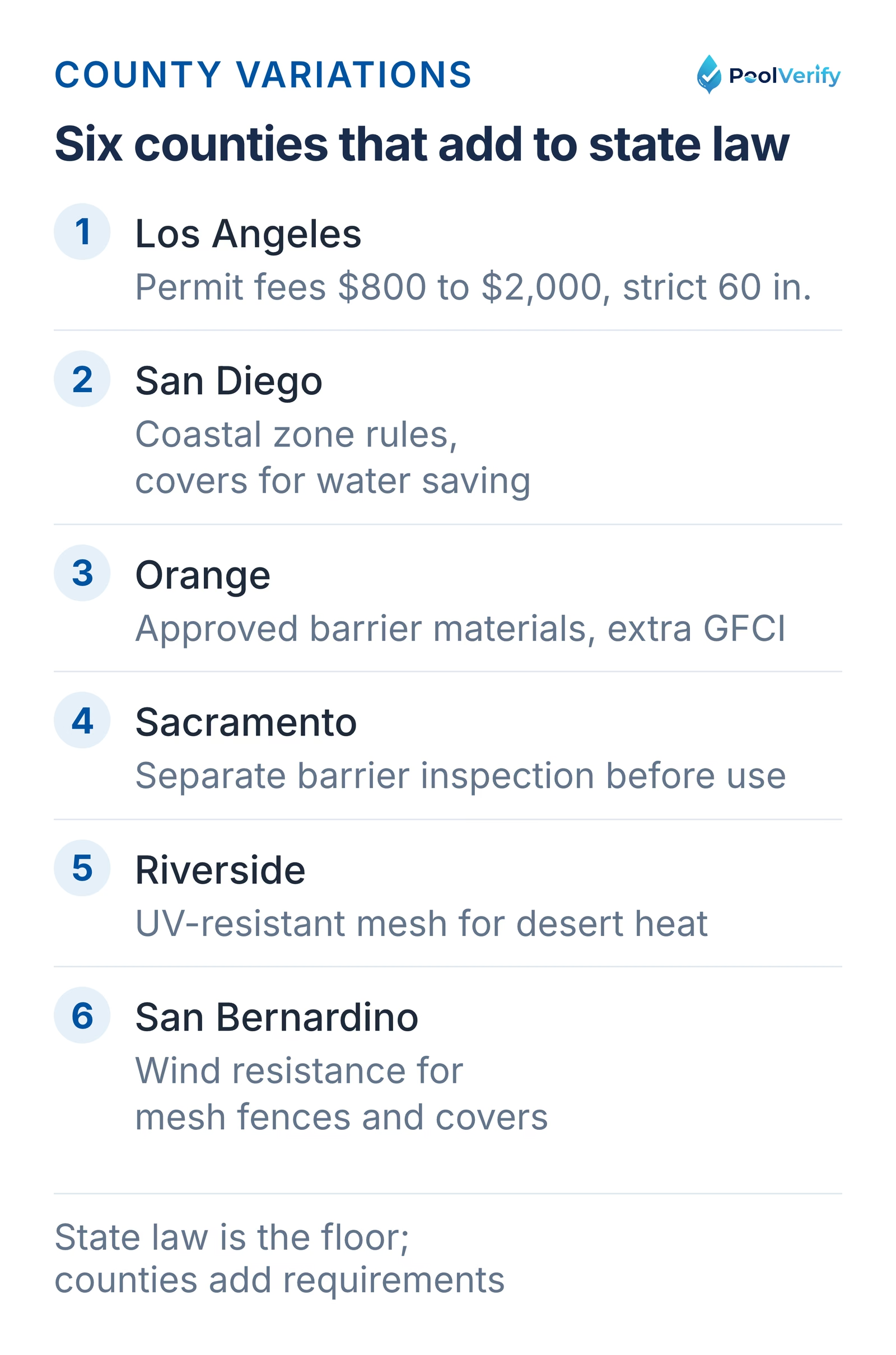
Six California counties, from Los Angeles to San Bernardino, add pool barrier and permit requirements above state law.
How to verify county-specific requirements
Step 1: Visit county building department website or office
Step 2: Request information about pool safety requirements and local amendments to California Building Code
Step 3: Review any county ordinances specific to swimming pools (often in County Code Title 8 or Title 26)
Step 4: During permit application, ask plan review staff about any additional requirements beyond state standards
Step 5: Consult licensed local pool contractors familiar with county-specific requirements
Multi-county projects and relocations
Contractors working across counties: Must familiarize themselves with each county's specific requirements before permit applications
Homeowners relocating: Don't assume pool built to standards in one county meets requirements in another
Consistent elements: All California counties enforce minimum state requirements (two safety features, height/spacing standards, etc.)
Municipal additional requirements
Individual California cities and municipalities frequently impose requirements beyond both state and county standards. Understanding municipal codes prevents compliance gaps and permit delays.
Common types of municipal pool requirements
Aesthetic and design standards
Barrier appearance requirements:
Approved colors and materials lists
Prohibited fence styles (no chainlink in some cities)
Setback requirements from property lines (5-10 feet typical)
Height limits in front yards or street-facing sides
Landscaping requirements:
Minimum landscaping around pool areas
Required trees or shrubs for screening
Drought-tolerant plant requirements
Lighting restrictions:
Pool lighting color temperature limits
Restrictions on uplighting or colored lights
Dark sky ordinances limiting light pollution
Noise ordinances affecting pools
Equipment noise limits:
Maximum decibel levels for pool equipment (pumps, heaters, waterfalls)
Required equipment enclosures or sound barriers
Prohibited operation hours (typical: 10pm-7am)
Activity noise restrictions:
Prohibited hours for pool use in some municipalities
Noise complaint enforcement procedures
Water conservation requirements
Cover requirements:
Mandatory pool covers for all pools (water conservation, not safety)
Automatic fill valves with shutoff mechanisms
Leak detection system requirements
Water features restrictions:
Limits on waterfalls and fountains in drought-sensitive areas
Recirculating system requirements for water features
Additional safety requirements
Rescue equipment:
Required life ring or reaching pole at poolside
First aid kit requirements
Posted emergency contact information and CPR instructions
Depth markers:
Required depth markings on pool deck or coping
Specific font size and color requirements for visibility
Pool rules signage:
Posted pool rules and safety warnings
"No Diving" signs for shallow areas
Multilingual signage in some jurisdictions
Notable California cities with enhanced requirements
Los Angeles (City)
Comprehensive pool ordinance: Los Angeles Municipal Code Section 91.8104 et seq.
Key requirements beyond state law:
Mandatory pool covers for water conservation
Enhanced electrical bonding requirements
Specific drain cover standards exceeding federal VGB Act
Required pool lighting for night safety
San Francisco
Limited applicability: Few single-family pools due to urban density, but requirements include:
Stringent barrier aesthetics requirements
Solar heating mandatory for pools over 500 square feet
Enhanced water quality monitoring for semi-public pools
San Diego (City)
Coastal Commission coordination: Properties in coastal zone require Coastal Development Permits with additional standards:
View corridor preservation requirements
Barrier materials limited to specific approved types
Enhanced landscape screening requirements
Water efficiency standards: Mandatory pool covers and leak detection systems
San Jose
Green building requirements:
Energy-efficient pool equipment mandatory
Solar pool heating required or solar-ready plumbing
Pool covers required for all new construction
Barrier requirements: Enhanced enforcement of barrier spacing and height standards
Sacramento (City)
Urban forest preservation:
Tree protection requirements during pool construction
Mandatory replacement trees if protected trees removed
Root zone protection standards during excavation
Fresno
Agricultural preservation district requirements:
Properties in ag zones face additional setback requirements
Well water use restrictions for pool filling
Enhanced drainage requirements protecting agricultural land
How to verify municipal requirements
City building department: Primary source for municipal pool requirements
Municipal code online: Most California cities publish municipal codes online (typically Title 15, 18, or 24 for building codes)
Planning department: For aesthetic requirements, setbacks, and design standards
HOA coordination: Verify HOA approval doesn't substitute for city permits (both typically required)
Conflict between municipal and state/county requirements
Most stringent requirement applies: When municipal codes conflict with state or county requirements, the most protective/restrictive requirement typically applies.
Example: If state requires 60-inch barrier, county requires 66-inch barrier, and city requires 72-inch barrier, the 72-inch city requirement applies.
Pre-emption limits: Cities cannot weaken state health and safety requirements, but can add supplemental requirements.
HOA pool requirements and restrictions
Homeowners associations (HOAs) impose additional requirements beyond government regulations through CC&Rs (Covenants, Conditions, and Restrictions) and architectural guidelines. Understanding HOA requirements prevents approval delays and non-compliance issues.
HOA authority over pool installations
Legal basis: CC&Rs are private contracts between property owners within HOA communities. When property is purchased, buyers agree to comply with CC&Rs recorded against property title.
Setback requirements from property lines or common areas
Landscaping requirements around pool areas
Equipment screening and visibility restrictions
Construction timeline and hours restrictions
Important limitation: California Civil Code §4745prohibits HOAs from preventing installation of safety features required by state law, even if they conflict with HOA aesthetics rules. State safety law supersedes HOA restrictions.
Common HOA pool requirements
Architectural review requirements
Pre-approval mandatory: HOAs typically require architectural review committee (ARC) approval before building permit application.
Required submittals:
Detailed pool plans showing dimensions and location
Barrier design with materials, colors, and height specifications
Landscaping plan showing plants and irrigation
Equipment location and screening plan
Construction timeline and contractor information
Approval timeline: 30-60 days typical (varies by HOA)
Fees: Architectural review fees range from $100-500+
Barrier aesthetics requirements
Approved materials: HOAs often limit barrier materials to specific types:
Wood fencing stained in approved colors
Wrought iron powder-coated in black, bronze, or dark colors
Prohibited: Exposed pumps, heaters, or filters visible from street
Noise mitigation:
Equipment enclosures for sound reduction
Restrictions on equipment operation hours (even if city allows)
Landscaping requirements
Minimum landscaping standards:
Required trees or shrubs around pool area
Drought-tolerant plant requirements
Prohibition on certain plant types (messy trees, thorny plants near pools)
Irrigation system requirements
Maintenance obligations:
Ongoing landscape maintenance standards
HOA authority to cite for poor maintenance
Multi-family HOA community pool requirements
Common area pools (shared by 25+ units) face different requirements as public/semi-public pools:
Health department regulation: County health departments inspect and regulate per California Health and Safety Code Section 116043.
Required testing and maintenance:
Daily water chemistry testing and logging (25+ unit HOAs)
Twice weekly testing for smaller HOAs (fewer than 25 units)
Maximum 4 days between tests
Safety equipment:
Life rings, reaching poles, first aid kit
Posted CPR instructions and emergency contact information
Safety rules signage
Barrier requirements:
Perimeter barriers with self-closing, self-latching gates
Gates with keyless exit from inside pool area
48-inch minimum barrier height
Operator requirements:
Certified pool operator (CPO) overseeing water quality
Maintenance logs and chemical records
Regular professional inspections
Resolving HOA conflicts with safety requirements
Scenario: HOA prohibits 60-inch fencing, requires maximum 48-inch height for aesthetics.
Resolution: California Civil Code §4745 prohibits HOAs from preventing installation of safety features required by state law. Property owner can install 60-inch barrier despite HOA restriction.
Recommended approach:
Submit architectural application citing state law requirement
Propose compromise aesthetics (materials, colors) meeting HOA standards within state-required height
Cite Civil Code §4745 if HOA denies based solely on height
Proceed with legally required installation after reasonable attempt at HOA coordination
HOA cannot prevent: Installation of required safety features, barrier heights meeting state minimums, gate self-closing/latching mechanisms
HOA can require: Specific materials, colors, or aesthetic treatments within state safety requirements
HOA approval process timeline
Typical timeline for pool project approval:
Week 1-2: Gather HOA CC&Rs, architectural guidelines, and application forms
Week 3-4: Prepare architectural application with plans and specifications
Week 5-8: HOA architectural review committee meets (typically monthly) and reviews application
Week 9-10: Receive approval or request for modifications
Week 11: Submit building permit application to city (after HOA approval)
Total pre-construction timeline: 11-15 weeks
Tip: Begin HOA approval process before finalizing pool contractor agreements to avoid delays.
Enforcement and penalties
California pool law violations carry professional, legal, and financial consequences. Understanding enforcement mechanisms and penalty structures emphasizes the importance of compliance.
Building department enforcement
Primary enforcement authority: Local building departments enforce pool safety laws through permit and inspection processes.
Enforcement mechanisms:
Permit denial: Building department may deny permits for pools not including required two safety features
Inspection failures: Building inspectors fail final inspections if safety features non-compliant or non-functional
Stop-work orders: Issued for construction proceeding without permits or violating approved plans
Code compliance investigations: Triggered by complaints or proactive enforcement programs
Correction notices: Property owners given specific deadlines to correct violations (typically 30-90 days)
Administrative citations: Fines issued for continuing violations after correction notice period expires
Permit revocations: Existing permits revoked for serious violations
Fine structures for pool violations
Building code violations (typical ranges, vary by jurisdiction):
First offense: $500-1,000 for safety feature deficiencies
Second offense: $1,000-2,500 for repeat violations or failure to correct
Continuing violations: $100-500 per day for each day violation continues after correction deadline
Unpermitted construction: $2,500-10,000+ for pools built without required permits
Example: Los Angeles County charges $1,500 base fine plus $350 per day for unpermitted pool construction continuing after notice.
Inspector professional penalties
Licensed home inspectors who fail to comply with BPC §7195 requirements face multiple enforcement avenues:
Professional liability lawsuits:
Damages: Costs to bring pool to compliance ($2,000-10,000+)
Legal fees and court costs
Lost time and opportunity costs
Potential punitive damages for gross negligence
Errors and omissions insurance impacts:
Claims increasing premiums 20-50%
Coverage exclusions for pool inspections in future policies
Policy cancellation for multiple claims
Professional association discipline:
CREIA (California Real Estate Inspection Association): Membership suspension, censure, mandatory additional training, membership revocation for serious violations
InterNACHI: Similar disciplinary procedures and professional censure
ASHI (American Society of Home Inspectors): Ethics complaints and professional sanctions
Non-fatal near-drowning: $500,000 to $5 million for medical costs, long-term care, permanent injuries
Criminal charges (for egregious cases):
Involuntary manslaughter if gross negligence established
Child endangerment charges
Building code violation criminal charges (misdemeanor, typically)
Homeowner insurance impacts:
Claims denied if willful non-compliance with safety laws proven
Premium increases after pool incident claims
Coverage exclusions or policy cancellation
Property sale complications:
Buyer purchase agreement cancellation rights if pool non-compliant
Mandatory repairs or credits ($3,000-10,000 typical)
Extended days on market (22% longer average)
Lower sale prices ($3,000-8,000 typical reduction)
Real estate agent exposure
Licensed real estate agents failing to ensure pool compliance face:
Department of Real Estate complaints: Buyers or sellers may file complaints alleging:
Breach of fiduciary duty
Failure to disclose material facts
Negligent misrepresentation
Inadequate transaction coordination
DRE disciplinary actions:
License suspension (30 days, 1 year)
Mandatory additional education
Probationary license status
License revocation for serious or repeat violations
Civil liability:
Breach of contract claims
Professional negligence lawsuits
Damages: Buyer costs to achieve compliance, transaction costs, lost opportunity costs
E&O insurance claims: Similar impacts as inspector claims (rate increases, coverage limitations)
Seller disclosure liability
Non-disclosure of pool deficiencies creates significant post-sale liability:
Fraud claims: Buyers may sue for fraudulent concealment if sellers knowingly withheld pool safety deficiency information
Rescission rights: In extreme cases, buyers may seek transaction rescission (unwinding sale entirely)
Damages: Cost to bring pool to compliance, legal fees, consequential damages
Statute of limitations: Typically 3-4 years from discovery of non-disclosure for bringing claims
Example case: Seller aware pool had only one safety feature, provided inspection report but minimized deficiency. Buyer discovered issue after purchase, sued for cost of barrier fence installation ($6,500) plus attorney fees ($8,000). Seller paid $14,500 settlement plus own legal defense costs ($12,000).
Tenant/guest injury liability (rental properties)
Landlords face heightened exposure when tenants or guests injured in rental property pools:
Premises liability: Landlords have duty to maintain safe conditions, including functional pool safety features
Typical damages in rental pool injury cases: $300,000 to $2 million depending on injury severity
Contributing factors increasing liability:
Knowledge of safety feature deficiencies without correction
Failure to respond to tenant maintenance requests
Lack of maintenance documentation
No professional inspections or safety verification
Criminal charges possible: For severe negligence or willful disregard of known hazards
Avoiding enforcement and penalties
Prevention strategies:
Pool owners: Proactive professional inspections, prompt safety feature maintenance, honest disclosure during property sales, comprehensive liability insurance
Inspectors: Current training certification, comprehensive inspection checklists, thorough documentation and photography, required disclosure language in all reports, professional E&O insurance
Real estate agents: Recommend qualified trained inspectors, review inspection reports for completeness, facilitate safety feature installations during escrow, verify seller disclosure completion
Contractors: Proper permitting for all pool construction, specification-compliant safety feature installation, thorough final inspection coordination, documentation provided to property owners
How to achieve compliance
Achieving and maintaining California pool law compliance involves systematic assessment, professional installation, regular maintenance, and thorough documentation. This section provides practical guidance for compliance at any stage.
Step 1: Determine which laws apply
New construction: HSC §115922 requires two safety features before building department final inspection
Existing pool being sold: BPC §7195 inspection required, SB 442 seller certification required, buyers typically demand compliance
Existing pool not being sold: No immediate legal requirement (unless remodeling with permits), but compliance recommended for safety and future sale preparation
Rental property: Ongoing maintenance obligations for safety features, periodic professional inspection recommended
County/municipal requirements: Check local building department for additional requirements beyond state standards
Step 2: Professional pool inspection
Schedule comprehensive inspection with qualified professional:
Inspector qualifications:
Licensed home inspector with current BPC §7195 training certification (renewed every 3 years)
Licensed C-53 pool contractor
Professional pool inspector with relevant credentials
Inspection scope: Seven drowning prevention features identification, operational status assessment, compliance determination, photographic documentation, written report with findings
Cost: $150-400 for standalone pool safety inspection; included in comprehensive home inspection ($400-600)
Digital inspection tools: Professional inspectors using PoolVerify inspection software complete thorough inspections in 15-20 minutes with comprehensive documentation and instant PDF reports.
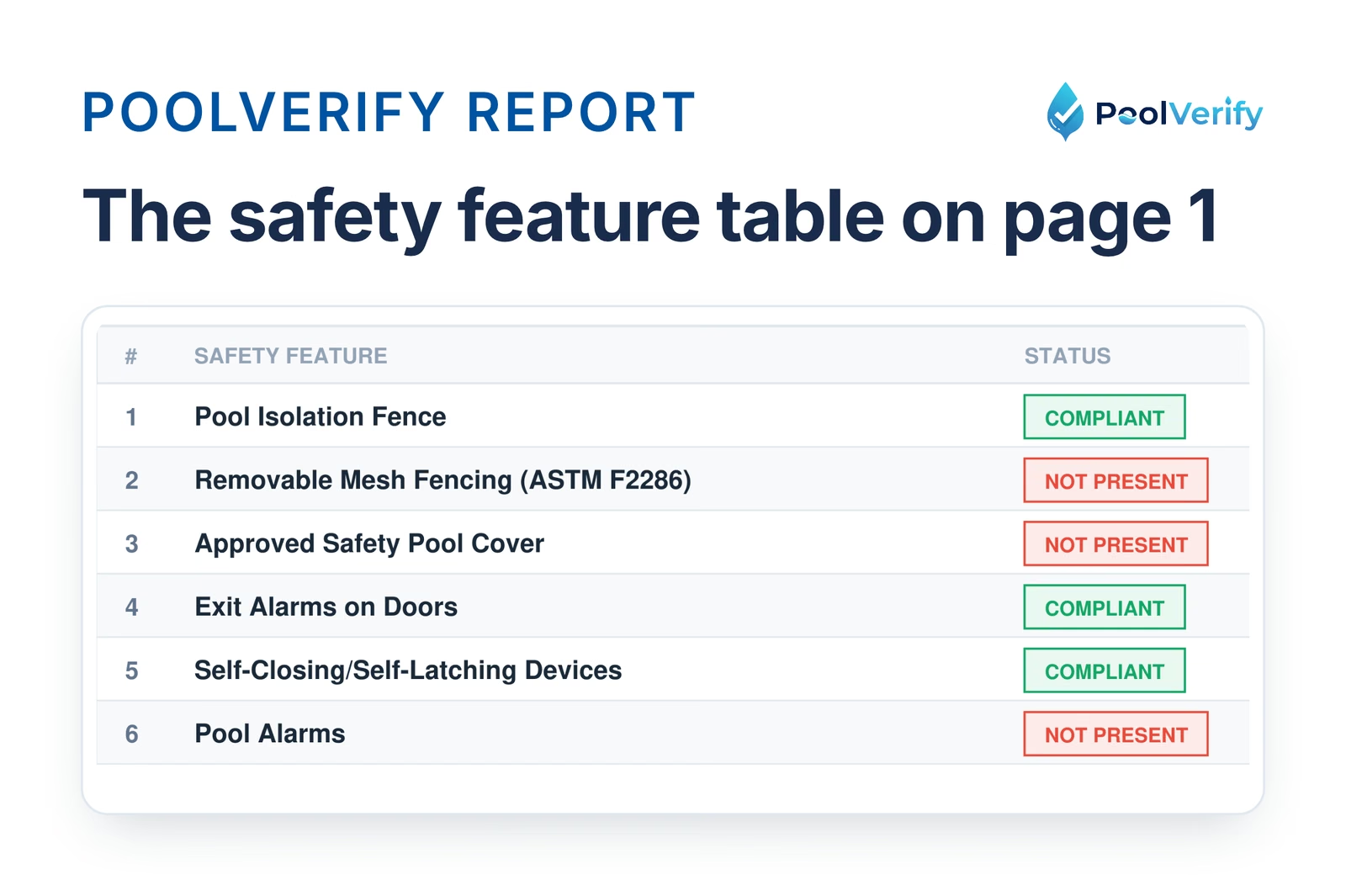
The safety feature table on page 1 of a PoolVerify report, with present and operable columns for each HSC §115922 item.
Step 3: Safety feature installation
Based on inspection findings, install required safety features achieving minimum two compliant features:
Hiring qualified contractors:
Licensed C-53 pool contractors: Primary professionals for pool safety feature installation
Professional verification: For property transfers, schedule follow-up inspection documenting compliance achievement
Building department inspection (if permits required): Schedule final inspection for permitted work
Step 5: Ongoing maintenance
Regular testing schedule:
Monthly (recommended minimum):
Test gate self-closing and self-latching function
Test alarm functionality (door alarms, pool alarms)
Visual inspection of barriers for damage or deterioration
Quarterly:
Clean and inspect safety cover (if applicable)
Lubricate gate hinges and latch mechanisms
Test alarm volume with decibel meter
Annually:
Replace alarm batteries (even if still functioning)
Professional inspection of all safety features
Replace drain covers per VGB Act 5-year requirement
Repair any identified deficiencies promptly
Maintenance documentation: Keep log of testing, repairs, and professional inspections for liability protection and future property transfer documentation
Step 6: Compliance certification for property transfers
When selling property with pool:
Timing: Schedule professional BPC §7195-compliant inspection early in listing preparation or immediately upon accepting purchase offer
Report delivery: Provide inspection report to buyers satisfying SB 442 certification requirement
Negotiate repairs: If deficiencies identified, negotiate with buyers:
Seller completes repairs before close
Seller provides credit for buyer to complete repairs
Price reduction reflecting non-compliance
Documentation to buyers: Provide copies of safety feature installation invoices, warranties, maintenance records, and professional inspection reports
Compliance costs summary
Typical compliance cost ranges (achieving two features from non-compliant pool):
Most cost-effective: Pool alarm ($200-400) + removable mesh fence ($1,200-2,000) = $1,400-2,400 total
Total compliance investment: $1,550 to $23,400 depending on existing features and selected additions
Cost of compliance
Understanding the financial investment required for pool safety compliance helps property owners budget appropriately and make informed decisions about feature selection.
Initial installation costs by feature
Feature 1: Barrier fence
Wood fencing: $15-30 per linear foot installed
Wrought iron/aluminum: $25-45 per linear foot installed
Glass panels: $150-300 per linear foot installed
Typical pool perimeter: 100-150 linear feet
Total cost: $3,000-8,000 for most residential pools (mid-range materials)
Civil lawsuit damages (near-drowning): $500,000 to $5 million
Legal defense costs: $50,000 to $300,000+
Insurance premium increases: 30-100%+ after claims
Enforcement penalties:
Building code violation fines: $500-2,500+
Continuing violation daily fines: $100-500 per day
Unpermitted construction fines: $2,500-10,000
Comparison: Compliance investment of $2,000-25,000 is dramatically less expensive than non-compliance costs in sale situations or liability incidents.
Financing options for compliance
Home equity line of credit (HELOC): Borrow against home equity for safety feature installation
Personal loans: Unsecured loans for $2,000-25,000 typically available at 6-12% interest
Credit cards: For smaller installations ($1,000-3,000), 0% introductory APR cards can provide interest-free financing for 12-18 months
Contractor financing: Some pool contractors offer payment plans or financing programs
Property sale credits: Negotiate buyer completion of safety feature installation with seller credit at closing
FHA 203(k) loans: Buyers can include compliance costs in mortgage for properties requiring safety feature installation
Return on investment
Property value increase: Compliant pools add value compared to non-compliant pools:
Faster sale time (22% reduction in market days)
Higher sale prices ($3,000-8,000 typical premium)
Broader buyer pool (buyers with children prioritize safe pools)
Insurance benefits: Some homeowner insurance carriers offer discounts (5-10%) for pools with multiple safety features
Peace of mind: Invaluable protection against child drowning tragedies
Rental income: Compliant pools enable vacation rental operations in some jurisdictions
Tax considerations
Deductibility: Pool safety features generally not tax-deductible as personal home expenses
Exception: Rental property pool safety features may be deductible as business expenses or depreciated over time (consult tax professional)
Capital improvements: Safety feature installations may increase home cost basis, reducing capital gains tax when property sold
Recent 2025-2026 updates
California pool laws continue evolving with new legislation, updated technical standards, and enhanced enforcement mechanisms. Staying current with recent changes ensures ongoing compliance.
SB 552 key changes (effective January 1, 2025)
Senate Bill 552, signed September 27, 2024, made several important refinements:
Prohibited safety feature combinations: Explicitly prohibits combining building wall as barrier (Feature 2) with exit alarms on same doors (Feature 5) as satisfying "two feature" requirement. These are now considered one feature, not two.
Rationale: Both features provide same protection layer (alarmed doors), not two independent features.
Impact: Property owners relying on this combination must add third feature (barrier fence, pool alarm, or safety cover) to achieve compliance.
Under SB 552 a wall barrier and exit alarms on the same doors count as one feature; a fence, cover or pool alarm is added.
Enhanced inspector reporting requirements: BPC §7195 inspections must now include:
More detailed operational status assessment (not just presence/absence)
Specific documentation of feature condition
Explicit identification of prohibited combinations
Building department enforcement authority: Clarified local building departments have authority to:
Issue correction notices for non-compliant existing pools
Verify safety features during property transfers
Educational emphasis: Reinforced requirement to include pool isolation fence effectiveness statement in inspection reports:
"A pool isolation fence is the most studied and effective drowning prevention safety feature for preventing a child from accessing a pool or spa unsupervised, according to the American Academy of Pediatrics Policy Statement, 'Prevention of Drowning,' published in 2019."
Technical standard updates: Updated references to current ASTM specifications:
ASTM F2286-23 (removable mesh fencing)
ASTM F1346-23 (safety pool covers)
ASTM F2208-15 (pool alarms)
2026 energy efficiency requirements
Effective January 1, 2026: New requirements for swimming pool and spa heating in California:
Gas heating prohibition: Gas is no longer allowed as primary heating source for pools and spas adding heaters for the first time.
Acceptable heating sources:
Electric heat pumps (most energy efficient)
Solar pool heating systems
Hybrid systems combining solar and electric
Grandfathering: Existing gas heaters can remain in place and be repaired, but cannot be newly installed
Rationale: Climate change mitigation, greenhouse gas emission reductions, energy efficiency
Impact: New pool construction costs increase $3,000-6,000 for heat pump installation vs. traditional gas heaters
AB 2866 daycare facility requirements (2024)
Assembly Bill 2866 established enhanced pool safety requirements for childcare facilities:
Licensed family daycare homes with in-ground pools must have:
Enclosure or fence isolating pool (Feature 1)
Pool cover OR pool alarm (Feature 4 or 6)
Redundant protection ensuring no single feature failure allows child access
Licensed daycare centers with pools must have:
Mesh fence, enclosure, or self-closing door (Features 1, 2, or 3)
Second redundant feature preventing unattended access
Posted safety procedures and emergency response plan
Effective date: January 1, 2024
Enforcement: Through daycare licensing requirements and Department of Social Services inspections
Inspector training requirements update (2024)
SB 736 training mandate became effective January 1, 2024:
Requirement: Home inspectors must complete continuing education training module every three years to maintain certification for pool inspection.
Training content:
Seven drowning prevention safety features identification
BPC §7195 reporting requirements
HSC §115922 overview and requirements
Inspection procedures and methodologies
Common deficiencies recognition
ASTM and ANSI standards familiarity
Approved providers:
California Real Estate Inspection Association (CREIA)
InterNACHI
Various professional education providers
Enforcement: Professional liability if inadequate training contributes to inspection errors, professional association discipline, contractor license issues for C-53 inspectors
Pending legislation (2026 session)
Bills under consideration in 2026 legislative session:
Enhanced alarm technology requirements: Proposals to require:
Smart alarm systems with smartphone notifications
Integration with home security systems
Video monitoring capabilities
AI-powered detection systems
Mandatory buyer education: Proposals requiring:
Pool safety education materials provided to buyers
Impact: Products must meet current specifications. Older products may not satisfy current compliance requirements if standards have changed significantly.
Verification: Check manufacturer certification labels show current ASTM specification year
Limitations
This guide is general information about pool safety law, not legal advice; the current text of HSC §115922 and BPC §7195 on leginfo.legislature.ca.gov controls, and local building departments add their own requirements. PoolVerify is inspection software for California residential pool safety inspections; it does not perform inspections, certify inspectors, or issue compliance certificates.
Frequently asked questions
Do I need two safety features if my pool was built in 1995?
No automatic requirement for pools built before January 1, 1998 (when HSC §115922 became effective). However, during property transfers, BPC §7195 inspections will identify how many features exist, and SB 442 requires disclosure to buyers. Most buyers demand compliance as purchase condition, creating effective requirement despite grandfathering. Best practice: Install two safety features proactively to avoid transaction delays and liability risks.
What happens if my pool only has one safety feature?
For property sales: Inspection report must explicitly state pool has fewer than two required features. Buyers typically negotiate seller credits ($2,000-10,000) for safety feature installation or require completion before closing. Property likely remains on market longer (22% longer average) and sells for less ($3,000-8,000 typical reduction).
For existing pools not being sold: No immediate legal requirement to upgrade unless remodeling with permits. However, liability risk is significantly higher if drowning incident occurs. Insurance may deny coverage if non-compliance contributory to incident.
Recommended: Install second safety feature for liability protection and future sale preparation.
Can I satisfy the two-feature requirement with a pool cover and pool alarm?
Yes, this is a valid combination. Safety pool cover meeting ASTM F1346 (Feature 4) combined with pool surface alarm meeting ASTM F2208 (Feature 6) satisfies the two-feature requirement.
Consideration: Pool cover must be deployed to provide protection. If cover stored open/retracted, pool effectively has only one feature (alarm). American Academy of Pediatrics recommends including isolation fence (Feature 1) as most reliable protection.
Do above-ground pools need safety features?
Yes, if they meet definition of "swimming pool" under HSC §115922:
Temporary portable pools (seasonal Intex-style without permanent connections) typically exempt, but check local ordinances, some jurisdictions have stricter requirements.
Above-ground pool walls may satisfy barrier requirement if:
Wall height 48+ inches from ground level
Access ladder removed when pool not supervised, or
Ladder secured with locking mechanism, or
Pool area fenced with compliant barrier
How much does it cost to bring a non-compliant pool to compliance?
Cost range: $1,400-23,000+ depending on existing features and selected additions.
Most cost-effective: Pool alarm ($200-400) + removable mesh fence ($1,200-2,000) = $1,600-2,400 total
Most common: Barrier fence ($3,000-8,000) + exit alarms ($200-600) = $3,200-8,600 total
Financing: HELOC, personal loans, contractor financing, or buyer credit negotiated at closing.
Can my HOA prevent me from installing required safety features?
No. California Civil Code §4745 prohibits HOAs from preventing installation of safety features required by state law, even if they conflict with HOA aesthetic guidelines.
HOA can require: Specific materials, colors, or designs within state safety requirements (e.g., can require black wrought iron vs. chainlink, but cannot prohibit 60-inch height).
Recommended approach:
Submit architectural application showing state law requirement
Propose compromise meeting HOA aesthetics within legal requirements
Cite Civil Code §4745 if HOA denies based solely on safety feature
Proceed with installation after reasonable coordination attempt
Who can perform BPC §7195 pool inspections?
Qualified inspectors include:
Licensed home inspectors with current pool inspection training certification (renewed every 3 years as of January 1, 2024)
Licensed contractors:
C-53 pool contractors
B general contractors
Professional inspectors certified through:
CREIA (California Real Estate Inspection Association)
InterNACHI (International Association of Certified Home Inspectors)
ASHI (American Society of Home Inspectors)
Requirement: Must have completed required training module covering seven drowning prevention features and BPC §7195 reporting requirements.
Not qualified: Pool service technicians without licenses, homeowners (for property transfer purposes), unlicensed general handymen.
What's the difference between BPC §7195, HSC §115922, and SB 442?
HSC §115922 (Swimming Pool Safety Act): Establishes safety standards: pools must have two of seven features. Applies to new construction and remodeling with building permits.
BPC §7195 (Home Inspector Requirements): Establishes inspection reporting standards: inspectors must identify safety features and state if pool has fewer than two. Applies during property transfer inspections.
SB 442 (Seller Disclosure): Establishes disclosure obligation: sellers must provide buyers with written certification of pool safety features. Applies to all property transfers with pools.
How they work together: HSC §115922 creates substantive requirements, BPC §7195 creates inspection mechanism, SB 442 creates disclosure obligation. All three work together ensuring pools built to standards are verified and disclosed during transfers.
Conclusion
California's comprehensive pool safety laws, encompassing BPC §7195, HSC §115922, SB 442, and SB 552, create robust protections preventing child drowning tragedies while establishing clear compliance standards for pool owners, inspectors, and real estate professionals.
Understanding these interconnected statutes, recognizing when each applies, and following systematic compliance procedures ensures safe pools and smooth property transactions. With enhanced enforcement mechanisms effective in 2025, proactive compliance is more important than ever.
Whether you're a property owner maintaining an existing pool, a seller preparing for property transfer, a buyer evaluating pool compliance, an inspector conducting BPC §7195 assessments, or a contractor building new pools, this guide provides the comprehensive knowledge needed to navigate California's pool safety regulatory landscape successfully.
Key takeaways:
Two safety features minimum: All pools must have at least two of seven drowning prevention features
Property transfer trigger: BPC §7195 inspections and SB 442 disclosures required during sales
Multiple compliance layers: State, county, municipal, and HOA requirements all apply
Recent updates: SB 552 (effective January 1, 2025) prohibits certain feature combinations and enhances enforcement
Cost-effective compliance: $1,400-$8,600 for most pools achieving two-feature minimum
Professional inspections essential: Qualified inspectors with current training certification ensure thorough compliance assessment
Ready to streamline California pool safety compliance?PoolVerify inspection software helps pool professionals record BPC §7195-compliant inspections on a checklist with photos with California-specific templates, required disclosure language, automatic photo documentation, and instant PDF reports. The first inspection is part of the 14-day trial.
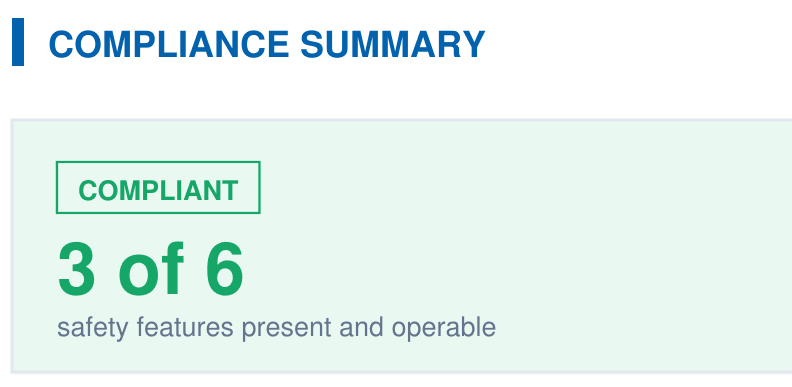
A branded PDF with the compliance summary, the feature table, each finding with its photos, and the signature, generated on‑site when the BPC §7195 and HSC §115922 checklist is complete.