Pool Inspector License Requirements: California Guide
Complete guide to pool inspector licensing in California. C-53 contractor license, B license, home inspector requirements, certification options, and step-by-step process.
Operating as a pool inspector in California requires proper licensing, but which license do you actually need? With California's strict safety regulations and mandatory BPC §7195 compliance inspections, understanding licensing requirements is crucial for anyone considering a career in pool inspection.
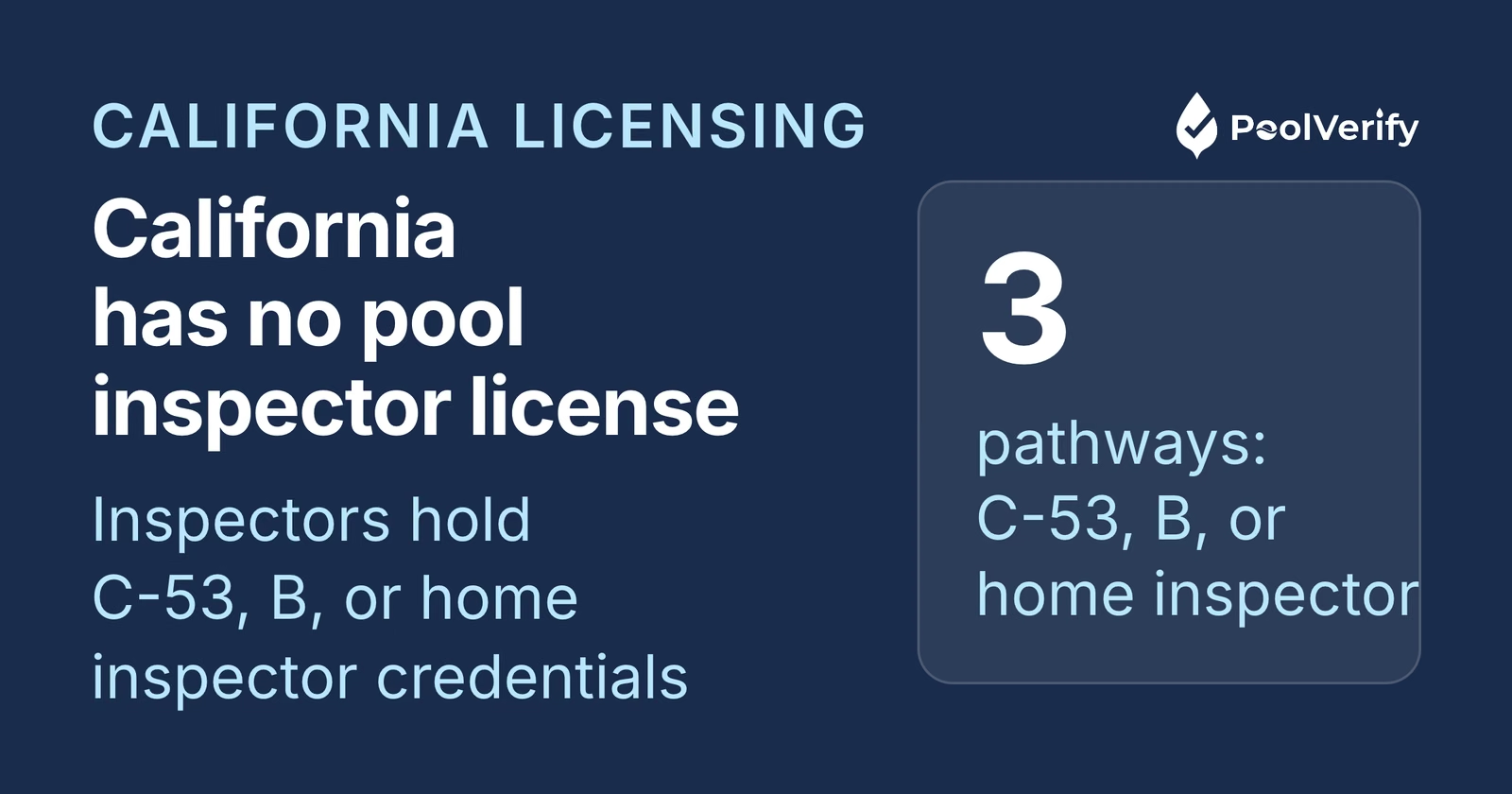
Unlike some states, California doesn't offer a standalone "pool inspector" license. Instead, aspiring pool inspectors must obtain one of three qualifying licenses: a C-53 Swimming Pool Contractor license, a B General Contractor license, or a Home Inspector license. Each pathway has distinct requirements, timelines, and costs.
This comprehensive guide covers everything you need to know about California pool inspector licensing requirements in 2026, including step-by-step application processes, examination requirements, costs, certification options, and how to choose the right license for your career goals.
California Pool Inspector License Overview
California's pool inspection industry is governed by specific licensing requirements tied to the type of inspection being performed.
Who Needs a Pool Inspector License?
If you plan to perform BPC §7195 pool safety inspections for property transfers in California, you must hold one of these licenses:
Required Licenses:
C-53 Swimming Pool Contractor: Licensed pool construction and repair contractors
B General Contractor: General building contractors
Home inspector credentials: California does not license home inspectors; CREIA and InterNACHI membership are the usual credentials
Certified Pool Operator (CPO®) and Certified Pool Inspector (CPI®) certifications provide valuable technical knowledge but do not satisfy California's legal licensing requirements for property transfer inspections.
According to CSLB: "A swimming pool contractor constructs swimming pools, spas or hot tubs, including installation of solar heating equipment using those trades or skills necessary for such construction."
Scope of work:
Swimming pool construction
Spa and hot tub installation
Pool remodeling and renovation
Pool equipment installation
Pool safety inspections
Solar pool heating systems
Project threshold: Required for projects $1,000 or more (labor and materials combined) as of January 1, 2025 under Assembly Bill 2622.
C-53 License Requirements
1. Experience Requirements
Minimum: 4 years of journey-level experience in swimming pool construction, installation, or maintenance within the last 10 years
Journey-level experience means:
Working under a licensed contractor
Full-time employment in pool construction/service
Increasingly responsible technical work
Practical knowledge of pool systems, equipment, codes
$350 for non-sole owner (partnerships, corporations, LLCs)
Step 8: Complete Additional Requirements
Live Scan fingerprinting
Asbestos certification (open-book exam)
Step 9: Receive License
CSLB issues license typically within 1-2 months after completing all requirements
License number: Four-digit or six-digit license number Expiration: 2-year renewal cycle
C-53 License Timeline
Typical timeline: 6-9 months total
1-2 months: Application processing
1-3 months: Exam preparation and completion
1-2 months: Final license issuance post-exam
Fast track: Some applicants complete in 4 months with proper preparation and immediate exam scheduling
Delays possible due to:
Incomplete applications
Experience verification issues
Failed exams requiring retakes
Missing documentation
C-53 License Costs
Expense
Cost
Application fee
$450
Exam fees (both exams)
$102.86
Initial license fee
$200-350
Contractor bond (annual)
$100-200
Fingerprinting
$49-59
Exam prep materials (optional)
$300-800
Total initial investment
$1,500-3,000
Annual renewal costs:
License renewal: $450 every 2 years
Bond renewal: $100-200 annually
Continuing education: $100-300
Insurance: Varies
Advantages of C-53 for Pool Inspection
Specialization: Demonstrates deep pool expertise to clients
Dual revenue streams: Perform inspections AND repairs/construction
Industry credibility: Recognized as pool industry professional
Existing business integration: Add inspections to existing pool service business
Equipment knowledge: Technical expertise in pool systems and equipment
Higher rates: Can command premium pricing due to contractor status
B General Contractor License
The B General Contractor license is California's most versatile contractor license, covering general building construction.
What is a B License?
CSLB definition: Class B licenses general building construction involving structures for support, shelter, and enclosure of persons, animals, chattels, or movable property. Projects must incorporate at least two unrelated building trades or crafts.
Scope of work:
General building construction
Home remodeling and renovation
Structural work
Multi-trade projects
Pool inspections (as part of property assessment)
Coordination of specialty contractors
Authority: B license holders can work in any area of construction, including pools
B License Requirements
1. Experience Requirements
Minimum: 4 years of journey-level experience in general construction within the last 10 years
Qualifying experience:
General building contractor employee
Construction project manager
Multi-trade construction work
Supervisory construction roles
Documentation: Certification of Work Experience forms with employer verification
Education substitution: Up to 3 years substituted with construction-related degrees
2. Age Requirement
Must be at least 18 years old
3. Examination Requirements
Law and Business Examination only:
115 multiple-choice questions
3.5 hours to complete
Covers contractor law, business practices, project management
No separate trade exam for B license (distinguishes it from specialty licenses like C-53)
Passing score: Typically 72%
18-month exam window from application approval
4. Financial Requirements
Contractor bond: $25,000 minimum
Annual premium: $100-200
Workers' compensation: Required if employing workers
Complete Application for Original Contractor License
Pay $450 application fee
Application review (1-2 months)
Schedule and pass Law and Business exam
Submit bonds and insurance
Pay initial license fee ($200-350)
Complete fingerprinting and additional requirements
Receive license (1-2 months)
Timeline: 6-9 months typically
Exam advantage: Only one exam required (vs. two for C-53)
B License Costs
Expense
Cost
Application fee
$450
Exam fee (Law & Business)
$51.43
Initial license fee
$200-350
Contractor bond (annual)
$100-200
Fingerprinting
$49-59
Exam prep materials (optional)
$300-800
Total initial investment
$1,500-3,000
Similar costs to C-53 but potentially lower exam prep costs (one exam vs. two)
Advantages of B License for Pool Inspection
Maximum flexibility: Can work in any construction area, not just pools
Single exam: Easier path if you have general construction experience
Broader business opportunities: Home remodeling, additions, general contracting
Established contractor recognition: B license widely recognized and respected
Property inspection scope: Can assess entire properties including pools
Higher project values: No restrictions on project size or complexity
Disadvantages
Less pool-specific: Doesn't demonstrate specialized pool expertise like C-53
Requires broad experience: General construction background needed (pool-only experience insufficient)
May need supplementary credentials: CPO or CPI certification helpful to establish pool expertise
California Home Inspector License
California's approach to home inspector licensing differs from contractor licenses, with unique requirements and pathways.
California Home Inspector Regulations
Important: California is one of 20 states that does not require state licensing for home inspectors. However, home inspectors must comply with the 1996 California Trade Practice Act, which:
Defines what constitutes a home inspection
Establishes standards of practice
Outlines inspector legal responsibilities and limitations
Provides legal framework for professional conduct
Who Can Perform Home Inspections in California?
Under BPC §7195, a "home inspector" is any individual who performs a home inspection: no specific state license is mandated.
However, professional home inspectors typically obtain:
Professional association certifications
Training credentials
Insurance coverage
Business licensing
Becoming a Professional Home Inspector
While not legally required, following these steps establishes you as a credible professional:
1. Professional Training
Training programs (not legally mandated but highly recommended):
Purpose: Pool inspection training specifically for home inspectors
Course: "How to Inspect Pools and Spas" online course
Cost: Free for InterNACHI members (~$289/year membership)
Content:
Residential pool safety inspection standards
California BPC §7195 requirements
Equipment inspection techniques
Report writing for pool inspections
Credential: InterNACHI Certified Pool & Spa Inspector designation
Benefits:
Included with membership (no additional cost)
Specifically designed for home inspectors
Marketing logo usage rights
California-specific compliance content
Should You Get Voluntary Certifications?
Yes, if:
You want to demonstrate specialized pool expertise
You're a home inspector adding pool inspections
You plan to inspect commercial pools (CPO often required)
You want continuing education credits
You're building credibility in a competitive market
Less critical if:
You hold C-53 license (already demonstrates pool expertise)
You have extensive pool industry experience
You're in a low-competition market
Budget is extremely limited
Best approach: Obtain required license first, add voluntary certifications second for enhanced credibility
Choosing the Right License for Your Goals
Selecting the optimal licensing pathway depends on your background, goals, and timeline.
Decision Framework
If you have 4+ years pool industry experience:
C-53 Swimming Pool Contractor License
Fastest path for pool professionals
Enables inspection + repair services
Demonstrates specialized expertise
Best return on investment for pool-focused career
If you have 4+ years general construction experience:
B General Contractor License
Leverages existing construction background
Maximum flexibility across projects
Only one exam required
Can expand beyond pool inspection
If you're new to construction/pool industry:
Home Inspector Path
Fastest entry (no 4-year experience requirement)
Lower regulatory barriers
Broader property inspection scope
Multiple revenue stream opportunities
If you want maximum earning potential:
C-53 or B license + voluntary certifications
Combine inspection and repair services
Command higher rates
Licensed contractor credibility
CPO/CPI certifications enhance expertise
Career Goals Assessment
Career Goal
Recommended License
Rationale
Pool-only inspection business
C-53
Specialized credibility, repair option
Full-service property inspections
Home Inspector
Broadest scope, home inspection focus
Inspection + repair services
C-53 or B
Only contractors can perform repairs
Commercial pool inspections
B or C-53 + CPO
Contractor license + operational knowledge
Fast market entry
Home Inspector
Lowest barriers, fastest path
Expanding existing pool business
C-53
Natural addition to pool service
Expanding existing construction business
B
Already have infrastructure
Career change from unrelated field
Home Inspector
Most accessible pathway
Income Potential by License Type
C-53 license holders:
Pool inspections: $150-300 each
Repair work: Additional revenue
Potential income: $75,000-150,000+ annually
B license holders:
Pool inspections: $150-300 each
General contracting: Higher project values
Potential income: $80,000-200,000+ annually
Home inspectors:
Full home inspections: $350-600 each
Pool inspections (add-on): $100-200 each
Potential income: $60,000-120,000 annually
Note: Income varies significantly based on location, volume, efficiency, and services offered
Multiple License Strategy
Best of both worlds: Some professionals hold multiple licenses
Example combinations:
Home Inspector + C-53 license
B license + home inspector credentials
C-53 license + CPO + CPI certifications
Benefits:
Maximum service offerings
Broadest client base
Highest income potential
Competitive advantages
Drawbacks:
Higher costs and maintenance
Multiple renewal requirements
More complex business operations
Costs Comparison: All License Types
Understanding total costs helps with financial planning and decision-making.
Initial Investment Comparison
Cost Category
C-53 License
B License
Home Inspector
Training/education
$300-800
$300-800
$1,000-3,000
Application fees
$450
$450
$0
Exam fees
$103
$51
$225
License fees
$200-350
$200-350
$0
Bond (first year)
$100-200
$100-200
$0
Fingerprinting
$49-59
$49-59
$0
Insurance (first year)
$500-2,000
$500-2,000
$1,200-2,800
Professional association
Optional
Optional
$289-500
Equipment/tools
$500-2,000
$500-2,000
$500-2,000
Total initial
$2,500-6,500
$2,500-6,500
$3,200-9,000
Considerations:
Home inspector path: Higher training costs but no licensing fees
Contractor licenses: Application/licensing costs but potentially lower training
Insurance: Required for all paths, significant ongoing expense
Annual Recurring Costs
Cost Category
C-53 License
B License
Home Inspector
License renewal (biennial)
$450 every 2 years
$450 every 2 years
$0
Bond renewal
$100-200
$100-200
$0
Insurance
$500-2,000+
$500-2,000+
$1,200-2,800
Continuing education
$100-300
$100-300
$200-500
Professional dues
$100-500
$100-500
$289-500
Voluntary cert renewal
$100-300
$100-300
$100-300
Annual average
$1,500-4,000
$1,500-4,000
$1,800-4,100
Insight: Ongoing costs similar across all pathways, with insurance representing largest expense
Return on Investment
Break-even point (based on $175 average inspection fee):
C-53 license: 15-40 inspections to recover initial investment B license: 15-40 inspections to recover initial investment Home inspector: 20-55 inspections to recover initial investment
Timeline to break-even:
Part-time (5 inspections/month): 3-11 months
Full-time (40 inspections/month): Under 2 months
Long-term value: All pathways offer strong ROI within first year of operation
After Licensing: Starting Your Inspection Business
Once licensed, launching your pool inspection business requires additional setup.
Business Formation
Choose business structure:
Sole proprietorship: Simplest, personal liability exposure
LLC: Liability protection, professional image ($800+ filing in California)
Corporation: For larger operations, more complexity
Register your business:
File DBA ("Doing Business As") if using trade name
Obtain Federal EIN (Employer Identification Number)
Register with California Secretary of State (if LLC/Corp)
Obtain local business licenses
Cost: $200-1,000 depending on structure
Insurance Coverage
Required coverage:
General Liability Insurance:
Coverage: Property damage, bodily injury
Typical limits: $1 million per occurrence
Cost: $500-1,500 annually
Errors & Omissions (E&O) / Professional Liability:
Pricing: $39/month (25 inspections) or $79/month (unlimited) on annual billing
Alternative software:
Spectora ($89-200/month, generic templates)
HomeGauge ($79-149/month, generic templates)
ISN ($89+/month, generic templates)
Complete your first inspection professionally from day onePoolVerify provides pre-built California compliance templates so new inspectors can generate professional BPC §7195 reports immediately, no template creation required. Start Your Free Trial
Marketing Your Services
Target clients:
Real estate agents and brokers
Homeowners selling properties with pools
Pool service companies (referral partnerships)
Property management companies
Home inspectors (subcontracting)
Marketing channels:
Website: Professional site with local SEO ($500-2,000 setup, $50-200/month hosting)
Google Business Profile: Free, essential for local search
Real estate networking: Agent meetups, open houses, referral programs
Social media: Facebook, Instagram, LinkedIn (organic and paid)
Direct mail: Postcards to real estate agents ($200-500 per campaign)
Initial marketing budget: $500-2,000 first year
Pricing Your Services
California pool inspection rates (2026):
Standalone residential pool inspection: $150-300 Pool inspection with home inspection: $100-200 (add-on fee) Commercial pool inspection: $250-500+ Re-inspection after repairs: $75-150 Consultation services: $100-200/hour
Pricing factors:
Geographic location (higher in Bay Area, LA, San Diego)
Pool size and complexity
Property type
Travel distance
Report turnaround time
Your credentials and experience
Recommended starting rate: $150-200 for residential pool safety inspection
Volume discount strategy: Offer discounts to real estate agents who provide regular referrals
Continuing Education and License Renewal
Maintaining your license requires ongoing education and renewal.
Contractor License Renewal (C-53, B)
Renewal cycle: Every 2 years
Renewal fee: $450
Continuing education: 8 hours required topics:
California contractor law updates
Business management
Professional ethics
CSLB-approved courses
Renewal process:
Complete continuing education (before expiration)
Submit renewal application
Pay renewal fee
Update bond and insurance if needed
Verify workers' comp compliance
Consequences of late renewal:
Late fee: Additional $150
Inactive status: Cannot legally contract
Potential delinquency and expiration
Home Inspector Continuing Education
Not legally mandated by California, but professional associations require:
Join industry associations (PHTA, InterNACHI, ASHI)
Attend annual conferences and trade shows
Subscribe to industry publications
Network with fellow inspectors
Adopt new inspection technologies
Advanced certifications:
Pursue additional specializations
Expert witness training
Commercial pool certification
Training and education credentials
Limitations
This guide is general information about pool safety law, not legal advice; the current text of HSC §115922 and BPC §7195 on leginfo.legislature.ca.gov controls, and local building departments add their own requirements. PoolVerify is inspection software for California residential pool safety inspections; it does not perform inspections, certify inspectors, or issue compliance certificates.
Frequently Asked Questions
What license do I need to be a pool inspector in California?
You need one of three licenses: C-53 Swimming Pool Contractor license, B General Contractor license, or Home Inspector credentials. California has no standalone "pool inspector" license. For BPC §7195 property transfer inspections, you must hold one of these qualifying licenses. CPO and CPI certifications provide valuable training but don't satisfy legal licensing requirements.
How long does it take to get a pool inspector license in California?
Timeline varies by license type. C-53 or B contractor licenses require 4+ years documented experience plus 6-9 months for application, exams, and licensing. Home inspector path takes 3-12 months with no experience requirement but includes training, NHIE exam, and business setup. Fast-track options exist but most complete in 6-12 months total.
How much does it cost to become a licensed pool inspector in California?
Total initial investment ranges from $2,500-9,000 depending on pathway. C-53 license costs $2,500-6,500 (application $450, exams $103, training $300-800, bond $100-200, insurance $500-2,000). Home inspector path costs $3,200-9,000 (training $1,000-3,000, NHIE $225, insurance $1,200-2,800). Annual recurring costs: $1,500-4,100 all pathways.
Can I do pool inspections without a license in California?
No. Performing pool safety inspections for compensation without proper licensing violates California law. BPC §7195 requires inspectors hold a contractor license (B or C-53) or home inspector credentials. Unlicensed operation can result in misdemeanor charges, fines up to $5,000 per violation, civil penalties to $15,000, and liability exposure. Proper licensing is legally required and professionally essential.
Is CPO or CPI certification enough to inspect pools in California?
No. CPO (Certified Pool Operator) and CPI (Certified Pool Inspector) certifications alone do not satisfy California's legal requirements for BPC §7195 property transfer inspections. You must hold a contractor license (C-53 or B) or home inspector credentials. CPO and CPI certifications provide valuable technical knowledge and enhance credibility but are supplementary, not sufficient on their own.
What's the easiest way to become a pool inspector in California?
The home inspector path is typically easiest for career changers with no construction background. It requires no 4-year experience requirement, has no state licensing exam, and can be completed in 3-12 months. However, if you already have 4+ years pool or construction experience, obtaining a C-53 or B contractor license may be faster since you meet experience requirements.
How much do licensed pool inspectors make in California?
Licensed pool inspectors in California earn $60,000-150,000+ annually depending on volume and services. Charging $150-200 per inspection: part-time (5-10/month) earns $9,000-24,000; full-time (40-80/month) earns $72,000-192,000. Contractor license holders (C-53, B) can add repair services for higher income. Location significantly impacts rates (Bay Area, LA higher than rural areas).
Do I need insurance to be a pool inspector in California?
Yes. Professional liability (E&O) insurance protects against inspection errors and omissions claims and is essential for all pool inspectors. General liability insurance protects against property damage and injury claims. Contractor license holders must carry workers' compensation if employing workers. Total insurance costs: $1,500-5,000 annually. Insurance is both legally required (for contractors) and professionally necessary for credibility and protection.
Conclusion: Your Path to Pool Inspector Licensing
Becoming a licensed pool inspector in California requires choosing among three pathways: C-53 Swimming Pool Contractor license, B General Contractor license, or Home Inspector credentials. Each pathway offers unique advantages, timelines, and costs.
Key takeaways:
For pool industry professionals: C-53 license leverages existing experience, enables inspection + repair services, and demonstrates specialized expertise ($2,500-6,500 investment, 6-9 months)
For construction professionals: B license provides maximum flexibility, requires only one exam, and allows expansion beyond pools ($2,500-6,500 investment, 6-9 months)
For career changers: Home inspector path offers fastest entry with no experience requirement, broader property inspection scope, but higher training costs ($3,200-9,000 investment, 3-12 months)
All pathways: Lead to viable pool inspection careers with $60,000-150,000+ annual income potential in California's robust market of 1.2+ million pools
Recommended approach:
Assess your background and career goals
Choose appropriate licensing pathway
Complete required education and examinations
Obtain necessary insurance and bonds
Invest in professional tools and software
Market services to real estate and property professionals
Maintain licenses through continuing education
Success factors: Proper licensing, professional insurance, quality equipment, efficient inspection software like PoolVerify, and strong real estate professional relationships create thriving California pool inspection businesses.
Start your licensing journey today by documenting your experience, researching training programs, or contacting the CSLB to begin your application process.
Launch your licensed pool inspection business with confidence PoolVerify's California-specific BPC §7195 templates, instant PDF reports, and mobile-friendly platform help newly licensed inspectors deliver professional results from day one. Try PoolVerify Free for 14 Days
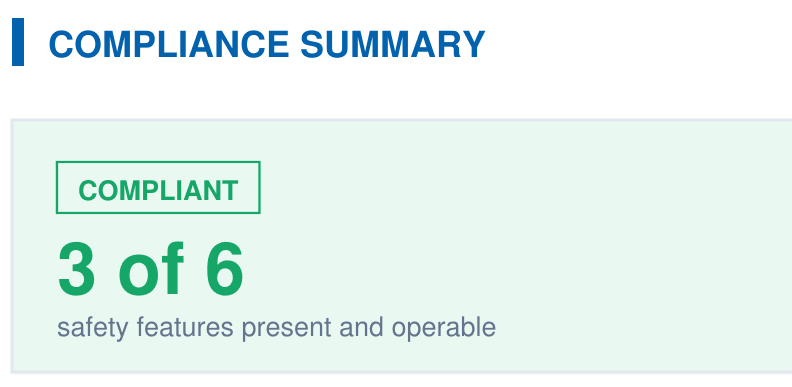
A branded PDF with the compliance summary, the feature table, each finding with its photos, and the signature, generated on‑site when the BPC §7195 and HSC §115922 checklist is complete.