Pool Inspector Salary: How Much Inspectors Make in 2026
Complete guide to pool inspector salaries in California and nationwide. Learn average earnings, salary ranges by state, factors affecting income, and how to maximize your pool inspection career earnings.
Considering a career as a pool inspector? Wondering if pool inspection is a financially viable profession? Pool inspector salaries vary significantly based on location, experience, specialization, and business model, but the earning potential can be substantial, especially in high-demand states like California, Texas, and Florida.
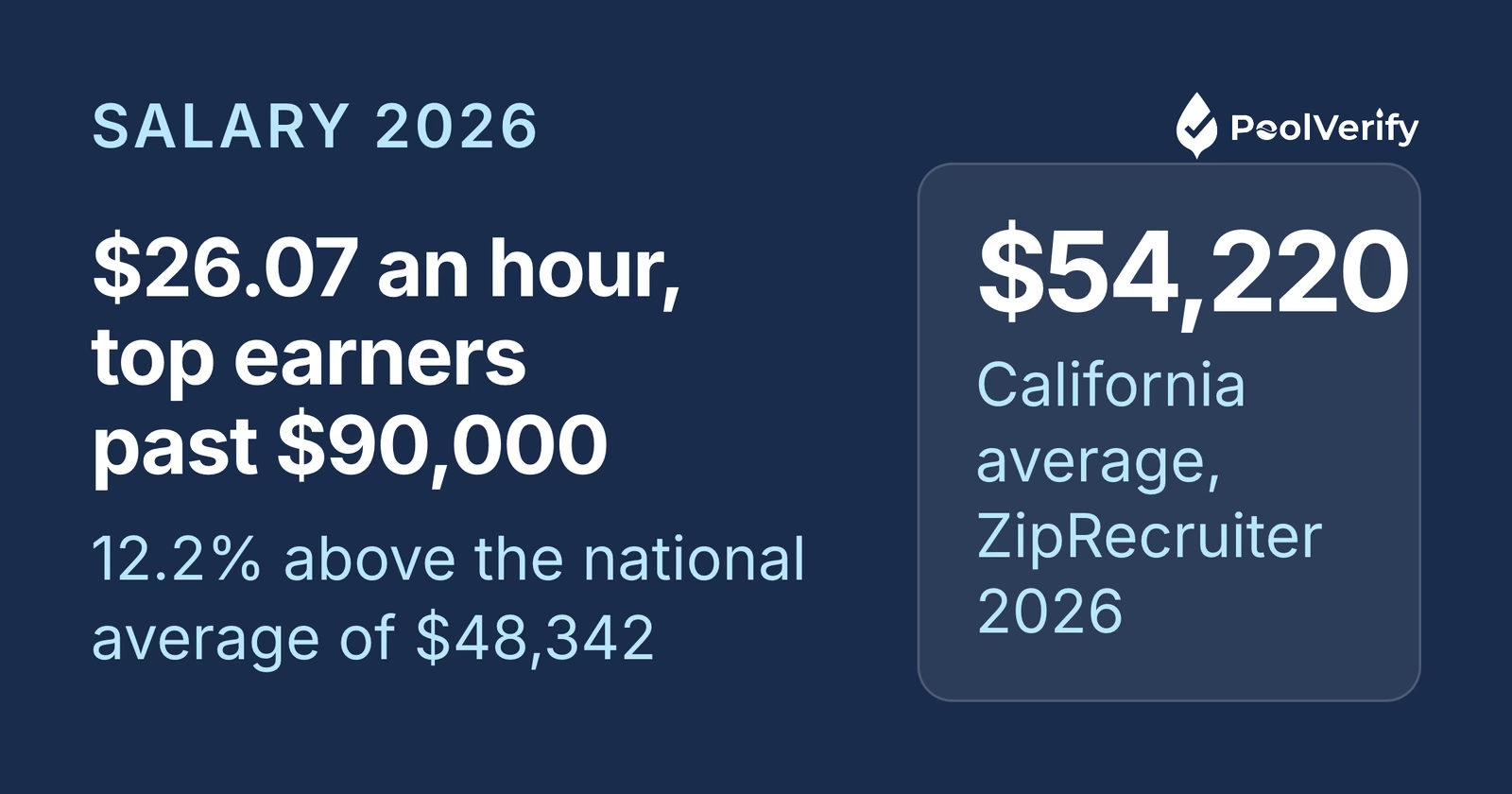
As of 2026, the average pool inspector in California earns $54,220 annually ($26.07/hour), with top earners making over $90,000 per year. Independent pool inspectors who build strong client bases and leverage modern inspection technology can earn even more, with some experienced professionals reporting incomes exceeding $120,000 annually.
This comprehensive guide breaks down pool inspector salaries by state, experience level, and business model, explaining factors that affect earnings and providing actionable strategies to maximize your income as a pool safety professional.
Pool inspector salary overview (2026 national data)
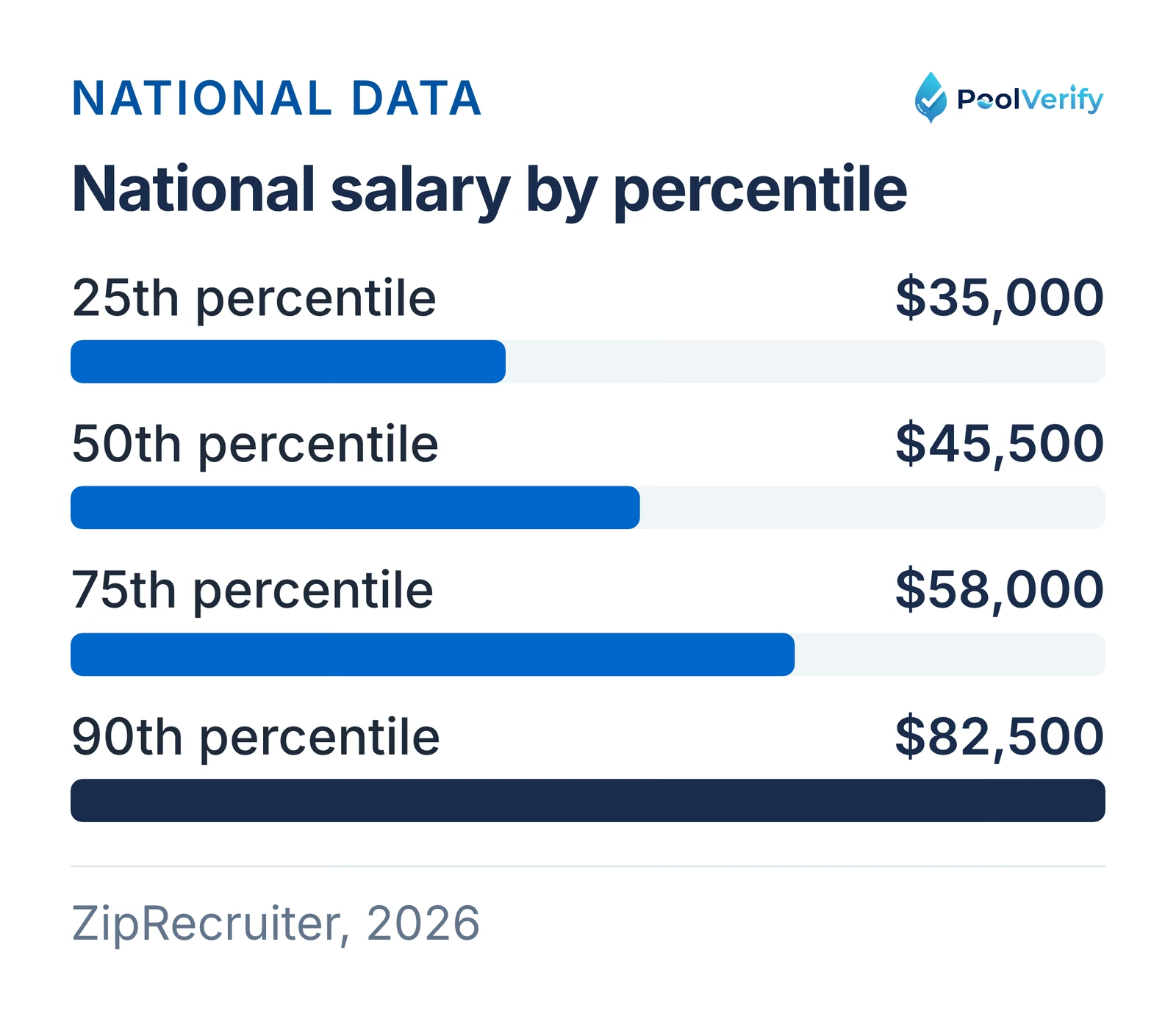
National pool inspector salary at the 25th, 50th, 75th, and 90th percentiles, from ZipRecruiter 2026 data.
Regional salary variations
Pool inspector salaries vary significantly by region due to:
High-paying regions:
Western states (California, Arizona, Nevada): $52,000-$62,000 average
Southeastern states (Florida, Texas, Georgia): $46,000-$55,000 average
Northeast (New York, New Jersey, Massachusetts): $48,000-$58,000 average
Lower-paying regions:
Midwest (Iowa, Kansas, Nebraska): $38,000-$45,000 average
Mountain states (Montana, Wyoming, Idaho): $40,000-$48,000 average
Southern states (Alabama, Mississippi, Arkansas): $36,000-$44,000 average
Why the variation?:
Pool density: States with more residential pools have higher demand
Cost of living: Higher cost regions pay more to attract qualified inspectors
Regulatory stringency: States with strict pool safety laws (like California) create more inspection opportunities
Year-round demand: Warmer climates support year-round pool inspection business
Key insight: The top 10 highest-paying states for pool inspectors all have either high pool ownership rates (California, Florida, Arizona) or stringent pool safety regulations requiring frequent inspections.
California pool inspector salary breakdown
California represents one of the best markets for pool inspectors due to:
Over 1.2 million residential swimming pools statewide
Strict pool safety laws (BPC §7195, HSC §115922, SB 442) requiring professional inspections
High property values and real estate transaction volume
California average: $54,220 per year ($26.07/hour)
California salary range:
25th percentile: $38,000/year ($18.27/hour)
Median (50th percentile): $51,500/year ($24.76/hour)
75th percentile: $62,700/year ($30.14/hour)
90th percentile: $90,795/year ($43.65/hour)
Monthly breakdown (based on California average):
Monthly gross: $4,518
Weekly gross: $1,042
Daily gross: $208 (5-day work week)
California salary by major metro area
Pool inspector salaries vary significantly across California regions. Here's a comprehensive breakdown of earnings across 7+ major California markets:
Metropolitan Area
Average Annual Salary
Hourly Rate
% vs State Avg
Typical Rate per Inspection
San Francisco Bay Area
$67,250
$32.33
+24.0%
$250-$400
Berkeley/Oakland
$67,250
$32.33
+24.1%
$275-$425
Silicon Valley/Palo Alto
$65,800
$31.63
+21.4%
$275-$400
Los Angeles County
$57,900
$27.84
+6.8%
$200-$325
Orange County
$56,400
$27.12
+4.0%
$200-$300
San Diego County
$54,800
$26.35
+1.1%
$175-$275
Sacramento Metro
$52,300
$25.14
-3.5%
$150-$250
Inland Empire
$50,500
$24.28
-6.9%
$150-$225
Central Valley/Fresno
$48,900
$23.51
-9.8%
$150-$225
Bakersfield/Kern County
$47,800
$22.98
-11.8%
$125-$200
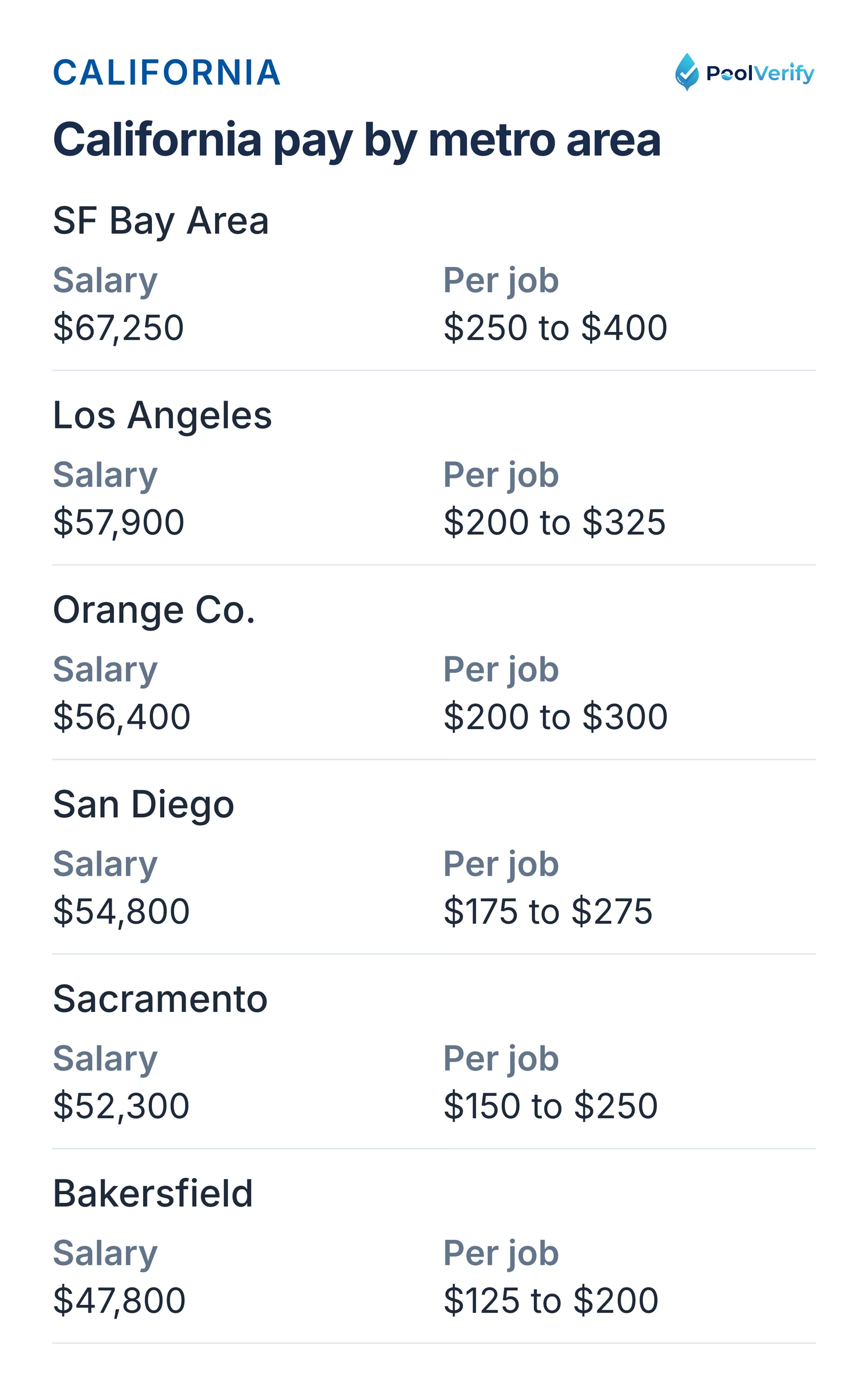
Average pool inspector salary and typical fee per inspection in six California metro areas.
Why Bay Area pays most:
Highest cost of living requires higher wages
High property values support premium pricing
Strict local ordinances require frequent inspections
Affluent clientele willing to pay for quality service
California vs national average
California pool inspectors earn 12.2% more than the national average ($54,220 vs $48,342), making it one of the most lucrative states for pool inspection careers.
However: California's cost of living is 38% higher than the national average, meaning real purchasing power may be comparable to lower-paying states with lower costs.
Interesting California ranking
Despite higher nominal salaries, California ranks #50 out of 50 states for pool inspector salaries when adjusted for cost of living. This means:
Nominal earnings: California pays well in absolute dollars
Real earnings: After accounting for housing, taxes, and living expenses, California's advantage diminishes
Opportunity: Higher-cost areas within California (Bay Area) still offer best earning potential for skilled inspectors
Financial planning tip: California pool inspectors should factor higher business costs (vehicle expenses, insurance, permits) when calculating net income compared to national averages.
Pool inspector salaries by state
Pool inspector earnings vary dramatically across the United States based on pool density, regulations, and local economic conditions.
Top 10 highest-paying states for pool inspectors (2026)
Rank
State
Average Annual Salary
Average Hourly Rate
Reason for High Pay
1
Massachusetts
$62,400
$30.00
High cost of living, strict regulations
2
Washington
$61,200
$29.42
High income levels, quality standards
3
New York
$59,800
$28.75
Large market, high property values
4
New Jersey
$58,300
$28.03
Dense population, high home values
5
California
$54,220
$26.07
Largest pool market, strict laws
6
Connecticut
$53,900
$25.91
Affluent suburbs, regulatory requirements
7
Maryland
$52,700
$25.34
Washington DC metro, high standards
8
Virginia
$51,800
$24.90
Growing market, new construction
9
Arizona
$51,200
$24.62
Massive pool market, year-round season
10
Florida
$50,400
$24.23
Highest pool density nationwide
Major pool markets salary comparison
The states with the most swimming pools don't always pay the highest salaries:
State
# of Residential Pools (est.)
Average Salary
Inspections/Year (typical)
California
1,200,000
$54,220
180-250
Florida
1,100,000
$50,400
200-280
Texas
650,000
$47,200
160-220
Arizona
425,000
$51,200
170-240
Nevada
140,000
$48,900
150-210
Key observation: While Florida has nearly as many pools as California, California inspectors earn 7.6% more on average, primarily due to:
California's stricter regulatory environment requiring professional inspections
Higher real estate transaction values supporting premium pricing
Career planning insight: Consider relocating to high-growth markets (Arizona, Texas, Georgia) where demand is increasing faster than inspector supply, creating upward wage pressure.
Factors affecting pool inspector income
Pool inspector salaries vary based on numerous controllable and uncontrollable factors. Understanding these helps maximize earning potential.
1. Geographic location
Impact: Can affect salary by 40-60%
As demonstrated in state-by-state data:
High-cost coastal markets (San Francisco, New York, Boston): $60,000-$90,000
Mid-tier markets (Phoenix, Las Vegas, Orlando): $48,000-$62,000
Lower-cost markets (Memphis, Little Rock, Des Moines): $36,000-$48,000
Actionable strategy: Target wealthy suburbs and neighborhoods with high pool density rather than broad geographic markets.
2. Experience and certifications
Impact: Can increase salary by 35-50%
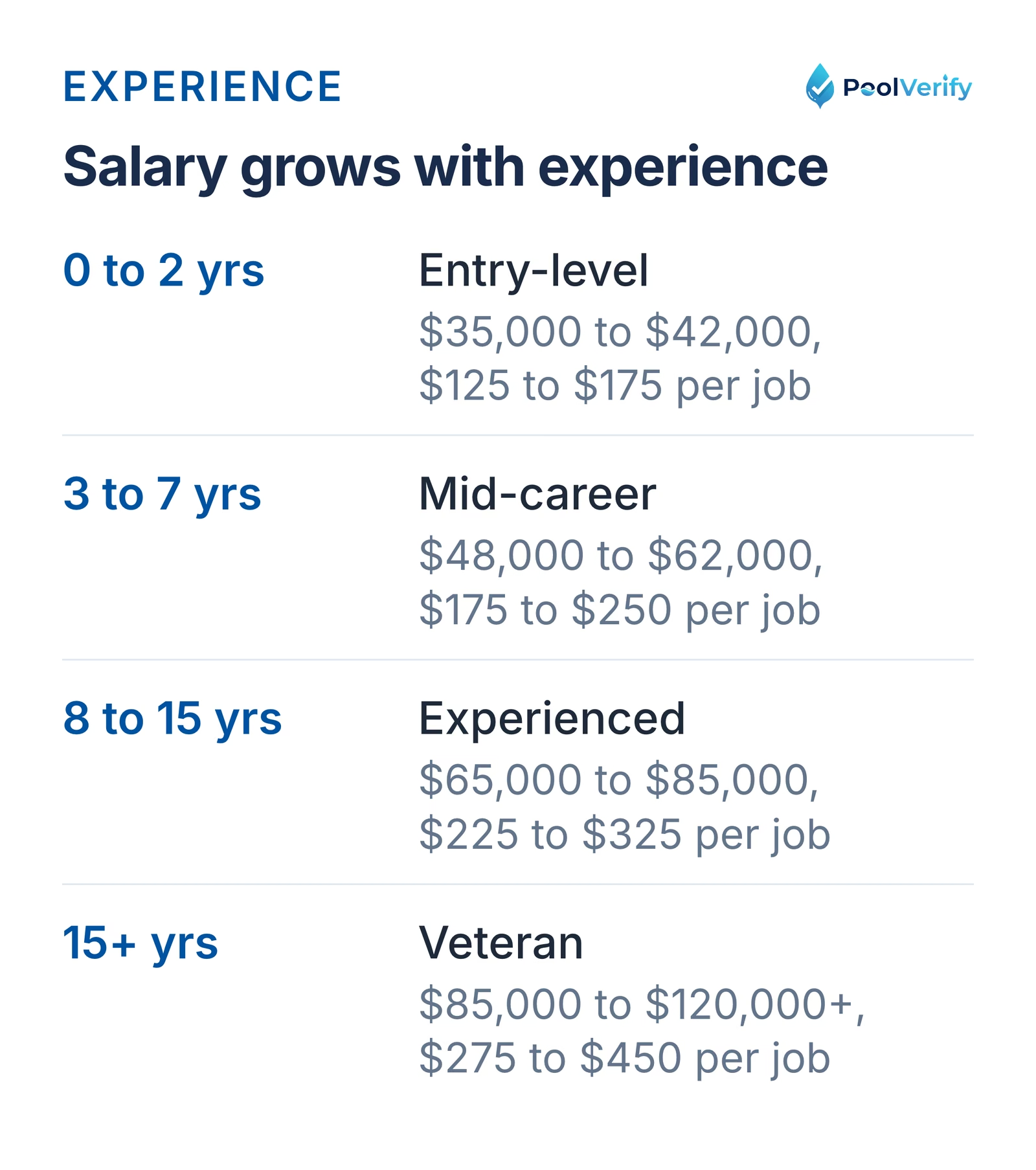
Entry-level (0-2 years):
Average: $35,000-$42,000
Typical rate per inspection: $125-$175
Building clientele, learning regulations
Mid-career (3-7 years):
Average: $48,000-$62,000
Typical rate per inspection: $175-$250
Established reputation, repeat customers
Experienced (8-15 years):
Average: $65,000-$85,000
Typical rate per inspection: $225-$325
Strong referral network, premium pricing
Veteran (15+ years):
Average: $85,000-$120,000+
Typical rate per inspection: $275-$450
Industry expert, consulting opportunities
Valuable certifications that increase earning potential:
Certified Pool/Spa Inspector (CPI): Industry standard certification
CPO (Certified Pool Operator): Demonstrates technical expertise
Home inspector license (varies by state), Enables bundled services
C-53 Pool Contractor License (California), Premium credibility
ROI on certifications: a CPI or CPO credential is what real estate agents and property managers ask for, and it supports a higher fee than an uncredentialed inspector can charge.
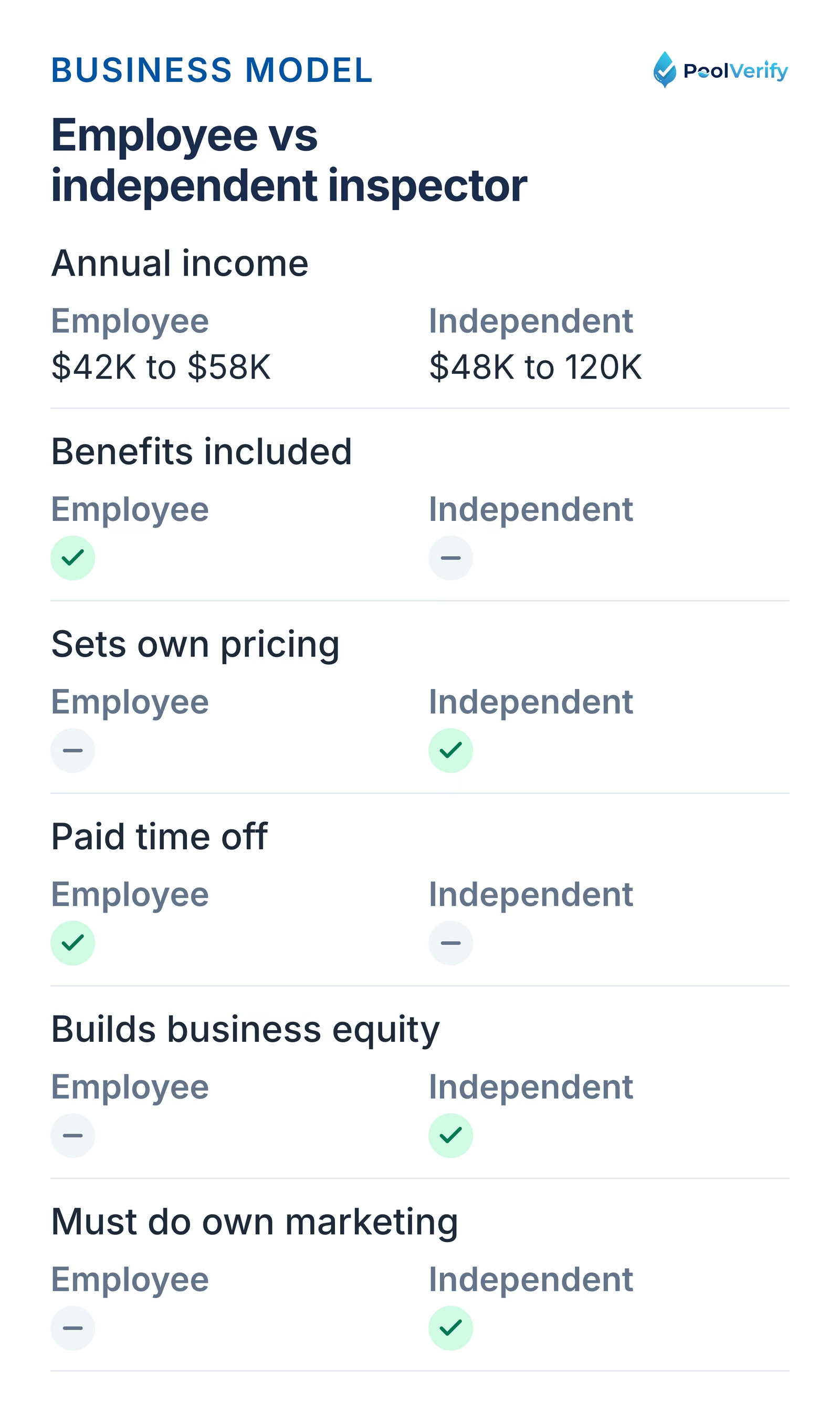
3. Business model (employee vs self-employed)
Impact: Can affect income by 50-150%
Employee inspector (working for pool service company, inspection firm):
Salary range: $38,000-$58,000 + benefits
Pros: Steady paycheck, benefits, no business overhead, training provided
Cons: Limited earning ceiling, no equity, less autonomy
Typical employers: Pool service companies, home inspection firms, property management companies
Self-employed/independent inspector:
Income range: $45,000-$120,000+ (highly variable)
Pros: Unlimited earning potential, control pricing, flexible schedule, build business equity
Cons: Variable income, must handle marketing, pay own benefits/insurance, business overhead
Income reality: The top 10% of independent pool inspectors earn 2-3x more than the median employee inspector, but also face greater income volatility and business risk.
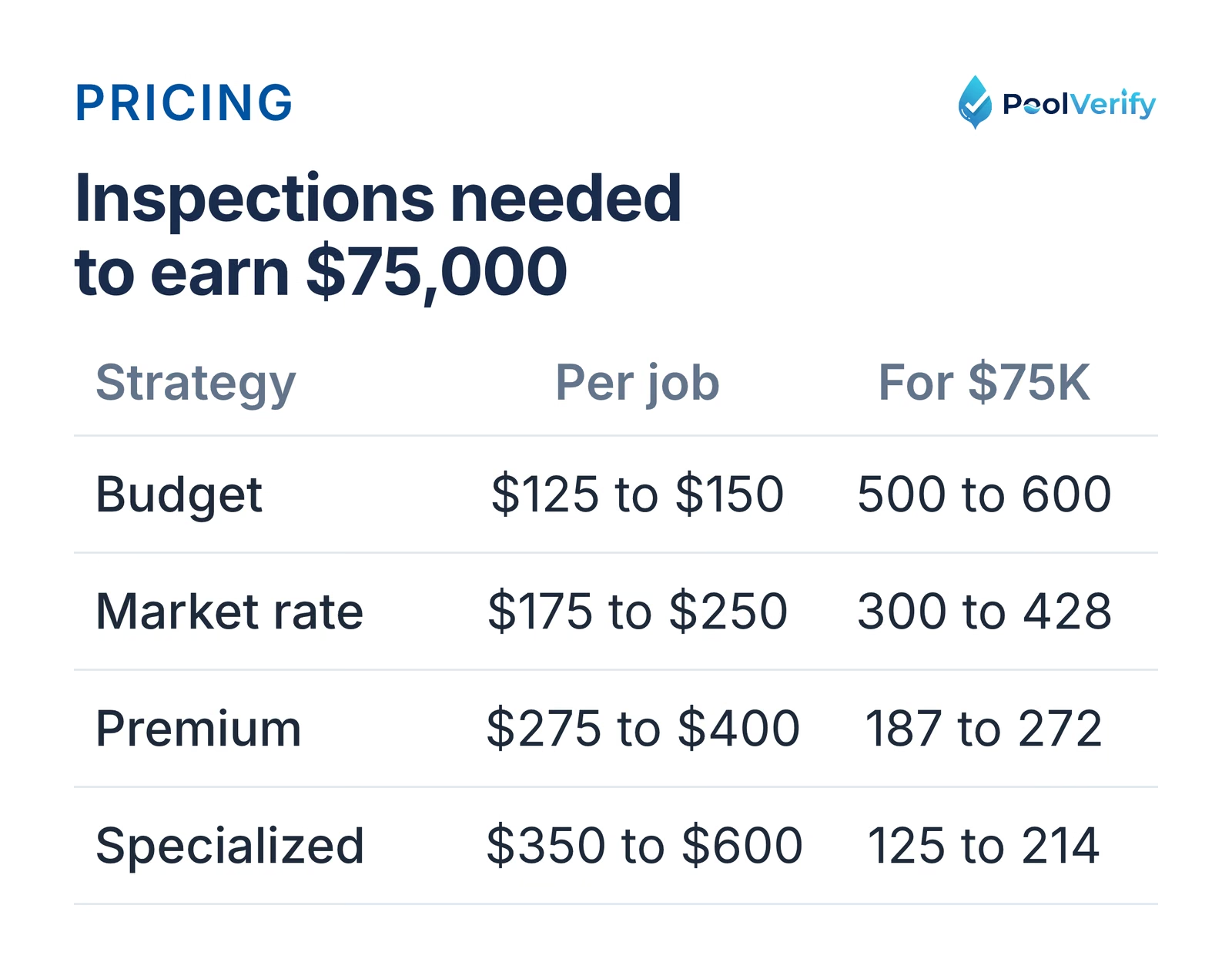
4. Inspection volume and pricing strategy
Impact: Direct multiplier on annual income
Annual income formula:
Annual Income = (Inspections per Year) × (Average Fee per Inspection) - Business Expenses
Key insight: Premium-priced inspectors need 45-50% fewer inspections to achieve the same annual income as budget-priced inspectors, while delivering higher-quality service and experiencing less burnout.
Inspections needed per year to earn $75,000 at budget, market, premium, and specialized pricing.
Software investment: PoolVerify costs $588-$948/year (Starter plan), generating ROI of 8,000-13,500% for busy inspectors.
Efficiency insight: Top-earning pool inspectors report that modern inspection software is the single most impactful investment in their business, enabling 40-50% more inspections without working longer hours.
7. Marketing and client acquisition
Impact: Can increase income by 20-40%
Client acquisition cost (CAC) benchmarks:
Referral/word-of-mouth: $0-$15 per customer (best ROI)
Realtor partnerships: $25-$75 per customer (relationship development costs)
Google Ads: $80-$250 per customer (competitive markets)
Investment: $0 (time) + $300/year professional photos
Return: 30-80 annual inspection bookings
ROI: 2,000-5,000%
Customer referral program
Investment: $25-$50 referral fee per successful referral
Return: 40-100 annual referrals from satisfied customers
ROI: 600-1,200%
Educational content marketing (blog, videos, social media)
Investment: $1,000-$5,000/year (time or freelancer costs)
Return: 60-200 annual bookings from organic search
ROI: 600-2,000%
Marketing budget rule of thumb: Successful independent inspectors invest 5-10% of gross revenue in marketing and client acquisition.
Pool inspector salary by experience level
Experience dramatically affects earning potential for pool inspectors. Here's a detailed breakdown:
Entry-level pool inspector (0-2 years)
Average salary: $35,000-$42,000/year
Typical situation:
Recently certified, building clientele
Working for established inspection company OR
Starting independent practice with low volume
Income sources:
Hourly wage if employee: $17-$22/hour
Per-inspection fee if independent: $125-$175
Annual inspection volume: 200-350 inspections
Challenges:
Limited experience commands lower rates
Building reputation takes 12-24 months
Learning curve on complex pool systems
Establishing referral relationships
Growth strategies:
Offer competitive pricing to build portfolio
Request testimonials from every satisfied client
Partner with established inspectors for mentorship
Focus on perfect reports to build reputation
Financial reality: Most entry-level independent inspectors supplement income with part-time work or transitionally work as employees while building independent client base.
Financial reality: This is the "sweet spot" where income becomes stable and predictable, with opportunities to significantly increase earnings through optimization.
Transition to business owner (hire other inspectors)
Develop passive income (online courses, templates)
Focus on high-value clients and services
Build industry reputation through speaking, writing
Financial reality: Top performers at this level earn $90,000-$120,000 by combining inspection volume, premium pricing, and ancillary income streams.
Average salary and fee per inspection at each experience level, from entry-level to veteran.
Veteran pool inspector (15+ years)
Average salary: $85,000-$120,000+/year
Typical situation:
Industry expert and thought leader
Often owns inspection business or franchise
May reduce inspection volume, focus on consulting
Income sources:
Business owner: $60,000-$200,000+ (including business profit)
Consulting: $150-$500/hour for expert advice
Expert witness: $250-$500/hour + case fees
Training/speaking: $2,000-$10,000 per engagement
Annual inspection volume: 200-400 (if still actively inspecting)
Advantages:
Brand recognition attracts premium clients
Can be highly selective about projects
Multiple income streams provide stability
Business equity represents wealth accumulation
Growth strategies:
Scale business with employee inspectors
Franchise or license business model
Write books, create courses on pool inspection
Expand to related services (consulting, product development)
Financial reality: Veterans at this level often earn more from business ownership, consulting, and ancillary services than from conducting inspections personally.
Experience-based salary summary
Experience Level
Avg. Salary
Inspection Fee
Annual Volume
Time Investment
Entry (0-2 yrs)
$38,000
$150
250
50-60 hrs/week
Mid-career (3-7)
$55,000
$215
320
45-50 hrs/week
Experienced (8-15)
$75,000
$275
350
40-45 hrs/week
Veteran (15+)
$95,000
$325+
300
35-40 hrs/week
Key insight: As experience increases, successful inspectors work FEWER hours while earning MORE income through higher fees, efficiency gains, and diversified revenue streams.
Employee vs independent pool inspector earnings
One of the biggest decisions affecting income is whether to work as an employee or operate independently.
Employee pool inspector
Average annual salary: $42,000-$58,000 + benefits
Compensation structure:
Hourly wage: $20-$28/hour
Salary: $40,000-$55,000/year
Benefits: Health insurance, paid time off, retirement matching
Bonuses: Performance bonuses 5-15% of salary
Employers:
Pool service companies
Home inspection firms
Property management companies
Pool contractor companies
Advantages: Yes Predictable income (bi-weekly paycheck) Yes Health insurance and benefits included Yes No business overhead or startup costs Yes Training and continuing education provided Yes No marketing required (clients provided) Yes Limited liability (company assumes risk) Yes Paid time off, sick leave
Disadvantages: No Limited earning ceiling ($45,000-$65,000 typical maximum) No No control over pricing or services offered No Must follow company policies and procedures No No business equity accumulation No Less schedule flexibility No Income growth limited to raises/promotions
Best for:
New inspectors learning the business
Individuals valuing stability over earning potential
Those who prefer not to manage business operations
Inspectors in markets with limited independent opportunities
Average annual income: $48,000-$120,000+ (highly variable)
Income structure:
Per inspection: $150-$400 depending on market and service
Annual volume: 200-600 inspections
Gross revenue: $40,000-$180,000
Net income after expenses: 60-75% of gross (varies significantly)
Advantages: Yes Unlimited earning potential (no ceiling) Yes Control over pricing, services, and schedule Yes Keep 100% of revenue (after expenses) Yes Build business equity and asset value Yes Tax advantages (business expense deductions) Yes Choose clients and service areas Yes Scale business by hiring employees
Disadvantages: No Income variability (seasonal fluctuations) No Must pay own insurance, benefits, retirement No Business overhead costs (vehicle, insurance, software, marketing) No Responsible for marketing and client acquisition No Manage bookkeeping, taxes, legal compliance No Personal liability exposure (requires insurance) No No paid time off (not working = not earning)
Benefits: Employer benefits + additional income + entrepreneurial experience
Contractor arrangement:
Work as independent contractor for multiple companies
Company provides leads, inspector keeps 60-75% of fee
No benefits, but more flexibility than employee
Income: $45,000-$75,000 depending on volume
Which model pays more?
Income potential comparison (5-year career trajectory):
Employee path:
Year 1: $42,000
Year 3: $48,000
Year 5: $55,000
5-year total: $246,000
Independent path (successful trajectory):
Year 1: $35,000 (building clientele)
Year 3: $62,000 (established)
Year 5: $85,000 (optimized)
5-year total: $307,000
Difference: Independent path earns $61,000 more over 5 years (25% higher), but with greater risk and variability.
Decision framework: Choose employee path if you value stability, benefits, and limited risk. Choose independent path if you're entrepreneurial, have 6-12 months financial runway, and want maximum long-term earning potential.
How to increase your pool inspector salary
Regardless of experience level or employment model, pool inspectors can implement proven strategies to boost income:
1. Invest in modern inspection technology
PoolVerify inspection software enables inspectors to:
Complete inspections 40% faster (45 minutes vs 75 minutes)
Conduct 50% more inspections per year with same time investment
Generate professional reports on-site instead of back-office work
Deliver same-day PDF reports to clients (competitive advantage)
ROI calculation:
Software cost: $588/year (Starter plan)
Additional inspections enabled: 100-150/year
Additional revenue at $200/inspection: $20,000-$30,000
Home Inspector License: State-specific requirements
Enables bundled home + pool inspections
Access to realtor networks
ROI: CPI certification enables $25-$40 higher fee per inspection. At 250 inspections/year = $6,250-$10,000 additional annual income.
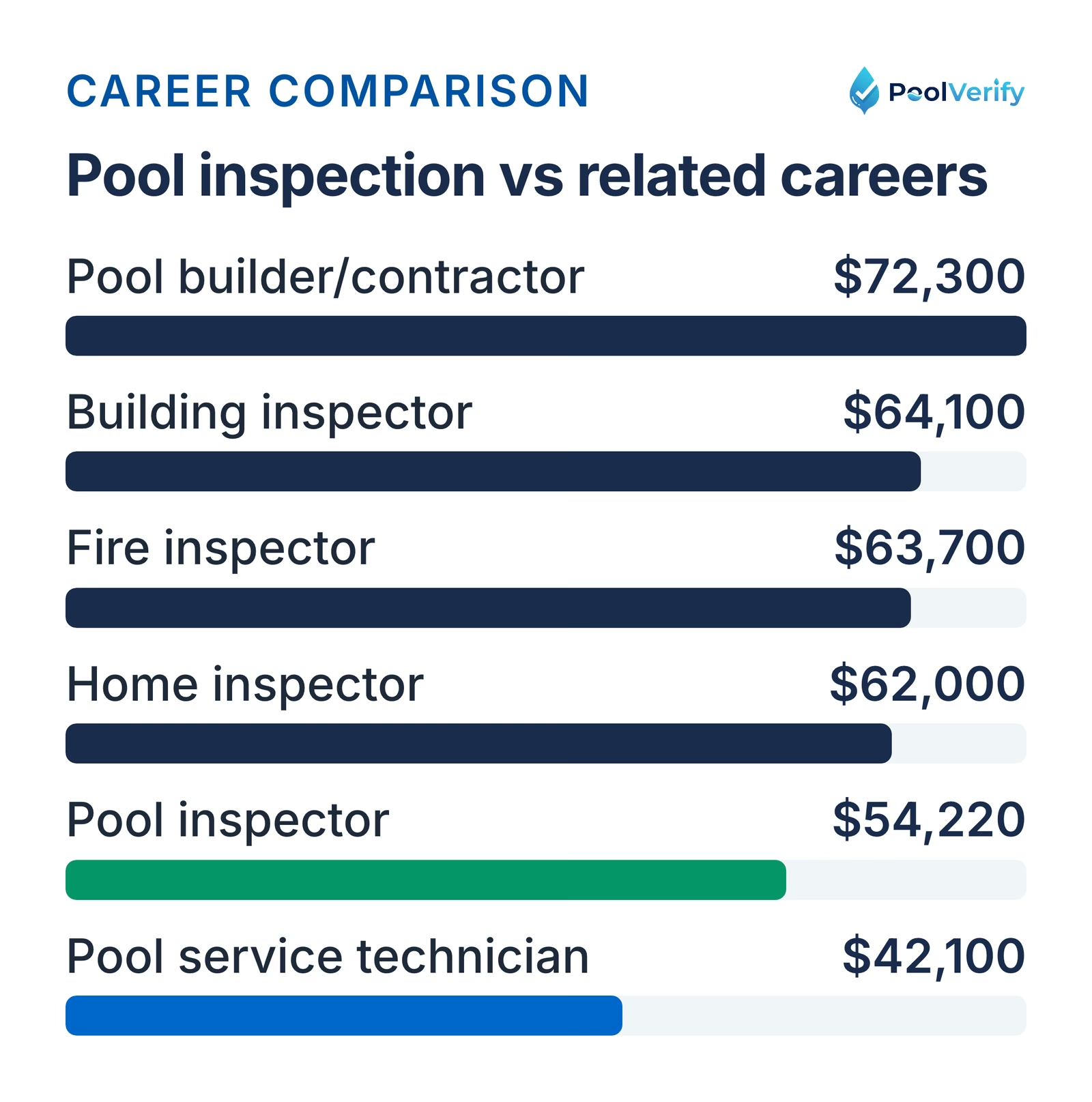
Pool inspector income compared to related careers
How does pool inspection compare financially to related inspection and service careers?
Inspection career salary comparison
Career
Average Annual Salary
Hourly Rate
Typical Requirements
Home inspector
$62,000
$29.81
State license, training
Pool inspector (independent)
$54,220
$26.07
Certification, insurance
Building inspector
$64,100
$30.82
Engineering/construction background
Code enforcement inspector
$58,900
$28.32
Municipal employment
Fire inspector
$63,700
$30.63
Fire safety certification
Environmental health inspector
$56,400
$27.12
Health/science degree
Property inspector (apartments)
$48,300
$23.22
Property management experience
Key insight: Pool inspection salaries are competitive with related inspection careers while requiring less formal education and offering flexible independent practice opportunities.
Pool service career salary comparison
Career
Average Annual Salary
Hourly Rate
Work Environment
Pool inspector
$54,220
$26.07
Professional, low physical demand
Pool service technician
$42,100
$20.24
Physical labor, chemical exposure
Pool repair technician
$48,600
$23.37
Physical, troubleshooting focused
Pool builder/contractor
$72,300
$34.76
Project management, physical
Pool maintenance route owner
$55,000-$90,000
Varies
Recurring revenue, physical
Advantages of pool inspection vs service/repair:
Less physically demanding (no lifting, chemicals, equipment)
Professional environment (cleaner, safer)
Higher perceived expertise (professional vs tradesperson)
Easier to continue career into later years
Real estate-related career salary comparison
Career
Average Annual Salary
Typical Commission/Fee
Flexibility
Pool inspector
$54,220
$150-$400/inspection
High flexibility
Real estate agent
$49,700
2.5-3% of sale (varies greatly)
Very flexible
Home inspector
$62,000
$400-$650/inspection
High flexibility
Appraiser
$58,900
$400-$800/appraisal
Moderate flexibility
Mortgage loan officer
$63,400
Varies by loans closed
Moderate flexibility
Pool inspection advantages:
Lower barrier to entry than real estate license
More predictable income than commission-based real estate
Less complex than home inspection (focused scope)
Average salaries for pool inspection and five related inspection and pool service careers.
Is pool inspection a good career financially?
Based on salary data, market trends, and career outlook, pool inspection can be a financially rewarding career, especially for entrepreneurial individuals in high-demand markets.
Pros of pool inspection career (financial perspective)
YesSolid middle-class income: $45,000-$85,000 for full-time inspectors
YesLow barrier to entry: No 4-year degree required; certification courses cost $500-$2,000
YesStartup costs manageable: $3,000-$8,000 to launch independent business (vs $50K-$100K for franchise)
YesIncome growth potential: Top inspectors earn $100K-$150K+ with experience and optimization
YesRecession-resistant: Pool safety laws require inspections regardless of economic conditions
YesAging population opportunity: Experienced inspectors can continue working into 60s-70s (low physical demands)
YesFlexible schedule: Control your own time and workload
Cons of pool inspection career (financial perspective)
NoIncome ceiling for employees: Employee inspectors rarely exceed $65,000/year
NoSeasonal income fluctuations: Some markets have 40-50% lower winter volume
NoSelf-employment challenges: Must manage marketing, bookkeeping, insurance, taxes
NoInitial income inconsistency: Building client base takes 12-24 months
NoVehicle/equipment costs: $5,000-$10,000/year in overhead for independent inspectors
NoNo paid time off: Not working = not earning (until you build passive income or employees)
NoMarket saturation risk: Some high-density markets becoming oversaturated
Financial viability assessment
Pool inspection is financially viable if:
You live in a state with high pool density (CA, FL, TX, AZ)
You're entrepreneurial and willing to market yourself
You can manage variable income (or start part-time while employed)
You invest in efficiency tools (PoolVerify software)
You're willing to continuously learn and improve
Pool inspection may NOT be ideal if:
You need guaranteed salary and benefits (consider employee path)
You live in low-pool-density state (limited market)
You're risk-averse about variable income
You're not comfortable with sales/marketing
You need immediate high income (takes time to build)
Long-term financial outlook (10-year projection)
Conservative trajectory (employee path):
Years 1-3: $40,000-$48,000
Years 4-7: $50,000-$58,000
Years 8-10: $58,000-$68,000
10-year cumulative earnings: ~$520,000
Aggressive trajectory (successful independent):
Years 1-2: $35,000-$50,000 (building)
Years 3-5: $65,000-$80,000 (established)
Years 6-10: $85,000-$120,000 (optimized/scaled)
10-year cumulative earnings: ~$760,000
Difference: Successful independent path earns $240,000 more over 10 years (46% higher), plus business equity value.
Comparison to college degree careers
Pool inspector (no degree required):
10-year earnings: $520,000-$760,000
Education cost: $500-$2,000
Time to start earning: 3-6 months
Bachelor's degree career (typical):
10-year earnings: $480,000-$720,000
Education cost: $40,000-$100,000 + 4 years
Time to start earning: 4+ years
ROI insight: Pool inspection offers comparable lifetime earnings to many bachelor's degree careers, with significantly lower education costs and faster time to income.
Final verdict: Is it worth it financially?
Yes, if you:
Treat it as a professional business (not a side gig)
Continuously improve skills and efficiency
Invest in modern tools (PoolVerify, marketing, certifications)
Target high-value markets and clients
Build multiple income streams over time
Maybe, if you:
Need guaranteed income and benefits (consider employee path)
Value maximum flexibility over maximum income
Want work-life balance with decent middle-class income
No, if you:
Expect six-figure income immediately without effort
Are unwilling to market yourself or build relationships
Live in low-demand market with limited pool density
Need corporate structure, advancement ladder, and benefits
Bottom line: Pool inspection can be a financially rewarding career, particularly for self-motivated individuals in high-demand markets who leverage modern technology and business strategies. The combination of reasonable income, low barriers to entry, and entrepreneurial opportunity makes it an attractive career path for the right person.
Limitations
This guide is general information about pool safety law, not legal advice; the current text of HSC §115922 and BPC §7195 on leginfo.legislature.ca.gov controls, and local building departments add their own requirements. PoolVerify is inspection software for California residential pool safety inspections; it does not perform inspections, certify inspectors, or issue compliance certificates.
Frequently asked questions
How much do pool inspectors make per hour?
The average pool inspector earns $23-$30 per hour as an employee, or $26.07 per hour on average nationally. Independent pool inspectors' effective hourly rates vary widely based on efficiency and pricing:
Budget pricing: $35-$50/hour (including travel and report time)
Market rate pricing: $55-$75/hour
Premium pricing: $80-$120/hour (with efficient systems like PoolVerify)
Top-performing independent inspectors using modern software can achieve effective hourly rates of $100-$150/hour.
Do pool inspectors make good money?
Pool inspectors can make good money, especially those who operate independently in high-demand markets. Full-time pool inspectors earn $45,000-$85,000 annually, with top performers exceeding $100,000-$120,000.
Success factors include:
Geographic location (CA, FL, TX, AZ pay best)
Business model (independent earns more than employee)
Traditional methods (paper forms): 3-4 inspections per day
Digital methods (basic software): 4-5 inspections per day
PoolVerify software: 6-8 inspections per day
Factors affecting daily capacity:
Travel distance between inspections
Complexity of pools (spa combos, commercial pools take longer)
Inspection scope (compliance-only vs comprehensive)
Report delivery method (instant PDF vs manual compilation)
Most full-time inspectors conduct 250-400 inspections per year, working 4-5 days/week year-round.
Is pool inspection seasonal?
Partially, depending on your location:
Year-round markets (Southern CA, Florida, Arizona, Texas):
Consistent demand 12 months/year
Slight dip (10-20%) in winter months
Peak season: April-September (home buying season)
Seasonal markets (Northern states):
Strong demand May-October
40-60% reduction November-April
Many inspectors supplement with winter snow removal, other services
Real estate-driven demand: Pool inspections tied to home sales are less seasonal than pool maintenance, as home transactions occur year-round.
Financial planning: Set aside 20-30% of summer earnings to cover slower winter months in seasonal markets.
What certifications increase pool inspector salary?
High-value certifications:
Certified Pool/Spa Inspector (CPI): Most valuable
Fee increase: 15-22%
Typical premium: $30-$50 more per inspection
Course cost: $695
ROI: Pays for itself in 15-25 inspections
Certified Pool Operator (CPO)
Fee increase: 8-12%
Required for some commercial inspections
Course cost: $250-$400
State home inspector license
Opens bundled service opportunities
Average fee for home + pool: $550-$800 (vs $200 pool-only)
Varies by state
C-53 Pool Contractor License (California)
Credibility boost, premium pricing
Can perform equipment installations
License process: $1,500-$3,000
ROI example: CPI certification at $695 enables $40 higher fee per inspection. At 250 inspections/year = $10,000 additional annual income (1,336% ROI).
Can you make $100,000 as a pool inspector?
Yes, but requires:
High-volume independent practice
400+ inspections/year at $225+ average = $90K+
Requires efficient systems (PoolVerify), strong marketing
Located in high-demand market
Premium pricing strategy
300 inspections/year at $325+ average = $97K+
Target affluent clients, luxury properties
Established reputation and expertise
Business owner model
Hire 1-2 employee inspectors
Keep 30-40% of their inspection revenue
Your inspections + profit share = $100K+
Multiple income streams
Inspections: $70K
Expert witness: $15K
Consulting/training: $10K
Equipment referrals: $5K
Total: $100K
Reality: About 10-15% of experienced independent pool inspectors earn $100K+. Most are business owners, have 8+ years experience, and operate in high-demand markets with modern systems.
Is pool inspection better than pool service/maintenance?
Depends on priorities:
Pool inspection advantages:
Higher average income ($54K vs $42K for service techs)
Less physically demanding (no lifting heavy equipment, chemical exposure)
Professional image (vs tradesperson)
Can continue into later years (60s-70s)
More variety (different pools daily vs same route)
Pool maintenance advantages:
Recurring revenue (same customers weekly/monthly)
More predictable income (service routes)
Lower liability risk (less legal exposure)
Simpler marketing (retain existing customers)
Hybrid model: Many inspectors start in pool maintenance, transition to inspection as they gain expertise. Some maintain small maintenance routes for guaranteed income while building inspection practice.
What states pay pool inspectors the most?
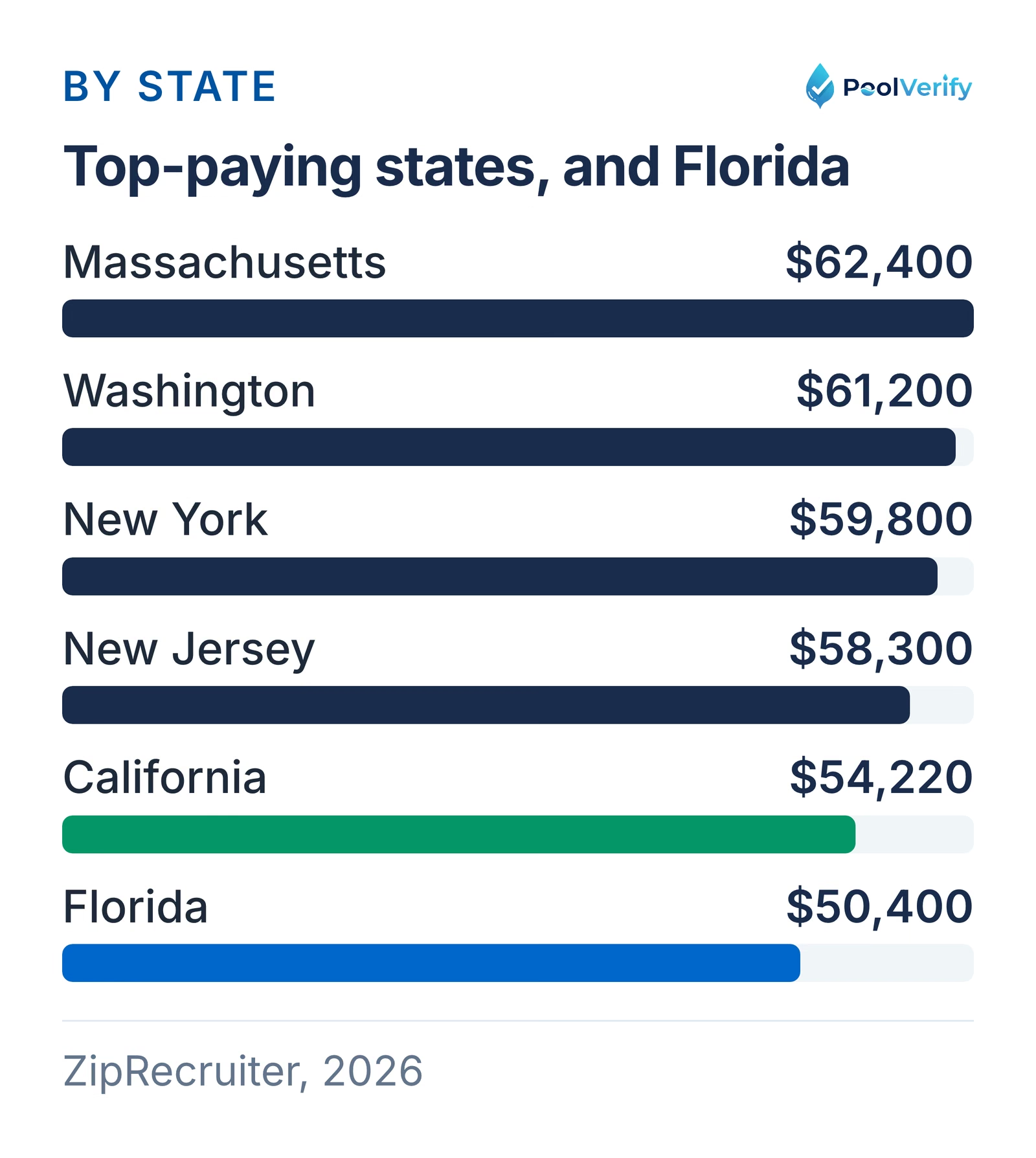
Top 5 highest-paying states (2026):
Massachusetts: $62,400/year
Washington: $61,200/year
New York: $59,800/year
New Jersey: $58,300/year
California: $54,220/year
Best states for pool inspection careers (combining pay and market size):
California: High pay + massive market (1.2M pools)
Florida: Good pay + largest market (1.1M pools)
Arizona: Good pay + year-round season
Texas: Moderate pay + growing market
New York: High pay + steady demand
Cost-of-living adjusted: While California pays more nominally, cost-adjusted rankings favor Arizona, Texas, and Florida for real purchasing power.
Ready to maximize your pool inspector earnings?
Whether you're starting your pool inspection career or looking to increase your current income, PoolVerify inspection software is the most effective tool for boosting earning potential.
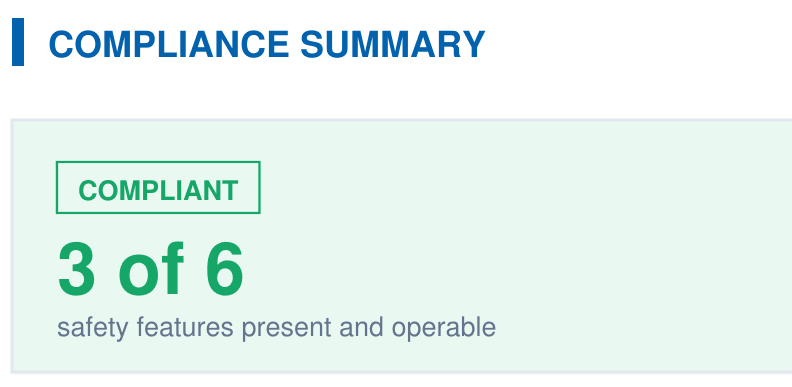
A branded PDF with the compliance summary, the feature table, each finding with its photos, and the signature, generated on‑site when the BPC §7195 and HSC §115922 checklist is complete.