Starting a Pool Inspection Business: Complete Guide
Complete guide to starting a profitable pool inspection business in 2026. Covers licensing, insurance, equipment costs, pricing strategy, marketing tactics, and first-year financial projections.
Starting a pool inspection business in 2026 offers excellent opportunities for entrepreneurs. With stricter drowning prevention regulations, increased real estate transactions requiring pool compliance, and growing awareness of pool safety, qualified inspectors are in high demand across the United States, particularly in states like California, Florida, Texas, and Arizona.
This comprehensive guide covers everything you need to launch and grow a successful pool inspection business, including detailed startup cost breakdowns, licensing requirements by state, equipment recommendations, pricing strategies that maximize profitability, effective marketing tactics for customer acquisition, and realistic first-year financial projections based on industry data.
Why Start a Pool Inspection Business in 2026?
The pool inspection industry presents compelling opportunities for new business owners in 2026. Several market factors create favorable conditions for launching a pool inspection business.
Growing Market Demand
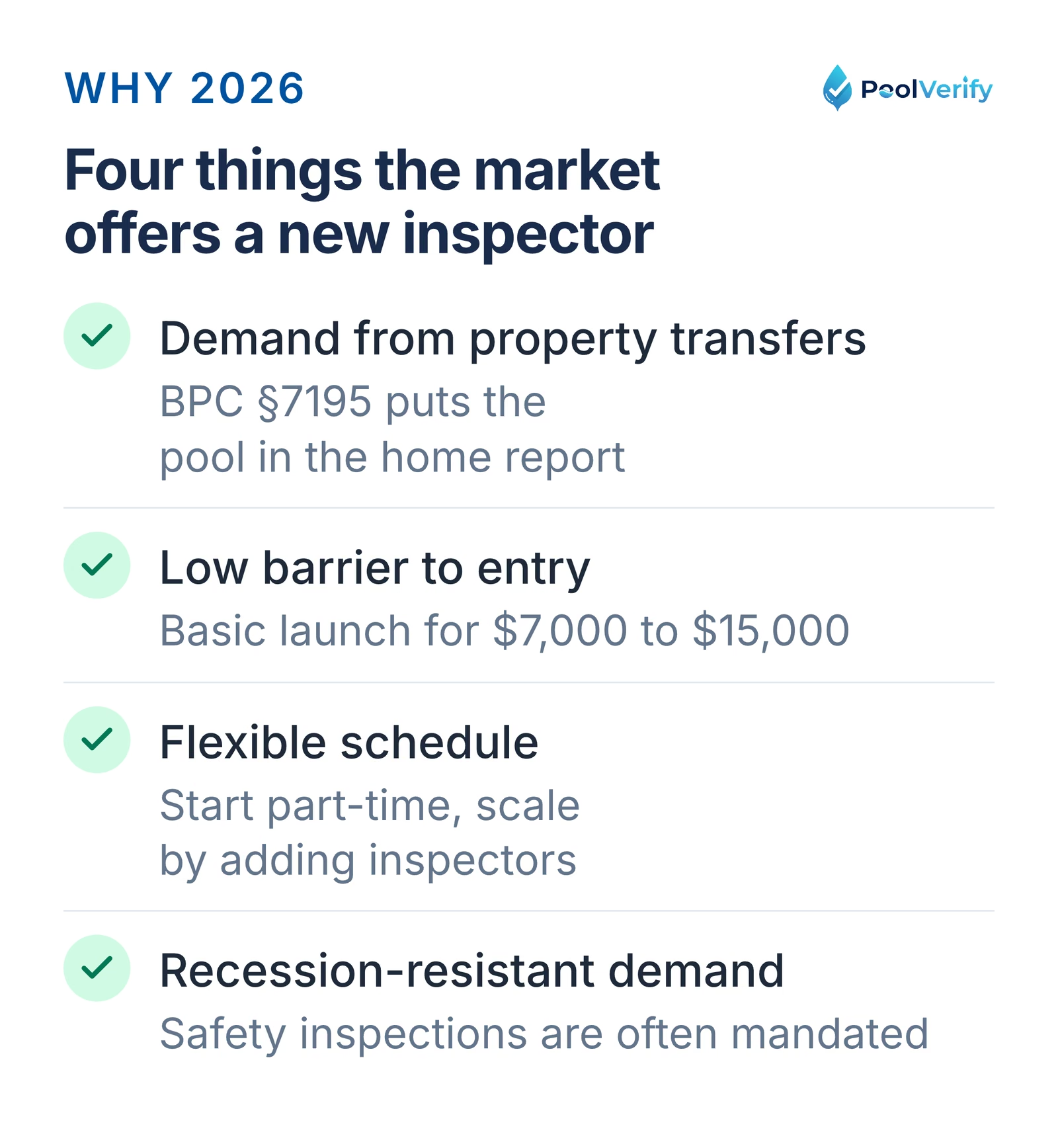
Pool safety regulations continue to become stricter nationwide. California's BPC §7195 requires pool safety inspections during property transfers, creating consistent demand. Similar regulations are expanding to other states, with Florida, Texas, and Arizona implementing enhanced pool safety requirements.
According to IBISWorld's 2025 analysis, the swimming pool industry continues to grow, driving increased demand for inspection services. Real estate transactions involving pools typically require professional inspections, creating steady workflow for qualified inspectors.
Four market conditions for a new pool inspection business: transfer demand, a $7,000 to $15,000 launch, flexibility.
Low Barrier to Entry
Compared to other trades, pool inspection businesses require relatively modest startup capital. You can launch a basic pool inspection business for $7,000-$15,000, significantly lower than most construction or home service businesses. The primary investments include certification, basic equipment, insurance, and marketing.
Flexible Schedule and Scalability
Pool inspection businesses offer excellent work-life balance with flexible scheduling. You control your calendar, choosing how many inspections to conduct daily. Start part-time while maintaining other employment, then transition to full-time as your client base grows. Scale by adding inspectors, expanding service areas, or offering complementary services like pool maintenance or repairs.
Strong Income Potential
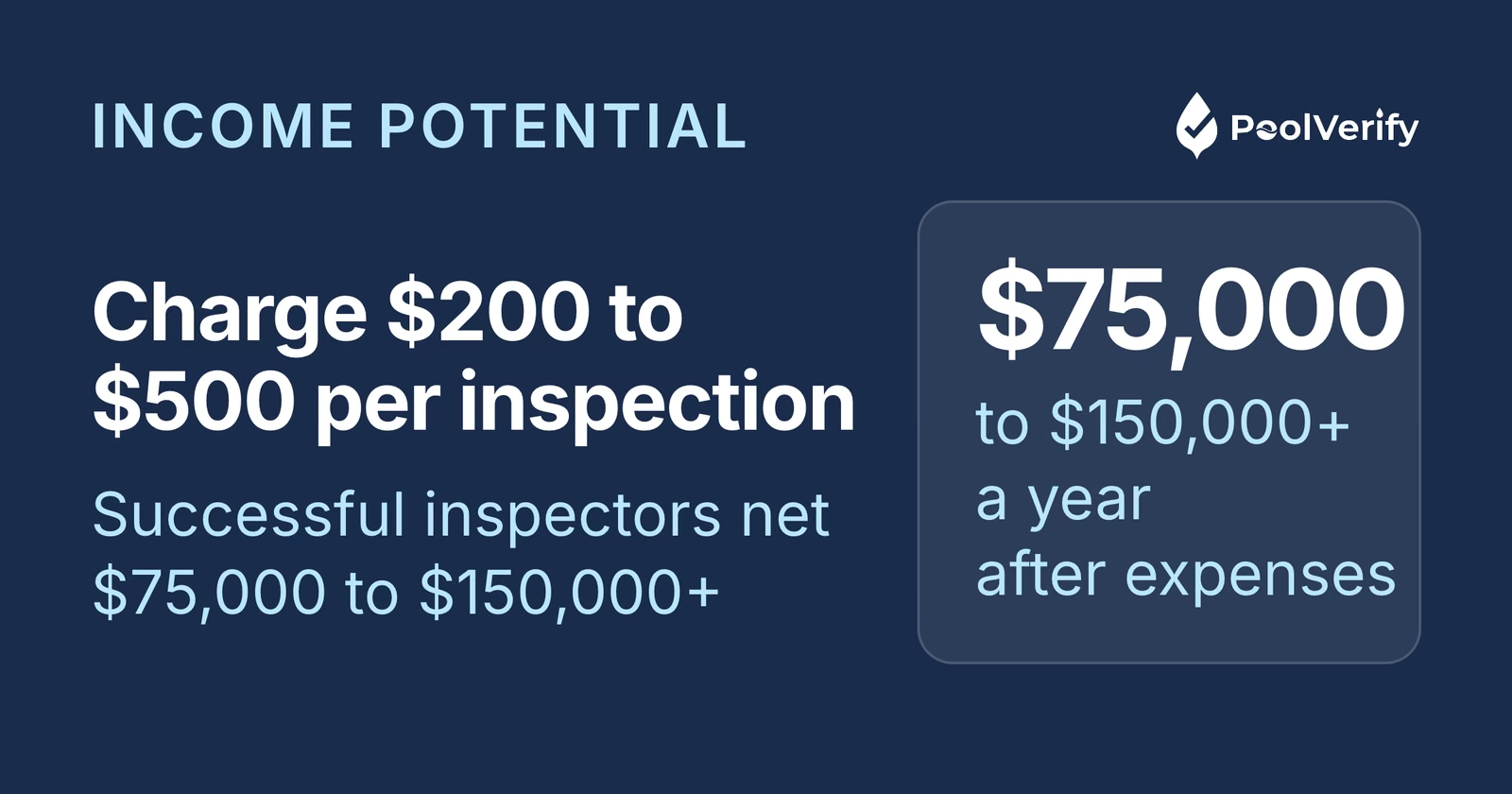
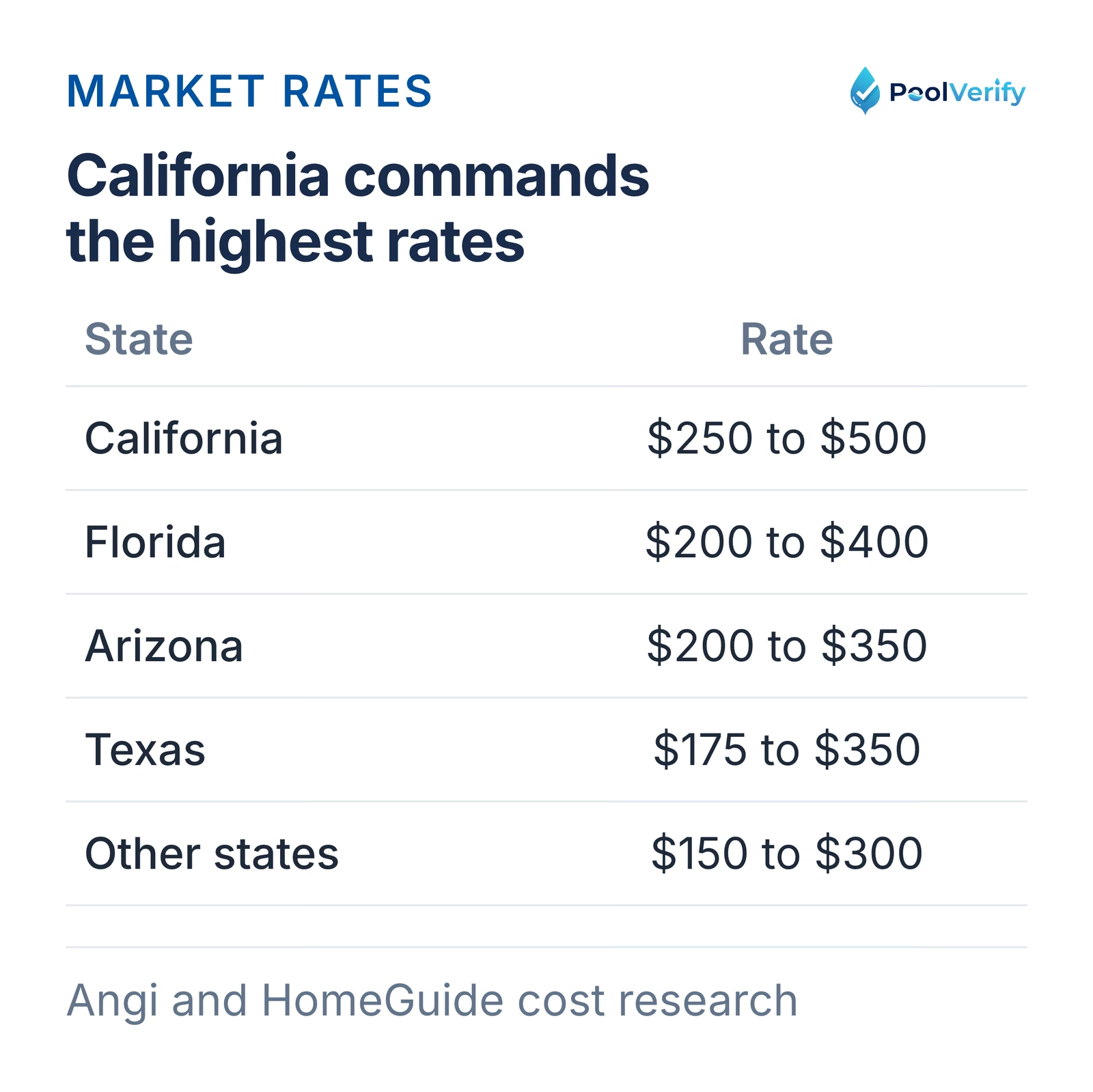
Independent pool inspectors typically charge $200-$500 per inspection, with California inspectors commanding higher rates due to complex compliance requirements. Full-time inspectors conducting 3-5 inspections daily can generate $150,000-$250,000 in annual revenue. After expenses, successful inspectors earn $75,000-$150,000+ annually.
Recession-Resistant Business Model
Pool safety inspections remain necessary regardless of economic conditions. Real estate transactions, commercial pool compliance, and insurance requirements drive consistent demand even during economic downturns. Unlike discretionary pool services, safety inspections are often legally mandated, creating stable revenue streams.
Business Setup and Legal Requirements
Proper business setup establishes legal protection and professional credibility. Follow these essential steps when launching your pool inspection business.
Choose Your Business Structure
Select the appropriate legal entity for your pool inspection business:
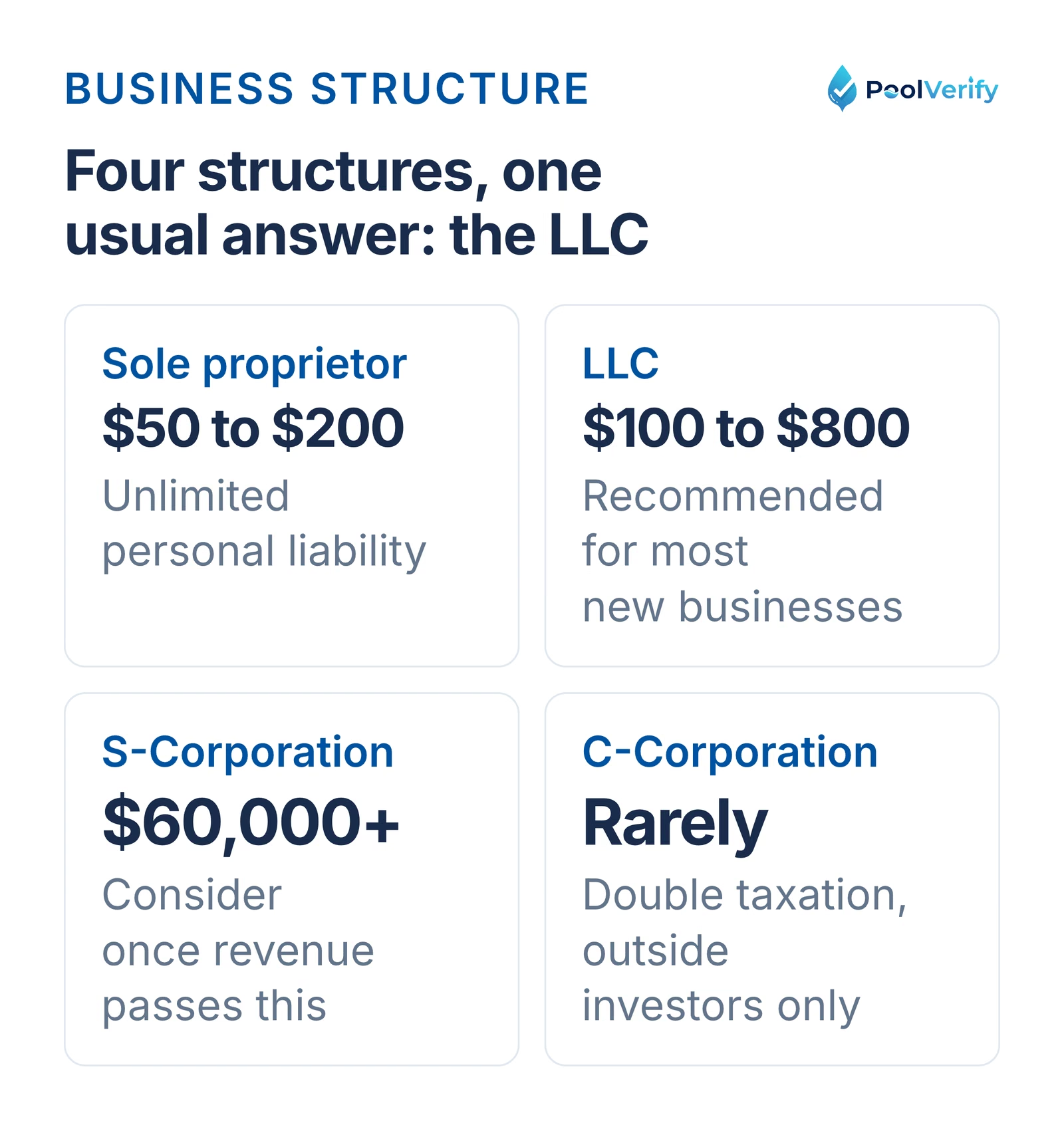
Sole Proprietorship: Simplest structure for solo inspectors. Minimal paperwork and costs ($50-$200 for business licenses). However, you have unlimited personal liability for business debts and lawsuits. Best for testing business viability before committing to more complex structures.
Limited Liability Company (LLC): Most popular choice for pool inspection businesses. Provides personal asset protection while maintaining simple taxation. Formation costs range from $100-$800 depending on state. Recommended for most new pool inspection businesses due to liability protection.
S-Corporation: Provides liability protection plus potential tax savings through salary/distribution split. More complex bookkeeping and regulatory requirements. Consider once annual revenue exceeds $60,000-$80,000. Requires payroll setup and quarterly tax filings.
C-Corporation: Rarely appropriate for small pool inspection businesses due to double taxation. Only consider if planning significant expansion with outside investors.
Setup cost and liability for a sole proprietorship, LLC, S-Corporation and C-Corporation, with the LLC recommended.
Register Your Business
Complete these registration steps in order:
Choose and register business name: Search your state's business name database to ensure availability. File DBA (Doing Business As) if operating under name different from your legal name. Cost: $10-$100 depending on jurisdiction.
Register with state: File articles of organization (LLC) or incorporation documents with your secretary of state. Online filing typically costs $100-$300 and processes within 1-2 weeks. Expedited processing available for additional fees.
Obtain EIN: Apply for Employer Identification Number from IRS even if you have no employees. Free online application at IRS.gov, receive EIN immediately. Required for business banking and tax filing.
Register for state taxes: Register for sales tax permit if applicable in your state. Some states require pool inspection businesses to collect sales tax on services. Check your state's department of revenue requirements.
Open business bank account: Separate business and personal finances from day one. Prevents commingling issues and simplifies accounting. Bring EIN, formation documents, and identification to bank. Compare business checking account fees and features.
Obtain Business Licenses and Permits
According to Wolters Kluwer's expert insights, licensing requirements vary significantly by location. Most jurisdictions require at minimum:
General Business License: Required in virtually all cities and counties. Confirms business registration and compliance. Cost varies from $50-$500 annually depending on location and projected revenue. Renew annually.
Professional License: Some states require contractor licenses for pool inspectors. California requires Contractor License B (General) or C-53 (Swimming Pool) for certain inspection activities. Florida requires specific pool contractor licensing. Check your state contractor licensing board requirements.
Health Department Permits: Required for commercial pool inspections in most jurisdictions. Some counties require separate permits for public pool inspections versus residential. Cost: $100-$500 annually.
Establish Business Operations
Set up essential business infrastructure:
Business Address: Use home address (check zoning), obtain virtual office ($25-$75/month), or rent office space if needed. Most pool inspection businesses operate successfully from home offices with vehicles serving as mobile offices.
Phone System: Professional phone system with business hours greeting, voicemail, and call forwarding. Options include dedicated cell phone ($30-$60/month), VoIP system like Grasshopper ($26-$80/month), or Google Voice (free but limited features).
Email and Website: Professional email using your domain (@yourbusiness.com) rather than generic Gmail. Website with service descriptions, service area, contact information, and online booking. Budget $500-$2,000 for professional website or use DIY platforms like Squarespace ($16-$49/month).
Accounting System: Implement accounting software from day one. QuickBooks Online ($30-$200/month), FreshBooks ($15-$50/month), or Wave (free for basic features). Track all income, expenses, mileage, and generate financial reports for tax preparation.
Licensing and Certification Requirements
Professional certifications demonstrate competence and build client confidence. While requirements vary by state and municipality, several certifications provide credibility and legal authorization to conduct pool inspections.
State-Specific Licensing Requirements
As noted by Pool Certs, there is no uniform state licensing for pool professionals across the United States. Requirements vary significantly:
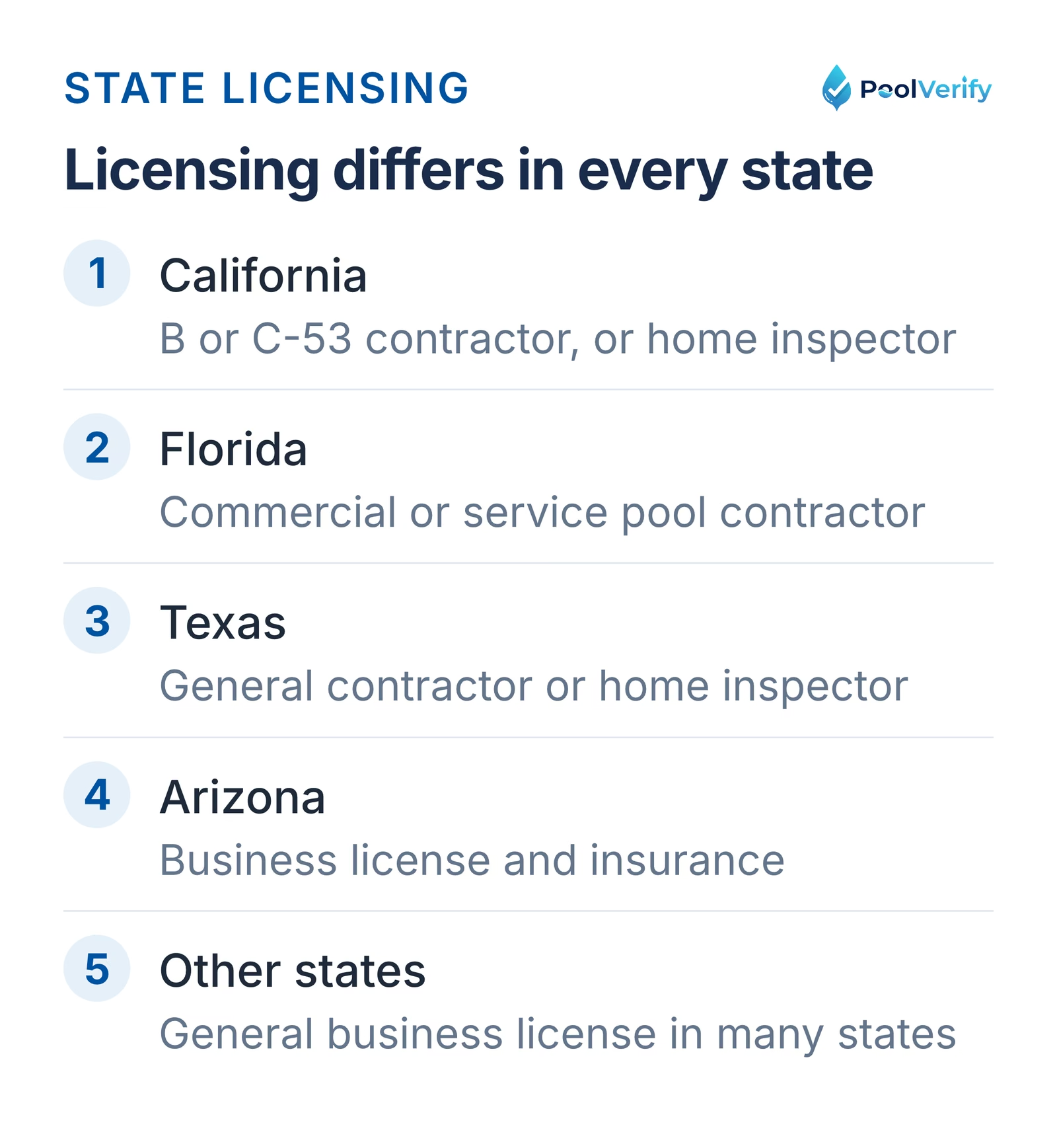
California: Requires contractor license for pool construction, repair, and certain inspection activities. Business and Professions Code §7195 governs pool safety inspections. Some inspectors operate under home inspector licenses (HI certification). Local building departments may have additional requirements.
Texas: General contractor license or home inspector license covers pool inspections in most jurisdictions. Some municipalities have additional requirements for commercial pool inspections.
Arizona: Business license and insurance typically sufficient for residential inspections. Commercial pool inspections may require additional certifications.
Other States: Many states require only general business licenses. However, professional certifications increase credibility and client confidence regardless of legal requirements.
The license a pool inspector needs in California, Florida, Texas, Arizona and other states.
Essential Certifications
Regardless of state requirements, these certifications establish professional credibility:
Certified Pool/Spa Operator (CPO)
The CPO certification from Pool & Hot Tub Alliance is the industry standard for pool operations knowledge. According to PHTA's official certification page, CPO certification covers water chemistry, pool operations, safety, and regulatory compliance.
Requirements: No industry experience required. Must be 16 years old to register.
Course Format: 16-hour two-day classroom program or hybrid blended format combining online coursework with one-day in-person class.
Cost: $390 for 2026 (increased from previous years per PHTA requirements)
Validity: 5 years, then requires recertification
Benefits: Recognized nationwide, required for commercial pool servicing in many jurisdictions, demonstrates technical competence
According to Get Skimmer's licensing guide, CPO certification is highly recommended and often required for servicing commercial or public pools, with many states and municipalities mandating CPO certification for contractors working on hotel, HOA, or municipal pools.
CPO recertification every 5 years: $100-$200 for renewal course
Stay current on code changes, new equipment, and inspection technologies
Attend industry conferences and trade shows
Join professional associations for ongoing education and networking
Insurance Requirements
Proper insurance protects your business from devastating financial losses. According to InspectorPro Insurance, pool inspection businesses face specific liability risks requiring comprehensive coverage.
Essential Insurance Coverage Types
Errors & Omissions (E&O) Insurance
Also called Professional Liability Insurance, E&O coverage protects against negligence claims and inspection errors. InspectorPro explains that if a negligence claim is made against you or your business, E&O insurance can cover the cost of defending you against a lawsuit as well as any cost associated with the claim.
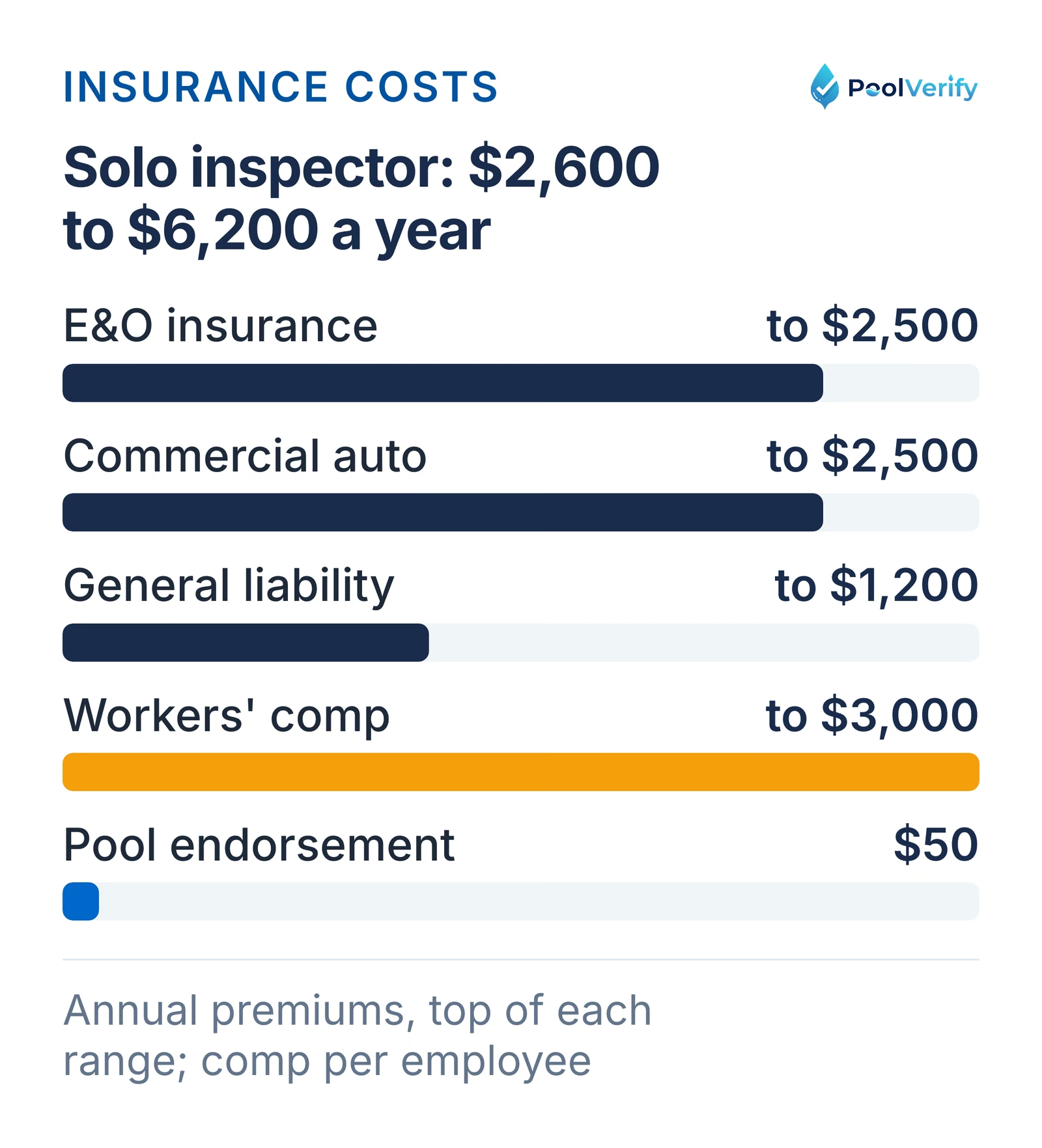
Cost: $800-$2,500 annually depending on coverage limits and claims history
Recommended Limits: $1 million per occurrence, $2 million aggregate minimum
Why Critical: Pool safety issues can result in drownings or serious injuries, leading to substantial liability claims. E&O insurance covers legal defense costs even if claims are frivolous.
General Liability Insurance
Covers bodily injury and property damage occurring during inspections.
Coverage: Slip and fall accidents, property damage (breaking pool equipment, damaging landscaping), client injuries during inspection
Cost: $600-$1,200 annually for $1 million coverage
Typical Scenario: Inspector accidentally damages pool filter housing during inspection, client trips over inspection equipment, pool gate damaged during testing
According to California Pool Association, while California does not mandate pool and spa technicians to carry specific insurance, many clients and contractors require proof of insurance before hiring.
Commercial Auto Insurance
Required if using vehicle for business purposes (driving to inspection sites).
Coverage: Vehicle damage, liability for accidents during business use, medical payments
Cost: $1,200-$2,500 annually depending on vehicle, driving history, and coverage limits
Important Note: Personal auto insurance typically excludes business use. Inform your insurance carrier about business use to ensure coverage.
Workers' Compensation Insurance
Required by law in California and most states if you have employees. According to FO Agency's California pool technician insurance guide, if you have employees, California law requires workers' compensation insurance.
Coverage: Employee medical expenses, lost wages, disability benefits for work-related injuries
Cost: $800-$3,000 annually per employee depending on classification and payroll
Not Required: If operating as sole proprietor with no employees
Annual insurance costs for a pool inspection business: E&O, commercial auto, general liability, workers' comp, endorsement.
Pool and Spa Inspection Endorsements
InspectorPro notes that most home inspection insurance policies exclude additional services like pool and spa inspections. Typically, insurers charge a flat annual fee around $50 for a pool and spa endorsement.
If transitioning from home inspection to pool-specific inspection, verify your current policy covers pool inspections or obtain proper endorsement.
Total Insurance Investment
Budget for comprehensive coverage:
E&O Insurance: $800-$2,500/year
General Liability: $600-$1,200/year
Commercial Auto: $1,200-$2,500/year
Pool Endorsement (if applicable): $50/year
Workers' Comp (if employees): $800-$3,000/year per employee
Total for solo inspector: $2,600-$6,200 annually
Total with one employee: $3,400-$9,200 annually
Many insurance providers offer package policies bundling multiple coverage types at discounted rates. Shop multiple carriers and work with insurance brokers specializing in inspection businesses for best rates.
Essential Equipment and Tools
According to ZenBusiness's pool cleaning startup cost guide, pool cleaning equipment and supplies typically range from $500-$3,000. Pool inspection requires less equipment than maintenance, focusing on testing and documentation tools.
Core Inspection Equipment
Testing and Measurement Tools
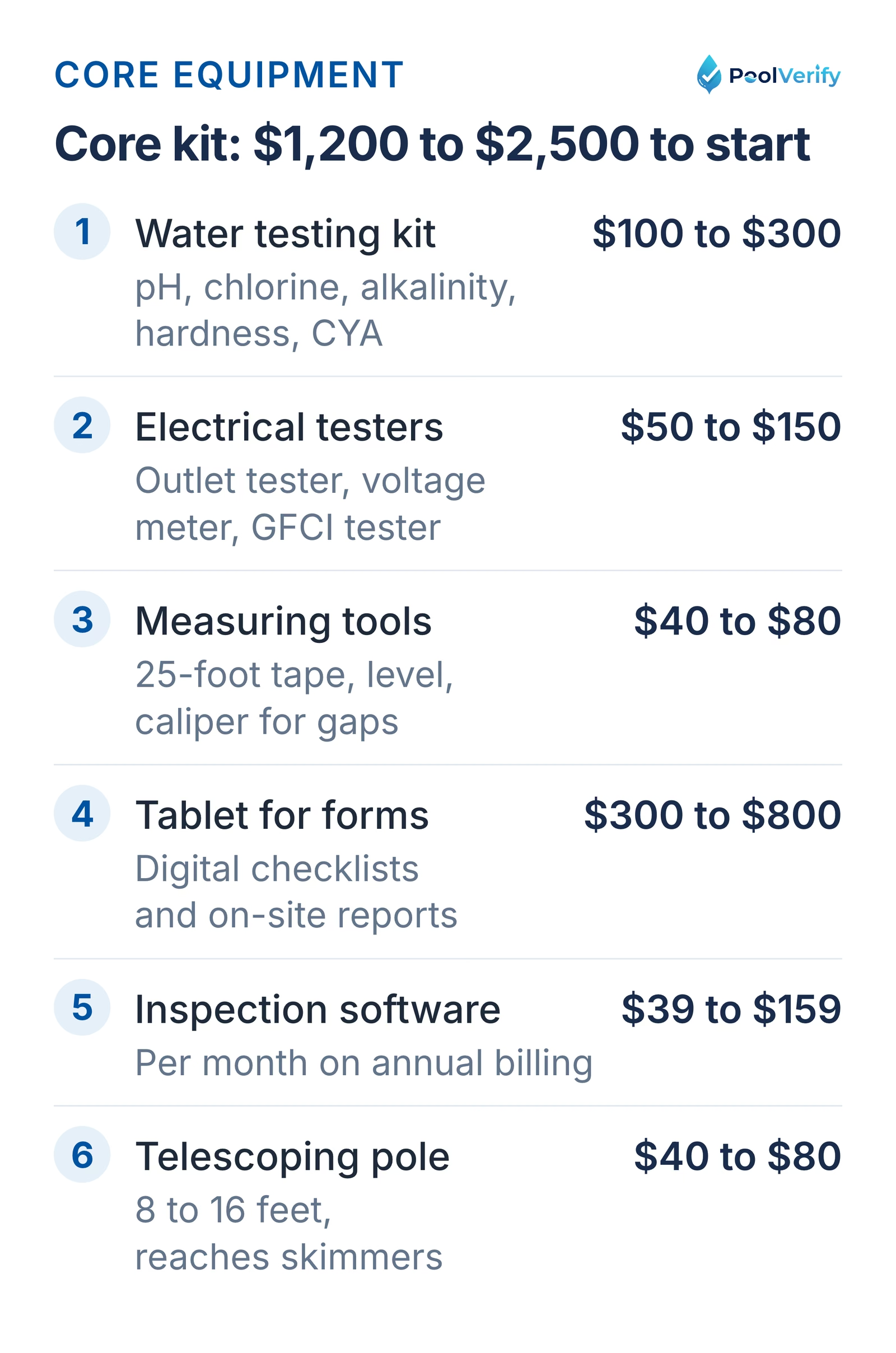
Water Testing Kit: Comprehensive test kit for pH, chlorine, alkalinity, calcium hardness, cyanuric acid
Cost: $100-$300
Options: Taylor K-2006 complete test kit (professional standard), LaMotte ColorQ digital tester
Why needed: Assess water chemistry compliance, identify potential problems
Electrical Testing Equipment: Outlet tester, voltage meter, GFCI tester
Cost: $50-$150
Why needed: Verify electrical safety, test GFCI protection, check pool equipment electrical compliance
Measuring Tools: Tape measure (25-foot minimum), level, caliper for gap measurements
Cost: $40-$80
Why needed: Measure barrier heights, gap spacing, equipment clearances
Pressure Gauge: For testing filter pressure and circulation system
Cost: $20-$50
Why needed: Assess filtration system performance
Thermometer: Digital pool/spa thermometer
Cost: $15-$40
Why needed: Verify water temperature, especially for commercial pools and spas
Core pool inspection equipment with costs, from a $100 water testing kit to a $300 to $800 tablet.
Documentation Equipment
Digital Camera or Smartphone: High-quality camera for defect documentation
Cost: $0-$800 (if not using existing smartphone)
Requirements: 12+ megapixel camera, good lighting capabilities, close-up capability
Why needed: Photo documentation critical for reports, evidence of conditions
Tablet or Laptop: For digital inspection forms and report generation
Business Cards: Professional cards with contact information, website, services
Cost: $20-$100 for 500 cards
Include: Name, credentials (CPO, CPI), phone, email, website, service area
Branded Clothing: Polo shirts or work shirts with business logo
Cost: $100-$300 for 3-5 shirts
Why needed: Professional appearance, brand recognition, credibility
Vehicle Signage: Magnetic signs or vehicle wrap with business name and contact
Cost: $100-$2,000 depending on complexity
Why needed: Mobile advertising, professional appearance, credibility
Branded Report Covers: Professional-looking report templates or covers
Cost: $0-$200 for design
Why needed: Professional presentation, brand consistency
Total Equipment Investment
Minimum Startup Equipment: $1,200-$2,500
Basic testing equipment
Smartphone for photos
Budget tablet
Inspection software subscription (first 3 months)
Basic safety equipment
Business cards
Professional Setup: $3,000-$5,000
Complete testing equipment
Professional tablet/laptop
Inspection software annual subscription
Safety equipment
Professional branding (clothing, vehicle signage)
Marketing materials
Premium Setup: $5,000-$8,000
High-end testing equipment
Premium tablet and backup device
Advanced inspection software
Complete safety equipment
Professional branding package
Portable printer
Marketing materials and website
Many equipment costs are one-time investments, with only software subscriptions, supplies (test reagents), and equipment maintenance as ongoing expenses.
Pool Size and Depth: Larger pools require more time and thorough inspection. Many inspectors base rates on square footage and depth. A 15x30 residential pool inspection takes 30-45 minutes, while 20x40 pool may take 60+ minutes.
Special Features: Spas, waterfalls, slides, diving boards, automation systems require additional inspection time. Charge $50-$150 extra for each major feature requiring specialized inspection.
Property Type:
Residential single pool: Base rate
Residential multiple pools/spa: Add 50-75% per additional water feature
Commercial/multi-family: 2-3x residential rate due to stricter requirements and liability
HOA/community pools: Premium rates ($500-$1,500) due to complexity and liability
Geographic Location: As noted by Angi's research, in hot weather states like Florida or California, there's more competition and varied pricing for pool inspection services, while in colder states where pools are less common, expect to charge more due to limited inspector availability.
Pool Condition: Well-maintained pools inspect faster with fewer issues to document. Older or neglected pools require extensive documentation, additional testing, and detailed defect reporting. Consider charging premium for pools over 20 years old or with obvious neglect.
Report Complexity: Basic compliance report versus comprehensive condition assessment. Detailed reports with extensive photography, repair cost estimates, and prioritized recommendations justify higher rates.
Pricing Models to Consider
Flat-Rate Pricing
Charge consistent rate per inspection type regardless of actual time spent.
Advantages:
Easy to quote over phone
Simple for customers to understand
Encourages efficiency
Predictable revenue
Disadvantages:
May undercharge for complex inspections
May lose jobs if rate higher than actual complexity
Difficult to account for travel time variations
Best for: Residential inspections in defined service area with similar pool types
Example Rate Structure:
Basic residential pool: $275
Pool + spa combo: $375
Commercial pool: $600
Re-inspection: $150
Tiered Pricing
Different rates based on property type, pool size, or features.
Advantages:
More accurate pricing for complexity
Can capture value from premium properties
Customers feel pricing is fair
Flexibility for different markets
Disadvantages:
More complex to explain
Requires clear communication of what's included
May need on-site assessment before quoting
Example Tiers:
Tier 1: Residential pool under 20,000 gallons, no special features: $250
Tier 2: Residential pool over 20,000 gallons or with spa: $350
Tier 3: Pool with multiple features (waterfall, slide, automation): $450
Tier 4: Commercial/multi-family pools: $600+
Value-Based Pricing
Price based on value provided rather than time spent, particularly for specialized services.
Example Applications:
Pre-purchase inspections for real estate: $350-$500 (high stakes decision)
Account for non-billable time: administrative work, marketing, equipment maintenance
Include growth capital for equipment upgrades and business expansion
Review and adjust pricing quarterly based on actual costs and market conditions
Marketing Your Pool Inspection Business
Effective marketing generates consistent leads and builds sustainable business growth. According to Get Skimmer's pool service marketing guide, the strongest results come from combining online and offline strategies that work together to generate consistent, qualified leads.
Digital Marketing Strategies
Local SEO Optimization
Local search engine optimization puts your business in front of customers actively searching for pool inspectors.
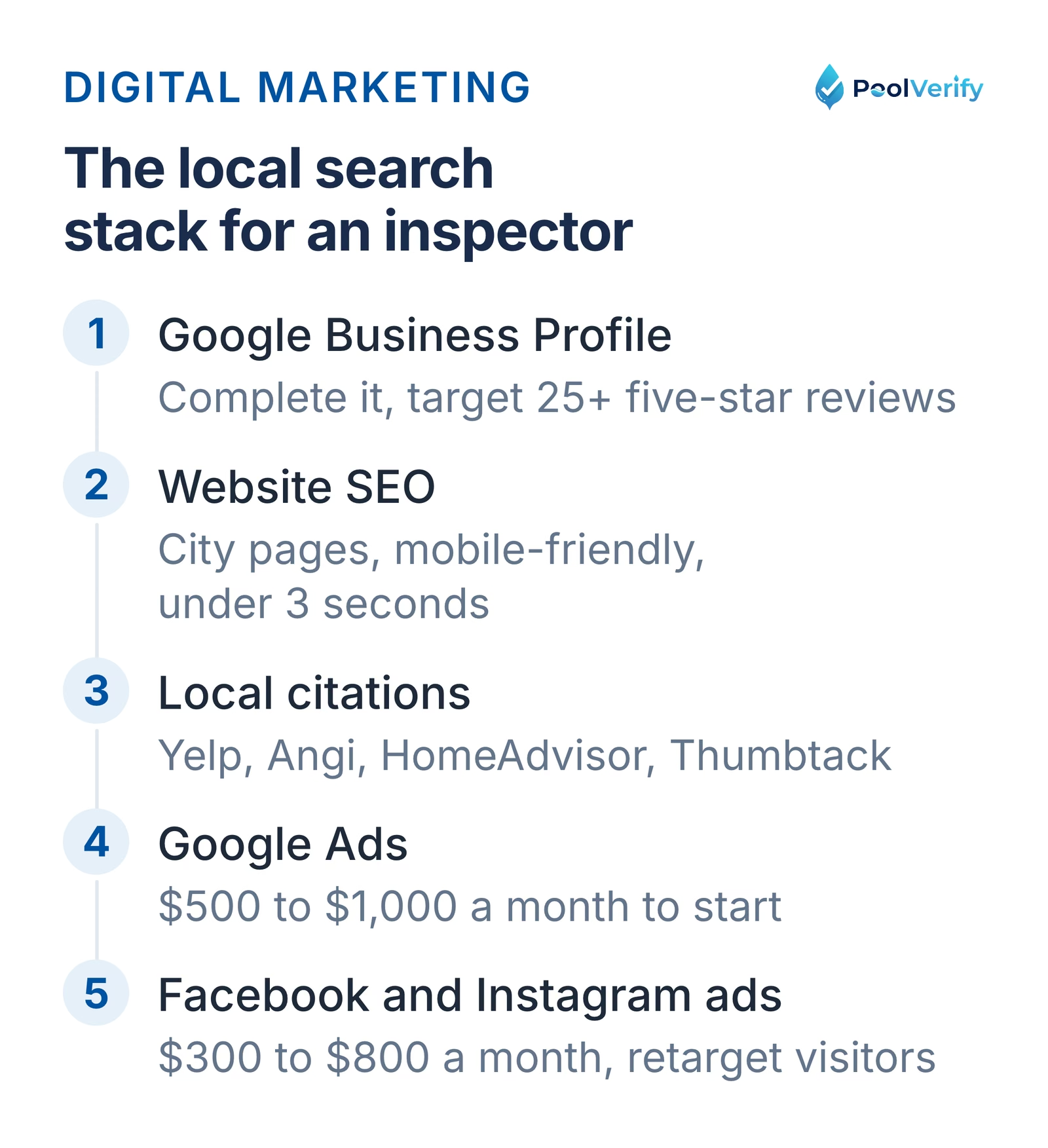
Google Business Profile: Claim and optimize your free Google Business Profile listing
Complete all information fields: hours, services, service area, photos
Collect and respond to all reviews (target 25+ five-star reviews)
Post regular updates about services, seasonal tips, special offers
Add pool inspection photos showing professional equipment and process
Result: Appear in "pool inspector near me" local pack results
Website SEO: Optimize website for local pool inspection searches
Industry directories: Pool & Hot Tub Alliance, local pool associations
Ensure consistent NAP (Name, Address, Phone) across all listings
Cost: Free to $300/year for premium listings
Five digital marketing steps for a pool inspector, from Google Business Profile to a $300 to $800 social ad budget.
Pay-Per-Click Advertising
PPC advertising generates immediate leads while building organic presence.
Google Ads: According to The Pool Journals' marketing guide, PPC or pay-per-click advertising allows pool service companies to strategically place ads on Google properties to reach homeowners at the exact moment when they need their services.
Budget Recommendations:
Start with $500-$1,000/month testing budget
Focus on high-intent keywords: "pool inspection [city]", "pool safety inspection near me"
Use call extensions, location extensions, review extensions
Track conversions: phone calls, form submissions, bookings
Target 10-20% conversion rate (10-20 leads per 100 clicks)
Acceptable cost per lead: $20-$60 depending on market
Posting Frequency: 3-5 posts per week across platforms, using scheduling tools like Hootsuite or Buffer ($20-$100/month)
Traditional Marketing Tactics
Strategic Partnerships and Referral Networks
Building referral relationships generates high-quality, pre-sold leads.
Real Estate Agent Partnerships: According to Pro Pool Inspectors' marketing course, the real estate market provides substantial opportunities for pool inspectors.
Approach:
Identify agents specializing in homes with pools
Offer agent-exclusive pricing or priority scheduling
Provide co-branded marketing materials
Create referral bonus program: $25-$50 per referral
Offer free educational seminars on pool compliance for agents
Join real estate association as affiliate member
Property Manager Relationships: Commercial and multi-family properties require regular inspections
Offer annual inspection contracts with discounted rates
Provide streamlined reporting for multiple properties
Be responsive to emergency inspection requests
Pool Service Company Partnerships: Pool maintenance companies don't typically offer inspection services
Position as complementary service, not competition
Offer wholesale inspection rates for their clients
Provide co-marketing opportunities
Return referrals when clients need maintenance services
Home Inspector Networking: Home inspectors often subcontract pool inspections
Attend home inspector association meetings
Offer wholesale rates for subcontracted inspections
Provide fast turnaround (24-hour reports)
Maintain liability insurance meeting their requirements
Direct Mail and Local Advertising
Physical mail stands out in digital-dominated environment. According to Get Skimmer's marketing strategies, physical mail stands out in an era dominated by digital clutter when targeting specific neighborhoods or demographics.
Effective Direct Mail Campaigns:
Target neighborhoods with higher pool density using county assessor data
Send postcards offering "Free Pool Safety Assessment" or "Seasonal Pool Inspection Special"
Mail quarterly to stay top-of-mind
Include strong offer: $50 off first inspection, free water chemistry analysis
Cost: $0.50-$1.50 per piece including design, printing, postage
Typical response rate: 0.5-2% (5-20 responses per 1,000 mailers)
Community Advertising:
Local newspaper pool safety articles (establish expertise)
Homeowner association newsletters (sponsor or advertise)
Community pool bulletin boards
Local home shows and trade shows ($200-$2,000 booth fee)
Youth sports sponsorships (visibility in pool-owning demographic)
Free Inspection Offers
According to Pool Marketing advice, offering free pool inspections to potential customers helps establish credibility and earn their trust.
Strategic Free Inspection Uses:
New business launch: offer 20-30 free inspections for reviews and referrals
Neighborhood saturation: offer free inspections in target neighborhood, capitalize on word-of-mouth
Realtor relationship building: free demo inspections for top agents
Seasonal promotions: free safety checks during National Water Safety Month (May)
Monetization Strategy:
Upsell comprehensive paid inspection if issues found
Offer repair services or contractor referrals (referral fees)
Build email list for future marketing
Generate reviews and testimonials
Cost: Time investment only, use as lead generation tool
Marketing Budget Allocation
Year 1 Recommended Marketing Budget: 15-20% of projected revenue
Example for $100,000 revenue target: $15,000-$20,000 marketing budget
Allocation:
Website and SEO: $2,000-$3,000 (25-30%)
Google Ads: $6,000-$8,000 (40-50%)
Direct mail: $2,000-$3,000 (15-20%)
Social media advertising: $1,500-$2,500 (10-15%)
Networking and partnerships: $1,000-$1,500 (5-10%)
Print materials and signage: $500-$1,000 (3-5%)
Adjust based on results, tracking cost per lead and customer acquisition cost for each channel.
First-Year Financial Projections
Understanding realistic financial expectations helps avoid discouragement during slow early months and guides cash flow management. Based on Financial Models Lab's building inspection service projections, inspection businesses typically require 6-12 months to reach profitability.
Revenue Projections by Quarter
Conservative First-Year Revenue Model:
Quarter
Inspections/Month
Avg Rate
Monthly Revenue
Quarterly Revenue
Q1 (Months 1-3)
8, 12, 15
$300
$2,400 to $4,500
$10,500
Q2 (Months 4-6)
20, 25, 28
$300
$6,000 to $8,400
$21,900
Q3 (Months 7-9)
32, 35, 38
$300
$9,600 to $11,400
$31,500
Q4 (Months 10-12)
40, 42, 45
$300
$12,000 to $13,500
$38,100
Year 1 Total
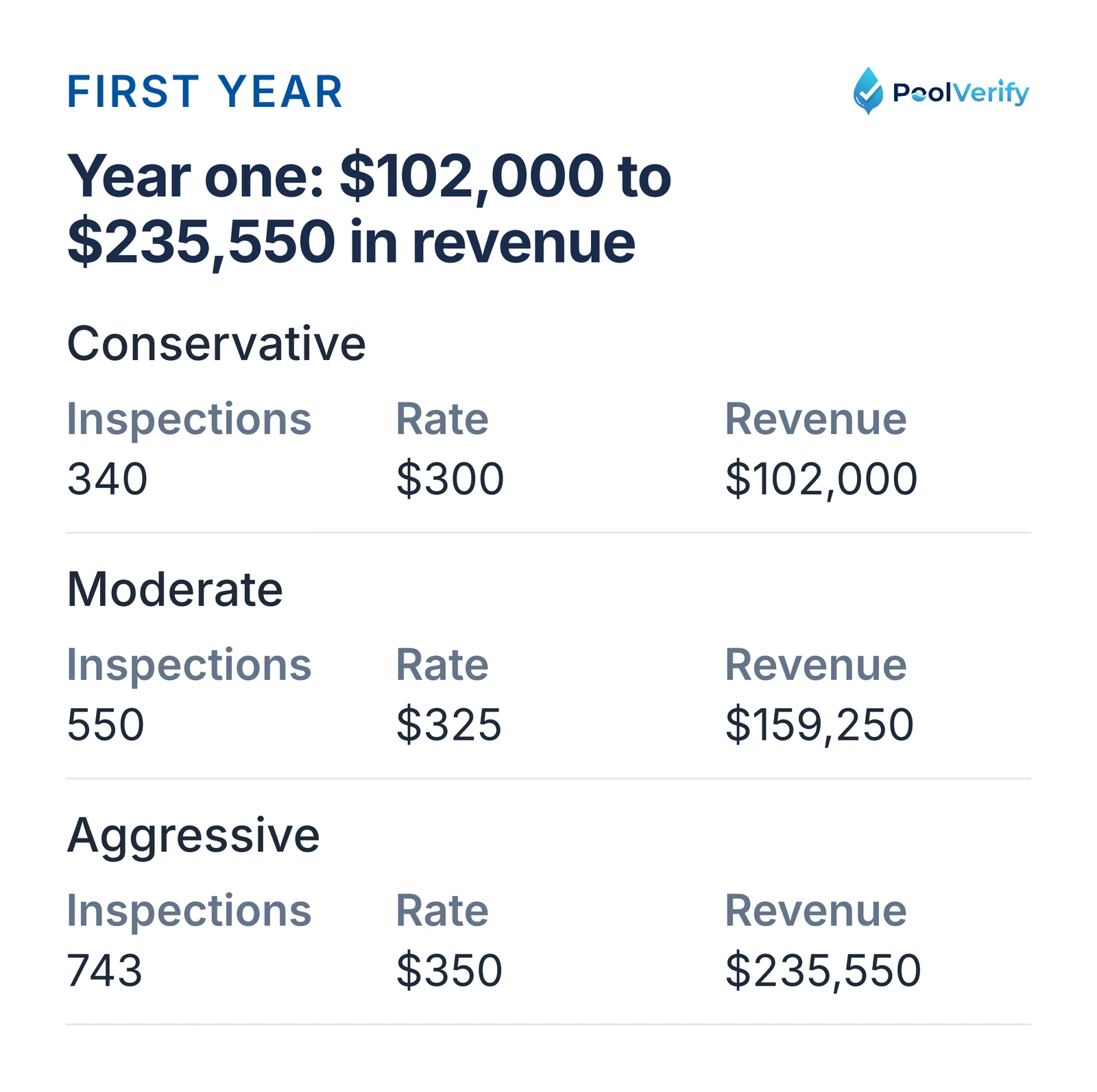
340
$300
$102,000
Moderate First-Year Revenue Model:
Quarter
Inspections/Month
Avg Rate
Monthly Revenue
Quarterly Revenue
Q1 (Months 1-3)
12, 18, 22
$325
$3,900 to $7,150
$16,900
Q2 (Months 4-6)
28, 35, 40
$325
$9,100 to $13,000
$33,475
Q3 (Months 7-9)
48, 52, 55
$325
$15,600 to $17,875
$50,375
Q4 (Months 10-12)
58, 60, 62
$325
$18,850 to $20,150
$58,500
Year 1 Total
550
$325
$159,250
Aggressive First-Year Revenue Model (experienced inspector, strong market):
Quarter
Inspections/Month
Avg Rate
$350
Monthly Revenue
Quarterly Revenue
Q1 (Months 1-3)
20, 28, 35
$350
$7,000 to $12,250
$29,050
Q2 (Months 4-6)
45, 52, 58
$350
$15,750 to $20,300
$54,250
Q3 (Months 7-9)
65, 70, 72
$350
$22,750 to $25,200
$72,450
Q4 (Months 10-12)
75, 75, 78
$350
$26,250 to $27,300
$79,800
Year 1 Total
743
$350
$235,550
Three first-year revenue models: 340 inspections for $102,000, 550 for $159,250, and 743 for $235,550.
Total Fixed Monthly: $1,060-$2,950/month ($12,720-$35,400 annually)
Variable Expenses:
Fuel: $0.30-$0.50 per mile (average 50-100 miles daily)
Equipment maintenance/replacement: $50-$200/month
Test kit reagents: $30-$80/month
Continuing education: $25-$70/month (amortized)
Payment processing fees: 2.9% of revenue
Subcontractors (if used): varies
Variable Costs: Approximately 15-25% of revenue
Profitability Timeline
According to Financial Models Lab's building inspection analysis, breakeven is projected at October 2026, with cash flow neutrality targeted for the 10th month of operation, while positive EBITDA of $48,000 is achieved in Year 2, recovering from an initial $83,000 loss in Year 1.
Conservative Model Year 1:
Revenue: $102,000
Fixed expenses: $20,000
Variable expenses (25%): $25,500
Total expenses: $45,500
Net profit: $56,500 (55% profit margin)
Owner draw potential: $40,000-$50,000
Moderate Model Year 1:
Revenue: $159,250
Fixed expenses: $25,000
Variable expenses (22%): $35,035
Total expenses: $60,035
Net profit: $99,215 (62% profit margin)
Owner draw potential: $70,000-$85,000
Aggressive Model Year 1:
Revenue: $235,550
Fixed expenses: $30,000
Variable expenses (20%): $47,110
Total expenses: $77,110
Net profit: $158,440 (67% profit margin)
Owner draw potential: $110,000-$135,000
Cash Flow Management
Critical First 90 Days: According to Financial Models Lab, minimum cash required to sustain operations includes covering losses during ramp-up period.
Slow season (November-February): Lower revenue, use reserves or diversify services (spa inspections, equipment assessments)
Key Performance Indicators to Track
Monitor these metrics monthly to ensure business health:
Revenue Metrics:
Total inspections completed
Average inspection fee
Revenue per inspection (including add-ons)
Month-over-month growth percentage
Customer acquisition rate
Profitability Metrics:
Gross margin percentage (target 65-75%)
Net profit margin (target 50-65%)
Cost per inspection
Billable utilization rate (target 75-85% of available time)
Marketing Metrics:
Marketing cost per lead
Customer acquisition cost (total marketing ÷ new customers)
Conversion rate (leads to customers)
Return on ad spend (revenue ÷ marketing cost)
Customer Metrics:
Repeat customer rate
Referral rate
Average customer lifetime value
Customer satisfaction score
Review/rating average
According to Financial Models Lab's KPI guidance, target gross margin percentage above 70% with variable costs starting at 27% in 2026, and maintain billable utilization rate between 75% and 85% to maximize inspector output.
Scaling Your Business
After establishing consistent workflow and profitability, consider these growth strategies for expanding your pool inspection business.
Adding Inspection Capacity
Hiring Additional Inspectors: Scale beyond personal capacity by adding employees or subcontractors.
Employee Model:
Hire certified inspector as W-2 employee
Provide salary ($40,000-$55,000) plus benefits
Maintain quality control and brand consistency
Required: workers' compensation insurance, payroll system, training program
Profitability: Charge $300 per inspection, pay inspector $30-$40/hour ($60-$80 per 2-hour inspection), gross margin $220-$240 per inspection
Subcontractor Model:
Contract with independent inspectors (1099)
Pay per inspection ($100-$150) or percentage (40-50% of fee)
Saves 30-45 minutes per inspection versus paper forms
Route Optimization: Plan daily routes for maximum efficiency
Group inspections by geography
Minimize drive time between appointments
Target 3-5 inspections daily depending on market density
Use mapping software for optimal routing
Automated Marketing: Implement systems for consistent lead generation
Email marketing automation for leads and past clients
Social media scheduling tools
CRM system for follow-up automation
Review request automation
Building a Sellable Business
Plan exit strategy from beginning:
Build Systems and Documentation:
Written procedures for all business processes
Training manuals for inspectors
Customer database with contact history
Vendor relationships and pricing agreements
Marketing systems and brand assets
Reduce Owner Dependency:
Hire operations manager
Implement quality control systems
Build team capable of operating without owner
Establish brand beyond owner personality
Financial Documentation:
Clean accounting records (QuickBooks or similar)
Tax returns filed accurately and on time
Profitability demonstrated over multiple years
Customer concentration below 15% (no single customer > 15% of revenue)
Business Valuation: Pool inspection businesses typically sell for 2-4x annual profit (EBITDA) depending on:
Revenue stability and growth
Customer concentration and retention
Owner involvement level
Systems and documentation quality
Market position and brand strength
Geographic factors and competition
Example: $150,000 net profit × 3x multiple = $450,000 sale price
Common Mistakes to Avoid
Learning from others' mistakes accelerates your success. Avoid these common pitfalls:
Business Planning Mistakes
Underestimating Startup Costs: Many new business owners budget for obvious costs (equipment, licenses) but forget hidden expenses (insurance, marketing, slow initial months, equipment repairs, continuing education, professional services).
Skipping Business Plan: "I'll figure it out as I go" rarely works.
Solution: Write simple one-page business plan covering: target market, services offered, pricing strategy, marketing plan, financial projections. Update quarterly.
Ignoring Market Research: Launching in saturated market or area with insufficient pool density.
Solution: Research competitor density, pool ownership statistics, demographic fit. Use county assessor data to identify pool counts by neighborhood. Target areas with 1,000+ pools and fewer than 3 competing inspectors.
Pricing and Financial Mistakes
Underpricing to Win Business: Racing to bottom on price attracts price-sensitive customers, generates insufficient profit, and creates unsustainable business model.
Solution: Price competitively but profitably. Emphasize value (credentials, technology, responsiveness, thoroughness) rather than competing on price alone. Calculate true costs and required profit margin.
Inconsistent Invoicing and Collections: Delayed invoicing, accepting "I'll pay you later", not following up on overdue accounts.
Solution: Invoice same day or within 24 hours. Accept credit cards for immediate payment. Require payment before delivering report for new customers. Implement automatic payment reminder system.
Failing to Track Expenses: Missing tax deductions, can't calculate true profitability, surprises at tax time.
Solution: Use accounting software from day one. Track every business expense immediately. Categorize expenses properly. Reconcile bank accounts monthly. Hire tax professional for year-end preparation.
Operational Mistakes
Using Paper Forms: Handwritten forms appear unprofessional, take excessive time to transcribe, prone to errors and omissions, difficult to organize and retrieve.
Inadequate Photo Documentation: Photos are critical evidence of conditions found. Insufficient photos, poor quality images, missing key defects, no organization system.
Solution: Photograph every major component and all defects. Use high-resolution camera or smartphone. Organize photos by area/system. Use inspection software for automatic photo organization and annotation. Take 30-50 photos per typical residential inspection.
Incomplete Inspections: Rushing through inspections, missing components, skipping testing, inadequate documentation to avoid liability claims.
Solution: Use comprehensive checklist every time (digital checklist prevents skipping items). Budget adequate time (1.5-2 hours residential, 2-3 hours commercial). Never skip components to save time. Read our guide on common pool inspection mistakes.
Poor Report Writing: Vague descriptions, missing defect locations, no photos of issues, inconsistent terminology, delayed report delivery.
Solution: Use templates for consistency. Include specific locations and descriptions. Photo every defect. Define terminology clearly. Deliver reports within 24 hours (same-day if possible). Learn how to write professional pool inspection reports.
Marketing and Customer Service Mistakes
Inconsistent Marketing: Marketing heavily for two months, then stopping when busy, then wondering why leads dried up when schedule opens.
Solution: Maintain consistent marketing presence year-round. Automate where possible. Budget monthly marketing allocation. Track cost per lead and ROI by channel.
Ignoring Online Reputation: Not requesting reviews, ignoring negative feedback, missing reviews on multiple platforms.
Solution: Request review from every satisfied customer. Respond professionally to all reviews (positive and negative). Monitor Google, Yelp, Facebook, industry platforms. Address concerns raised in negative reviews professionally and promptly.
Solution: Return calls/emails within 2 hours during business hours. Use automated scheduling system. Send appointment confirmations and reminders. Deliver reports on promised timeline. Set and manage expectations clearly.
Not Building Referral Network: Relying solely on online leads, missing partnership opportunities, not rewarding referrals.
Solution: Develop relationships with realtors, property managers, pool companies, home inspectors. Implement referral reward program. Provide excellent service worthy of referrals. Ask for referrals from satisfied customers.
Legal and Compliance Mistakes
Operating Without Proper Insurance: Thinking "it won't happen to me", underestimating liability exposure, trying to save money on insurance.
Solution: Obtain comprehensive E&O and general liability insurance before conducting first inspection. Maintain proper coverage limits ($1 million minimum). Never let policies lapse. Read about pool inspector insurance requirements.
License and Certification Lapses: Forgetting renewal dates, missing continuing education requirements, operating with expired credentials.
Solution: Set calendar reminders 60 days before renewal dates. Complete continuing education early. Budget for renewal costs. Keep digital copies of all credentials.
Misclassifying Workers: Treating employees as contractors to avoid payroll taxes, not understanding IRS classification rules, creating significant tax liability.
Solution: Consult with accountant or attorney before hiring. Understand employee versus contractor rules. When in doubt, classify as employee. Proper payroll setup from beginning.
Inadequate Contracts: Verbal agreements, missing liability limitations, unclear scope of service, no dispute resolution procedures.
Solution: Use written inspection agreement for every job. Include liability limitations, inspection standards followed, dispute resolution process. Have attorney review agreement template. Obtain signed agreement before inspection.
Limitations
This guide is general information about pool safety law, not legal advice; the current text of HSC §115922 and BPC §7195 on leginfo.legislature.ca.gov controls, and local building departments add their own requirements. PoolVerify is inspection software for California residential pool safety inspections; it does not perform inspections, certify inspectors, or issue compliance certificates.
Frequently Asked Questions
How much does it cost to start a pool inspection business?
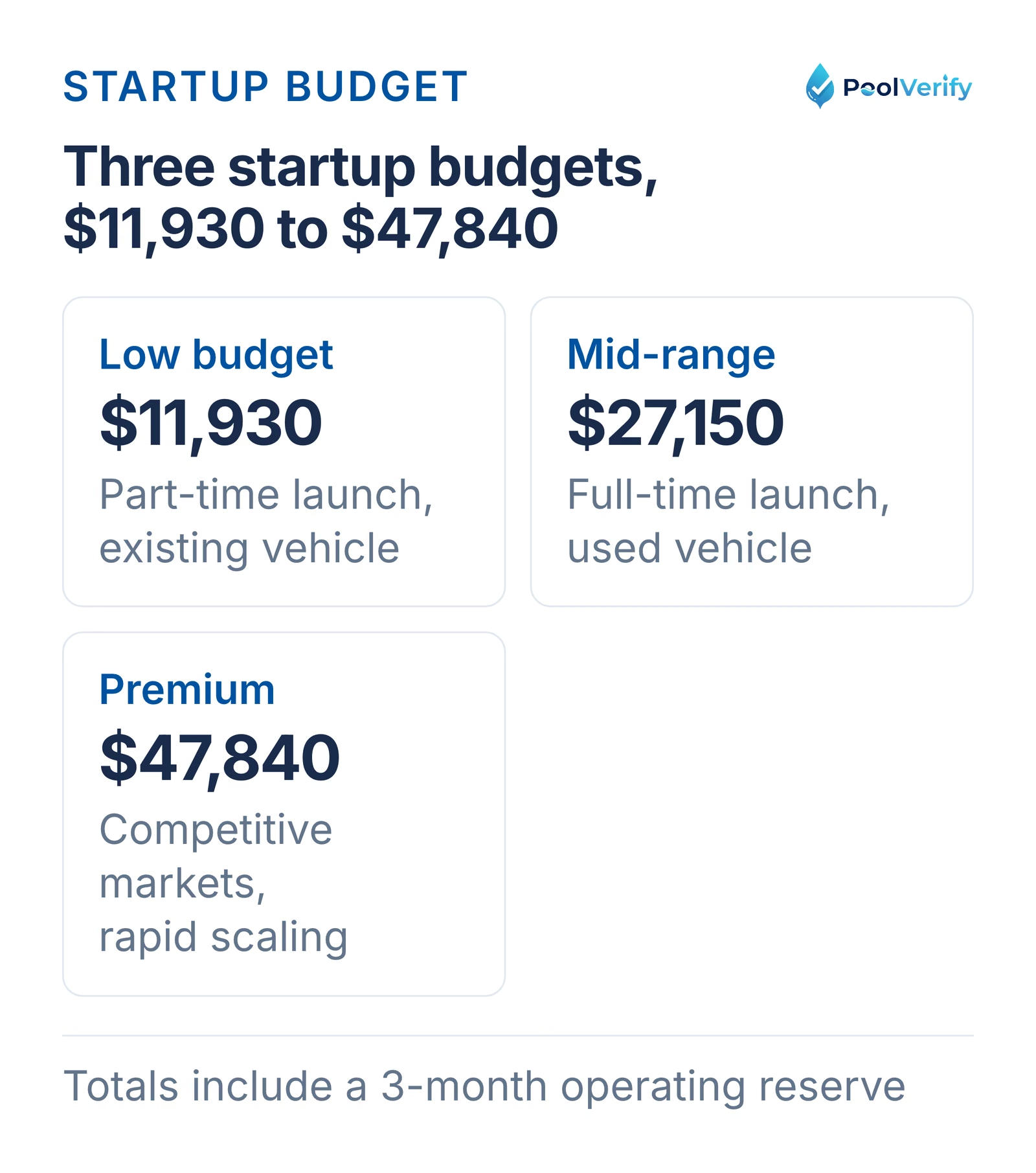
Starting a pool inspection business costs $7,000-$15,000 for basic setup, $20,000-$30,000 for professional setup, or $40,000-$50,000 for premium positioning. Major expenses include certifications ($390-$990), insurance ($2,600-$6,200), equipment ($1,200-$5,000), vehicle signage ($100-$2,000), website ($200-$2,000), and 3-month operating reserve. According to Service Titan's pool business analysis, starting a pool service business typically costs between $7,000 and $25,000 depending on setup and scope.
Do you need a license to start a pool inspection business?
Licensing requirements vary by state and municipality. California requires contractor licenses (B or C-53) or home inspector licenses for pool inspections. Florida requires pool contractor licensing. Many states require only general business licenses. Professional certifications like CPO ($390) and CPI ($300) provide credibility regardless of legal requirements. Check your state contractor licensing board and local building department for specific requirements. Learn more about pool inspection certification requirements.
How much can you make with a pool inspection business?
Pool inspector income varies widely based on location, volume, and pricing. Inspectors charge $200-$500 per inspection depending on market. Full-time inspectors conducting 40-60 inspections monthly generate $8,000-$30,000 monthly revenue ($96,000-$360,000 annually). After expenses (20-35% of revenue), successful solo inspectors net $60,000-$200,000+ annually. First-year realistic net profit ranges from $40,000-$100,000 depending on market and effort. See our detailed guide on pool inspector salary and income.
What certifications do you need for pool inspection?
Essential certifications include Certified Pool/Spa Operator (CPO) from Pool & Hot Tub Alliance ($390, 16-hour course), and Certified Pool Inspector (CPI) from qualified training providers ($300). According to PHTA, CPO certification is valid for 5 years and covers water chemistry, operations, and safety. Additional valuable certifications include InterNACHI Pool & Spa Inspector certification, state-specific contractor licenses, and specialized training for commercial pools. Learn more about becoming a pool inspector.
How do you get clients for a pool inspection business?
Effective client acquisition combines digital and traditional marketing. Optimize Google Business Profile for local search visibility, run Google Ads targeting "pool inspection [city]" keywords ($500-$1,500/month budget), build referral partnerships with realtors and property managers, join real estate associations, request reviews from every satisfied customer, send direct mail to pool-owning neighborhoods, maintain active social media presence, and offer initial promotional pricing for first 30 days. According to Get Skimmer's marketing guide, combining online and offline strategies generates most consistent qualified leads. Budget 15-20% of projected revenue for marketing in year one.
What equipment do you need for pool inspections?
Essential pool inspection equipment includes water testing kit ($100-$300), electrical testing tools ($50-$150), measuring tools ($40-$80), digital camera or smartphone, tablet for digital inspection forms ($300-$800), inspection software subscription ($30-$100/month), telescoping pole ($40-$80), ladder ($100-$250), safety equipment ($50-$100), and professional business cards and branded clothing. According to ZenBusiness, basic equipment setup costs $1,200-$2,500 while professional setup runs $3,000-$5,000. Digital inspection software is essential for professional reports and efficiency. Compare digital versus paper inspection methods.
Is a pool inspection business profitable?
Yes, pool inspection businesses can be highly profitable with gross margins of 65-75% and net profit margins of 50-65% for established operations. Low overhead (no inventory, minimal equipment), high hourly effective rates ($150-$300/hour), flexible scaling through added inspectors, and recurring customer base from realtors and property managers create strong profitability. First-year net profit typically ranges $40,000-$100,000 for solo inspectors. Year two and beyond often exceeds $75,000-$150,000+ as marketing compounds and referrals increase. According to Financial Models Lab's inspection business analysis, targeting gross margin percentage above 70% with billable utilization rate between 75-85% maximizes profitability.
Ready to Launch Your Pool Inspection Business?
Starting a pool inspection business in 2026 offers excellent opportunities for motivated entrepreneurs. With relatively low startup costs, strong profit margins, flexible scheduling, and growing market demand driven by safety regulations, the business model works across various markets and business sizes.
Success requires proper planning, professional certifications, comprehensive insurance, effective marketing, efficient operations, and excellent customer service. Invest in professional tools like PoolVerify's digital inspection platform to streamline operations, create professional reports, and deliver exceptional customer experience from day one.
California pool inspectors particularly benefit from strict BPC §7195 compliance requirements creating consistent demand. Whether starting part-time to test the market or launching full-time with aggressive growth plans, the pool inspection industry rewards those who deliver quality service and build strong reputations.
Take action today: obtain your CPO certification, set up your business structure, secure proper insurance, invest in inspection software, and launch your marketing. Your first client is searching for a qualified pool inspector right now.
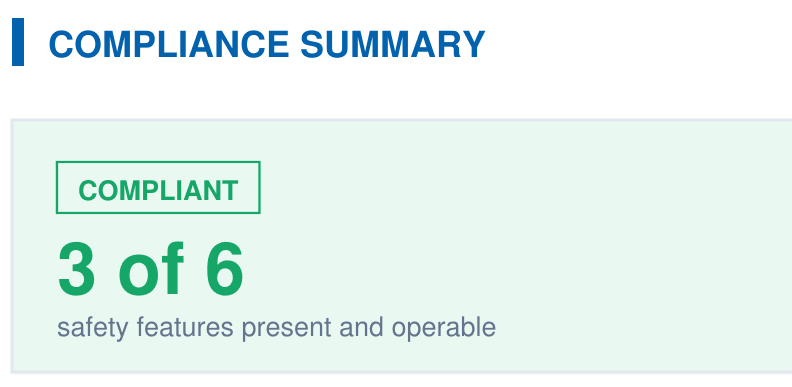
A branded PDF with the compliance summary, the feature table, each finding with its photos, and the signature, generated on‑site when the BPC §7195 and HSC §115922 checklist is complete.