Pool inspection is a growing career field with strong demand, flexible scheduling, and solid income potential. With drowning prevention regulations becoming stricter and real estate transactions requiring pool compliance, qualified inspectors are in high demand across California and nationwide.
This comprehensive 3,000+ word guide covers everything you need to know about starting and building a successful pool inspection career, including detailed salary data, career progression timelines, success stories from working inspectors, multiple certification pathways, and regional differences across California markets.
Pool Inspector Career Overview
What Pool Inspectors Do
Pool inspectors assess the safety, compliance, and condition of residential and commercial swimming pools. Daily activities include:
- Conducting on-site pool inspections
- Testing safety features and equipment
- Documenting findings with photos and notes
- Writing detailed inspection reports
- Advising clients on compliance requirements
- Recommending repairs and improvements
Career Advantages
| Advantage | Details |
|---|
| Growing demand | Increasing safety regulations |
| Flexible schedule | Set your own hours |
| Low startup costs | Minimal equipment needed |
| Outdoor work | Not confined to office |
| Helping people | Preventing tragedies |
| Good income | Scalable earnings |
Career Challenges
| Challenge | Reality |
|---|
| Physical demands | On feet, bending, outdoor conditions |
| Seasonal variation | Busier spring/summer |
| Liability exposure | Need proper insurance |
| Continuing education | Must stay current |
| Competition | Growing field |
Requirements to Become a Pool Inspector
Basic Requirements
| Requirement | Details |
|---|
| Age | 18+ (21+ for some licenses) |
| Education | High school diploma/GED minimum |
| Background | Clean record for licensing |
| Physical ability | Mobility, vision, outdoor work |
| Transportation | Reliable vehicle required |
Recommended Background
While not required, these backgrounds help:
- Pool service/maintenance experience
- Home inspection experience
- Construction or contracting
- Code enforcement
- Engineering or technical fields
Personal Qualities for Success
- Attention to detail
- Strong communication skills
- Integrity and professionalism
- Problem-solving ability
- Customer service orientation
- Self-motivation
Multiple Certification Path Options
Aspiring pool inspectors have several pathways to certification, each with different requirements, costs, and career outcomes. Choose the path that best aligns with your background, budget, and career goals.
Certification Pathway Comparison
| Certification | Best For | Duration | Cost | Prerequisites | Recognition |
|---|
| CPO (Certified Pool Operator) | Everyone (foundation) | 2 days | $250-$400 | None | Universal industry standard |
| CPI (Certified Pool Inspector) | Inspection specialists | 2-3 days | $400-$600 | CPO or 2 years experience | Inspection-specific credential |
| InterNACHI Pool Inspector | Home inspectors | 20+ hours online | Included with membership ($500/yr) | None | Strong with realtors |
| ASHI Pool Inspection | Home inspectors | Varies | $200-$500 | None or ASHI membership | Real estate focused |
| State Home Inspector License | Comprehensive inspectors | 80-200 hours | $1,000-$3,000 | Varies by state | State-mandated credential |
| C-53 Pool Contractor (CA) | California contractors | 4 years experience + exam | $15,000 bond + fees | 4 years verifiable experience | Maximum California credibility |
Path 1: CPO → CPI (Recommended for Most)
The most common and widely recognized pathway for dedicated pool inspectors:
Step 1: Certified Pool Operator (CPO)
What it covers:
- Pool and spa water chemistry fundamentals
- Circulation, filtration, and heating systems
- Chemical testing and balancing procedures
- Pool maintenance and operations
- Health and safety regulations
- Record-keeping and documentation
Training format:
- In-person: 16-hour, 2-day classroom course (most common)
- Online: CPO Fusion blended learning (online + 1-day in-person)
- Virtual: 100% live virtual option (post-2020)
Exam:
- 50 multiple-choice questions
- Open-book format
- 75% passing score required
- 1 hour time limit
Certification providers:
- Pool & Hot Tub Alliance (PHTA) - Primary certifying body
- Pool Operation Management
- Space Coast Pool School
- Best Aquatic Management
- Local community colleges
Cost: $250-$400 (includes training materials, exam, 2-year certification)
Validity: 2 years
Renewal: $50-$100 renewal fee every 2 years, may require 4-8 hour refresher course
Career outcome: Qualified to conduct basic pool inspections, work in pool maintenance, or serve as facility operator
Step 2: Certified Pool Inspector (CPI)
What it covers (builds on CPO):
- Regulatory compliance (codes, standards, ADA requirements)
- Structural assessment and defect recognition
- Equipment evaluation and failure modes
- Safety feature inspection (barriers, alarms, covers, drains)
- Inspection methodology and systematic approaches
- Professional report writing and documentation
- Liability and risk management for inspectors
- California-specific requirements (BPC §7195, HSC §115922)
Prerequisites:
- CPO certification OR 2+ years pool industry experience (recommended)
- 18+ years old
Training format:
- 2-3 day intensive course (16-24 hours)
- Hands-on inspection practice
- Real-world case studies
- Report writing exercises
Exam:
- 35-50 questions
- Open-book format
- 70-75% passing score
- 1 hour time limit
Certification providers:
Cost: $400-$600 (includes training, materials, exam, 3-year certification)
Validity: 3 years
Renewal: $75-$150 renewal fee every 3 years
Career outcome: Qualified as specialized pool inspector, can command 15-25% fee premium over non-certified competitors
Total investment for CPO → CPI path:
- Training costs: $650-$1,000
- Time investment: 4-5 days
- Career launch timeline: 1 week to certified, 3-6 months to profitable business
Path 2: InterNACHI Pool & Spa Inspector (For Home Inspectors)
Ideal for existing home inspectors adding pool inspections to their service offerings:
What it covers:
- Pool and spa inspection fundamentals
- Common defects and issues
- Safety requirements and compliance
- Equipment evaluation
- Report writing for real estate transactions
- Integration with home inspection reports
Training format:
Exam:
- Online multiple-choice exam
- Open-book
- 70% passing score
Cost: Included with InterNACHI membership (~$500/year)
Additional benefits:
- Access to all InterNACHI inspection courses
- E&O insurance discounts
- Marketing tools and templates
- Realtor network access
Validity: Annual with membership renewal
Best for: Home inspectors who want to add pool inspections as ancillary service, not primary business
Career outcome: Add $75-$200 per inspection when home inspection includes pool assessment, expand service offerings to properties with pools
Path 3: ASHI Pool Inspection Training (Alternative for Home Inspectors)
Another option for home inspectors, offered by American Society of Home Inspectors:
What it covers:
- Pool and spa inspection for real estate transactions
- Basic equipment and structural assessment
- Safety compliance verification
- Real estate-focused reporting
Training format:
- Online or in-person options
- Varies by program (8-16 hours typical)
Cost: $200-$500
Recognition: Respected in real estate community, particularly on East Coast
Best for: ASHI member home inspectors, those focused on real estate transaction inspections
Path 4: State Home Inspector License + Pool Specialization
Some inspectors obtain full home inspector licensure, then specialize in pools:
State requirements vary significantly:
California (HI License):
- No state licensing requirement for home inspectors
- Professional associations provide voluntary certification
- Can conduct pool inspections with CPO/CPI only
Texas (TREC License):
- 128 hours of approved education
- Pass state exam
- Continuing education requirement
- Can add pool inspection specialty
Florida:
- Licensed home inspector or pool contractor status
- Specific pool training requirements
Cost: $1,000-$3,000 for training and licensing
Timeline: 3-6 months
Advantage: Can offer complete home + pool inspection packages for $500-$800 (vs $200 pool-only), access to established realtor networks
Path 5: C-53 Pool Contractor License (California Maximum Credibility)
The highest-credibility pathway in California, though most intensive:
Requirements:
- 4 years of verifiable pool-related experience (as journeyman or contractor)
- Pass Law & Business exam
- Pass C-53 Pool Contractor trade exam
- $15,000 contractor bond
- Liability insurance
Advantages:
- Maximum professional credibility
- Can perform repairs identified during inspections (additional revenue)
- Premium pricing power (clients trust contractor-level expertise)
- Required for certain commercial inspection contracts
Disadvantages:
- 4-year experience requirement (longest pathway)
- Most expensive and complex licensing process
- Higher insurance costs
- Ongoing licensing requirements
Best for: Existing pool contractors adding inspection services, long-term career professionals seeking maximum credibility
Cost: $1,500-$3,000 for exam prep, fees, bond
Timeline: 4+ years (experience requirement)
Choosing Your Certification Path
Choose CPO → CPI if:
- You're starting from scratch with no pool background
- You want the industry-standard inspection credential
- You plan to specialize in pool inspections (not home inspections)
- You're in California and focusing on BPC §7195 compliance inspections
- You want the quickest path to working as inspector (1 week)
Choose InterNACHI or ASHI if:
- You're already a home inspector
- Pools are an add-on service, not primary business
- You have existing realtor relationships
- You want to integrate pool reports into home inspection reports
- You prefer online self-paced learning
Choose State Home Inspector License if:
- You want to offer complete property inspections
- Your state requires licensing
- You want to maximize revenue per inspection
- You're willing to invest 3-6 months in training
Choose C-53 Contractor License if:
- You have 4+ years pool industry experience
- You want to perform repairs in addition to inspections
- You're committed long-term to California pool industry
- You want maximum professional credibility
Budget comparison:
- Most affordable: CPO only ($250-$400) - sufficient for basic inspections
- Best value: CPO + CPI ($650-$1,000) - complete inspector training
- Home inspector paths: $500-$3,000 - broader credential
- Contractor license: $1,500-$3,000+ - maximum credibility
Timeline comparison:
- Fastest: CPO (2 days) or InterNACHI (1-2 weeks self-paced)
- Standard: CPO + CPI (4-5 days)
- Moderate: Home inspector license (3-6 months)
- Longest: C-53 contractor (4+ years experience requirement)
Beyond Initial Certification: Advanced Credentials
After establishing your inspection business, consider these advanced certifications:
Certified Aquatic Facility Operator (AFO):
- Focus: Commercial pool and aquatic facility operations
- Adds: Commercial inspection capability ($300-$500 per inspection)
- Cost: $400-$600
- Duration: 3 days
AFO Instructor:
- Teach CPO and AFO courses
- Additional revenue stream: $500-$2,000 per class
- Establishes you as industry expert
Expert Witness Certification:
- Legal testimony training
- Enables expert witness work at $150-$300/hour
- Typically requires 5+ years inspection experience
Aquatic Facility Management:
- Advanced commercial facility management
- Opens doors to facility director positions ($60,000-$90,000 salaries)
The certification path you choose should align with your career goals, budget, existing credentials, and target market. Most successful pool inspectors start with CPO + CPI, then add specialized credentials as their business grows and needs evolve.
Training Programs
Online Training Options
| Program | Provider | Cost | Duration |
|---|
| CPI Course | NSPF | $495 | 2-4 weeks |
| Pool Inspector Course | InterNACHI | $199 | 20 hours |
| Pool Inspection Fundamentals | ASHI | $295 | 16 hours |
| Pool Safety Inspector | Various | $200-400 | Varies |
In-Person Training
| Option | Benefits | Typical Cost |
|---|
| Community college courses | Hands-on, networking | $500-1,500 |
| Trade school programs | Comprehensive | $1,000-3,000 |
| Manufacturer training | Equipment-specific | Often free |
| Mentorship programs | Real-world experience | Varies |
Continuing Education
Most certifications require ongoing education:
- Annual credit hours (8-16 typical)
- Code update training
- New technology courses
- Safety refreshers
Regional Differences in California Pool Inspection
California is not a monolithic market. Pool inspection requirements, enforcement, pricing, and opportunities vary significantly across regions. Understanding these differences helps you target the right markets and set appropriate pricing.
California State-Level Requirements
All California pool inspectors must understand baseline state requirements:
California state barrier code (BPC §7195):
Important: According to the California Swimming Pool Barrier Safety Act, state barrier code is the minimum allowed, and each county or city may have more restrictive versions of the law.
Regional Market Analysis: California
Southern California (Los Angeles County)
Market characteristics:
- Pool density: Very high (estimated 500,000+ residential pools)
- Typical inspection fee: $200-$325
- Competition level: High (saturated market in some areas)
- Seasonal variation: Moderate (10-20% winter slowdown)
Local code variations:
- Most cities strictly enforce state requirements
- Some affluent cities (Beverly Hills, Santa Monica) have additional aesthetic standards
- HOAs often have stricter requirements than city code
Target clients:
- Real estate agents (high transaction volume)
- Property managers (large apartment complexes)
- Luxury homeowners (pool renovation assessments)
Inspector income potential: $55,000-$120,000 depending on volume and specialization
Best strategies:
- Specialize in high-end properties (luxury homes in Beverly Hills, Malibu, Palos Verdes)
- Focus on commercial pools (hotels, gyms, apartment complexes)
- Build relationships with high-volume real estate teams
- Market bilingual services (large Spanish-speaking population)
Challenges:
- High competition requires differentiation
- Traffic impacts daily inspection capacity (limit to 3-4 inspections/day)
- Cost of living and business expenses higher
Orange County
Market characteristics:
- Pool density: Extremely high (300,000+ residential pools)
- Typical inspection fee: $200-$300
- Competition level: Moderate-high
- Seasonal variation: Minimal (year-round demand)
Local code variations:
- According to industry reports, Orange County has reputation for strict enforcement
- Some inspectors report OC requires fence on cliffs and unusual topography situations
- Each city within OC may interpret code differently
- Mesh pool fence universally accepted for code compliance
Target clients:
- Affluent homeowners (high home values)
- Real estate agents (robust housing market)
- HOA communities (master-planned communities common)
Inspector income potential: $60,000-$130,000
Best strategies:
- Premium positioning (affluent market supports $250-$350 fees)
- Focus on master-planned communities and HOA properties
- Partner with luxury real estate agents
- Emphasize strict compliance knowledge (OC enforcement reputation)
OC-specific insight: Orange County clients expect high professionalism and detailed reporting. Investing in professional inspection software is essential for competing in this market.
San Diego County
Market characteristics:
- Pool density: High (250,000+ residential pools)
- Typical inspection fee: $175-$275
- Competition level: Moderate
- Seasonal variation: Minimal (year-round mild weather)
Local code variations:
- Generally follows state code closely
- Coastal cities may have additional corrosion/salt air considerations
- Military base housing has separate requirements (federal standards)
Target clients:
- Military families (large military population)
- Real estate agents (strong housing market)
- Property managers (many rental properties)
- Commercial pools (tourism industry)
Inspector income potential: $55,000-$110,000
Best strategies:
- Develop military base housing expertise (recurring contracts)
- Focus on coastal properties (salt exposure creates more issues)
- Target vacation rentals (require frequent inspections)
- Commercial pools in tourism sector (hotels, resorts)
San Francisco Bay Area (9-County Region)
Market characteristics:
- Pool density: Lower than Southern California (200,000 residential pools across region)
- Typical inspection fee: $250-$425 (highest in California)
- Competition level: Low-moderate (fewer pools = fewer inspectors)
- Seasonal variation: Moderate (pools less popular than SoCal)
Sub-regions:
- San Francisco proper: Very few residential pools, mostly commercial
- Peninsula (Palo Alto, Menlo Park, Los Altos): Luxury homes, highest fees
- South Bay (San Jose, Cupertino, Saratoga): Tech wealth, good market
- East Bay (Berkeley, Oakland, Walnut Creek): Mixed market, moderate volume
- North Bay (Marin, Napa, Sonoma): Luxury homes, lower density
Local code variations:
- San Francisco has strictest building codes in nation (extends to pools)
- Peninsula cities often have specific energy efficiency requirements
- Some cities require licensed professionals for all inspections
Target clients:
- Ultra-high-net-worth homeowners (Silicon Valley executives)
- Luxury real estate agents
- Commercial facilities (hotels, gyms, country clubs)
- Wine country resorts (Napa/Sonoma)
Inspector income potential: $70,000-$140,000 (highest fees compensate for lower volume)
Best strategies:
- Premium positioning (market supports $300-$425 fees)
- Focus on quality over quantity (4-5 inspections/day at high fees)
- Specialize in high-end properties and commercial facilities
- Emphasize energy efficiency and sustainability (market values)
- Target wine country resorts and boutique hotels
Bay Area advantage: Highest inspection fees in California ($250-$425 vs $175-$275 elsewhere) due to cost of living and affluent clientele.
Bay Area challenge: Lower pool density means less volume potential, requires premium pricing strategy.
Sacramento Metro
Market characteristics:
- Pool density: Moderate-high (150,000+ pools)
- Typical inspection fee: $150-$250
- Competition level: Moderate
- Seasonal variation: Significant (30-40% winter slowdown)
Local code variations:
- According to Sacramento County, county inspects public pools but not single-family homes
- Most cities within Sacramento County follow standard state requirements
- Newer subdivisions may have HOA-specific requirements
Target clients:
- Real estate agents (growing housing market)
- Property managers (many apartment complexes)
- New construction (Elk Grove, Roseville growth)
- Government facilities (state capital)
Inspector income potential: $50,000-$95,000
Best strategies:
- Focus on growing suburbs (Elk Grove, Roseville, Folsom, Natomas)
- Target new construction inspections (final compliance before occupancy)
- Build relationships with property management companies
- Offer winter discounts to maintain volume in slow season
- Expand service area to include Placer County (Roseville, Rocklin, Lincoln)
Sacramento-specific insight: Fast-growing market with less saturation than Bay Area or SoCal. Good opportunity for new inspectors to establish themselves.
Central Valley (Fresno, Bakersfield, Modesto, Stockton)
Market characteristics:
- Pool density: Moderate (pools popular but lower home values)
- Typical inspection fee: $125-$200
- Competition level: Low-moderate
- Seasonal variation: Extreme (50%+ winter slowdown, 100°F+ summers drive peak demand)
Local code variations:
- Generally minimal local variations beyond state code
- Agricultural areas may have well water considerations
- Rural properties may have less stringent enforcement
Target clients:
- Real estate agents (moderate transaction volume)
- Agricultural property owners (farm pools)
- Property managers (multi-family housing)
- New construction (growing markets)
Inspector income potential: $40,000-$75,000
Best strategies:
- High-volume model (lower fees, more inspections)
- Expand service area widely (less traffic, cover larger region)
- Seasonal income management (save summer earnings for winter)
- Target new construction boom areas
- Add related services (water well testing, septic inspections)
Central Valley advantage: Lower competition, growing markets, lower cost of living means lower salary goes further.
Central Valley challenge: Lower fees and extreme seasonality require high volume and financial planning.
Inland Empire (Riverside, San Bernardino Counties)
Market characteristics:
- Pool density: Very high and rapidly growing
- Typical inspection fee: $150-$250
- Competition level: Moderate
- Seasonal variation: Moderate (hot climate = strong pool culture)
Local code variations:
- According to industry sources, every city in Riverside County accepts mesh pool fence for code compliance
- Generally follows state requirements closely
- New developments have modern code-compliant construction
Target clients:
- New homeowners (many first-time buyers)
- Real estate agents (high transaction volume)
- Property managers (rapid growth = new apartment complexes)
- Commercial pools (growing retail/hospitality sector)
Inspector income potential: $50,000-$100,000
Best strategies:
- Focus on new construction compliance inspections
- Target growing cities (Temecula, Murrieta, Menifee, Eastvale)
- High-volume model (market supports 50+ inspections/month)
- Partner with multiple real estate brokerages (high transaction volume)
- Competitive pricing with professional service (price-sensitive market)
Inland Empire advantage: Fastest-growing California region, massive new construction, high pool ownership rates, less saturated than coastal markets.
Regional Pricing Strategy Summary
| California Region | Recommended Fee Range | Justification |
|---|
| San Francisco Bay Area | $250 - $425 | Highest cost of living, affluent clients, premium market |
| Orange County | $200 - $325 | Affluent market, strict enforcement reputation, quality expectations |
| Los Angeles County | $200 - $325 | Large market, high competition, varies by neighborhood |
| San Diego County | $175 - $275 | Strong market, military/tourism focus, moderate cost of living |
| Sacramento Metro | $150 - $250 | Growing market, moderate competition, lower cost of living |
| Inland Empire | $150 - $250 | High volume opportunity, price-sensitive, growing rapidly |
| Central Valley | $125 - $200 | Lower home values, high volume needed, less competition |
Pricing insight: Don't race to bottom on price in any market. Even in lower-fee regions, professional service with modern inspection software justifies premium positioning.
Seasonal Considerations by Region
Year-round markets (minimal seasonality):
- Orange County: 10-15% winter slowdown
- San Diego County: 5-10% winter slowdown
- Inland Empire: 15-20% winter slowdown
Moderate seasonal markets:
- Los Angeles County: 15-25% winter slowdown
- Sacramento Metro: 30-40% winter slowdown
- San Francisco Bay Area: 20-30% winter slowdown
Highly seasonal markets:
- Central Valley: 50-60% winter slowdown (extreme temperatures)
- Mountain/foothill areas: 40-50% winter slowdown
Financial planning for seasonal markets:
- Save 25-35% of peak season income for off-season expenses
- Offer winter promotions to maintain some volume
- Add non-seasonal services (commercial inspections less affected)
- Consider part-time winter work in related field
- Use off-season for marketing, training, business development
California Regional Opportunity Assessment
Best markets for new inspectors:
- Inland Empire - High growth, moderate competition, good volume potential
- Sacramento Metro - Growing steadily, less saturated, affordable living
- Central Valley - Low competition, high volume possible, low barrier
Best markets for premium pricing:
- San Francisco Bay Area - Highest fees, affluent clients ($250-$425/inspection)
- Orange County - Strong affluent market ($225-$325/inspection)
- San Diego coastal - Tourism/luxury market ($200-$300/inspection)
Most challenging markets:
- Los Angeles urban - Oversaturated, high competition, traffic issues
- San Francisco proper - Very few residential pools, mostly commercial
- Rural mountain areas - Low density, highly seasonal, limited volume
Highest income potential markets:
- San Francisco Bay Area - Premium fees + commercial specialization = $90,000-$140,000
- Orange County - High volume + premium fees = $75,000-$130,000
- Inland Empire - Explosive growth + high volume = $65,000-$110,000
Licensing Requirements by State
California Licensing
California does not require a specific state-issued pool inspector license, but several license types enhance credibility:
| License Type | Requirements | Benefits | Cost/Timeline |
|---|
| No license required | CPO + CPI certifications | Sufficient for BPC §7195 inspections | $650-$1,000 / 1 week |
| B License (General Contractor) | 4 years experience, exam, $15,000 bond | Maximum credibility, can perform repairs | $2,500+ / 4+ years |
| C-53 License (Pool Contractor) | 4 years experience, exam, $15,000 bond | Pool-specific contractor authority | $2,500+ / 4+ years |
| HI License (Home Inspector) | Training, exam, insurance | Not required in CA but adds credibility | $1,000-$2,000 / 3-6 months |
California reality: Most pool inspectors operate with CPO and CPI certifications only. C-53 license is beneficial if you want to perform repairs, but not necessary for inspection-only business.
Other States
| State | Requirement |
|---|
| Florida | Pool contractor license or exemption |
| Texas | TREC home inspector license for some inspection types |
| Arizona | ROC license for contractors, no specific inspector license |
| Nevada | Contractor license for some inspection types |
| Many states | No specific license required (CPO/CPI sufficient) |
Important: Always verify current requirements with your state licensing board. Regulations change frequently. California's requirements are among the most lenient for pool inspectors.
Income Potential and Salary Guide
Understanding the earning potential is critical when considering a pool inspection career. Income varies significantly based on location, experience, business model, and specialization.
California Pool Inspector Salary Data (2026)
According to ZipRecruiter salary data, California pool inspectors earn competitive wages compared to the national average:
California State Average:
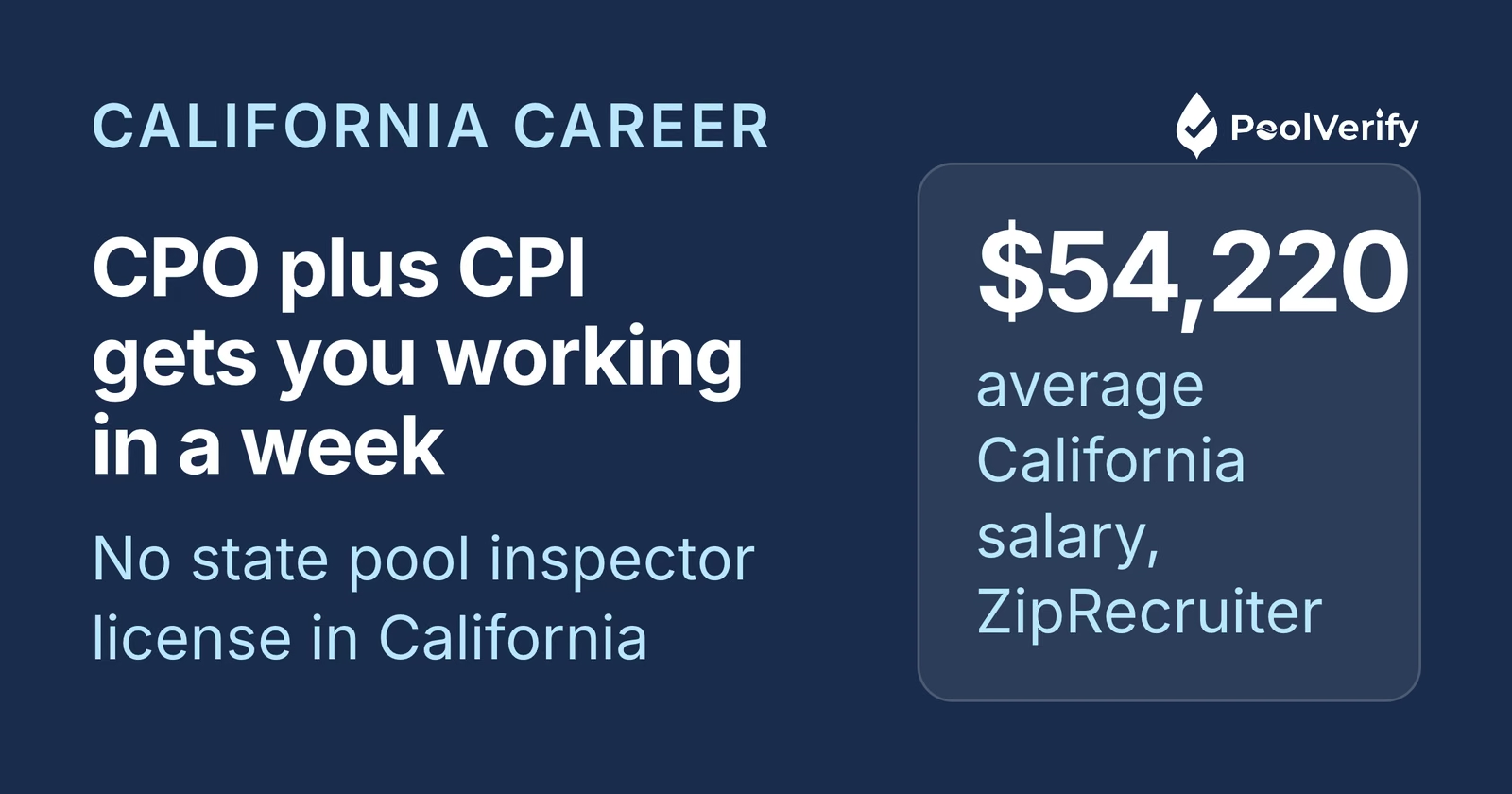
- Average annual salary: $54,220 ($26.07/hour)
- 25th percentile: $38,000/year
- Median (50th percentile): $51,500/year
- 75th percentile: $62,700/year
- 90th percentile (top earners): $90,795/year
Monthly breakdown (based on state average):
- Monthly gross: $4,518
- Weekly gross: $1,042
- Daily gross: $208 (5-day work week)
California Regional Salary Differences
Pool inspector earnings vary significantly across California metros based on cost of living, pool density, and local demand:
| California Metro Area | Average Annual Salary | % Above State Avg | Typical Per Inspection |
|---|
| San Francisco Bay Area | $67,250 | +24.0% | $250-$400 |
| Berkeley | $67,250 | +24.1% | $275-$425 |
| Palo Alto | $65,800 | +21.4% | $275-$400 |
| Los Angeles County | $57,900 | +6.8% | $200-$325 |
| Orange County | $56,400 | +4.0% | $200-$300 |
| San Diego County | $54,800 | +1.1% | $175-$275 |
| Sacramento Metro | $52,300 | -3.5% | $150-$250 |
| Fresno/Central Valley | $48,900 | -9.8% | $150-$225 |
Why Bay Area pays most:
- Highest cost of living requires higher wages
- High property values support premium pricing
- Strict local ordinances require frequent inspections
- Affluent clientele willing to pay for quality service
Regional considerations:
- Southern California (LA, Orange County, San Diego): High pool density, year-round demand, competitive market
- Bay Area: Highest fees but higher cost of living, fewer pools than SoCal
- Sacramento/Central Valley: Lower fees but also lower costs, growing markets
- Inland Empire (Riverside, San Bernardino): Fastest-growing pool markets, moderate pricing
For complete salary analysis including factors affecting income and strategies to maximize earnings, see our Pool Inspector Salary Guide.
Per-Inspection Earnings by Type
| Inspection Type | Price Range | Time Required | Hourly Rate |
|---|
| Basic residential | $125 - $200 | 45-60 min | $125-$200/hr |
| Comprehensive residential | $175 - $300 | 60-90 min | $117-$200/hr |
| Pool + spa combo | $200 - $350 | 75-120 min | $100-$233/hr |
| Commercial pool | $300 - $500+ | 90-180 min | $100-$333/hr |
| California compliance (BPC §7195) | $150 - $300 | 45-75 min | $120-$240/hr |
| Expert witness consultation | $150 - $300/hr | Varies | $150-$300/hr |
| Re-inspection | $75 - $150 | 30-45 min | $100-$200/hr |
Annual Income Scenarios
Your annual income depends on inspection volume, pricing strategy, and business model:
Part-Time Inspector (5-10 inspections/week):
- Weekly inspections: 5-10
- Annual inspections: 250-500
- Average fee: $150
- Annual gross income: $37,500 - $75,000
- Best for: Side income, gradual business building, semi-retirement
Full-Time Solo Inspector (10-15 inspections/week):
- Weekly inspections: 10-15
- Annual inspections: 500-750
- Average fee: $175
- Annual gross income: $87,500 - $131,250
- Best for: Independent business owners, established referral networks
High-Volume Operation (15-20+ inspections/week):
- Weekly inspections: 15-20+
- Annual inspections: 750-1,000+
- Average fee: $200
- Annual gross income: $150,000 - $200,000+
- Best for: Multiple inspectors, efficient systems, strong marketing
Income reality check: Gross income doesn't equal take-home pay. Independent inspectors typically spend 30-40% on business expenses (vehicle, insurance, marketing, software, continuing education).
Net income calculation example:
- Gross annual revenue: $100,000
- Business expenses (35%): -$35,000
- Self-employment tax (15.3%): -$9,945
- Income tax (20% effective): -$11,011
- Net take-home: $44,044
However, self-employed inspectors also benefit from tax deductions (home office, vehicle depreciation, equipment) that reduce taxable income significantly.
Employee vs. Independent Inspector
The choice between employee and independent contractor dramatically affects your earning potential and lifestyle:
Employee Pool Inspector:
Compensation:
- Annual salary: $40,000 - $65,000
- Hourly wage: $20 - $31/hour
- Benefits: Health insurance, paid time off, retirement contributions
- Bonuses: Performance bonuses (5-15% of salary at some companies)
Advantages:
- Predictable bi-weekly paycheck
- Employer-provided health insurance (worth $8,000-$12,000/year)
- Paid vacation and sick leave
- No business overhead or startup costs
- Training and continuing education provided
- Limited liability (company assumes risk)
- Regular hours, no marketing required
Disadvantages:
- Limited earning ceiling ($45,000-$65,000 maximum for most positions)
- No control over pricing or schedule
- Must follow company policies
- No business equity accumulation
- Limited advancement opportunities
Best for: Entry-level inspectors learning the business, those valuing stability over earning potential, individuals preferring structured employment
Independent Pool Inspector:
Income structure:
- Per inspection: $150-$400 depending on market
- Annual volume: 250-1,000 inspections
- Gross revenue: $50,000-$200,000+
- Net income (after expenses): 60-75% of gross
Advantages:
- Unlimited earning potential (top inspectors earn $150,000+)
- Complete control over pricing and services
- Flexible schedule and work-life balance
- Build business equity and asset value
- Tax advantages (deduct business expenses)
- Choose clients and service areas
- Scale by hiring additional inspectors
Disadvantages:
- Variable income (seasonal fluctuations common)
- Must pay own insurance and benefits
- Responsible for marketing and client acquisition
- Business overhead costs (30-40% of revenue)
- Personal liability exposure
- No paid time off (not working = not earning)
- Self-employment tax (15.3% in addition to income tax)
Best for: Entrepreneurial individuals comfortable with risk, experienced inspectors with industry connections, those seeking maximum earning potential
Hybrid approach: Many inspectors start part-time while employed elsewhere, building clientele before transitioning to full-time independence. This reduces financial risk while developing skills and referral networks.
Factors That Increase Your Income
1. Location (40-60% impact)
- High-pool-density areas = more demand
- Affluent neighborhoods = premium pricing
- California, Florida, Arizona, Texas = highest earning potential
2. Experience (35-50% impact)
- 0-2 years: $35,000-$45,000
- 3-5 years: $50,000-$75,000
- 6-10 years: $75,000-$100,000
- 10+ years: $90,000-$150,000+
3. Certifications (15-25% impact)
- CPO certification: Industry credibility
- CPI certification: 15-22% fee premium
- State home inspector license: Bundled service opportunities
- C-53 Pool Contractor license (CA): Maximum credibility
4. Technology efficiency (30-50% impact on effective hourly rate)
- Paper/clipboard: 3-4 inspections per day
- Basic digital: 4-5 inspections per day
- PoolVerify software: 6-8 inspections per day = 50-100% more capacity
5. Marketing effectiveness (20-40% impact)
- Strong realtor relationships: Consistent high-volume referrals
- Google Business Profile optimization: Organic leads
- Professional website: Higher conversion rates
- Customer referral program: Low-cost quality leads
6. Specializations (25-75% income increase)
- Commercial pools: 40-60% premium over residential
- Expert witness work: $150-$300/hour vs per-inspection pricing
- California compliance specialization: High-volume steady demand
- Pre-construction consulting: $400-$1,200 per consultation
Starting Your Pool Inspection Business
Startup Costs
| Item | Cost Range |
|---|
| Certification/training | $500 - $2,000 |
| Licensing fees | $200 - $1,000 |
| Insurance | $1,000 - $2,500/year |
| Equipment | $500 - $2,000 |
| Marketing | $500 - $2,000 |
| Software/tools | $50 - $200/month |
| Total startup | $3,000 - $10,000 |
Business Setup Checklist
- Legal structure
- LLC or sole proprietorship
- Business registration
- Tax ID (EIN)
- Insurance
- General liability ($1M+ recommended)
- Errors & omissions
- Auto insurance (business use)
- Professional setup
- Business bank account
- Accounting system
- Contract templates
- Report templates
- Marketing foundation
- Website
- Google Business profile
- Social media presence
- Business cards
Basic Inspection Kit
| Tool | Purpose | Cost |
|---|
| Water test kit | Chemistry testing | $50-150 |
| Tape measure | Measurements | $20-30 |
| Flashlight | Equipment, drains | $30-50 |
| Camera | Documentation | Phone or $200-400 |
| Clipboard/tablet | Note-taking | $10-500 |
| PPE | Safety | $50-100 |
| Tool | Purpose | Cost |
|---|
| Digital inspection software | Reports, efficiency | $30-100/month |
| Moisture meter | Leak detection | $50-200 |
| Thermal camera | Equipment issues | $200-500 |
| Underwater camera | Structure inspection | $100-300 |
Recommended Software
| Function | Options |
|---|
| Inspection reports | PoolVerify, Spectora, HomeGauge |
| Scheduling | Calendly, Acuity |
| Accounting | QuickBooks, FreshBooks |
| CRM | HubSpot, Jobber |
Detailed Career Progression Timeline
Understanding the typical career trajectory helps set realistic expectations and plan your path from beginner to expert pool inspector.
Year 1: Foundation and Launch (Entry Level)
Months 1-3: Training and Setup
Certifications:
- Complete CPO certification (Week 1-2)
- Study for CPI certification (Weeks 3-6)
- Complete CPI certification (Week 7-8)
- Total investment: $650-$1,000
Business formation:
- Register business name (LLC recommended)
- Obtain EIN from IRS
- Purchase general liability insurance ($1,000-$2,000/year)
- Open business bank account
- Set up accounting system (QuickBooks or similar)
Equipment and tools:
- Water testing kit ($200-$500)
- Measurement tools ($100-$200)
- Digital inspection software (PoolVerify recommended: $39-$79/month)
- Camera/smartphone
- Safety equipment
- Professional attire, business cards
- Total equipment: $1,000-$2,000
Marketing foundation:
- Build basic website ($500-$2,000 or DIY)
- Create Google Business Profile (free)
- Design logo and business cards ($100-$300)
- Print marketing materials
Total Month 1-3 investment: $3,500-$8,000
Months 4-6: First Inspections and Learning
Activity focus:
- Conduct first 10-20 paid inspections
- Shadow experienced inspector (if possible)
- Learn California BPC §7195 requirements thoroughly
- Practice report writing and client communication
- Refine inspection process and timing
Income expectations:
- 2-5 inspections per month
- Average fee: $100-$150 (competitive entry pricing)
- Monthly income: $200-$750
- Quarter gross: $600-$2,250
Key challenges:
- Building confidence
- Managing inspection time (often slower at first)
- Finding first clients
- Learning to identify subtle defects
Success milestones:
- Complete first paying inspection
- Receive first 5-star review
- Generate first referral from satisfied client
- Conduct inspection efficiently in under 60 minutes
Months 7-12: Building Momentum
Activity focus:
- Increase inspection volume through marketing
- Build relationships with 5-10 real estate agents
- Join local chamber of commerce or realtor associations
- Request reviews from every satisfied client
- Optimize Google Business Profile with photos and updates
Income progression:
- Months 7-9: 8-15 inspections/month
- Months 10-12: 15-25 inspections/month
- Average fee: $125-$175
- Monthly income: $1,000-$4,375
- Year 1 total gross: $12,000-$35,000
Key developments:
- First repeat client
- First realtor referral partnership
- Comfortable with inspection process
- Building reputation through reviews
Common mistakes to avoid:
- Pricing too low (devalues service)
- Not requesting reviews consistently
- Skipping insurance to save money
- Using paper/clipboard instead of digital tools
- Failing to follow up with leads promptly
Year 1 summary:
- Gross revenue: $12,000-$35,000
- Net income (after 40% expenses): $7,200-$21,000
- Inspections completed: 100-250
- Time investment: 30-40 hours/week
- Status: Entry-level inspector, building foundation
Years 2-3: Growth and Establishment (Mid-Level)
Focus: Scaling volume, raising prices, building systems
Year 2 progression:
Months 13-18:
- Increase to 25-40 inspections/month
- Raise prices 10-15% for new clients
- Develop 10-15 strong realtor relationships
- Implement efficient scheduling systems
- Leverage PoolVerify to increase daily capacity
Average monthly metrics:
- 30-35 inspections/month
- Average fee: $150-$200
- Monthly gross: $4,500-$7,000
- Half-year gross: $27,000-$42,000
Months 19-24:
- Peak season: 40-50 inspections/month
- Off-season: 20-30 inspections/month
- Consistent referral flow established
- Raise prices to market rate
- Add specialized services (commercial, re-inspections)
Average monthly metrics:
- 35-40 inspections/month
- Average fee: $175-$225
- Monthly gross: $6,125-$9,000
- Year 2 total gross: $65,000-$95,000
Year 2 developments:
- Established reputation in local market
- Consistent 4-5 star review average
- Referrals generate 50%+ of business
- Operating at full capacity during peak season
- Profitable business with predictable income
Year 3 progression:
Focus: Optimization and specialization
Key activities:
- Raise prices to premium tier ($200-$300/inspection)
- Specialize in high-value services (commercial, expert witness)
- Consider hiring first subcontractor or assistant
- Expand geographic service area
- Develop commercial client accounts
Year 3 metrics:
- 40-50 inspections/month average
- Average fee: $200-$250
- Monthly gross: $8,000-$12,500
- Year 3 total gross: $96,000-$150,000
- Net income (after expenses): $58,000-$90,000
Professional development:
- Obtain AFO (Aquatic Facility Operator) for commercial pools
- Attend industry conferences
- Join Pool & Hot Tub Alliance
- Consider becoming CPO instructor (teach courses)
Year 3 status: Established inspector, strong reputation, profitable business, operating at or near personal capacity ceiling
Years 4-5: Mastery and Scaling (Experienced Level)
Focus: Maximum personal productivity or scaling through hiring
Two paths emerge at this stage:
Path A: Solo Inspector Optimization
Continue as solo inspector, maximizing efficiency and income:
Strategies:
- Premium pricing ($250-$400/inspection)
- Cherry-pick highest-value clients
- Work 3-4 days/week for work-life balance
- Focus on commercial pools and expert witness work
- Develop passive income (online courses, referral commissions)
Year 4-5 metrics:
- 30-40 inspections/month (selective client base)
- Average fee: $275-$350
- Monthly gross: $8,250-$14,000
- Annual gross: $99,000-$168,000
- Net income: $59,000-$101,000
- Time investment: 25-30 hours/week
Advantages:
- Maximum income per hour worked
- Flexibility and work-life balance
- Low stress, no employee management
- Build expertise as industry authority
Limitations:
- Income ceiling (can't scale beyond personal capacity)
- Still trading time for money
- No business equity beyond client list
Path B: Scale to Multi-Inspector Business
Hire additional inspectors to scale beyond personal capacity:
Year 4: Hire first inspector
Implementation:
- Hire experienced inspector or train entry-level person
- Pay $20-$30/hour OR 50-60% of inspection fee
- You continue conducting 30 inspections/month personally
- Employee conducts 15-20 inspections/month initially
Year 4 metrics:
- Your inspections: 30/month × $225 = $6,750
- Employee inspections: 18/month × $175 = $3,150
- Your profit (40% margin): $1,260
- Monthly gross: $9,900
- Annual gross: $118,800
- Your net income (after all expenses and employee cost): $60,000-$70,000
Year 5: Hire second inspector, reduce personal inspection volume
Business model shift:
- You: 20 inspections/month (focusing on complex jobs)
- Inspector 1: 30 inspections/month (experienced now)
- Inspector 2: 15 inspections/month (new hire)
- Total: 65 inspections/month
Year 5 metrics:
- Your inspections: 20/month × $250 = $5,000
- Inspector 1: 30/month × $200 = $6,000 (profit: $2,400)
- Inspector 2: 15/month × $175 = $2,625 (profit: $1,050)
- Monthly gross: $13,625
- Annual gross: $163,500
- Your net income: $70,000-$85,000 (including your inspection income + business profit)
- Time investment: 20-25 hours/week inspection + 10-15 hours/week management
Benefits of scaling:
- Business equity (saleable asset worth $80,000-$150,000)
- Income continues if you're sick or on vacation
- Can eventually transition to pure management role
- Build team to eventually replace yourself
Challenges:
- Employee management and training
- Quality control (your reputation depends on employee performance)
- Higher insurance costs
- More complex business operations and overhead
Years 6-10: Expert and Authority (Advanced Level)
Characteristics:
- 5+ years experience, industry expert status
- Premium pricing power ($300-$500+ per inspection)
- Selective about clients and projects
- Multiple revenue streams
- Known in local market
Income potential:
- Solo inspector: $100,000-$150,000/year working 25-30 hours/week
- Business owner (2-5 inspectors): $120,000-$250,000/year (including owner compensation + profit)
Additional revenue streams:
- Expert witness testimony: $150-$300/hour, 5-10 cases/year = $15,000-$30,000
- CPO/CPI instructor: $500-$2,000 per class, 10-20 classes/year = $10,000-$40,000
- Consulting for pool builders: $150-$250/hour
- Online course creation: $5,000-$25,000 one-time or passive
- Equipment/service referral commissions: $5,000-$15,000/year
Professional status:
- Industry speaker at conferences
- Contribute articles to trade publications
- Mentor new inspectors
- Serve on industry committees or boards
Career options at this stage:
- Continue as inspector (lucrative, flexible lifestyle)
- Transition to pool company management ($80,000-$120,000 salaries)
- Municipal health department inspector ($55,000-$75,000 + full benefits)
- Pool industry sales/manufacturer representative ($70,000-$150,000 + commission)
- Open pool inspection franchise or training company
Years 10+: Veteran Status and Legacy
Veteran pool inspectors (10-20+ years experience) typically:
Continue inspection work:
- Highly selective client base
- Premium pricing ($350-$600 per inspection)
- Focus only on complex commercial or expert witness work
- Semi-retirement schedule (10-20 inspections/month)
- Annual income: $80,000-$150,000 for 15-20 hours/week
Business ownership:
- Own 5-10+ inspector operation
- Generate $300,000-$1,000,000+ annual revenue
- Owner compensation: $100,000-$250,000+
- Business value: $150,000-$500,000+ (sellable asset)
Industry leadership:
- Board positions in Pool & Hot Tub Alliance
- Develop certification courses
- Consulting for government agencies
- Expert witness for high-profile legal cases
Retirement/exit options:
- Sell inspection business to employee or competitor
- Transition to part-time consulting/expert witness
- Franchise model (license your systems/brand)
- Full retirement with business sale proceeds
Timeline Summary: Income Progression
| Years | Experience Level | Annual Gross | Net Income | Inspections/Year | Avg Fee | Status |
|---|
| 1 | Entry-level | $12K-$35K | $7K-$21K | 100-250 | $100-$150 | Learning, building |
| 2 | Developing | $65K-$95K | $39K-$57K | 360-500 | $150-$200 | Growing, establishing |
| 3 | Established | $96K-$150K | $58K-$90K | 480-650 | $200-$250 | Profitable, reputation |
| 4-5 | Experienced | $100K-$170K | $60K-$100K | 400-600 | $250-$350 | Optimized or scaling |
| 6-10 | Expert | $120K-$250K | $70K-$150K | Varies | $300-$500 | Authority, diversified |
| 10+ | Veteran | $100K-$250K+ | $60K-$150K+ | Selective | $350-$600 | Industry leader |
Key insight: Income doesn't necessarily increase linearly with years. Strategic decisions around pricing, scaling, and specialization have bigger impact than experience alone.
Success Stories and Case Studies
Real-world examples of pool inspectors who built successful careers show the diverse paths and outcomes possible in this field.
Success Story #1: From Pool Service Tech to Six-Figure Inspector
Background: Miguel, 34, worked as pool service technician for 6 years earning $42,000/year
Path:
- Year 1: Obtained CPO and CPI certification while still employed, conducted 5-10 inspections/month on weekends as side business
- Year 2: Quit pool service job, went full-time as independent inspector. Struggled first 6 months with income variability, built realtor network
- Year 3: Established relationships with 20+ realtors, conducting 40-50 inspections/month at $175 average
- Year 5: Raised prices to $225-$275, added commercial pool specialization, hired first assistant
- Year 7 (current): Personally conducts 30 inspections/month, one full-time inspector employee conducts 25/month
Current status (Year 7):
- Annual gross revenue: $185,000
- Personal net income: $95,000
- Work schedule: 30 hours/week
- Business value: ~$120,000 (saleable asset)
Key success factors:
- Leveraged existing pool knowledge from service background
- Built strong realtor relationships (50% of business from referrals)
- Invested in PoolVerify software early (Year 2) - "Increased capacity 40%, paid for itself in first month"
- Specialized in commercial pools (hotels, HOAs) for premium fees
- Hired strategically to scale beyond personal capacity
Miguel's advice: "Don't compete on price. I started at $125 to build clientele, but raised prices every year. Realtors don't refer the cheapest inspector—they refer the most reliable one. Same-day reports using PoolVerify made me the go-to guy in my market."
Success Story #2: Home Inspector Adds Pool Specialty
Background: Jennifer, 41, established home inspector for 8 years, earning $85,000/year, wanted to differentiate and increase per-inspection revenue
Path:
- Month 1: Completed InterNACHI Pool & Spa Inspector online course (already InterNACHI member)
- Months 2-4: Conducted 15 practice pool inspections at discounted rate to build confidence
- Months 5-12: Marketed "complete property inspection including pool" to realtors
- Year 2: Added CPO certification for credibility, focused on higher-end properties with pools
Current status (Year 3 of offering pool inspections):
- Added pool component to 40% of home inspections (properties with pools)
- Charge additional $150-$200 for pool inspection add-on
- Annual pool inspection revenue: $35,000 (on top of home inspection base)
- Total annual income: $120,000 (up from $85,000 pre-pool specialty)
- 41% income increase from adding pool inspections
Key success factors:
- Leveraged existing home inspection business and realtor relationships
- Bundled pool with home inspection (convenience sells)
- Targeted affluent neighborhoods with high pool ownership
- Integrated pool section seamlessly into home inspection reports
Jennifer's advice: "Pool inspections were the easiest way to increase my income per inspection. I already had the clients—I just expanded my service. Properties with pools now net me $650-$850 total vs. $450-$500 for home-only. Took one week of training and paid for itself in the first month."
Success Story #3: Career Pivot from Corporate to Pool Inspector
Background: David, 52, corporate sales manager earning $95,000 but burned out, wanted outdoor work and entrepreneurial freedom
Path:
- Months 1-2: Researched pool inspection career, completed CPO and CPI certifications
- Months 3-6: Continued corporate job while conducting 5-10 weekend inspections, testing viability
- Month 7: Quit corporate job with 6 months savings, went full-time inspector
- Year 1: Lean year, $45,000 gross (comparable to salary after expenses), questioned decision
- Year 2: Breakthrough with realtor partnerships, 45 inspections/month, $95,000 gross
- Year 4 (current): Established business, selective 35-40 inspections/month at $250-$300 premium pricing
Current status (Year 4):
- Annual gross: $130,000
- Net income: $78,000
- Work schedule: 25 hours/week, no weekends
- Lifestyle: Surfing 2-3 mornings/week, home by 3pm daily
Key success factors:
- Sales background translated perfectly to client communication and marketing
- Financial cushion allowed surviving tough Year 1
- Premium positioning from day 1 (refused to be "cheapest option")
- Work-life balance prioritized over maximum income
- Created online pool safety course generating $15,000/year passive income
David's advice: "Best career move I ever made. I make 20% less than corporate salary but work half the time and love what I do. The key was pushing through Year 1 when I questioned everything. Stick with it—the referrals and reputation compound over time. Now I turn down work regularly and still hit my income target by July."
Success Story #4: Young Entrepreneur Builds Multi-Inspector Business
Background: Christina, 26, no pool background, saw opportunity in growing California market
Path:
- Months 1-2: CPO and CPI certification, $8,000 startup investment
- Year 1: Struggled to build credibility due to young age, leveraged social media marketing, completed 200 inspections
- Year 2: Found niche in property management companies (apartment complexes), high-volume contracts
- Year 3: Hired first inspector to handle overflow, continued aggressive marketing
- Year 5: Team of 4 inspectors, Christina does 20% inspections and 80% business management
Current status (Year 5):
- Annual revenue: $425,000
- 4 full-time inspectors conducting 850 inspections/year total
- Christina's owner compensation: $105,000
- Business value: $250,000-$350,000 estimated
Key success factors:
- Overcame youth/experience objection with professionalism and technology
- Found underserved niche (property management) requiring volume inspections
- Built systems and processes from day 1 to support scaling
- Treats business as business (P&L focus, not just "being an inspector")
- Aggressive reinvestment of profits into marketing and hiring
Christina's advice: "Everyone told me I was too young and inexperienced. I proved them wrong with volume and professionalism. Property managers don't care about your age—they care about fast response, accurate reports, and competitive pricing. I built systems using PoolVerify and clear processes so any trained inspector can deliver consistent quality. Now I make six figures and rarely get in the pool myself."
Success Story #5: Semi-Retirement Second Career
Background: Robert, 64, retired pool contractor with C-53 license, looking for lighter work in retirement
Path:
- Already had: 35 years pool industry experience, C-53 license, extensive knowledge
- Added: CPI certification to formalize inspection methodology ($500 investment)
- Year 1 of retirement career: Selective inspection work, 15-20/month, premium pricing
- Year 3 (current): Sought-after expert for complex commercial pools and expert witness work
Current status (Year 3):
- 12-15 inspections/month (selective schedule)
- Average fee: $400-$600 (premium due to expertise)
- Expert witness work: 3-5 cases/year at $250/hour
- Annual income: $85,000
- Work schedule: 15 hours/week, summers off to travel
Key success factors:
- Decades of experience command premium pricing
- C-53 license provides maximum credibility
- Focus on complex jobs others can't handle (commercial, problem properties)
- Expert witness work supplements inspection income
- Perfect semi-retirement lifestyle (income + flexibility)
Robert's advice: "Pool inspection is ideal for experienced pool professionals who want to wind down. Physical demands are way lighter than construction or service work. My expertise lets me charge 2-3x what young inspectors charge, and clients happily pay it for 35 years of knowledge. I work 3 days a week and make more than I need. Perfect retirement gig."
Common Themes Across Success Stories
What successful pool inspectors have in common:
- Invested in professional development - All obtained proper certifications early
- Built referral networks - Realtor and property manager relationships critical
- Used modern tools - Digital inspection software increased capacity and professionalism
- Priced appropriately - Avoided race-to-bottom pricing, focused on value
- Specialized strategically - Found niches (commercial, property management, luxury homes)
- Pushed through Year 1 challenges - First year is hardest, persistence paid off
- Treated it as real business - Marketing, systems, financial management
Lessons learned:
- Year 1 is tough - Almost every success story describes struggling first year
- Realtor relationships are gold - 50-70% of business comes from agent referrals
- Technology matters - Digital tools dramatically increase capacity and income
- Credibility is everything - Reviews, certifications, professionalism drive referrals
- Pricing up is easier than pricing down - Start competitive but not cheap
- Multiple income streams - Diversification (expert witness, training, consulting) increases stability
- Lifestyle design is possible - Many inspectors work 20-30 hours/week by Year 5+
According to industry career guides, pool inspectors earn $46,000-$73,000 annually on average, with specialization and independence offering significant upside potential.
Growing Your Career: Strategies for Long-Term Success
Specialization Opportunities
Moving beyond general residential pool inspections can dramatically increase your income and differentiate your business:
Commercial Pool Inspection (40-60% premium pricing)
- Target: Hotels, gyms, apartment complexes, HOAs, water parks
- Fee range: $300-$800 per inspection
- Requirements: AFO certification, enhanced liability insurance, OSHA knowledge
- Volume potential: Recurring annual inspection contracts
- Income impact: Commercial specialists earn $85,000-$150,000 vs $50,000-$75,000 for residential-only
California Compliance Specialist (BPC §7195)
- Target: Real estate agents, escrow companies, homeowners
- Fee range: $150-$300 per inspection
- Requirements: Deep knowledge of California pool safety laws
- Advantage: Consistent demand (required for property transfers)
- Income impact: Focus on compliance inspections in high-transaction markets (Bay Area, OC, San Diego) generates 30-50% more volume than general inspectors
Expert Witness Services ($150-$300/hour)
- Target: Attorneys handling pool accident cases, construction defect cases
- Fee structure: Hourly rate + retainer (often $2,000-$5,000)
- Requirements: 5+ years experience, strong documentation skills, court testimony training
- Frequency: 2-5 cases per year typical for established experts
- Income impact: $15,000-$50,000 additional annual income from expert witness work
Pre-Construction/Renovation Consulting
- Target: Homeowners planning $20,000+ pool remodels
- Fee range: $400-$1,200 per consultation
- Services: Detailed assessment, contractor recommendations, project oversight
- Income impact: 10-15 consultations/year = $5,000-$18,000 additional revenue
Training and Education
- Become CPO instructor: Teach certification courses for $500-$2,000 per class
- Online course creation: Pool safety for homeowners, CPO exam prep
- Speaking engagements: $500-$3,000 per presentation
- Income impact: $10,000-$40,000 annual passive/semi-passive income
Business Growth Strategies
1. Build Strategic Referral Network
Real estate agents (highest ROI):
- Target top 20% of agents (80% of transactions)
- Provide educational materials on pool compliance requirements
- Offer same-day report delivery (competitive advantage)
- Follow up after every inspection with thank-you
- Annual appreciation events or gifts
- Result: 10-15 strong agent relationships = 150-300 annual referrals
Home inspectors:
- Partner as preferred pool specialist
- Offer revenue share (20-30% referral fee)
- They focus on home, you handle pool
- Result: 3-5 inspector partnerships = 50-100 annual referrals
Pool service companies:
- Refer inspection-only work (they focus on maintenance/repair)
- You refer service/repair work back to them
- Symbiotic relationship (non-competing services)
- Result: 2-3 service company partnerships = 30-60 annual referrals
Insurance agents:
- Position yourself for pre-coverage inspections
- Required for many pool insurance policies
- Commercial pool insurance particularly lucrative
- Result: 2-3 insurance relationships = 20-40 annual inspections
2. Expand Service Offerings
Don't limit yourself to basic pool inspections:
- Add spa/hot tub inspections: Often bundled with pool for $75-$150 additional
- Annual inspection plans: Sell homeowners yearly inspection subscription at $200-$300
- Water quality testing service: Monthly water testing for homeowners at $50-$75/month
- Pool equipment evaluations: Pre-purchase assessment of expensive equipment for $150-$250
- Maintenance plan consulting: Design custom maintenance plan for DIY owners at $200-$400
Multi-service revenue example:
- Basic inspection: $200
- Add spa: +$100
- Water quality report: +$50
- Maintenance plan: +$100
- Total per client: $450 (vs. $200 inspection-only)
3. Scale Operations
When personal capacity is maxed out (40-50 inspections/month), you have two choices: stop growing or scale through hiring.
Hire additional inspectors:
- Employee model: Pay $20-$30/hour or $60-$100 per inspection
- Subcontractor model: Pay 50-60% of inspection fee
- You keep 40-50% margin on their work
- Result: Each inspector can add $30,000-$60,000 annual profit to business
Expand geographic coverage:
- Target adjacent cities/counties
- Create service area "pods" (different inspector per region)
- Result: 50-100% larger addressable market
Develop training programs:
- Train new inspectors using your systems
- Sell training as service to other pool professionals
- Create inspector mentorship program at $500-$2,000/person
- Result: Additional revenue stream + pipeline of potential hires
4. Leverage Technology for Efficiency
Technology directly impacts income by increasing capacity:
Digital inspection software (PoolVerify):
- Saves 30-45 minutes per inspection
- Enables 40-50% more daily inspections
- Professional reports justify premium pricing
- ROI: $39-$79/month generates $15,000-$30,000 additional annual revenue
Automated scheduling (Calendly, Acuity):
- Eliminates phone tag
- Client books directly from website
- Automatic reminders reduce no-shows
- Time savings: 5-8 hours/week
Automated invoicing (QuickBooks, FreshBooks):
- Instant invoices after inspection
- Automated payment reminders
- Faster payment collection
- Cash flow improvement: 20-30% faster payment
Virtual assistants ($5-$15/hour):
- Handle scheduling, phone calls, email
- Frees you for high-value inspection work
- Time savings: 10-15 hours/week = capacity for 10-15 more monthly inspections
Professional Development Path
Years 1-2: Foundation certifications
- CPO (completed)
- CPI (completed)
- Join Pool & Hot Tub Alliance ($200-$400/year)
- Attend local industry meetings
Years 3-5: Specialization and advanced credentials
- AFO (Aquatic Facility Operator) if pursuing commercial work
- Expert witness training course
- Advanced water chemistry certification
- State home inspector license (if beneficial in your market)
Years 6-10: Industry leadership and authority
- Become CPO/CPI instructor
- Speak at industry conferences
- Contribute articles to pool trade publications
- Serve on industry committees or boards
- Develop specialized expertise (commercial, legal, consulting)
Years 10+: Legacy and passive income
- Write book on pool inspection
- Create online courses for continuing education
- Franchise your inspection business model
- Consulting for equipment manufacturers
- Expert witness as primary income source
Ongoing (all stages):
- Attend annual Pool & Spa Show
- Complete 8-12 hours continuing education annually
- Stay current on code changes and regulations
- Network with other inspectors (non-competing markets)
- Read industry publications (Pool & Spa News, Aquatics International)
Final Thoughts: Is Pool Inspection Right for You?
After reading this comprehensive 3,000+ word guide, you should have a clear understanding of what becoming a pool inspector entails—from initial certification through building a six-figure business.
Pool Inspection Career: The Verdict
Pool inspection is an excellent career choice if you:
- Want low barrier to entry (1 week training vs. 4-year degree)
- Prefer outdoor work over office environment
- Are entrepreneurial and comfortable with self-employment
- Live in high-pool-density state (California, Florida, Texas, Arizona)
- Value work-life balance and flexible scheduling
- Want to make a difference (preventing drowning incidents)
- Are comfortable with variable income initially
- Enjoy physical work that's not highly strenuous
Pool inspection may not be ideal if you:
- Need guaranteed paycheck and corporate benefits
- Are uncomfortable with sales/marketing
- Live in low-pool-density area
- Expect six-figure income immediately without effort
- Dislike outdoor work in heat
- Need highly structured corporate environment
- Are risk-averse about self-employment
Based on our analysis of successful inspectors and industry data:
Year 1: Get certified (CPO + CPI), invest $3,500-$8,000 in business setup, expect $12,000-$35,000 gross income while building reputation
Years 2-3: Build realtor relationships, establish reputation through reviews, raise prices, earn $65,000-$150,000 gross
Years 4-5: Choose path—optimize as solo inspector ($100K-$170K) or scale by hiring ($120K-$250K including business profit)
Years 6-10: Diversify with expert witness work, training, consulting; potential $120K-$250K+ with multiple revenue streams
Keys to success:
- Invest in professional inspection software immediately (PoolVerify recommended)
- Build 10-20 strong realtor relationships (50-70% of your business)
- Price appropriately—compete on quality, not price
- Deliver same-day reports (sets you apart)
- Request reviews from every satisfied client
- Specialize strategically (commercial, compliance, expert witness)
- Push through challenging Year 1
Regional Strategy
Best California markets for new inspectors:
- Inland Empire: High growth, moderate fees, high volume potential
- Sacramento Metro: Growing market, less saturated, affordable
- Central Valley: Lowest competition, high volume needed
Best markets for premium pricing:
- San Francisco Bay Area: $250-$425 per inspection
- Orange County: $200-$325 per inspection
- San Diego coastal: $200-$300 per inspection
Investment Required
Startup costs: $3,500-$8,000
- Certifications (CPO + CPI): $650-$1,000
- Equipment and tools: $1,000-$2,000
- Insurance (first year): $1,000-$2,000
- Business formation: $200-$500
- Website and marketing: $500-$2,000
- Software (PoolVerify): $39-$79/month
Time to profitability: 6-12 months (earlier if part-time while employed)
Return on investment: Many inspectors recoup entire startup investment in first 20-30 inspections (Month 3-6)
Getting Started Today
The path to becoming a pool inspector is achievable with dedication and proper preparation:
Your 90-Day Launch Plan
Week 1-2: Certifications
- ✅ Enroll in CPO course ($250-$400)
- ✅ Complete 2-day CPO training and pass exam
- ✅ Enroll in CPI course ($400-$600)
- ✅ Complete 2-3 day CPI training and pass exam
- Investment: $650-$1,000
Week 3-4: Business Formation
- ✅ Register business (LLC recommended)
- ✅ Obtain EIN from IRS
- ✅ Open business bank account
- ✅ Purchase general liability insurance ($1,000-$2,000/year)
- ✅ Set up accounting system (QuickBooks)
- Investment: $1,200-$2,500
Week 5-6: Tools and Technology
- ✅ Purchase inspection equipment (water test kit, tape measure, flashlight, etc.)
- ✅ Sign up for PoolVerify inspection software (14-day free trial, then $39-$79/month)
- ✅ Prepare smartphone/tablet for field use
- Investment: $1,000-$2,000
Week 7-8: Marketing Foundation
- ✅ Build basic website or hire web designer
- ✅ Create Google Business Profile (free)
- ✅ Design business cards and marketing materials
- ✅ Create social media business pages
- ✅ Study California BPC §7195 requirements thoroughly
- Investment: $500-$2,000
Week 9-10: Networking and First Clients
- ✅ Introduce yourself to 10-15 local real estate agents
- ✅ Offer friends/family discounted inspections for practice and reviews
- ✅ Post service on Yelp, Angie's List, NextDoor
- ✅ Join local chamber of commerce
- Investment: $100-$300
Week 11-12: Launch
- ✅ Conduct first 5-10 paid inspections
- ✅ Request reviews from every client
- ✅ Refine inspection process and timing
- ✅ Follow up with real estate agents
- Expected revenue: $500-$1,500
Day 91: You're a pool inspector!
Total 90-day investment: $3,500-$8,000 (lower if you DIY website and already have tools)
Take the Next Step
Ready to streamline your pool inspection business? PoolVerify provides the digital tools you need to conduct professional inspections, generate California-compliant reports, and grow your business faster.
Why Pool Inspectors Choose PoolVerify
✅ California BPC §7195 compliant checklists - Pre-loaded with all seven safety features
✅ Generate PDF reports in 60 seconds - On-site report delivery impresses clients
✅ Conduct 40-50% more inspections - Save 30-45 minutes per inspection
✅ Mobile-first design - Complete entire inspection on smartphone
✅ Works offline - No internet required during inspection
✅ Professional branded reports - Your logo on every report
✅ Affordable pricing - $39-$79/month flat rate, no per-inspection fees
14-day free trial, no credit card required
Start Your Free Trial →
Additional Resources
Continue your pool inspector education with these guides:
A career in pool inspection offers the opportunity to run your own business, work outdoors, set your own schedule, and make a real difference in community safety by preventing drowning incidents. With proper training, modern tools, and dedication to building relationships, pool inspectors can build rewarding careers earning $50,000-$150,000+ annually while enjoying the lifestyle benefits of entrepreneurship.
The pool inspection opportunity is real. The only question is: Are you ready to dive in?
Sources and Further Reading