PoolVerify
FeaturesPricingResourcesCompanyLoginStart Free Trial
  1. Home
  2. Resources
  3. Self Closing Pool Gate: Requirements, Installation & Best Products [2026]
Compliance-safety

Self Closing Pool Gate: Requirements, Installation & Best Products [2026]

Complete guide to self-closing pool gates: California requirements, installation methods, product comparisons, and compliance testing. Learn about spring-loaded, hydraulic, and TruClose systems.

Self-closing pool gate with compliant mechanism and installation details
PoolVerify Team
January 31, 2026
14 min

Self-closing pool gates are a mandatory safety feature required by California law to prevent unsupervised pool access and drowning accidents. Under California Health and Safety Code §115922, all swimming pool barrier gates must be self-closing (automatically close from any position) and self-latching (automatically engage the latch).

If you're installing a new pool, replacing an old gate, or ensuring compliance for a property sale, understanding self-closing gate requirements and mechanisms is essential. This comprehensive guide covers California regulations, installation methods, product comparisons, and testing procedures.

What is a Self-Closing Pool Gate?

A self-closing pool gate is equipped with a mechanical device that automatically closes the gate from any open position without requiring human intervention. The mechanism uses springs, hydraulics, tension, gravity, or magnetic force to pull the gate shut after being opened.

Key Characteristics

Automatic Closure: The gate must close completely from any open position (California requires closure from 12 inches away from the gate post).

No Manual Intervention: Once released, the gate closes without needing to be pushed or pulled shut.

Consistent Performance: The mechanism must work reliably in all weather conditions and after repeated use.

Adjustable Tension: Most quality systems allow you to adjust the closing force to ensure proper operation with your specific gate weight and hinge configuration.

Self-Closing vs. Self-Latching

Combined diagram of pool gate with both self-closing and self-latching mechanisms

Combined diagram of pool gate with both self-closing and self-latching mechanisms

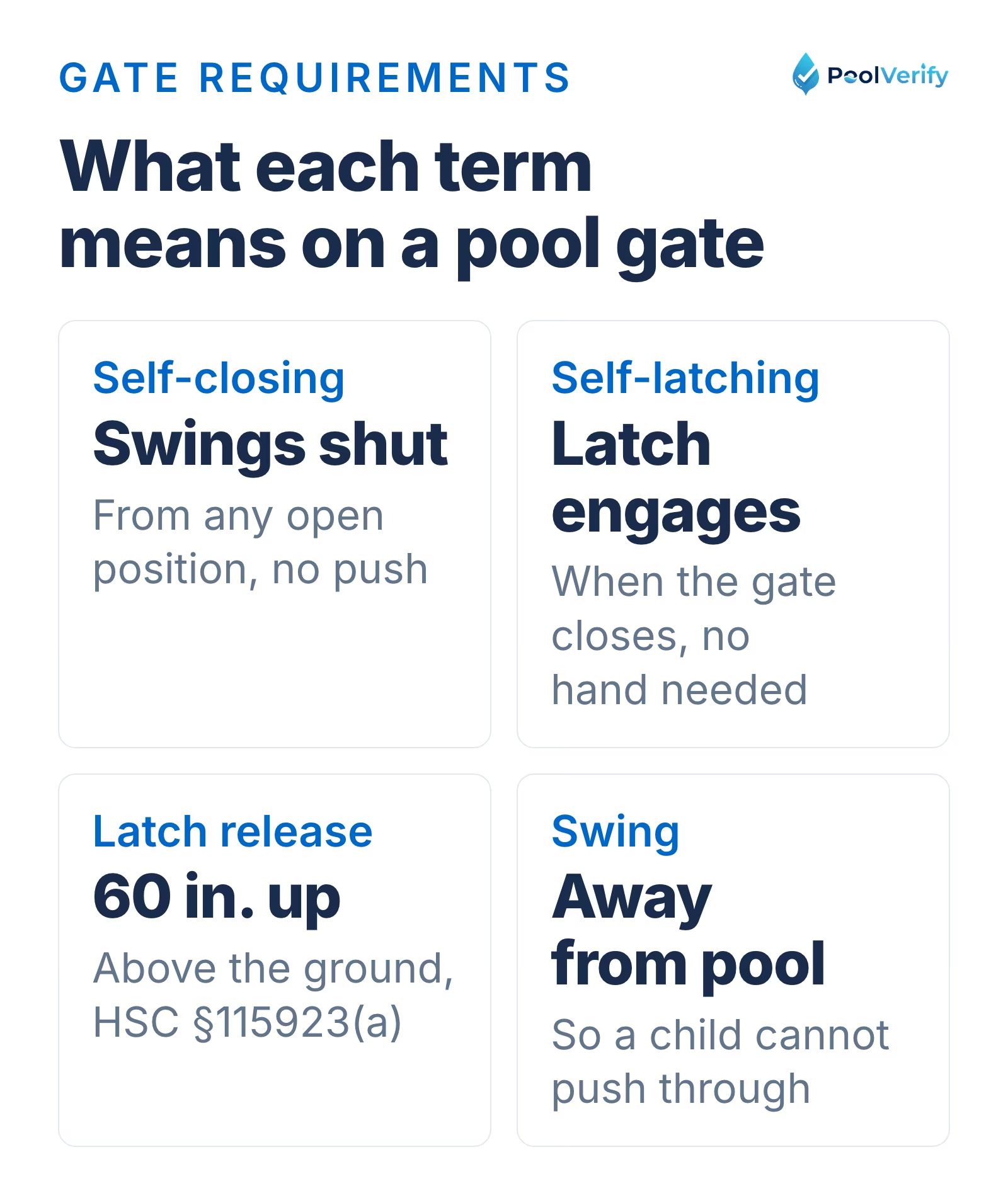
These terms are often confused, but they describe different required features:

  • Self-Closing: The gate automatically swings shut from any open position
  • Self-Latching: The latch automatically engages when the gate closes (no manual locking required)

California requires BOTH features on all pool barrier gates. A gate that closes but doesn't automatically latch does not meet compliance standards.

California Self-Closing Gate Requirements

California has strict requirements for pool barrier gates under the Swimming Pool Safety Act (HSC §115922). Non-compliance can result in failed inspections during property transfers (required under BPC §7195) and liability in the event of accidents.

Legal Requirements (HSC §115922)

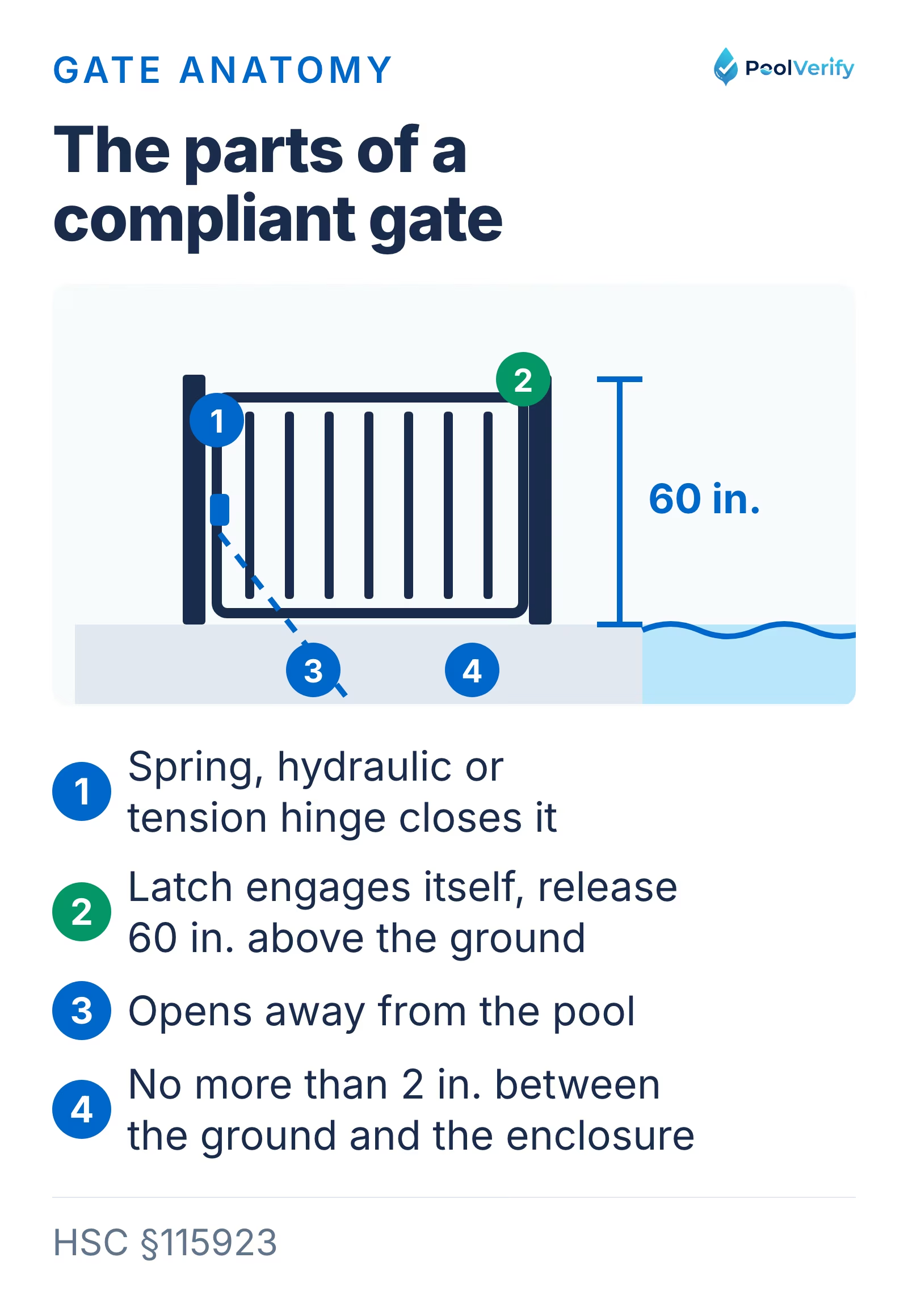
Automatic Closure: Gates must be self-closing and automatically return to the closed position from any open position.

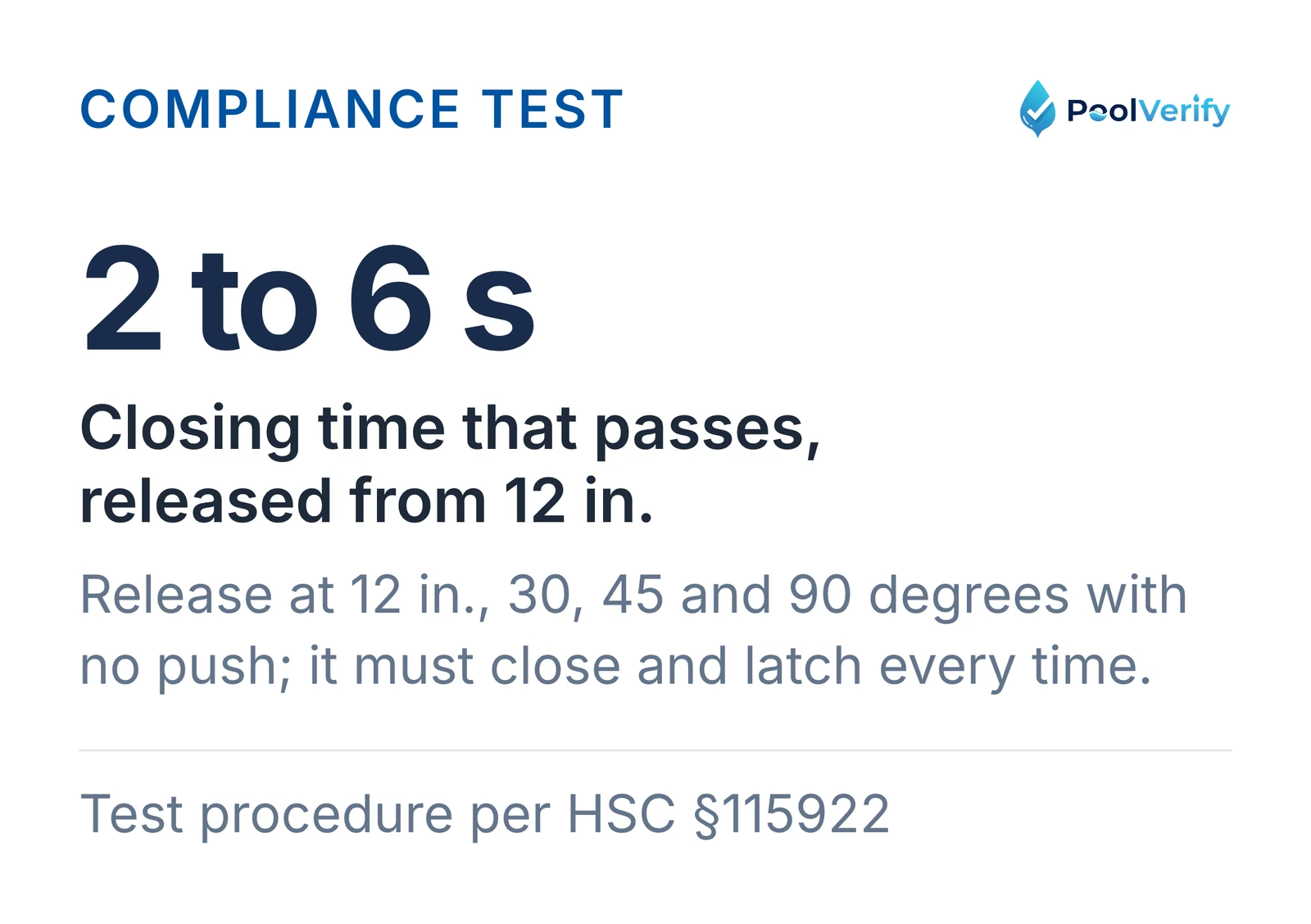
Release Position: The gate must close when opened and released from a position of 12 inches or less from the gate post.

Self-Latching: The gate must be self-latching, with the latch automatically engaging when the gate closes.

Latch Height: The release mechanism for the latch must be at least 54 inches above the bottom of the gate (measured on the side facing away from the pool).

Opening Direction: Gates must open away from the pool (outward-opening) to prevent children from pushing their way in.

Gap Spacing: The gate and barrier must have no gap greater than 1/2 inch at the bottom when closed.

When Self-Closing Gates Are Required

Self-closing and self-latching gates are required for:

✅ All residential swimming pools with water depth exceeding 18 inches

✅ Spas and hot tubs that cannot be covered with a safety cover

✅ Pool barriers that include a gate as part of the enclosure

✅ Property transfers in California (BPC §7195 requires compliance inspections before sale or lease)

Penalties for Non-Compliance

Non-compliant pool gates can result in:

  • Failed property transfer inspections (blocking sales or leases)
  • Municipal citations and fines ($100-500 per violation)
  • Homeowner liability in the event of drowning or injury
  • Insurance claim denials if non-compliance contributed to an accident

Learn more about California pool gate requirements including latch height, gap spacing, and opening direction standards.

Types of Self-Closing Gate Mechanisms

Comparison of different types of self-closing gate mechanisms and their features

Comparison of different types of self-closing gate mechanisms and their features

Technical diagram of self-closing pool gate mechanism showing all components

Technical diagram of self-closing pool gate mechanism showing all components

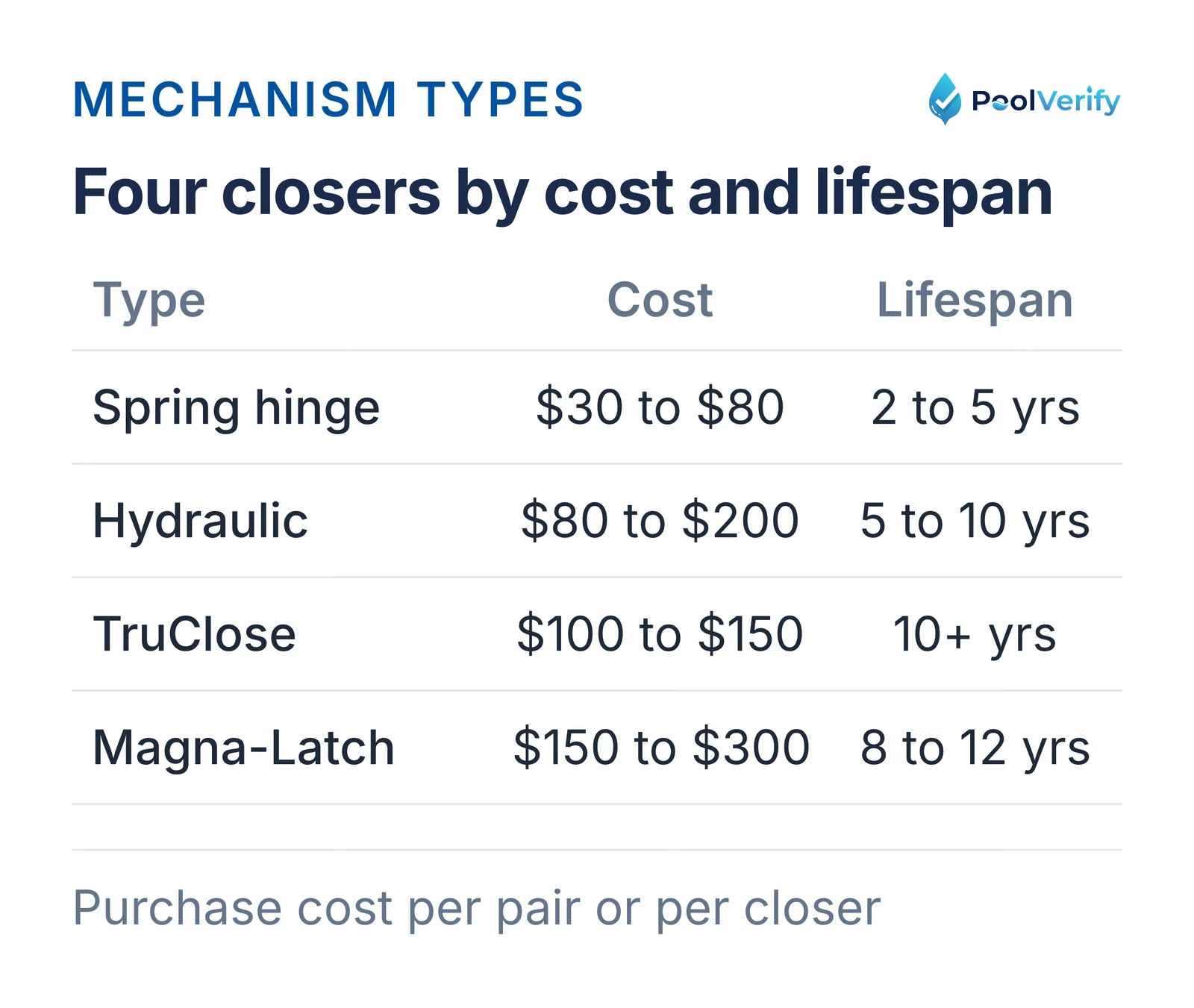
There are five primary types of self-closing mechanisms for pool gates, each with distinct advantages, costs, and maintenance requirements.

1. Spring-Loaded Hinges

How They Work: Traditional self-closing hinges with an internal coil spring that creates tension, pulling the gate closed when released.

Pros:

  • Affordable: $30-80 for a pair of hinges
  • Easy installation: Direct replacement for standard hinges
  • No external components: Clean appearance
  • Reliable in dry climates: Minimal maintenance needed

Cons:

  • Spring wear: Springs weaken over time (2-5 year lifespan)
  • Rust and corrosion: Steel springs corrode in coastal or humid environments
  • Limited adjustability: Fixed tension in most models
  • Can bind or stick: Requires regular lubrication

Best For: Budget-conscious installations, lightweight gates (under 40 lbs), dry climates

Popular Models:

  • National Hardware N342-050 Self-Closing Hinge ($35-50/pair)
  • Jacknob 2710 Self-Closing Hinge ($40-60/pair)
  • D&D Technologies SureClose Self-Closing Hinge ($50-80/pair)

2. Hydraulic Gate Closers

How They Work: A hydraulic piston mechanism (similar to a door closer) that controls the speed and force of gate closure using fluid resistance.

Pros:

  • Smooth, controlled closure: Adjustable closing speed prevents slamming
  • Heavy gate capacity: Handles gates up to 150-200 lbs
  • Durable construction: Commercial-grade quality (5-10 year lifespan)
  • Adjustable tension: Fine-tune closing force

Cons:

  • Higher cost: $80-200 per closer
  • Visible mechanism: External arm and cylinder visible on gate
  • Maintenance required: Hydraulic fluid can leak, seals wear out
  • Weather sensitivity: Extreme temperatures affect hydraulic fluid viscosity

Best For: Heavy gates (over 60 lbs), high-traffic areas, commercial pools

Popular Models:

  • LCN 4040XP Series Hydraulic Closer ($120-180)
  • Norton 8501 Series Gate Closer ($100-150)
  • Yale 5000 Series Surface Closer ($80-140)

3. TruClose Tension Hinges

Step-by-step TruClose hinge installation guide with detailed instructions

Step-by-step TruClose hinge installation guide with detailed instructions

How They Work: Patented adjustable round hinge system using engineering-grade polymers and stainless-steel tension springs that apply consistent closing force.

Pros:

  • No rust or binding: Engineered polymers resist corrosion
  • Adjustable tension: External tension screws for easy adjustment
  • Long lifespan: 10+ years with minimal maintenance
  • Self-lubricating: Polymer bearings don't require oil
  • Two capacities: Regular (66 lb) and Heavy Duty (154 lb)
  • Clean appearance: Round hinge design

Cons:

  • Higher upfront cost: $100-150 per pair
  • Requires specific installation: Round hinge design may require gate modifications
  • Not universally available: Fewer retailers stock TruClose compared to standard hinges

Best For: Long-term reliability, coastal/humid environments, medium to heavy gates

TruClose Models:

  • TruClose Regular (TC3648): Up to 66 lb gate capacity, $100-125/pair
  • TruClose Heavy Duty (TC4860): Up to 154 lb gate capacity, $125-150/pair

TruClose hinges are widely considered the gold standard for pool gates due to their rust-proof construction, easy adjustability, and long lifespan.

4. Gravity-Based Closers

How They Work: The gate is mounted on a slight incline or weighted to use gravity to pull the gate closed.

Pros:

  • No mechanical parts: Nothing to wear out or break
  • Zero maintenance: No springs, hydraulics, or adjustments needed
  • Silent operation: No clicking or slamming

Cons:

  • Limited applications: Requires specific gate orientation and slope
  • Uneven closing force: Gravity alone may not provide consistent closure
  • Not ideal for windy areas: Wind can prevent closure
  • Difficult to adjust: Requires physical gate realignment

Best For: Specific architectural designs, areas with no wind, gates that naturally swing closed

5. Magnetic Gate Systems (Magna-Latch)

How They Work: Combines a magnetic latch with a self-closing hinge to provide both automatic closure and latching in one integrated system.

Pros:

  • Integrated system: Self-closing and self-latching in one device
  • No visible latch: Clean, modern appearance
  • Adjustable magnetic force: Control latch strength
  • Child-resistant: Latch release requires adult strength and coordination

Cons:

  • Premium pricing: $150-300 per system
  • Requires precise alignment: Magnetic latch must align perfectly
  • Metal gate sensitivity: Strong magnets can affect nearby metal components
  • Replacement parts costly: Proprietary system with limited aftermarket parts

Best For: High-end installations, modern aesthetic, integrated self-closing + self-latching solution

Popular Model: Magna-Latch Series 2 or Series 3 ($150-250)

Compare pool safety inspection requirements including gate closure testing procedures.

How to Install a Self-Closing Pool Gate

Installation procedures vary based on the mechanism type. All installations must result in a gate that closes automatically from 12 inches away from the gate post to meet California requirements.

Pre-Installation Requirements

Before installing any self-closing mechanism:

✅ Gate must be square and level: A sagging or binding gate will not close properly

✅ Hinges must move freely: Lubricate or replace binding hinges

✅ Ground clearance: Ensure 1/2-inch maximum gap at bottom (no obstructions)

✅ Gate weight known: Select mechanism rated for your gate weight

✅ Opening direction: Verify gate opens away from pool

Installing Spring-Loaded Hinges

Tools Needed: Drill, screwdriver, level, wrench

Steps:

  1. Remove existing hinges: Unscrew old hinges from gate and post
  2. Position new hinges: Align self-closing hinges in same locations
  3. Install top hinge: Secure top hinge to gate, then to post (support gate during installation)
  4. Install bottom hinge: Attach bottom hinge to gate and post
  5. Test alignment: Gate should swing freely without binding
  6. Adjust tension (if adjustable): Tighten or loosen tension spring until gate closes from 12 inches
  7. Test closure: Open gate to various positions and verify automatic closure

Common Issues:

  • Gate doesn't close completely: Increase spring tension or check for obstructions
  • Gate slams shut: Reduce spring tension
  • Hinges bind: Realign hinges or lubricate pins

Installing Hydraulic Closers

Tools Needed: Drill, level, wrench, measuring tape

Steps:

  1. Determine mounting position: Hydraulic closer typically mounts on top rail of gate
  2. Install closer bracket: Secure closer body to gate frame with provided hardware
  3. Install post bracket: Attach arm bracket to fence post
  4. Connect closer arm: Attach closer arm to both brackets
  5. Adjust closing speed: Use adjustment valves to control closing speed (typically 2-4 seconds)
  6. Adjust closing force: Set closing force to ensure gate closes from 12 inches
  7. Test operation: Verify smooth closure from various positions

Adjustment Valves (typical hydraulic closer):

  • Sweep valve: Controls initial closing speed (first 90° of travel)
  • Latch valve: Controls final closing speed (last 15° of travel)
  • Back-check valve: Prevents gate from opening too quickly

Installing TruClose Hinges

Tools Needed: Drill, level, 5/32" Allen wrench

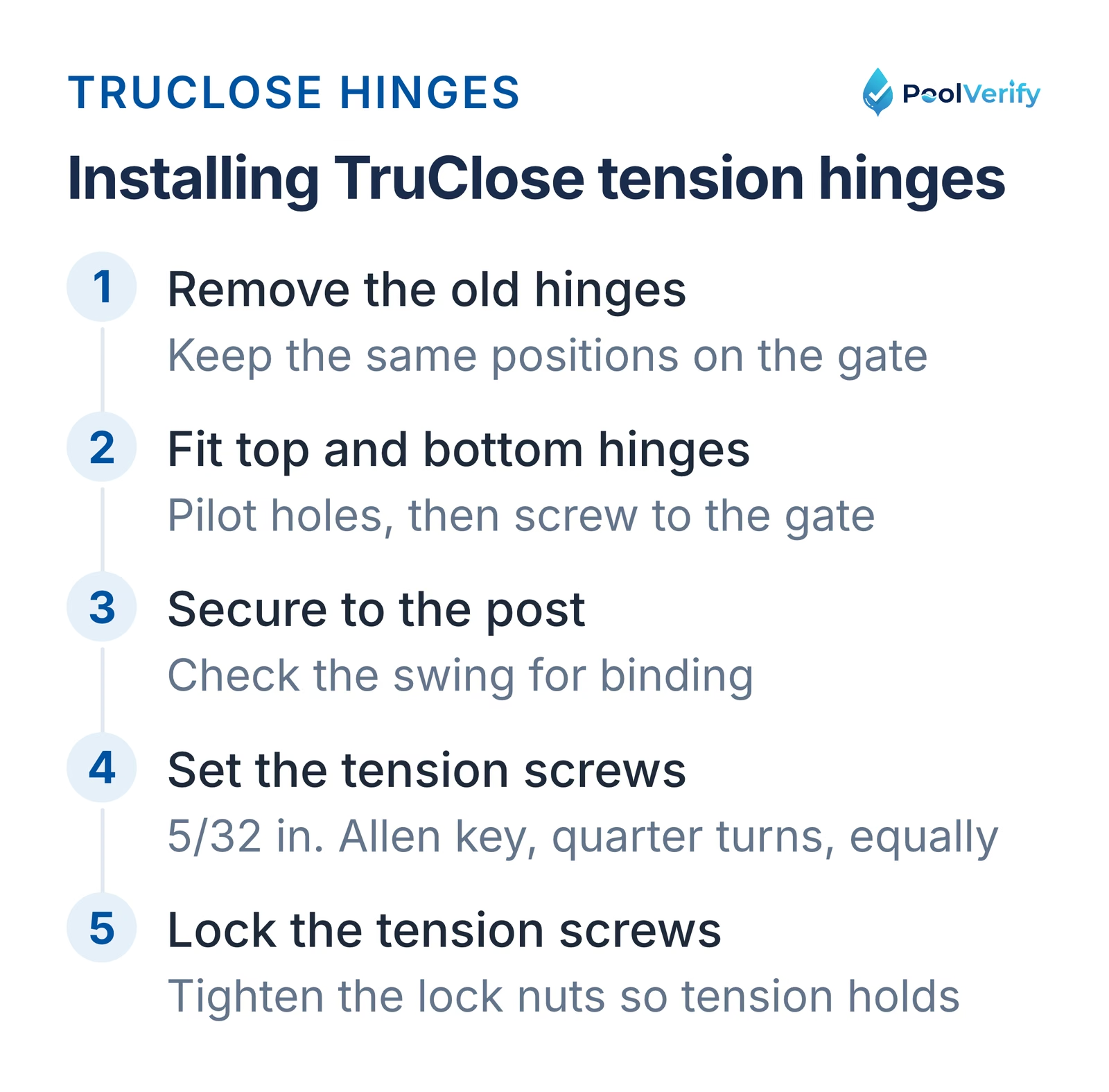
Steps:

  1. Remove old hinges: Take off existing gate hinges
  2. Position TruClose hinges: Place top and bottom TruClose hinges on gate (same locations as old hinges)
  3. Secure to gate: Drill pilot holes and screw hinges to gate
  4. Secure to post: Attach hinges to fence post
  5. Check gate swing: Gate should swing smoothly without binding
  6. Adjust tension screws: Use 5/32" Allen wrench to turn tension adjustment screws clockwise (increase) or counterclockwise (decrease)
  7. Fine-tune closure: Adjust until gate closes automatically from 12 inches
  8. Lock tension screws: Tighten lock nuts to prevent tension drift

TruClose Tension Adjustment:

  • Each hinge has 4 adjustment screws for fine-tuning
  • Turn screws equally (quarter-turn increments) to maintain balanced tension
  • Test after each adjustment

Installing Magna-Latch Systems

Tools Needed: Drill, level, measuring tape, screwdriver

Steps:

  1. Install self-closing hinges: Follow manufacturer's instructions for included hinges
  2. Measure latch height: Mark 54+ inches from bottom of gate (California minimum)
  3. Install magnetic latch: Secure latch to gate at marked height
  4. Install strike plate: Position magnetic strike on fence post (precise alignment critical)
  5. Test magnetic engagement: Close gate to verify latch engages automatically
  6. Adjust strike position: Move strike plate horizontally/vertically for perfect alignment
  7. Set magnetic force: Adjust magnet strength to ensure reliable latching

Alignment Tips:

  • Use included alignment template for precise strike positioning
  • Test engagement from various gate positions
  • Ensure latch releases only with adult-strength pull

See complete pool gate installation requirements for California compliance.

Testing Your Self-Closing Pool Gate

Diagram showing proper testing positions and procedures for self-closing gates

Diagram showing proper testing positions and procedures for self-closing gates

California inspectors and PoolVerify certified inspectors use standardized testing procedures to verify self-closing gate compliance.

Official Compliance Test

Test Procedure (per HSC §115922):

  1. Open gate to 12 inches from gate post (measure the gap)
  2. Release gate without pushing or pulling
  3. Gate must close automatically and completely
  4. Latch must engage without assistance
  5. Repeat from various positions: 30°, 45°, 90°

Pass Criteria:

✅ Gate closes completely from all positions

✅ Latch engages automatically

✅ Closure time: 2-6 seconds (not too fast/slow)

✅ No assistance required

Fail Criteria:

❌ Gate does not close completely

❌ Latch does not engage

❌ Gate requires pushing to close

❌ Gate slams shut dangerously fast

❌ Gate rebounds open after closing

Monthly Homeowner Testing

Perform these simple tests monthly:

Visual Inspection:

  • Check hinges for rust, corrosion, or damage
  • Inspect closer mechanisms for leaks (hydraulic) or broken springs
  • Verify no obstructions in gate path
  • Check ground clearance (1/2" max gap)

Functional Test:

  • Open gate to 45° and release → should close automatically
  • Open gate fully (90°) and release → should close automatically
  • Verify latch clicks into place
  • Test latch release at 54" height

Adjustment Needed If:

  • Gate doesn't close from 12 inches
  • Closure takes longer than 6 seconds
  • Gate slams shut in under 2 seconds
  • Latch doesn't engage reliably

Professional Inspection Requirements

California requires professional pool safety inspections:

During Property Transfer (BPC §7195): Mandatory inspection before sale or lease of property with pool

After Repairs: Any gate or barrier repairs should be reinspected

Annually: Recommended annual inspection for rental properties or high-use pools

Schedule a PoolVerify inspection to ensure full compliance with California regulations.

Common Self-Closing Gate Problems & Solutions

Even properly installed self-closing gates can develop issues over time. Here's how to diagnose and fix common problems:

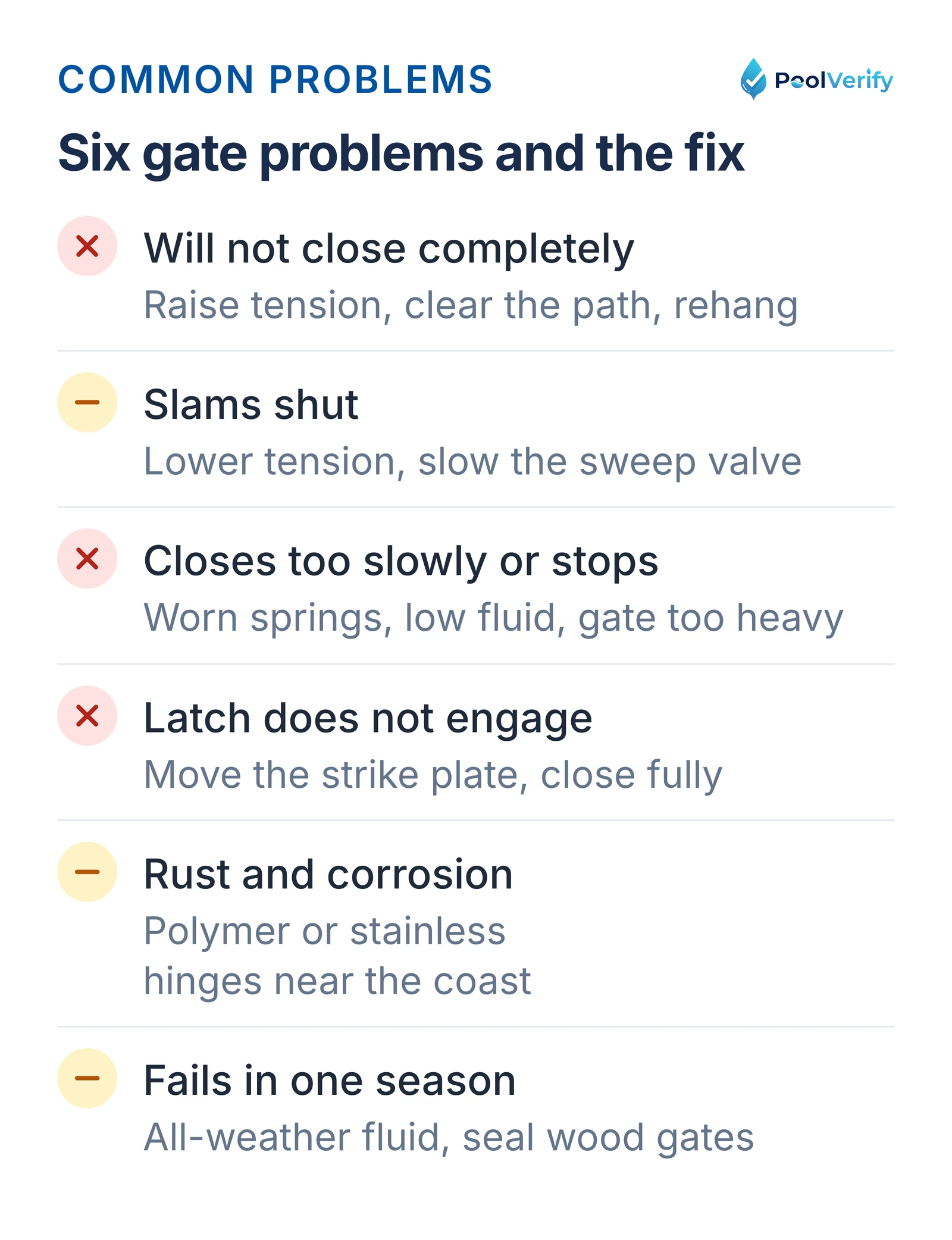
Problem 1: Gate Won't Close Completely

Symptoms: Gate stops before fully closing, leaves gap

Causes & Solutions:

Insufficient closing force:

  • Spring-loaded: Replace worn springs or upgrade to stronger hinges
  • Hydraulic: Increase closing force adjustment
  • TruClose: Turn tension screws clockwise (1/4 turn increments)

Gate sagging:

  • Tighten hinge screws
  • Rehang gate to ensure square and level alignment
  • Add diagonal brace to prevent sagging

Obstruction in path:

  • Clear debris, gravel, or vegetation from gate swing path
  • Trim ground if necessary to maintain 1/2" gap

Binding hinges:

  • Lubricate hinge pins with silicone spray
  • Replace corroded hinges

Problem 2: Gate Slams Shut Too Fast

Symptoms: Gate closes violently, slams into frame

Causes & Solutions:

Excessive closing force:

  • Spring-loaded: Replace with lower-tension springs (if adjustable)
  • Hydraulic: Reduce closing force, adjust sweep valve for slower speed
  • TruClose: Turn tension screws counterclockwise

Missing speed control:

  • Hydraulic closers: Adjust sweep and latch valves to slow closure
  • Add a cushioned gate stop to prevent damage

Problem 3: Gate Closes Too Slowly or Stops

Symptoms: Gate takes 10+ seconds to close, stops before latching

Causes & Solutions:

Weak closing mechanism:

  • Spring-loaded: Springs worn out → replace hinges
  • Hydraulic: Low fluid or internal leak → service or replace closer
  • TruClose: Increase tension with adjustment screws

Gate too heavy for mechanism:

  • Check mechanism weight rating vs. actual gate weight
  • Upgrade to Heavy Duty TruClose or commercial hydraulic closer

Binding or friction:

  • Lubricate hinges and moving parts
  • Check for rubbing between gate and frame → adjust alignment

Problem 4: Latch Doesn't Engage Automatically

Symptoms: Gate closes but latch doesn't click into place

Causes & Solutions:

Latch misalignment:

  • Adjust strike plate position (move up/down/side-to-side)
  • Ensure gate closes completely (latch may miss strike if gate stops early)

Worn latch mechanism:

  • Replace self-latching mechanism
  • Clean latch of rust, dirt, or debris

Insufficient closing force:

  • Increase closing force to ensure gate closes with enough momentum to engage latch

Problem 5: Rust and Corrosion

Symptoms: Hinges or closers rusting, binding, squeaking

Causes & Solutions:

Metal corrosion:

  • Coastal areas: Use stainless steel or polymer hinges (TruClose recommended)
  • Humid climates: Apply rust-preventive spray quarterly
  • Severe rust: Replace with corrosion-resistant mechanisms

Lack of maintenance:

  • Lubricate hinges every 3-6 months with silicone spray
  • Clean and inspect quarterly
  • Replace worn components before failure

Problem 6: Seasonal Performance Issues

Diagram showing compliant pool gate opening direction requirements

Diagram showing compliant pool gate opening direction requirements

Symptoms: Gate works in summer but fails in winter (or vice versa)

Causes & Solutions:

Temperature-sensitive hydraulic fluid:

  • Hydraulic closers: Use all-weather hydraulic fluid
  • Adjust closing speed seasonally (fluid thickens in cold, thins in heat)

Frost or ice buildup:

  • Keep gate path clear of snow and ice
  • Use de-icing spray on hinges (not on pool side)

Wood gate swelling/shrinking:

  • Wood gates expand in humidity, shrink in dry conditions
  • Seal wood to minimize moisture absorption
  • Adjust tension seasonally

Learn about complete pool safety inspection checklists covering gates, barriers, and equipment.

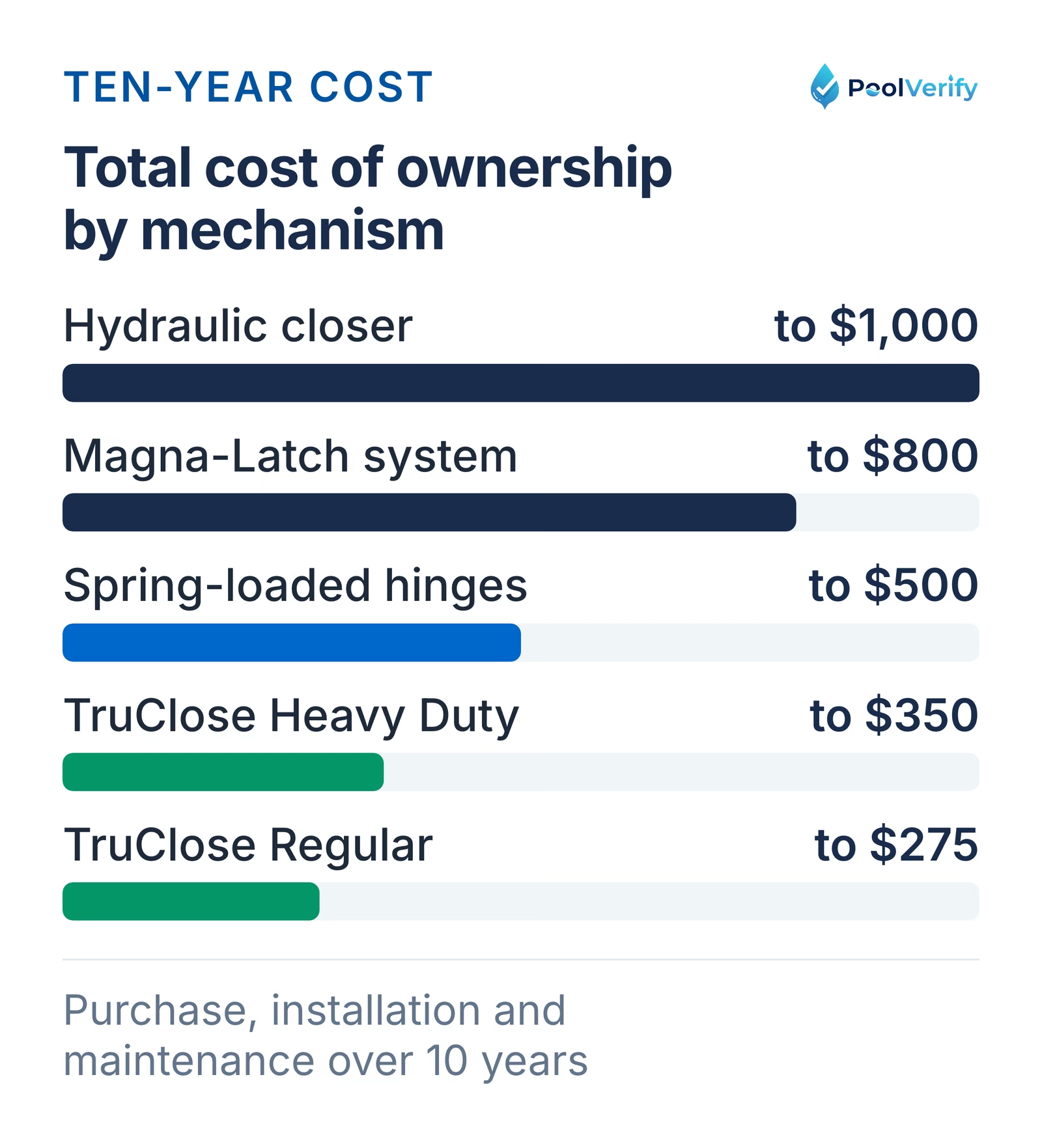
Cost Comparison: Self-Closing Gate Mechanisms

Understanding the total cost of ownership helps you select the right mechanism for your budget and needs.

Mechanism TypePurchase CostInstallation CostLifespanAnnual MaintenanceTotal 10-Year Cost
Spring-Loaded Hinges$30-80$0-150 (DIY possible)2-5 years$0-20$180-500
Hydraulic Closers$80-200$100-3005-10 years$20-50$480-1,000
TruClose Regular$100-125$0-150 (DIY possible)10+ years$0-10$100-275
TruClose Heavy Duty$125-150$0-20010+ years$0-10$125-350
Magna-Latch System$150-300$150-4008-12 years$10-30$450-800

Cost Notes:

  • DIY installation saves $100-400 but requires basic carpentry skills
  • Professional installation recommended for hydraulic closers and Magna-Latch systems
  • Maintenance costs include lubrication, cleaning, and minor adjustments
  • Replacement costs for spring-loaded hinges (every 3-5 years) add significantly to long-term cost

Best Value: TruClose hinges offer the best long-term value with minimal maintenance and 10+ year lifespan, despite higher upfront costs.

Product Recommendations by Gate Type

For Lightweight Gates (Under 40 lbs)

Best Choice: D&D Technologies SureClose Hinges ($50-80)

  • Self-closing and self-latching in one hinge
  • Adjustable tension
  • Suitable for aluminum and light wood gates
  • Easy DIY installation

Budget Alternative: National Hardware N342-050 ($35-50)

  • Basic spring-loaded hinges
  • Works for low-traffic gates
  • 2-3 year lifespan in dry climates

For Medium Gates (40-80 lbs)

Best Choice: TruClose Regular (TC3648) ($100-125)

  • Rust-proof polymer construction
  • Adjustable tension with external screws
  • 10+ year lifespan
  • Self-lubricating bearings

Alternative: Norton 8501 Series Hydraulic Closer ($100-150)

  • Smooth, controlled closure
  • Adjustable closing speed
  • Requires more maintenance than TruClose

For Heavy Gates (80-150 lbs)

Best Choice: TruClose Heavy Duty (TC4860) ($125-150)

  • 154 lb capacity
  • Same corrosion resistance and adjustability as Regular model
  • Ideal for large wood or wrought iron gates

Alternative: LCN 4040XP Hydraulic Closer ($120-180)

  • Commercial-grade closer
  • Handles gates up to 200 lbs
  • Adjustable closing speed and force

For Coastal/Humid Environments

Best Choice: TruClose (any model) ($100-150)

  • Engineering-grade polymers don't rust
  • Stainless steel springs resist corrosion
  • No binding or seizing in salt air

Avoid: Standard steel spring-loaded hinges (corrode rapidly in coastal environments)

For High-End Installations

Best Choice: Magna-Latch Series 3 ($200-300)

  • Integrated self-closing and magnetic self-latching
  • Clean, modern aesthetic
  • Key-lockable option available
  • Tested to 100,000+ cycles

For Commercial/High-Traffic Pools

Best Choice: LCN 4040XP Series with Heavy-Duty Arm ($150-200)

  • Rated for 1 million+ cycles
  • Vandal-resistant construction
  • Adjustable closing force and speed
  • Field-serviceable

Maintenance Schedule for Self-Closing Gates

Proper maintenance extends lifespan and ensures continuous compliance.

Monthly Tasks (5 minutes)

✅ Visual inspection: Check for rust, damage, or loose screws

✅ Function test: Open to 45° and 90°, verify automatic closure

✅ Latch test: Ensure latch engages automatically

✅ Ground clearance: Check for debris or obstructions

Quarterly Tasks (15 minutes)

✅ Lubricate hinges: Apply silicone spray to hinge pins and moving parts

✅ Clean latch: Remove dirt, rust, or debris from latch mechanism

✅ Tighten screws: Check and tighten all hinge and closer mounting screws

✅ Adjust tension: Fine-tune closing force if needed

Annual Tasks (30 minutes)

✅ Professional inspection: Schedule before property transfer or after major repairs

✅ Deep cleaning: Remove all dirt, salt, or corrosion from mechanisms

✅ Alignment check: Verify gate is still square and level

✅ Replace worn parts: Change springs, seals, or hydraulic fluid as needed

Replacement Indicators

Replace self-closing mechanisms when:

❌ Springs visibly broken or stretched

❌ Hydraulic closer leaking fluid

❌ Rust or corrosion preventing smooth operation

❌ Gate no longer closes from 12-inch position despite adjustments

❌ Mechanism over 5 years old (spring-loaded) or 10 years old (hydraulic/TruClose)

Get a professional pool safety inspection to verify full compliance before property transfer.

Self-Closing Gates and Property Transfers

California's BPC §7195 requires pool safety compliance inspections before any property sale or lease. Self-closing gates are a primary inspection checkpoint.

What Inspectors Check

During a PoolVerify inspection, certified inspectors verify:

✅ Automatic closure: Gate closes from 12 inches without assistance

✅ Self-latching: Latch engages automatically when gate closes

✅ Latch height: Release mechanism at 54+ inches from bottom of gate

✅ Opening direction: Gate opens away from pool

✅ Gap spacing: Maximum 1/2-inch gap at bottom

✅ No obstruction: Gate path clear of debris

Common Inspection Failures

The most common reasons pool gates fail compliance inspections:

❌ Worn springs: Old spring-loaded hinges no longer provide sufficient closing force

❌ Misaligned latch: Gate closes but latch doesn't engage

❌ Sagging gate: Gate out of square, binds during closure

❌ Latch too low: Release mechanism below 54-inch minimum

❌ Gate opens inward: Opens toward pool instead of away

Pre-Sale Preparation

Before listing your property:

  1. Test gate closure: Verify automatic closure from all positions
  2. Schedule inspection early: Allow time for repairs before closing
  3. Gather documentation: Keep records of gate installation and maintenance
  4. Budget for repairs: Set aside $200-500 for potential gate upgrades

Schedule a PoolVerify inspection starting at $99 with same-day digital reports and compliance certification.

Frequently Asked Questions

Can I install a self-closing gate myself?

Yes, most self-closing mechanisms are DIY-friendly. Spring-loaded hinges and TruClose hinges require basic tools (drill, screwdriver, level) and can be installed in 1-2 hours. Hydraulic closers are more complex and may benefit from professional installation. All installations must result in a gate that closes automatically from 12 inches to meet California requirements.

Do I need both self-closing and self-latching?

Yes, California law (HSC §115922) requires both features. Self-closing means the gate automatically swings shut; self-latching means the latch automatically engages when the gate closes. A gate that closes but requires manual latching does not comply.

How often should I replace self-closing hinges?

Spring-loaded hinges: 2-5 years (coastal areas: 2-3 years, dry inland: 4-5 years)

Hydraulic closers: 5-10 years with proper maintenance

TruClose hinges: 10+ years (minimal maintenance required)

Magna-Latch: 8-12 years

Replace sooner if rust, binding, or failure to close from 12 inches occurs.

What's the best self-closing mechanism for coastal areas?

TruClose hinges are the best choice for coastal environments due to their rust-proof polymer construction and stainless steel springs. Standard steel spring-loaded hinges corrode rapidly in salt air. Hydraulic closers can work but require more frequent maintenance and rust-preventive treatment.

Can I use a self-closing gate for a side yard exit?

Yes, if the side yard exit is part of the pool barrier enclosure, it must be self-closing and self-latching. If the side yard exit is outside the pool barrier (not providing access to the pool area), it does not require self-closing features. Consult a PoolVerify inspector to verify your specific configuration.

How do I adjust a self-closing gate that slams shut?

Spring-loaded: Replace with lower-tension springs or add a gate stop cushion

Hydraulic: Adjust the sweep valve (controls initial closing speed) and latch valve (controls final closing speed) to slow closure

TruClose: Turn tension adjustment screws counterclockwise in quarter-turn increments

My gate is too heavy for standard hinges. What should I use?

For gates over 80 lbs, use TruClose Heavy Duty (TC4860) rated for up to 154 lbs, or a commercial-grade hydraulic closer like the LCN 4040XP (up to 200 lbs). Standard spring-loaded hinges are not suitable for heavy gates and will fail prematurely.

Do self-closing gates work in winter?

Yes, but performance may vary. Hydraulic closers can be affected by cold temperatures (hydraulic fluid thickens), requiring seasonal adjustment. TruClose hinges and spring-loaded hinges are less temperature-sensitive. Keep gate path clear of ice and snow, and lubricate hinges before winter.

Related Resources

  • Pool Gate Requirements California: Complete Compliance Guide
  • Pool Fence Requirements by State: 50-State Comparison
  • Pool Safety Inspection: Complete Checklist & Requirements
  • Swimming Pool Inspection: What to Expect
  • How PoolVerify Works: Compliance Inspections in 48 Hours

Ensure Your Pool Gate Complies with California Law

Various hardware options and products for self-closing pool gate mechanisms

Various hardware options and products for self-closing pool gate mechanisms

Self-closing gates are mandatory under California law (HSC §115922) and a critical component of pool safety. Whether you're installing a new gate, replacing an old mechanism, or preparing for a property transfer inspection, choosing the right self-closing system ensures compliance and protects children from unsupervised pool access.

TruClose hinges offer the best combination of reliability, low maintenance, and long-term value for most residential pools. For heavy gates or high-traffic areas, hydraulic closers provide smooth, controlled operation. Budget-conscious homeowners can start with spring-loaded hinges but should plan for replacement every 3-5 years.

Schedule a PoolVerify inspection to verify your pool gate meets all California requirements before your property transfer. Our certified inspectors provide same-day digital reports, compliance certification, and expert recommendations for any needed repairs.


Sources:

  • California Health and Safety Code §115922 (Swimming Pool Safety Act)
  • California Business and Professions Code §7195 (Property Transfer Requirements)
  • International Building Code (IBC) 2021 Edition, Section 3109
  • TruClose Hinges Technical Specifications and Installation Guide
  • Consumer Product Safety Commission (CPSC) Pool Safety Guidelines
  • California Association of Pool Inspectors Compliance Standards

In this article

What is a Self-Closing Pool Gate?California Self-Closing Gate RequirementsTypes of Self-Closing Gate MechanismsHow to Install a Self-Closing Pool GateTesting Your Self-Closing Pool GateCommon Self-Closing Gate Problems & SolutionsCost Comparison: Self-Closing Gate MechanismsProduct Recommendations by Gate TypeMaintenance Schedule for Self-Closing GatesSelf-Closing Gates and Property TransfersFrequently Asked QuestionsRelated Resources+ more sections below

Share

TwitterLinkedIn

Streamline inspections?

Professional reports in minutes.

Start Free Trial

Frequently Asked Questions

What is a self-closing pool gate?

A self-closing pool gate is equipped with a mechanical device that automatically closes the gate from any open position without human intervention. California requires all pool barrier gates to be self-closing and self-latching per HSC §115922, using spring-loaded hinges, hydraulic closers, or tension-based systems.

Are self-closing gates required for pools in California?

Yes, California law (HSC §115922) requires all swimming pool barrier gates to be self-closing and self-latching. The gate must automatically close from any open position and the latch must automatically engage. This applies to all residential pools with water depths exceeding 18 inches.

How much does a self-closing pool gate cost?

Self-closing pool gate systems range from $30-300 depending on mechanism type. Spring-loaded hinges cost $30-80, hydraulic closers $80-200, TruClose tension systems $100-150, and Magna-Latch magnetic systems $150-300. Professional installation adds $150-400 to total costs.

What is the best self-closing gate mechanism?

TruClose hinges are considered the gold standard for pool gates, offering reliable automatic closure with adjustable tension, no rust or binding, and 66-154 lb capacity. Hydraulic closers provide smooth operation but require more maintenance. The best choice depends on gate weight, usage, and budget.

How do you test if a pool gate is self-closing?

Open the gate to various positions (30 degrees, 45 degrees, 90 degrees) and release. The gate must automatically close completely and the latch must engage without assistance. California requires gates to close from any open position. Test monthly and after any repairs or adjustments.

Related Articles

Self-latching pool gate mechanism installed at proper height showing compliance features
Pool-compliance

Self Latching Pool Gate: Requirements & Best Options [2026]

Complete guide to self-latching pool gates in California. Learn BPC §7195 requirements, self-closing vs self-latching differences, latch types, installation specs, and best products.

Pool Gate Requirements: Complete California Compliance Guide [2026]
Compliance-safety

Pool Gate Requirements: Complete California Compliance Guide [2026]

California pool gate requirements 2026: 54-inch minimum latch height, self-closing and self-latching mechanisms, outward opening direction, and maximum 1/2-inch gap when closed. Complete HSC §115922 compliance guide.

California compliant pool barrier with proper fencing height and self-closing gate mechanism
Pool-compliance

California Pool Barrier Requirements: Complete 2026 Compliance Guide

Complete guide to California pool barrier requirements for 2026. Learn BPC §7195 and HSC §115922 specifications for height, spacing, gates, and materials.

Previous
Pool Safety Inspection: Complete Checklist & Requirements [2026]
Next
Spectora Pricing 2026: $109/Month — Is It Worth It?
500+ Inspectors
5+ Hrs Saved/Week

Ready to Transform YourPool Inspection Business?

Join California's fastest-growing inspection platform. Create professional reports in minutes, not hours.

Start Free Trial
14-day free trialFull feature accessCancel anytime
PoolVerify

The modern pool inspection platform built for California professionals. Complete BPC §7195 compliance, built in.

support@poolverify.io

256-bit SSL

Encrypted

CA Compliant

BPC §7195

Product

  • Features
  • Pricing
  • Resources

Free Tools

  • Compliance Checker
  • Cost Calculator
  • Salary Estimator

Compare

  • vs Spectora
  • vs HappyCo
  • vs HomeGauge
  • vs ISN
  • vs Pool Inspector App
  • vs Pro Pool Inspectors
  • vs SafetyCulture

Solutions

  • Pool Inspection Software
  • For Real Estate
  • For Property Managers
  • Free Trial

Resources

  • Pool Report Writing
  • CA AB 3205 Guide
  • Free Checklist Download
  • ROI Calculator
  • Case Studies

Locations

  • Fresno
  • Anaheim
  • Oakland
  • San Jose
  • San Diego
  • Sacramento
  • Long Beach
  • Los Angeles
  • Orange County
  • San Francisco Bay Area

Company

  • About
  • Security
  • Contact

Legal

  • Privacy
  • Terms
  • Do Not Sell

© 2026 PoolVerify, Inc. All rights reserved.

Built for California Pool Inspectors