PoolVerify
FeaturesPricingResourcesCompanyLoginStart Free Trial
  1. Home
  2. Resources
  3. Pool Fence Requirements by State: Complete Comparison Guide [2026]
Compliance-safety

Pool Fence Requirements by State: Complete Comparison Guide [2026]

Comprehensive state-by-state comparison of pool fence requirements: height minimums, gate specifications, and compliance rules for all 50 U.S. states. California, Florida, Texas, Arizona, New York regulations explained.

Pool Fence Requirements by State: Complete Comparison Guide [2026]
January 31, 2026
16 min

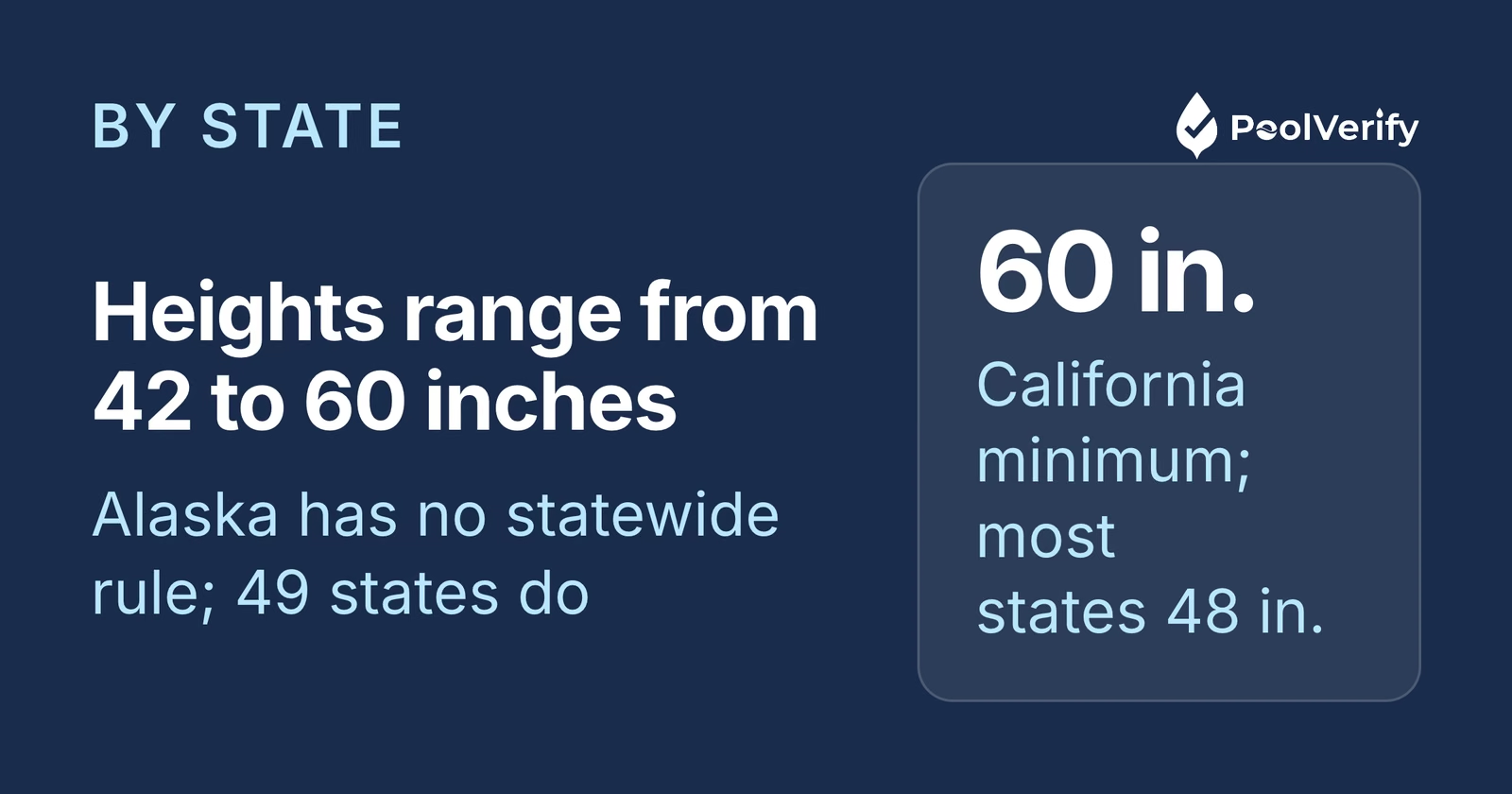
Pool fence requirements vary significantly by state, with barrier heights ranging from 42 inches to 60 inches, different gate latch positioning rules, and varying enforcement mechanisms. Understanding your state's specific pool fence regulations is critical for legal compliance, insurance coverage, and—most importantly—preventing child drowning incidents. This comprehensive state-by-state guide compares pool barrier requirements across all 50 U.S. states, helping pool owners, builders, and inspectors navigate the complex landscape of pool safety regulations.

Whether you're installing a new pool, buying a home with an existing pool, or ensuring ongoing compliance, this guide provides the detailed comparisons you need to meet your state's requirements.

Quick Reference: Pool Fence Height by State

This table provides an at-a-glance comparison of minimum pool fence height requirements across all 50 U.S. states:

StateMinimum HeightGate Latch HeightNotes
Alabama48 inches40-54 inchesFollows IBC, local variations
AlaskaNoneN/ANo statewide requirements
Arizona60 inches54 inchesApplies when children <6 in home
Arkansas48 inches40 inchesMinimum 4 feet
California60 inches54 inchesStrictest requirements, 7 safety features
Colorado48 inches40-48 inchesLocal codes vary
Connecticut48 inches48 inchesStrictly enforced
Delaware48 inches40 inchesStandard IBC
Florida48 inches48-54 inchesChapter 515, varies by county
Georgia48 inches48 inchesLocal enforcement varies
Hawaii48 inches48 inchesCounty-specific rules
Idaho48 inches40 inchesFollows IBC
Illinois42-48 inches40 inchesSome areas allow 42 inches
Indiana48 inches40 inchesStandard requirements
Iowa48 inches40 inchesMinimum 4 feet
Kansas48 inches40 inchesLocal variations common
Kentucky48 inches40 inchesFollows IBC
Louisiana48 inches48 inchesParish-level enforcement
Maine48 inches40 inchesMunicipal codes vary
Maryland48 inches48 inchesCounty requirements
Massachusetts48 inches48 inchesTown-by-town enforcement
Michigan48 inches48 inchesLocal ordinances
Minnesota48 inches40 inchesCity-specific codes
Mississippi48 inches40 inchesLimited enforcement
Missouri48 inches40 inchesCounty requirements
Montana48 inches40 inchesMinimal state regulation
Nebraska48 inches40 inchesFollows IBC
Nevada60 inches (perimeter) / 48 inches (isolation)54 inchesClark County has specific rules
New Hampshire48 inches48 inchesMunicipal enforcement
New Jersey48-60 inches48-54 inchesWilliam's Law, varies by municipality
New Mexico48 inches40 inchesLimited state oversight
New York48-54 inches40-48 inchesMany municipalities require 54 inches
North Carolina48 inches48 inchesCounty health dept. oversight
North Dakota48 inches40 inchesMinimal regulation
Ohio48 inches40-48 inchesLocal health departments
Oklahoma48 inches40 inchesCity ordinances
Oregon48 inches48 inchesCounty variations
Pennsylvania48 inches40-48 inchesTownship enforcement
Rhode Island48 inches48 inchesStrict enforcement
South Carolina48 inches40-48 inchesCounty regulations
South Dakota48 inches40 inchesLimited oversight
Tennessee48 inches40-48 inchesLocal codes
Texas48 inches60 inches60-inch latch height unique requirement
Utah48 inches40 inchesFollows IBC closely
Vermont48 inches48 inchesTown ordinances
Virginia48 inches48 inchesCounty health departments
Washington48 inches40-48 inchesCounty variations
West Virginia48 inches40 inchesMinimal state regulation
Wisconsin48 inches40-48 inchesCounty codes
Wyoming48 inches40 inchesFollows IBC

Important note: This table reflects statewide minimums. Local municipalities frequently enforce stricter requirements. Always verify with your local building department before installing pool barriers.

Understanding the International Building Code (IBC)

The International Building Code (IBC) establishes baseline pool barrier standards adopted by most U.S. states with local modifications.

IBC Standard Pool Barrier Requirements

Barrier height: Minimum 48 inches (4 feet) measured on exterior side facing away from pool

Maximum ground clearance: 2 inches or less between bottom of barrier and ground

Maximum gap size: Openings shall not allow passage of a 4-inch diameter sphere

Horizontal member spacing: If horizontal members (like rails) are present on exterior side and spaced less than 45 inches apart, vertical spacing shall not exceed 1¾ inches

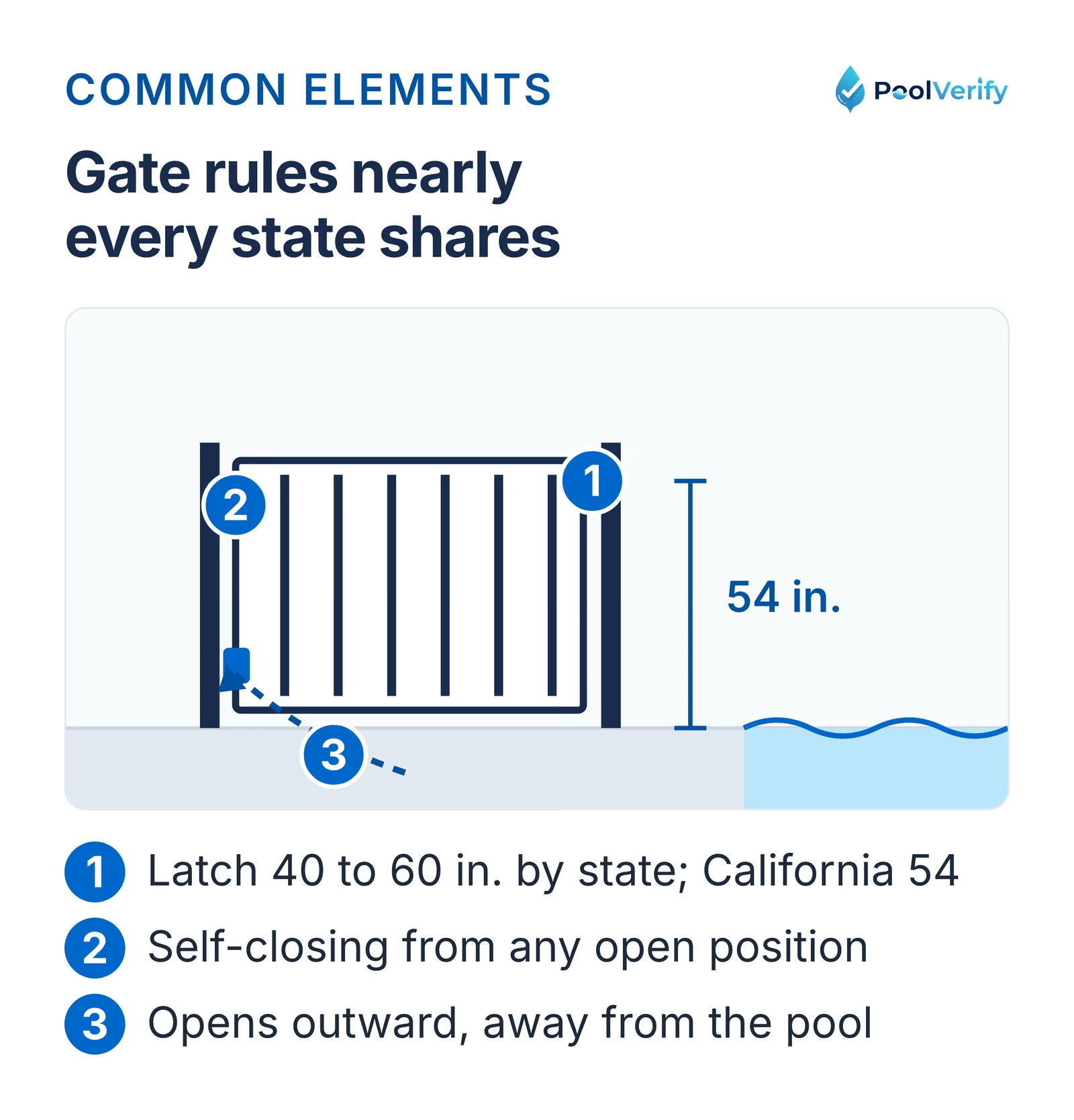
Gate requirements:

  • Self-closing from all open positions
  • Self-latching mechanism
  • Latch release located minimum 40 inches above ground (IBC baseline)
  • Gates open outward away from pool

Alternative compliance: If house wall forms part of barrier, all doors and windows to pool must have approved protective devices (alarms, self-closing mechanisms, or security locks)

How States Modify IBC Standards

While the IBC provides the foundation, states modify requirements in several ways:

Height increases: California, Arizona, and Nevada require 60 inches (5 feet) instead of 48 inches

Latch positioning: California and Texas mandate 54-60 inch latch heights (vs. IBC's 40-inch minimum)

Additional safety features: California requires 2 of 7 approved drowning prevention devices beyond just barriers

Enforcement mechanisms: Some states delegate entirely to local municipalities, creating patchwork compliance landscapes

Above-ground pool exemptions: Many states exempt above-ground pools if walls are 48+ inches and ladder is removable

Detailed State-by-State Requirements

California: Strictest Requirements in the U.S.

California maintains the nation's most comprehensive pool safety regulations.

Primary statute: Health and Safety Code §115922 (Swimming Pool Safety Act)

Minimum fence height: 60 inches (5 feet) measured from exterior ground level

Gate requirements:

  • Self-closing and self-latching
  • Latch release minimum 54 inches above ground (or positioned on pool side at least 3 inches below gate top)
  • Gates open outward away from pool
  • Maximum ½-inch gap when gate is latched

Ground clearance: Maximum 2 inches

Gap requirements: No gap shall allow passage of 4-inch diameter sphere

Seven drowning prevention safety features (minimum 2 required):

  1. Isolation barrier (pool enclosed separately from house)
  2. Removable mesh fencing (ASTM F2286 compliant)
  3. Safety pool cover (ASTM F1346-91 compliant)
  4. Exit alarms on doors providing pool access
  5. Self-closing door devices with 54+ inch release
  6. Pool water entry alarm (ASTM F2208)
  7. Other approved safety devices

Applies to: All new pool construction and substantial remodeling requiring permits (post-2007)

Enforcement: Local building officials inspect before issuing final approval; property transfer compliance required under BPC §7195

Complete California pool fence requirements guide

Florida: Residential Swimming Pool Safety Act

Florida's Chapter 515 establishes statewide pool barrier standards with some county variations.

Primary statute: Florida Statutes Chapter 515 (Residential Swimming Pool Safety Act)

Minimum fence height: 48 inches (4 feet) measured from exterior ground level

Gate requirements:

  • Self-closing from all positions
  • Self-latching automatically
  • Latch positioned 48-54 inches above ground (varies by jurisdiction)
  • Opens outward away from pool

Special requirements:

  • Some counties (Orange County/Orlando) require 5-foot clearance between barrier and pool edge
  • Pool must be totally enclosed within barrier
  • Property fence can serve as pool barrier if compliant

Above-ground pools: If pool wall is 48+ inches and ladder is removable, additional barrier not required

Enforcement: Local building departments; health departments for public pools

Notable: Florida has strong enforcement due to high drowning incident rates

Texas: Unique 60-Inch Latch Requirement

Texas pool fence regulations follow IBC with one significant modification.

Primary statute: Texas Health and Safety Code Chapter 757

Minimum fence height: 48 inches (4 feet)

Gate requirements:

  • Self-closing mechanism required
  • Self-latching required
  • Latch positioned minimum 60 inches above ground (highest latch requirement in U.S.)
  • Opens outward

Rationale: The 60-inch latch height ensures children up to age 7-8 cannot reach the release mechanism

Ground clearance: Maximum 2 inches

Gap requirements: No opening larger than 4-inch diameter

Enforcement: Municipal building departments and health authorities

Variation: Some cities have additional requirements beyond state minimums

Arizona: Conditional Requirements Based on Children Present

Arizona's unique approach applies strict requirements only when young children live in the home.

Primary statute: Arizona Revised Statutes §36-1681

Trigger: Requirements apply to residences where children younger than 6 years live

Minimum fence height: 60 inches (5 feet) measured from exterior ground level

Gate requirements:

  • Self-closing and self-latching
  • Latch minimum 54 inches above ground
  • Opens outward

Barrier specifications:

  • Maximum 2-inch ground clearance
  • Maximum 4-inch gap openings
  • Horizontal members spaced 45+ inches apart (if on exterior)

Above-ground pools: If wall is 60+ inches and ladder removable, may not require additional barrier

Enforcement: County health departments

Exception: If no children under 6 reside in home, requirements may not apply (though recommended for safety and resale value)

New York: State Minimum with Municipal Variations

New York follows IBC baseline with significant local modifications.

Primary statute: New York State Residential Code Appendix G

State minimum fence height: 48 inches (4 feet)

Common municipal requirement: 54 inches (4.5 feet) in many jurisdictions

Gate requirements:

  • Self-closing from all positions
  • Self-latching mechanism
  • Latch positioned minimum 40 inches above ground (state minimum)
  • Many municipalities require 48-54 inches

Barrier specifications:

  • Maximum 2-inch ground clearance
  • Vertical spacing maximum 1¾ inches (if horizontal members present)
  • 4-inch maximum spacing between vertical members (if horizontal members 45+ inches apart)

House as barrier: If house wall forms barrier, doors must have self-closing/latching devices with releases 40+ inches high

Enforcement: Highly variable by municipality; some areas strictly enforce, others have minimal oversight

Recommendation: Always check specific town, village, or city requirements

New Jersey: William's Law and Local Ordinances

New Jersey regulations reflect "William's Law" (named after drowning victim) with local variations.

Primary statute: New Jersey Administrative Code

State baseline: 48 inches (4 feet)

William's Law requirement: 60 inches (5 feet) in municipalities that adopt the law

Current reality: Mix of 48-inch and 60-inch requirements depending on municipality

Gate requirements:

  • Self-closing from all positions
  • Self-latching automatically
  • Latch height varies 48-54 inches by municipality
  • Opens outward

Ground clearance: Maximum 2 inches

Enforcement: Municipal building departments and health officials

Notable: Strong enforcement in densely populated areas (North Jersey)

Nevada: Isolation vs. Perimeter Fence Distinction

Nevada (particularly Clark County) distinguishes between isolation and perimeter fencing.

Primary statute: Nevada Administrative Code §444.136; Clark County regulations

Isolation fence: Fence surrounding pool only, separate from property line

  • Minimum height: 48 inches (4 feet)

Perimeter fence: Property fence serving as pool barrier

  • Minimum height: 60 inches (5 feet) in most jurisdictions

Gate requirements:

  • Self-closing mechanism
  • Self-latching mechanism
  • Latch positioned minimum 54 inches above ground
  • Opens outward

Mesh fencing: If using mesh, openings must be smaller than 1¾ inches and resistant to climbing

Enforcement: Clark County (Las Vegas area) has strict enforcement; other counties vary

Special rule: Some municipalities allow 48-inch perimeter fence if house forms part of barrier with door alarms

States with Minimal or No Requirements

Alaska: No statewide pool fence requirements for residential pools

Montana, Wyoming, Dakotas: Minimal state-level regulation; primarily deferred to municipalities

Rural areas nationwide: Even in states with regulations, rural areas often have limited enforcement

Common Elements Across Most States

Infographic showing most common pool fence code violations and how to avoid them

Infographic showing most common pool fence code violations and how to avoid them

Despite variations, most state pool fence regulations share these common requirements:

Universal Barrier Specifications

Minimum height: 48-60 inches (4-5 feet) is standard across 49 states

Maximum ground clearance: 2 inches nearly universal

Maximum gap openings: 4-inch diameter sphere test standard

Self-closing gates: Required in all states with pool fence regulations

Self-latching gates: Required in all states with pool fence regulations

Outward-opening gates: Required in nearly all states

Standard Materials Accepted

All states with pool fence requirements accept these barrier types:

Wrought iron or aluminum fencing: Most common residential choice

Mesh removable fencing: ASTM F2286 compliant (counts as safety feature in some states)

Chain link: Must have maximum 1¾-inch mesh

Wood fencing: Must meet height and gap requirements

Glass panels: Tempered safety glass meeting structural standards

Masonry walls: Concrete, brick, stone meeting height requirements

Vinyl/PVC fencing: Must meet structural and gap specifications

Not typically accepted: Barbed wire, electric fencing, decorative non-structural barriers

Prohibited Barrier Types

States commonly prohibit these as pool barriers:

❌ Decorative fencing that allows easy climbing (lattice, wide horizontal spacing)

❌ Chain-link with large mesh (over 1¾-inch openings)

❌ Hedges or vegetation alone (not structural barriers)

❌ Temporary barriers (construction fencing, caution tape)

❌ Gates that don't self-close or self-latch

❌ Barriers with climbable features (horizontal rails spaced <45 inches apart on exterior)

Above-Ground Pool Fence Requirements by State

Above-ground pool safety requirements and fence specifications by state

Above-ground pool safety requirements and fence specifications by state

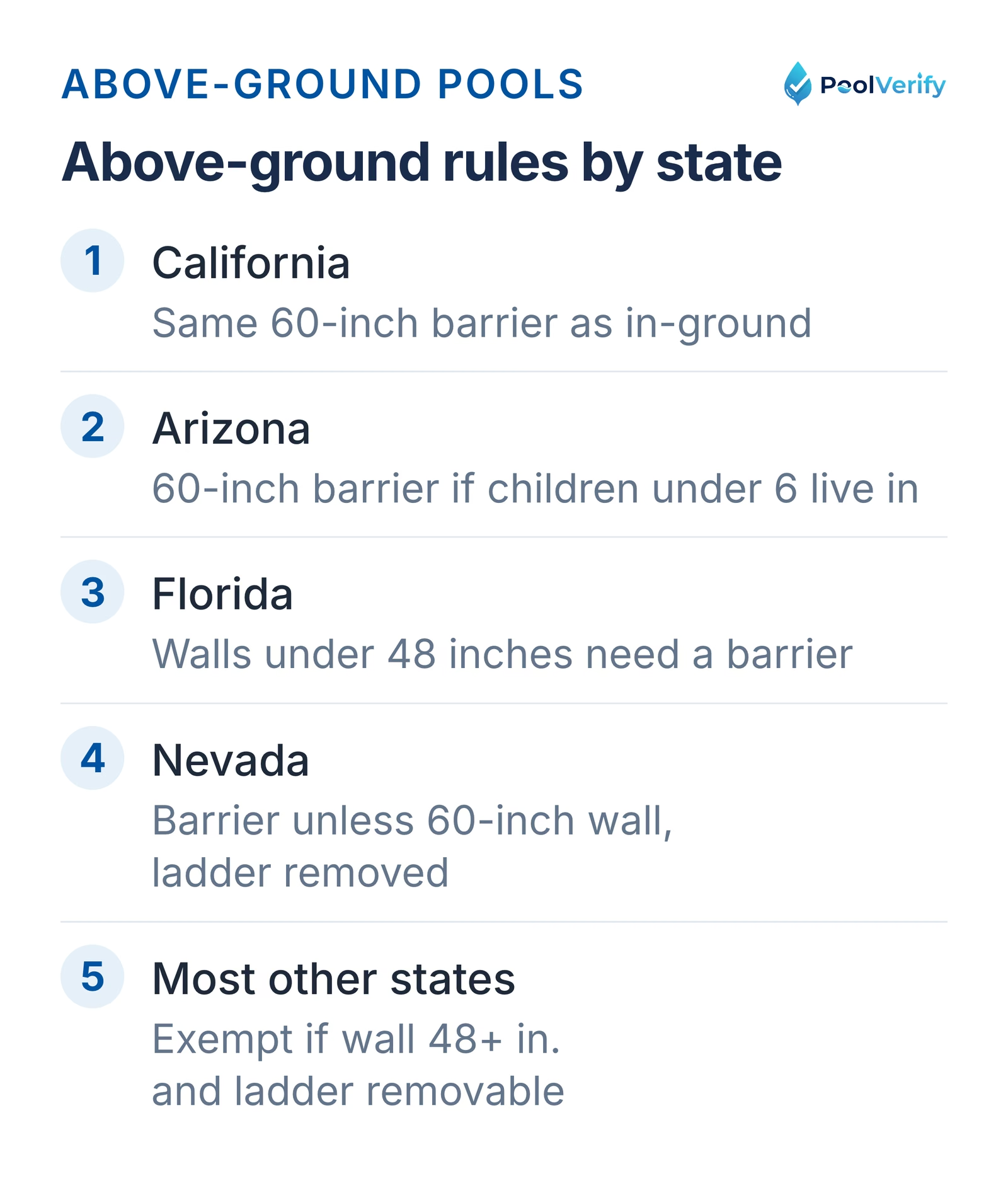
Above-ground pool fence requirements vary more than in-ground regulations:

States Requiring Barriers for All Pools

California: Above-ground pools must meet same 60-inch barrier requirements as in-ground

Arizona: If children under 6 in home, above-ground pools need 60-inch barriers

Florida: Above-ground pools with walls less than 48 inches require additional barriers

Nevada: Above-ground pools require barriers unless wall is 60+ inches with removable ladder

States with Above-Ground Exemptions

Most states exempt above-ground pools if:

  • Pool wall is minimum 48 inches tall (measured from outside ground to top of pool)
  • Access ladder is removable and removed when pool not in use
  • No permanent deck or stairs provide access

Rationale: If pool wall itself serves as barrier and ladder is removed, it functions equivalently to a fenced in-ground pool

Deck and Barrier Requirements

If an above-ground pool has a deck:

  • Deck more than 24-30 inches above ground typically triggers barrier requirements
  • Deck must be enclosed with compliant fencing
  • Deck gates must be self-closing and self-latching
  • Some states require isolation fence (between house and pool/deck)

Example scenario: Above-ground pool with 48-inch walls and 4-foot deck with stairs

  • Pool wall alone doesn't require fencing (meets height requirement)
  • But deck with stairs provides permanent access
  • Therefore, deck must be fenced with compliant barrier and gate

Local Municipal Variations

Critical understanding: State regulations establish minimums; municipalities often enforce stricter standards.

Common Municipal Modifications

Height increases:

  • State requires 48 inches, city requires 60 inches
  • Example: Many California cities require 72-inch (6-foot) fences

Latch positioning:

  • State allows 40-inch latch height, city requires 54 inches
  • Example: Texas cities often exceed state's 60-inch requirement

Additional safety features:

  • State requires barrier only, city requires alarm systems too
  • Example: Some Florida counties mandate pool alarms beyond barriers

Setback requirements:

  • Distance between pool edge and property line
  • Clearance between pool and barrier (5-10 feet in some areas)

Material restrictions:

  • Some municipalities prohibit chain-link
  • Others require specific aesthetic standards (HOA-like requirements)

How to Find Your Local Requirements

Step 1: Visit your municipal building department website

  • Search "[your city name] pool fence requirements"
  • Look for building codes, swimming pool ordinances

Step 2: Call local building inspector's office

  • Ask specific questions about fence height, gate latches, materials
  • Request any handouts or requirement sheets

Step 3: Check county health department

  • Public health departments often regulate pool safety
  • May have different requirements than building department

Step 4: Review HOA regulations (if applicable)

  • Homeowners associations often impose stricter aesthetic standards
  • May restrict materials, colors, or styles beyond legal requirements

Step 5: Consult certified pool inspector

  • Professional pool inspectors know local codes
  • Can conduct pre-installation consultation

Pro tip: Don't rely solely on contractor advice. While many pool builders know local codes, you are ultimately responsible for compliance.

Pool Fence Compliance During Property Transfer

Many states require pool fence compliance verification during property sales:

California BPC §7195 Compliance

Requirement: Seller must provide buyer with written pool safety compliance statement

Timing: Before property transfer closes

Inspection required: Document seven drowning prevention safety features

Municipal submission: Compliance report filed with local building department

Non-compliance consequence: Sale can't close until pool brought into compliance or seller provides repair credit

Complete guide to California pool compliance

Other States with Transfer Requirements

Arizona: Many counties require pool safety inspection during property transfer

Florida: Some municipalities require compliance verification; varies by county

Nevada: Clark County may require inspection reports

Texas: Varies by municipality; some require compliance statements

Buyer Protection Strategies

Order pool-specific inspection: Don't rely on general home inspection to catch pool code violations

Request compliance documentation: Ask seller for recent pool inspection reports

Verify with municipality: Confirm property's pool has approval/permit on file

Budget for upgrades: Assume $1,000-5,000 for bringing non-compliant pool to current standards

Negotiate repairs: Use inspection findings to negotiate seller-funded repairs or purchase price reduction

Common Pool Fence Violations and Corrections

Violation #1: Insufficient Fence Height

Problem: Fence measures 48 inches in 60-inch requirement state, or measured from wrong side

Citation frequency: Very common (25-30% of violations)

Correction:

  • Add fence extension (12-inch top rail)
  • Replace entire fence with taller barrier
  • Cost: $500-3,000 depending on pool perimeter

Violation #2: Gates Don't Self-Close

Problem: Gate doesn't automatically close or requires manual pushing

Citation frequency: Extremely common (40%+ of violations)

Correction:

  • Install spring-loaded hinges ($30-80 DIY, $150-300 installed)
  • Install hydraulic gate closer ($80-200 DIY, $200-400 installed)
  • Replace worn hinges on existing self-closing mechanism
  • Cost: $50-400 per gate

Violation #3: Gates Don't Self-Latch

Problem: Gate closes but latch doesn't engage automatically, or latch is too low

Citation frequency: Very common (30-35% of violations)

Correction:

  • Install compliant self-latching mechanism ($40-150)
  • Reposition latch to meet height requirement (54+ inches)
  • Install Magna-Latch or TruClose system ($150-300)
  • Cost: $50-350 per gate

Violation #4: Excessive Ground Clearance

Problem: Gap between fence bottom and ground exceeds 2 inches

Citation frequency: Common (15-20% of violations)

Causes: Settling, erosion, improper installation, ground slope

Correction:

  • Install kick plates along fence bottom
  • Add gravel or concrete footer
  • Adjust fence height/positioning
  • Cost: $200-1,000 depending on perimeter

Violation #5: Gaps Too Large

Problem: Spacing between pickets/bars allows 4+ inch sphere passage

Citation frequency: Moderate (10-15% of violations)

Correction:

  • Add intermediate pickets/bars
  • Replace fence sections with compliant spacing
  • Install mesh/screening between bars
  • Cost: $500-2,500 depending on extent

Violation #6: Climbable Fence Design

Problem: Horizontal rails on exterior side spaced less than 45 inches apart, creating ladder effect

Citation frequency: Moderate (10-12% of violations)

Correction:

  • Reorient fence (place horizontal rails on pool side)
  • Add vertical pickets to prevent climbing
  • Replace with non-climbable design
  • Cost: $1,000-4,000 for fence replacement

Violation #7: House Forms Barrier but Doors Unprotected

Problem: Pool fence meets property line at house, but doors to pool area lack alarms or safety devices

Citation frequency: Common (20-25% of violations)

Correction:

  • Install door alarms on all pool-access doors ($50-300 per door)
  • Install self-closing devices with high-mounted releases ($100-400 per door)
  • Extend fence to create isolation barrier ($1,500-5,000)
  • Cost: $200-5,000 depending on solution

How Pool Inspectors Verify Fence Compliance

Professional pool inspectors use systematic approaches to verify barrier compliance:

Physical Measurements

Fence height:

  • Measure from exterior ground level (not pool side or deck)
  • Use measuring tape or laser measurer
  • Verify compliance at multiple points (ground may slope)
  • Document with photos showing measurement

Ground clearance:

  • Measure gap from ground to fence bottom
  • Check entire perimeter (settling creates variations)
  • 4-inch sphere test at suspicious points

Gap dimensions:

  • Test all openings with 4-inch diameter sphere
  • Pay special attention to gates and hinges
  • Measure picket spacing with calipers or ruler

Latch height:

  • Measure from ground to latch release mechanism
  • Verify meets state requirement (40, 48, 54, or 60 inches)
  • Document positioning relative to gate top

Functional Testing

Self-closing gates:

  • Open gate to various positions (25%, 50%, 75%, full)
  • Release and observe whether it closes completely
  • Gate must close from ANY open position
  • Time closure (should be moderate speed, 10-15 seconds ideal)

Self-latching gates:

  • Confirm latch engages automatically when gate closes
  • Verify latch holds securely (push/pull test)
  • Check that latch can't be easily defeated by children

Gate direction:

  • Verify gates swing outward (away from pool)
  • Check all pool access gates (some properties have multiple)

Documentation

Photo evidence:

  • Fence from multiple angles showing height
  • All gates (closed and latched)
  • Latch mechanisms with height measurement visible
  • Ground clearance points
  • Any deficiencies found

Compliance report:

  • Pass/fail determination per code requirement
  • Specific violations noted with code citations
  • Recommendations for correction
  • Cost estimates for repairs (some inspectors provide)

Digital inspection tools: Modern pool inspectors use field inspection software to streamline documentation, generate instant compliance reports, and maintain GPS-tagged records.

PoolVerify: Built for Multi-State Pool Compliance

If you conduct pool inspections across multiple states or jurisdictions, PoolVerify's digital inspection platform streamlines compliance documentation:

State-Specific Checklists

Pre-loaded templates for major states:

  • California BPC §7195 / HSC §115922 (60-inch, 7 safety features)
  • Florida Chapter 515 (48-inch standard)
  • Arizona ARS §36-1681 (60-inch conditional)
  • Texas Chapter 757 (48-inch fence, 60-inch latch)
  • Nevada/Clark County (isolation vs. perimeter distinction)
  • New York, New Jersey variations

Customizable for local codes:

  • Add municipality-specific requirements
  • Modify height requirements by jurisdiction
  • Include HOA or local standards

Measurement Documentation

Photo measurement tools:

  • Capture fence height with on-screen ruler overlay
  • Document latch height measurements
  • Photograph gap testing with 4-inch sphere reference
  • GPS-tag all photos proving on-site inspection

Compliance scoring:

  • Automatic pass/fail per state requirement
  • Red-flag violations prominently
  • Calculate compliance percentage

Multi-State Operations

Switch between state templates:

  • California inspection Monday, Nevada inspection Tuesday
  • One platform, all state checklists
  • No need to rebuild forms for each jurisdiction

Consistent documentation:

  • Professional reports regardless of state
  • Custom branding with your company logo
  • Instant PDF generation on-site

Historical tracking:

  • Maintain inspection records across all states
  • Compare compliance rates by jurisdiction
  • Identify common violations per region

Pricing Built for Multi-State Inspectors

Flat-rate unlimited:

  • $79/month Professional plan
  • Unlimited users (multi-inspector teams)
  • Unlimited inspections
  • All state templates included

14-day free trial:

  • Test with inspections in multiple states
  • Verify templates meet your needs
  • No credit card required to start

Try PoolVerify free for 14 days

Frequently Asked Questions

What states have the strictest pool fence requirements?

California has the strictest pool fence requirements in the U.S., mandating 60-inch (5-foot) minimum height, self-closing/self-latching gates with 54-inch latch heights, and requiring at least 2 of 7 drowning prevention safety features (HSC §115922). Arizona and Nevada also require 60-inch fences in most jurisdictions. Other strict states include New York (48-inch minimum, some municipalities require 54 inches) and New Jersey (4-5 feet depending on local ordinances).

What is the most common pool fence height requirement?

The most common pool fence height requirement across U.S. states is 48 inches (4 feet), which is the standard established by the International Building Code (IBC) and adopted by approximately 35 states. However, several high-population states including California, Arizona, and Nevada require 60 inches (5 feet), and many municipalities enforce stricter local standards exceeding state minimums.

Do all states require pool fences?

No, Alaska has no statewide pool fence requirements for residential pools. However, the other 49 states have some form of pool barrier regulations, though requirements vary significantly. Most states require fences for new pool construction, with some states grandfathering older pools. Many states allow municipalities to set their own standards, which are often stricter than state minimums.

What are the standard pool gate requirements across states?

Nearly all states with pool fence requirements mandate: (1) Self-closing gates that automatically close from any position, (2) Self-latching mechanisms that engage without manual operation, (3) Gates that open outward (away from pool), and (4) Latch heights of 40-54 inches above ground (varies by state - California requires 54 inches minimum, while many states require only 40 inches). These requirements are derived from the International Building Code.

Can my property fence serve as a pool barrier?

Yes, in most states your property fence can serve as the required pool barrier if it meets all pool fence specifications: proper height (48-60 inches depending on state), maximum 2-inch ground clearance, gaps no larger than 4 inches, and self-closing/self-latching gate requirements. However, if your house forms part of the barrier, all doors and windows must have approved safety features (alarms, self-closing devices, or locks positioned 54+ inches high).

Do pool fence requirements apply to above-ground pools?

Pool fence requirements for above-ground pools vary significantly by state. Many states exempt above-ground pools if the pool wall is at least 48 inches high and the ladder is removable. However, some states (California, Florida, Arizona) apply the same barrier requirements to all pools regardless of type. Check your specific state and local regulations, as above-ground pool rules are highly variable.

What happens if my pool fence doesn't meet state requirements?

Non-compliant pool fences can result in: (1) Building code violations and fines ($500-5,000+ depending on jurisdiction), (2) Certificate of occupancy denial for new homes, (3) Insurance claim denials if an incident occurs, (4) Civil liability in drowning cases, (5) Mandatory correction orders before pool use, and (6) Property sale complications during compliance inspections. Most jurisdictions require compliance before pool can be legally used or property transferred.

How do I find my specific local pool fence requirements?

To find your local pool fence requirements: (1) Check your municipality's building department website for pool ordinances, (2) Call your local building inspector's office, (3) Review your county health department pool regulations, (4) Consult state swimming pool safety act statutes, and (5) Hire a certified pool inspector familiar with local codes. Always verify local requirements, as municipalities frequently enforce standards stricter than state minimums.

Related Resources

  • Swimming Pool Fence Requirements: California Guide - Detailed California compliance
  • Pool Inspection: Complete Guide - Comprehensive pool inspection overview
  • California Pool Safety Requirements - BPC §7195 and HSC §115922 explained
  • Pool Inspector Career Guide - Becoming a pool inspector
  • Field Inspection Software Guide - Choosing inspection software
  • Digital Pool Inspection Features - PoolVerify platform overview
  • California Compliance Tools - Multi-state inspection documentation

Conclusion

Pool fence requirements vary dramatically by state, from no requirements in Alaska to California's comprehensive 60-inch barrier mandate with seven drowning prevention safety features. While the International Building Code establishes a 48-inch baseline adopted by most states, high-population states including California, Arizona, Nevada, New York, and New Jersey enforce stricter standards, and nearly all states allow municipalities to exceed state minimums.

The most common requirements across states include 48-60 inch fence heights, self-closing and self-latching gates, outward-opening gates, latch heights of 40-60 inches, maximum 2-inch ground clearance, and 4-inch maximum gap openings. Understanding your specific state and local requirements is critical for legal compliance, insurance coverage, and preventing child drowning incidents.

For pool owners, the key takeaway is simple: always verify your local municipality's specific requirements, as they frequently exceed state minimums. For pool inspectors conducting compliance assessments across multiple jurisdictions, PoolVerify's digital inspection platform provides state-specific checklists, measurement documentation tools, and instant compliance reporting formatted for any jurisdiction.

Ready to streamline multi-state pool fence compliance documentation? Start your 14-day free trial of PoolVerify and experience how digital tools make compliance inspections faster and more thorough across all 50 states.


Sources

  • Pool Fencing Laws: State-by State Requirements
  • California Pool Fence Laws & Requirements in 2026
  • Florida Pool Fence Laws & Requirements in 2026
  • Arizona Pool Fence Laws & Requirements in 2026
  • Texas Pool Fence Laws & Requirements in 2026
  • New Jersey Pool Fence Laws & Requirements in 2026
  • Swimming Pool Sign & Fence Laws - All 50 States
  • Arizona Revised Statutes §36-1681
  • Florida Statutes Chapter 515
  • Pool Fence Requirements NY | Legal & Safety Codes
  • Nevada Swimming Pool Fence Regulations

Last updated: January 31, 2026

In this article

Quick Reference: Pool Fence Height by StateUnderstanding the International Building Code (IBC)Detailed State-by-State RequirementsCommon Elements Across Most StatesAbove-Ground Pool Fence Requirements by StateLocal Municipal VariationsPool Fence Compliance During Property TransferCommon Pool Fence Violations and CorrectionsHow Pool Inspectors Verify Fence CompliancePoolVerify: Built for Multi-State Pool ComplianceFrequently Asked QuestionsRelated Resources+ more sections below

Share

TwitterLinkedIn

Streamline inspections?

Professional reports in minutes.

Start Free Trial

Frequently Asked Questions

What states have the strictest pool fence requirements?

California has the strictest requirements, mandating 60-inch minimum height, self-closing and self-latching gates with 54-inch latch heights, and at least two of seven drowning prevention safety features under HSC Section 115922. Arizona and Nevada also require 60-inch fences in most jurisdictions.

What is the most common pool fence height requirement?

The most common pool fence height requirement across U.S. states is 48 inches (4 feet), established by the International Building Code and adopted by approximately 35 states. However, California, Arizona, and Nevada require 60 inches, and many municipalities enforce stricter local standards exceeding state minimums.

Do pool fence requirements apply to above-ground pools?

Requirements vary significantly by state. Many states exempt above-ground pools if the pool wall is at least 48 inches high and the ladder is removable. However, California, Florida, and Arizona apply the same barrier requirements to all pools regardless of type. Check your specific state and local regulations.

What happens if my pool fence does not meet state requirements?

Non-compliant pool fences can result in building code violation fines of $500-$5,000 or more, certificate of occupancy denial for new homes, insurance claim denials if an incident occurs, civil liability in drowning cases, and property sale complications during compliance inspections.

Related Articles

United States map showing pool fence height requirements color-coded by state regulations
Pool-compliance

Pool Fence Regulations by State: 2026 Comparison

Complete state-by-state pool fence requirements comparison for 2026. Height regulations, gate requirements, and compliance rules across all 50 states.

United States map showing pool fencing law requirements by state
Pool-compliance

Pool Fencing Laws by State: 2026 Comparison

Complete state-by-state pool fencing law comparison for 2026. Height requirements, gate standards, self-closing latches, which states require fences, and local variations.

Comparison chart showing pool fence height requirements across different US states
Pool-compliance

Pool Fence Height Requirements: State-by-State Guide [2026]

Complete state-by-state comparison of pool fence height requirements in 2026. Learn minimum heights, measurement methods, and compliance guidelines for all 50 states.

Previous
Pool Fence Regulations by State: 2026 Comparison
Next
Pool Gate Requirements: Complete California Compliance Guide [2026]
500+ Inspectors
5+ Hrs Saved/Week

Ready to Transform YourPool Inspection Business?

Join California's fastest-growing inspection platform. Create professional reports in minutes, not hours.

Start Free Trial
14-day free trialFull feature accessCancel anytime
PoolVerify

The modern pool inspection platform built for California professionals. Complete BPC §7195 compliance, built in.

support@poolverify.io

256-bit SSL

Encrypted

CA Compliant

BPC §7195

Product

  • Features
  • Pricing
  • Resources

Free Tools

  • Compliance Checker
  • Cost Calculator
  • Salary Estimator

Compare

  • vs Spectora
  • vs HappyCo
  • vs HomeGauge
  • vs ISN
  • vs Pool Inspector App
  • vs Pro Pool Inspectors
  • vs SafetyCulture

Solutions

  • Pool Inspection Software
  • For Real Estate
  • For Property Managers
  • Free Trial

Resources

  • Pool Report Writing
  • CA AB 3205 Guide
  • Free Checklist Download
  • ROI Calculator
  • Case Studies

Locations

  • Fresno
  • Anaheim
  • Oakland
  • San Jose
  • San Diego
  • Sacramento
  • Long Beach
  • Los Angeles
  • Orange County
  • San Francisco Bay Area

Company

  • About
  • Security
  • Contact

Legal

  • Privacy
  • Terms
  • Do Not Sell

© 2026 PoolVerify, Inc. All rights reserved.

Built for California Pool Inspectors