California Airbnb and short-term rental hosts with a pool or spa must comply with the same residential pool safety laws as homeowners, BPC §7195, HSC §115922, and the federal Virginia Graeme Baker Pool and Spa Safety Act: plus Airbnb's own host-responsibility policy and any local STR ordinance. At minimum, the pool must have at least two of the seven HSC §115922(a) drowning-prevention features, a VGB-compliant drain cover on every suction outlet, and a documented inspection before guests arrive. PoolVerify generates that documentation in a California-specific template designed for STR hosts and property managers.
Short-term rental pools are a liability category of their own. Unlike a private homeowner, a California Airbnb or Vrbo host invites a rotating series of strangers, often including children, onto the property, typically with no on-site supervision and no pre-stay safety briefing. State pool safety law, California Health and Safety Code §115922, was written for residential pools generally, but it applies squarely to rentals, and local city ordinances in Los Angeles, San Francisco, San Diego, and Orange County add STR-specific requirements on top.
According to the Consumer Product Safety Commission, drowning is the leading cause of unintentional injury death for children ages 1 to 4 in the United States (CPSC, 2025). California operates approximately 1.34 million residential swimming pools (California Energy Commission), more than any other state, and a growing share of those are listed on STR platforms. This guide covers which California laws apply, what Airbnb and Vrbo expect from hosts, how to document compliance, and where hosts most often fall short.
Do California pool safety laws apply to Airbnb hosts
Yes, California's residential pool safety statutes apply to short-term rentals just as they apply to owner-occupied homes. HSC §115922 governs the safety features required at single-family residences with a pool or spa whenever a building permit is issued for new construction or remodeling, and BPC §7195 is triggered at property transfer. Neither statute carves out an exception for rental or STR occupancy. On top of state law, cities with STR permit regimes, Los Angeles, San Francisco, San Diego, Palm Springs, layer additional operational rules, and Airbnb's own host-responsibility policy requires full compliance with all applicable laws.
The practical result: a California Airbnb host with a pool carries every obligation a homeowner does, plus disclosure and house-rule obligations imposed by the booking platform, plus local STR permit conditions, plus the heightened duty of care that comes with commercially inviting guests onto the property.
The three laws every California STR host must know
Three regulatory frameworks set the baseline for California STR pool safety: BPC §7195, HSC §115922, and the federal Virginia Graeme Baker Pool and Spa Safety Act. Every STR host should know which triggers each and what documentation each one expects.
Real-property transfer of a 1 to 4 unit dwelling with a pool or spa
Home inspector must note the presence or absence of the seven HSC §115922(a) drowning-prevention features in the transfer inspection report. Amended by SB 552, effective January 1, 2025.
Any pool or spa deemed "public" under federal or local rules, which can include frequently rented STR pools in some jurisdictions
Every suction outlet must have an anti-entrapment cover compliant with ASME A112.19.8 / ANSI APSP-16.
BPC §7195 matters to STR hosts at two moments: when you buy the property (the transfer inspection documents your baseline) and when you sell. HSC §115922 is the ongoing rulebook. The VGB Act is the one most STR hosts miss, because the line between "residential" and "public" pool can shift based on local interpretation once the pool is rented commercially.
The seven HSC §115922 safety features, STR checklist
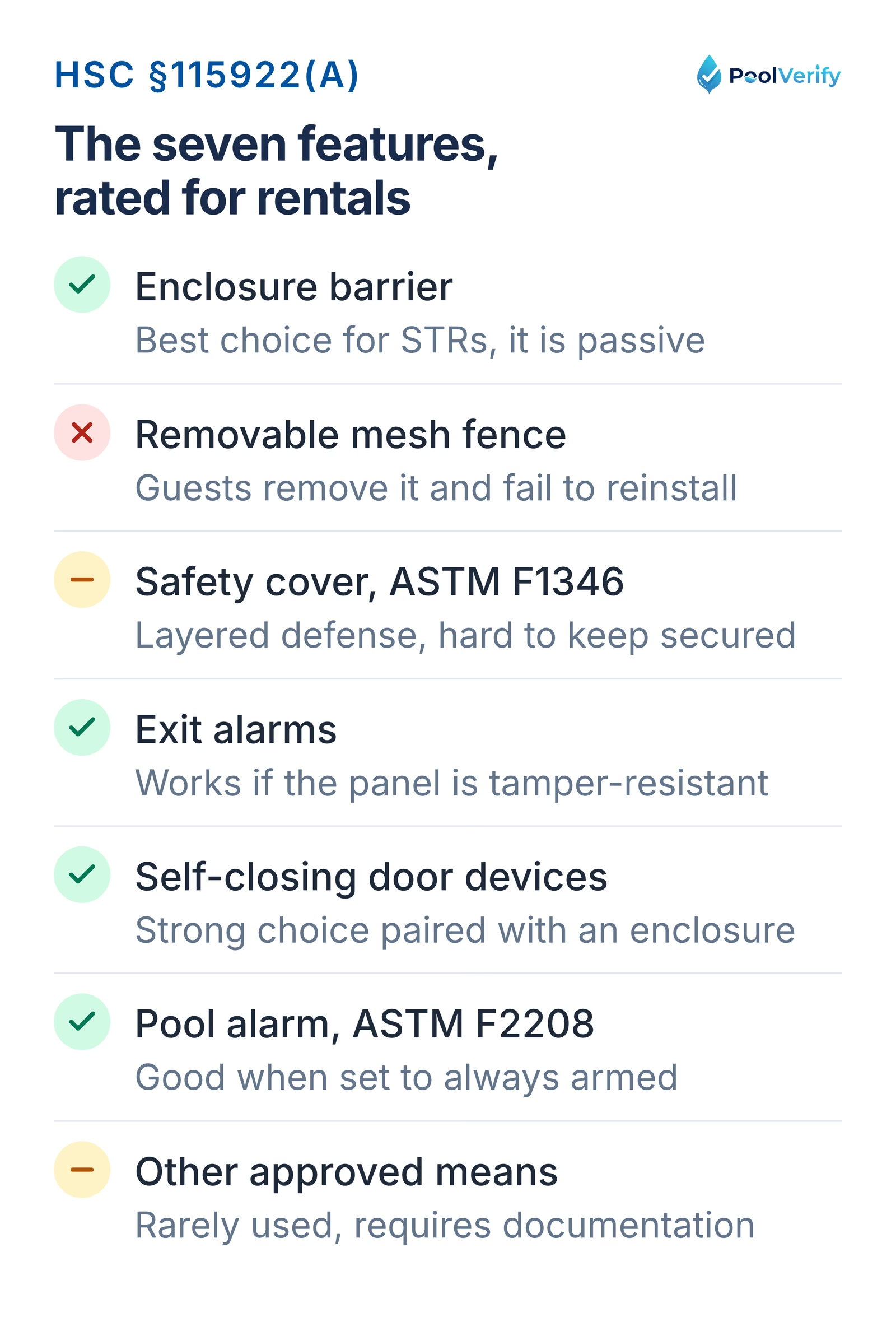
The seven HSC §115922(a) safety features rated for short-term rentals, with the enclosure barrier the best passive choice.
California requires at least two of the seven HSC §115922(a) drowning-prevention features on every covered pool or spa. For an STR, choosing features that work with rotating guests, rather than live-in family, matters. Mesh fencing a guest forgets to re-install, or a home-door alarm the host disables at check-in, defeats the purpose of the law and the statute.
Enclosure barrier meeting HSC §115923 that isolates the pool from the home, minimum 60-inch height, maximum 4-inch gaps between vertical members, self-closing and self-latching gates. Best choice for STRs because it is passive.
Removable mesh fencing meeting ASTM F2286 with a self-closing, self-latching gate. Not recommended for STRs, guests removing it and failing to reinstall is a documented liability pattern.
Approved safety pool cover meeting ASTM F1346. Useful as a layered defense; not ideal as the primary feature for an STR because guest use makes it hard to keep secured between swims.
Exit alarms on doors and windows providing direct pool access, with audible or verbal warnings. Works for STRs if the control panel is tamper-resistant.
Self-closing, self-latching devices on home-to-pool doors with the release mechanism 54 inches or higher from the floor. Strong STR choice paired with an enclosure.
Pool alarm independently certified to ASTM F2208. Good for STRs when set to "always armed" and documented in the house rules.
Other protection means of equal or greater protection, independently verified by the DSA or an approved testing agency. Rarely used; requires documentation.
For an STR pool, the most defensible combination is a compliant enclosure barrier plus self-closing self-latching home-door devices plus an ASTM F2208 pool alarm: three overlapping layers, two of which are passive.
Ready to document your STR pool safety in one California-specific report? PoolVerify's built-in HSC §115922 and BPC §7195 templates capture every required feature with photo evidence and digital signatures, then generate a branded PDF in under 30 seconds. 14-day free trial, no credit card to start. Start your free trial
Airbnb and Vrbo host responsibilities for pools
Airbnb and Vrbo do not set a separate California pool code, but both require hosts to comply with all local laws and to disclose the presence of pools, hot tubs, and their house rules accurately in the listing. Airbnb's host-responsibility standards include local-law compliance, accurate amenity disclosure, and the expectation that safety equipment like pool alarms and covers is maintained and functional.
For California STR hosts, that translates into three practical expectations:
Accurate listing disclosure: every pool, hot tub, spa, and any non-obvious hazard, deep-end-only depth, shared-access pool, no lifeguard, must be listed in the amenities and description.
House rules: post pool-specific rules (no unsupervised children, no diving, no glass, no alcohol around the pool) in both the listing and on a weatherproof sign on-site.
Documented maintenance and inspection: Airbnb does not audit this, but in the event of an incident, both Airbnb's host protection program and third-party liability carriers expect a documented inspection and maintenance trail.
Vrbo's host safety expectations parallel Airbnb's. Neither platform accepts "we didn't know" as a defense when a guest is injured by a code violation the host should reasonably have known about.
How to prepare a California STR pool for guest safety
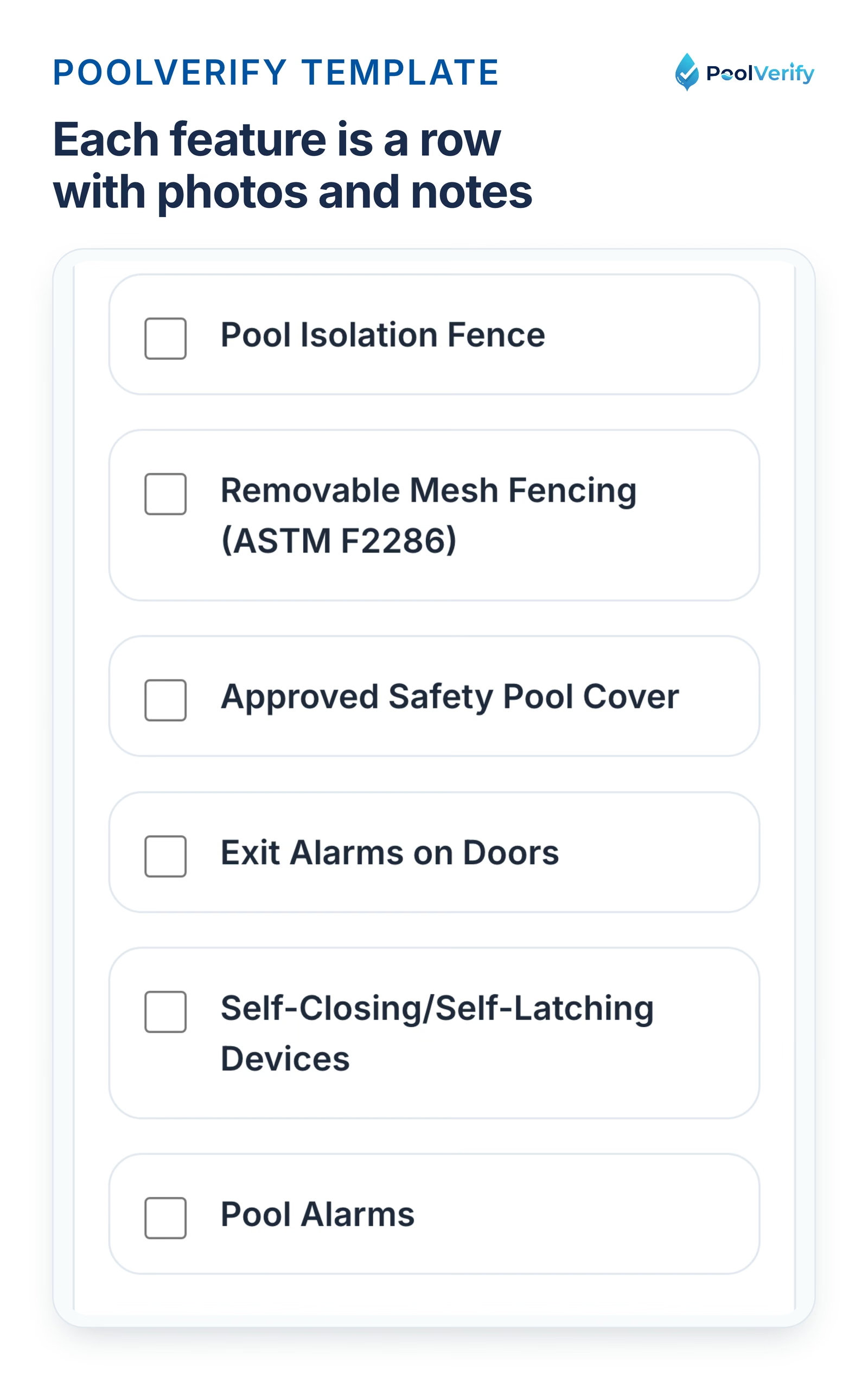
The PoolVerify California template on a phone, with each HSC §115922 safety feature as a checklist row with photo and notes.
Use the following sequence before every season, after any repair, and any time you change STR management companies.
Confirm pool age and remodel history: check the building permit history to confirm whether HSC §115922 was triggered by construction or remodel work.
Inventory installed safety features: photograph and document which of the seven HSC §115922(a) features are present, with a scale reference in each photo.
Verify drain cover compliance: confirm every suction outlet has a VGB Act and ASME A112.19.8 compliant anti-entrapment cover. Cover lifespan is stamped on the face.
Test all safety equipment: self-closing gates, door exit alarms, surface pool alarms. Document pass or fail.
Generate a branded compliance report: PoolVerify compiles the inspection into a California-specific PDF with photos, ESIGN-compliant digital signatures, and a unique inspection ID.
Post safety rules in the listing and on-site: update Airbnb or Vrbo amenities and house rules, and install a weatherproof sign with the same rules poolside.
The full process takes about 45 minutes for a single pool and can be done entirely from a tablet or phone.
Inspection frequency and documentation
For California STR pools, the inspection cadence that minimizes liability is annual at minimum, plus after any remodel, drain-cover replacement, or equipment change. BPC §7195 is only triggered at property transfer, but the heightened commercial duty of care on an STR means a transfer-only inspection cadence is not defensible after a serious incident.
Recommended STR inspection cadence:
Pre-season (once per year): full HSC §115922 and VGB Act compliance inspection with photo documentation.
Post-remodel or repair: any time a permit is pulled, inspect again before re-opening the listing.
After drain cover replacement: document the new cover's stamp, certification, and expected lifespan.
Monthly walk-through: confirm gates self-close, latches engage, alarms sound. A photo log is enough.
Before every change in STR management: so the new manager inherits documented compliance.
Keep each inspection report for at least the pool's remaining useful life plus California's four-year negligence statute of limitations. A PoolVerify-generated PDF is far easier to retrieve four years later than a paper form in a garage file cabinet.
STR host obligations vs. traditional homeowner
The gap between an owner-occupier and an STR operator is wider than most hosts realize.
Obligation
Traditional Homeowner
California STR Host
HSC §115922 safety features
Two of seven required for permitted construction / remodel
Same, no STR exception
BPC §7195 transfer report
On sale only
On sale only (same)
VGB Act drain-cover compliance
Recommended
Often required when pool deemed public under local rules
Listing disclosure of pool/spa
N/A
Required by Airbnb and Vrbo
Posted house rules
N/A
Required best practice; often required by local STR ordinance
Annual safety inspection
Recommended
Strongly advised; effectively required by insurers
Documented guest-safety trail
None required
Required by most STR liability carriers
Local STR permit conditions
N/A
Varies (LA, SF, San Diego, Palm Springs all have conditions)
Liability, insurance, and penalties
Non-compliance with California pool safety law at an STR carries four overlapping risks: city code fines, STR permit revocation, Airbnb or Vrbo listing removal, and personal liability for guest injury or drowning. Of the four, personal liability is the most serious, host protection programs and third-party liability carriers almost universally exclude claims arising from known code violations.
City code enforcement: varies by jurisdiction, but fines for missing or non-functional safety features commonly run from a few hundred dollars per violation per day to several thousand dollars.
STR permit conditions: Los Angeles, San Francisco, San Diego, and Palm Springs all have STR permit regimes. Permits can be suspended or revoked for documented safety violations.
Airbnb and Vrbo listing removal: both platforms remove listings with documented unsafe conditions or unresolved complaints.
Negligence liability: in a drowning or serious injury case, the host's personal assets are at stake. California's comparative-negligence framework can still hold a host majority-liable when a statutory safety feature was missing or non-functional.
A documented inspection is the single most effective piece of defensive evidence. It demonstrates a duty of care, it establishes the pool's compliance baseline, and it shifts the factual record in the host's favor.
How PoolVerify helps STR hosts and property managers
PoolVerify is built exclusively for California pool safety compliance, which makes it the natural fit for STR hosts and the property-management companies that serve them. The BPC §7195 and HSC §115922 templates are pre-loaded, the seven HSC §115922(a) features each have a dedicated photo-and-notes block, and VGB drain-cover verification is a first-class checklist item.
Key features for STR operators:
Responsive web app: complete the inspection from any tablet, phone, or laptop with no app-store install.
Photo documentation: up to 10 photos per item with automatic compression, timestamps, and captions.
Instant branded PDF reports: generated in under 30 seconds with a unique inspection ID for insurer and city records.
ESIGN Act-compliant digital signatures from host, inspector, and property manager.
Cloud storage: 256-bit encryption, long-term retention, accessible years later if an incident occurs.
Viewer roles (Professional and Business plans), share read-only access with insurers, HOAs, city inspectors, or co-hosts.
Team management (Business plan), property managers running multiple STR pools can assign inspectors, track completion, and see portfolio-level compliance.
Pricing starts at $39/month on annual billing for solo hosts, $79/month annual for property managers needing unlimited inspections and custom checklists, and $159/month annual for multi-inspector teams. A 14-day free trial with the full limits of the plan you choose is available, no credit card to start.
Limitations
This guide is general information about pool safety law, not legal advice; the current text of HSC §115922 and BPC §7195 on leginfo.legislature.ca.gov controls, and local building departments add their own requirements. PoolVerify is inspection software for California residential pool safety inspections; it does not perform inspections, certify inspectors, or issue compliance certificates.
Frequently asked questions
Do California pool safety laws apply to Airbnb and short-term rentals?
Yes. BPC §7195 and HSC §115922 apply to residential pools statewide, including those at short-term rentals. HSC §115922 is triggered when a building permit is issued for new construction or remodeling, and the federal Virginia Graeme Baker Act applies to pools treated as public by local rules. Neither state statute includes a rental-occupancy exception, and Airbnb's host-responsibility policy requires compliance with all local laws.
How many safety features does a California STR pool need?
At least two of the seven drowning-prevention features listed in HSC §115922(a): isolating enclosure, removable mesh fencing, ASTM F1346 safety cover, exit alarms, self-closing self-latching home-door devices, ASTM F2208 pool alarm, or an equivalent DSA-approved alternative. For a short-term rental, the most defensible combination is a compliant enclosure barrier plus self-closing home-door devices plus an ASTM F2208 pool alarm.
Does Airbnb require a pool inspection before hosting?
Airbnb does not mandate a specific pool inspection, but its host policies require compliance with all local laws and accurate listing disclosure. California STR hosts with pools should complete a BPC §7195 and HSC §115922 safety inspection annually at minimum, plus after any repair or remodel. Documented inspections also protect the host if a guest incident occurs or if city code enforcement audits the STR permit.
Are hot tubs and spas covered by the same California rules?
Yes. HSC §115922 defines swimming pool and spa together, so California hot tubs at STRs must meet the same safety-feature, barrier, and anti-entrapment requirements as pools. Spa covers must meet ASTM F1346 or equivalent to count as an approved safety feature, and suction outlets on spas are covered by the VGB Act just like pool drains.
What happens if my California Airbnb pool is not compliant?
Non-compliance can lead to city code-enforcement fines, STR permit revocation in cities like Los Angeles and San Francisco, Airbnb listing removal for unsafe conditions, and, most seriously, personal liability if a guest drowning or injury occurs. Host protection programs and third-party liability carriers typically exclude claims arising from known code violations, which leaves the host's personal assets exposed.
Document compliance before your next guest arrives
California STR hosts inherit every pool safety obligation a homeowner has, plus disclosure duties to Airbnb and Vrbo, plus local STR permit conditions, plus a heightened commercial duty of care. The cost of meeting every requirement is low; the cost of getting caught non-compliant after an incident is not.
A documented inspection is the single most effective defense, against city code enforcement, against insurer claim denials, against platform delisting, and against personal liability. It also takes less than an hour per property.
PoolVerify is the only inspection platform built exclusively for California pool safety, pre-loaded BPC §7195 and HSC §115922 templates, VGB drain-cover verification, integrated photo documentation, and ESIGN-compliant digital signatures on any device.
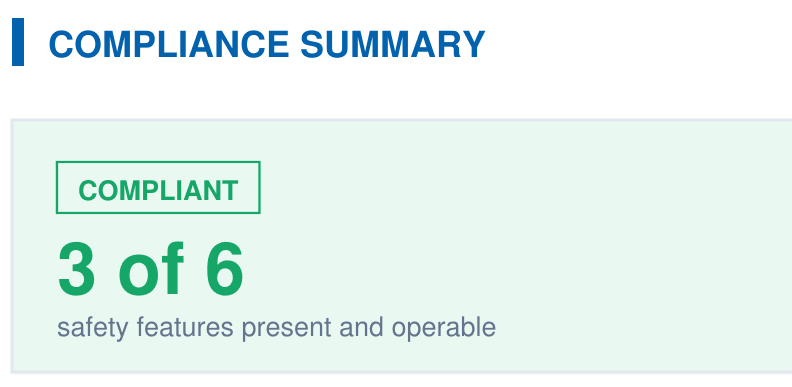
A branded PDF with the compliance summary, the feature table, each finding with its photos, and the signature, generated on‑site when the BPC §7195 and HSC §115922 checklist is complete.