Pool inspection requirements for Los Angeles, San Diego, Orange County, and all California counties. BPC §7195 baseline laws plus county-specific permit and enforcement variations.
California pool safety regulations operate on multiple levels. While state laws like BPC §7195 and HSC §115922 establish baseline requirements, each county adds its own layer of specifications, enforcement procedures, and inspection frequencies. For pool inspectors, service companies, and property owners, understanding these county-by-county variations is critical for compliance.
This comprehensive guide breaks down California's state baseline requirements and examines how ten major counties, representing over 60% of the state's population, implement and enforce pool safety regulations in 2026.
Understanding California's Pool Safety Framework
California pool safety regulations operate through a hierarchical framework where state laws establish minimum standards and local jurisdictions add additional requirements. This creates a compliance landscape where pool owners must meet both state baseline requirements and county-specific regulations.
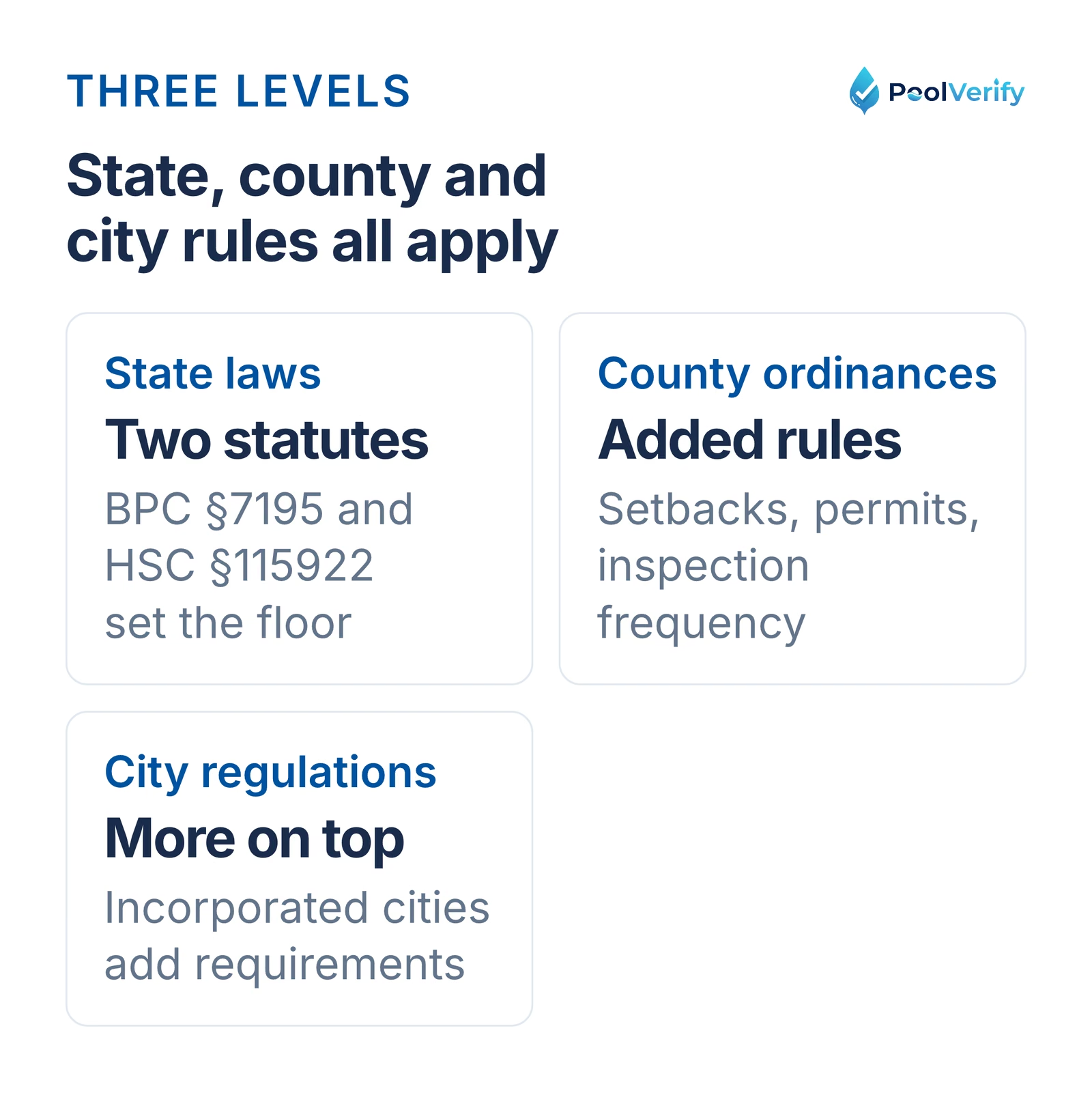
The framework consists of three levels:
State Laws: BPC §7195 and HSC §115922 establish mandatory minimum safety features
County Ordinances: Counties add requirements for setbacks, permits, inspection frequency, and enforcement procedures
City Regulations: Incorporated cities within counties may impose additional requirements beyond county standards
Understanding this hierarchy is essential because compliance requires meeting requirements at all three levels. According to the California Department of Public Health, many California cities and counties have additional pool laws and requirements beyond state law.
California pool rules stack in three levels: state statutes, county ordinances on permits and setbacks, city regulations.
State Baseline Requirements (BPC §7195)
Business and Professions Code §7195 establishes California's foundational pool safety inspection requirements during property transfers. Enacted to prevent accidental drownings, particularly among children under five years old, this law mandates specific safety features at all residential swimming pools and spas.
What BPC §7195 Requires
BPC §7195 requires that home inspection reports for properties with pools or spas must identify which of the seven drowning prevention safety features listed in HSC §115922 are present. The inspection must specifically state if the pool or spa has fewer than two of the required safety features.
The law applies to:
Property transfers requiring a home inspection
Residential swimming pools and spas
Properties sold by licensed real estate agents
Single-family homes and multi-family properties with pools
When BPC §7195 Inspections Are Required
Pool safety inspections under BPC §7195 are mandatory during real estate transactions. While the timing can vary by county, inspections typically occur during the escrow period, before final sale closing. Some counties require proof of inspection before transfer of title, while others allow post-closing compliance periods.
Ready to streamline your California pool safety inspections?PoolVerify helps you complete BPC §7195 inspections on any device and generate professional PDF reports instantly. Built exclusively for California pool compliance. Start Your Free Trial
State Baseline Requirements (HSC §115922)
Health and Safety Code §115922, also known as the Swimming Pool Safety Act, establishes the seven drowning prevention safety features that pools must have. Upon issuance of a building permit for construction of a new swimming pool or spa, or remodeling of an existing pool at a private single-family home, the pool must be equipped with at least two of these seven features.
The Seven Required Safety Features
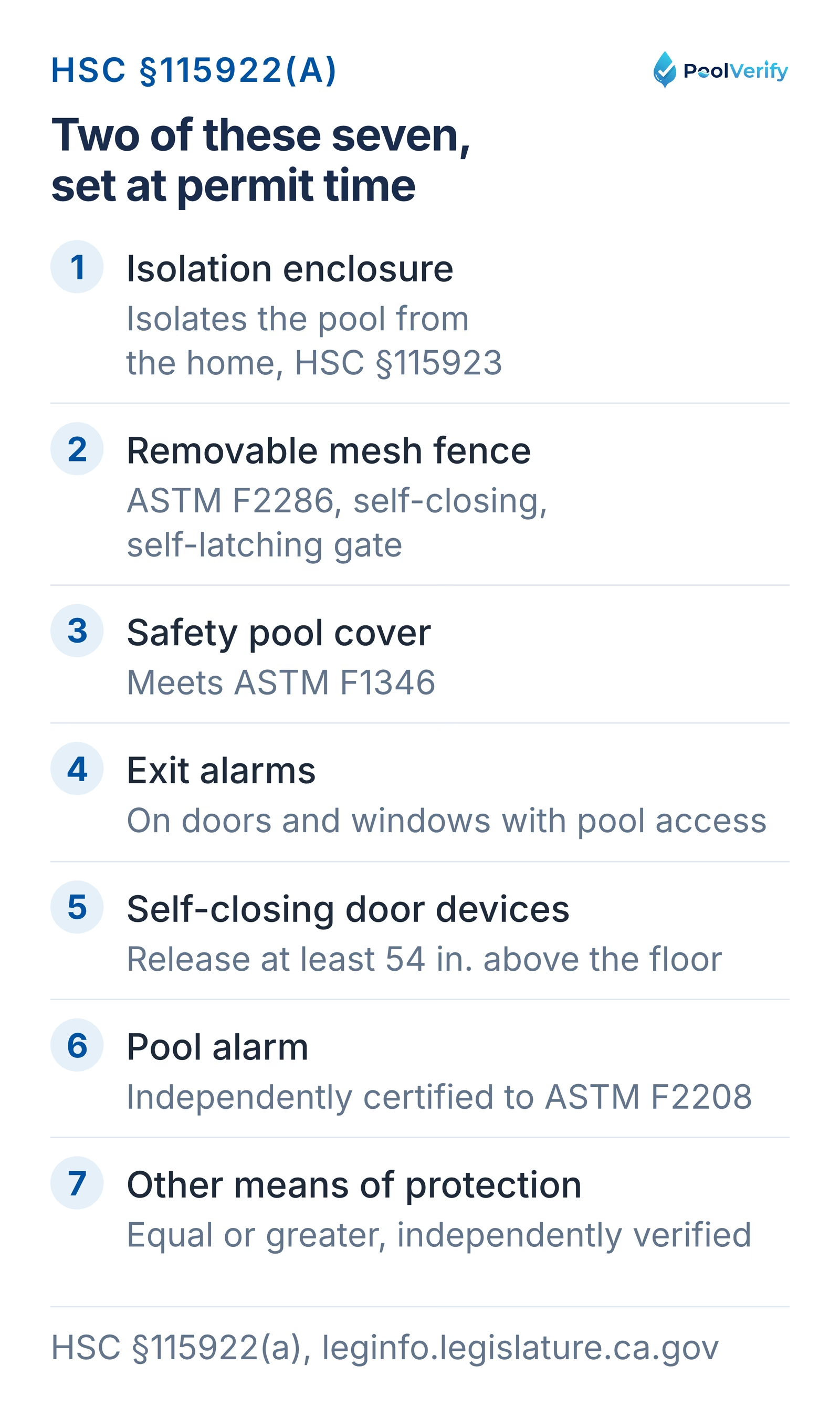
According to HSC §115922, pools must have at least two of the following:
Enclosure with self-closing, self-latching gate: Barriers at least 60 inches high with gates that open away from the pool and close and latch on their own, the latch at least 60 inches above the ground
Exit alarms on residence doors: Alarms that sound when doors providing pool access are opened
Self-closing, self-latching device on all pool access doors: Hardware that automatically secures doors at 54 inches or higher
Approved safety pool cover: ASTM F1346 compliant covers that meet specific safety standards
Pool safety net: Professionally installed nets meeting ASTM F2286 standards
Pool alarm: Subsurface or surface wave detection systems meeting ASTM F2208 standards
Other approved means of protection: Alternative systems approved by the governing body
For new pool construction or major remodeling, local building officials must inspect and approve these safety devices before issuing final approval for completion of permitted work.
The seven HSC §115922(a) drowning prevention features; a new or remodeled pool needs two of them at permit time.
County-by-County Pool Inspection Requirements
While state law provides the foundation, California's 58 counties implement pool safety requirements differently. The following sections detail requirements for California's ten most populous counties, which collectively represent over 19 million residents and hundreds of thousands of residential pools.
Los Angeles County Pool Requirements
Los Angeles County, with over 10 million residents, maintains some of California's most comprehensive pool inspection requirements. The county distinguishes between public and residential pools, with different permit and inspection protocols for each.
Public Pool Requirements
According to the Los Angeles County Department of Public Health, any person proposing to construct, reconstruct, renovate, alter, relocate, or replace a public pool must submit legible plans to the Recreational Waters Program for review and written approval before commencing work.
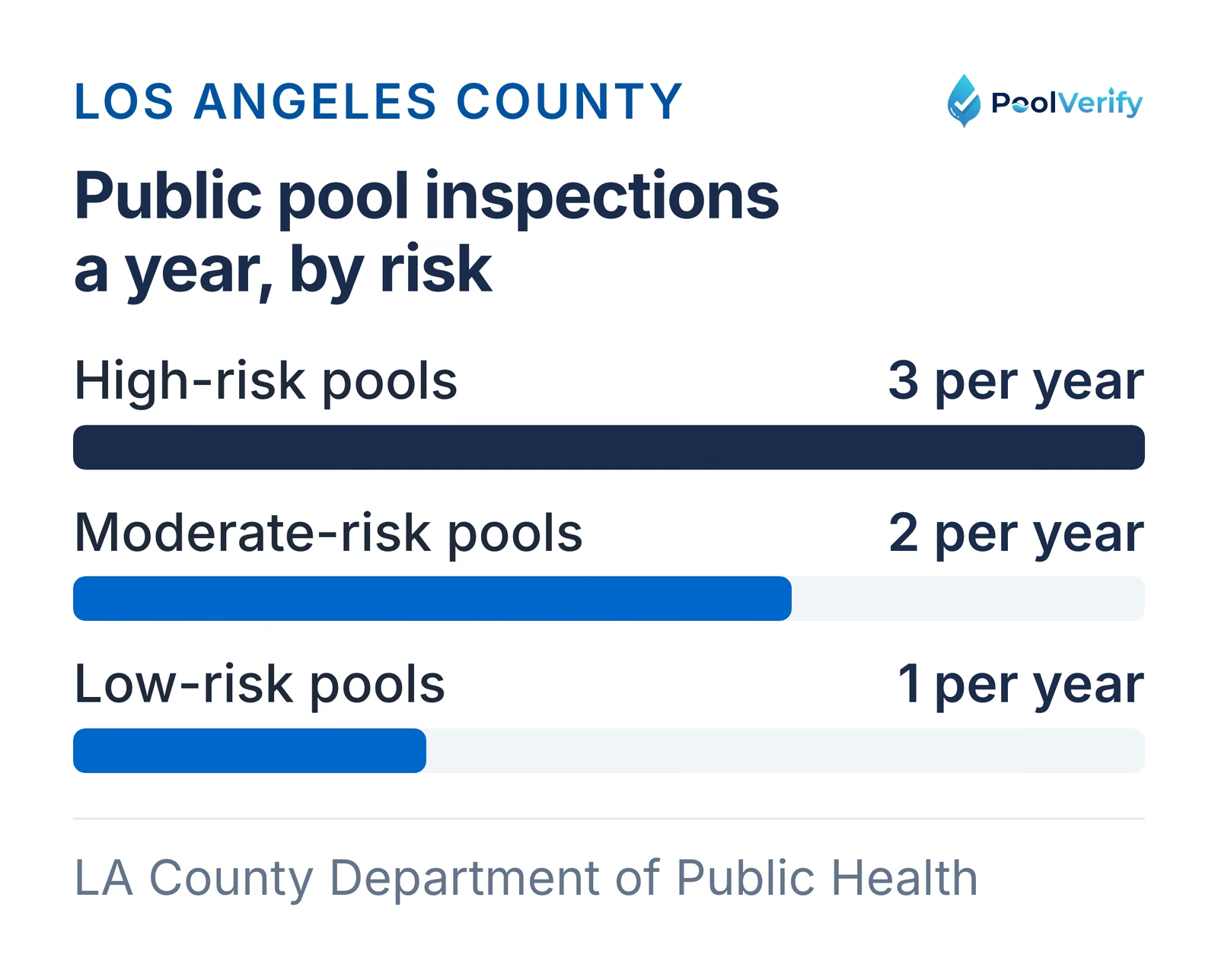
Public pools receive routine inspections based on risk:
High-risk pools: 3 inspections per year minimum
Moderate-risk pools: 2 inspections per year
Low-risk pools: 1 inspection per year minimum
Residential Pool Requirements
For residential pool construction in LA County, permits are issued by the Los Angeles Department of Building and Safety (for City of LA properties) or LA County Public Works (for unincorporated areas). The Combination Swimming Pool Permit is the most popular option, covering pool construction plus related electrical, plumbing, and mechanical work.
LA County Specific Requirements
Los Angeles specifies a minimum barrier height of 4½ feet for existing pools (compared to 5 feet in many other counties), with gates being self-latching with latches located at 4½ feet minimum above ground. The city's municipal code (LAMC SEC. 94.103.0) establishes specific permit and inspection requirements.
Plan review timelines: LA County's Recreational Waters Program aims to provide initial plan reviews within 20 days of plan submissions.
Los Angeles County inspects high-risk public pools 3 times a year, moderate-risk pools twice and low-risk pools once.
San Diego County Pool Requirements
San Diego County implements pool safety requirements through its Department of Environmental Health, Food and Housing Division. The county updated its standards effective October 1, 2025, to reflect new Suction Outlet Fittings Assembly (SOFA) standards.
Public Pool Permitting
The San Diego County Pool Plan Check unit reviews plans for new public swimming pools and existing public pools undergoing renovation. Four sets of legible paper plans or digital plans uploaded via the Citizen Portal are required for submission.
Inspections may be required at various stages of construction:
The Food and Housing Division does not review plans for residential swimming pools and spas. Residential pool construction requirements refer to the Swimming Pool Safety Act section of the California Health & Safety Code.
San Diego County building permits are required for all in-ground pools. According to local pool contractors, building permit requirements ensure pools meet safety and building standards through inspections at various stages of construction.
San Diego Enforcement
San Diego maintains detailed public pool inspection guides and conducts regular compliance inspections. The county requires annual permit renewals for all public pools, with fees based on pool size and type.
Orange County Pool Requirements
Orange County oversees pool safety through OC Development Services for unincorporated areas, while incorporated cities within the county maintain their own building departments. The county requires comprehensive plan submissions for all pool construction.
Orange County enforces standard California pool fence laws requiring 5-foot barriers with gaps of 4 inches or less between fence slats and 2 inches or less under the fence. However, some cities within Orange County may require additional safety features or higher fencing.
According to pool fence contractors serving the region, Orange County pool fence requirements follow state standards but local jurisdictions may impose stricter requirements for setbacks, lighting, and noise ordinances restricting pool equipment operation hours.
Inspection Process
Orange County requires multiple inspections during pool construction:
Footing and steel inspection
Plumbing rough inspection
Electrical rough inspection
Gas line inspection (if applicable)
Final inspection including barrier compliance
Riverside County Pool Requirements
Riverside County demonstrates significant variation between unincorporated county areas and incorporated cities, particularly regarding acceptable barrier types. The county implements requirements through its Building and Safety Department and Department of Environmental Health.
Notable Riverside County Variations
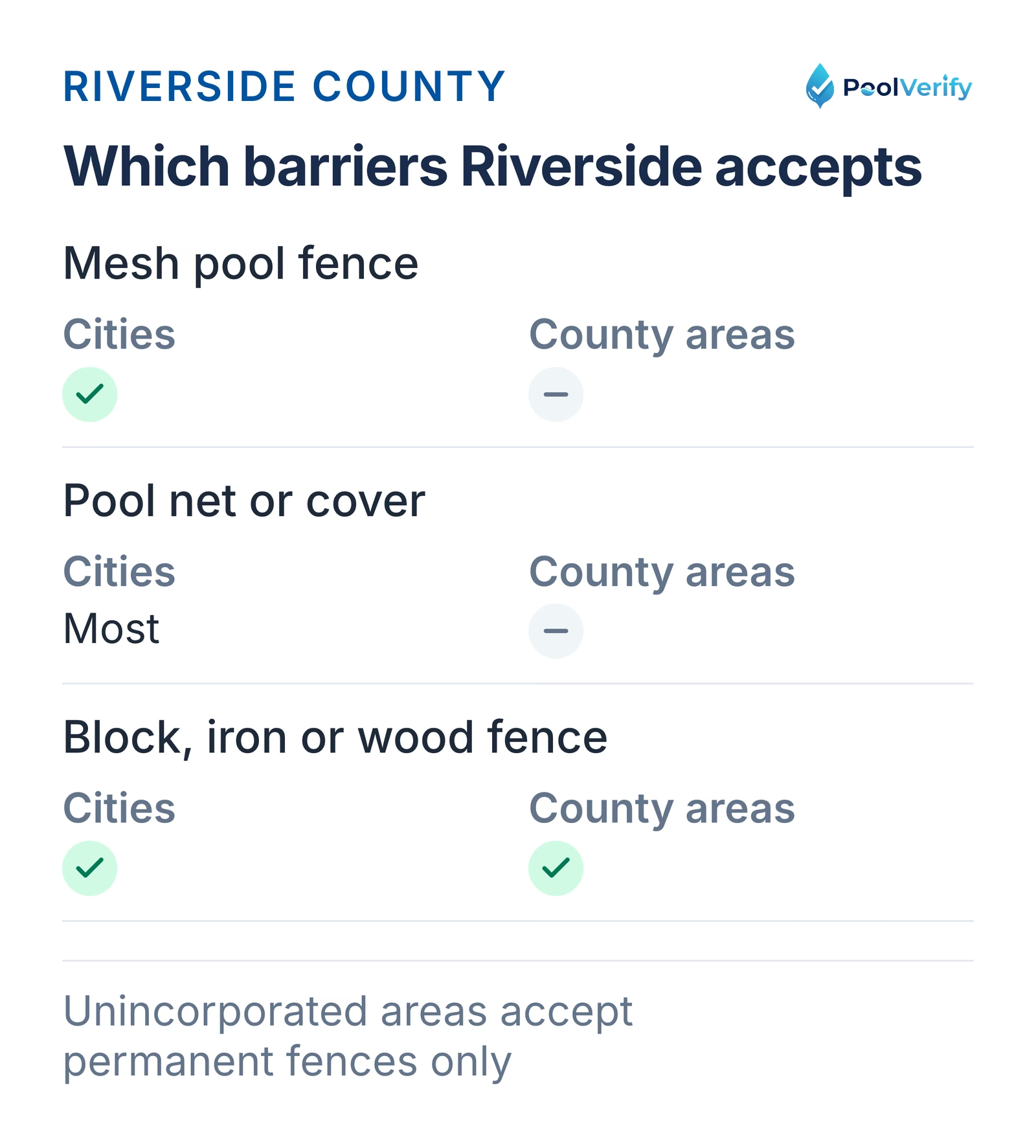
A striking example of county-level differences: According to California pool safety resources, in Riverside County, every city accepts mesh pool fence for code and most accept pool nets or covers for code. However, Riverside County unincorporated areas only accept permanent block, iron, or wood fences.
This demonstrates how pool compliance can vary dramatically within a single county based on whether the property is in an incorporated city or unincorporated county area.
Setback requirements in unincorporated areas: In-ground pools or spas must be 5 feet from side and rear property lines to water's edge.
Environmental Health Requirements
The Riverside County Department of Environmental Health requires plan approval before constructing or altering swimming pools, spas, or associated structures. Registered Environmental Health Specialists conduct routine, unannounced inspections and complaint investigations to verify compliance with pool code requirements and Riverside County Ordinances.
Riverside cities accept mesh fences and most accept nets or covers; unincorporated areas allow only block, iron or wood.
San Bernardino County Pool Requirements
San Bernardino County requires permits from multiple departments for pool construction and maintains comprehensive public pool inspection programs. The county provides detailed construction guides for public pools.
Public Pool Construction
The San Bernardino County Public Pool Construction Guide requires plan approval from the Department of Public Health, Division of Environmental Health Services (DEHS) before constructing, altering, converting, or remodeling any public pool or auxiliary structure.
Request for inspections should be made at least 5 business days in advance. Inspections are required at multiple construction stages:
Pre-construction meeting
Rough plumbing inspection
Equipment installation inspection
Pre-operational inspection
Final inspection and approval
Residential Pool Permits
According to San Bernardino County EZ Online Permitting, a Pool and Spa Permit is required prior to construction of any pool or spa on a property. Applicants must submit plans and supporting documentation for review and approval by the County.
Permits must also be obtained from Environmental Health Services Water/Waste Water Program at (800) 442-2283.
Inspection Requirements
The county requires inspections at various construction stages. According to their FAQ on pool inspections, pool and spa construction typically requires:
Barrier/fence inspection
Bonding/grounding inspection
Plumbing inspection
Deck inspection
Final inspection
Santa Clara County Pool Requirements
Santa Clara County, home to Silicon Valley, implements pool requirements through its Department of Environmental Health with emphasis on both construction permits and operating permits for public pools.
Permit Application Process
According to the Santa Clara County DEH, public pools require permits to operate and must be designed and built to meet standards in the California Building Code and California Health and Safety Code.
The county has 30 calendar days to review all plan submittals. This review timeline is notably longer than Los Angeles County's 20-day target, reflecting different county procedures.
Inspection Frequency
After construction and initial approval by DEH inspectors, public pools are inspected at least twice per year to ensure safe and sanitary operation. Inspectors verify:
Water chemistry and clarity
Entrapment risks and drain covers
Gates and enclosure compliance
Disinfection and filtration equipment
Depth markers and life safety equipment
Safety Survey Requirements
Santa Clara County conducts pool safety surveys to assess compliance with state and local requirements. Pool owners may be contacted for survey participation as part of ongoing safety monitoring efforts.
Alameda County Pool Requirements
Alameda County distinguishes clearly between public and private pools, with different permit requirements for each category. Private pools serving three or fewer residential units do not require DEH permits.
Private pools and spas intended for use by occupants of no more than three residential units do not require a permit from the Department, though they must still comply with state safety requirements under BPC §7195 and HSC §115922.
Permit Application
Alameda County provides an online permit portal for pool permit applications. The county requires detailed plan submissions including:
Pool design and specifications
Barrier and safety feature plans
Equipment specifications
Water circulation and filtration systems
Chemical feed systems
Inspection Standards
Public pools receive regular inspections covering:
Water quality testing
Safety equipment verification
Barrier compliance
Chemical storage and handling
Record keeping requirements
Sacramento County Pool Requirements
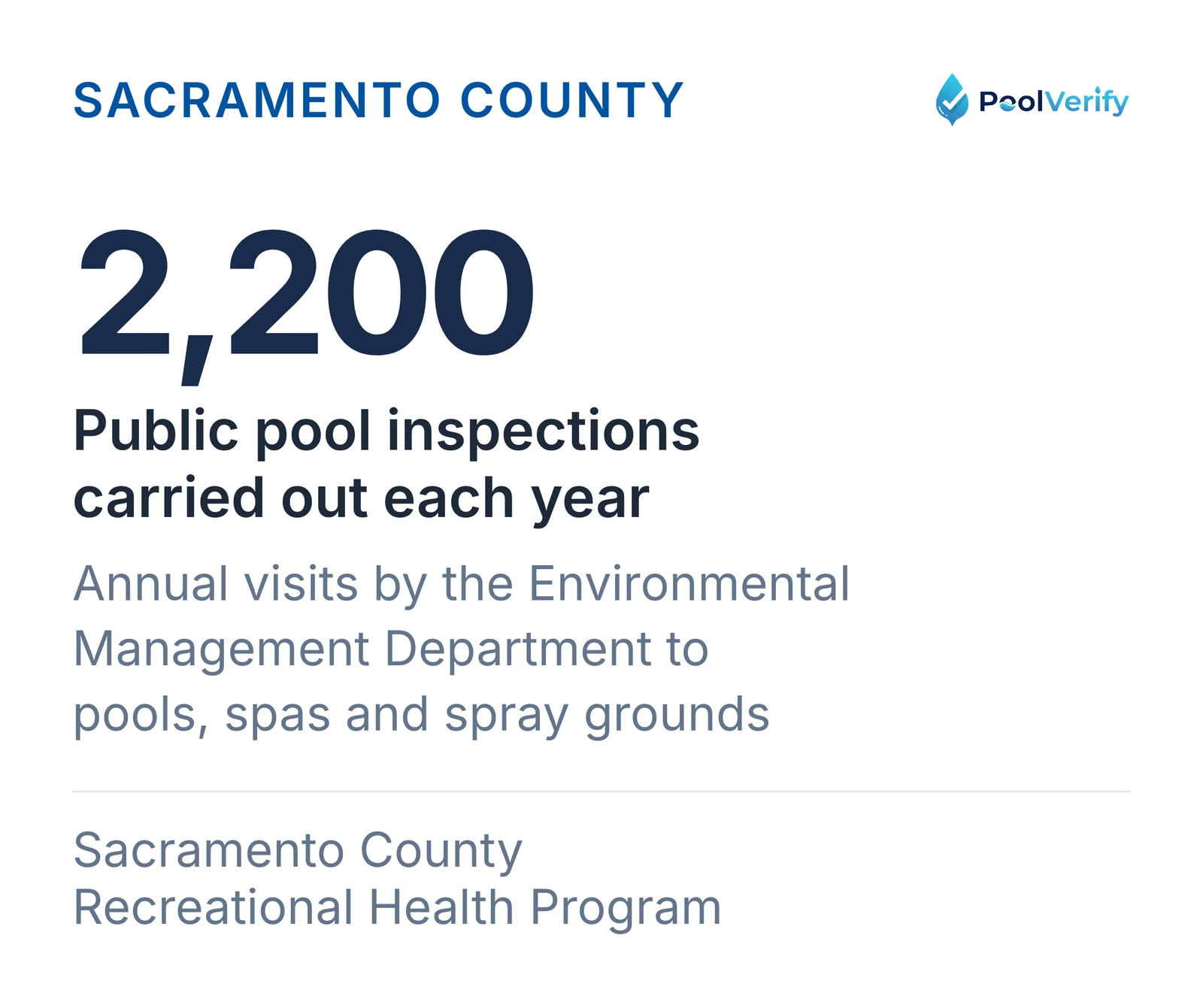
Sacramento County conducts approximately 2,200 public pool inspections annually through its Environmental Management Department. The county has detailed requirements for both residential and public pool construction.
Public Pool Permitting
According to the Sacramento County Recreational Health Program, a new permit must be obtained anytime a public pool, spa, spray ground, or water park feature is built or when ownership changes occur.
Sacramento County's Environmental Management Department conducts annual inspections at approximately 2,200 public pools, spas, spray grounds, and water parks throughout the county.
Residential Pool Requirements
For residential pools, Sacramento County requires detailed pool plans showing:
Exact dimensions and location on property
Setback distances from structures and property lines
Equipment locations and specifications
Barrier and gate details including heights and hardware
Structural specifications
Plumbing layouts and equipment
Electrical plans including bonding and grounding
Drainage details
Forms and Documentation
Sacramento County maintains extensive pool forms and documents for permit applications, inspection requests, and compliance documentation.
Sacramento County's Environmental Management Department inspects about 2,200 public pools and spas each year.
Contra Costa County Pool Requirements
Contra Costa County enforces pool requirements through its Health Services Department and maintains specific setback requirements that differ from some other counties.
Permit Requirements
According to Contra Costa County, all public pools must have a public health permit, which must be renewed annually. Plan review is required for any work that changes or upgrades any part of a public pool or spa.
In-ground pools or spas must be 5 feet from side and rear property lines to water's edge
Above-ground pools or spas may have greater setbacks and may require additional review
Inspection Frequency
Contra Costa Environmental Health inspects public pools annually and upon reports of concern. The county maintains detailed inspection protocols covering:
Water chemistry and testing
Safety equipment and barriers
Filtration and circulation systems
Compliance with the Swimming Pool and Spa Safety Act
Fresno County implements pool safety requirements through its Department of Public Health, with emphasis on both construction permits and ongoing compliance monitoring.
Permit and Inspection Requirements
While specific Fresno County pool inspection frequency information is limited in public resources, the county follows California state standards requiring that residential pools have safety openings or devices inspected and approved.
According to the City of Fresno Consumer Notice, residential swimming pools, spas, and hot tubs must comply with state safety requirements, with property owners responsible for ensuring compliance during property transfers.
Public Pool Standards
Fresno County maintains inspection schedules for public pools similar to other California counties, with frequency based on facility type and risk level. The county's daily inspection schedule demonstrates ongoing monitoring of recreational facilities throughout the county.
Safety Requirements
Fresno County enforces standard California safety requirements including:
60-inch minimum barrier height
Self-closing, self-latching gates with the latch at least 60 inches above the ground
Proper drain cover compliance (VGBA standards)
At least two of seven HSC §115922 safety features
County Requirements Comparison Table
The following table compares key pool inspection and permit requirements across California's ten most populous counties:
County
Public Pool Inspection Frequency
Plan Review Timeline
Residential Permit Required
Setback Requirements (Rear/Side)
Barrier Type Restrictions
Los Angeles
1-3x/year (risk-based)
20 days
Yes
Varies by city
Standard (4.5' min existing)
San Diego
Annual minimum
30 days
Yes
5 feet typical
Standard (5' min)
Orange
Annual minimum
30 days
Yes
5 feet typical
Standard (5' min)
Riverside
Annual minimum
30 days
Yes
5 feet
Unincorporated: permanent only
San Bernardino
Annual minimum
30 days
Yes
5 feet typical
Standard (5' min)
Santa Clara
2x/year minimum
30 days
Public only
5 feet typical
Standard (5' min)
Alameda
Annual minimum
30 days
Public only
5 feet typical
Standard (5' min)
Sacramento
Annual minimum
30 days
Yes
5 feet typical
Standard (5' min)
Contra Costa
Annual minimum
30 days
Public only
5 feet
Standard (5' min)
Fresno
Annual minimum
30 days
Yes
5 feet typical
Standard (5' min)
Note: Requirements may vary within incorporated cities in each county. Always verify with local building department.
Key Differences Across Counties
While all California counties must enforce state baseline requirements, significant variations exist in implementation, enforcement, and additional requirements.
Permit Review Timelines
Counties show variation in plan review timelines:
Fastest: Los Angeles County (20 days target)
Standard: Most counties (30 days)
Variation: Some counties may take longer for complex projects
Inspection Frequency
Public pool inspection frequency varies significantly:
Most Frequent: Los Angeles County (up to 3x/year for high-risk pools)
Most Common: Annual inspections minimum (most counties)
Enhanced: Santa Clara County (2x/year minimum)
Barrier Requirements
Most counties follow standard 5-foot barrier requirements, with notable exceptions:
Los Angeles: Allows 4.5-foot barriers for existing pools
Riverside County: Unincorporated areas restrict barrier types to permanent materials (no mesh fences)
Residential vs. Public Pool Distinction
Counties differ in residential pool permit requirements:
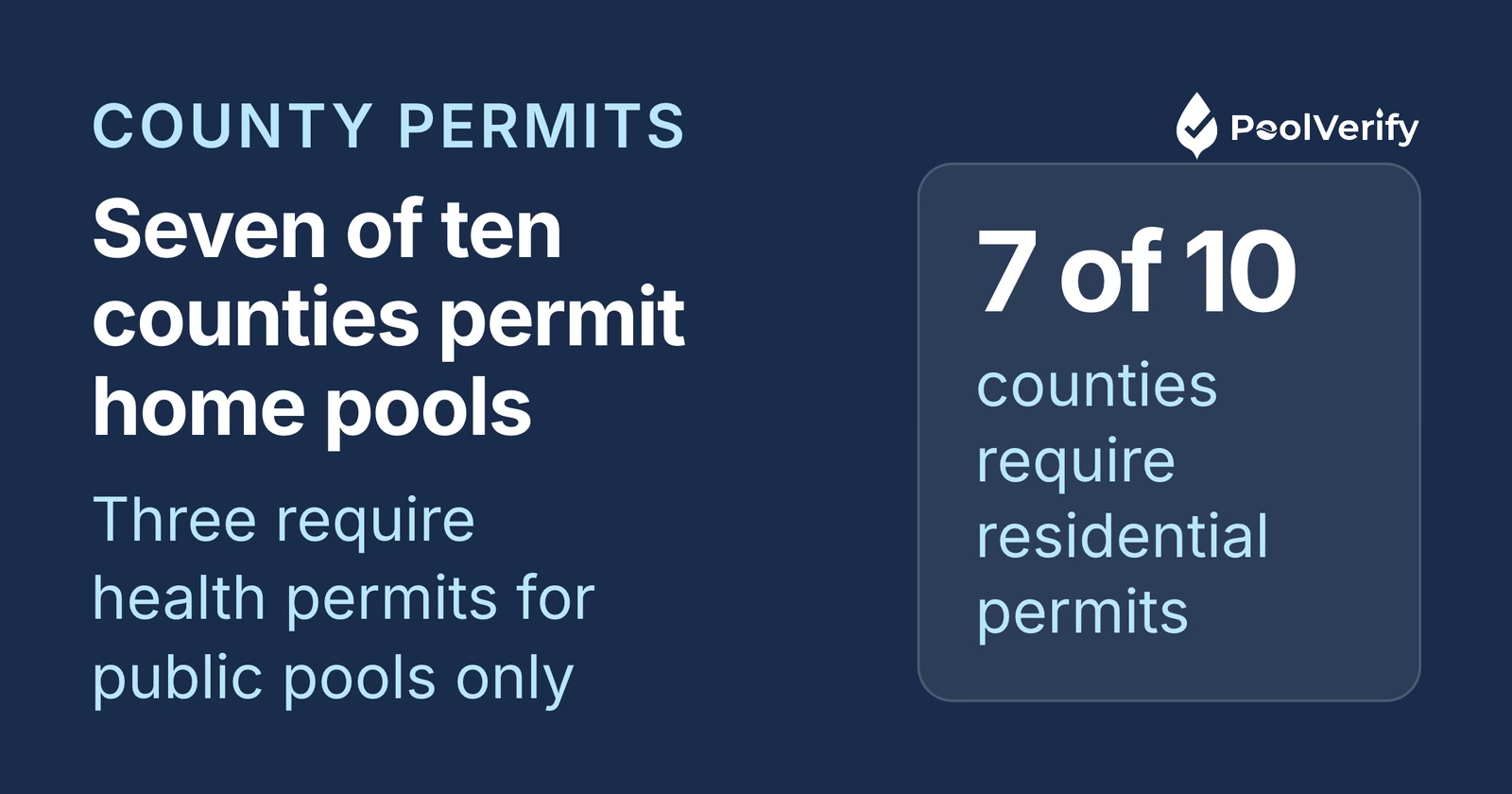
Full Permits Required: Los Angeles, San Diego, Orange, Riverside, San Bernardino, Sacramento, Fresno
Public Pools Only: Santa Clara, Alameda, Contra Costa (private pools don't require DEH permits but must comply with state laws)
Setback Requirements
While most counties require 5-foot setbacks from property lines to pool water's edge, specific requirements can vary:
Some counties measure to pool edge vs. water's edge
Above-ground pools may have different requirements
Local zoning may impose additional restrictions
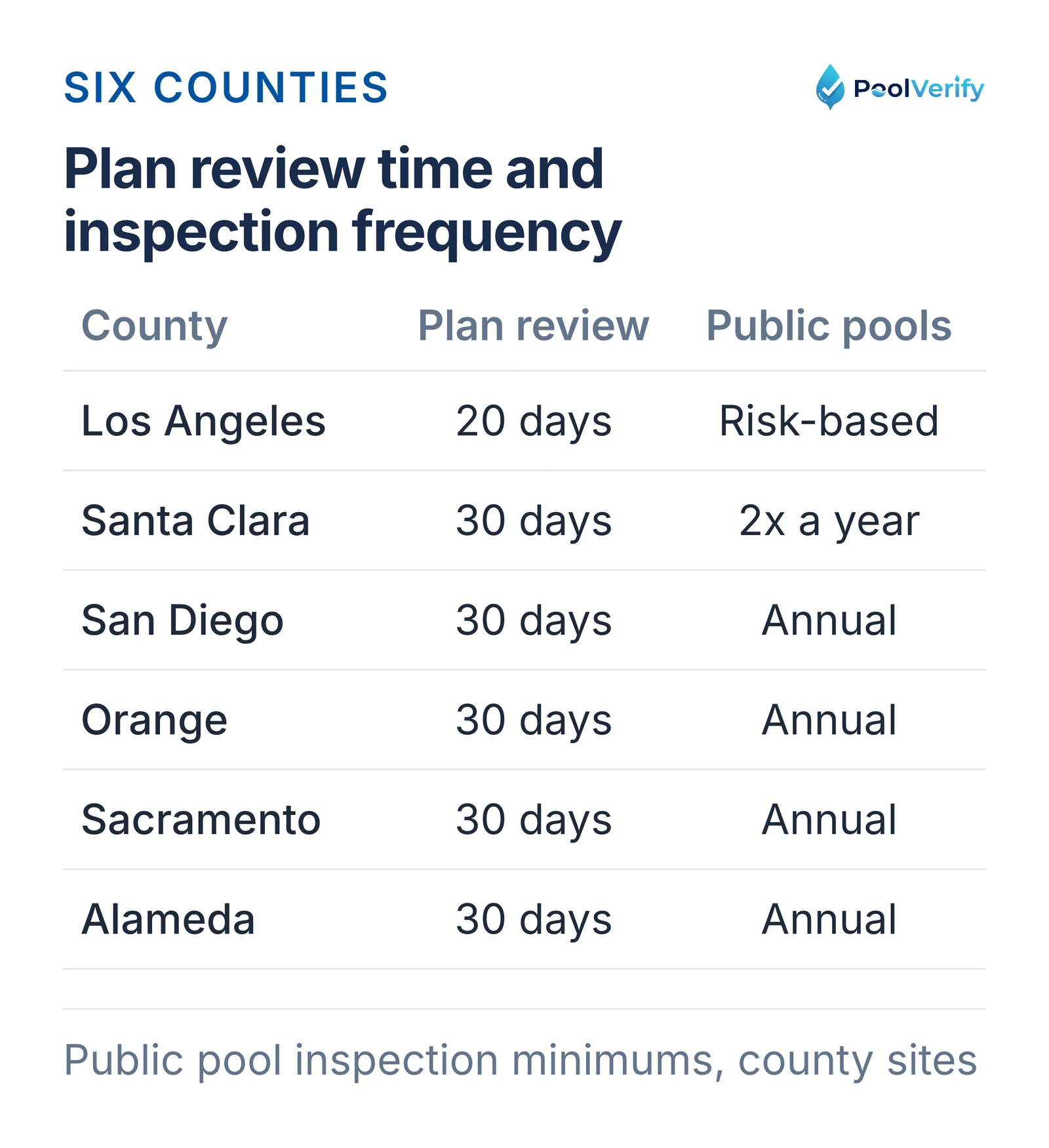
Plan review is 20 days in Los Angeles, 30 elsewhere; Santa Clara inspects public pools twice a year, most counties once.
How to Ensure Compliance in Your County
Given the complexity of multi-level pool safety regulations, ensuring compliance requires a systematic approach addressing state, county, and city requirements.
Step 1: Identify Your Jurisdiction
Determine whether your property is in:
An incorporated city (check city building department requirements)
Unincorporated county area (check county building department requirements)
A special district with additional requirements
Step 2: Research County-Specific Requirements
Contact your local building department to verify:
Current permit requirements and fees
Plan submission requirements
Required inspection stages
Setback requirements specific to your property zoning
Acceptable barrier types and materials
Timeline for plan review and inspections
Step 3: Meet State Baseline Requirements
Ensure compliance with both:
BPC §7195: Required for property transfers, mandates home inspection reports identify which safety features are present
HSC §115922: Requires at least two of seven drowning prevention safety features for new construction or major remodeling
Step 4: Use Professional Inspection Services
For property transfers or compliance verification, consider professional pool inspection services. PoolVerify provides California-compliant inspection software that:
Covers all BPC §7195 and HSC §115922 requirements
Generates instant PDF reports with digital signatures
Works on any device for on-site inspections
Ensures compliance with state and local requirements
Step 5: Maintain Documentation
Keep organized records of:
Original building permits and approved plans
Inspection reports and approvals
Equipment installation certifications
Annual maintenance records
Compliance updates when regulations change
Step 6: Stay Updated on Regulation Changes
Pool safety regulations evolve. Monitor:
State legislative changes (California Legislature website)
County health department announcements
Local building department updates
Professional association newsletters
Limitations
This guide is general information about pool safety law, not legal advice; the current text of HSC §115922 and BPC §7195 on leginfo.legislature.ca.gov controls, and local building departments add their own requirements. PoolVerify is inspection software for California residential pool safety inspections; it does not perform inspections, certify inspectors, or issue compliance certificates.
Frequently Asked Questions
Do all California counties require pool inspections during property sales?
Yes, but with variations in enforcement. BPC §7195 is a state law that applies statewide, requiring home inspection reports to identify pool safety features during property transfers. However, counties differ in how strictly they enforce this requirement and whether they require proof of inspection before closing. Some counties conduct follow-up inspections, while others rely on home inspector reports.
Which California county has the strictest pool requirements?
Los Angeles County is generally considered to have the most comprehensive requirements, with risk-based inspection frequency (up to 3 times per year for high-risk public pools), detailed plan review processes, and the fastest review timelines (20 days). However, Riverside County unincorporated areas have the most restrictive barrier requirements, accepting only permanent fencing materials.
Can I use a mesh pool fence in all California counties?
No. While most California counties accept mesh pool fences that meet height and spacing requirements, Riverside County unincorporated areas only accept permanent block, iron, or wood fences. Incorporated cities within Riverside County typically do accept mesh fences. Always verify acceptable barrier types with your specific local building department before installation.
How often are public pools inspected in California?
Inspection frequency varies by county. Los Angeles County inspects high-risk public pools 3 times per year, moderate-risk pools twice per year, and low-risk pools once per year. Santa Clara County inspects public pools at least twice per year. Most other counties conduct annual inspections minimum, with additional inspections triggered by complaints or violations.
Do private residential pools require county permits in California?
It depends on the county. Los Angeles, San Diego, Orange, Riverside, San Bernardino, Sacramento, and Fresno counties require permits for residential pool construction. Santa Clara, Alameda, and Contra Costa counties don't require permits from the Department of Environmental Health for private pools serving three or fewer residential units, though these pools must still comply with state safety laws (BPC §7195 and HSC §115922).
What happens if my pool doesn't meet county requirements?
Non-compliance can result in several consequences: failure of home inspection during property sale (potentially delaying or preventing sale), fines and penalties from code enforcement, orders to bring pool into compliance (with specific deadlines), red-tagging of pool equipment preventing use, and potential liability issues if accidents occur. County enforcement procedures vary, with some counties offering compliance assistance periods before imposing penalties.
How long does county pool permit review take?
Review timelines vary by county. Los Angeles County aims for 20-day initial reviews, while most other California counties have 30-day review periods. Complex projects may require additional review time. Santa Clara County explicitly states 30 calendar days for all submittals. Incomplete submissions will extend review timelines as counties request additional information.
Are inspection requirements different for new vs. existing pools?
Yes. New pool construction requires multiple inspections during construction (footing, plumbing, electrical, final) and must meet current code requirements including HSC §115922's requirement for at least two safety features. Existing pools may be grandfathered under older standards but must meet current requirements when sold (BPC §7195) or undergo major remodeling. Some counties, like Los Angeles, allow lower barrier heights (4.5 feet) for existing pools.
Ready to Streamline County-Compliant Inspections?
Navigating California's county-by-county pool inspection requirements doesn't have to be complicated. PoolVerify is built exclusively for California pool safety compliance, covering state baseline requirements and helping you document county-specific variations.
PoolVerify helps pool inspectors:
Complete comprehensive BPC §7195 and HSC §115922 inspections
Document county-specific requirements with custom checklists
Generate professional PDF reports instantly
Capture geo-tagged photos for compliance documentation
Obtain digital signatures on-site
Maintain organized inspection records for all counties
California pool safety compliance requires attention to state laws and local variations. Whether you're conducting inspections in Los Angeles County with its risk-based frequency requirements, navigating Riverside County's barrier material restrictions, or working across multiple counties, understanding these county-level differences is essential for thorough, compliant inspections.
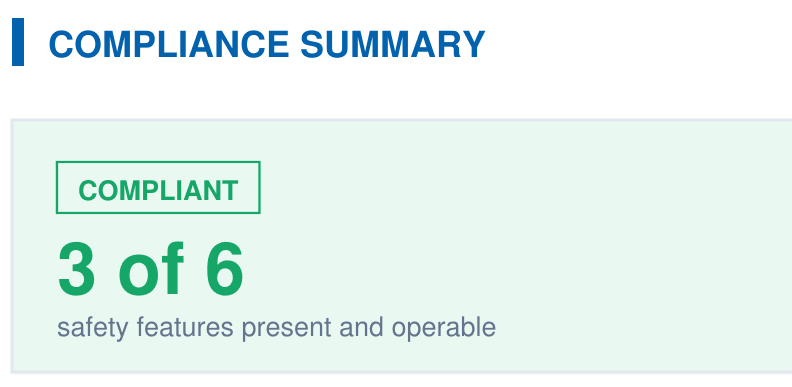
A branded PDF with the compliance summary, the feature table, each finding with its photos, and the signature, generated on‑site when the BPC §7195 and HSC §115922 checklist is complete.