Suction Entrapment: What It Is and How to Prevent It
Suction entrapment is when a pool or hot tub drain holds a swimmer's body, limb or hair by suction. The five types, why spas are riskier, the law, and what to do.
Suction entrapment is what happens when a swimmer's body, limb, hair, clothing or jewelry blocks or catches on a pool or spa suction outlet and the circulation pump's suction holds the person against it. The pump does not know anyone is there: it keeps pulling until it is switched off or water finds another path. A trapped adult cannot pull free, and a trapped child is usually underwater. It is the hazard that the federal Virginia Graeme Baker Pool and Spa Safety Act was written to end, and it is why a new California pool or spa cannot be permitted with a single main drain.
This guide explains the five kinds of entrapment the U.S. Consumer Product Safety Commission (CPSC) recognizes, why hot tubs and spas are the higher-risk setting, what the federal and California rules require, how an inspector checks a pool for the hazard, and what to do in the seconds after someone is caught.
What is suction entrapment?
Every pool and spa circulates water: a pump draws water out through suction outlets (main drains on the floor or wall and the skimmers at the waterline), pushes it through a filter and heater, and returns it through return inlets. Suction is spread across the open area of every outlet cover. When a body covers an outlet, the whole suction of the pump concentrates on the sealed opening and pulls the body onto it.
Three things make the event so dangerous:
It is immediate. The seal forms as soon as the opening is covered. There is no warning.
It cannot be broken by pulling. With the pump running, the force on a sealed outlet is far more than a rescuer can overcome by lifting, and pulling a hair or limb entrapment makes the injury worse.
The victim is usually underwater. Main drains sit at the deepest point of the pool, and spa outlets sit at seat level.
The event that gave the federal law its name illustrates all three. In June 2002 seven-year-old Virginia Graeme Baker was held by the suction of a hot tub drain; two adults could not pull her free, and she died. Congress passed the Virginia Graeme Baker Pool and Spa Safety Act in her name in 2007, and its requirements took effect on December 19, 2008.
The five types of suction entrapment
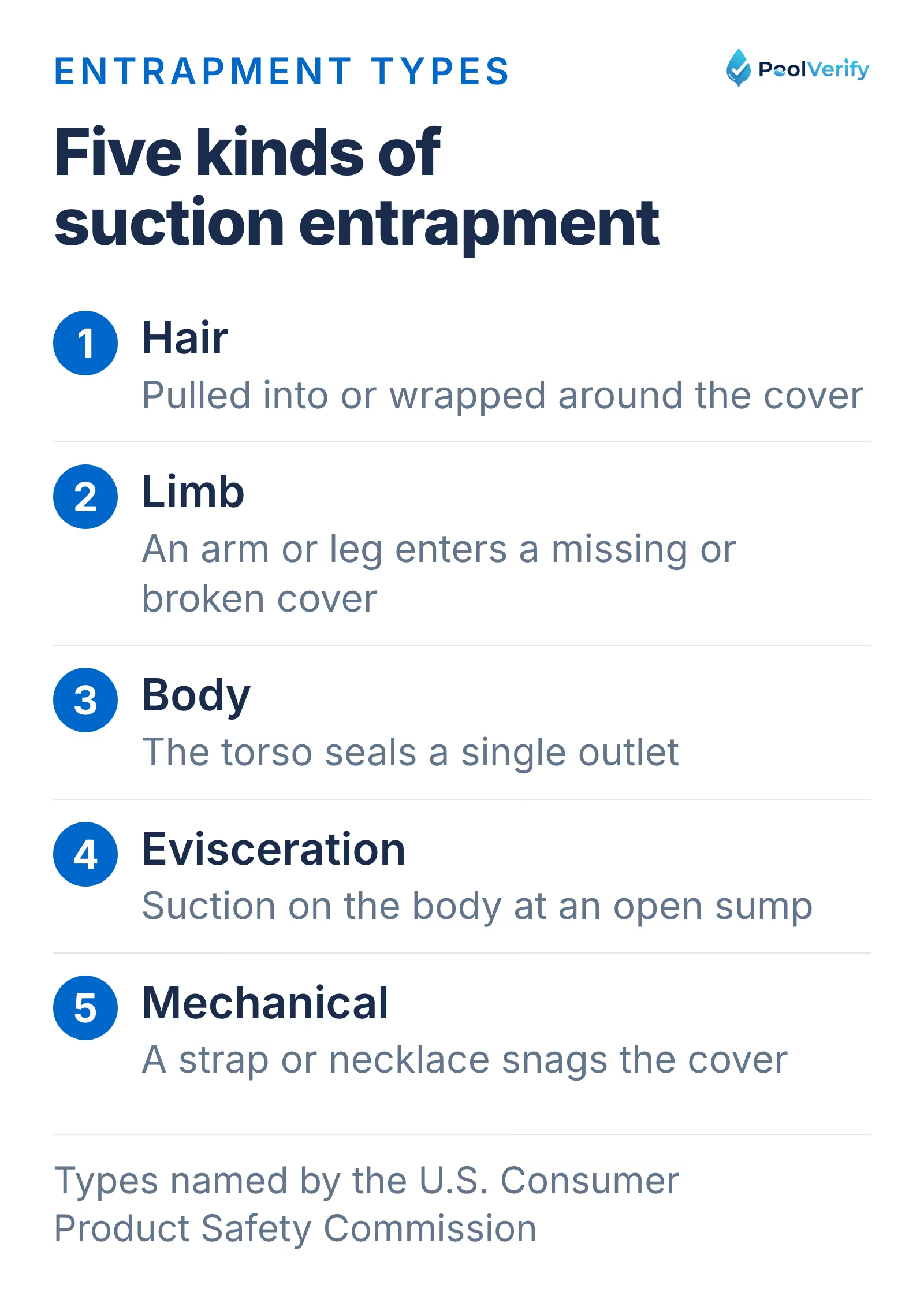
The CPSC codes incidents into five entrapment types, following the classification developed by the Association of Pool and Spa Professionals. Inspectors use the list because each type points to a different defect in the outlet.
The five kinds of suction entrapment and the outlet defect behind each: hair, limb, body, evisceration, mechanical
Type
What happens
The defect that allows it
Hair entrapment
Long hair is drawn into the outlet or wraps around the cover and holds the head underwater
Covers with large openings or protruding fasteners; strong flow through a small cover
Limb entrapment
An arm, leg, hand or foot enters the outlet and is held or wedged
A missing or broken cover, or an oversized opening
Body entrapment
The torso, back or buttocks seals the opening and the body is held to it
A flat cover on a single outlet, or no cover at all
Evisceration
Suction acts directly on the body through an open or broken fitting and injures internal organs
A missing cover on a shallow outlet, typically in a wading pool or spa
Mechanical entrapment
A swimsuit strap, necklace or bracelet catches on the cover
Protruding screws, broken grate edges, or non-compliant cover designs
The pattern in the right-hand column is the whole prevention story: a complete, correctly rated, tool-fastened anti-entrapment cover on every outlet stops hair, limb, evisceration and mechanical entrapment, and having no single point of suction stops body entrapment.
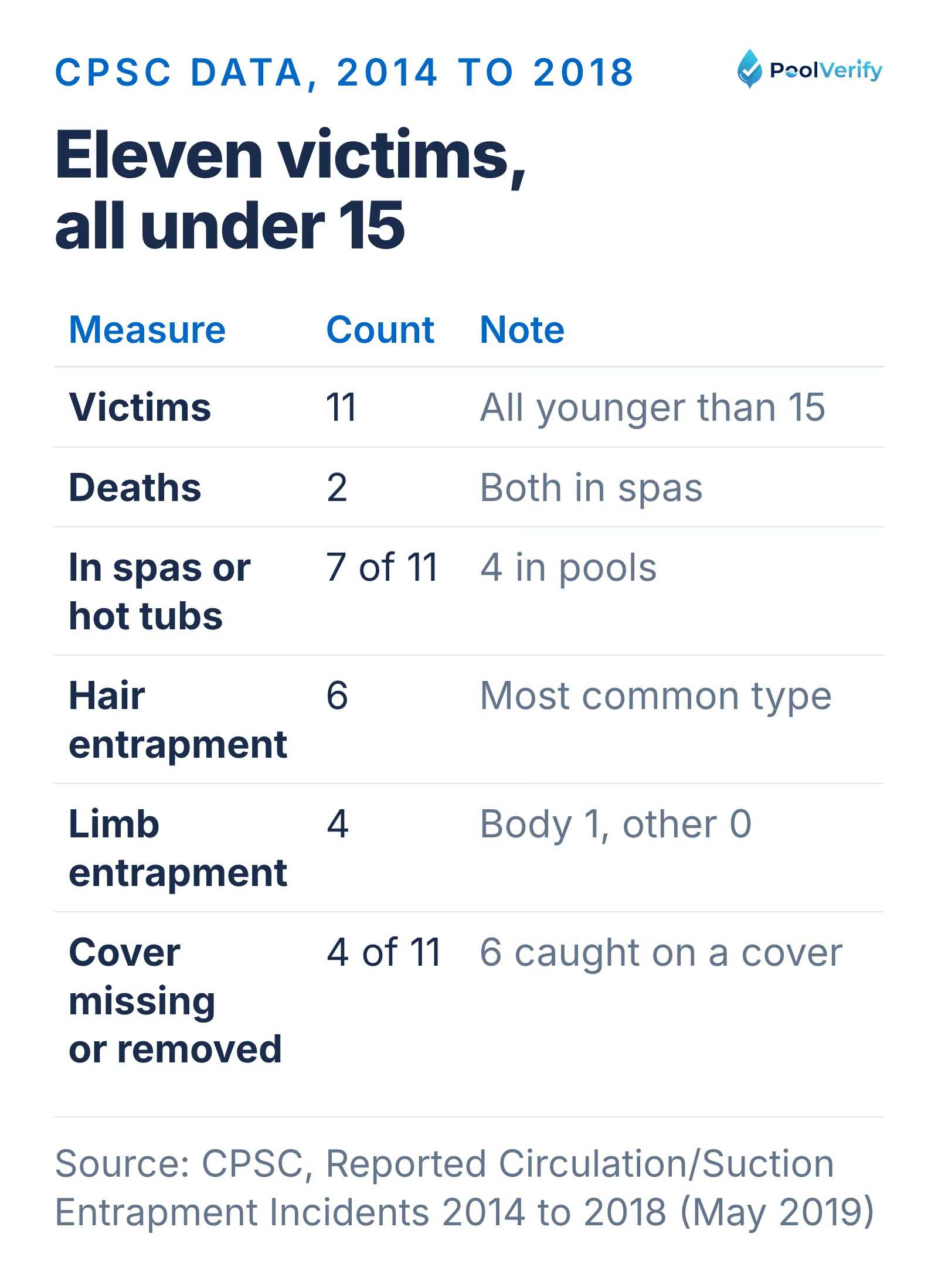
CPSC entrapment incidents 2014 to 2018: 11 victims, all under 15, two deaths in spas, hair entrapment most common, seven of eleven in spas
Measure (2014 to 2018, reported to CPSC)
Count
Victims
11, all younger than 15
Fatalities
2, both in spas
Injuries
9 (4 in pools, 5 in spas)
Spa or hot tub incidents
7 of 11
Residential settings
6 of 11
Hair entrapment
6
Limb entrapment
4
Body entrapment
1
Evisceration or mechanical
0
Caught on an outlet cover
6
Outlet cover missing or removed
4
Held by suction, cover intact
1
Three conclusions follow. Spas produced most of the incidents and both deaths, which is why the next section is about hot tubs. Hair entrapment is now the most common type, so the condition of the cover, not just its presence, is what an inspector should photograph. And the report notes that since the federal act took effect in December 2008 there have been no reported fatalities involving a child entrapped on a suction outlet cover in a public pool or spa: the engineering works where it is enforced, and the remaining cases are in backyard pools and spas and in missing or damaged covers.
Why hot tubs, jacuzzis and spas are the higher risk
Most searches for suction entrapment come from hot tub and spa owners, and the CPSC data above says the concern is justified: 7 of 11 victims and both deaths in 2014 to 2018 were in spas. Under California law a hot tub or spa is a swimming pool: HSC §115921(a) defines "swimming pool" to include hot tubs, spas, portable spas and non-portable wading pools that hold water over 18 inches deep. The physics is less forgiving in a spa than in a pool:
Bathers sit on the outlets. Spa suction fittings are at seat and floor level where people rest their backs, hips and feet.
The water is shallow. A trapped person cannot roll away and the head is close to the surface of a small volume of water that a rescuer cannot enter easily.
The pumps are powerful. Jets need high flow, so the suction side is strong relative to the water volume.
Single drains are common. Older portable spas and many site-built spas were plumbed with one main drain per pump.
Hair floats over the outlet. Sitting still with long hair in moving water is exactly how hair entrapment starts.
For portable spas the manufacturer's suction fittings and pump are matched at the factory; the risk comes from a missing, cracked or aftermarket cover. For site-built spas the permit rules below apply exactly as they do to a pool. Whichever kind you own or inspect, confirm two things: every suction fitting has an intact, marked cover, and the pump can be switched off from beside the spa.
Inspecting spas? PoolVerify's checklist has a photo on every item, so the drain cover marking and the emergency switch location are recorded on-site and appear in the PDF report. See how the report looks.
What the law requires
Two bodies of law apply, and they are often confused. The federal act governs covers and public pools nationwide. California's Swimming Pool Safety Act governs how a new or remodeled residential pool or spa is plumbed when the building permit is issued.
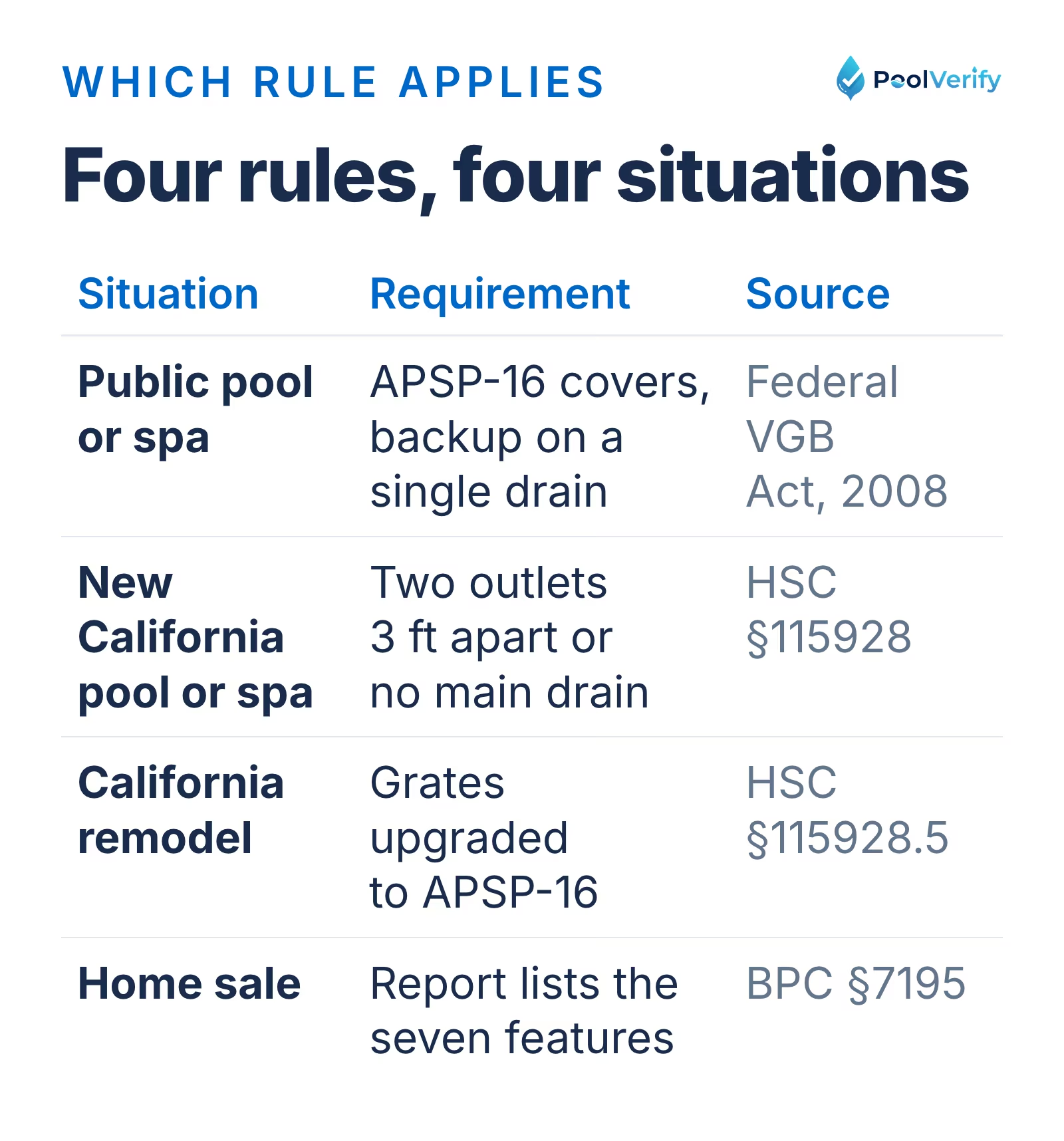
Which rule applies where: the federal VGB Act, HSC §115928 at permit, HSC §115928.5 at remodel, and BPC §7195 at sale
Situation
What is required
Source
Public pool or spa, any state
Anti-entrapment covers meeting ANSI/APSP-16 on every outlet; a pool with a single main drain (other than an unblockable one) also needs a secondary system: safety vacuum release system, suction-limiting vent, gravity drainage, automatic pump shut-off, or drain disablement
Virginia Graeme Baker Pool and Spa Safety Act, 15 U.S.C. §8001 et seq., in force December 19, 2008
Covers sold in the U.S.
Must conform to ANSI/APSP-16 (formerly ASME/ANSI A112.19.8)
VGB Act
New California pool or spa permit
At least two suction outlets per pump, hydraulically balanced and symmetrically plumbed through T fittings, at least 3 feet apart in any dimension, or a design that uses skimmers or perimeter overflow instead of suction outlets; every outlet covered by an ANSI/APSP-16 grate that cannot be removed without tools
Must meet CPSC Publication 363, "Guidelines for Entrapment Hazards: Making Pools and Spas Safer" (March 2005)
HSC §115928(c)
Home sale with a pool or spa
The home inspection report identifies which of the seven HSC §115922(a) drowning prevention features are present; suction outlets are not among the seven
Two points follow from the table. First, HSC §115922 is not the suction entrapment statute. Its seven features keep a child out of the water; the outlet rules live in HSC §115928 and §115928.5. Guides that list "compliant drain covers" as one of the seven features are wrong. Second, there is no California statute that orders an existing residential pool to be retrofitted unless a building permit is pulled for a remodel. The cover on an older backyard pool is the owner's responsibility, and the federal act guarantees only that any replacement cover sold to them conforms to ANSI/APSP-16.
How suction entrapment is prevented
Prevention is a layered design problem, and the layers are in order of strength.
1. A compliant cover on every outlet
An ANSI/APSP-16 cover is tested for body blocking, hair entrapment, finger and limb entry, and flow. On the cover you should find the standard designation, the flow rating in gallons per minute, the mounting position it is rated for (floor, wall or both), a service life, and the manufacturer. The rating must be at least the pump's flow. The cover must be fastened with all of its screws so that it cannot be removed by hand. Our pool drain cover requirements guide covers the marking and the replacement schedule in detail.
2. No single point of suction
This is the requirement HSC §115928 writes into every new California permit. Two outlets per pump, plumbed so that blocking one leaves the pump drawing freely through the other, and at least 3 feet apart so one body cannot cover both. The alternative is a pool with no main drain at all that circulates through skimmers or a perimeter overflow channel. Either way, covering one opening does not concentrate the pump's suction on a person.
3. A backup that reacts when a blockage happens
A safety vacuum release system (SVRS) senses the pressure change when an outlet is blocked and shuts the pump off or vents the line within seconds. Suction-limiting vents and gravity drainage systems achieve the same result passively. Under the federal act one of these is mandatory for a public pool with a single main drain. On a residential pool it is a backup that HSC §115928(c) allows and standardizes; it does not replace the two-outlet rule at permit.
4. Behaviour around the water
Tie long hair up in a spa, keep children off drains, and never allow a pool or spa to be used with a cover missing. Everyone responsible for a pool should know where the pump switch is.
How an inspector checks for the hazard
A residential pool safety inspection in California is organized around the HSC §115922(a) features, but a competent inspector records the suction outlets on the same visit. The steps take a few minutes and one photo per outlet.
Count the suction outlets. Main drains, spa floor and wall fittings, and any vacuum port. Compare the count with the number of pumps: a pump with a single outlet is the finding to flag.
Photograph each cover. Confirm it is present and unbroken, all fasteners are in place, and the ANSI/APSP-16 marking, flow rating and position rating are legible. Note the service-life date.
Measure the separation. Where two outlets serve one pump, they should be at least 3 feet apart in every direction.
Locate the shut-off. Note where the pump switch or emergency stop is and whether it is reachable from the pool or spa deck.
Identify any backup device. An SVRS is usually on the equipment pad; record make, model and whether its indicator shows it is powered.
Write the finding plainly. "Single main drain, cover marked ANSI/APSP-16 100 GPM, intact" or "Spa floor fitting cover missing, recommend the spa not be used until replaced."
Do this with the checklist open. PoolVerify runs the California checklist on a phone with a photo on each item, collects the signature, and generates the branded PDF on-site. Start your 14-day free trial, no credit card to start.
What to do if someone is trapped
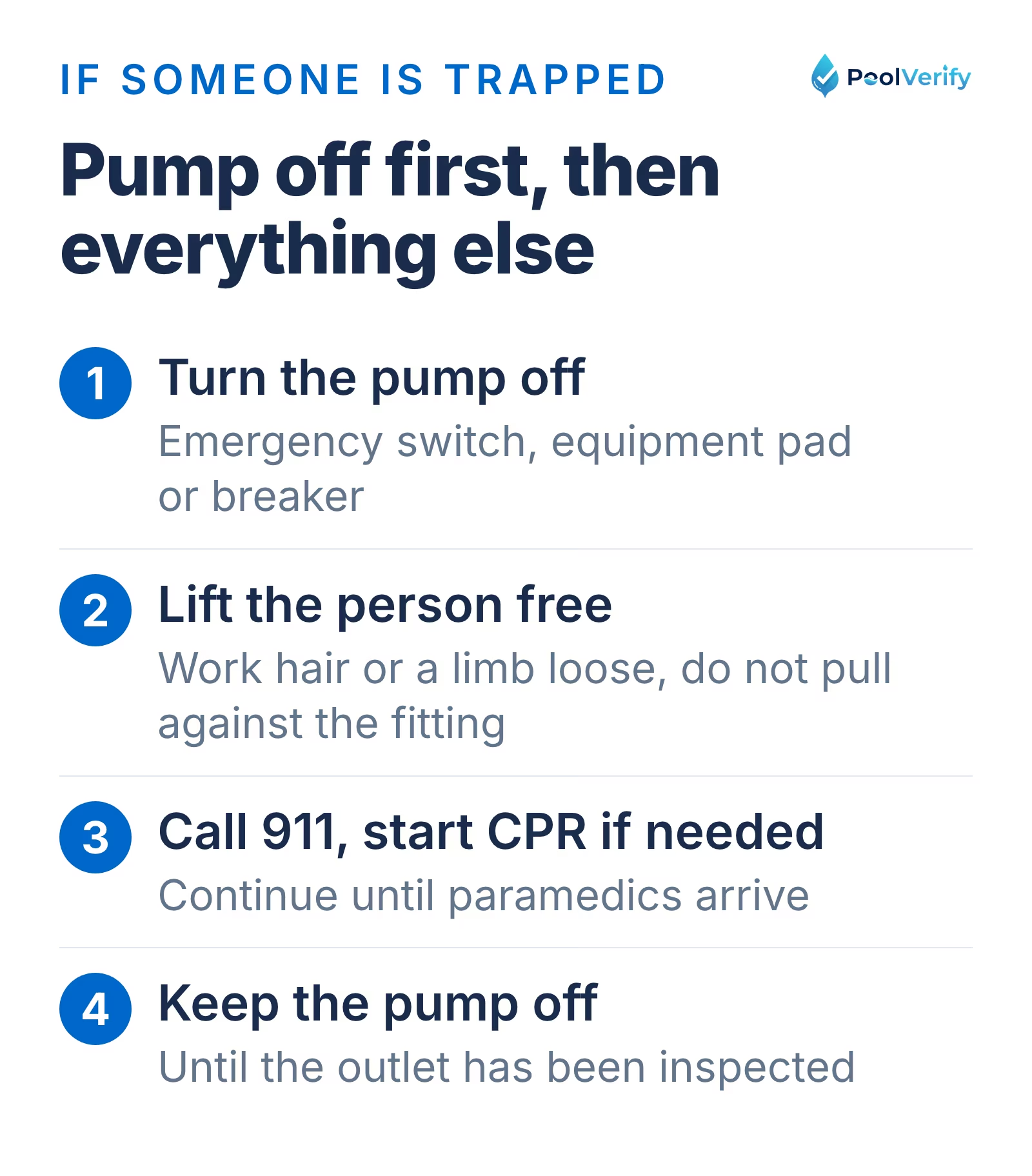
The four steps when a swimmer is held by a drain: pump off, lift free, call 911, keep the pump off
Turn the pump off. Use the emergency switch, the switch at the equipment pad, or the breaker. Suction stops the instant the pump stops. This is the single action that frees the person, and it comes before pulling.
Lift the person free and out of the water. If a limb or hair is still caught after the pump stops, work it loose rather than pulling against the fitting.
Call 911 and begin CPR if the person is not breathing. Continue until paramedics take over.
Keep the pump off. Do not restart circulation until the outlet has been inspected and the cover replaced or the plumbing corrected.
Because everything depends on step one, a pool or spa owner should be able to answer "where is the switch?" without thinking, and an inspector's report should tell them if the answer is not obvious.
Limitations
This guide is general information about pool safety law, not legal advice; the current text of HSC §115928, HSC §115928.5 and HSC §115922 on leginfo.legislature.ca.gov controls, the federal act and CPSC guidance govern public pools and cover certification, and local building departments add their own requirements. Public and commercial pools are outside this guide. PoolVerify is inspection software for California residential pool safety inspections; it does not perform inspections, certify inspectors, or issue compliance certificates.
Frequently asked questions
What is suction entrapment?
Suction entrapment happens when a swimmer's body, limb, hair, clothing or jewelry blocks or catches on a pool or spa suction outlet and the pump's suction holds the person against it, often underwater. The pump keeps pulling until it is switched off or the water finds another way in, so the trapped person cannot free themselves.
What is suction entrapment in a hot tub or jacuzzi?
The same event in a spa: a bather sits or leans against a floor or wall suction fitting and the pump holds them there. Spas and hot tubs carry more risk than pools because the water is shallow, bathers sit on or near the outlets, jets need strong pumps, and many older units have a single main drain.
What are the types of suction entrapment?
The U.S. Consumer Product Safety Commission uses five: hair entrapment, where hair is pulled into or wrapped around a cover; limb entrapment, where an arm or leg enters the outlet; body entrapment, where the torso seals the opening; evisceration, where suction acts on the body through an open fitting; and mechanical entrapment, where clothing or jewelry catches on the cover. In 2014 to 2018, hair entrapment accounted for 6 of the 11 reported victims.
How is suction entrapment prevented?
By an anti-entrapment cover on every suction outlet that meets ANSI/APSP-16 and cannot be removed without tools, and by removing the single point of suction: two outlets per pump at least 3 feet apart, or a design without main drains that draws water through skimmers or perimeter overflow. A safety vacuum release system or vent is a backup, not a substitute.
What should I do if someone is trapped by a pool or spa drain?
Turn the pump off first, at the emergency switch, the equipment pad or the breaker. Suction ends the moment the pump stops and the person can be lifted free. Do not spend the first seconds pulling against the suction. Call 911 and start CPR if the person is not breathing. Keep the pump off until the outlet has been inspected.
Does California law address suction entrapment in residential pools?
Yes, at permit. Under HSC §115928 a new residential pool or spa must have at least two suction outlets per pump, hydraulically balanced and at least 3 feet apart, or use skimmers or perimeter overflow instead of main drains, and every outlet must carry an ANSI/APSP-16 grate that needs tools to remove. Under HSC §115928.5 a remodel permit requires existing outlets to be upgraded to ANSI/APSP-16 grates.
Is a drain cover one of the seven drowning prevention safety features?
No. The seven features in HSC §115922(a) are about keeping a child out of the water: enclosure, removable mesh fencing, safety cover, exit alarms, self-closing door devices, an in-water alarm, and an independently verified equivalent. Suction outlets are governed by HSC §115928 at permit and by the federal VGB Act, so a BPC §7195 home inspection report is not required to state drain findings, although a careful inspector notes them.
How often should drain covers be checked?
Look at every cover each time the pool or spa is serviced and at every inspection. Confirm it is present, intact, fastened with all screws, and marked ANSI/APSP-16 with a flow rating that meets the pump. Covers carry a stamped service life; replace a cover that is cracked, faded, loose, or past its date, and replace it the same day if it is missing.
Conclusion
Suction entrapment is the one pool hazard with a complete engineering answer: a compliant cover on every outlet and no single point of suction. The federal act put that answer into every drain cover sold since 2008 and into every public pool; California put it into every residential building permit through HSC §115928. What remains is the installed base of older backyard pools and spas, and that is where an inspector's photo of a cracked or missing cover, and a note telling the owner where the pump switch is, does the most good.
PoolVerify's California checklist gives every item a photo and a note field and turns the visit into a branded PDF on-site. Start your 14-day free trial, no credit card to start.
A branded PDF with the compliance summary, the feature table, each finding with its photos, and the signature, generated on‑site when the BPC §7195 and HSC §115922 checklist is complete.