HSC §115922: California Swimming Pool Safety Act Guide
Complete guide to California HSC §115922 Swimming Pool Safety Act. Learn the 7 drowning prevention features, compliance requirements, penalties, history, and 2025 SB 552 amendments for pool owners and inspectors.
California Health and Safety Code Section 115922, commonly known as the Swimming Pool Safety Act, is the state's primary legislation protecting children from pool-related drownings. With drowning remaining the leading cause of accidental death for California children under 5 years old, averaging 49 fatalities annually, understanding and complying with HSC §115922 is essential for pool owners, builders, and inspectors.
This comprehensive guide explains everything you need to know about HSC §115922: its history, the seven required drowning prevention features, compliance procedures, recent 2025 amendments, penalties for violations, and practical implementation strategies. Whether you're building a new pool, remodeling an existing one, or verifying compliance, this guide provides the complete information you need.
What is HSC §115922?
California Health and Safety Code Section 115922 is the core provision of the Swimming Pool Safety Act (Article 2.5, Sections 115920-115929). It establishes mandatory drowning prevention requirements for residential swimming pools and spas in California.
The fundamental requirement
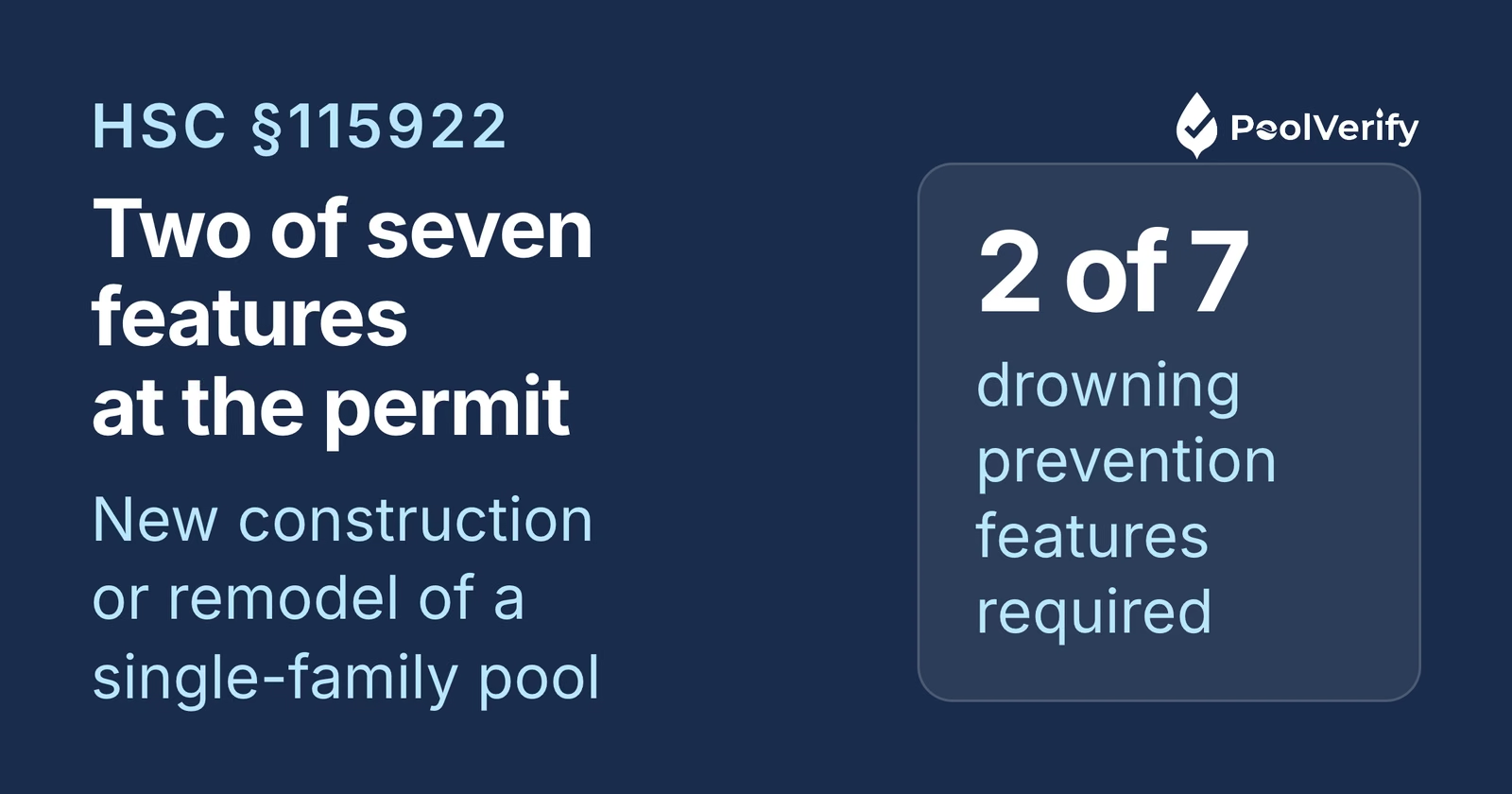
HSC §115922 states that when a building permit is issued for the construction of a new swimming pool or spa, or the remodeling of an existing swimming pool or spa at a private single-family home, the pool or spa SHALL be equipped with at least TWO of seven specified drowning prevention safety features.
This law applies specifically to:
YesPrivate, single-family home pools and spas: Residential properties with individual ownership
YesNew pool construction: Any newly built swimming pool or spa requiring a building permit
YesPool remodeling projects: Existing pools undergoing remodeling that requires a building permit
NoDoes NOT apply to:
Apartments and multi-family residential buildings (covered under separate regulations)
Commercial pools (hotels, gyms, fitness centers)
Public pools (city pools, school facilities)
Spas or hot tubs with locking safety covers compliant with ASTM F1346
Why HSC §115922 exists
The Swimming Pool Safety Act addresses a critical public health crisis. According to California drowning prevention data from 2017-2021, drowning is the leading cause of unintentional injury death among California children under age 5, with pools accounting for 65% of fatal drowning incidents in this age group.
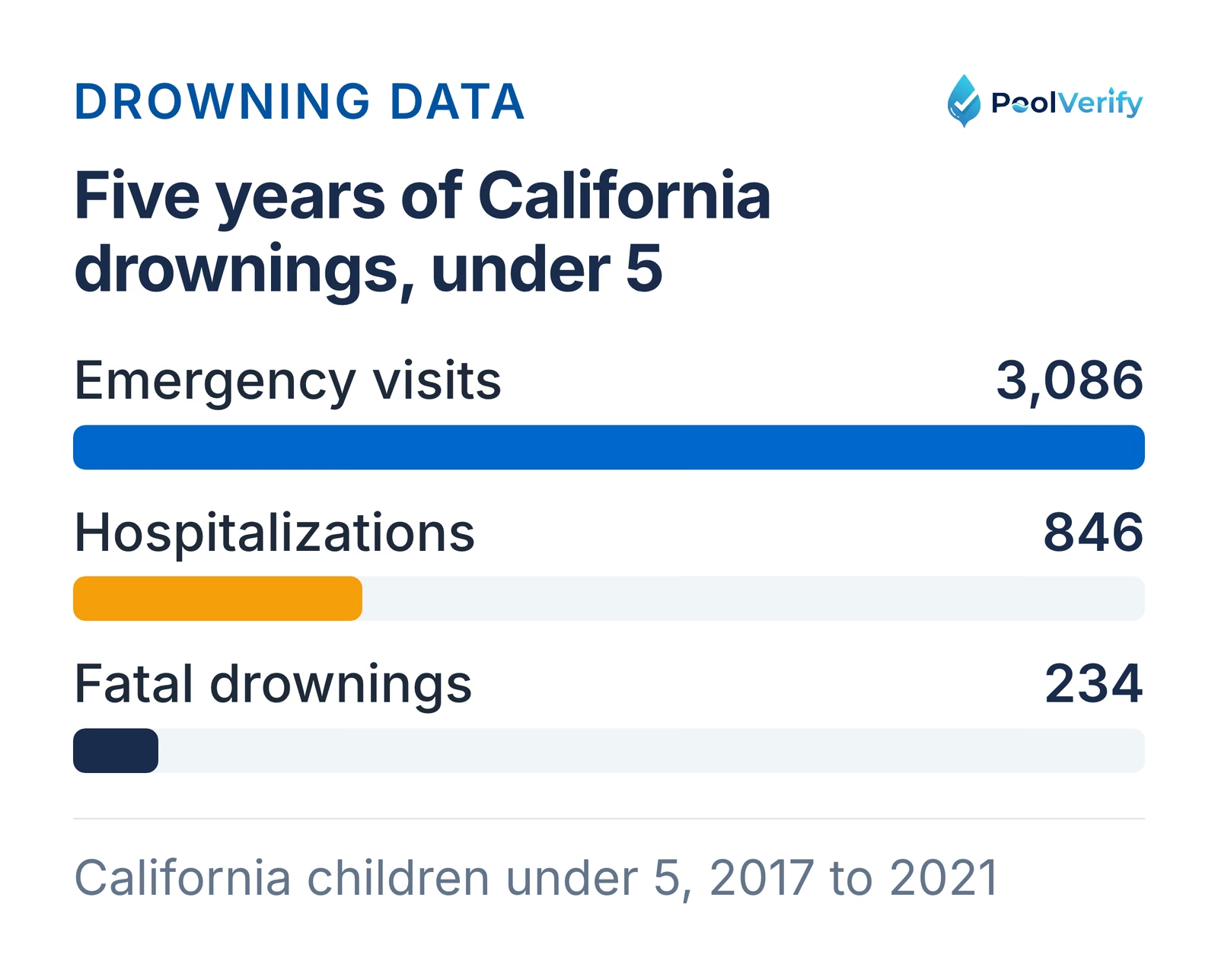
Over the five-year study period, California recorded:
234 fatal drowning incidents
846 drowning-related hospitalizations
3,086 emergency department visits
Despite these sobering statistics and updated legislation in 2017, drowning fatality rates among 1-4 year-old California children have not declined significantly, highlighting the ongoing critical importance of HSC §115922 enforcement and compliance.
California drowning data for children under 5, 2017 to 2021: 3,086 emergency visits, 846 hospitalizations, 234 deaths.
Critical insight: The requirement for two safety features rather than one reflects the principle of redundant protection: if one barrier fails or is temporarily compromised, a second layer of protection remains in place to prevent child drownings.
Historical background: How the Swimming Pool Safety Act came to be
Understanding the legislative history of HSC §115922 provides context for its current requirements and reveals how California has progressively strengthened pool safety protections in response to continuing tragedies.
1996-1997: The original Swimming Pool Safety Act
The Swimming Pool Safety Act was originally enacted in 1996 (Stats. 1996, Ch. 925, Sec. 3.5) and became effective January 1, 1997. This groundbreaking legislation made California one of the first states to mandate specific pool safety features for residential properties.
Original 1996 requirements:
Pools required one approved safety measure (not two)
Approved measures included: permanent fencing, compliant pool covers, door and window alarms, and self-closing door devices
Applied only to new construction, not existing pools
ASTM F2286-05 compliant removable mesh pool fencing
ASTM F2208-08 pool water entry detection alarms
This amendment acknowledged advances in pool safety technology and provided homeowners with more flexibility in choosing safety features appropriate to their property configuration.
2017-2018: The pivotal two-feature requirement
The most significant change came with Senate Bill 442 (SB 442), which passed unanimously in 2017 and took effect January 1, 2018. This amendment fundamentally transformed California pool safety requirements.
Key SB 442 changes:
Increased from ONE to TWO required safety features: The landmark change requiring redundant protection
Expanded compliance triggers: Applied requirements to pool remodeling, not just new construction
Enhanced inspection requirements: Required building officials to verify compliance before final approval
Standardized feature specifications: Updated ASTM standards and clarified technical requirements
Legislative rationale: Despite the original 1997 law, California continued to see 30-50 child pool drownings annually. Research demonstrated that pools with multiple layers of protection had 87% fewer child drowning incidents compared to pools with single barriers. The two-feature requirement reflects evidence-based drowning prevention strategy.
2024-2025: SB 552 technical refinements
Most recently, Senate Bill 552 was signed into law on September 27, 2024, with amendments effective January 1, 2025. While not changing the fundamental two-feature requirement, SB 552 modernized technical specifications and clarified enforcement procedures.
SB 552 amendments (detailed later in this article):
Updated ASTM standards for pool covers (F1346-23)
Clarified removable mesh fencing specifications
Enhanced inspection verification procedures
Strengthened local jurisdiction enforcement authority
Why the law continues evolving
Despite nearly three decades of the Swimming Pool Safety Act, California Department of Developmental Services drowning prevention data shows that drowning fatality rates have not declined in the last 5 years. For children under five, 87% of fatal drownings happen in home pools or hot tubs.
This persistent tragedy drives continued legislative refinement, enforcement emphasis, and public education efforts around HSC §115922 compliance.
When HSC §115922 compliance is required
Understanding when HSC §115922 requirements are triggered is essential for pool owners, contractors, and inspectors. Compliance is not universally mandatory for all pools, it depends on specific scenarios.
Scenario 1: New pool construction (always required)
HSC §115922 compliance is mandatory when a building permit is issued for construction of a new swimming pool or spa at a private single-family home.
Triggers compliance:
In-ground pool construction
Above-ground pool installation requiring permanent plumbing/electrical connections
New spa or hot tub installation requiring building permit
Pool and spa combination projects
Compliance timeline:
Permit application: Plans must show at least two approved safety features
Plan review: Building department verifies feature specifications meet standards
Construction: Safety features installed according to approved plans
Inspection: Building official inspects features before final approval
Final approval: Certificate of occupancy not issued until compliance verified
Who is responsible: Property owner (though typically the pool contractor ensures compliance as part of construction contract)
Scenario 2: Pool remodeling requiring building permit (depends on scope)
HSC §115922 compliance is triggered when a building permit is required for remodeling an existing pool or spa.
Remodeling work that typically requires permits (and triggers HSC §115922):
Pool replastering or resurfacing (in most jurisdictions)
Equipment replacement (pump, heater, filter systems requiring electrical/plumbing work)
Structural modifications (expanding pool, adding features, deck reconstruction)
Plumbing system modifications
Electrical system upgrades
Work that typically does NOT require permits (no HSC §115922 trigger):
Routine maintenance (cleaning, chemical balancing)
Minor cosmetic repairs (tile replacement, small coping fixes)
Pool equipment repair (like-for-like replacement without permit)
Non-structural landscaping around pool perimeter
Important: Permit requirements vary by local jurisdiction. Always check with your city or county building department before starting pool remodeling work. If they require a permit, HSC §115922 compliance becomes mandatory.
Scenario 3: Property transfer (disclosure required, compliance encouraged)
While HSC §115922 technically applies only when building permits are issued, California's SB 442 (effective January 2018) requires pool safety disclosure during property transfers.
SB 442 requirements for property sales:
Seller must provide written statement of which drowning prevention features are present
Statement must be prepared by licensed professional who inspected the property
Disclosure provided to buyer before transfer of title
Practical reality: Even if a pre-1998 pool is technically "grandfathered" under HSC §115922, buyers often:
Request installation of missing safety features as condition of sale
Negotiate price reductions for non-compliant pools
Pools constructed before January 1, 1998 (when HSC §115922 became effective) are generally grandfathered and not required to meet the two-feature standard, UNLESS:
The pool is remodeled and a building permit is required
The property is sold (SB 442 disclosure applies)
Local city or county ordinances impose retroactive requirements
Exception: Some California jurisdictions have enacted local ordinances requiring all pools, regardless of age, to meet current safety standards. Check with your local building department.
When to verify your pool's compliance status
Recommended compliance verification times:
Before listing your home for sale: Proactive inspection avoids buyer objections and delays
Before starting pool remodeling: Understand compliance obligations before committing to projects
After purchasing a property with a pool: Verify safety status for insurance and liability protection
Every 3-5 years: Periodic compliance check ensures features remain functional
After severe weather or seismic events: Verify barriers, gates, and alarms still function properly
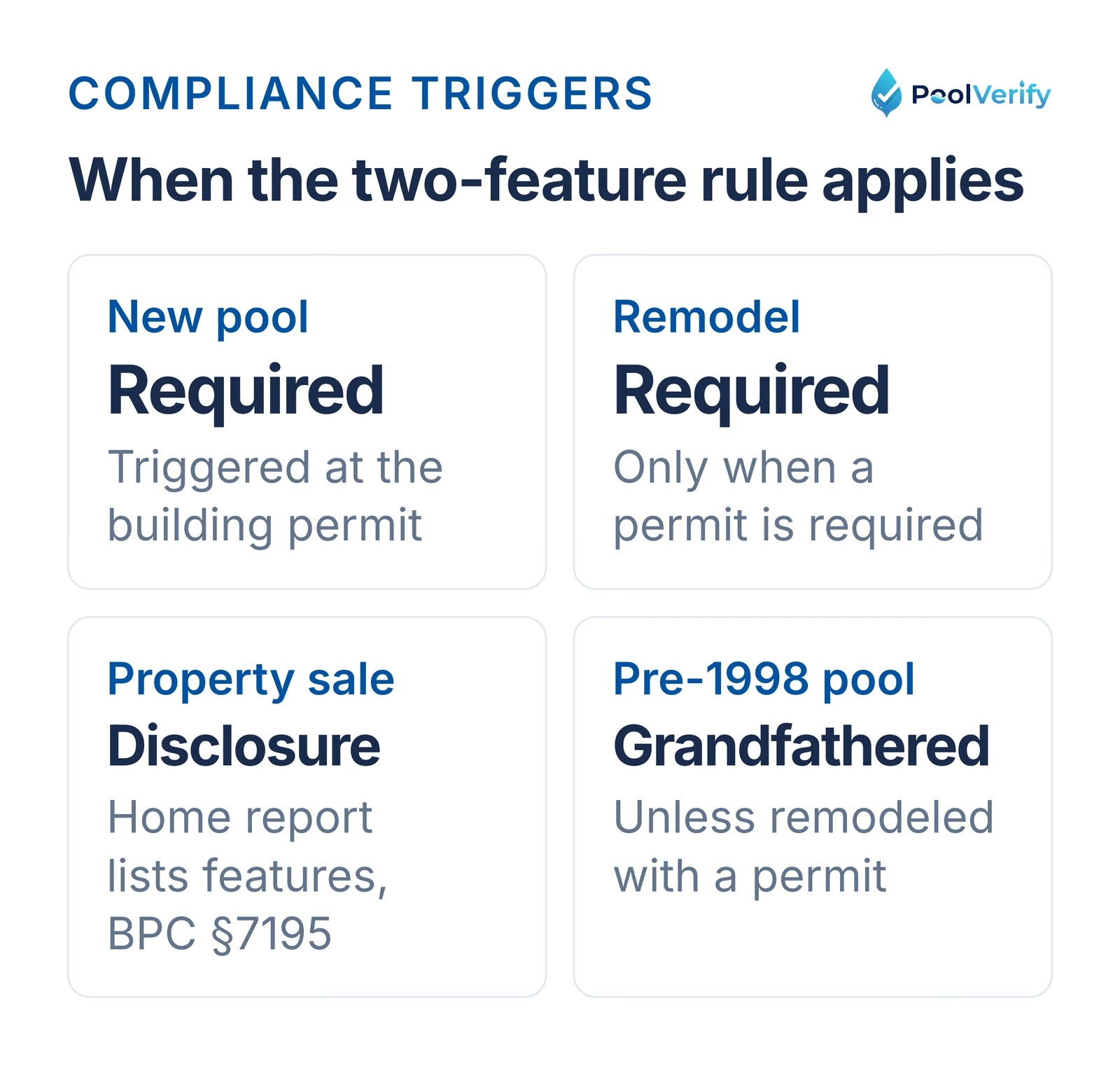
HSC §115922 applies to new pools and permitted remodels; a sale triggers BPC §7195 disclosure; old pools are grandfathered.
The two-feature requirement explained
The heart of HSC §115922 is its mandate for at least two drowning prevention safety features. This section explains the rationale, implementation, and practical implications of this requirement.
Why two features instead of one?
California's shift from one required feature (1997-2017) to two required features (2018-present) reflects evidence-based drowning prevention strategy.
Redundancy saves lives:
Children are resourceful and persistent, a single barrier may be temporarily compromised
Gates left open, alarms with dead batteries, or damaged fencing create vulnerabilities
Two independent protective layers ensure that if one fails, a second remains functional
Scenario 1: A parent props open the back door while carrying groceries, temporarily disabling the exit alarm (Feature 4). However, the pool is surrounded by a compliant barrier fence with self-closing gate (Feature 1), preventing unsupervised child access during this brief window.
Scenario 2: High winds damage one section of perimeter fencing (Feature 1). The pool is covered with an ASTM-compliant safety cover (Feature 3), maintaining protection while fence repairs are completed.
Scenario 3: A child learns to defeat the self-closing gate mechanism by placing a toy to block closure (Feature 1). Pool water entry alarms (Feature 6) provide a second layer, sounding immediately if the child enters the water.
Multi-layered protection principle
The two-feature requirement aligns with the "layers of protection" approach advocated by the Consumer Product Safety Commission and drowning prevention experts:
Recommended layers of protection (HSC §115922 requires 2 minimum):
Physical barriers: Fencing that prevents unsupervised access
Alarms and alerts: Devices that notify adults of potential danger
Protective covers: Physical barriers across water surface
Supervision (not legally mandated but essential)
Swimming skills and water safety education (not legally mandated)
California's two-feature requirement ensures at least two of these protective layers are in place at all times.
How compliance is verified
Building officials verify two-feature compliance through a multi-step process:
Step 1: Plan review
Permit application includes detailed plans showing proposed safety features
Building department reviews specifications against HSC §115922 standards
Plans must clearly identify which two (or more) features will be installed
Step 2: Construction inspection
Inspector verifies features are installed according to approved plans
Before issuing final approval or certificate of occupancy, building official conducts final inspection
Confirms both required features are present and fully functional
Issues written confirmation of HSC §115922 compliance
Step 4: Documentation
Compliance documentation becomes part of permanent building department records
Property owner receives compliance certificate
Records available for future property transfers and insurance verification
Can you install more than two features?
Absolutely: and pool safety experts recommend it. HSC §115922 establishes minimum requirements, not maximum limitations.
Benefits of installing 3+ features:
Enhanced child safety: Additional layers of protection provide peace of mind
Insurance premium reductions: Many insurers offer 5-15% discounts for enhanced safety
Property value: Homes with comprehensive pool safety features command higher prices
Liability protection: Demonstrates reasonable care in negligence lawsuits
Flexibility: More features allow some to be temporarily disabled for maintenance without compromising overall safety
Recommended approach: Install at least three features combining different protective strategies, for example, barrier fencing (physical), exit alarms (notification), and pool cover (water surface protection).
The seven drowning prevention safety features
HSC §115922 specifies seven approved drowning prevention features. Pools must have at least two of these to comply. This section provides comprehensive details on each feature, including technical specifications, implementation guidance, costs, and compliance considerations.
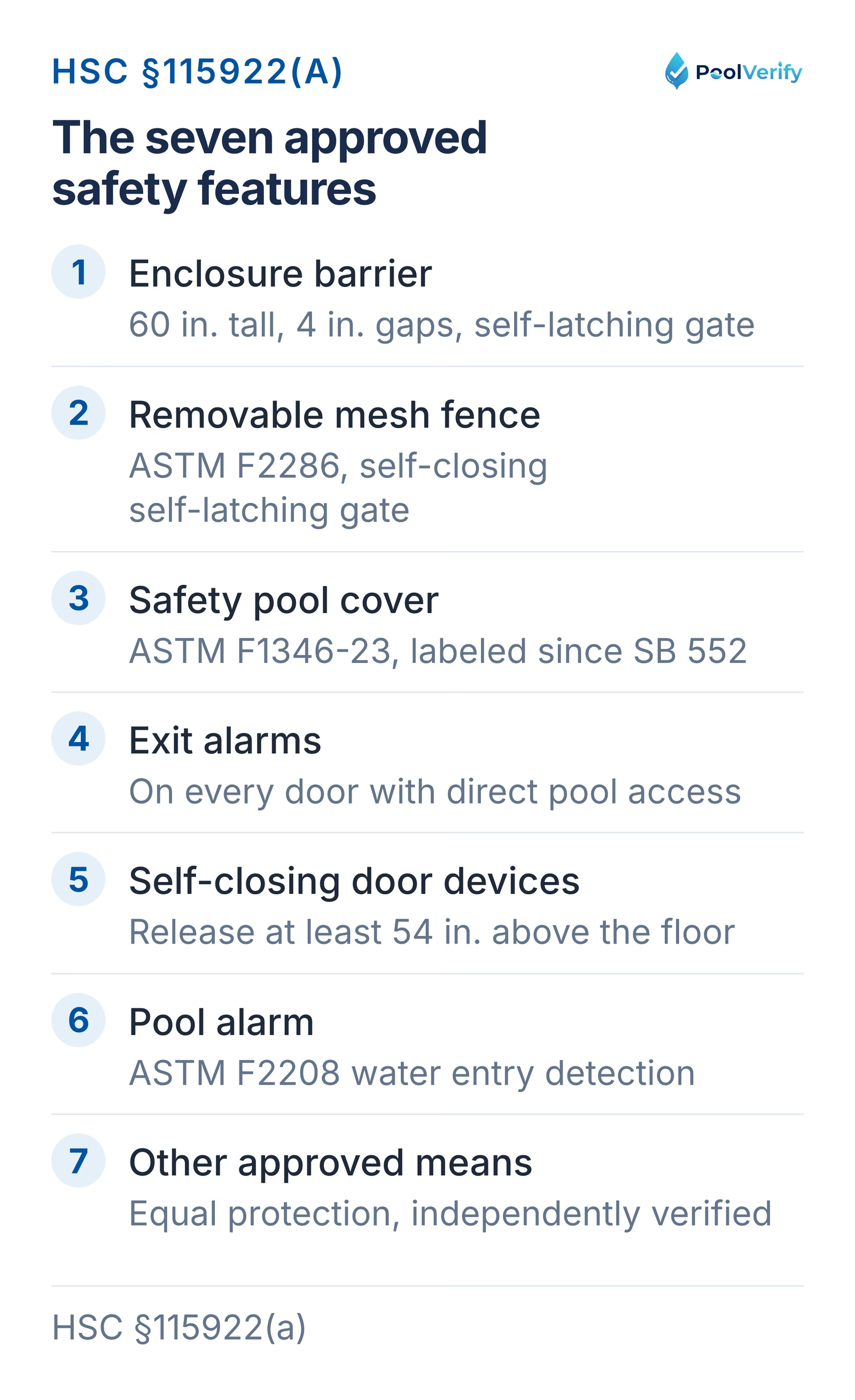
The seven HSC §115922(a) safety features, from a 60-inch enclosure barrier to an independently verified alternative.
Feature 1: Enclosure barrier isolating pool from home
A physical barrier (fence, wall, or combination) that completely isolates the swimming pool or spa from the private single-family home, preventing unsupervised access by children.
Technical requirements (HSC §115923)
HSC §115922 references §115923 for detailed enclosure barrier specifications:
Height requirements:
Minimum 60 inches (5 feet) measured from grade on the side facing away from the pool
If the top of the barrier is less than 45 inches from adjacent surfaces (deck, bench, wall), additional protection required
Spacing and openings:
Vertical members (slats, pickets): Maximum 4 inches apart
Horizontal members (rails): If less than 45 inches apart, must be on pool side of fence or spaced to prevent climbing
Chain-link fence: Maximum 1¾ inch mesh size
No openings allowing passage of 4-inch diameter sphere
Maximum 2-inch gap between bottom of barrier and grade (prevents small children from crawling under)
Structural integrity:
Barrier must be constructed to prevent climbing or easy penetration
Materials must be durable and weather-resistant
Posts securely anchored to prevent barrier displacement
Gate requirements (critical):
Gates must open outward from pool (away from water)
Must be self-closing from any open position
Must be self-latching
Self-latching device placed no lower than 60 inches above the ground (HSC §115923(a))
Latches may not have handholds or footholds within 3 inches
Acceptable barrier materials
Common compliant materials:
Wrought iron or ornamental metal fencing: Durable, requires minimal maintenance, customizable ($20-$40/linear foot)
Wood privacy fencing: Traditional appearance, requires periodic maintenance ($15-$30/linear foot)
Vinyl or composite fencing: Low maintenance, weather-resistant ($25-$40/linear foot)
Masonry walls: Permanent, durable, can serve as property boundary ($40-$80/linear foot)
Approved glass or acrylic panels: Modern aesthetic, requires professional installation ($100-$200/linear foot)
Implementation considerations
Using house wall as part of barrier: If your home forms one side of the pool barrier, that wall must have:
No doors providing pool access (or Feature 4 alarms on all doors)
No windows within 60 inches of grade (or windows equipped with child-resistant locks/bars)
No pet doors (or pet doors secured and non-functional)
Installation best practices:
Hire licensed fence contractor (C-13 specialty or B general license)
Obtain building permit before installation
Locate underground utilities before digging post holes
Ensure gates have commercial-grade self-closing hinges (residential spring hinges often fail)
Test self-closing function from multiple positions and angles
Install the latch at least 60 inches above the ground (HSC §115923(a)) with no footholds below
Cost: $3,000-$8,000 for typical residential pool perimeter (varies by material, pool size, and terrain)
Feature 2: Removable mesh fencing with compliant gate
A temporary, removable barrier system that provides flexibility while meeting safety standards. This feature is particularly popular for families who want to remove the barrier when the pool is being actively supervised.
Technical requirements (ASTM F2286)
HSC §115922 requires removable mesh fencing to meet ASTM International F2286 standard, which specifies:
Height and construction:
Minimum 4 feet (48 inches) high
Mesh material resistant to tearing and climbing
Mesh openings no larger than 1¾ inches
Fence must withstand lateral force of 25 pounds applied anywhere on fence
Gate requirements:
Must be self-closing from any open position
Must be self-latching
Must accommodate a key lockable device
Gate construction meets same strength and spacing standards as fence sections
Installation requirements:
Poles/posts secured in drilled holes or surface mounts
Fence sections create continuous barrier with no gaps
Must be completely removable when desired (typically stored rolled up)
When installed, must meet all spacing and height requirements
Advantages of removable mesh fencing
Flexibility:
Remove fence during adult-supervised pool use for unobstructed yard access
Reinstall quickly when supervision ends or children are home
Portable for seasonal installation or temporary pool use
Aesthetics:
Transparent mesh preserves yard views when installed
Completely removed from view when not needed
Less visually imposing than permanent fencing
Practicality:
Effective for oddly shaped pools where permanent fencing is challenging
Ideal for rental properties (can move with tenant)
Works for temporary pools or situations where permanent installation is prohibited
Common removable mesh fence brands
Approved manufacturers (verify current ASTM F2286 compliance):
Life Saver Pool Fence: Industry leader, extensive dealer network
Guardian Pool Fence Systems: Durable mesh, modular design
Protect-A-Child Pool Fence: Self-install options available
Katchakid Safety Fence: Commercial-grade systems
Baby Guard Pool Fence: Residential focus, aesthetic options
Installation considerations
Professional installation recommended: While some systems are marketed as DIY-friendly, professional installation ensures:
Proper pole spacing and alignment
Correct tension for self-closing gates
Compliance with local building department requirements
Warranty protection
Maintenance requirements:
Inspect mesh for tears or deterioration annually
Verify pole anchors remain secure
Test gate self-closing and latching function monthly
Clean mesh to prevent mold or mildew
Replace sections showing wear or UV damage
Limitation: Removable mesh fencing is only protective when installed. If frequently removed and not promptly reinstalled, it provides less consistent protection than permanent barriers.
Cost: $1,200-$3,500 for professionally installed system (typical residential pool)
Feature 3: Approved safety pool cover
A manually or power-operated cover that meets ASTM standards for weight-bearing capacity and child safety. Safety pool covers provide a physical barrier across the water surface, preventing submersion even if perimeter barriers are breached.
Technical requirements (ASTM F1346-23)
Following the 2025 SB 552 amendments, HSC §115922 now requires safety pool covers to meet ASTM International F1346-23 standard, which specifies:
Weight-bearing capacity:
Must support minimum 485 pounds (equivalent to two adults and one child)
Load distribution prevents localized failure or submersion
Weight-bearing capability verified through independent testing
Safety specifications:
Cannot create entrapment hazard
Prevents gap large enough for child to pass through when properly secured
Drainage system prevents standing water accumulation on cover surface
Anchoring system secures cover perimeter to prevent displacement
Labeling requirement:
Cover must be accompanied by a label verifying ASTM F1346-23 compliance
Label includes manufacturer, model, testing lab certification
Property owner should retain label and testing documentation
Operational requirements:
Cover must be operable by one person (though assistance recommended for large pools)
Manual covers: Crank or winch mechanism
Power-operated covers: Motor-driven with manual backup capability
Types of approved safety covers
Automatic safety covers (power-operated):
Key-switch operation: Prevents unauthorized or accidental deployment/retraction
Track-mounted systems: Cover slides along deck-mounted tracks
Motor-driven mechanism: Opens and closes with button press (30-60 seconds typical)
Built-in drainage: Allows rainwater drainage while maintaining weight-bearing capacity
Cost: $6,000-$15,000+ (varies by pool size, shape, and system quality)
Manual solid covers:
Anchor-secured design: Cover attached to deck anchors with spring-loaded straps
Manual operation: One person can deploy/retract (though physically demanding)
Water removal needed: Pump required to remove accumulated rainwater
Cost: $1,500-$3,500 (varies by pool size)
Manual mesh covers:
Anchor-secured design: Similar to solid covers
Mesh material: Allows water drainage while blocking debris and children
No water accumulation: Rainwater drains through mesh
UV-resistant materials: Withstands sun exposure without degradation
Cost: $1,200-$2,500 (varies by pool size)
Implementation considerations
Advantages of safety covers:
Provide protection even if child breaches perimeter barrier
Reduce pool maintenance (blocks debris, reduces water evaporation)
Lower chemical usage (blocks sunlight reducing algae growth)
Reduces heating costs (automatic covers provide insulation)
Insurance premium reductions (often 10-15% for automatic covers)
Operational challenges:
Manual covers require consistent discipline: Must be deployed every time pool use ends
Automatic covers are expensive: Significant upfront investment
Retrofitting challenges: Some pool designs difficult to retrofit with automatic systems
Maintenance required: Tracks, motors, and fabric require periodic service
Critical compliance point: A pool cover only qualifies as an HSC §115922 safety feature if:
It meets ASTM F1346-23 standard (labeled and verified)
It is actually deployed/closed when pool is not in supervised use
A safety cover stored beside the pool provides zero protection and doesn't count toward the two-feature requirement.
Best practice: Establish and follow a strict protocol: "Last person out of pool deploys cover." For automatic covers, make key-switch operation part of your pool closing routine.
Cost comparison:
Manual mesh safety cover: $1,200-$2,500
Manual solid safety cover: $1,500-$3,500
Basic automatic cover: $6,000-$10,000
Premium automatic cover system: $10,000-$15,000+
Feature 4: Exit alarms on doors providing pool access
Approved audible alarms installed on every door from the dwelling that provides direct access to the pool area. These alarms alert adults when someone exits the house toward the pool, providing critical notification of potential unsupervised access.
Technical requirements
HSC §115922 specifies detailed requirements for exit alarms:
Sound level:
Minimum 85 decibels measured at 10 feet from alarm
Alarm must be audible throughout the dwelling
Loud enough to alert adults in different rooms, including during normal household noise
Operational characteristics:
Automatic reset: Alarm automatically resets when door closes
Manual temporary disabling: Adult-accessible override for normal use (maximum 15 seconds disable time)
Tamper-resistant: Cannot be easily deactivated by children
Battery backup: Hardwired alarms must have battery backup; battery-powered alarms require low-battery warning
Installation specifications:
Alarm installed on every door providing direct pool access
Mounted where children cannot reach controls (typically top of door frame)
Professional installation ensures proper operation and building code compliance
Which doors require alarms?
Doors requiring exit alarms (Feature 4):
Sliding glass doors from house to pool area
French doors opening to pool deck
Back doors providing pool access
Garage doors if garage provides direct pool access
ANY door a child could use to reach pool from inside house
Doors NOT requiring alarms:
Doors that open to areas where pool is not accessible (front door, side doors leading away from pool)
Interior doors between rooms inside the house
Doors from separate structures (detached garages, pool houses) unless they provide direct pool access
Important: If your home forms part of the pool barrier (Feature 1), exit alarms are required on all doors providing access to the pool area for that feature to qualify.
Approved alarm types and products
Surface-mount door alarms:
Battery-powered units mounted on door frame
Magnetic contact triggers alarm when door opens
Pros: Easy DIY installation, no wiring required
Cons: Battery replacement needed, less durable than hardwired
Cost: $30-$80 per door
Hardwired alarm systems:
Wired directly to home electrical system
Battery backup prevents power outage vulnerability
Pros: Most reliable, no battery replacement, professional installation
Pros: Professional monitoring, smartphone alerts, integration with other security features
Cons: Monthly monitoring fees, dependent on security system functionality
Cost: $100-$200 per door integration
Common approved brands:
Poolguard Door Alarm (ASTM F2017 compliant)
Safety Turtle Pool Alarm System (comprehensive monitoring)
Techko SafePool Door Alarm (affordable, effective)
Doberman Security Door Alarm (high-decibel alert)
Implementation considerations
Installation best practices:
Install alarms high on door frame (out of child reach)
Test alarm weekly to ensure functionality
Replace batteries according to manufacturer schedule (typically 6-12 months)
Ensure alarm is audible in all areas of home (test from farthest room)
Establish clear family protocol for alarm override use
User discipline required:
Exit alarms only effective if consistently activated
Resist temptation to disable alarms for convenience
Override feature should be used only briefly for immediate adult pool access
Ensure alarm reactivates after override period
Limitations:
Alarms provide notification, not physical prevention
Adults must respond immediately to alarm
False alarms (pets, wind) can lead to alarm fatigue
Requires consistent battery maintenance and testing
Cost: $150-$800 total (depending on number of doors and alarm type)
Feature 5: Self-closing self-latching door devices
If doors from the dwelling provide pool access, they can be equipped with self-closing and self-latching mechanisms that automatically secure the door after each use, preventing unsupervised child access.
Technical requirements
Self-closing mechanism:
Door automatically closes from any open position
Closure speed sufficient to prevent child from slipping through before door closes
Typically achieved through pneumatic or hydraulic door closers
Cannot have handholds or footholds within 3 inches of release mechanism
Must be secure enough that young children cannot defeat through manipulation
Distinction from Feature 4
Feature 4 (exit alarms) and Feature 5 (self-closing/self-latching devices) are separate features that can both apply to doors providing pool access:
Feature 4: Alarms that notify adults when door opens
Feature 5: Mechanical devices that automatically close and latch door
Can you use both on same door? Yes, using both alarms (Feature 4) AND self-closing/latching devices (Feature 5) on your doors counts as TWO separate features toward the HSC §115922 requirement, potentially providing complete compliance from door security alone.
Implementation considerations
Advantages:
Passive protection (no user action required after initial installation)
Works 24/7 regardless of adult supervision level
No batteries or power required (purely mechanical)
May not be compatible with all door types (especially lightweight doors)
Installation requirements:
Professional installation recommended for proper adjustment
Must meet building code requirements for door closers
Release placement critical for compliance (54 inches minimum above the floor on a home door, HSC §115922(a)(5))
Cost: $100-$250 per door (device plus installation)
Feature 6: Pool water entry detection alarm
An alarm system that detects when someone or something enters the pool water and sounds an audible alert. Unlike exit alarms that monitor doors, pool alarms monitor the water itself.
Technical requirements (ASTM F2208)
HSC §115922 requires pool alarms to meet ASTM F2208 standard:
Detection sensitivity:
Must detect entry of child-sized object (typically 18 pounds minimum)
Alarm must sound within 30 seconds of water disturbance
Sensitivity adjustable to prevent excessive false alarms from wind, debris
Sound level:
Minimum 85 decibels measured at 10 feet from alarm
Must be audible inside dwelling and in pool area
Loud enough to alert adults during normal household activity
Operational requirements:
Cannot be easily deactivated or muted by child
Battery backup or hardwired power
Low-battery warning indicator
Manual deactivation available for authorized pool use (with automatic reactivation after use)
Tamper resistance:
Alarm controls placed where children cannot reach or manipulate
Secure mounting prevents removal or displacement
Waterproof construction for reliability
Types of pool water entry alarms
Surface wave detection alarms:
Float on water surface near pool center
Detect wave patterns caused by water entry
Pros: Simple installation, no wiring, portable
Cons: Subject to false alarms from wind, rain, debris; must be removed for pool use
Cost: $100-$300
Subsurface pressure detection alarms:
Mounted on pool wall below water surface
Detect pressure changes from water displacement
Pros: More reliable than surface alarms, stays in place during use
Cons: More complex installation, higher cost
Cost: $200-$500
Perimeter infrared alarms:
Create infrared beam around pool perimeter
Alert when beam is interrupted by person approaching pool
Pros: Detects approach before water entry, fewer false alarms
Cons: Most expensive, requires careful installation and alignment
Cost: $500-$1,500
Common approved brands:
Poolguard PGRM-SB In-Ground Pool Alarm (subsurface, ASTM F2208 compliant)
Safety Turtle 2.0 Pool Alarm Kit (comprehensive wristband system)
Techko Safe Pool Alarm (surface alarm, budget-friendly)
Maytronics Dolphin Wave Pool Alarm (subsurface detection)
Implementation considerations
Advantages:
Detects pool entry regardless of how access was gained
Works even if perimeter barriers are breached
Provides notification opportunity for immediate adult response
Limitations and challenges:
Not a physical barrier: Alarm sounds after someone is already in water
False alarms common: Wind, rain, debris, animals can trigger alarms
Alarm fatigue: Frequent false alarms may lead to ignoring alerts or disabling alarm
Response time critical: Adults must be close enough to respond within seconds
Replace batteries according to manufacturer schedule
Remove surface alarms when pool is in supervised use (replace immediately after)
Adjust sensitivity to minimize false alarms without compromising detection
Position alarm optimally for whole-pool coverage
When pool alarms work best:
As secondary feature combined with physical barrier
In situations where physical barriers are impractical
For pools with complex shapes or multiple access points
As supplemental protection during barrier installation or repair
Cost: $100-$1,500 depending on technology and pool size
Feature 7: Other approved protective means
HSC §115922 includes a seventh category recognizing that pool safety technology evolves and some situations require custom solutions. This provision allows "other means of protection" if they meet specific criteria.
Requirements for alternative protective means
To qualify as an HSC §115922 approved feature, an alternative safety measure must:
1. Provide equal or greater protection:
Degree of protection must be equal to or greater than Features 1-6
Must address drowning prevention through prevention of access or notification of unauthorized access
2. Independent testing laboratory verification:
Protection level must be independently verified by an approved testing laboratory
Testing documentation must demonstrate compliance with recognized safety standards
Verification must be from laboratory accredited by relevant authorities
3. Building official approval:
Local building official must review and approve the alternative measure
Approval typically requires submission of:
Engineering specifications and drawings
Independent testing laboratory certification
Detailed operational and maintenance protocols
Evidence of equal or superior protection compared to standard features
Examples of potentially approvable alternative features
Smart pool monitoring systems:
AI-powered cameras detecting pool entry
Smartphone alerts with visual verification
Continuous monitoring and recording
Status: Some jurisdictions approve with proper certification; requires case-by-case evaluation
Integrated security systems:
Comprehensive systems combining cameras, sensors, alarms
Professional monitoring services
Redundant notification systems
Status: May qualify if independently tested and building department approved
Document how alternative provides equal or greater protection
Compile manufacturer specifications and warranty information
Step 3: Formal submission
Submit application with all documentation
Pay required review fees
Respond to building department questions or requests for clarification
Step 4: Building official review
Building official evaluates documentation
May consult with engineers or safety experts
Issues written approval or denial with explanation
Step 5: Installation and inspection
If approved, install alternative feature according to approved plans
Building inspector verifies compliance with approved specifications
Final approval issued
Practical considerations
Approval is not guaranteed: Building officials have discretion to approve or deny alternative features. Be prepared for possible denial and have backup plan using standard Features 1-6.
Approval timeline: Expect 4-8 weeks for alternative feature review (much longer than standard feature approval).
Cost: Alternative features often more expensive than standard features due to:
Engineering and documentation costs
Independent testing laboratory fees
Building department review fees
Custom installation requirements
Best use cases:
Historic properties where standard features compromise architectural integrity
Unique topography making standard barriers impractical
Existing structures where retrofitting standard features is extremely difficult
Situations requiring enhanced protection beyond standard features
Recommendation: Unless you have specific compelling reasons to pursue Feature 7, most pool owners find it more practical, economical, and reliable to implement two of the established Features 1-6.
HSC §115922 compliance procedures
Understanding the formal compliance process ensures your new pool or remodeling project meets all legal requirements and receives timely approvals. Here's the step-by-step procedure.
Step 1: Pre-application planning
Before applying for a building permit:
Determine which features you'll install: Select at least two of the seven HSC §115922 features
Verify local requirements: Check if your jurisdiction has requirements beyond state minimums
Obtain preliminary quotes: Get cost estimates from licensed contractors
Review property constraints: Identify property line setbacks, easements, utility locations
Check HOA requirements: If applicable, verify homeowners association approval
Planning considerations:
Choose features appropriate to your property layout and family needs
Consider long-term maintenance requirements
Factor in future property sale considerations
Plan for budget including permit fees and installation costs
Step 2: Building permit application
Required application materials:
Completed permit application form: Available from local building department
Site plan: Showing pool location, property boundaries, setbacks, and safety features
Pool construction plans: Detailed drawings showing pool dimensions, equipment, plumbing, electrical
Safety feature specifications: Detailed plans for each of the two (or more) features including:
Store permanently with property records: Compliance documentation adds value and facilitates future property transfers
Common compliance challenges and solutions
Challenge 1: Plans rejected for insufficient detail
Solution: Hire experienced pool contractor familiar with local building department requirements
Provide manufacturer cut sheets and specifications for all safety features
Include detailed drawings showing measurements and mounting details
Challenge 2: Safety features not meeting standards during inspection
Solution: Install features before final inspection and self-test functionality
Use only products with documented ASTM compliance
Hire licensed contractors experienced with HSC §115922 requirements
Challenge 3: Delays in inspection scheduling
Solution: Schedule inspections well in advance
Be flexible with inspector availability
Maintain clear communication with building department
Challenge 4: Local requirements exceed state minimums
Solution: Research local ordinances before permit application
Consult with building department during planning phase
Budget for enhanced requirements if applicable
Pro tip: Using PoolVerify's pool inspection software, inspectors can document HSC §115922 compliance efficiently with built-in California-specific checklists, photo documentation, and instant PDF reports for building department submission.
SB 552: 2025 amendments to HSC §115922
Senate Bill 552, signed by Governor Newsom on September 27, 2024, introduced important technical amendments to California's Swimming Pool Safety Act, effective January 1, 2025. While these changes don't alter the fundamental two-feature requirement, they modernize standards and clarify enforcement procedures.
Overview of SB 552
SB 552 is an act to amend Section 7195 of the Business and Professions Code, and to amend Sections 115921, 115922, and 115925 of the Health and Safety Code, relating to public safety for pools and spas.
Bill history:
Introduced: February 2023
Passed Senate: Unanimous
Passed Assembly: Overwhelming majority
Signed by Governor: September 27, 2024
Effective date: January 1, 2025
Key amendments to HSC §115922
1. Updated ASTM standard for safety pool covers (Feature 3)
Previous requirement: Safety pool covers meeting ASTM F1346 (unspecified version)
New requirement (effective January 1, 2025): Covers must meet ASTM F1346-23 standard and be accompanied by a label verifying compliance.
What changed:
Specifies the 2023 version of the ASTM standard (most current as of 2024)
Explicitly requires labeling: Covers must have visible label verifying standard compliance
Clarifies that both manually operated and power-operated covers can qualify
Impact on pool owners:
New installations: Must use covers meeting ASTM F1346-23 (most manufacturers already comply)
Existing installations: Covers installed before 2025 are grandfathered unless pool is remodeled
Verification: Retain label documentation for building department and property transfer purposes
Previous language: Referenced ASTM F2286 standard without specificity
New language: Explicitly states removable mesh fencing must meet ASTM International F2286 standard AND be used "in conjunction with a gate that is self-closing and self-latching and can accommodate a key lockable device."
What this clarifies:
Gate must be self-closing (closes automatically from any position)
Gate must be self-latching (latches automatically when closed)
Gate must accommodate a key lockable device (though lock need not always be engaged, capability must exist)
Impact: Ensures removable mesh fence gates meet same safety standards as permanent barrier gates, preventing child from simply opening gate to access pool.
3. Enhanced building official inspection authority (HSC §115925)
Amendment to Section 115925: "Before the issuance of a final approval for the completion of permitted construction or remodeling work, the local building code official shall inspect the drowning safety prevention features required by this section and, if no violations are found, shall give final approval."
What changed:
Changes from permissive "may inspect" to mandatory "shall inspect"
Makes final approval explicitly contingent on safety feature inspection
Eliminates ambiguity about building official responsibilities
Impact:
Strengthens enforcement: Inspections are now mandatory, not optional
Prevents shortcuts: Building officials cannot skip HSC §115922 verification
Protects public safety: Ensures every new/remodeled pool meets requirements before use
4. Integration with Business and Professions Code §7195
SB 552 also amended BPC §7195, which governs home inspection reporting requirements. While not part of HSC §115922, this related amendment affects pool compliance:
BPC §7195 amendment: When home inspectors conduct inspections of properties with pools, they must:
Identify which of the seven HSC §115922 features are present
Explicitly state if fewer than two features exist
Provide clear disclosure to property buyers
Impact: Creates consistency between new construction requirements (HSC §115922) and property transfer disclosure requirements (BPC §7195 + SB 442).
What SB 552 does NOT change
Important clarifications about what remains unchanged:
YesTwo-feature requirement: Still requires minimum of two drowning prevention features (unchanged since 2018)
YesThe seven approved features: Same seven categories of safety features (no additions or deletions)
YesWhen compliance is required: Still triggered by building permits for new construction or remodeling
YesWho must comply: Still applies to private single-family home pools and spas
YesPenalty structure: Misdemeanor penalties and administrative enforcement unchanged
YesGrandfathering: Pre-1998 pools remain grandfathered unless remodeled with permit
Implementation timeline
September 27, 2024: Bill signed by Governor Newsom
October-December 2024: Building departments update internal procedures and inspection protocols
January 1, 2025: All SB 552 amendments become legally effective
Ongoing (2025-2026): All new permits, inspections, and compliance verifications must follow SB 552 requirements
Practical implications for pool owners
If you're building or remodeling in 2026:
Ensure safety pool covers meet ASTM F1346-23 and retain labeled documentation
Verify removable mesh fence gates have self-closing, self-latching mechanisms with key lock capability
Expect more thorough safety feature inspections from building officials
Budget additional time for compliance verification
If you own an existing pool:
SB 552 does not require retrofitting existing installations
If selling property, expect home inspectors to apply BPC §7195 requirements more stringently
If remodeling and obtaining permit, new standards will apply
Consider proactive compliance assessment to avoid surprises during future sale
If you're a pool inspector:
Update inspection templates to reference ASTM F1346-23 for covers
Verify gate mechanisms on removable mesh fencing meet enhanced specifications
Expect building departments to require more detailed safety feature documentation
Familiarize yourself with strengthened enforcement procedures
Bottom line: SB 552 modernizes technical standards and strengthens enforcement without fundamentally changing HSC §115922 requirements. Most pool owners already in compliance remain compliant; new construction and remodels face slightly enhanced verification procedures.
Penalties for HSC §115922 violations
Failing to comply with HSC §115922 can result in criminal penalties, administrative enforcement, civil liability, and tragic consequences. Understanding potential penalties emphasizes the critical importance of compliance.
Criminal penalties (HSC §115926)
HSC §115926 establishes criminal penalties for willful violations:
Misdemeanor offense:
Imprisonment in county jail not exceeding six months, OR
Fine not exceeding $2,500, OR
Both fine and imprisonment
Who can be prosecuted:
Property owners who construct non-compliant pools
Contractors who build pools without required safety features
Individuals who willfully remove or disable required safety features after installation
Prosecution standard: Requires proof of willful violation (intentional non-compliance or disregard for requirements), not accidental or negligent non-compliance.
Reality check: Criminal prosecution for pool code violations is rare and typically occurs only in cases involving:
Child injury or death combined with clear non-compliance
Deliberate removal of safety features after prior warnings
Contractors repeatedly building non-compliant pools despite citations
Administrative enforcement
More common than criminal prosecution, administrative enforcement through building departments:
Building permit denial or revocation:
Building department can deny permit for plans not showing HSC §115922 compliance
Existing permits can be revoked if violations discovered during construction
Stop-work orders:
Building official can issue stop-work order if construction proceeds without approved safety features
All work must halt until compliance issues resolved
Continuing work during stop-work order can result in additional penalties
Denial of certificate of occupancy / final approval:
Final approval withheld until HSC §115922 compliance verified
Pool cannot be legally used until final approval issued
Property sale may be delayed if final approval not obtained
Re-inspection fees and penalties:
Additional fees charged for re-inspections required due to non-compliance
Some jurisdictions impose daily penalties until violations corrected
Code enforcement proceedings:
Building department can initiate formal code enforcement action
Require correction of violations within specified timeframe
Impose penalties for non-compliance
Civil liability
Property transfer complications:
When selling a property with non-compliant pool:
Buyer remedies: Buyer can cancel contract, demand corrections, or negotiate price reductions
Breach of disclosure: Failure to disclose non-compliance can result in lawsuit for fraud or misrepresentation
Coverage denial: Insurers may deny coverage for properties with non-compliant pools
Claim denial: If accident occurs, insurer may deny claim if non-compliance contributed to incident
Premium increases: Non-compliant pools may result in dramatically higher premiums or policy non-renewal
Personal injury liability:
If drowning or near-drowning occurs in non-compliant pool:
Negligence claims: Non-compliance with HSC §115922 is strong evidence of negligence
Attractive nuisance doctrine: Pool owners have heightened duty of care; non-compliance increases liability
Damages: Wrongful death and personal injury claims can exceed $1 million to $5 million+
Punitive damages: Willful non-compliance may result in punitive damages beyond compensatory damages
Case precedent: California courts have consistently held that failure to comply with pool safety statutes constitutes evidence of negligence in drowning injury cases. Property owners found liable even when victim was trespassing or not pool owner's child.
Post-accident criminal liability
Most severe penalties follow drowning deaths involving non-compliant pools:
Potential criminal charges:
Involuntary manslaughter: If gross negligence or recklessness established
Child endangerment: Willful exposure of child to danger resulting in death or injury
Enhanced penalties: Increased sentences when victim is minor
Prosecution factors:
Degree of non-compliance (no safety features vs. one feature vs. deficient features)
Prior warnings or citations
Evidence of willful disregard for safety requirements
Circumstances of incident
Contractor-specific penalties
Contractors who build non-compliant pools face additional professional consequences:
License discipline:
Complaint filed with Contractors State License Board
Investigation of license violation
Potential license suspension or revocation
Public record of disciplinary action
Civil penalties:
CSLB can impose civil penalties for code violations
Fines ranging from $5,000 to $15,000 per violation
Requirement to correct deficiencies at contractor's expense
Professional liability:
Lawsuits from property owners for cost of corrections
Claims against contractor's liability insurance
Damage to professional reputation and referral business
Financial comparison: Compliance vs. non-compliance
Cost of proactive compliance:
Two required safety features: $2,000 to $8,000
Building permit and inspections: $500 to $1,500
Total: $2,500 to $9,500
Cost of non-compliance:
Criminal fine: Up to $2,500
Safety feature installation (after violation): $2,000 to $8,000
Re-inspection and administrative fees: $500 to $1,500
Legal fees (if prosecuted): $5,000 to $25,000+
Property value impact / transaction delays: $10,000 to $50,000+
Potential personal injury liability: $1,000,000 to $5,000,000+
Potential total: $1,020,000+
Bottom line: The cost of HSC §115922 compliance is a fraction of the financial, legal, and human costs of non-compliance. Proactive installation of required safety features is the only responsible and economical choice.
HSC §115922 vs other California pool laws
California pool safety is governed by multiple interrelated statutes. Understanding how HSC §115922 fits within the broader legal framework helps pool owners, contractors, and inspectors ensure complete compliance.
Three primary California pool safety statutes
Law
Purpose
When It Applies
Key Requirements
HSC §115922
Establishes safety standards
New pool construction & remodeling with permit
Must have 2+ drowning prevention features
BPC §7195
Inspection reporting
Home inspections conducted
Inspector must identify features present
SB 442
Buyer disclosure
Property transfers/sales
Seller must certify features via licensed inspector
How these laws work together
Scenario 1: Building a new pool
HSC §115922 applies: Must install 2+ features to get building permit approval
BPC §7195: Not applicable (no home inspection occurring)
SB 442: Not applicable (not selling property)
Scenario 2: Remodeling existing pool
HSC §115922 applies if building permit required: Must bring pool into 2-feature compliance
BPC §7195: Not applicable (no home inspection occurring)
SB 442: Not applicable (not selling property)
Scenario 3: Selling property with pool
HSC §115922: Pool should have 2+ features (but legally grandfathered if pre-1998 construction)
BPC §7195 applies: Inspector must identify which features are present in report
SB 442: This is the bill that put the seven-feature identification into BPC §7195; there is no separate seller certificate
Scenario 4: Buying property with pool
HSC §115922: Assess whether pool has 2+ features (may request seller install if deficient)
BPC §7195 applies: Home inspector must document features in inspection report
SB 442: The inspection report's seven-feature statement is what the buyer uses for negotiations
Related California pool safety laws
Virginia Graeme Baker Pool and Spa Safety Act (federal law, applies in California):
Requires anti-entrapment drain covers meeting ASME/ANSI A112.19.8 standard
Dual drain systems or secondary anti-entrapment devices
Applies to ALL pools including residential (different from HSC §115922)
Enforced through building codes and inspections
California Building Code Chapter 31 (residential pool construction standards):
Local requirements supersede state minimums (must comply with stricter standard)
Compliance hierarchy
When multiple laws apply, follow this compliance hierarchy:
Federal law (Virginia Graeme Baker Act), Always applies
Local ordinances (if stricter than state law), Check city/county requirements
California state law (HSC §115922, BPC §7195, SB 442), State minimums
HOA requirements (if applicable), May add aesthetic or additional safety requirements
Rule: Always comply with the strictest applicable requirement. You cannot choose a weaker standard even if one source allows it.
Common misconceptions
Myth 1: "I passed a home inspection, so my pool is HSC §115922 compliant."
Reality: BPC §7195 requires inspectors to identify features present, not certify compliance. Inspector may note your pool has one feature, which satisfies BPC §7195 disclosure requirements, but pool is still non-compliant with HSC §115922's two-feature requirement.
Myth 2: "My pool was built before 1998, so none of these laws apply."
Reality: Pre-1998 pools are grandfathered under HSC §115922 for the two-feature requirement, but:
SB 442 still applies during property sales (disclosure required)
BPC §7195 still applies if home inspection conducted
Virginia Graeme Baker Act applies regardless of pool age (drain covers)
Local ordinances may have retroactive requirements
Myth 3: "I only need to comply with HSC §115922 if the building department catches me."
Reality: Non-compliance creates liability regardless of whether building department issues citations. If accident occurs, non-compliance is evidence of negligence in civil and criminal proceedings. Insurance may deny coverage. Compliance is legally and ethically mandatory whether or not actively enforced.
Ensuring complete compliance
Comprehensive compliance checklist:
YesHSC §115922: Two drowning prevention features installed and functional
YesCalifornia Building Code: Pool structure, electrical, plumbing meets code
YesLocal ordinances: Research and comply with city/county specific requirements
YesHOA requirements: If applicable, architectural approval and CC&R compliance
YesBuilding permit: Obtained for new construction or remodeling
YesFinal inspection approval: Building official verified compliance before pool use
YesDocumentation retained: All permits, inspections, certifications saved permanently
Pro tip: Use PoolVerify's California pool compliance software to document compliance with all applicable laws using built-in checklists for HSC §115922, BPC §7195, SB 442, and drain cover requirements.
Best feature combinations for compliance
With seven approved features to choose from, pool owners have flexibility in meeting HSC §115922's two-feature minimum. This section provides guidance on selecting the optimal feature combination for your specific situation.
Most common feature combinations (by popularity)
Based on building department data and pool contractor surveys, here are the most frequently implemented combinations:
Exit alarms (Feature 4), Notification if child exits house
Pool cover (Feature 3), Secondary physical barrier over water
Pool alarm (Feature 6), Backup notification if water entry occurs
Cost: $6,000 to $20,000 (depending on cover type)
Rationale: Multiple independent layers ensure that even if several features fail simultaneously (gate left open, alarm battery dead, cover not deployed), remaining features provide protection.
Expert recommendation: For families with children under 5, the additional investment in 3-4 features provides peace of mind worth far more than the incremental cost. As children age and swimming skills develop, excess features can be maintained for liability protection or removed if desired.
Grandfathered pools: Pre-1998 installations
If your pool was constructed before January 1, 1998 (when HSC §115922 became effective), it is technically "grandfathered" and not required to meet the two-feature standard, with important exceptions and practical considerations.
What "grandfathered" means
Pools built before January 1, 1998 are not legally required to be retrofitted with two HSC §115922 features, UNLESS:
NoGrandfathering ends if:
You remodel the pool and obtain a building permit (compliance triggered)
You sell the property (SB 442 disclosure required, buyers often demand compliance)
Your local jurisdiction has enacted retroactive requirements (some cities/counties mandate compliance regardless of age)
YesGrandfathering remains if:
Pool is maintained in existing condition without major remodeling
No building permits are obtained for pool work
Property is not sold or transferred
Local jurisdiction has no retroactive requirements
Why you should consider compliance despite grandfathering
Even if your pool is technically grandfathered, there are compelling reasons to voluntarily achieve HSC §115922 compliance:
1. Liability protection
Negligence standard: California courts apply "reasonable care" standard; an unprotected pool may be deemed unreasonably dangerous
Comparative evidence: Non-compliance with current safety standards is evidence of negligence in injury lawsuits
Insurance claims: Insurers may deny coverage or assert policy exceptions if accident involves non-compliant pool
2. Insurance requirements
Underwriting requirements: Many insurers now require proof of safety features for pools regardless of age
Coverage denial: New policies or renewals may be denied for pools lacking basic safety features
Premium surcharges: Non-compliant pools may incur 20-50% higher premiums
3. Property transfer complications
Even though pre-1998 pools are grandfathered under HSC §115922:
SB 442 requires disclosure: Seller must certify which features are present (likely fewer than two)
Buyer objections: Most buyers request safety upgrades or price reductions
Financing issues: Some lenders require pool compliance for loan approval
Transaction delays: Resolving compliance issues during escrow extends closing timelines
4. Child safety
The most important reason: Drowning risk doesn't respect grandfathering status. Children are equally vulnerable in pre-1998 pools as in newer installations.
Assessing your grandfathered pool
Step 1: Verify grandfathered status
Research your pool's construction date:
Check building department records for original pool permit
Review property purchase documents and disclosures
Consult title insurance documents
Ask previous owner if known
Step 2: Identify existing safety features
Determine which (if any) HSC §115922 features are currently present:
Barrier fence isolating pool from house
Exit alarms on doors
Self-closing/latching doors
Pool cover
Pool alarm
Other features
Step 3: Assess gap to compliance
Determine what would be needed for full compliance:
If you have one feature: One additional feature needed
If you have zero features: Two features needed
Step 4: Get cost estimates
Obtain quotes for installing missing features:
Licensed fence contractor for barrier installation
Licensed electrician for alarm installation
Licensed pool contractor for covers or pool alarms
Upgrading grandfathered pools
Voluntary compliance process (no permit required if no other work):
Select features to install: Choose from seven HSC §115922 approved features
Verify no permit required: Check with building department (typically no permit if only adding safety features without pool modifications)
Hire licensed contractors: Ensure proper installation and compliance
Document installation: Retain receipts, specifications, and photos
Notify insurance company: May qualify for premium reduction
Compliance triggered by remodeling (permit required):
If you're remodeling pool and building permit is required:
Building permit application: Include safety feature plans
Bring pool into full HSC §115922 compliance: Install required two features
Building department inspection: Verify compliance
Final approval: Receive compliance certification
Local jurisdiction retroactive requirements
Some California cities and counties require all pools, regardless of age, to meet current safety standards. Check with your local building department to determine if retroactive requirements apply.
Jurisdictions known to have retroactive requirements (examples):
City of Los Angeles (phased compliance requirements)
Some Sacramento County zones
Selected coastal communities
Enforcement mechanisms:
Complaint-driven investigations
Rental property inspection programs
Property transfer verification
Important: Even if state law grandfathers your pool, local ordinances may not. Always verify local requirements.
Cost of retrofitting grandfathered pools
Budget-friendly options ($1,500 to $3,000):
Install exit alarms + pool alarm
Install basic barrier fence + exit alarms
Mid-range options ($3,000 to $6,000):
Install quality barrier fence + manual pool cover
Install mesh removable fence + exit alarms
Premium options ($6,000 to $15,000+):
Install barrier fence + automatic pool cover
Install multiple features (3-4) for maximum protection
Property transfer strategy
If selling property with grandfathered non-compliant pool:
Option 1: Install features before listing (recommended)
Advantages: Broader buyer appeal, faster sale, higher price, fewer objections
Timing: Install 30-60 days before listing
Investment recovery: Typically recover 80-100% of safety feature costs in sale price
Option 2: Offer compliance credit
Advantages: Lower upfront cost to seller
Process: Provide estimates, offer credit at closing for buyer to install features
Risk: Buyer may request larger credit than actual cost
Option 3: Sell as-is with disclosure
Advantages: No upfront investment
Reality: Typically results in lowest sale price, longest time on market, most buyer objections
Report requirement: The home inspection report states which of the seven features are present (BPC §7195, as amended by SB 442)
Local jurisdiction requirements beyond HSC §115922
California law allows cities and counties to impose pool safety requirements stricter than state minimums. Always verify local requirements before designing or installing pool safety features.
Review relevant sections for specific local requirements
Step 4: Verify HOA requirements (if applicable)
Request CC&Rs (Covenants, Conditions & Restrictions) from HOA
Review architectural guidelines
Submit plans to HOA architectural committee before building permit application
Step 5: Consult with local pool contractors
Licensed contractors familiar with local requirements
Can identify jurisdiction-specific standards from experience
Often maintain relationships with building department staff
Enforcement of local requirements
Local building departments enforce enhanced requirements through:
Permit plan review: Plans must show compliance with local amendments before approval
Field inspections: Inspectors verify local standards during construction
Final inspection: Certificate of occupancy denied until local requirements met
Complaint response: Investigating reported violations of local ordinances
Penalties for local violations: Same administrative enforcement as state law (permit denial, stop-work orders, final approval withholding) plus potential local fines.
Cost impact of local enhancements
Typical cost increases for enhanced local requirements:
Higher/longer fencing: +$500 to $2,000 (vs. standard 60-inch fence)
Third safety feature: +$1,000 to $5,000 (depending on feature selected)
Enhanced alarms: +$200 to $500 (higher-quality systems)
Additional inspections: +$200 to $500 in inspection fees
Engineering for variances: +$1,500 to $5,000 (if seeking exception to local requirements)
Pro tip: Research local requirements before designing your pool and safety features. Discovering enhanced requirements mid-construction can result in costly redesigns and delays.
Implementation costs and ROI
Understanding the financial investment required for HSC §115922 compliance helps pool owners budget appropriately and recognize the value created through compliance.
Feature installation costs (detailed breakdown)
Feature 1: Enclosure barrier with self-closing gates
Wood privacy fence: $15-$30 per linear foot installed
Wrought iron/ornamental metal: $20-$40 per linear foot installed
Vinyl/composite fencing: $25-$40 per linear foot installed
Masonry wall: $40-$80 per linear foot installed
Self-closing gate hardware: $150-$400 per gate
Typical perimeter (120-150 linear feet): $3,000-$8,000 total
Feature 2: Removable mesh fencing
Professional installation (typical pool): $1,200-$3,500
DIY kits (if allowed by jurisdiction): $800-$2,000
Gate hardware: Included in system cost
Typical installation: $1,200-$3,500 total
Feature 3: Safety pool covers
Manual mesh cover: $1,200-$2,500
Manual solid cover: $1,500-$3,500
Basic automatic cover: $6,000-$10,000
Premium automatic cover: $10,000-$15,000+
Installation: Included in cover costs
Typical installation: $1,200-$15,000 total
Feature 4: Exit alarms on doors
Battery-powered surface mount: $30-$80 per door
Hardwired alarms: $150-$300 per door (installed)
Integrated security system: $100-$200 per door integration
Typical home (2-4 doors): $200-$1,200 total
Feature 5: Self-closing, self-latching door devices
Commercial door closer: $75-$150 per door
High-quality latch hardware: $25-$100 per door
Professional installation: $50-$100 per door
Typical installation (2-4 doors): $300-$1,000 total
Feature 6: Pool water entry alarm
Surface wave alarm: $100-$300
Subsurface pressure alarm: $200-$500
Perimeter infrared system: $500-$1,500
Installation: DIY to $200 professional
Typical installation: $100-$1,500 total
Feature 7: Other approved means
Custom engineered solutions: $3,000-$10,000+
Smart monitoring systems: $1,000-$5,000
Engineering and approval: $1,500-$5,000
Typical installation: $5,500-$20,000 total
Most economical compliance combinations
Budget option 1: Exit alarms + Pool alarm
Exit alarms (3 doors): $240-$900
Pool alarm: $100-$300
Total: $340-$1,200
Best for: Pools where house forms complete perimeter
Budget option 2: Exit alarms + Self-closing doors
Exit alarms (3 doors): $240-$900
Self-closing devices (3 doors): $300-$750
Total: $540-$1,650
Best for: Attached pools with limited door access
Mid-range option: Barrier fence + Exit alarms
Basic barrier fence (130 LF): $2,500-$4,500
Exit alarms (2-3 doors): $160-$900
Total: $2,660-$5,400
Best for: Most residential installations (most popular choice)
Premium option: Barrier fence + Automatic cover
Quality barrier fence: $3,500-$6,000
Automatic pool cover: $6,000-$12,000
Total: $9,500-$18,000
Best for: Maximum safety and pool maintenance benefits
Additional costs to budget
Permit and inspection fees:
Building permit application: $300-$800
Plan review fees: $150-$400
Inspection fees: $100-$300
Re-inspection fees (if needed): $75-$150 per visit
Total: $625-$1,650
Professional services:
Licensed contractors (labor included in feature costs above)
Engineering (if required for variances): $1,500-$5,000
HSC §115922 compliance provides tangible financial returns beyond the invaluable benefit of child safety:
Property value impact:
Compliant pools increase property value by 2-5% on average
For $600,000 home: $12,000-$30,000 value increase
Typical ROI: 200-600% on safety feature investment
Insurance premium savings:
Enhanced safety features reduce premiums by 5-15%
Average California pool insurance: $800-$1,500/year
Annual savings: $40-$225
10-year savings: $400-$2,250
Faster property sales:
Fewer negotiation points when the home inspection report lists the features present
Reduced carrying costs during sale period
Fewer buyer objections and smoother transactions
Avoided costs of non-compliance:
No stop-work orders or permit delays
No price reductions during property sale ($10,000-$50,000 typical)
No civil penalties or criminal fines ($2,500+)
No personal injury liability (potentially millions)
Pool maintenance savings (if using pool cover):
Reduced chemical usage: $200-$400/year
Reduced water evaporation: $100-$300/year
Reduced heating costs: $300-$800/year (if heated)
Reduced cleaning time/costs: $200-$500/year
Total annual savings: $800-$2,000
Cost comparison: New construction vs. retrofit
Installing features during new pool construction:
Barrier fence integrated into design: $3,000-$6,000
Features included in permit from start: No additional fees
Single inspection process: No extra inspection costs
Total typical cost: $3,000-$10,000
Retrofitting existing non-compliant pool:
Barrier fence added to existing landscape: $3,500-$8,000
Separate permit may be required: $300-$800
May require landscape/hardscape modifications: $500-$2,000
Total typical cost: $4,300-$10,800
Savings from new construction compliance: $1,300-$800 (15-20% less expensive)
Financing options
Paying for HSC §115922 compliance:
1. Cash payment (most economical)
No interest charges
Immediate completion
2. Home equity line of credit (HELOC)
Interest rates typically 6-9%
Interest may be tax-deductible (consult tax advisor)
Flexible repayment
3. Personal loan
Unsecured loan for safety improvements
Interest rates typically 8-15%
Fixed repayment schedule
4. Contractor financing
Some contractors offer financing programs
Interest rates vary (6-20%)
Convenience of single-source financing
5. Property tax assessment (PACE programs)
Some jurisdictions offer Property Assessed Clean Energy programs for safety improvements
Repaid through property tax assessment
Fixed interest rate, long-term repayment
Budget planning recommendations
For new pool construction:
Budget 8-12% of total pool cost for safety features
Example: $50,000 pool budget = $4,000-$6,000 for features
For existing pool retrofit:
Budget minimum $2,500-$5,000 for most economical compliance
Budget $5,000-$10,000 for comprehensive compliance
Add 20% contingency for unexpected issues
Prioritize spending:
Physical barriers first (Feature 1 or 3), Most effective protection
Alarms second (Feature 4 or 6), Notification backup
Additional features third: Enhanced protection for high-risk families
Financial perspective: HSC §115922 compliance is not an expense, it's an investment in safety, property value, insurance savings, and legal protection that pays for itself multiple times over through direct financial returns and avoided catastrophic costs.
Limitations
This guide is general information about pool safety law, not legal advice; the current text of HSC §115922 and BPC §7195 on leginfo.legislature.ca.gov controls, and local building departments add their own requirements. PoolVerify is inspection software for California residential pool safety inspections; it does not perform inspections, certify inspectors, or issue compliance certificates.
Frequently asked questions
Does HSC §115922 apply to above-ground pools?
It depends on whether the above-ground pool is permanently installed and requires a building permit.
HSC §115922 applies to:
Above-ground pools with permanent plumbing and electrical connections
Above-ground pools requiring building permits for installation
Above-ground pools integrated into deck structures
HSC §115922 typically does NOT apply to:
Temporary/portable above-ground pools (Intex-style, no permanent connections)
Pools that don't require building permits (check local jurisdiction)
Key factor: If your building department requires a permit for installation, HSC §115922 compliance is triggered.
Can I remove safety features after passing final inspection?
No. Willfully removing or disabling required safety features after compliance verification is:
A criminal misdemeanor under HSC §115926 (up to $2,500 fine and/or 6 months imprisonment)
Evidence of gross negligence if accident occurs
Grounds for insurance coverage denial
Violation of building code (subject to code enforcement)
Required safety features must remain installed and functional for the life of the pool.
What if my pool was built before building permits existed for pools in my area?
Very old pools (1950s-1970s in many jurisdictions) may predate local pool permit requirements. These pools are:
Generally grandfathered under HSC §115922 (statute effective 1997/1998)
Still subject to SB 442 disclosure requirements during property transfers
May be subject to local retroactive compliance ordinances (check with building department)
Recommended for compliance despite grandfathering for safety and liability protection
Do I need permits to add safety features to an existing pool?
It depends on the features and your jurisdiction:
Typically NO permit required (but verify locally):
Installing battery-operated exit alarms or pool alarms
Installing removable mesh fencing (non-permanent)
Adding manual pool cover
May require permit:
Permanent barrier fence construction (most jurisdictions require fence permits)
Electrical work for hardwired alarms (electrical permit required)
Automatic pool cover installation (mechanical/electrical permit may be required)
Always verify with local building department before installing features without permits. Some jurisdictions require permits for all pool modifications.
Can I install safety features myself or must I hire a contractor?
DIY allowed for:
Surface-mount battery-operated exit alarms (no electrical permit)
Some pool alarm installations (battery-powered)
Removable mesh fencing (if system designed for DIY and no permit required)
Licensed contractor required for:
Barrier fence construction (requires fencing or general contractor license)
Electrical work for hardwired alarms (requires C-10 electrical license)
Automatic pool cover installation (requires C-53 pool contractor license)
Any work requiring building permits
Why use licensed contractors even when DIY allowed:
Ensures compliance with HSC §115922 standards
Professional liability insurance protection
Warranty on workmanship and materials
Passes building department inspection more reliably
What happens if I start using my pool before getting final approval?
Using a pool before receiving final building department approval is:
Violation of building code (using unpermitted construction)
Subject to stop-use order and daily penalties
Potential insurance coverage issue (insurer may deny claims for unpermitted pool)
Legal liability (evidence of negligence if accident occurs)
Always wait for final approval before using newly constructed or remodeled pools.
How do I prove compliance when selling my property?
To satisfy SB 442 disclosure requirements:
Hire licensed inspector (home inspector, pool inspector, or licensed contractor)
Inspector assesses pool and documents which HSC §115922 features are present
Inspector provides written certification stating features present (ideally 2+)
Provide certification to buyer during disclosure period (typically days 1-17 of escrow)
Can my HOA prohibit the safety features required by law?
No. California Civil Code §4745 states that HOAs cannot prohibit safety features required by state law, even if they conflict with CC&Rs or architectural guidelines.
If your HOA objects:
Cite Civil Code §4745 and HSC §115922 requirements
Provide written documentation showing features are legally mandated
Offer compromise on aesthetics (materials, colors) while maintaining compliance
Consult with attorney if HOA continues to block compliance
HOAs can regulate:
Aesthetic elements (color, materials, style) as long as functionality maintained
Placement (within reasonable limits)
Installation procedures and contractor requirements
HOAs cannot:
Prohibit legally required safety features entirely
Impose restrictions that make compliance impossible or impractical
Fine or discipline owners for installing mandated features
Ready to ensure your pool meets HSC §115922 requirements?
California Health and Safety Code Section 115922 exists to protect lives, especially young children who are most vulnerable to drowning tragedies. Understanding and complying with the Swimming Pool Safety Act's requirements ensures your pool is safe, your property is protected from liability, and your investment is preserved.
Whether you're building a new pool, remodeling an existing one, or preparing to sell your property, compliance with HSC §115922 is both a legal obligation and a moral imperative.
For pool owners
Verify your pool's compliance status through professional inspection:
Identify which of the seven drowning prevention features your pool currently has
Understand what's needed to achieve or maintain two-feature compliance
Obtain documentation for insurance and future property transfers
Ensure your family's safety and your legal protection
A branded PDF with the compliance summary, the feature table, each finding with its photos, and the signature, generated on‑site when the BPC §7195 and HSC §115922 checklist is complete.