Pool Deck Inspection: Safety Checklist & Common Issues
Complete pool deck inspection guide covering safety requirements, common problems (cracks, drainage, trip hazards, slip resistance), California building codes, inspection checklist, and repair recommendations.
Pool decks represent one of the most common areas for poolside injuries, accounting for an estimated 30-40% of all pool-related accidents according to the Consumer Product Safety Commission. Cracked, uneven, or poorly maintained decking creates serious trip hazards, slip risks, and drainage problems that compromise both safety and property value.
Professional pool deck inspection identifies structural issues, safety hazards, and code violations before they result in injuries or costly emergency repairs. Whether you're conducting a California pool safety inspection, buying or selling a property, or performing routine maintenance, understanding deck safety requirements is essential.
This comprehensive guide covers pool deck inspection standards, California building codes, common problems, safety requirements, and repair recommendations, everything inspectors and homeowners need to assess deck condition and maintain a safe pool environment.
Pool deck safety requirements and building codes
Pool deck safety standards address slip resistance, trip hazards, structural integrity, drainage, and accessibility. California follows Chapter 31B of the California Building Code for public pools, with local jurisdictions enforcing residential pool requirements.
Key safety standards
Structural requirements:
Load-bearing capacity sufficient for intended use
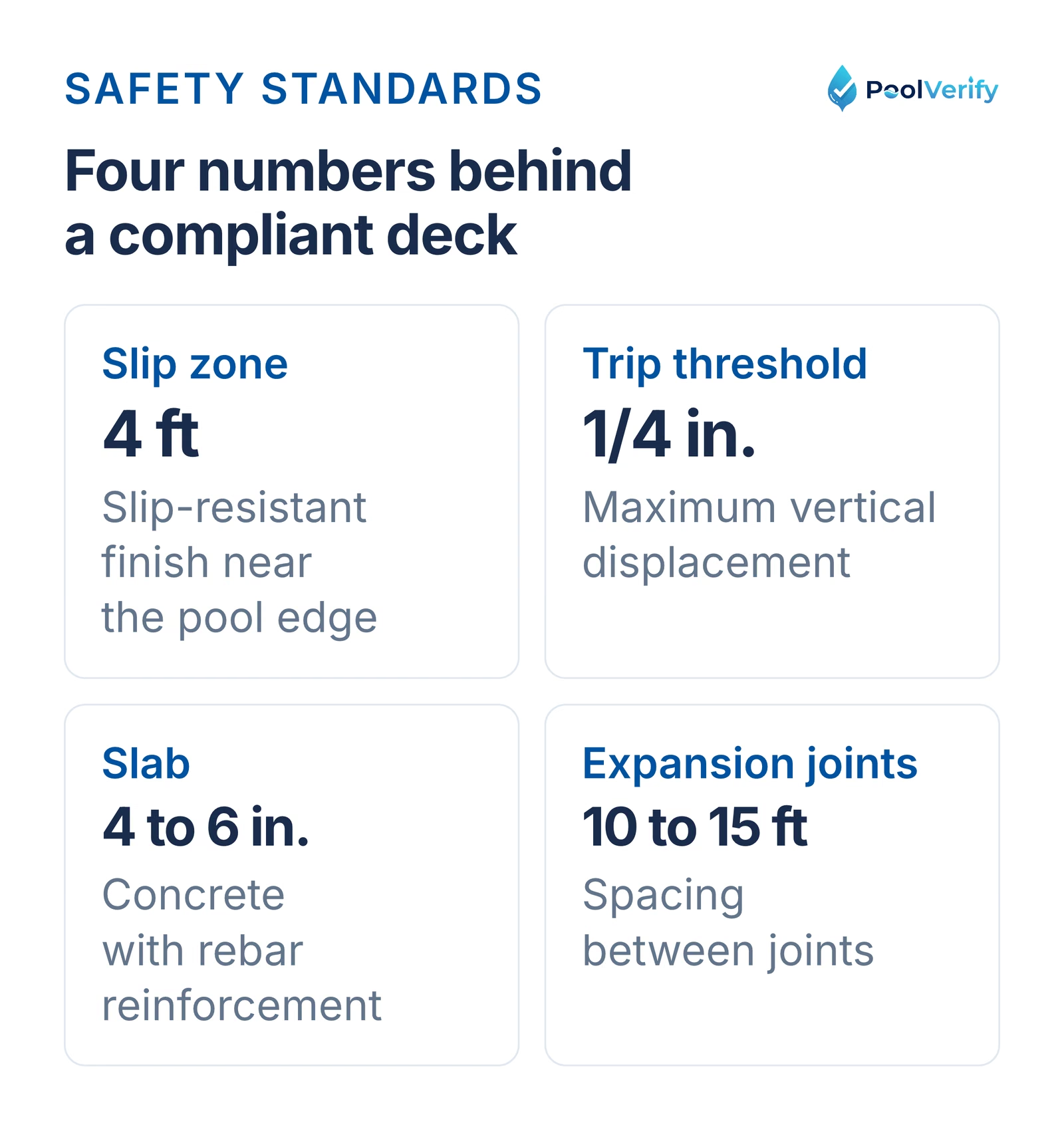
Proper reinforcement (typically 4-6 inch concrete with rebar)
Stable substrate without settlement or shifting
Proper expansion joints every 10-15 feet
Surface requirements:
Slip-resistant finish (especially within 4 feet of pool edge)
No standing water or pooling
Smooth enough to be comfortable barefoot
Durable enough to withstand cleaning and chemicals
Safety requirements:
No vertical displacement exceeding 1/4 inch (trip hazard threshold)
Rounded or bull-nosed pool edges (not sharp corners)
Proper drainage away from pool and structures
Adequate clearance from electrical equipment
According to California's deck inspection requirements, elevated decks over 6 feet require professional inspection every six years under SB 721 and SB 326, though pool decks at grade level have different inspection triggers, typically during property transfers or when permits are required.
Four pool deck standards: a 4-foot slip-resistant zone, 1/4-inch trip threshold, 4 to 6-inch slab, joints every 10 to 15 ft.
California pool deck building code requirements
California's Chapter 31B [DPH] Public Pools establishes specific requirements for pool deck construction, though these primarily apply to commercial and public pools. Residential pool decks typically follow local building codes, which often reference similar standards.
Drainage requirements (California Building Code)
Pool deck surfaces must have:
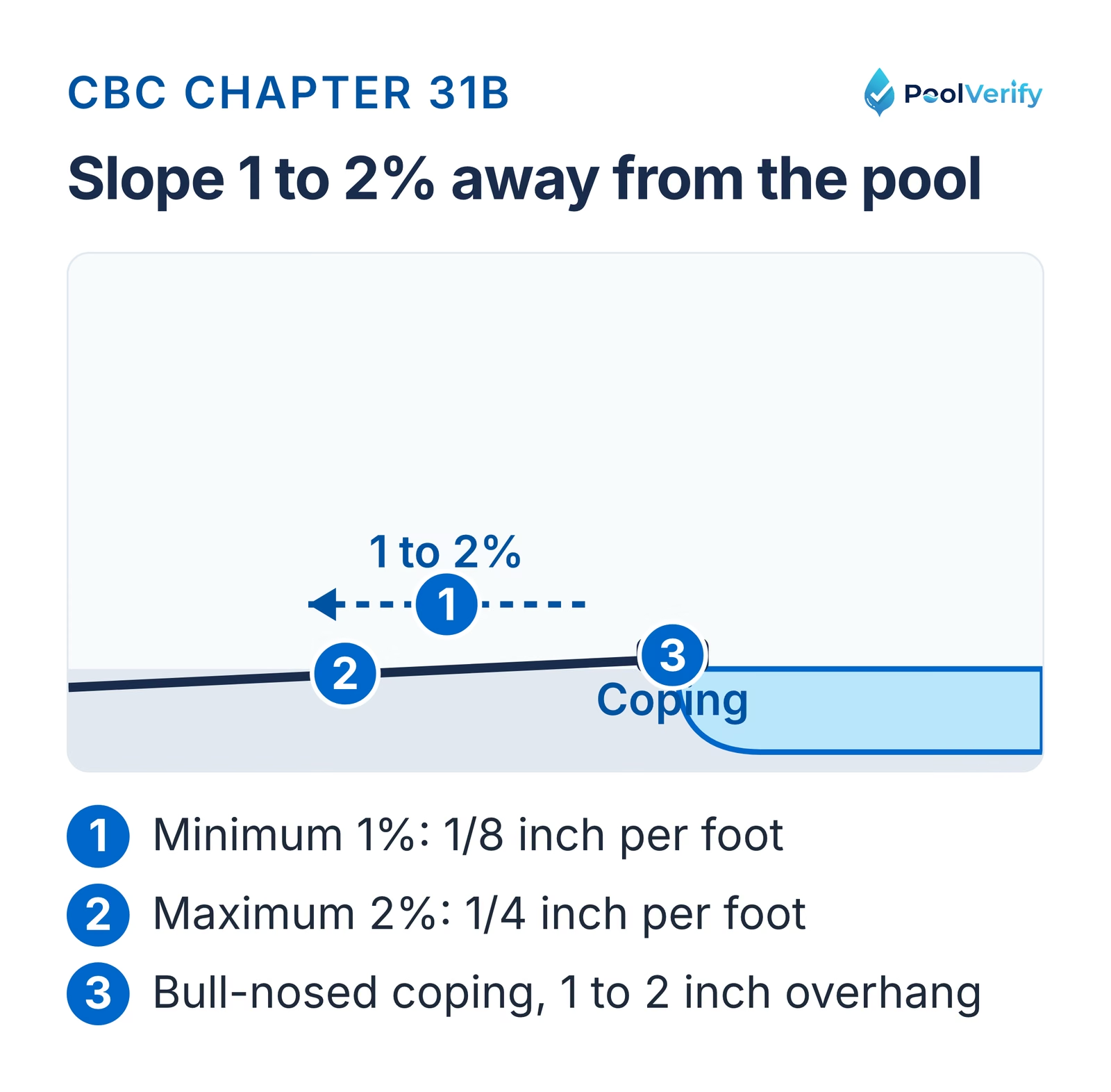
Minimum slope: 1% (1/8 inch per foot) away from pool
Maximum slope: 2% (1/4 inch per foot) away from pool
Drainage system: Directed to approved deck drainage system
No standing water: Surface finished to prevent water accumulation
Deck materials must be equivalent to concrete in strength and durability
Surface must provide adequate slip resistance
Materials must withstand repeated cleaning and chemical exposure
No deck coverings that deteriorate from pool maintenance
Pool edge (coping) requirements
California Building Code requires:
Bull-nosed coping or cantilevered decking of reinforced concrete
Rounded slip-resistant edges (not sharp corners)
Overhang: Between 1-2 inches (25-51mm)
Material equivalent to concrete in strength and durability
Trip hazard prevention
No pool installation shall create hazardous conditions adjacent to the pool, including:
Open ditches or voids
Pool walkways not level with existing surfaces
Deck edges with vertical displacement exceeding code limits
Apron or deck edges creating trip hazards
Pool deck inspection checklist
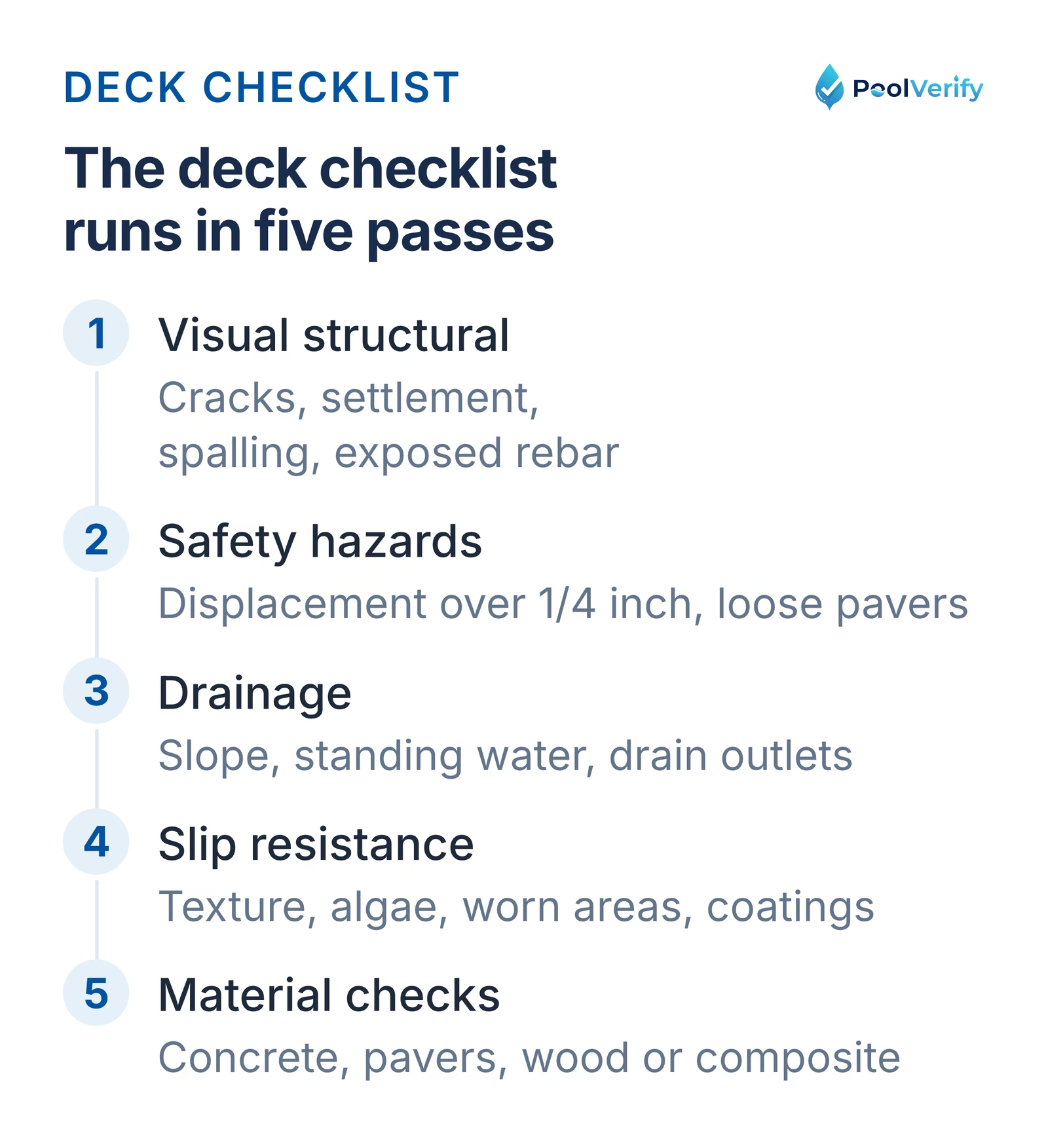
Professional pool deck inspection covers structural integrity, safety hazards, drainage, surface condition, and code compliance. Use this comprehensive checklist for thorough deck assessment.
Visual structural inspection
Overall condition: General appearance and structural integrity
Cracks: Identify all cracks (note location, length, width, pattern)
Settlement: Check for sunken areas or uneven sections
Separation: Gaps between deck and pool coping or building
Spalling: Surface deterioration, flaking, or scaling concrete
Exposed rebar: Steel reinforcement visible through concrete
Expansion joints: Condition and proper placement
Safety hazard assessment
Trip hazards: Vertical displacement exceeding 1/4 inch between sections
Uneven surfaces: Abrupt changes in elevation
Loose materials: Pavers, tiles, or concrete pieces that move
Sharp edges: Exposed corners or broken coping that could cause injury
Protruding objects: Nails, screws, or anchors sticking up from surface
Drainage evaluation
Proper slope: Verify 1-2% slope away from pool (minimum 1/8" per foot)
Standing water: Check for puddles or areas that don't drain
Drainage outlets: Deck drains functional and clear
Drainage direction: Water flows away from pool and structures
Soil erosion: Undermining from poor drainage
Slip resistance testing
Surface texture: Adequate slip resistance (especially near pool edge)
Algae growth: Green or slimy areas indicating biological growth
The five passes of a pool deck inspection: structure, safety hazards, drainage, slip resistance and material checks.
Common pool deck problems
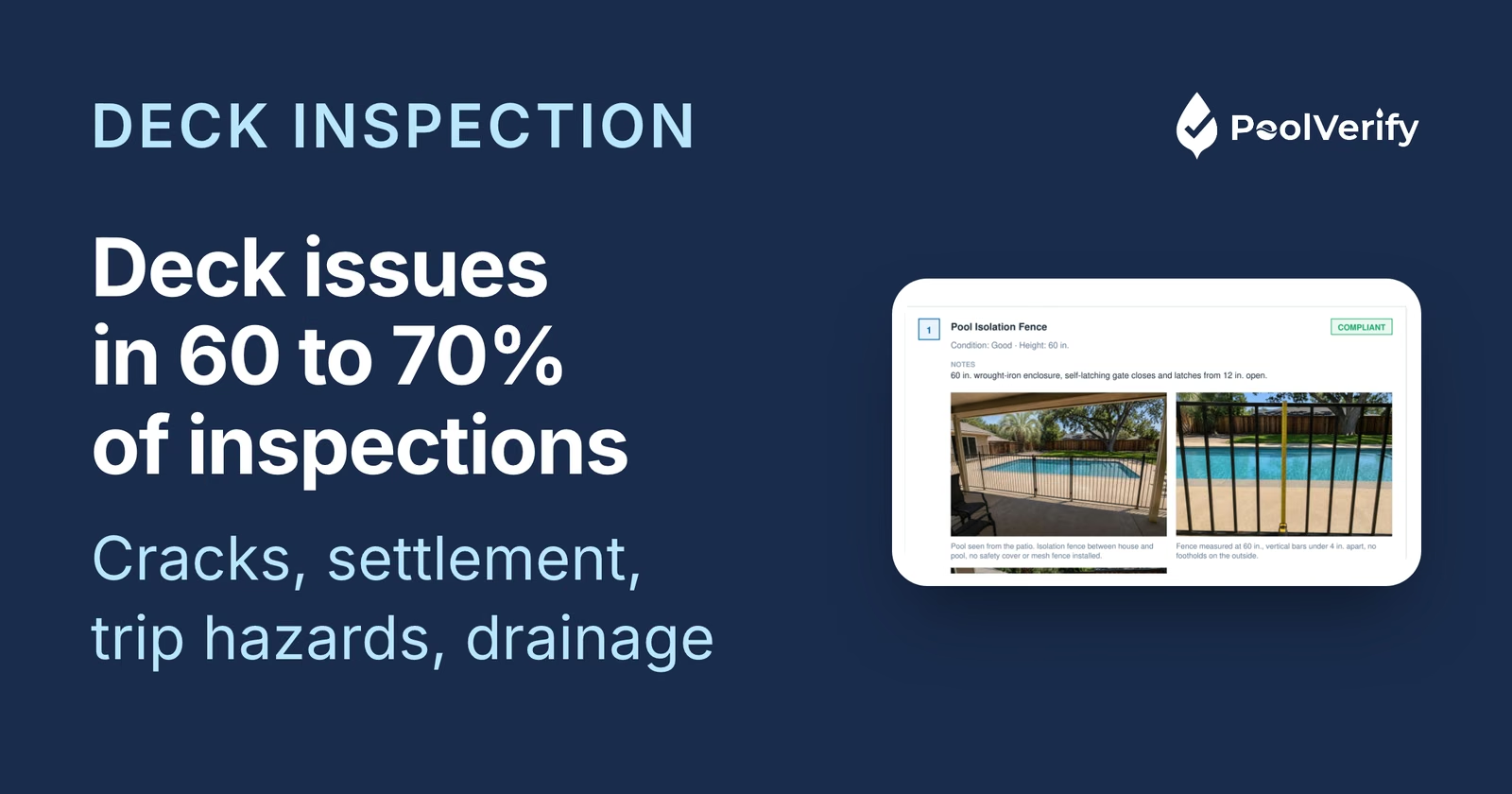
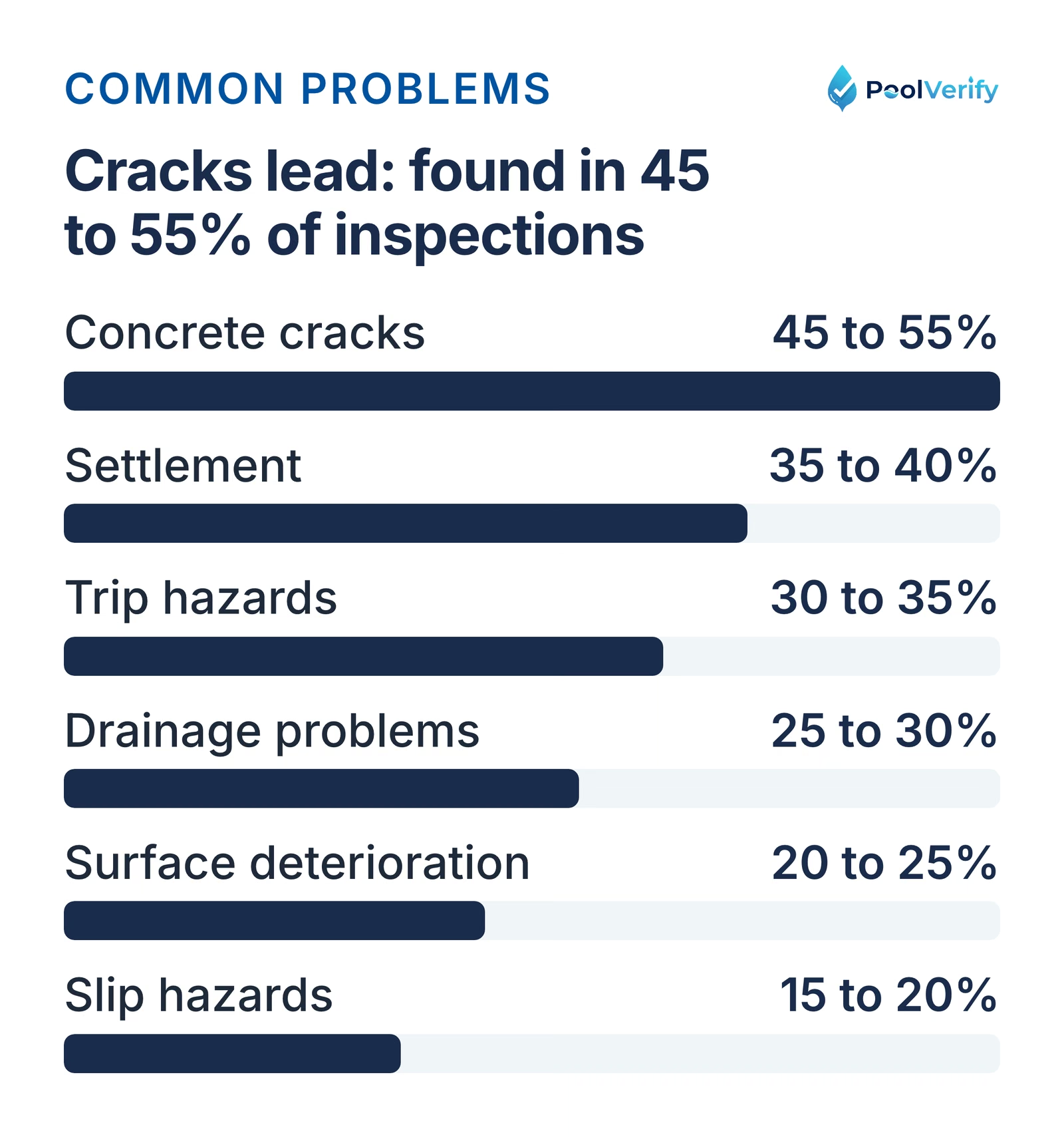
Professional inspections typically reveal at least one deck issue in approximately 60-70% of pool inspections. Understanding these common problems helps inspectors identify issues and homeowners prioritize repairs.
1. Concrete cracks (found in 45-55% of inspections)
Hairline cracks (less than 1/8 inch wide):
Usually cosmetic but should be sealed
Often caused by concrete shrinkage during curing
May indicate normal settling (if isolated)
Monitor for widening over time
Structural cracks (greater than 1/8 inch wide):
Require professional evaluation
May indicate foundation problems
Can allow water infiltration causing further damage
Often result from soil settlement or tree roots
Pool deck crack causes and patterns include ground settlement, tree roots, poor construction, temperature fluctuations, chemical exposure, and heavy loads.
2. Settlement and sinking (35-40% of inspections)
Ground settlement occurs when soil beneath the deck shifts and compresses:
Improper compaction: Backfill material not properly compacted during construction
Soil composition: Expansive soils or heavy clay that shifts with moisture
Heavy loads: Concrete weight compressing loose soil beneath
Water infiltration: Soil erosion washing away supporting material
Warning signs:
Gaps between deck and pool coping
Cracks radiating from one area
Puddles forming in previously flat areas
Doors or gates no longer closing properly
3. Trip hazards and uneven surfaces (30-35% of inspections)
Trip hazards create serious liability and are among the most common poolside injury causes:
Vertical displacement: Sections offset by more than 1/4 inch
Heaving: Sections pushed up by tree roots or frost
Settlement: Sunken sections creating edges
Broken pavers: Missing or damaged pavers creating voids
The Consumer Product Safety Commission reports poolside surfaces are among the most common areas for slips, trips, and falls in residential environments, which is why many insurers require deck safety assessment during pool inspections.
4. Drainage problems (25-30% of inspections)
Standing water issues:
Creates slip hazards when wet
Accelerates surface deterioration
Promotes algae and biological growth
Can indicate settlement or improper slope
Causes:
Insufficient slope (less than 1% grade)
Reverse slope draining toward pool
Clogged deck drains
Settlement creating low spots
5. Surface deterioration (20-25% of inspections)
Spalling and scaling:
Surface concrete flaking or peeling away
Caused by freeze-thaw cycles, chemical damage, or poor finishing
Exposes aggregate and creates rough surfaces
Requires resurfacing if extensive
Chemical damage:
Discoloration from chlorine or acid washing
Etching from improper chemical balance
Salt damage in saltwater pool installations
6. Slip hazards (15-20% of inspections)
Inadequate slip resistance:
Smooth troweled finishes becoming slippery when wet
Worn surfaces losing original texture
Algae or biofilm growth creating slick areas
Inappropriate materials within 4 feet of pool edge
California code requires slip-resistant surfaces, particularly within the critical 4-foot zone around the pool edge where wet feet are most common.
How often six pool deck problems appear in inspections, from cracks at 45 to 55% down to slip hazards at 15 to 20%.
Pool deck crack types and causes
Understanding crack patterns helps diagnose underlying problems and determine appropriate repairs. Not all cracks indicate serious structural issues, but certain patterns require professional evaluation.
Hairline cracks (cosmetic)
Characteristics:
Less than 1/8 inch (3mm) wide
Surface level only (not deep)
Usually straight or slightly curved
No vertical displacement
Causes:
Normal concrete shrinkage during curing
Minor temperature fluctuations
Surface finishing technique
Action required: Seal to prevent water infiltration and widening; monitor for changes.
Pattern or map cracking (crazing)
Characteristics:
Network of fine surface cracks
Resembles spider webs or maps
Shallow depth (surface only)
Often covers large areas
Causes:
Rapid drying during concrete curing
Too much water in concrete mix
Over-finishing or working wet concrete
Action required: Primarily cosmetic; seal or resurface for appearance.
Action required: Address underlying settlement first, then repair cracks.
Expansion joint separation
Characteristics:
Gaps at planned expansion joints
Usually straight lines every 10-15 feet
May exceed original joint width
Normal with extreme temperature changes
Causes:
Temperature-related expansion and contraction
Normal joint movement
Deteriorated or missing joint filler
Action required: Replace joint filler material; monitor for excessive movement.
Drainage and slope requirements
Proper drainage is critical for deck safety, longevity, and code compliance. California Building Code Chapter 31B specifies exact requirements for pool deck drainage.
Required slope specifications
Minimum slope: 1% (1/8 inch per foot)
Absolute minimum for gravity drainage
Provides minimal water movement
May still allow some puddling in real-world conditions
Maximum slope: 2% (1/4 inch per foot)
Provides good drainage without excessive slope
More comfortable for walking
Reduces rapid runoff erosion
Optimal slope: 1.5% (3/16 inch per foot)
Balances drainage effectiveness with comfort
Ensures positive drainage without noticeable slope
Industry standard for quality pool deck construction
How to measure deck slope
Tools needed:
4-foot level
Tape measure or ruler
Pencil and notepad
Measurement process:
Place 4-foot level on deck surface
Position one end at pool edge, extending away from pool
Lift level until bubble centers (now showing correct slope direction)
Measure vertical distance from deck to bottom of level at 4-foot mark
1/8 inch drop over 4 feet = 0.26% (below minimum, insufficient)
1/4 inch drop over 4 feet = 0.52% (minimum acceptable)
1/2 inch drop over 4 feet = 1.04% (good)
3/4 inch drop over 4 feet = 1.56% (optimal)
1 inch drop over 4 feet = 2.08% (maximum code limit)
Drainage system types
Surface drainage (most common residential):
Deck slopes to lawn, landscaping, or permeable areas
Requires adequate drainage path
Must not drain toward buildings or neighbor property
Most cost-effective for typical installations
Deck drains:
Floor drains installed in deck surface
Connect to underground drainage piping
Required for enclosed pool areas
Common in commercial installations
Perimeter drainage:
Trench drains along deck edges
Collect water before it reaches landscaping
Prevent soil erosion and foundation issues
Often required for hillside or elevated installations
Common drainage problems
Reverse slope (draining toward pool):
Settlement causing slope reversal
Construction error from initial installation
Serious code violation requiring correction
Ponding water:
Low spots from settlement or construction errors
Creates slip hazards and surface damage
Indicates insufficient slope or drainage blockage
Erosion:
Soil washing away under deck edges
Can create voids causing settlement
Results from concentrated water flow without proper drainage
Pool deck drainage slope of 1 to 2% away from the pool, with bull-nosed coping overhanging 1 to 2 inches.
Trip hazard identification
Trip hazards are the leading cause of poolside injuries and represent significant liability for property owners. Professional inspection identifies vertical displacements, uneven surfaces, and other conditions that create tripping risks.
Trip hazard thresholds
Industry standards:
1/4 inch (6mm): Maximum acceptable vertical displacement (ADA standard)
1/8-1/4 inch: Monitor and consider repair
1/4-1/2 inch: Immediate repair recommended
Over 1/2 inch: Serious hazard requiring urgent correction
High-traffic areas (near gates, stairs, entries):
Lower tolerance for vertical displacement
Consider repair at 1/8 inch in critical areas
Increased liability in frequently used paths
Common trip hazard types
Settled sections:
Deck sections sinking due to soil settlement
Creates edges between settled and stable areas
Often progressive, continues worsening over time
Heaved sections:
Deck sections pushed upward by tree roots or frost
Creates ridges across walking surfaces
May indicate ongoing active movement
Expansion joint separation:
Excessive gaps at expansion joints
Can catch shoe tips or create stumbling risk
Normal joints should be 1/4-1/2 inch wide
Broken or missing pavers:
Create voids and sudden elevation changes
Can shift when stepped on
Particularly dangerous in poor lighting
Deteriorated edges:
Pool coping or deck edges breaking away
Sharp edges that can cause cuts or tripping
Requires replacement to restore safe edge condition
Slip resistance is critical for pool deck safety, as wet feet on smooth surfaces create dangerous conditions. California Building Code requires adequate slip resistance, particularly within 4 feet of the pool edge.
Slip resistance standards
High-slip-resistance zones (within 4 feet of pool):
Must use materials equivalent to concrete in slip resistance
Surface texture required for barefoot safety when wet
Cannot use smooth tile or polished finishes
Must withstand repeated chemical exposure and cleaning
General deck areas (beyond 4 feet from pool):
Slip resistance still recommended
May use wider variety of materials
Should consider typical wet conditions
Measuring slip resistance
Dynamic Coefficient of Friction (DCOF):
Standard measurement for slip resistance
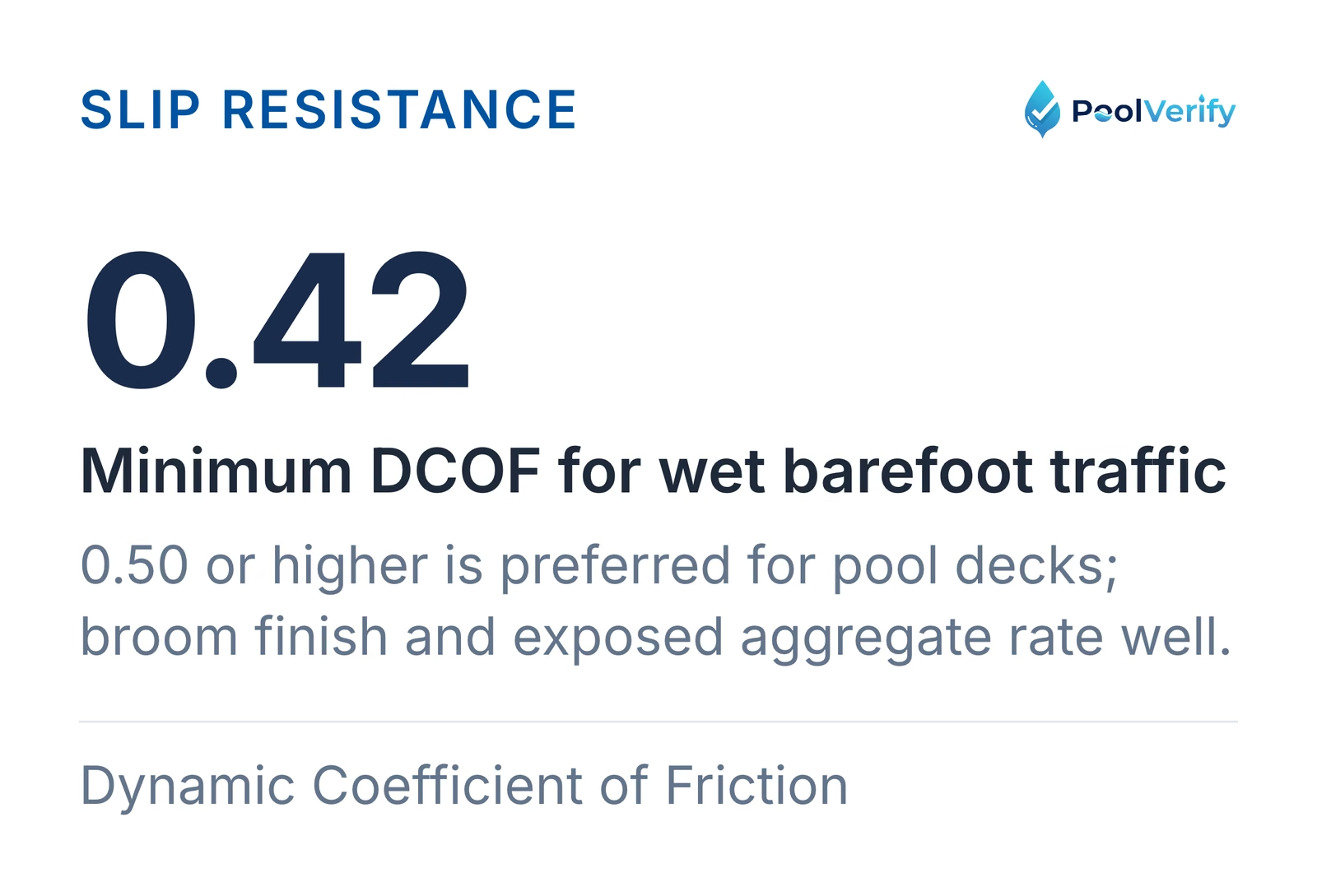
0.42 or higher: Recommended minimum for wet barefoot traffic
0.50 or higher: Preferred for pool decks
Higher numbers = more slip resistant
Wet pendulum test:
Simulates foot slip on wet surface
Provides slip resistance value (SRV)
36 or higher: Low slip risk
Below 36: Increased slip risk when wet
Surface textures for slip resistance
Excellent slip resistance:
Broom-finished concrete (medium-stiff bristles)
Exposed aggregate (small to medium stones)
Textured spray coatings
Salt-finish concrete
Good slip resistance:
Stamped concrete with texture
Pebble surfaces
Non-polished pavers with texture
Wood decking with proper spacing
Poor slip resistance (avoid near pool):
Smooth troweled concrete
Polished finishes
Glazed tile
Sealed surfaces without texture
Slip hazard indicators during inspection
Smooth worn areas: Traffic patterns showing texture loss
Algae or biofilm growth: Green or dark slimy areas
Pooled water: Standing water creating extended wet conditions
Deteriorated coatings: Non-slip coatings peeling or worn away
Inappropriate materials: Smooth tile within 4 feet of pool edge
According to ADA accessibility standards for pools, sloped pool entries must be slip resistant, though standard pool decks have exceptions allowing for proper texture requirements rather than extreme slip resistance that may be uncomfortable barefoot.
The recommended minimum dynamic coefficient of friction for a wet pool deck is 0.42, with 0.50 or higher preferred.
Pool deck repair recommendations
Repair methods depend on problem severity, underlying causes, and budget. Address underlying issues (settlement, drainage) before surface repairs to prevent recurrence.
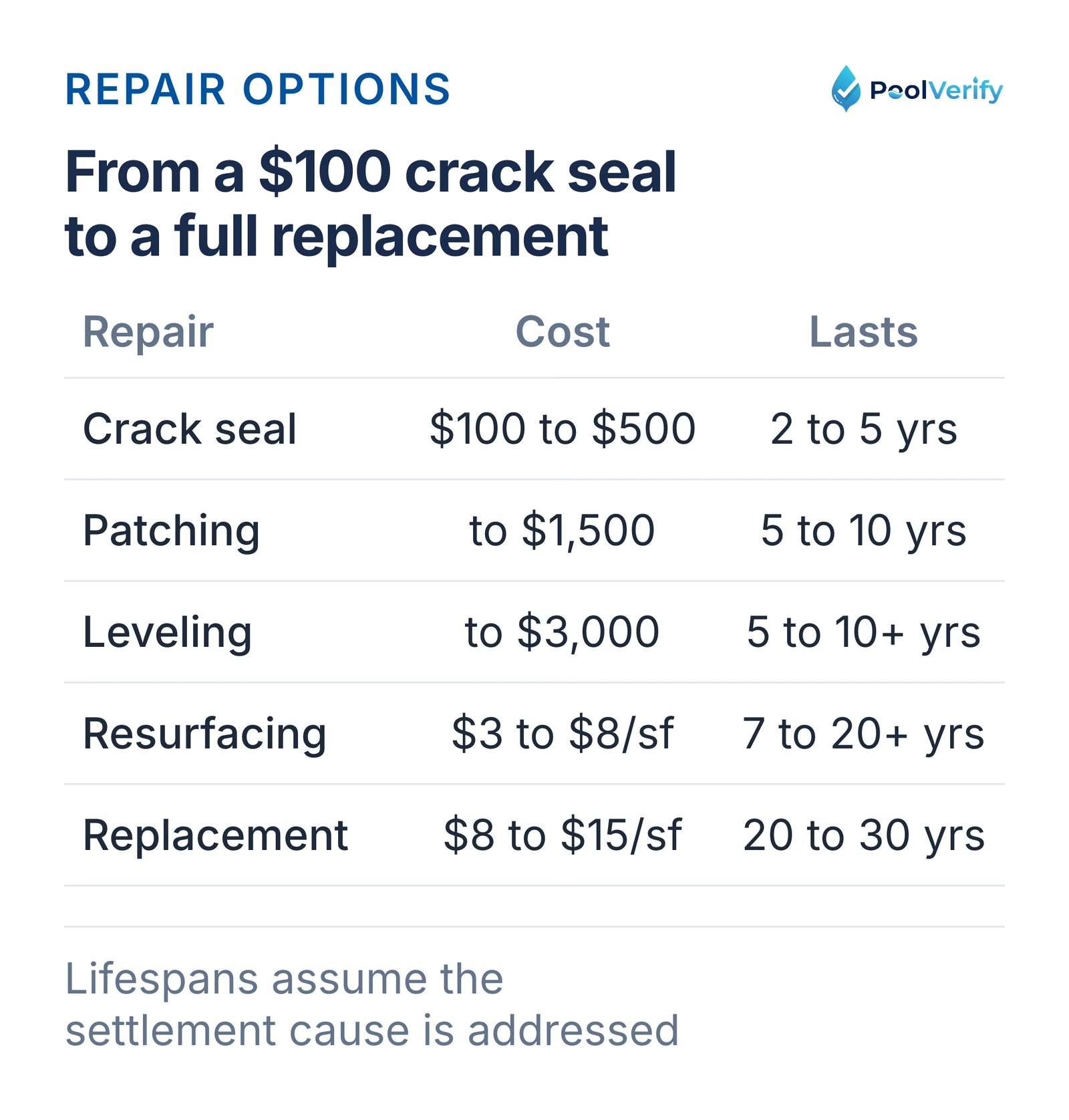
Minor crack repair ($100-$500)
Appropriate for:
Hairline cracks (less than 1/8 inch)
Cosmetic surface cracks
Map cracking or crazing
Repair methods:
Concrete caulk or sealant: For cracks up to 1/8 inch wide
Crack filler: Flexible polymer products that move with concrete
Surface sealer: Clear coating over repaired cracks
Process:
Clean crack thoroughly (pressure wash or wire brush)
Allow to dry completely
Apply appropriate filler material
Smooth and blend with surrounding surface
Seal entire deck if applicable
Expected lifespan: 2-5 years before resealing needed
Concrete patching ($300-$1,500)
Appropriate for:
Larger cracks (greater than 1/8 inch)
Spalling or surface deterioration
Small damaged areas (less than 25% of deck)
Repair methods:
Chip and patch: Remove damaged concrete and patch with repair compound
Epoxy injection: Fill structural cracks with epoxy resin
Overlay patches: Thin layer of specialized concrete over damaged areas
Process:
Remove deteriorated or loose concrete
Clean area to sound concrete
Apply bonding agent
Fill with concrete repair compound
Finish to match surrounding deck
Cure properly (keep moist 3-7 days)
Expected lifespan: 5-10 years with proper application
Concrete leveling and lifting ($1,000-$3,000)
Appropriate for:
Settled sections creating trip hazards
Voids under concrete slabs
Uneven areas that still have structural integrity
Repair methods:
Mudjacking (slabjacking):
Pump cement-based grout under settled slab
Lifts concrete back to proper level
Cost: $1,000-$2,000 for typical pool deck sections
Drilling required (1-2 inch holes)
PolyLevel foam injection:
Inject expanding polyurethane foam under slab
Lighter weight than mudjacking
Faster curing time (15 minutes vs 24 hours)
Cost: $1,500-$3,000 for typical sections
Smaller drill holes (5/8 inch)
Process:
Identify void locations and required lift
Drill injection holes strategically
Inject material until slab reaches proper level
Patch injection holes
Allow curing as needed
Expected lifespan: 5-10+ years if settlement cause addressed
Complete deck replacement ($8-$15+ per square foot)
Required when:
Structural failure beyond repair
Extensive settlement throughout deck
Severe cracking with continued movement
More than 50% of deck severely damaged
Replacement more cost-effective than repairs
Replacement process:
Remove existing deck completely
Address soil and drainage issues
Install proper base and reinforcement
Pour new concrete with proper slope
Finish with desired texture or coating
Cost for typical 500-600 sq ft pool deck: $4,000-$9,000+
Expected lifespan: 20-30+ years with proper construction and maintenance
Pool deck repair options with cost and lifespan, from crack sealing at $100 to $500 to replacement at $8 to $15 per sq ft.
When to replace vs repair pool decking
The decision between repair and replacement depends on damage extent, underlying causes, costs, and long-term goals.
Repair is appropriate when:
Isolated damage: Problems limited to specific areas (less than 30% of deck)
Stable structure: No ongoing settlement or structural movement
Cosmetic issues: Surface-level problems without structural concerns
Budget constraints: Repairs extend deck life until replacement affordable
Recent installation: Deck less than 10 years old with repairable damage
Cost-effectiveness threshold: If repairs exceed 50-60% of replacement cost, consider replacing entire deck.
Replacement is recommended when:
Widespread damage: More than 40-50% of deck affected
Active settlement: Ongoing sinking or movement indicates base failure
Structural failure: Major cracks, separation, or load-bearing concerns
Poor original construction: Inadequate reinforcement, thickness, or base
Age and wear: Deck exceeding 25-30 years with multiple issues
Drainage problems: Fundamental slope issues requiring complete rebuild
Professional evaluation needed for:
Cracks wider than 1/4 inch
Vertical displacement exceeding 1/2 inch
Progressive settlement or movement
Separation from pool structure
Exposed or corroded reinforcement
Extensive spalling or deterioration
Consider hiring a structural engineer ($300-$800) for evaluation if:
Underlying causes unclear
Multiple failed repair attempts
Concern about structural integrity
Insurance or liability documentation needed
Ready to streamline your California pool safety inspections?PoolVerify helps you complete comprehensive pool and deck inspections with digital photo documentation, instant PDF reports, and California-compliant checklists. Start Your Free Trial
Limitations
This guide is general information, not legal or professional advice, and prices and features of third-party products change; verify them on the vendor's site before deciding. PoolVerify is inspection software for California residential pool safety inspections; it does not perform inspections, certify inspectors, or issue compliance certificates.
Frequently Asked Questions
How often should pool decks be inspected?
Annual inspections are recommended for residential pool decks, with quarterly visual checks in areas subject to severe weather, freeze-thaw cycles, or known settlement issues. Professional inspection should be conducted during property transfers, after major weather events, or when visible damage appears. California SB 721 and SB 326 require elevated decks over 6 feet to be inspected every six years by qualified professionals.
What is considered a trip hazard on a pool deck?
Vertical displacement exceeding 1/4 inch (6mm) between adjacent deck sections is generally considered a trip hazard and should be repaired. The Americans with Disabilities Act (ADA) sets 1/4 inch as the maximum acceptable vertical displacement, and this standard is widely adopted for pool deck safety. In high-traffic areas or areas used by elderly or mobility-impaired individuals, lower thresholds (1/8 inch) may be more appropriate.
How much does pool deck inspection cost?
Standalone pool deck inspection typically costs $100-$300, though deck assessment is usually included as part of comprehensive pool safety inspections ($150-$400 total). Elevated deck inspections required by California SB 721/SB 326 for multi-family properties cost $400-$800+ depending on property size and complexity. Home inspection services that include pool deck assessment range from $300-$600 for complete property evaluation.
Can pool deck cracks be repaired or do they require replacement?
Most pool deck cracks can be successfully repaired unless they indicate serious structural problems. Hairline cracks (less than 1/8 inch) can be sealed with flexible crack filler ($100-$300). Larger structural cracks (1/8-1/4 inch) may require epoxy injection or concrete patching ($300-$1,500). Complete replacement ($4,000-$9,000+) is only necessary when cracks are accompanied by severe settlement, structural failure, or damage affecting more than 40-50% of the deck.
What slope is required for pool deck drainage in California?
California Building Code Chapter 31B requires pool deck surfaces to have a minimum slope of 1% (1/8 inch per foot) and maximum slope of 2% (1/4 inch per foot) away from the pool to an approved deck drainage system. The surface must be constructed and finished to prevent standing water. Optimal slope is typically 1.5% (3/16 inch per foot), which provides effective drainage while remaining comfortable for walking and accessibility.
Do pool decks need to be slip-resistant?
Yes, California Building Code requires pool decks to have adequate slip resistance, especially within 4 feet of the pool edge. Deck materials within this critical zone must be equivalent to concrete in slip resistance and able to withstand repeated cleaning and chemical exposure. The recommended minimum Dynamic Coefficient of Friction (DCOF) is 0.42 for wet barefoot traffic, with 0.50 or higher preferred for pool deck safety. Broom-finished concrete, exposed aggregate, and textured coatings provide good slip resistance.
Conclusion
Pool deck inspection identifies safety hazards, structural problems, and code violations before they result in injuries or costly emergency repairs. Understanding deck safety requirements, proper drainage (1-2% slope), slip resistance, trip hazard thresholds (1/4 inch maximum displacement), and California Building Code standards, enables thorough assessment and appropriate repairs.
Common pool deck problems include cracks (45-55% of inspections), settlement (35-40%), trip hazards (30-35%), drainage issues (25-30%), and inadequate slip resistance (15-20%). Most issues are repairable when caught early through regular inspection and maintenance.
Professional pool deck evaluation is recommended annually, during property transfers, after severe weather, or when visible damage appears. For California pool safety inspections that include comprehensive deck assessment with digital documentation, PoolVerify provides California-compliant checklists, photo documentation, and instant PDF reports, helping inspectors deliver thorough, professional assessments efficiently.
Ready to conduct professional pool deck inspections with complete documentation?Start your free trial of PoolVerify and complete your first inspection with our California-compliant pool and deck safety checklist.
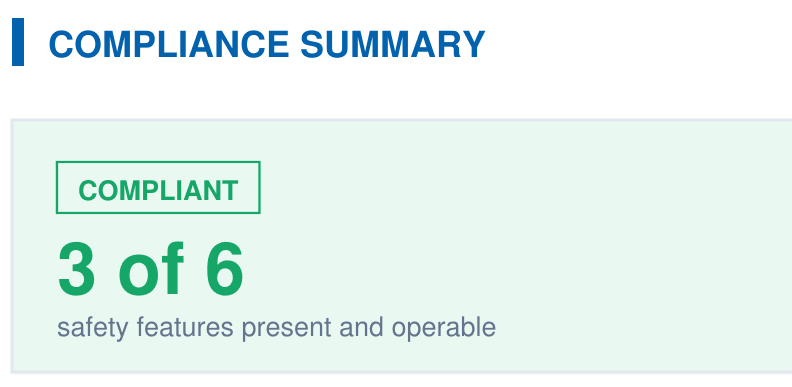
A branded PDF with the compliance summary, the feature table, each finding with its photos, and the signature, generated on‑site when the BPC §7195 and HSC §115922 checklist is complete.