Pool Contractor License, Bond and Insurance in California
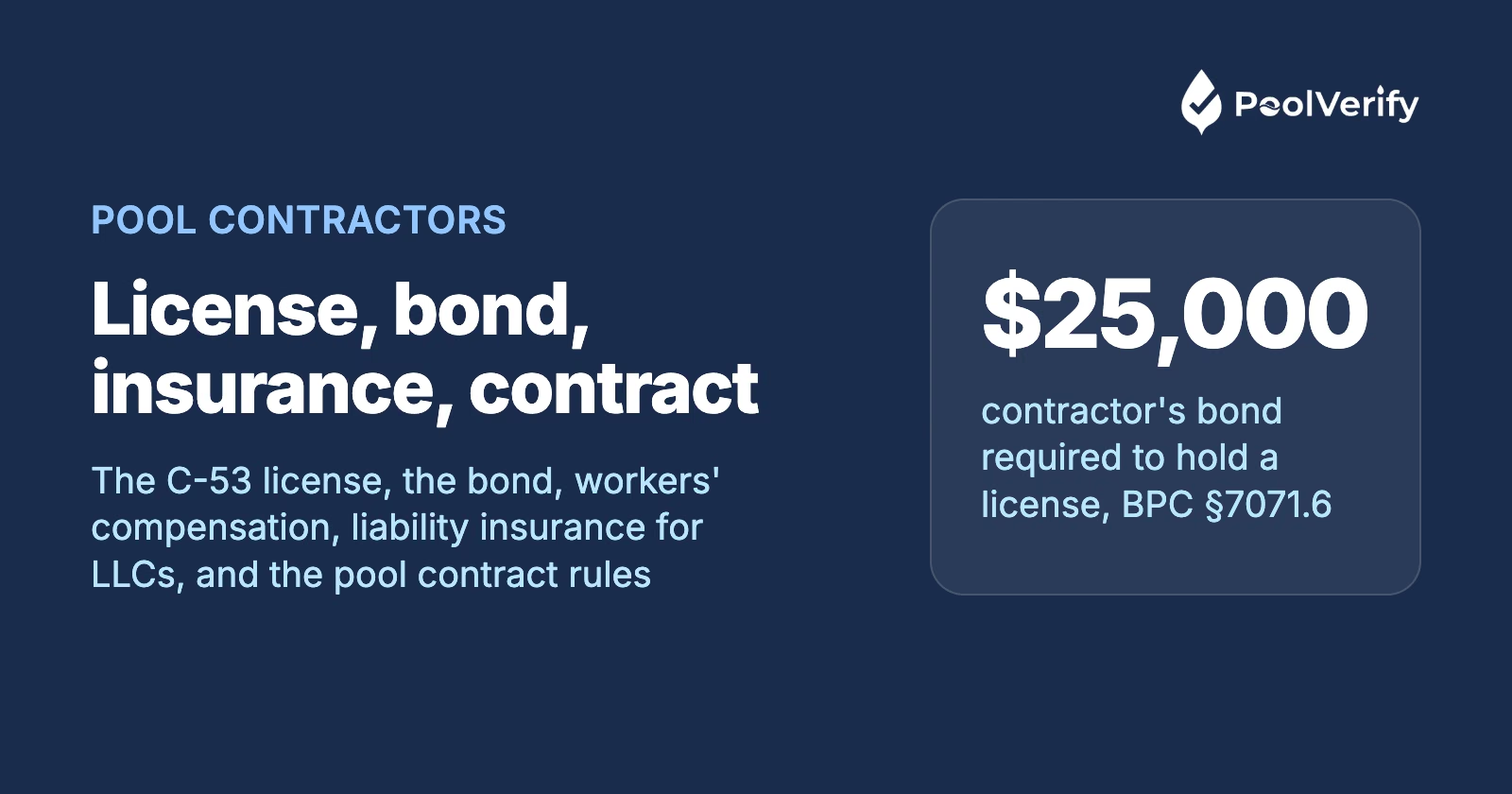
A California swimming pool contractor needs a CSLB license in the C-53 classification for any job of $1,000 or more or any job needing a building permit (BPC §7048), a $25,000 contractor's bond (BPC §7071.6), and a workers' compensation certificate or an exemption (BPC §7125). Liability insurance is required of LLC licensees (BPC §7071.19), and every home improvement contract must disclose it (BPC §7159). The pool contract rules, including the plan and scale drawing and the down payment cap.
A California swimming pool contractor needs a Contractors State License Board license in the C-53 classification for any job of $1,000 or more, or any job that needs a building permit, under BPC §7048; a $25,000 contractor's bond under BPC §7071.6; and a workers' compensation certificate or a no-employee exemption under BPC §7125. Liability insurance is required of a licensee organized as an LLC, and every contract must disclose it.
This guide covers the license, the bond, workers' compensation, liability insurance, the rules a swimming pool contract must follow, third-party financing, and the safety duties the permit adds. Our contractor's final inspection guide covers the drowning prevention features on the job itself.
Plan and scale drawing, down payment cap, progress payments, lien releases, written change orders; a pool contract that does not substantially comply is void
The license: C-53 and the $1,000 line
The CSLB licenses swimming pool contractors under classification C-53, which 16 CCR §832.53 describes as a contractor who "constructs swimming pools, spas or hot tubs, including installation of solar heating equipment using those trades or skills necessary for such construction."
The license line is in BPC §7048, as amended effective January 1, 2026: the minor work exemption covers work whose aggregate contract price for labor, materials and all other items is less than $1,000, and only where the work does not require a building permit and is not part of a larger operation. Any job that requires a building permit needs a license whatever its price, so a permitted pool always needs a licensed contractor. Homeowners can check a license on the CSLB website before signing.
The bond: $25,000
BPC §7071.6 makes a contractor's bond "in the sum of twenty-five thousand dollars ($25,000)" a condition of issuing, reinstating, reactivating, renewing and keeping a license. That amount has applied since January 1, 2023, under SB 607 (Stats. 2021, Ch. 367). The bond is a condition of the license, separate from any liability or workers' compensation coverage the business carries.
Workers' compensation
BPC §7125 requires a licensee to have on file "a current and valid Certificate of Workers' Compensation Insurance or Certification of Self-Insurance," or to file an exemption stating that the licensee has no employees. Five classifications cannot use the no-employee exemption: C-8 concrete, C-20 HVAC, C-22 asbestos abatement, C-39 roofing, and D-49 tree service. C-53 swimming pool is not on that list, so a pool contractor with no employees may file the exemption.
Liability insurance: required of LLCs, disclosed by everyone
The license law requires liability insurance of one business form. Under BPC §7071.19, a licensee that is a limited liability company must maintain liability insurance:
LLC personnel of record
Aggregate limit required
Five or fewer persons
Not less than $1,000,000
More than five persons
An additional $100,000 for each person over five
Any size
Not required to exceed $5,000,000 in any one designated period
For every other licensee, the law asks for disclosure. BPC §7159(e)(1) requires each home improvement contract to carry the heading "Commercial General Liability Insurance (CGL)" followed by one statement: that the contractor does not carry commercial general liability insurance, that it carries it written by a named insurer, that it is self-insured, or that it is a limited liability company carrying liability insurance or other security as the law requires. BPC §7159(e)(2) adds a "Workers' Compensation Insurance" heading stating either that the contractor has no employees and is exempt, or that it carries workers' compensation for all employees.
Which policies a pool business buys beyond these, and at what limits, is an insurance question this guide does not answer; the statutes set the floor and the disclosure.
The swimming pool contract
A contract to build a pool is a home improvement contract with extra requirements, and BPC §7167 makes the core ones decisive: "any contract, the primary purpose of which is the construction of a swimming pool, that does not substantially comply with paragraph (4) or (5) of subdivision (c) or paragraph (7), (8), or (9) of subdivision (d) of Section 7159, shall be void." BPC §7159 applies when the contract price exceeds $500.
Provision
What it requires
§7159(c)(4), lien releases
Upon satisfactory payment for any portion of the work, the contractor furnishes a full and unconditional release from any lien claim for that portion before any further payment
§7159(c)(5), change orders
A change-order form is incorporated into the contract; a change becomes part of the contract only if it is in writing and signed by the parties before the work starts
§7159(d)(7), project description
For swimming pools, "a plan and scale drawing showing the shape, size, dimensions, and the construction and equipment specifications"
§7159(d)(8), down payment
"The downpayment may not exceed $1,000 or 10 percent of the contract price, whichever is less"
§7159(d)(9), progress payments
Payments before completion are set out as a schedule of progress payments in the form the subdivision prescribes
The plan and scale drawing is also where the two drowning prevention features belong, because the building official inspects them before final approval under HSC §115922(c). Our guide to building a pool walks a homeowner through the same contract from the other side.
Financing by a third-party lender
When a swimming pool contract is financed by a third-party lender, BPC §7165 adds lender disclosures and timing rules: the buyer receives the written terms of the loan, including the annual percentage rate, finance charge, amount financed, number of payments and payment schedule, and the prescribed notice says that "until the cancellation period is over, the contractor cannot deliver any materials or perform any services except preliminary services." If costs turn out lower after excavation, the lender must offer to loan the lesser amount. Read the section before scheduling excavation on a financed job.
The safety duties the permit adds
The license law governs the business; the Swimming Pool Safety Act governs the pool. HSC §115924(a) requires anyone entering into an agreement to build a pool or spa, or to do permitted work on one, to "give the consumer notice of the requirements of this article." HSC §115922 then requires two of seven drowning prevention safety features when the permit is issued for a pool at a single-family home, inspected by the building official before final approval. Our HSC §115922 guide sets out the seven features and the three pairs that do not count.
The pre-final walk, documented. PoolVerify's California checklist records each physical HSC §115922(a) feature with condition, notes and up to 10 photos, and generates a dated PDF on a phone at the job, so the contractor and the homeowner have the same record before the building official arrives. Starter is $49 a month, or $39 on annual billing. See pricing or the contractor software guide.
Limitations
This guide is general information about California law, not legal, licensing or insurance advice. The current text of BPC §7048, §7071.6, §7071.19, §7125, §7159, §7165 and §7167 and 16 CCR §832.53 controls, and the CSLB's own requirements for applicants, such as examinations and experience, are outside this guide. It does not recommend insurers, policies or limits. PoolVerify is inspection software for California residential pool safety inspections; it does not license, bond or insure anyone, perform inspections, or issue compliance certificates.
Frequently asked questions
Does a pool contractor need a license in California?
Yes, for any job priced at $1,000 or more in labor, materials and other items, or any job that requires a building permit, under BPC §7048 as amended effective January 1, 2026. The Contractors State License Board licenses swimming pool contractors under classification C-53, which 16 CCR §832.53 describes as constructing swimming pools, spas or hot tubs.
Do pool contractors need insurance in California?
It depends on the business form and the employees. BPC §7071.19 requires liability insurance of a licensee that is a limited liability company, from a $1,000,000 aggregate. BPC §7125 requires a workers' compensation certificate unless the licensee files an exemption for having no employees. Every home improvement contract must disclose whether the contractor carries commercial general liability insurance.
How much is the contractor bond in California?
Twenty-five thousand dollars. BPC §7071.6 requires a contractor's bond of $25,000 as a condition of issuing, reinstating, reactivating, renewing or keeping a license, operative January 1, 2023. The bond is a license requirement, not an insurance policy, and it does not replace the liability or workers' compensation coverage the business carries.
Is workers' compensation required for a pool contractor with no employees?
Not if the licensee files the exemption. BPC §7125 requires a current certificate of workers' compensation insurance or self-insurance, or an exemption for a licensee with no employees. Five classifications cannot use the exemption: C-8 concrete, C-20 HVAC, C-22 asbestos abatement, C-39 roofing and D-49 tree service. C-53 swimming pool is not among them.
What must a swimming pool construction contract include?
BPC §7159 applies to home improvement and swimming pool contracts over $500. For a pool, the project description includes a plan and scale drawing with shape, size, dimensions and construction and equipment specifications. The contract also needs the down payment cap, a progress payment schedule, lien releases, signed change orders, and the liability insurance and workers' compensation notices.
What is the maximum down payment for a pool in California?
BPC §7159(d)(8) says the down payment may not exceed $1,000 or 10 percent of the contract price, whichever is less. Under BPC §7167, a contract whose primary purpose is building a swimming pool is void if it does not substantially comply with the down payment rule and the other provisions that section lists.
Conclusion
A California pool contractor's floor is a C-53 license for any job of $1,000 or more or any permitted job, a $25,000 bond, and workers' compensation or a filed no-employee exemption. Liability insurance is required of LLCs and disclosed by everyone in the contract. The pool contract itself needs a plan and scale drawing, a down payment no higher than $1,000 or 10 percent, a progress payment schedule, lien releases and signed change orders, or it is void. Contractors who want a dated record of the safety features before final can start a 14-day free trial of PoolVerify, no credit card to start.
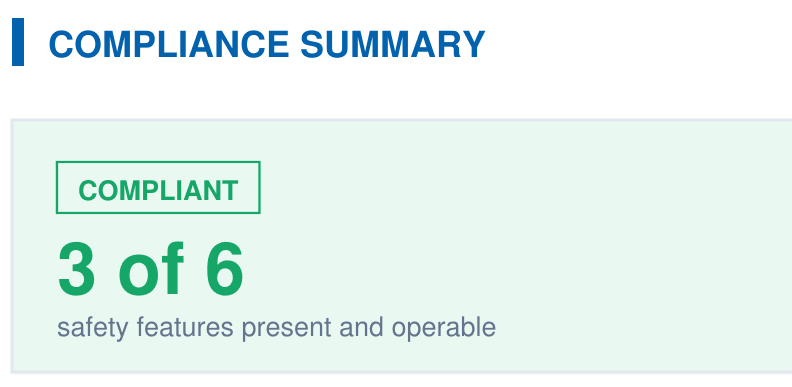
A branded PDF with the compliance summary, the feature table, each finding with its photos, and the signature, generated on‑site when the BPC §7195 and HSC §115922 checklist is complete.