Building a Pool in California: Permit and Safety Requirements
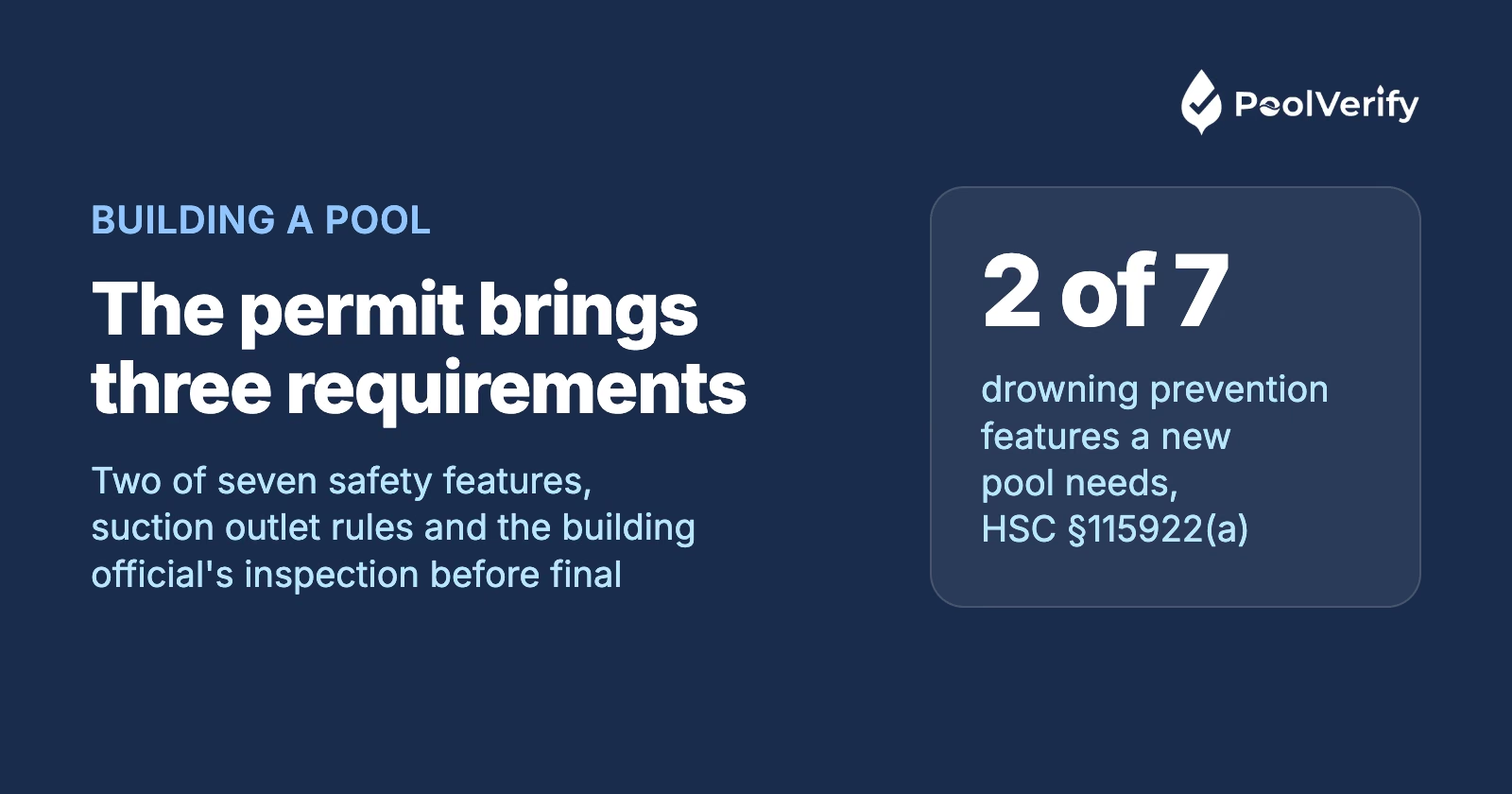
When a building permit is issued for a new pool or spa at a single-family home in California, state law attaches three requirements: at least two of seven drowning prevention safety features (HSC §115922(a)), suction outlets arranged and covered under HSC §115928, and the building official's inspection of the features before final approval (HSC §115922(c)). The contractor's notice duty, the C-53 license, HOA approval, and the final inspection.
When a building permit is issued for a new pool or spa at a single-family home in California, state law attaches three requirements: at least two of seven drowning prevention safety features under HSC §115922(a), suction outlets arranged and covered under HSC §115928, and the local building official's inspection of the features before final approval under §115922(c). The contractor must also give you notice of these requirements under HSC §115924.
This guide covers what the permit triggers, how to choose the two features, the suction outlet rules, the contractor's license and notice duty, HOA approval, the final inspection, and what the pool carries forward to a sale. It is written for the homeowner; our contractor's final inspection guide covers the same permit from the builder's side.
What the permit triggers
The Swimming Pool Safety Act does not say which pools need a permit; the city or county building department decides that under the codes it has adopted. What the Act does is attach requirements to the permit once it is issued.
Designed into the plumbing, with anti-entrapment grates
A "swimming pool" under HSC §115921 is any structure intended for swimming or recreational bathing that contains water over 18 inches deep, including hot tubs, spas, portable spas and nonportable wading pools, so a new spa at the house is inside the same rules. HSC §115925(b) exempts a hot tub or spa with a locking safety cover complying with ASTM F1346.
Choosing the two features
The two features are a design decision, so make it before the plans go in. The seven, from HSC §115922(a):
Feature
The specification
Our guide
(1) Enclosure
Meets HSC §115923: 60 inches high, 2 inches maximum underneath, no gap passing a 4 inch sphere, no handholds or footholds outside, gates opening away from the pool, self-closing and self-latching no lower than 60 inches above the ground
Two rules narrow the choice. HSC §115922(b) says an exit alarm and a door device on the same door, an exit alarm and a door latch on separate doors, and a safety cover with the in-water alarm do not satisfy the requirement. And BPC §7195(c) puts a statement in every California home inspection report with a pool that a pool isolation fence, as described in HSC §115923, is the most studied and effective drowning prevention safety feature, as the American Academy of Pediatrics has found. A buyer will read that sentence about your pool one day.
Suction outlets and drain covers
The plumbing has its own rule. Under HSC §115928, when a permit is issued for a new pool or spa, its suction outlets must provide circulation through at least two suction outlets per pump, hydraulically balanced, symmetrically plumbed and separated by at least three feet in any dimension, or the pool must be designed to use alternatives to suction outlets, including skimmers or perimeter overflow systems. Suction outlets are covered with anti-entrapment grates as specified in the ANSI/APSP-16 performance standard or a successor standard.
For a remodel, HSC §115928.5 requires the existing suction outlets to be upgraded with anti-entrapment grates to the same standard when the permit is issued. Our drain cover guide and suction entrapment guide explain why the rule exists and how covers are marked.
Your contractor: license and notice
The Contractors State License Board licenses swimming pool contractors under classification C-53, which 16 CCR §832.53 describes as a contractor who "constructs swimming pools, spas or hot tubs, including installation of solar heating equipment using those trades or skills necessary for such construction." Check the license on the CSLB website before you sign.
The contractor also owes you information. HSC §115924(a) says any person entering into an agreement to build a swimming pool or spa, or to engage in permitted work on one, "shall give the consumer notice of the requirements of this article." Subdivision (b) encourages contractors to share pool safety information and names sources such as the Consumer Product Safety Commission, the Drowning Prevention Foundation, Safe Kids Worldwide and the American Academy of Pediatrics. Ask which two features the contractor has put on the plans, and where.
If you live in an HOA
An association's approval is separate from the building permit, and it usually comes first. Under Civil Code §4765, when an association's governing documents require approval of a physical change to your property, its decision must be made in good faith, may not be unreasonable, arbitrary or capricious, and must be in writing; a disapproval must explain why, and you are entitled to reconsideration by the board at an open meeting. The association's own architectural rules sit on top of the state requirements, not in place of them.
The final inspection
The pool is not approved until the building official has looked at the features. HSC §115922(c) says that before the issuance of a final approval for the completion of permitted construction or remodeling work, the local building code official shall inspect the drowning prevention safety features required by the section and, if no violations are found, give final approval. The building department's own codes add structural, electrical and plumbing checks this guide does not cover; ask for its final inspection list early.
What makes the final go smoothly is having both features finished and working when the inspector arrives: gates and doors that close and latch on their own every time, alarms that sound, and the label on a cover, mesh fence or in-water alarm where it can be read. Our contractor's final inspection guide lists what fails most often.
Record the features before the official does. PoolVerify's California checklist puts each physical HSC §115922(a) feature on its own item with condition, notes and up to 10 photos, and generates a dated PDF on-site. A contractor or inspector can walk the pool the day before final and hand the homeowner the report. See the checklist or download the sample report.
After final approval
The Act's requirements attach at the permit and are checked at final. It sets no periodic inspection and no fine afterwards. Two later events bring the features back into view:
A later remodel under a permit triggers the two-feature rule and the suction outlet upgrade again.
A sale with a paid home inspection brings the BPC §7195 pool section, which identifies which of the seven features the pool has, whether each is in place, in good repair, operable as designed and labeled, and whether there are fewer than two.
Keep the permit, the final approval, the product labels and a dated record of the features with the house papers. Our how often guide covers when checks are required, and the buyer's guide shows how a future buyer will read the pool section.
Limitations
This guide is general information about California law, not legal advice. The current text of HSC §115921 to §115929, BPC §7195 and Civil Code §4765 controls. Whether a pool needs a permit, and what the building department checks beyond the Act, is set by local codes this guide does not describe, including setbacks, electrical, plumbing and structural requirements. PoolVerify is inspection software for California residential pool safety inspections; it does not perform inspections, certify inspectors, or issue compliance certificates.
Frequently asked questions
Do I need a permit to build a pool in California?
Whether a pool needs a building permit is decided by the city or county building department under the codes it has adopted, not by the Swimming Pool Safety Act. What the Act does is attach its requirements to the permit: once a permit is issued for a new pool or spa at a single-family home, HSC §115922 and §115928 apply.
What safety features are required for a new pool in California?
At least two of the seven in HSC §115922(a): an enclosure meeting HSC §115923, removable mesh fencing to ASTM F2286, a safety cover labeled to ASTM F1346-23, exit alarms, self-closing door devices, an in-water alarm to ASTM F2208, or an independently verified other means. HSC §115922(b) rejects three pairs, including a cover with an in-water alarm.
Do I need a fence around a new pool in California?
Not necessarily. A fence meeting HSC §115923 is one of the seven features, and a new pool needs any two of them, so a labeled safety cover with exit alarms, for example, also satisfies the Act. BPC §7195(c) does put a statement in every home inspection report that an isolation fence is the most studied and effective feature.
What does the final pool inspection check?
Under HSC §115922(c), before the final approval of the permit the local building official inspects the drowning prevention safety features required by the section and approves the pool if no violations are found. The building department's own codes add structural, electrical and plumbing checks that this guide does not cover; ask the department for its final inspection list.
Does a pool contractor need a license in California?
The Contractors State License Board licenses swimming pool contractors under classification C-53, which 16 CCR §832.53 describes as a contractor who constructs swimming pools, spas or hot tubs, including solar heating equipment. Check the license on the CSLB website before signing, and expect the Act notice HSC §115924 requires the contractor to give you.
Does remodeling an existing pool trigger the same rules?
Yes, when a permit is issued. HSC §115922(a) applies to a permit for remodeling an existing pool or spa at a single-family home, so the two-feature rule and the final inspection apply. HSC §115928.5 also requires the existing suction outlets to be upgraded with anti-entrapment grates meeting ANSI/APSP-16 or its successor standard.
Conclusion
Building a pool in California brings three state requirements with the permit: two of seven safety features, chosen so they are not one of the rejected pairs; suction outlets arranged and covered under HSC §115928; and the building official's inspection of the features before final. Choose the features with the design, hire a C-53 contractor who gives you the Act's notice, get HOA approval first if you have one, and keep the records. Inspectors and contractors who document those features can start a 14-day free trial of PoolVerify, no credit card to start.
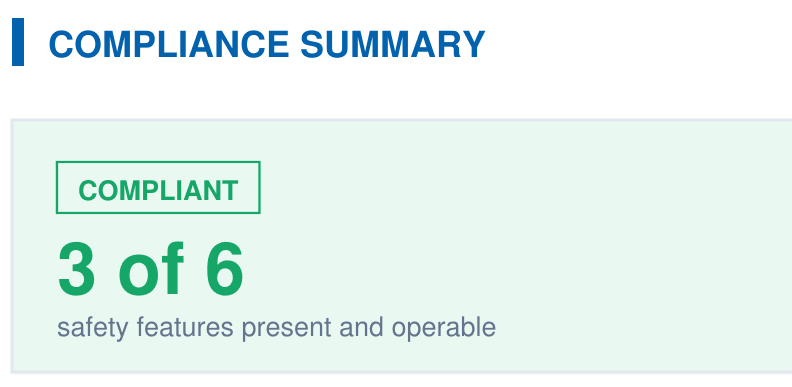
A branded PDF with the compliance summary, the feature table, each finding with its photos, and the signature, generated on‑site when the BPC §7195 and HSC §115922 checklist is complete.