Pool Contractors: HSC §115922 Features Before Final Inspection
When a permit is issued for a new pool or spa, or a remodel, at a single-family home, HSC §115922 requires two of seven drowning prevention safety features and the building official inspects them before final approval. HSC §115924 adds a notice duty on the contractor. The notice, the choice of features, the walk before you call for final, and the record to hand the homeowner.
When a building permit is issued for a new pool or spa, or a remodel, at a private single-family home, Health and Safety Code §115922(a) requires at least two of seven drowning prevention safety features, and §115922(c) has the local building code official inspect them before final approval. HSC §115924 adds a duty on the contractor: anyone contracting to build a pool or spa, or to do permitted work on one, must give the consumer notice of the Act's requirements.
This guide is for the B and C-53 licensees who pull those permits. It covers the duties the permit puts on the contractor, the §115924 notice, choosing the two features with the homeowner, the walk before you call for final, the record you hand over, and where a checklist tool fits beside your project software.
What the permit puts on the contractor
The Swimming Pool Safety Act, HSC §115920 to §115929, attaches to the permit, not to the pool's age. An unpermitted, unmodified pool has no duty under §115922; a permitted new pool or remodel has all of the following.
The pool or spa shall be equipped with at least two of the seven drowning prevention safety features
When the permit is issued for a new pool or spa, or a remodel, at a private single-family home
§115922(b)
Three pairs do not satisfy the two-feature rule: an exit alarm and a self-closing, self-latching device on the same door; an exit alarm and a door latch on separate doors; a safety cover and an in-water alarm
Since January 1, 2025, under SB 552 (Stats. 2024, Ch. 769)
§115922(c)
Before final approval, the local building code official shall inspect the features and, if no violations are found, shall give final approval
Any person entering into an agreement to build a pool or spa, or to engage in permitted work on one, shall give the consumer notice of the requirements of the Act
Exemptions: public pools, a hot tub or spa with a locking ASTM F1346 cover, and apartment complexes or any residential setting other than a single-family home
Decides whether the Act applies at all
The Act sets no fine, misdemeanor or jail term; the consequence of a missing feature is a permit without final approval, and at a later sale a BPC §7195 report that names the gap. Our non-compliance guide covers what the law does and does not penalize.
The HSC §115924 notice
HSC §115924(a) is one sentence: any person entering into an agreement to build a swimming pool or spa, or to engage in permitted work on a pool or spa covered by the article, shall give the consumer notice of the requirements of the article. The article is the Act, so the notice covers the two-of-seven rule, the seven features, the enclosure specifications in §115923, the exemptions and the suction outlet rules.
The statute names no form and no signature, so a notice that meets it is a matter of proof rather than format. Three habits make it provable:
Put it in the contract, as a clause that names the Act and lists the seven features and the three rejected pairs, with a line for the homeowner's initials.
Attach the department's material. Subdivision (b) says the Department of Health Services, whose public health functions now sit with the California Department of Public Health, shall have approved pool safety information available for consumers to download, encourages pool contractors to share it, and says contractors may provide materials from organizations such as the United States Consumer Product Safety Commission, the Drowning Prevention Foundation, the California Coalition for Children's Safety and Health, Safe Kids Worldwide, the Association of Pool and Spa Professionals, or the American Academy of Pediatrics.
Keep the signed copy with the permit file, next to the photos from the pre-final walk. If the pool is sold years later and the buyer's inspector asks what was installed and when, the file answers.
Choosing the two features with the homeowner
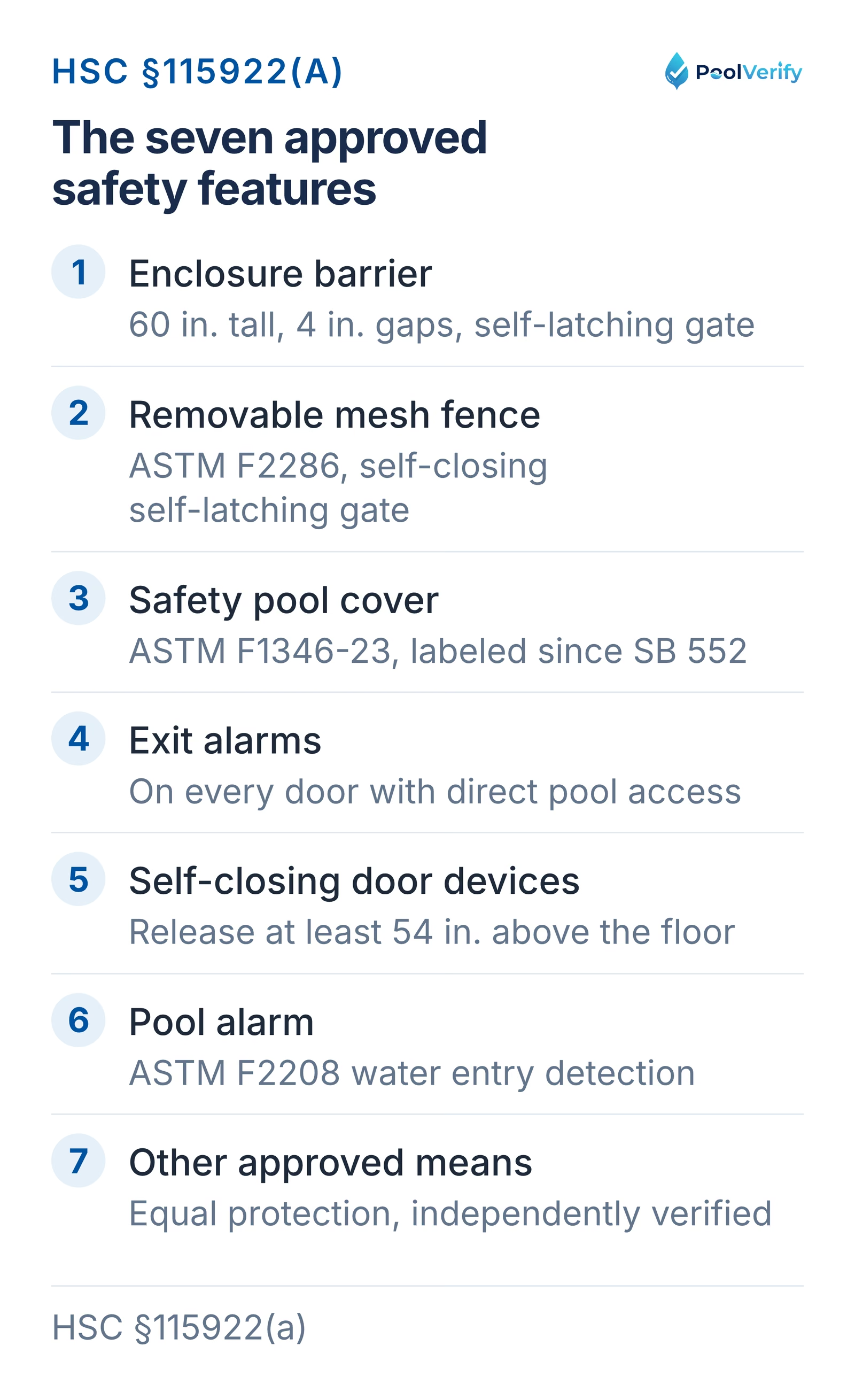
The seven features in HSC §115922(a) are listed below with the specification each one carries and what the building official will look for. Our HSC §115922 guide covers each in depth.
The seven HSC §115922(a) drowning prevention safety features, with the standard or specification each one carries.
Feature, §115922(a)
Specification
What is inspected
(1) Enclosure that isolates the pool from the home
HSC §115923: 60 inches high, no more than 2 inches under, no opening that passes a 4 inch sphere, no handholds or footholds outside, gates opening away from the pool, self-closing and self-latching with the release no lower than 60 inches above the ground
Each number, each gate
(2) Removable mesh fencing
ASTM F2286, with a gate that self-closes, self-latches and can be locked with a key
The label, the gate
(3) Safety pool cover
Approved cover, labeled to ASTM F1346-23
The label, the cover in place
(4) Exit alarms
On the home's doors and windows with direct access to the pool, sounding continuously or repeating a verbal warning when the opening is used
Each door and window
(5) Self-closing, self-latching device on doors with direct access
Release mechanism at least 54 inches above the floor
The door, the tape
(6) In-water alarm
Independently certified to ASTM F2208; a wearable alarm does not qualify
The certification, the alarm
(7) Other means of protection
Equal to or greater than the others, independently verified by an approved testing laboratory, and labeled
The verification and the label
Two habits at the design stage save a failed final. First, check the pair against §115922(b): an exit alarm and a door device on the same door count as one, an exit alarm and a door latch on separate doors count as one, and a safety cover with an in-water alarm counts as one. Second, choose features that survive the homeowner: a removable mesh fence the family takes down after final leaves the pool with one feature at the next sale, and the BPC §7195 report will say so. An enclosure that isolates the pool from the home is the feature the American Academy of Pediatrics statement in §7195(c) singles out, and our enclosure guide has the numbers.
At a spa or hot tub, §115925(b) exempts the unit from the Act when it has a locking safety cover that complies with ASTM F1346; the cover and its lock are what you install and document, as our spa guide explains.
The walk before you call for final
The building official inspects the features under §115922(c). The walk below is what a contractor does the day before, in the order the official will follow, so the visit ends in final approval rather than a correction notice.
Map the routes to the water. From the house, list every door, window and pet door with direct access to the pool, and whether an enclosure isolates the pool from the home at all.
Measure and test the enclosure. 60 inches high from the outside at the lowest point, no more than 2 inches under, no opening that passes a 4 inch sphere, no handholds or footholds outside, and every gate opening away from the pool, self-closing and self-latching from a few inches, halfway and fully open, with the latch release no lower than 60 inches above the ground. The gate latch guide covers the 60 inch rule and the 54 inch door rule it is confused with.
Test the house openings. Where the chosen features are on the house, confirm each door device closes and latches on its own with its release at least 54 inches above the floor, and each exit alarm sounds, or repeats a verbal warning, whenever a door or window with direct access opens. Our alarm guide covers exit and in-water alarms.
Find the labels. ASTM F1346-23 on the safety cover, ASTM F2286 on removable mesh fencing, and ASTM F2208 certification on an in-water alarm; a wearable alarm does not count.
Check the suction outlets. Confirm the outlet arrangement and the grate markings the permit requires under HSC §115928 for a new pool or §115928.5 for a remodel; our drain cover guide covers both sections.
Count against the rejected pairs. Two features present and operable, and not one of the three pairs §115922(b) rejects.
Photograph every item with the number in frame. Tape at the enclosure and the latch, the labels legible, the gate mid-swing, and generate the record before you call for final.
The walk, on a checklist with a photo per item. PoolVerify's California checklist carries the six physical HSC §115922(a) features as items with the measurement or label each one asks for, up to 10 photos per item with captions, the seventh feature in notes, and a branded PDF generated in seconds on any phone or tablet in the browser, so the homeowner's copy exists before the official arrives. See the checklist.
The record you hand the homeowner
The permit closes with final approval, but the pool's paperwork does not end there. At a later sale, BPC §7195(c) requires the home inspection report to identify which of the seven features the pool has, whether each is in place, in good repair, operable as designed and labeled, and to state specifically if there are fewer than two. The buyer's inspector will read labels and test gates, and every question the file answers in advance is one the homeowner does not field during escrow.
The handover record has four parts:
Part
What it holds
The §115924 notice
The signed clause, and any department or organization material provided with it
The two features
Which two were installed, the product and its label or certification, and the photos from the pre-final walk with the numbers in frame
The tests
Which gates and doors were tested, from what positions, and the alarms that sounded
The approval
The final approval from the building department, with its date
A homeowner who removes or changes a feature later changes the count, and the record shows what was there at final. Our pool laws hub sets out how the permit rules and the sale rules fit together.
Where PoolVerify fits a pool builder
Pool contractor software runs the project: estimating, scheduling, job costing, subcontractors and change orders, and our contractor software guide compares six of those platforms. None of them carries the seven features as a checklist. PoolVerify is a responsive web app for California residential pool safety inspections, and for a builder it does one job: the pre-final walk and the homeowner's record.
Need
What PoolVerify does
The seven features with the numbers
The California checklist lists the six physical HSC §115922(a) features as items with the measurement or label each asks for; the seventh, other means, is documented in notes
Photo evidence per feature
Up to 10 photos per item, compressed on upload, with captions and timestamps
The homeowner's copy
A branded PDF with the feature table, a finding with photos per item and the count, generated on-site and signed on the device with an ESIGN-compliant e-signature
A crew of superintendents
Business at $159 a month on annual billing or $199 monthly: unlimited team members with role-based permissions and 100GB of storage; Starter at $39 or $49 for one user and 25 inspections a month
Records that outlast the job
Cloud storage with 256-bit encryption, backed up automatically, retrievable by property
The trial is 14 days with no credit card to start; the plan and card are chosen when the first PDF report is generated, and the pricing page has every plan's limits. The sample report is the PDF the checklist produces. PoolVerify has no offline mode, so it saves as you work over a connection, and it is not project management, estimating or scheduling software for construction.
Limitations
This guide is general information about California law, not legal advice. The current text of HSC §115922, §115923, §115924 and §115928 on leginfo.legislature.ca.gov controls, and your local building department may apply its own requirements at the permit, so ask before you call for final. PoolVerify is inspection software for California residential pool safety inspections; it does not perform inspections, replace the building official's approval, certify contractors, or issue compliance certificates.
Frequently asked questions
Does a pool contractor have to give the homeowner notice of the Swimming Pool Safety Act?
Yes. HSC §115924(a) says any person entering into an agreement to build a swimming pool or spa, or to engage in permitted work on a pool or spa covered by the Act, shall give the consumer notice of the requirements of the Act. The statute names no form, so a written notice in the contract, signed and kept with the permit file, is the practical way to meet it.
How many safety features does a new pool need in California?
At least two of the seven in HSC §115922(a), when a building permit is issued for a new pool or spa, or the remodel of one, at a private single-family home. Since January 1, 2025, §115922(b) rejects three pairs: an exit alarm and a door device on the same door, an exit alarm and a door latch on separate doors, and a safety cover with an in-water alarm.
Who inspects the safety features before final approval?
The local building code official. HSC §115922(c) says that before the issuance of a final approval for the completion of permitted construction or remodeling work, the official shall inspect the drowning safety prevention features required by the section and, if no violations are found, shall give final approval. The contractor's walk is preparation for that inspection, not a substitute.
Does a spa or hot tub need the two features?
Usually yes, because HSC §115921 defines a swimming pool as any structure for swimming or recreational bathing holding water over 18 inches deep, including hot tubs, spas and portable spas. The exception is HSC §115925(b): a hot tub or spa with a locking safety cover that complies with ASTM F1346 is exempt from the Act, so the cover and its lock are what you document.
Is there a fine if a permitted pool is missing the features?
No. The Swimming Pool Safety Act sets no fine, misdemeanor or jail term. The consequence is that the building official does not give final approval under HSC §115922(c) until the features are in place, and at a later sale the BPC §7195 home inspection report identifies which of the seven features the pool has and states specifically if there are fewer than two.
What does PoolVerify do for a pool contractor?
It puts the pre-final walk on a California checklist: the six physical HSC §115922(a) features as items with the measurement or label each asks for, up to 10 photos per item, the seventh feature in notes, and a branded PDF generated on-site to hand the homeowner with the §115924 notice. It is not project management software and does not replace the building official's approval.
Conclusion
The permit puts three duties on the contractor: give the consumer notice of the Act under HSC §115924, equip the pool with two of the seven features that are not a rejected pair, and have them in place, operable and labeled when the building official inspects them under §115922(c). The walk the day before, with a tape and a camera, is how the visit ends in final approval, and the record from that walk is what the homeowner keeps for the sale.
PoolVerify puts the walk on a California checklist with a photo on every item and the homeowner's PDF generated before the official arrives. Start your 14-day free trial, no credit card to start.
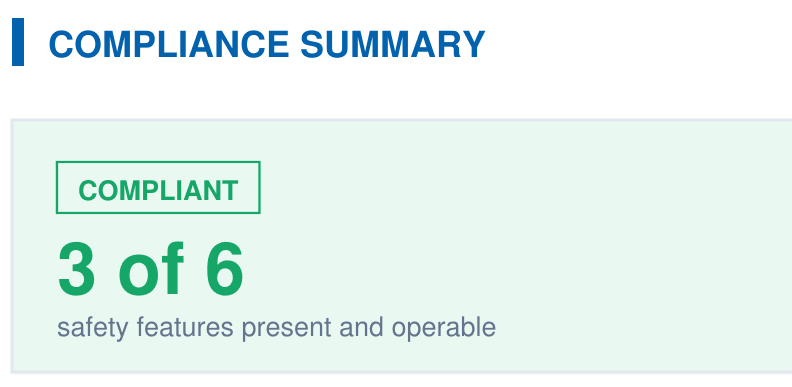
A branded PDF with the compliance summary, the feature table, each finding with its photos, and the signature, generated on‑site when the BPC §7195 and HSC §115922 checklist is complete.