Pool Inspector Liability in California: BPC §7196 to §7199
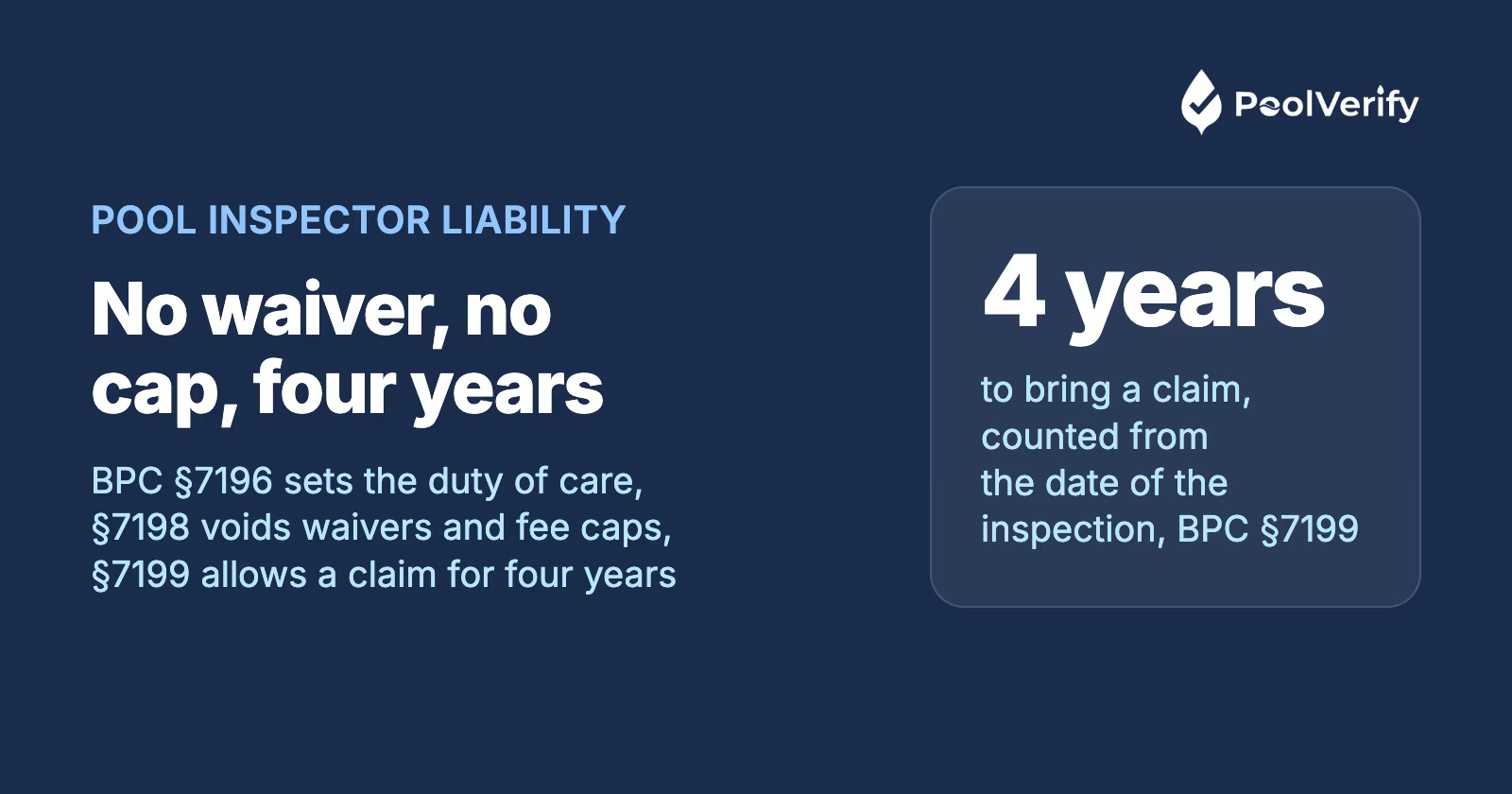
A California pool inspector's liability is civil and the statute sets its shape: BPC §7196 sets the duty of care of a reasonably prudent home inspector, §7198 voids any waiver or cap at the fee, and §7199 allows a claim for four years from the inspection. Where pool reports fall short, what a contract can still do, and the record to keep.
A California pool inspector's liability is civil, and the statute sets its shape. Business and Professions Code §7196 requires a home inspector to work with the degree of care that a reasonably prudent home inspector would exercise, §7198 voids any contract term that waives that duty or caps liability at the fee, and §7199 allows a claim for breach of duty arising from the report for four years from the inspection. There is no fine and no license. The report and the records behind it are the whole defense.
This guide covers what the four sections say, where pool reports fall short of the standard, what an inspection agreement can still do, what to keep for four years, and how a checklist tool produces that record on-site. It is written for anyone who inspects pools at a sale for a fee in California: home inspectors, pool service companies and contractors who sell inspections, and the companies that employ them.
What BPC §7196 to §7199 say
Chapter 9.3 of the Business and Professions Code regulates home inspection without a license. BPC §7195(d) defines a home inspector as any individual who performs a home inspection, and the four sections after it set the standard, the prohibited practices, the limits on contracts and the time to sue.
It is the duty of a home inspector who is not licensed as a general contractor, structural pest control operator or architect, or registered as a professional engineer, to conduct a home inspection with the degree of care that a reasonably prudent home inspector would exercise
The report is judged against what a careful inspector would have found and written, not against a license exam or an association's certificate
Four unfair business practices: repairs for a fee within 12 months on an inspected structure, inspecting property in which the inspector has a financial interest, paying the owner, broker or agent for referrals, and fees contingent on the findings or the close of escrow
Exposure that has nothing to do with what the report says
Contractual provisions that purport to waive the duty owed under §7196, or limit the liability of the home inspector to the cost of the home inspection report, are contrary to public policy and invalid
The fee is not the ceiling, whatever the agreement says
The time for commencement of a legal action for breach of duty arising from a home inspection report shall not exceed four years from the date of the inspection
The clock runs from the inspection date, so the record must outlive the job by four years
Two things follow. The standard applies whether or not the inspector belongs to CREIA, InterNACHI or any other voluntary association, because California has no home inspector license or certification, as our license requirements guide sets out. And the duty in §7196 is written for inspectors who are not licensed as general contractors, structural pest control operators or architects, or registered as engineers; a professional inspecting under one of those licenses answers to the standards of that license.
What the report must contain comes from BPC §7195(c): which of the seven HSC §115922(a) drowning prevention safety features the pool or spa has, a specific statement if it has fewer than two, whether each is in place, in good repair, operable as designed and, if applicable, appropriately labeled, and the American Academy of Pediatrics statement that a pool isolation fence is the most studied and effective drowning prevention safety feature. Our BPC §7195 guide covers the section clause by clause.
Where pool reports fall short of the standard
The pool section is short, and most of its exposure sits in a handful of habits. Each row below is a way a report can differ from what a reasonably prudent inspector would have written.
The habit
What a prudent report says instead
Counting a rejected pair as two features
HSC §115922(b) says the two-feature requirement is not satisfied by an exit alarm and a self-closing, self-latching device on the same door, an exit alarm and a door latch on separate doors, or a safety cover and an in-water alarm. A pool with one of those pairs and nothing else has fewer than two, and the report says so specifically
Recording presence without condition
§7195(c) asks whether each feature is in good repair and operable as designed. A gate that latches from a full swing but not from a few inches open is present and not operable as designed; the report separates the two facts
Measuring the wrong height
The enclosure gate's self-latching device sits no lower than 60 inches above the ground under HSC §115923; the 54 inch figure is the release on a home door to the pool under §115922(a)(5). A report that clears a gate latch at 55 inches has applied the door rule to the gate; see the gate latch guide
Leaving out a feature the pool lacks
The buyer must see which of the seven exist. A feature that is absent is recorded as not present, never omitted
Burying the fewer-than-two statement
The section asks for it specifically. A sentence of its own, under a heading the reader will find, is what specifically means
Recording an untested item as tested
An in-water alarm the owner would not let you trigger, or a cover that was off the pool, is recorded as not tested with the reason, not as operable
Claiming a determination you did not make
§7195(a)(2) and (c) say the section does not require a determination as to whether a feature meets the ASTM or ASME specifications. Reading the ASTM F1346-23 label on a cover is the job; writing that the cover meets the standard is a claim the label does not support
The last row is the one to reread. The statute deliberately keeps the inspector out of standards testing, so the safe sentence is the one that says what was seen and what was done: the label present, the gate released three times, the alarm sounded when the door opened. Our report writing guide shows the wording section by section.
What the agreement can and cannot do
BPC §7198 names two clauses and voids both: a waiver of the §7196 duty, and a cap on liability at the cost of the report. An agreement that carries either is not protection; it is a clause a court will disregard.
What the agreement can still do is describe the work accurately, and that description is worth more than a cap:
State the scope in the statute's words.BPC §7195(a)(1) defines a home inspection as a noninvasive, physical examination, and (a)(2) describes the pool section the same way. An agreement that says the pool examination is noninvasive and does not include a determination against ASTM or ASME specifications describes exactly what the section requires.
Name what is outside the pool section. Equipment life, water chemistry, plumbing under pressure, structural engineering and the electrical bonding you cannot see are not the seven features. An agreement that lists them keeps the client's expectations where the statute put them.
Record the facts of the engagement. The address, the date, who was present, what was not accessible, and the client's signature before the walk begins.
The statute names only the two invalid clauses. What any other term is worth, and how the agreement should read in your county, is a question for your attorney, not for this guide.
The four-year record
BPC §7199 gives a claim four years from the date of the inspection, so every pool report needs a file that can be opened four years later and read by someone who was not there. The file has five parts:
The report as delivered. The version the client received, with its date. If the report was corrected later, both versions and the correction date.
A photo on every item, with the number in frame. The tape against the enclosure at its lowest point, the tape from the ground to the latch release, the cover label, the mesh fencing label, the alarm's certification mark. A photo of the pool from the patio proves nothing about a latch.
The gate and door tests. Which openings were tested, from what positions, and what happened. A note that the east gate did not latch from a partly open position is a finding; a checkbox is not.
What could not be tested, and why. The alarm the owner declined to trigger, the cover that was off the pool, the window behind furniture.
The signed agreement with its scope and its exclusions.
Kept on a phone's camera roll and a laptop, that file depends on the phone and the laptop surviving four years. PoolVerify stores each inspection with its photos, the generated PDF and the signature on Supabase-managed infrastructure with 256-bit encryption at rest and in transit, backed up automatically, so the record survives a lost tablet or a new phone; the plan's storage allowance is 500MB on Starter, 10GB on Professional and 100GB on Business, and our security page describes the setup.
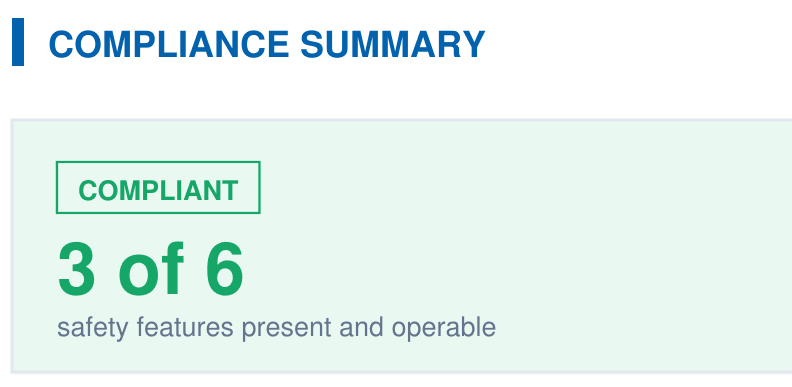
The record, produced on-site. PoolVerify's California checklist carries the six physical HSC §115922(a) features as items with the measurement or label each one asks for, up to 10 photos per item, the seventh feature in notes, and the client's ESIGN-compliant signature on the device. The PDF prints the feature count and the fewer-than-two statement on page 1 and is generated in seconds, so the four-year file exists before you leave the driveway. See the features.
The practices BPC §7197 treats as unfair
Report content is one exposure; the engagement itself is another. BPC §7197 lists four unfair business practices, and applies them to the company that employs the inspector and to a company controlled by one with a financial interest in the employer.
BPC §7197(a)
The practice
(1)
Performing or offering to perform, for an additional fee, any repairs to a structure on which the inspector or the inspector's company has prepared a home inspection report in the past 12 months
(2)
Inspecting for a fee any property in which the inspector, or the inspector's company, has a financial interest
(3)
Offering or delivering any compensation, inducement or reward to the owner of the inspected property, the broker or the agent for the referral of business
(4)
Accepting an engagement whose fee depends on the conclusions, on preestablished findings or on the close of escrow
For a pool service company that also sells inspections, (1) is the rule that shapes the offer: the gate you reported at a sale is not the gate you fix for a fee within 12 months. Our pool service company guide walks through building the service around that rule.
What the statute does not require
The Business and Professions Code does not require a pool inspector to carry errors and omissions insurance, to belong to an association, or to complete any training; whether to carry insurance, and how much, is a business decision to make with a broker against your inspection volume. The Swimming Pool Safety Act sets no fine, no misdemeanor and no jail term for anyone; its enforcement is the building official's final approval at a permit under HSC §115922(c) and the §7195 report at a sale, as our non-compliance guide explains. The exposure that remains for the inspector is the civil duty above, for four years, with no cap.
The record by hand and with PoolVerify
Part of the record
Paper and Word
PoolVerify
The seven features
Typed from memory or a generic form
The six physical HSC §115922(a) features as checklist items with the measurement or label each asks for; the seventh recorded in notes
The count and the statement
Counted by hand, easy to miscount across a rejected pair
The count of features present and operable, with a compliant or non-compliant status, printed on page 1 of the PDF
Photos
On the phone's camera roll, matched to items later
Up to 10 photos per item with captions, compressed on upload, stored with the inspection
Untested items
A note, if remembered at the laptop that evening
A note on the item at the pool, in the PDF
Signature
A scanned page or a photo of one
ESIGN-compliant e-signature captured on the device and embedded in the PDF
Retention
The laptop and the phone
Cloud storage with 256-bit encryption, backed up, retrievable by inspection and by client
Cost
The evening
Starter at $39 a month on annual billing or $49 monthly, 25 inspections a month; Professional at $79 or $99 with unlimited inspections
Starter costs less than one inspection a month for most inspectors, and the pricing page has every plan's limits. The trial is 14 days with no credit card to start; the plan and card are chosen when the first PDF report is generated. The sample report is the PDF the checklist produces, with the feature table on page 1.
Limitations
This guide is general information about California law, not legal advice, and it does not describe how any court has applied these sections. The current text of BPC §7195 to §7199 and HSC §115922 on leginfo.legislature.ca.gov controls, and the standards of practice of an inspector's association may ask for more than the statute. PoolVerify is inspection software for California residential pool safety inspections; it does not perform inspections, certify inspectors, insure them, or issue compliance certificates, and it has no offline mode, so it saves as you work over a connection.
Frequently asked questions
Can a client sue a pool inspector in California?
Yes, and the claim is civil. BPC §7196 requires a home inspector to work with the degree of care that a reasonably prudent home inspector would exercise, and BPC §7199 allows a legal action for breach of duty arising from the report within four years of the date of the inspection. Neither the Business and Professions Code nor the Swimming Pool Safety Act sets a fine for an inspector.
Can my inspection agreement limit my liability to the fee?
No. BPC §7198 says contractual provisions that purport to waive the duty owed under §7196, or limit the liability of the home inspector to the cost of the home inspection report, are contrary to public policy and invalid. The agreement can still define the scope of the inspection, name what was not examined, and record who signed it and when.
How long should I keep pool inspection records?
At least four years from the date of each inspection. BPC §7199 allows a legal action for breach of duty arising from a home inspection report for four years from the inspection, so the delivered report, the photos with measurements in frame, the notes on items that could not be tested and the signed agreement should stay retrievable for that whole period.
Does the standard of care change if I hold a contractor's license?
The duty in BPC §7196 is written for a home inspector who is not licensed as a general contractor, structural pest control operator or architect, or registered as a professional engineer. A professional inspecting under one of those licenses answers to the standards of that license, so ask your attorney which standard applies to the work you sell.
Am I liable if I did not test a cover or alarm to its ASTM standard?
BPC §7195(a)(2) and (c) both say the pool section does not require a determination as to whether a feature meets the ASTM International or ASME specifications referenced in HSC §115922. The prudent report records the label and the test you performed, and says which items you could not test. What creates exposure is a determination you claim but did not make.
Does software reduce a pool inspector's liability?
No software changes the duty of care. What a checklist tool changes is the record: PoolVerify's California checklist carries the six physical HSC §115922(a) features with a photo on each item, prints the feature count and the fewer-than-two statement on page 1 of the PDF, captures the client's signature, and stores the report with 256-bit encryption for as long as the account keeps it.
Conclusion
The pool inspector's exposure in California is civil, uncapped by contract, and open for four years from the inspection. It is answered by the report: all seven features named, presence separated from condition, the count checked against the three rejected pairs, fewer than two said in its own sentence, untested items recorded as untested, and a photo with the number in frame behind every line.
PoolVerify puts that report on a California checklist and generates the PDF on-site, with the photos, the count and the signature stored together for as long as you keep the account. Start your 14-day free trial, no credit card to start.
A branded PDF with the compliance summary, the feature table, each finding with its photos, and the signature, generated on‑site when the BPC §7195 and HSC §115922 checklist is complete.