Pool-compliance
Pool Fence Height Requirements: State-by-State Guide [2026]
Complete state-by-state comparison of pool fence height requirements in 2026. Learn minimum heights, measurement methods, and compliance guidelines for all 50 states.

10 min read
Pool fence height requirements vary significantly across the United States, from states with no residential requirements to California's strict 60-inch minimum. Understanding these requirements is essential for homeowners, pool installers, and inspectors ensuring compliance with local laws.
This comprehensive guide breaks down pool fence height requirements for all 50 states, explains proper measurement techniques, and covers critical compliance considerations that can affect pool safety inspections.
Table of Contents
- Why pool fence height matters
- How to measure pool fence height correctly
- State-by-state pool fence height requirements
- California's 60-inch requirement explained
- Common pool fence height violations
- Local ordinances vs state requirements
- Pool fence height exceptions
- Height requirements for gates
- Frequently asked questions
Why pool fence height matters

Proper method for measuring pool fence height from ground level
Pool fence height directly impacts the effectiveness of barriers in preventing unsupervised pool access by young children. The U.S. Consumer Product Safety Commission emphasizes that properly sized barriers are critical drowning prevention measures.
The 48-inch standard
Most states adopted the 48-inch (4-foot) minimum based on research showing this height prevents most children under 5 years old from climbing over barriers. This standard appears in:
- International Building Code (IBC) pool barrier guidelines
- ASTM F1908 safety standards for residential pools
- U.S. CPSC pool barrier safety guidelines
However, as pool safety research evolved, some jurisdictions increased requirements to account for:
- Taller children and climbing ability
- Additional safety margin for sloped terrain
- Enhanced community safety standards

Statistical chart showing pool drowning prevention effectiveness by barrier height
California's 60-inch requirement represents the highest statewide standard, providing extra protection against climbing and reflecting the state's commitment to comprehensive pool safety regulations under BPC §7195.
How to measure pool fence height correctly
Incorrect measurement is the most common pool fence compliance issue. Follow these guidelines to measure fence height properly:
Official measurement method
- Measure from the exterior side - Always measure from the side of the fence facing away from the pool, not the pool side
- Measure from finished grade - Measure from the final ground level after all landscaping and grading is complete
- Measure vertically - Use a level to ensure your measuring tool is perfectly vertical
- Measure to the top - Measure to the very top of the fence barrier, not decorative elements above
Common measurement mistakes
| Mistake | Why It's Wrong | Correct Method |
|---|---|---|
| Measuring from pool side | Ground may be higher on pool side | Always measure from exterior |
| Measuring before final grade | Ground settling or landscaping changes height | Measure after all grading complete |
| Measuring at an angle | Creates artificially longer measurement | Use level to ensure vertical |
| Measuring lowest fence point | Some areas may not meet minimum | Verify entire fence meets minimum |

Technical diagram showing correct vs incorrect pool fence height measurement methods
Measurement tools
Professional pool inspectors typically use:
- 6-foot or 8-foot measuring tape - Standard for residential fences
- Level - Ensures vertical measurement
- Laser measure - For quick verification across multiple points
- Documentation camera - Photos showing tape measure for verification
Inspectors using digital pool inspection software document fence height with timestamped photos showing the measuring tape in position for compliance verification.
Streamline your California pool fence inspections
PoolVerify includes built-in measurement documentation tools and photo capture for all barrier height requirements.
State-by-state pool fence height requirements

Chart comparing pool fence height requirements across different states

Pool fence gap and spacing requirements showing maximum allowable openings
Here's a comprehensive breakdown of pool fence height requirements across all 50 United States as of 2026:
States requiring 60 inches (5 feet)
| State | Height Requirement | Measurement Point | Notes |
|---|---|---|---|
| California | 60 inches (5 feet) | Exterior side, from finished grade | Highest state requirement; BPC §7195 |
States requiring 48 inches (4 feet)
| State | Height Requirement | Measurement Point | Notes |
|---|---|---|---|
| Arizona | 48 inches (4 feet) | Exterior side | State standard |
| Arkansas | 48 inches (4 feet) | Finished ground level | Max 4-inch gaps |
| Connecticut | 48 inches (4 feet) | Ground level | State standard |
| Florida | 48 inches (4 feet) | Outside ground level | Strict enforcement |
| Georgia | 48 inches (4 feet) | Grade level | State code |
| Illinois | 48 inches (4 feet) | Finished grade | Local codes may vary |
| Louisiana | 48 inches (4 feet) | Ground level | Parish codes may be stricter |
| Maryland | 48 inches (4 feet) | Exterior grade | County variations exist |
| Massachusetts | 48 inches (4 feet) | Finished ground level | Municipal codes may exceed |
| Michigan | 48 inches (4 feet) | Grade level | Local ordinances apply |
| Minnesota | 48 inches (4 feet) | Finished grade | State standard |
| Missouri | 48 inches (4 feet) | Ground level | County requirements |
| Nevada | 48 inches (4 feet) | Exterior side | Clark County may be stricter |
| New Jersey | 48 inches (4 feet) | Finished grade | Municipal variations common |
| New York | 48 inches (4 feet) | Above grade | Some municipalities require 60" |
| North Carolina | 48 inches (4 feet) | Ground level | County codes apply |
| Ohio | 48 inches (4 feet) | Exterior grade | Local requirements vary |
| Oregon | 48 inches (4 feet) | Finished grade | State standard |
| Pennsylvania | 48 inches (4 feet) | Ground level | Township codes may vary |
| South Carolina | 48 inches (4 feet) | Exterior side | County ordinances |
| Tennessee | 48 inches (4 feet) | Grade level | Local codes apply |
| Texas | 48 inches (4 feet) | Ground level exterior | Strict enforcement |
| Utah | 48 inches (4 feet) | Finished grade | State requirement |
| Virginia | 48 inches (4 feet) | Exterior grade | County variations |
| Washington | 48 inches (4 feet) | Ground level | Local codes may exceed |
| Wisconsin | 48 inches (4 feet) | Finished grade | Municipal requirements |
States with no residential pool fence requirements
| State | Requirement | Notes |
|---|---|---|
| Alaska | None | No statewide residential requirement |
| Delaware | None | No statewide residential requirement |
| Iowa | None | Some cities have local ordinances |
| Kansas | None | Local jurisdictions may require |
| Kentucky | None | Check local building codes |
| Mississippi | None | County and city codes vary |
| Montana | None | Local requirements may apply |
| Nebraska | None | Municipal codes may require |
| New Hampshire | None | Town-level requirements common |
| North Dakota | None | City ordinances may exist |
| Oklahoma | None | Local codes in some areas |
| Rhode Island | None | Municipal requirements vary |
| South Dakota | None | Check local building dept |
| Vermont | None | Town ordinances may apply |
| West Virginia | None | County codes may require |
| Wyoming | None | Check local jurisdiction |
Important notes
- Local codes can be stricter: Even in states without requirements, cities and counties may have ordinances
- Commercial pools: All states regulate commercial pool barriers, typically at 48+ inches
- New construction: Some states only require fences for pools built after specific dates
- Enforcement varies: Compliance verification often happens during home sales or remodeling permits

US map showing pool fence height requirements by state with color coding for different heights
California's 60-inch requirement explained
California stands alone with the nation's highest pool fence height requirement. Understanding why and how this applies is essential for California pool professionals.
Why California requires 60 inches
California Senate Bill 442, codified as Business and Professions Code Section 7195, established the 60-inch minimum based on:
- Enhanced child safety - Provides additional protection beyond the 48-inch standard
- Climbing prevention - Harder for older/taller children to scale
- Comprehensive safety approach - Part of California's multi-layered drowning prevention strategy
- Real estate transaction enforcement - Required inspections ensure compliance
When California's 60-inch rule applies
The requirement applies to:
- All new in-ground swimming pools (built after January 1, 2018)
- Existing pools undergoing remodeling exceeding $4,000
- Pools being sold as part of real estate transactions
- Pools requiring building permits for any reason
California measurement specifics
In California, proper measurement means:
- 60 inches minimum from exterior finished grade to barrier top
- Entire perimeter must meet requirement, not just average height
- Gates included - Gate height must also be 60 inches minimum
- Verification required - Professional pool safety inspection verifies compliance
California pool inspectors document fence height at multiple points around the perimeter, not just one location, ensuring complete compliance.
Common pool fence height violations
Pool inspectors regularly encounter these height-related violations:
1. Fence too short
Violation: Barrier measures less than required minimum (48" or 60" depending on state)
Common causes:
- Installed before code updates
- DIY installation without permit
- Ground settling raising exterior grade
- Measurement error during installation
Fix: Extend fence height with additional top rail or pickets, or lower exterior grade if possible
2. Measuring from wrong side
Violation: Fence meets height on pool side but not exterior side
Common causes:
- Sloped terrain with pool on higher ground
- Grading creates height difference between sides
- Installer measured from convenient (wrong) side
Fix: Extend fence to meet requirement from exterior measurement point
3. Gate height non-compliant
Violation: Gates shorter than fence panels
Common causes:
- Standard 48" gates used in 60" fence application
- Custom gates not specified to match fence height
- Gate sagging from hinge wear
Fix: Replace gates with proper height gates, adjust or replace hinges
4. Decorative elements don't count
Violation: Measuring includes decorative toppers that aren't solid barrier
Common causes:
- Assuming decorative finials add to height
- Including lattice or ornamental tops in measurement
- Using non-solid elements to reach minimum
Fix: Ensure solid barrier (not decorative elements) meets minimum height

Photo examples of common pool fence height violations with measurements shown
Professional inspectors using PoolVerify's inspection platform document these violations with photos showing measurements and detailed notes for correction.
Local ordinances vs state requirements

Comparison chart of different pool fence materials and their properties

International Building Code (IBC) pool fence standard requirements and specifications
Understanding the relationship between state and local pool fence requirements is critical for compliance.
How local codes work
Local codes can be stricter, never weaker:
- Cities and counties can exceed state minimums
- Local codes cannot reduce below state requirements
- When conflicts exist, the stricter requirement applies
Examples of local variations
New York State: 48-inch state requirement, but:
- Town of Hempstead: 60 inches (same as California)
- Suffolk County: 54 inches in some municipalities
- NYC: 48 inches but additional fence type restrictions
Florida State: 48-inch requirement, but:
- Some municipalities require 54 inches or 60 inches
- Local building codes may specify fence materials
- HOA requirements may exceed code minimums
Texas State: 48-inch requirement, but:
- Austin: Additional spacing requirements
- Dallas: Specific gate latch height rules
- Houston: Fence type restrictions in some areas
How to verify local requirements
Before installing pool fencing:
- Check state requirements - Start with your state's baseline
- Contact building department - Call your city/county building department
- Review HOA rules - Homeowners associations may have additional rules
- Get written confirmation - Request requirement specifics in writing
- Obtain proper permits - Permits trigger code compliance verification
Many pool contractors are familiar with local variations, but always verify before proceeding with installation.
Pool fence height exceptions
Some circumstances allow for modified fence height requirements:
Above-ground pools
Many states exempt above-ground pools if:
- Pool walls are 48 inches or taller
- Ladder is removable or lockable
- Pool walls have no permanent climbing features
However, California's BPC §7195 typically requires barriers for above-ground pools exceeding 18 inches deep.
Temporary/portable pools
Small temporary pools (typically under 18-24 inches deep) often have exemptions, though this varies by state.
Pre-existing pools (grandfathering)
Some jurisdictions grandfather pools built before code adoption:
- Original fence may remain if pool isn't remodeled
- Real estate transactions may trigger upgrade requirement
- Permits for any work may require full compliance
Building walls as barriers
When home walls serve as barriers:
- Wall height measured same as fence height
- Doors and windows require additional safety features
- May reduce but not eliminate fencing requirements
Check your state pool compliance requirements to understand which exceptions apply in your area.
Height requirements for gates
Gates present unique compliance challenges beyond overall fence height:
Gate height must match fence height
- Gates must meet same minimum height as fence panels
- No exemptions for gates being "entry points"
- Common mistake: Using standard 48" gates in 60" California fences
Gate height + latch height
States require both:
- Gate overall height: Minimum 48" or 60" (matches fence)
- Latch mounting height: Typically 54-60" from ground on exterior
This means a 60-inch gate in California needs:
- 60" total gate height from ground to top
- 60" latch mounting height on exterior side
Self-closing gates and height
Self-closing mechanisms can affect height if:
- Hydraulic closers add weight causing sag
- Gates settle over time reducing height
- Hinges wear allowing gates to drop
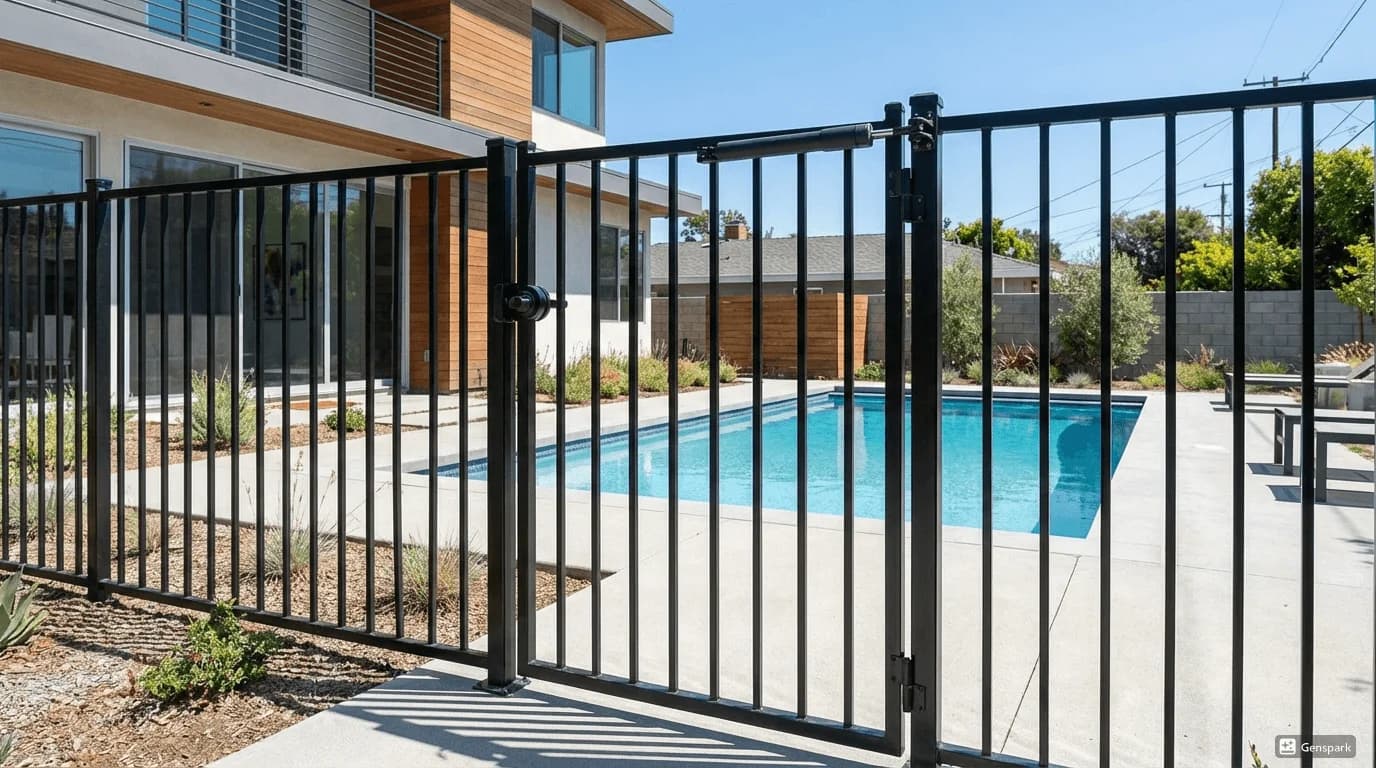
Regular maintenance ensures gates maintain required height through their lifespan. Learn more in our guide on pool gate requirements.
Frequently asked questions
What is the most common pool fence height requirement?
The most common pool fence height requirement in the United States is 48 inches (4 feet), measured from the exterior ground level. This standard is used by the majority of states with pool fence requirements and is based on CPSC safety guidelines.
Why does California require 60-inch pool fences?
California requires 60-inch (5-foot) pool fences under BPC §7195 to provide enhanced protection against child drowning. The additional 12 inches beyond the standard 48-inch requirement makes it significantly harder for children to climb over, reflecting California's comprehensive approach to pool safety.
Do I have to replace my 48-inch fence if I live in California?
If your pool was built before January 1, 2018, and you're not remodeling or selling, your 48-inch fence may be grandfathered. However, if you're selling your home, remodeling the pool (over $4,000), or obtaining permits for pool work, you'll likely need to upgrade to a 60-inch fence to meet current BPC §7195 requirements.
How do you measure pool fence height on sloped ground?
On sloped ground, measure pool fence height from the highest finished ground level on the exterior (non-pool) side of the fence. If the ground slopes significantly, you may need to measure at multiple points to ensure the entire fence meets the minimum height requirement at all locations.
Can decorative fence toppers count toward fence height?
No, decorative elements like finials, caps, or lattice toppers generally don't count toward fence height requirements. The solid barrier portion of the fence must meet the minimum height. Only continuous barrier elements (solid pickets, panels, etc.) that prevent climbing count toward the required height.
Do pool gates need to be the same height as the fence?
Yes, pool gates must meet the same minimum height requirement as the fence panels. A common violation is using standard 48-inch gates in areas requiring 60-inch fences. Gates cannot be shorter than the fence barrier and must provide equivalent protection against climbing.
Ensure your pool fences meet height requirements
Pool fence height requirements exist to save lives, and compliance is not just about meeting codes—it's about protecting children from drowning. Whether you're in California with its 60-inch requirement or another state with 48-inch standards, proper measurement and installation are essential.
For pool professionals conducting safety inspections, PoolVerify's digital inspection platform streamlines the verification process with:
- Built-in state-specific height requirement checklists
- Photo documentation with measurement verification
- Instant PDF reports showing compliance or violations
- Mobile-friendly interface for on-site inspections
Don't let fence height violations delay pool compliance or real estate transactions. Use professional tools designed for California's strict pool safety requirements.
Start Your 14-Day Free Trial →
Related posts
- Pool Barrier: Complete Requirements & Installation Guide
- Pool Gate Requirements: California Compliance Guide
- California Pool Fence Regulations: 2026 Guide
- Pool Safety Inspection Checklist: Complete Guide
- Swimming Pool Fence Requirements in California
Sources:
Frequently Asked Questions
What is the most common pool fence height requirement?
The most common pool fence height requirement in the United States is 48 inches (4 feet), measured from the exterior ground level. This standard is used by the majority of states with pool fence requirements and is based on CPSC safety guidelines for residential pools.
Why does California require 60-inch pool fences?
California requires 60-inch (5-foot) pool fences under BPC §7195 to provide enhanced protection against child drowning. The additional 12 inches beyond the standard 48-inch requirement makes it significantly harder for children to climb over, reflecting California's comprehensive pool safety approach.
Do I have to replace my 48-inch fence if I live in California?
If your pool was built before January 1, 2018 and you're not remodeling or selling, your 48-inch fence may be grandfathered. However, selling your home, remodeling the pool, or obtaining permits for pool work will likely require upgrading to a 60-inch fence for BPC §7195 compliance.
How do you measure pool fence height on sloped ground?
On sloped ground, measure pool fence height from the highest finished ground level on the exterior (non-pool) side of the fence. If the ground slopes significantly, measure at multiple points to ensure the entire fence meets the minimum height requirement at all locations.
Do pool gates need to be the same height as the fence?
Yes, pool gates must meet the same minimum height requirement as the fence panels. A common violation is using standard 48-inch gates in areas requiring 60-inch fences. Gates cannot be shorter than the fence barrier and must provide equivalent climbing protection.
Related Articles
Pool-compliance
California Pool Barrier Requirements: Complete 2026 Compliance Guide
Complete guide to California pool barrier requirements for 2026. Learn BPC §7195 and HSC §115922 specifications for height, spacing, gates, and materials.

Pool-compliance
Pool Barrier: Complete Requirements & Installation Guide [2026]
Complete guide to pool barrier requirements in California. Learn about BPC §7195 compliance, barrier types, height specifications, and installation guidelines.

Pool-compliance
Pool Fence Inspection: California Barrier Requirements [2026]
Complete guide to pool fence inspection in California. Learn the 60-inch height, 4-inch spacing, gate requirements, common violations, and inspection checklist for HSC 115922 compliance.