Are Electronic Signatures Valid on a California Pool Inspection Report?
Yes. California's Uniform Electronic Transactions Act, Civil Code §1633.7, and the federal ESIGN Act, 15 U.S.C. §7001, say a signature may not be denied legal effect solely because it is electronic, and BPC §7195 prescribes no signature at all. What the statutes say, what makes the signature the inspector's, and how PoolVerify signs the certification page.
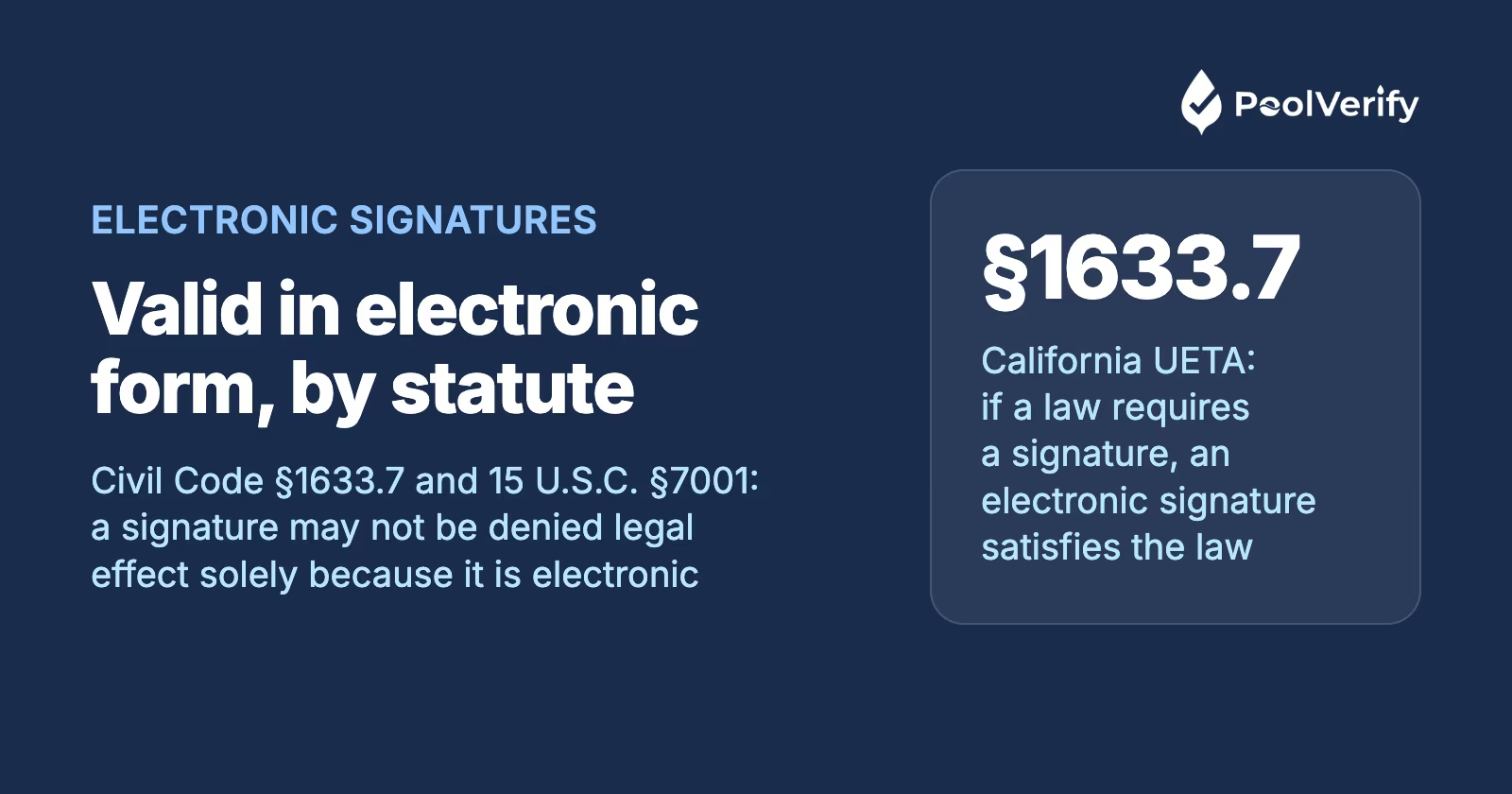
An electronically signed pool inspection report is as valid in California as one signed in ink. Civil Code §1633.7, part of the state's Uniform Electronic Transactions Act (UETA), says a signature may not be denied legal effect solely because it is in electronic form, and the federal ESIGN Act, 15 U.S.C. §7001, says the same for transactions affecting interstate commerce. BPC §7195, which defines the pool section of the report, prescribes no signature at all.
This guide sets out what the two statutes say, whether an inspection report is the kind of record they cover, what BPC §7195 does and does not require, what makes an electronic signature the inspector's, how PoolVerify signs the certification page, and the one thing the client does not sign.
What the two statutes say
California adopted the UETA in 1999 (Civil Code §1633.1 to §1633.17, effective January 1, 2000) and Congress passed the ESIGN Act in 2000. The operative sentences are short.
An electronic signature is an electronic sound, symbol or process attached to or logically associated with an electronic record and executed or adopted by a person with the intent to sign the electronic record
A signature drawn on a screen and embedded in the PDF fits the definition
An electronic record or electronic signature is attributable to a person if it was the act of the person, which may be shown in any manner, including a showing of the efficacy of any security procedure applied to determine the person
Who signed is a question of evidence, and the system's sign-in is part of that evidence
A signature, contract or other record relating to a transaction in or affecting interstate commerce may not be denied legal effect, validity or enforceability solely because it is in electronic form
An electronic signature is an electronic sound, symbol or process, attached to or logically associated with a contract or other record and executed or adopted by a person with the intent to sign the record
The federal definition, matching the state one
The two laws work together: the ESIGN Act sets a national rule and lets a state's enacted UETA govern in its place, and California's version carries the same operative sentences.
Is an inspection report the kind of record the UETA covers?
The UETA applies to electronic records and electronic signatures relating to a transaction, and Civil Code §1633.2(o) defines a transaction as an action or set of actions occurring between two or more persons relating to the conduct of business, commercial or governmental affairs. A pool inspection performed for a fee, and the report issued for it, is such a set of actions.
Civil Code §1633.3 lists what the UETA does not cover, and the list is specific: laws governing wills, codicils and testamentary trusts; most divisions of the Commercial Code; laws that require a separate signature for identified text or disclosures; and a long list of named code sections, among them consumer credit, landlord and tenant notices, insurance and the foreclosure notices in Civil Code §2924b to §2924j. Home inspection reports are not on it, and neither is BPC §7195.
What BPC §7195 requires, and what it does not
BPC §7195(c) is about content. The report shall identify which of the seven HSC §115922(a) drowning prevention safety features the pool or spa has, state specifically if it has fewer than two, say whether each is in place, in good repair, operable as designed and appropriately labeled, and include the isolation fence statement. Our BPC §7195 guide covers each clause.
The section says nothing about a signature, a format or a medium. It does not say the report must be signed, and it does not say ink. What stands behind the report is the duty of care in BPC §7196 and the four-year window for claims in §7199, which is why a certification with the inspector's name, the address, the date and a signature is what inspectors provide and what agents and buyers expect: it fixes who observed what, where and when. Our liability guide covers the four-year record.
What makes the signature the inspector's
Attribution under Civil Code §1633.9 is about evidence: the signature is the inspector's if it was the inspector's act, and that can be shown in any manner, including the security procedure the system applies to determine who signed. Four facts do that work on a PoolVerify report:
The account. The inspector draws and applies the signature inside a signed-in account with a verified email address, so the act is tied to a person the system has identified.
The printed name, company and date. The certification page carries the inspector's name and company under the signature and the date it was signed.
The certification sentence. The signature sits under a sentence in which the named inspector certifies that the features listed were observed at the named address on the named date.
The stored report. The PDF, the checklist and the photos are stored together with the inspection, so the signed version can be produced years later.
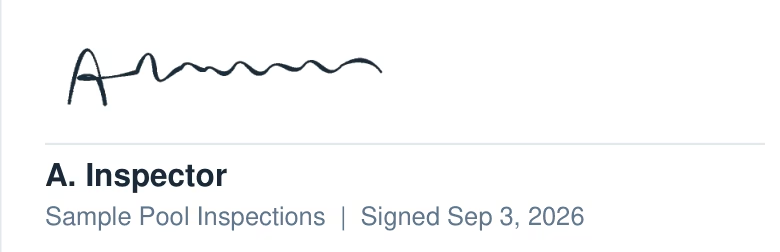
The certification block from page 5 of the report: the signature, the inspector's printed name, the company and the signed date.
How PoolVerify signs the certification page
The signature on a PoolVerify report is the inspector's. It is drawn once on the phone or tablet, saved in the account, and applied to the certification page when the inspector completes the inspection, or a new one is drawn at that moment. The report can be generated without a signature for review and generated again after the certification is signed, so the final version is the signed one.
Step
What happens
Draw the signature once
On the signature pad in the browser, on any device, saved to the account
Complete the inspection
The checklist's required items are validated, then the inspector signs and completes: the saved signature is applied, or a new one is drawn
Generate the PDF
The certification page prints the signature, the inspector's name, the company and the signed date under the certification sentence
Deliver
The PDF is emailed from the app and stored with the inspection under 256-bit encryption
Signed before it is generated, not printed, signed and scanned. PoolVerify's California checklist runs on the phone or tablet at the pool, and the inspector's ESIGN-compliant signature is applied to the certification when the inspection is completed, so the PDF that leaves the driveway is the final one. See the features.
What the client does not sign
The report is the inspector's certification, and only the inspector signs it. A client signs nothing in PoolVerify. The client's agreement to the inspection, its scope, its fee and its exclusions is a separate document that the inspector handles outside the report, on paper or with the signing tool the business already uses, and our liability guide covers what that agreement can and cannot say under BPC §7198.
Ink and electronic, compared
Question
Ink on paper
Electronic in PoolVerify
Legal effect
Recognized
Recognized: Civil Code §1633.7, 15 U.S.C. §7001
Required by BPC §7195
No
No
When it is signed
After printing, then scanned back into the file
At completion, before the PDF is generated
Who signed, shown how
Handwriting
The signed-in account, the printed name and date, the stored report
The record four years later
The scan, if kept
The signed PDF stored with the checklist and photos
Limitations
This guide is general information about California and federal law, not legal advice, and it does not describe how any court has applied these sections to an inspection report. The current text of Civil Code §1633.1 to §1633.17, 15 U.S.C. §7001 and following, and BPC §7195 controls, and the ESIGN Act's consumer consent rules in §7001(c) concern disclosures a law requires to be provided in writing to a consumer, which BPC §7195 does not. PoolVerify is inspection software for California residential pool safety inspections; it does not perform inspections, certify inspectors, provide a client signing service, or issue compliance certificates.
Frequently asked questions
Is an electronic signature legally valid in California?
Yes. Civil Code §1633.7(a), part of California's Uniform Electronic Transactions Act, says a record or signature may not be denied legal effect or enforceability solely because it is in electronic form, and §1633.7(d) says that if a law requires a signature, an electronic signature satisfies the law. The federal ESIGN Act, 15 U.S.C. §7001(a), says the same for transactions in or affecting interstate commerce.
Does BPC §7195 require a signature on the pool inspection report?
No. BPC §7195(c) prescribes the content of the report: which of the seven HSC §115922(a) features the pool has, the fewer-than-two statement, the condition of each feature and the isolation fence statement. It prescribes no signature, no format and no medium. The signed certification on a report is convention and what clients and agents expect, not a statutory requirement.
What counts as an electronic signature?
Civil Code §1633.2(h) defines it as an electronic sound, symbol or process attached to or logically associated with an electronic record and executed or adopted by a person with the intent to sign the electronic record; 15 U.S.C. §7006(5) uses the same words for a contract or other record. A signature drawn on a phone screen and embedded in the PDF is one.
How is an electronic signature attributed to the inspector?
Civil Code §1633.9(a) says an electronic record or signature is attributable to a person if it was the act of the person, which may be shown in any manner, including the efficacy of any security procedure applied to determine the person. In PoolVerify the inspector draws the signature in a signed-in account and it prints with the inspector's name, company and signed date.
Does the client sign a PoolVerify report?
No. The report is the inspector's certification that the features listed were observed at the property on the date, and the inspector signs it. A client's agreement to the inspection, its scope and its fee is a separate document that the inspector handles outside the report, on paper or with whatever signing tool the business uses.
Can I generate the PDF before signing it?
Yes. PoolVerify can generate the report without a signature and generate it again after the certification is signed, so a draft can be reviewed on-site and the final version signed when the inspection is completed. The signature is drawn once on the phone or tablet, saved in the account, and applied at completion, or a new one is drawn there.
Conclusion
An electronically signed pool inspection report has the legal effect of an ink one under Civil Code §1633.7 and 15 U.S.C. §7001, BPC §7195 requires no signature in the first place, and the question that matters is attribution: whether the signature can be shown to be the inspector's act. A signature drawn in the inspector's account, printed with the name, the company and the date under a certification sentence, on a report stored with its checklist and photos, answers it.
PoolVerify applies the inspector's signature to the certification when the inspection is completed and generates the signed PDF on-site. Start your 14-day free trial, no credit card to start.
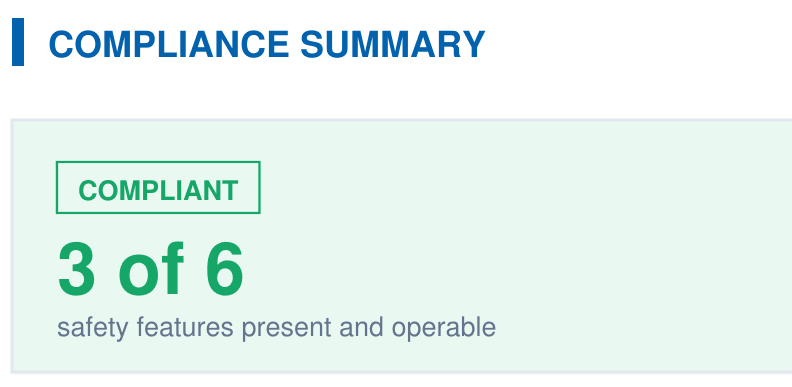
A branded PDF with the compliance summary, the feature table, each finding with its photos, and the signature, generated on‑site when the BPC §7195 and HSC §115922 checklist is complete.