How Home Inspectors Add Pool Safety Inspections in California
A California home inspector already owes the BPC §7195 pool section on every paid inspection of a home with a pool or spa. How to turn it into a priced, documented service: what to check, what to write, how to price it, and the tools that produce the report on-site.
A California home inspector already owes the pool section on every paid inspection of a one to four unit home with a pool or spa. Business and Professions Code §7195 makes a noninvasive examination of the pool and the dwelling part of the definition of a home inspection at a transfer, and makes the seven HSC §115922(a) safety features, their condition and a specific statement if there are fewer than two part of the definition of the report.
The add-on is not the duty. The add-on is doing it as a priced, documented service instead of an unpriced afterthought. This guide covers what the statute already requires of you, why the pool section is worth its own fee, the walk and the measurements, the pricing rules in BPC §7197, the report wording, and how a checklist tool produces the section on-site.
What BPC §7195 already requires of you
The pool duties sit inside two definitions in the section, so they apply whenever a home inspection is performed for a fee in connection with a transfer of a one to four unit dwelling with a pool or spa.
Where
What it says
What it means on the job
§7195(a)(2), the inspection
An appropriate inspection includes a noninvasive physical examination of the pool or spa and the dwelling to identify which, if any, of the seven HSC §115922(a) drowning prevention safety features the pool or spa is equipped with, in good repair, operable as designed and, if applicable, appropriately labeled
You walk the enclosure, test the gates and doors, look for the labels, and note condition
§7195(c), the report
The report shall identify which of the seven features the pool or spa has, shall specifically state if it has fewer than two, and whether those features are in place, in good repair, operable as designed and, if applicable, appropriately labeled, and shall include the written statement that a pool isolation fence is the most studied and effective drowning prevention safety feature, per the American Academy of Pediatrics 2019 policy statement
A seven-row table, a condition note per row, one specific sentence when the count is below two, and the fence statement
§7195(a)(2) and (c), the limit
The section does not require a determination as to whether a feature meets the ASTM International or ASME specifications referenced in HSC §115922
You read labels; you do not test covers or alarms to a standard
Nothing in the section is optional for the client, and nothing in it depends on a license: BPC §7195(d) defines a home inspector as any individual who performs a home inspection, and California issues no home inspector or pool inspector license. What stands behind the report is the duty of care in BPC §7196 and the four-year window for claims in §7199.
Why the pool section is its own service
Three things separate the pool section from the rest of the inspection and justify a line of its own on the invoice.
It is a second walk with a tape.HSC §115923 gives numbers: 60 inches of enclosure height, a gate latch no lower than 60 inches above the ground, no more than 2 inches under the enclosure, no opening that passes a 4 inch sphere, no handholds or footholds on the outside, and gates that open away from the pool, self-close and self-latch. Each is measured or tested, not glanced at.
It has its own statute-driven wording. The seven-feature table, the fewer-than-two sentence and the isolation fence statement are report content the rest of the inspection does not carry.
It carries the liability of a safety finding. A gate that does not latch is the finding a buyer's lawyer reads first. BPC §7198 voids any clause that waives the §7196 duty or caps your liability at the fee, so the section deserves the time it takes.
The seven features themselves are in HSC §115922(a): an enclosure meeting §115923 that isolates the pool from the home; removable mesh fencing meeting ASTM F2286 with a self-closing, self-latching, key-lockable gate; a safety cover labeled to ASTM F1346-23; exit alarms on the home's doors and windows with direct pool access; self-closing, self-latching devices on such doors with the release at least 54 inches above the floor; an in-water alarm certified to ASTM F2208 and operable as designed; and other means independently verified and labeled. Our HSC §115922 guide covers each one.
The walk, in the order you do it
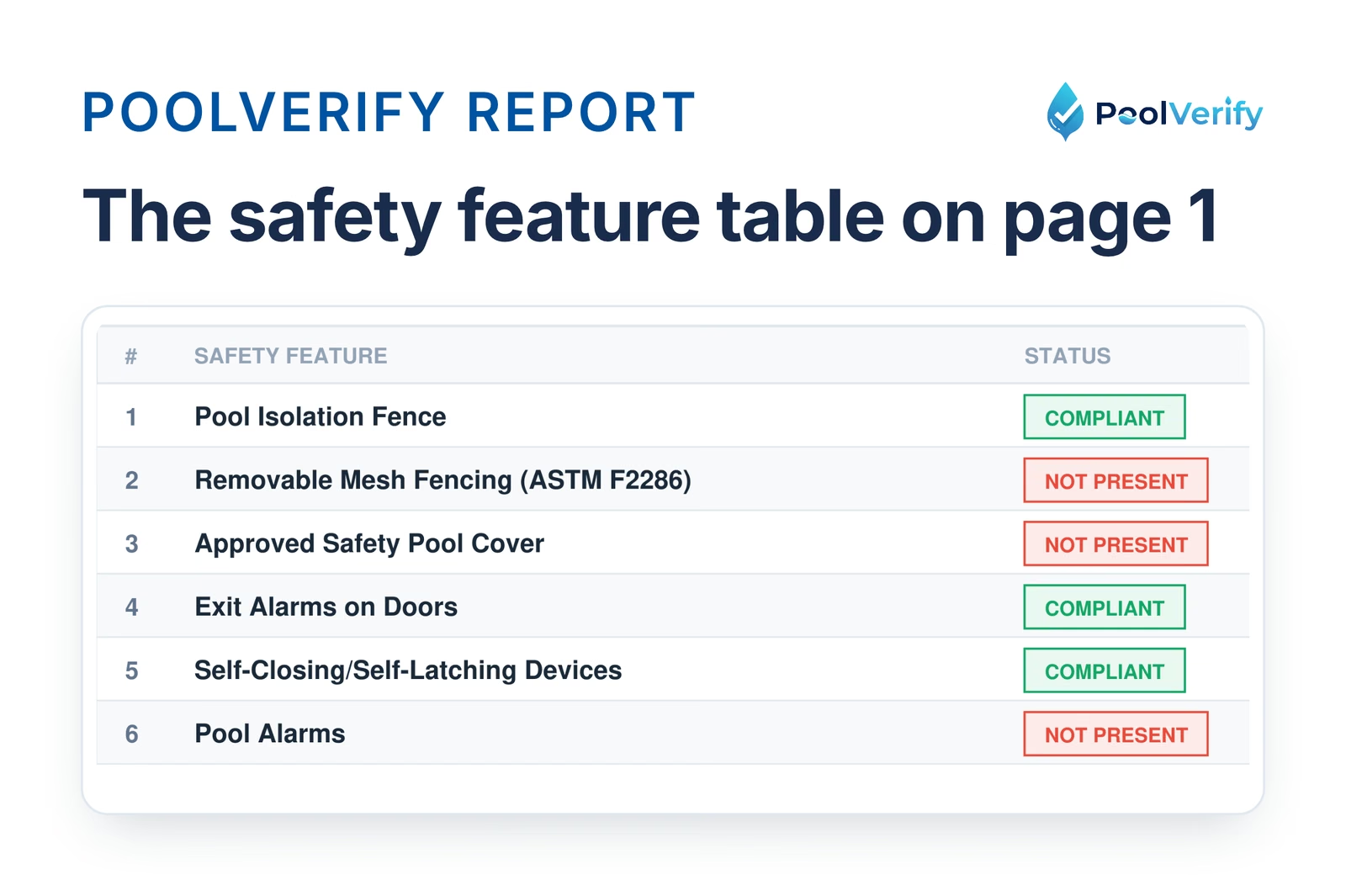
The safety feature table on page 1 of a PoolVerify report, with a compliant or not present status per feature.
Map the routes to the water. From the house, note every door, window and pet door that reaches the pool without an enclosure in between, and whether a fence or wall isolates the pool from the home at all.
Enclosure and gates. Height from the outside at the lowest point, the gap underneath, the widest opening, the outside surface. Release each gate from a few inches, halfway and fully open: it swings away from the pool, closes and latches on its own each time. Tape from the ground to the latch release, photograph with the tape in frame. The gate latch guide covers the 60 inch rule and the 54 inch door rule it is confused with.
Doors and windows from the house. Open each one with direct access: does an alarm sound or a verbal warning repeat, and does it continue while the opening is ajar? On doors, release the door and confirm it closes and latches on its own; measure from the floor to the release.
Cover and mesh fencing. Find the ASTM F1346-23 label on the cover and the F2286 label on removable mesh fencing; test the mesh fence gate the same way as an enclosure gate; note whether the fencing is installed at the time of inspection.
In-water alarm. Find the ASTM F2208 certification and, where the owner permits, trigger it. A wearable alarm on a child does not qualify.
Suction outlets. Not one of the seven features, but a photograph of the drain covers belongs in the section; the rules are in HSC §115928 and our drain cover guide.
Count. Add up the features that are present and operable, then check the three pairs HSC §115922(b) rejects: an exit alarm and a door device on the same door, an exit alarm and a door latch on separate doors, and a cover with an in-water alarm. If the total is below two, the report says so in a sentence of its own.
At a spa or hot tub with a locking cover that complies with ASTM F1346, note that HSC §115925(b) exempts it from the Swimming Pool Safety Act, and record the cover and its lock.
Pricing the section under BPC §7197
The statute names no fee. Set the pool fee the way you set the rest: from the time on site, the time in the report and the income you want, as our pricing guide walks through. BPC §7197 then draws four lines around it:
BPC §7197(a)
The rule
What it rules out
(1)
No repairs, for an additional fee, on a structure you reported on in the past 12 months
Fixing the latch you found, or sending your own crew to
(2)
No inspecting a property in which you or your company has a financial interest
Inspecting a listing you have a stake in
(3)
No compensation, inducement or reward to the owner, broker or agent for referrals
Paying agents per pool inspection they send
(4)
No engagement whose fee depends on the conclusions, preestablished findings or the close of escrow
A discount if the pool passes, or payment at closing only
The rules apply to the company that employs the inspector as much as to the inspector, and to a company controlled by one with a financial interest in the employer.
The section, priced and documented in one pass. PoolVerify's California checklist carries the six physical HSC §115922(a) features with the measurement, the label and a photo on each item, records the seventh in notes, captures the client's signature on the device and generates the branded PDF on-site with the fewer-than-two statement. It runs in the browser beside your main report tool. See the checklist.
Writing the section the statute describes
Three habits keep the pool section inside §7195(c):
Name all seven, every time. A feature the pool lacks is recorded as not present, never left out. The buyer must see which of the seven exist.
Separate presence from condition. "Enclosure present. East gate does not self-latch from a partly open position; latch release at 58 inches." Presence is a fact about the pool; condition is what in good repair and operable as designed mean.
Say fewer than two in its own sentence. The section asks for it specifically. A line under a heading the reader will find is what specifically means.
The report writing guide shows a full five-page example, and the sample report is the PDF PoolVerify generates, with the seven-feature table on page 1.
Where PoolVerify fits a home inspector
Most home inspectors keep their main report tool and need only the pool section to become as structured as the rest. PoolVerify is a responsive web app for California residential pool safety inspections, so it fits that gap without an install:
Need
What PoolVerify does
The seven features, in order, with the numbers
The California checklist lists the six physical HSC §115922(a) features as items with the measurement or label each one asks for; the seventh, other means, is documented in notes
Photo evidence per finding
Up to 10 photos per item, compressed on upload, with captions
The signature
ESIGN-compliant e-signature on the device, embedded in the PDF
The report section
A branded PDF generated in seconds, with the feature table, a finding with photos per item, and the fewer-than-two statement
Records for the four years BPC §7199 allows
Stored with 256-bit encryption on Supabase-managed infrastructure, exportable
Cost
Starter at $39 a month on annual billing or $49 monthly, 25 inspections a month; Professional at $79 or $99 with unlimited inspections, custom checklist items and scheduling
The trial is 14 days with no credit card to start; the plan and card are chosen when the first PDF report is generated. PoolVerify has no offline mode, so it saves as you work over a connection, and it does not perform inspections, certify inspectors or issue compliance certificates.
Limitations
This guide is general information about California law, not legal advice. The current text of BPC §7195 to §7199 and HSC §115922 on leginfo.legislature.ca.gov controls, and the standards of practice of an inspector's association may ask for more than the statute. The statute names no fee, and this guide quotes no market fee range. PoolVerify is inspection software for California residential pool safety inspections; it does not perform inspections, certify inspectors, or issue compliance certificates.
Frequently asked questions
Do I need a license or certification to inspect pools in California?
No. California has no home inspector license and no pool inspector license. BPC §7195(d) defines a home inspector as any individual who performs a home inspection, and the section contains no training or continuing education requirement. CREIA and InterNACHI are voluntary associations. What the statute does impose is a duty of care under BPC §7196 and a four-year window for claims under §7199.
Is the pool section optional if the client only wants a general home inspection?
Not when the home has a pool or spa. BPC §7195(a)(2) says an appropriate inspection at a transfer includes a noninvasive examination of the pool or spa and the dwelling to identify which of the seven HSC §115922(a) features are present, and §7195(c) says the report shall identify them and state specifically if there are fewer than two. The section is part of the definition of a home inspection, not an add-on the client can decline.
Can I charge separately for the pool section?
The statute names no fee, so the fee is yours to set, and a separate line for the pool examination is common because it adds a walk of the enclosure, gate and door tests, and a second report section. BPC §7197 bars fees that depend on the findings or on the close of escrow, and bars paying the owner, broker or agent for referrals.
Do I have to test whether a cover or alarm meets its ASTM standard?
No. BPC §7195(a)(2) and (c) both say the section does not require a determination as to whether a feature meets the ASTM International or ASME specifications referenced in HSC §115922. You record whether the feature is present, in good repair, operable as designed and, where the statute calls for one, labeled.
Can I repair the gate latch I just reported?
Not for a fee within 12 months. BPC §7197(a)(1) makes it an unfair business practice for a home inspector, or the company that employs the inspector, to perform or offer repairs for an additional fee on a structure the inspector reported on in the past 12 months. Refer the client to a licensed contractor instead.
What does PoolVerify add to the report software I already use?
The California pool section as a ready checklist: the six physical HSC §115922(a) features with the measurement, label and photo each one needs, the seventh recorded in notes, the client's signature on the device, and a branded PDF generated on-site with the fewer-than-two statement. It runs in the browser on any device, so it sits beside your main report tool rather than replacing it. Starter is $39 a month on annual billing with a 14-day free trial and no credit card to start.
Conclusion
The pool section is already yours under BPC §7195. Price it from the time it takes, keep the fee clear of the findings and the escrow, walk the seven features with a tape and a camera, and write the section the statute describes: all seven named, condition separated from presence, and fewer than two said in its own sentence.
PoolVerify puts that walk on a California checklist with a photo on every item and the PDF generated before you leave the driveway. Start your 14-day free trial, no credit card to start.
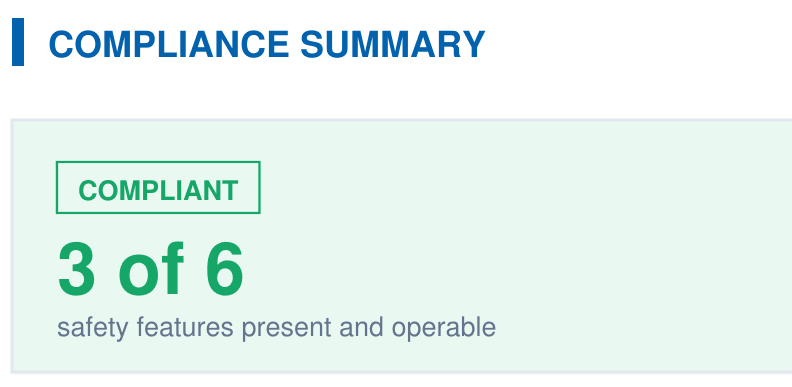
A branded PDF with the compliance summary, the feature table, each finding with its photos, and the signature, generated on‑site when the BPC §7195 and HSC §115922 checklist is complete.