Pool-compliance
Pool Barrier: Complete Requirements & Installation Guide [2026]
Complete guide to pool barrier requirements in California. Learn about BPC §7195 compliance, barrier types, height specifications, and installation guidelines.

12 min read
Pool barriers are the first line of defense against accidental drownings, and California law has strict requirements to ensure they work effectively. Whether you're installing a new pool, selling your home, or conducting safety inspections, understanding pool barrier requirements is essential for compliance and safety.
In this comprehensive guide, we'll cover everything you need to know about California pool barrier requirements under BPC §7195, including specifications, barrier types, installation guidelines, and common compliance issues that inspectors find.
Table of Contents
- What is a pool barrier?
- California pool barrier requirements (BPC §7195)
- Pool barrier height specifications
- Spacing and opening requirements
- Types of pool barriers
- Gate requirements and specifications
- Approved barrier materials
- Installation guidelines
- Common compliance issues
- Pool barrier inspection checklist
- Frequently asked questions
What is a pool barrier?
A pool barrier is any structure that restricts access to a swimming pool or spa, preventing unsupervised entry by young children. Pool barriers can include fencing, walls, building walls, or pool enclosures that create a physical separation between the pool and surrounding areas.
According to the U.S. Consumer Product Safety Commission, proper pool barriers can prevent approximately 70% of childhood drownings in residential swimming pools. This makes barriers one of the most effective drowning prevention measures available.

Professional diagram showing different pool barrier configurations including fencing, walls, and enclosures
California law requires pool barriers to meet specific standards that make them difficult for young children to climb over, crawl under, or squeeze through. These requirements are detailed in Business and Professions Code Section 7195 and referenced in building codes throughout the state.
California pool barrier requirements (BPC §7195)
California Senate Bill 442, codified as Business and Professions Code Section 7195, took effect January 1, 2018. This law, known as the California Pool Safety Act, establishes minimum safety standards for all new or remodeled in-ground pools.
Key BPC §7195 barrier requirements
Under BPC §7195, all swimming pools must have:
- A physical barrier that restricts access to the pool
- At least two of seven drowning prevention safety features (detailed below)
The seven approved drowning prevention features are:
- An enclosure that isolates the swimming pool or spa from the private single-family home
- Removable mesh fencing meeting ASTM F2286 standards with a self-closing, self-latching gate
- Approved safety pool cover
- Exit alarms on doors providing access to the pool
- Self-closing and self-latching doors with release mechanisms at 54+ inches
- Pool alarms meeting ASTM F2208 standards
- Other state-approved safety devices
Most California homeowners choose to install a permanent barrier (option #1) combined with one additional safety feature like a pool alarm or exit alarm.
Ready to streamline your California pool safety inspections?
PoolVerify includes built-in BPC §7195 compliance checklists to ensure you never miss a required barrier specification during inspections.
Pool barrier height specifications

Proper measurement technique for 60-inch pool barrier height requirement
Pool barrier height is one of the most critical compliance factors. California requires barriers to meet minimum height standards that prevent young children from climbing over.
Minimum barrier height
According to California regulations and the Residential Code Appendix AX, pool barriers must be at least 60 inches (5 feet) tall, measured from the exterior side facing away from the pool.
| Barrier Type | Minimum Height | Measurement Point |
|---|---|---|
| Standard fence | 60 inches (5 feet) | Exterior side, from finished grade |
| Wall barrier | 60 inches (5 feet) | From finished floor or grade |
| Mesh fencing | 60 inches (5 feet) | Full barrier height |
| Combination barrier | 60 inches (5 feet) | Shortest point of barrier |
How to measure barrier height correctly
Proper measurement is essential for compliance:
- Measure from the exterior side - Always measure from the side facing away from the pool, not the pool side
- Measure from finished grade - Measure from the finished ground level, not before landscaping
- Measure at the lowest point - If ground slopes, measure from the highest ground level adjacent to the fence
- Include entire barrier - Gates must also meet the 60-inch minimum height requirement

Technical illustration showing proper pool barrier height measurement technique from exterior ground level
Common measurement mistakes include measuring from the pool side (where ground may be higher) or measuring before final grading is complete. Professional pool inspectors using tools like PoolVerify's digital inspection software document barrier height with photos showing measuring tape for verification.
Spacing and opening requirements
Beyond height, California pool barriers must meet strict spacing requirements to prevent children from squeezing through, climbing over, or crawling under.
Vertical spacing requirements
Standard vertical spacing:
- Spacing between vertical members shall not exceed 1¾ inches in width
- Openings should not allow a 4-inch diameter sphere to pass through
Exception for high horizontal members:
- When horizontal members are spaced 45 inches or more apart vertically, vertical spacing can increase to 4 inches maximum
- This exception applies to horizontal rail fencing with widely-spaced top and bottom rails
Bottom clearance
The gap between the bottom of the barrier and the ground must not exceed 2 inches. This prevents small children from crawling underneath the barrier.
Horizontal member placement
For barriers with horizontal rails, slats, or decorative elements:
- Any horizontal members spaced less than 45 inches apart must be placed on the pool side of the fence
- This prevents children from using horizontal members as ladder rungs to climb over
Spacing requirements table
| Element | Maximum Opening | Purpose |
|---|---|---|
| Vertical spacing | 1¾ inches | Prevent squeezing through |
| Sphere test | 4-inch diameter | No body parts can pass through |
| Bottom clearance | 2 inches | Prevent crawling under |
| Chain link mesh | ¼ inch maximum | Prevent toe holds for climbing |
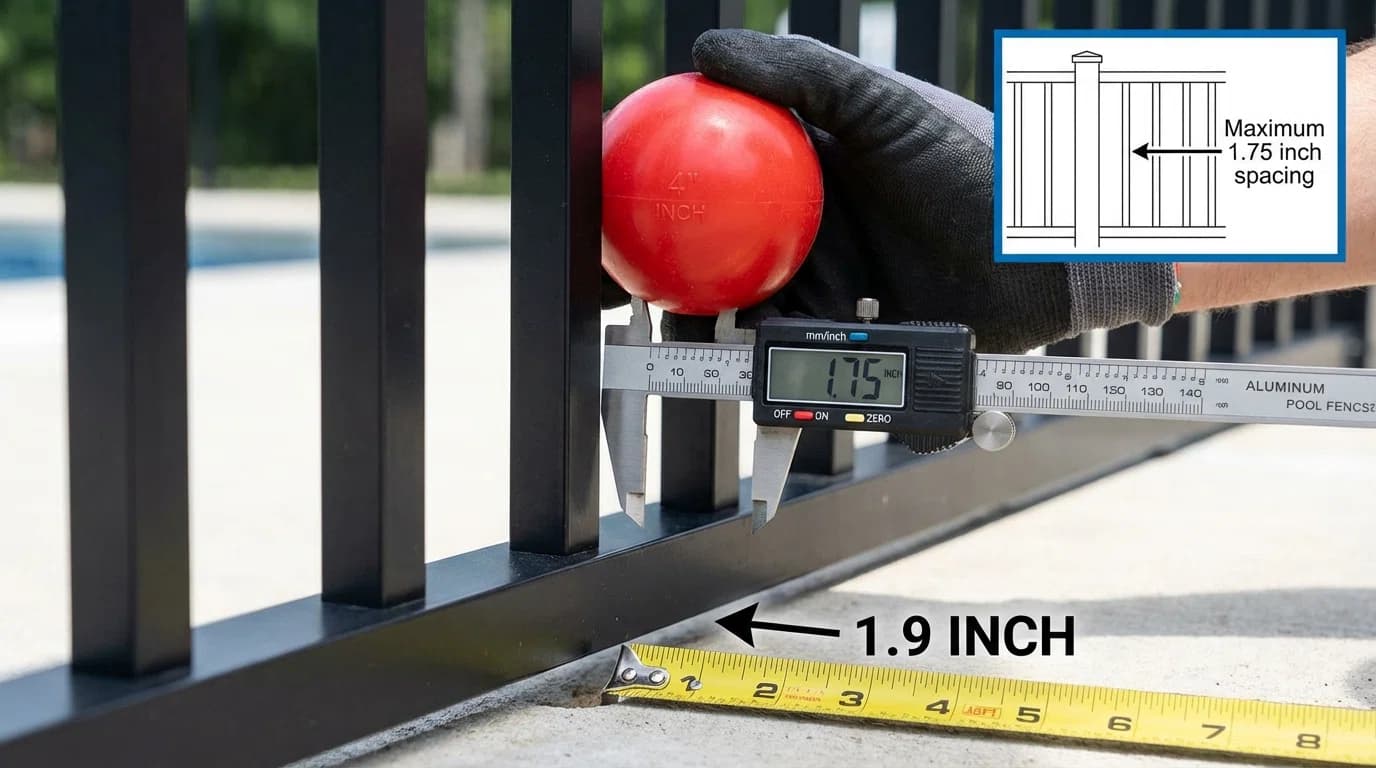
Close-up photo showing proper pool fence vertical spacing measurement with 4-inch sphere test
Inspectors commonly use a 4-inch sphere (often a baseball or purpose-built testing tool) to verify that no openings allow the sphere to pass through. This is documented during California pool safety inspections.
Types of pool barriers
California law allows several types of pool barriers, each with specific advantages and compliance considerations.
1. Permanent fencing
Traditional pool fencing is the most common barrier type. Permanent fencing includes:
- Wrought iron or aluminum fencing - Durable, decorative, and low-maintenance
- Vinyl fencing - Affordable and available in many styles
- Wood fencing - Classic appearance but requires ongoing maintenance
- Glass panel fencing - Modern, unobstructed view, premium option
Pros:
- Permanent protection
- Wide variety of styles and materials
- Increases property value
- Meets BPC §7195 requirements when properly installed
Cons:
- Higher upfront cost
- Professional installation usually required
- May obstruct pool view
2. Removable mesh fencing
Removable mesh fencing must meet ASTM F2286 standards. This type of barrier:
- Can be removed when pool is in supervised use
- Must include self-closing, self-latching gate
- Requires professional installation
- Must be at least 60 inches tall
Pros:
- Removable for entertaining
- Transparent mesh maintains view
- Meets BPC §7195 as standalone safety feature
Cons:
- Must be properly reinstalled after removal
- Less permanent than traditional fencing
- Requires regular inspection
3. Building wall barriers
The home itself can serve as part of the pool barrier if:
- All doors and windows providing pool access have exit alarms or are self-closing/latching
- The building wall is at least 60 inches tall at the point facing the pool
- Any openings meet spacing requirements
Pros:
- Reduces fencing needed
- Cost-effective solution
- Maintains open yard appearance
Cons:
- Requires additional safety features (alarms)
- Less flexible if home layout changes
- May not provide complete barrier
4. Pool enclosures
Full pool enclosures (screened or solid) that completely surround the pool area:
- Must have self-closing, self-latching doors
- Must meet all height and spacing requirements
- Can provide additional benefits (debris protection, shade)
Pros:
- Complete pool protection
- Keeps debris out of pool
- Can extend swimming season
- Provides shade and weather protection
Cons:
- Most expensive barrier option
- May require permits and professional installation
- Ongoing maintenance required
For detailed guidance on pool enclosures, see our guide on pool enclosure requirements in California.
Gate requirements and specifications
Pool barrier gates are the most common weak point in pool safety systems. California has specific requirements for gates to ensure they remain secure.
Self-closing requirement
All access gates to pool areas must be self-closing. This means:
- Gates must close automatically without manual assistance
- Closing mechanism must work consistently
- Gates must close from any open position
Self-latching requirement
Gates must also be self-latching, meaning:
- The latch engages automatically when gate closes
- No manual latching action required
- Latch must hold gate securely closed
Latch height requirement
The self-latching mechanism must be placed no lower than 60 inches above the ground on the exterior side of the gate. This prevents young children from reaching the latch release.
Gate swing direction
Access gates must open away from the pool (outward). This prevents a child from being able to push the gate open toward the pool area.
Gate clearance
The gap between the bottom of the gate and ground must not exceed 2 inches, consistent with fence bottom clearance requirements.

Pool gate showing self-closing hinge and high-mounted self-latching mechanism at 60 inches
During pool safety inspections, inspectors test gate mechanisms multiple times to ensure they close and latch properly from various positions. Learn more in our guide on pool gate requirements in California.
Approved barrier materials
California allows various materials for pool barriers, provided they meet height, spacing, and structural requirements.
Material options
| Material | Durability | Maintenance | Cost | Compliance |
|---|---|---|---|---|
| Aluminum | Excellent | Very low | Medium-High | Excellent |
| Vinyl (PVC) | Very good | Very low | Low-Medium | Excellent |
| Wood | Good | High | Medium | Good (if maintained) |
| Wrought iron | Excellent | Low | High | Excellent |
| Chain link | Excellent | Very low | Low | Good (mesh size critical) |
| Glass panels | Excellent | Medium | Very high | Excellent |
| Mesh (removable) | Good | Low | Medium | Excellent (ASTM F2286) |
Chain link requirements
If using chain link fencing:
- Maximum mesh opening: ¼ inch or smaller
- This prevents children from using the mesh as toe holds for climbing
- Must meet all height and clearance requirements
Material compliance considerations
All materials must:
- Be structurally sound and resist weathering
- Maintain required spacing (no degradation creating gaps)
- Support self-closing gates without sagging
- Be non-climbable (no footholds or handholds)
Wood fencing requires regular inspection as warping, rotting, or splitting can create non-compliant openings. Many pool inspectors recommend aluminum or vinyl for long-term compliance with minimal maintenance.
Installation guidelines
Proper installation is critical for pool barrier compliance. Whether hiring professionals or installing yourself, follow these guidelines.
Pre-installation planning
1. Check local requirements
- Verify local building codes (may exceed state minimums)
- Obtain necessary permits before installation
- Schedule required inspections
2. Survey the area
- Mark property lines
- Identify utility lines (call 811 before digging)
- Plan gate locations for access
3. Choose compliant materials
- Select materials meeting California standards
- Ensure gates include self-closing/latching hardware
- Verify spacing meets requirements
Installation steps
1. Mark fence line
- Use stakes and string to mark barrier perimeter
- Ensure barrier encloses pool completely
- Plan for adequate setback from pool edge
2. Set posts
- Dig post holes to proper depth (typically 24-36 inches)
- Use concrete for stability
- Ensure posts are plumb (vertical)
- Space posts according to manufacturer specifications
3. Install fencing panels
- Attach panels securely to posts
- Maintain consistent height
- Verify spacing requirements throughout
4. Install and adjust gates
- Mount self-closing hinges at proper height
- Install self-latching mechanism at 60+ inches
- Test closing and latching from multiple positions
- Adjust tension as needed
5. Final inspection
- Verify all height requirements met
- Test all gates multiple times
- Check bottom clearance throughout
- Perform 4-inch sphere test at all openings

Step-by-step installation diagram showing pool fence post placement, panel installation, and gate mounting
Professional vs. DIY installation
Consider professional installation if:
- Local codes require licensed contractors
- Terrain is challenging (slopes, hardscaping)
- Installing glass or complex materials
- You need permits and inspections coordinated
DIY may be suitable for:
- Simple terrain on your property
- Standard vinyl or aluminum fencing kits
- You have experience with fencing projects
- You can obtain permits yourself
Regardless of who installs the barrier, it must pass a California pool safety inspection before the pool can be used legally.
Common compliance issues
Pool inspectors regularly encounter these barrier compliance issues:
1. Incorrect barrier height
Issue: Barriers measuring less than 60 inches from exterior grade
Common causes:
- Measuring from pool side where ground is higher
- Ground settling after installation
- Landscaping changes raising exterior grade
Fix: Extend fence height or lower exterior grade
2. Excessive bottom clearance
Issue: Gap between fence and ground exceeds 2 inches
Common causes:
- Ground erosion under fence
- Sloping terrain not addressed
- Fence installed before final grading
Fix: Add bottom rail, adjust grade, or install barrier along ground
3. Non-compliant spacing
Issue: Openings exceed 1¾ inches or fail 4-inch sphere test
Common causes:
- Decorative fencing with wide gaps
- Wood fence boards warping or shrinking
- Chain link mesh too large
Fix: Add additional vertical members, replace non-compliant panels, or install compliant fencing
4. Gate problems
Issue: Gates don't self-close, self-latch, or latch is too low
Common causes:
- Worn or broken hinges/latches
- Gates sagging from settling
- Improper initial installation
Fix: Replace hardware, adjust/level gates, raise latch mechanism
5. Climbable features
Issue: Horizontal members on exterior side create ladder effect
Common causes:
- Decorative horizontal rails
- Fence designed for aesthetics not compliance
- Nearby objects (furniture, planters) providing climbing assist
Fix: Relocate horizontal members to pool side, redesign fence, remove nearby climbable objects
6. Barrier maintenance issues
Issue: Rotting wood, rusted metal, or damaged panels creating gaps
Common causes:
- Lack of regular maintenance
- Weather damage
- Age-related deterioration
Fix: Replace damaged sections, implement maintenance schedule, consider low-maintenance materials

Common pool barrier violations photo collage showing incorrect spacing, low gates, and excessive bottom clearance
Professional pool inspectors using digital inspection software like PoolVerify document these issues with photos and detailed notes to help homeowners achieve compliance.
Pool barrier inspection checklist
Use this checklist when inspecting pool barriers for BPC §7195 compliance:
Height and clearance
- [ ] Barrier height minimum 60 inches from exterior side
- [ ] Height measured from finished grade (exterior)
- [ ] Bottom clearance no more than 2 inches
- [ ] All sections meet height requirement (including gates)
Spacing and openings
- [ ] Vertical spacing does not exceed 1¾ inches
- [ ] 4-inch sphere cannot pass through any opening
- [ ] Chain link mesh ¼ inch or smaller (if applicable)
- [ ] No gaps created by damaged or warped materials
Gates
- [ ] Gates open away from pool
- [ ] Self-closing mechanism works from all positions
- [ ] Self-latching mechanism engages automatically
- [ ] Latch mounted at 60+ inches on exterior side
- [ ] Gate bottom clearance 2 inches or less
Materials and construction
- [ ] Barrier materials structurally sound
- [ ] No climbable horizontal members on exterior
- [ ] No nearby objects providing climbing assistance
- [ ] Fence posts secure and plumb
- [ ] All panels securely attached
Additional safety features
- [ ] At least one additional BPC §7195 safety feature present
- [ ] Exit alarms functional (if used)
- [ ] Pool alarms functional (if used)
- [ ] Safety cover compliant (if used)
For a comprehensive pool safety inspection, download our complete California pool inspection checklist.
Frequently asked questions
What is the minimum height for a pool barrier in California?
Pool barriers in California must be at least 60 inches (5 feet) tall, measured from the exterior side facing away from the pool at finished grade level. This applies to all barrier types including fences, walls, and enclosures.
Can I use my house as part of the pool barrier?
Yes, the building wall of your home can serve as part of the pool barrier under California BPC §7195, provided all doors and windows providing pool access have exit alarms or self-closing/self-latching mechanisms, and the wall meets height requirements.
How far apart can pool fence posts be?
Post spacing depends on the fence material and manufacturer specifications. Most aluminum and vinyl fences space posts 6-8 feet apart, while wood fences may require 6-foot spacing. The critical factor is maintaining structural integrity and preventing sagging that could create non-compliant openings.
Do I need a permit to install a pool barrier in California?
Most California jurisdictions require building permits for pool barrier installation. Requirements vary by city and county, so check with your local building department before beginning installation. Permits typically require inspection to verify compliance.
What happens if my pool barrier doesn't meet requirements?
Non-compliant pool barriers discovered during inspections (typically required for home sales or remodeling) must be corrected before the pool can be legally used or the property transaction can close. Violations can result in fines and liability if an accident occurs.
Can I remove my pool barrier temporarily?
Only removable mesh fencing meeting ASTM F2286 standards can be legally removed temporarily. Permanent barriers must remain in place and functional at all times. If using removable mesh fencing, it must be properly reinstalled when the pool is not under active adult supervision.
Ready to streamline your pool barrier inspections?
Pool barriers are the foundation of California pool safety compliance, and understanding BPC §7195 requirements is essential for inspectors, homeowners, and pool professionals. Proper barrier installation, maintenance, and inspection prevent accidents and ensure compliance with California law.
Whether you're conducting pool safety inspections professionally or preparing your pool for inspection, PoolVerify's digital inspection platform includes comprehensive barrier requirement checklists, photo documentation tools, and instant PDF reports that ensure complete BPC §7195 compliance.
Start completing California pool safety inspections more efficiently with built-in compliance checklists and professional reporting tools.
Start Your 14-Day Free Trial →
Related posts
- California Pool Barrier Requirements: Complete Guide
- Pool Gate Requirements: California Compliance Guide
- Self-Closing Pool Gate: Requirements & Installation
- Pool Safety Inspection Checklist: Complete Guide
- BPC §7195 Inspection: Complete Compliance Guide
Sources:
Frequently Asked Questions
What is the minimum height for a pool barrier in California?
Pool barriers in California must be at least 60 inches (5 feet) tall, measured from the exterior side facing away from the pool at finished grade level. This applies to all barrier types including fences, walls, and enclosures used to isolate the pool area.
Can I use my house as part of the pool barrier?
Yes, the building wall of your home can serve as part of the pool barrier under California BPC §7195, provided all doors and windows providing pool access have exit alarms or self-closing, self-latching mechanisms meeting height requirements. The remaining perimeter requires compliant fencing.
How far apart can pool fence posts be?
Post spacing depends on the fence material and manufacturer specifications. Most aluminum and vinyl fences space posts 6-8 feet apart, while wood fences may require 6-foot spacing. The critical factor is maintaining structural integrity and preventing sagging that creates non-compliant openings.
Do I need a permit to install a pool barrier in California?
Most California jurisdictions require building permits for pool barrier installation. Requirements vary by city and county, so check with your local building department before beginning installation. Permits typically require inspection to verify compliance with height and spacing standards.
Can I remove my pool barrier temporarily?
Only removable mesh fencing meeting ASTM F2286 standards can be legally removed temporarily. Permanent barriers must remain in place and functional at all times. If using removable mesh fencing, it must be properly reinstalled when the pool is not under active adult supervision.
Related Articles
Pool-compliance
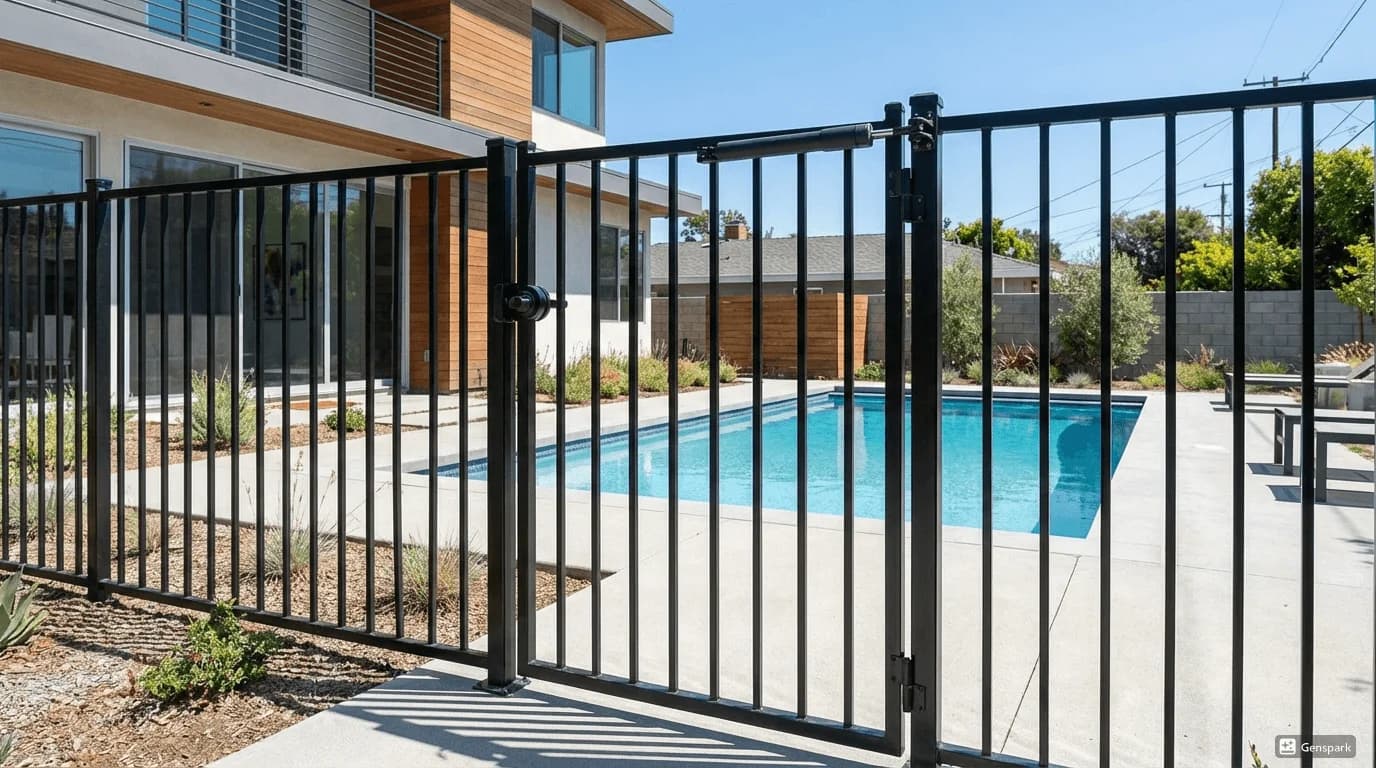
California Pool Barrier Requirements: Complete 2026 Compliance Guide
Complete guide to California pool barrier requirements for 2026. Learn BPC §7195 and HSC §115922 specifications for height, spacing, gates, and materials.

Pool-compliance
Pool Fence Height Requirements: State-by-State Guide [2026]
Complete state-by-state comparison of pool fence height requirements in 2026. Learn minimum heights, measurement methods, and compliance guidelines for all 50 states.
Pool-safety
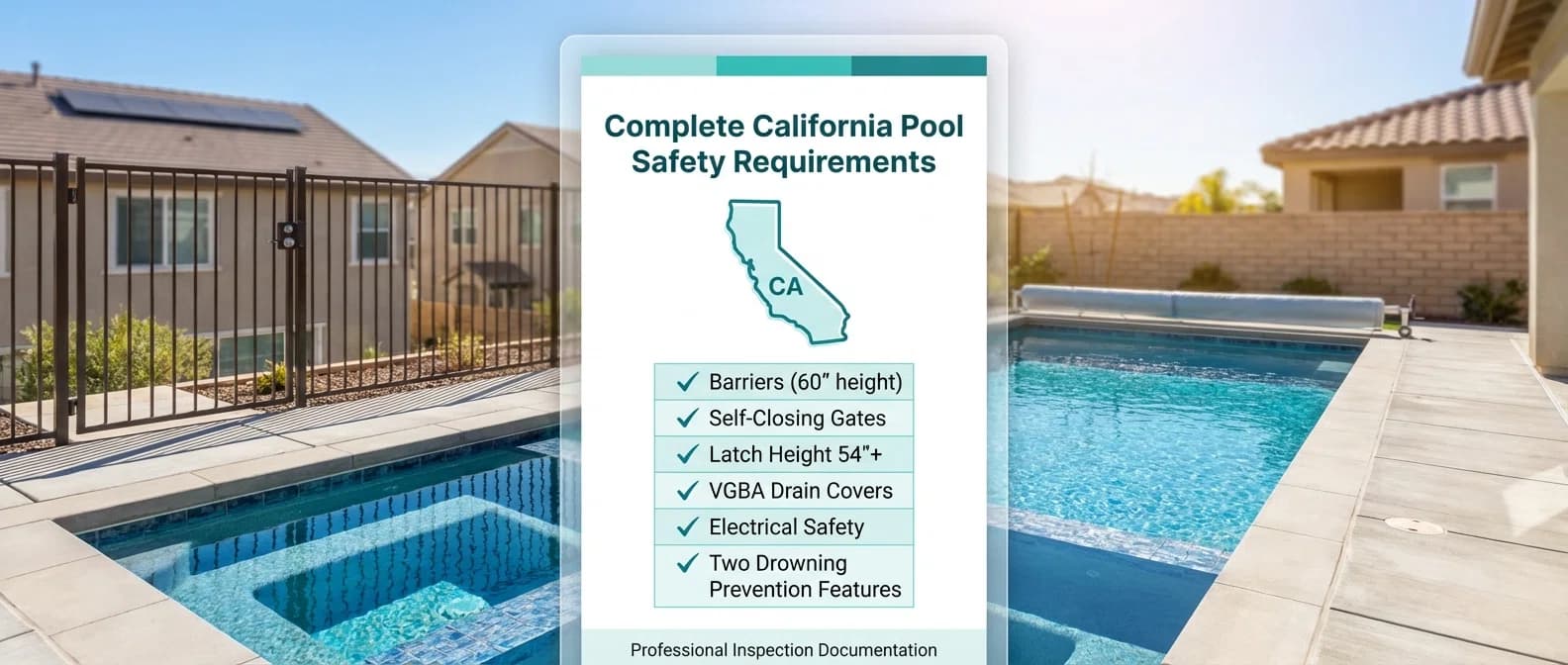
Pool Safety Requirements: Complete California List
Complete list of all California pool safety requirements including barriers, gates, latches, alarms, covers, drains, when they apply, and enforcement.