Pool-compliance
Pool Enclosure Requirements: California Guide
Complete California pool enclosure requirements guide covering types, specifications, when required vs fence, height, materials, gaps, permits, and inspections.
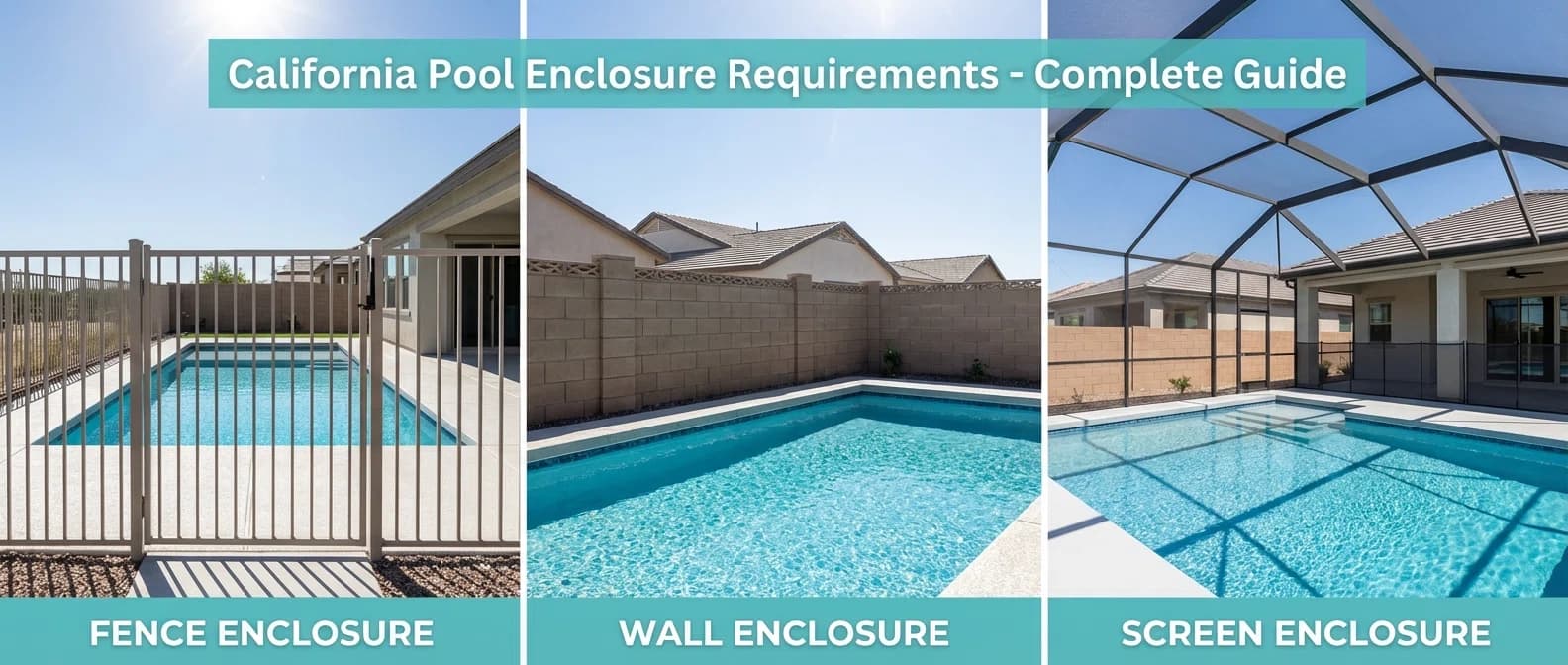
9 min read
Pool enclosures in California serve dual purposes: providing physical barriers preventing unauthorized pool access while potentially creating covered areas protecting from weather and debris. Understanding California's specific enclosure requirements is essential, as "enclosure" has precise legal meanings in pool safety codes that differ from casual use of the term.
Whether you're planning new pool construction, evaluating existing enclosures for compliance, or conducting pool safety inspections, this comprehensive guide clarifies exactly what California requires. Professional pool inspectors using California-specific inspection tools like PoolVerify ensure enclosures meet all applicable code requirements.
Table of Contents
- What is a pool enclosure under California law
- Types of pool enclosures
- California pool enclosure requirements
- When enclosures are required vs fencing
- Enclosure specifications and standards
- Screen vs solid enclosures
- Building permits for pool enclosures
- Pool enclosure compliance inspection
- Frequently asked questions
What is a pool enclosure under California law
California Building Code Section 3109 defines pool enclosures as "a fence, wall, or building wall that completely surrounds the swimming pool and obstructs access to the swimming pool." This legal definition differs from common usage where "pool enclosure" often means covered structures or screen rooms.
Under California pool safety law, an enclosure is fundamentally a barrier—any structure preventing unauthorized access to pool areas. This includes traditional fencing, masonry walls, building walls of adjacent structures, or combinations creating complete perimeters around pools.
Legal definition vs common usage
California Legal Definition: Any barrier completely surrounding and isolating the pool, whether fence, wall, or building structure. The focus is on access prevention, not weather protection.
Common Usage: Often refers to screened or covered structures over pools, sometimes called "pool cages" in Florida. These structures may or may not meet California enclosure requirements depending on barrier characteristics.
Understanding this distinction prevents confusion when reviewing code requirements or inspection reports. California pool compliance focuses on access prevention, not weather protection.
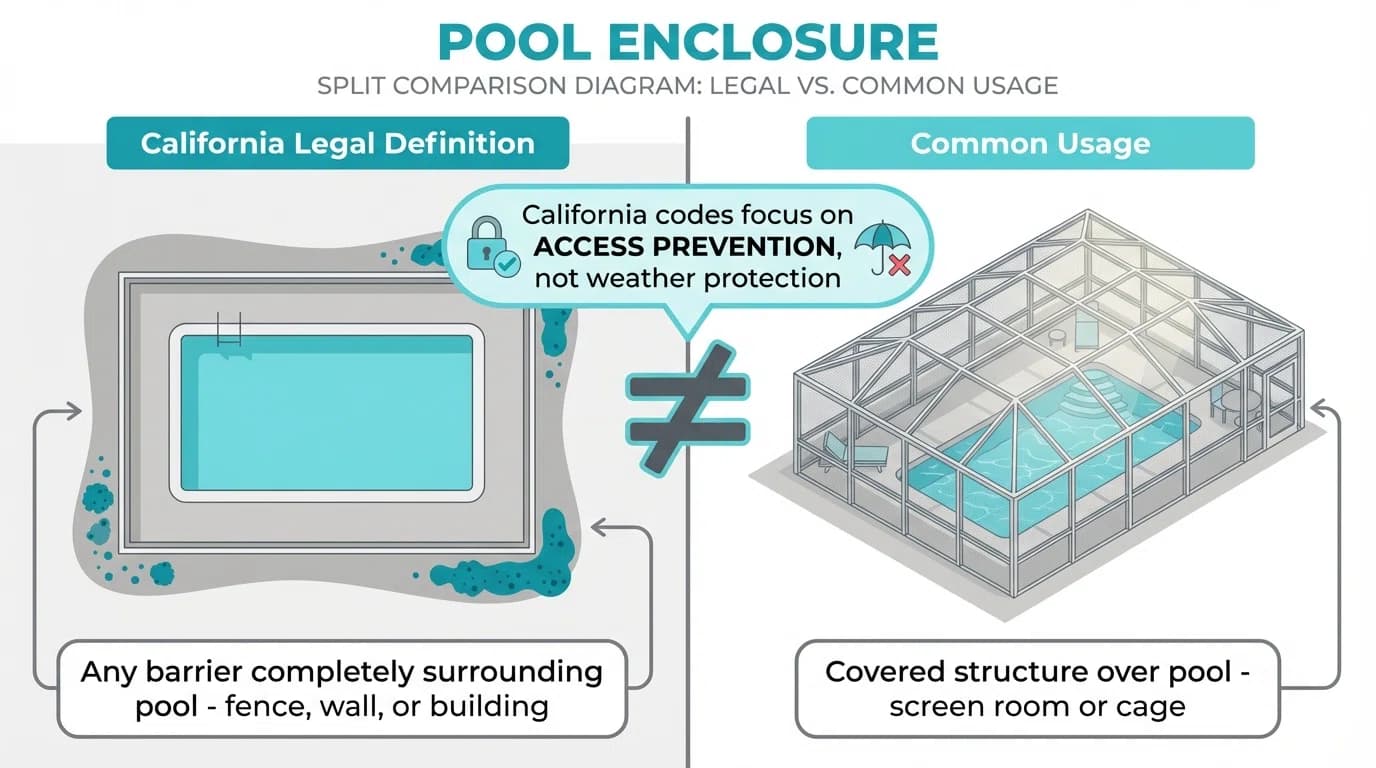
Diagram comparing legal pool enclosure definition to common pool enclosure usage
Enclosure vs barrier terminology
California codes use "enclosure" and "barrier" somewhat interchangeably, though nuanced differences exist:
Enclosure: Emphasizes completely surrounding the pool and creating isolated areas
Barrier: Focuses on the physical obstruction preventing access
Fence: Specific type of barrier/enclosure, typically open construction (pickets, rails, chain link)
Wall: Solid barrier/enclosure construction (masonry, concrete, solid wood)
All must meet the same fundamental requirements: minimum 60-inch height, maximum spacing/gaps, self-closing/self-latching gates, and isolation from unauthorized access.
Verify enclosure compliance with comprehensive inspections
PoolVerify helps inspectors document all enclosure types with detailed measurements, photos, and compliance verification.
Types of pool enclosures
California accepts multiple enclosure types, each meeting barrier requirements through different construction approaches. Understanding options helps pool owners select appropriate enclosures for their situations.
Traditional perimeter fencing
The most common enclosure type is perimeter fencing completely surrounding pool areas. Fence types include:
Wood Fencing: Solid board fences, picket fences, or combination styles. Must meet height requirements and gap limitations. Horizontal boards on pool side create climbing hazards unless spaced 45+ inches apart.
Metal Fencing: Wrought iron, aluminum ornamental, tubular steel, or chain link. Vertical picket spacing cannot exceed 4 inches. Chain link requires 1.75-inch maximum mesh with minimal sagging.
Vinyl/Composite Fencing: Manufactured fence systems in various styles. Same height and spacing requirements as wood or metal fencing.
Mesh Fencing: Removable mesh fencing meeting ASTM F2286 standards qualifies as both a barrier and one of the seven drowning prevention features under HSC §115922.
All fencing types must include compliant self-closing, self-latching gates. Detailed fence requirements are covered in our swimming pool fence requirements guide.
Masonry and solid walls
Solid wall enclosures include concrete block walls, poured concrete, brick walls, or stone walls. Solid walls offer privacy and noise reduction advantages over open fencing.
Height Requirements: Same 60-inch minimum as fencing, measured from grade on non-pool side
Climbability: Pool side surface must be smooth without handholds, footholds, or decorative features enabling climbing
Gates: Must include compliant self-closing, self-latching access gates
Structural: Must be engineered for wind loads, seismic requirements, and not create drainage issues
Masonry walls in earthquake-prone California require proper engineering and may need building permits even when pool permits aren't required.
Building walls as enclosures
Dwelling walls, garage walls, or accessory structure walls can form part of pool enclosures, reducing fencing needs. When building walls serve as barriers:
Door Requirements: Every door providing pool access must have a pool alarm (ASTM F2208), exit alarm with 54+ inch deactivation control, or be self-closing/self-latching with 54+ inch release mechanism.
Window Requirements: Windows with sills less than 60 inches above grade must have guards preventing child passage or be designed to prevent opening to child-passage size.
Gaps: No gaps between building walls and connecting fences/walls can exceed 4 inches
Penetrations: Utility penetrations, vents, or openings cannot allow child passage
Using building walls reduces fencing costs but requires careful attention to door and window requirements.
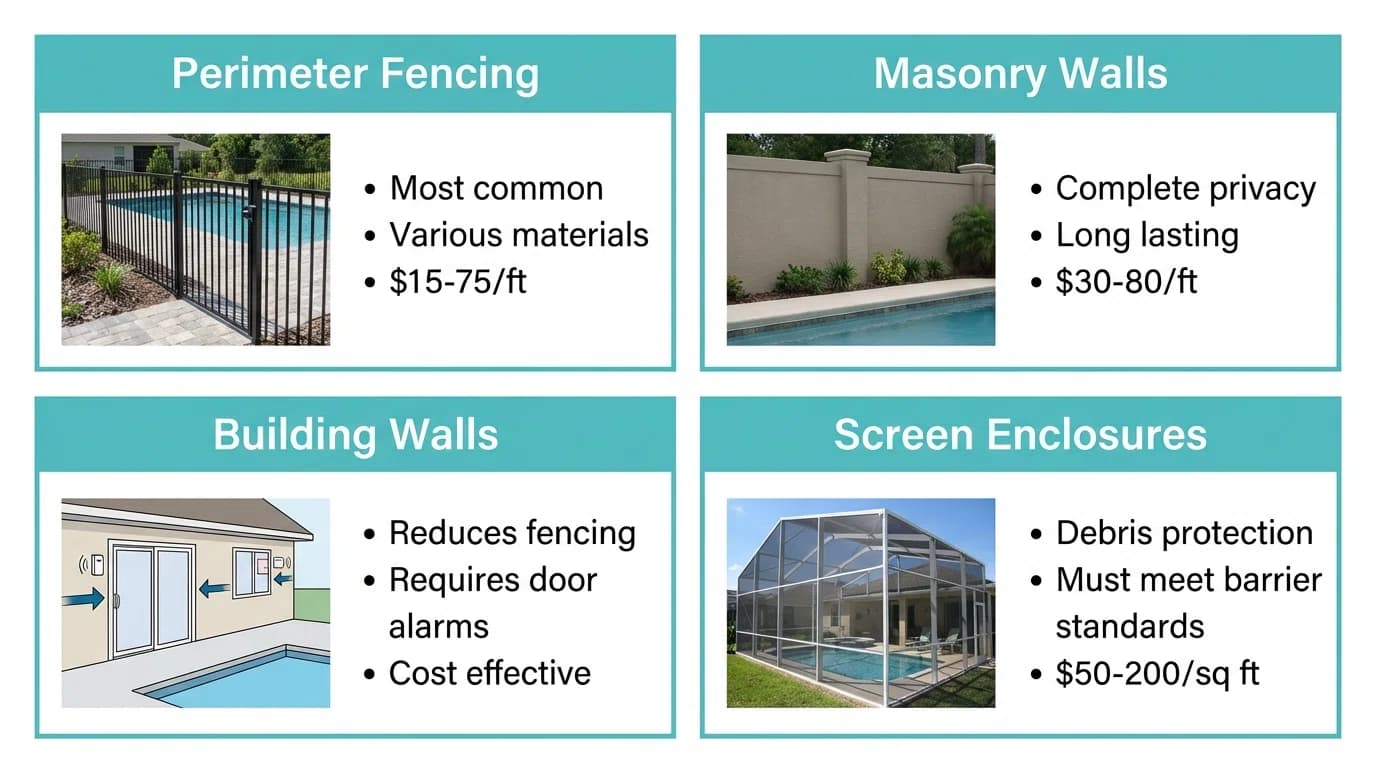
Different pool enclosure types showing fencing, walls, and building integration
Screen and covered enclosures
Screen enclosures or covered structures over pools can serve as barriers if they meet all enclosure requirements:
Height: Screen enclosure framing and mesh must create minimum 60-inch barrier height from grade
Mesh Spacing: Screen mesh openings cannot exceed 4 inches (most window screen is far smaller)
Access Control: Entry doors must be self-closing and self-latching with 54+ inch releases
Structural Integrity: Screens must be taut and frames rigid, preventing children from pushing through
Complete Enclosure: Must completely enclose pool area, not just cover pool surface
Many decorative screen enclosures don't meet California barrier requirements due to inadequate access control or structural integrity. Pool safety inspections verify screen enclosures provide equivalent protection to traditional barriers.
California pool enclosure requirements
All pool enclosures regardless of type must meet California Building Code Section 3109 barrier requirements. These specifications ensure enclosures effectively prevent child access.
Height requirements
Pool enclosures must be minimum 60 inches (5 feet) tall measured from grade on the side facing away from the pool. This measurement applies at all points around the pool perimeter.
Grade Definition: Finished ground surface, including any built-up areas. If landscaping, pavement, or fill raises ground level adjacent to enclosure exterior, height is measured from that elevated surface.
Measurement Points: On sloped terrain, measure at the highest point within 3 feet of enclosure exterior. This prevents low spots where terrain slopes away from enclosures.
Consistent Height: Enclosures cannot drop below 60 inches at any point. Decorative variations in fence heights must maintain minimums continuously.
The pool barrier height requirements apply identically to all enclosure types.
Spacing and gap requirements
Horizontal and vertical spacing between enclosure components cannot exceed 4 inches at any point:
Vertical Pickets/Slats: Maximum 4-inch spacing between vertical elements like fence pickets
Horizontal Rails: If less than 45 inches apart on pool side, vertical spacing must be maximum 1.75 inches
Chain Link: Maximum 1.75-inch mesh with 4-inch maximum diagonal diamond measurement
Mesh Fencing: Maximum 1-inch openings for ASTM F2286 compliant mesh
Ground Clearance: Maximum 2-inch gap between enclosure bottom and grade
These spacing limits prevent children from squeezing through or climbing over enclosures.
Surface and climbing prevention
Pool side enclosure surfaces must be free of handholds, footholds, or climbable features:
Horizontal Elements: Horizontal rails, boards, or decorative features on pool side create climbing hazards unless spaced 45+ inches apart
Decorative Features: Fence tops, post caps, or ornamental elements cannot create handholds accessible to children
Chain Link Fabric: Must be taut with minimal sagging preventing climbing
Vertical Orientation: Vertical picket orientation discourages climbing more than horizontal board orientation
The California Building Code specifically prohibits enclosure characteristics enabling climbing by children under age 5.
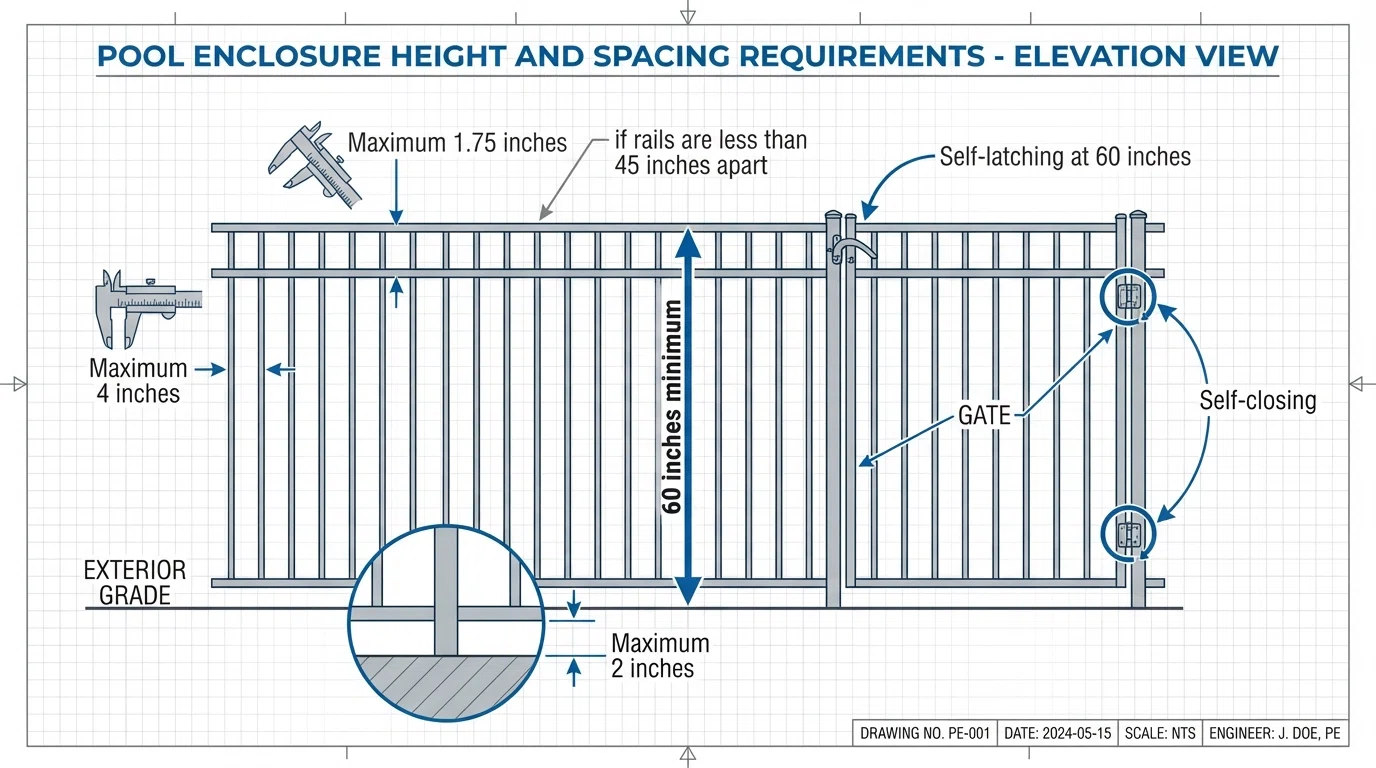
Pool enclosure height and spacing requirements showing measurement points
Gate requirements
Every gate in pool enclosures must meet specific functional requirements:
Self-Closing: Gates must automatically close completely from any open position without manual assistance
Self-Latching: Latches must automatically engage when gates close
Latch Height: Release mechanisms minimum 54 inches above grade from pool side
Opening Direction: Gates must swing away from pool areas
Gap When Closed: Maximum 0.5-inch gap between gate edge and gate post
Detailed gate specifications are covered in our pool gate latch requirements guide and self-closing gate requirements.
Document all enclosure specifications accurately
PoolVerify includes measurement tools, photo documentation, and compliance checklists for all enclosure types and requirements.
When enclosures are required vs fencing
Understanding when pool enclosures (barriers) are required versus when other safety features suffice is essential for California compliance.
New pool construction requirements
When building permits are issued for new swimming pool construction after January 1, 2018, California requires:
- Pool enclosure/barrier completely surrounding the pool (meets CBC 3109 requirements), PLUS
- One additional drowning prevention feature from the remaining six options under HSC §115922
The enclosure itself counts as one of the seven drowning prevention features. Adding one additional feature (alarm, safety cover, mesh fencing, compliant doors, etc.) satisfies the "minimum two features" requirement.
Pool enclosures are effectively mandatory for new construction, as they're the most practical drowning prevention feature for permanent barrier protection.
Above-ground pool exceptions
Above-ground pools with non-climbable walls minimum 60 inches high may use the pool structure itself as the barrier without additional fencing if:
- Pool walls have smooth surfaces without handholds or footholds
- Ladder or stair access is removable, locked, or enclosed in compliant barriers when pool is not in use
- Pool walls cannot be bridged by adjacent structures or landscaping
Most above-ground pools still benefit from perimeter fencing providing layered protection and preventing access to pool equipment.
Spa and hot tub enclosure requirements
Spas and hot tubs follow the same enclosure requirements as swimming pools when water depth exceeds 18 inches. However, lockable safety covers meeting ASTM F1346 standards can serve as the barrier for spas, eliminating fencing requirements if:
- Cover locks securely preventing removal by children
- Cover supports minimum 485 pounds across any 2x2 foot area
- Cover completely spans spa opening when closed
- Locking mechanism requires deliberate adult operation
This exception makes lockable spa covers popular for compliance, though perimeter fencing provides additional security.
Temporary vs permanent barriers
California requires permanent barrier installations for swimming pools. Temporary fencing, removable barriers without proper anchoring, or easily displaced enclosures don't meet requirements except for ASTM F2286 mesh fencing specifically designed as removable barriers.
Removable mesh fencing must remain installed whenever the pool is not in active supervised use. Simply owning compliant mesh fencing doesn't satisfy requirements if it's not installed.
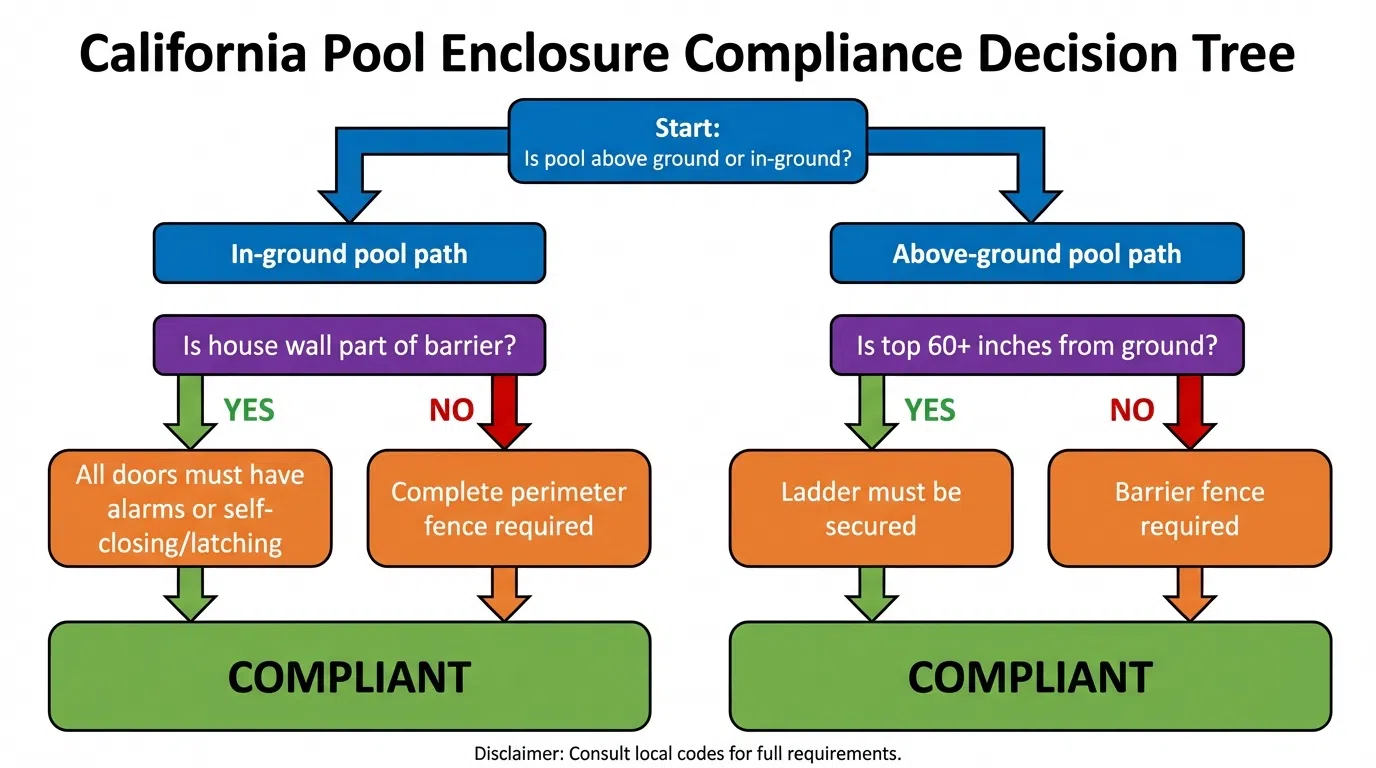
Decision tree showing when pool enclosures are required vs other barrier options
Enclosure specifications and standards
California enclosure requirements reference specific technical standards ensuring consistent performance across different enclosure types.
California Building Code CBC 3109
California Building Code Chapter 31, Section 3109 establishes detailed pool enclosure specifications incorporated from International Building Code with California amendments. Key CBC 3109 requirements include:
- 3109.2: Applicability to pools, spas, and hot tubs exceeding 18-inch depth
- 3109.4: Barrier height, spacing, and surface requirements
- 3109.4.1: Horizontal member spacing and climbing prevention
- 3109.4.2: Gate and latch requirements with specifications
- 3109.4.3: Building walls serving as barriers with door/window requirements
CBC 3109 provides the foundational enclosure standards all California pools must meet.
ASTM F2286 removable mesh fencing
ASTM F2286 establishes standards for removable mesh pool fencing used as drowning prevention features:
Mesh Specifications: Maximum 1-inch openings preventing finger or toe insertion
Height Requirements: Minimum 60 inches when installed
Strength Requirements: Must resist normal climbing and pushing forces by children
Installation: Must anchor securely to deck or ground preventing removal by children
Visibility: Mesh transparency allows pool area visibility while serving as barrier
ASTM F2286 mesh fencing offers flexibility for pool areas where permanent fencing is impractical or aesthetically undesirable.
ASTM F2453 fence labeling
ASTM F2453 establishes labeling requirements for manufactured fence systems and gates, requiring permanent labels indicating:
- Manufacturer identification
- Model number and manufacturing date
- Compliance with applicable ASTM standards
- Installation and maintenance instructions
While not universally required, ASTM F2453 labeling helps verify fence systems meet California requirements.
Local jurisdiction amendments
Many California cities and counties adopt CBC with local amendments adding requirements beyond state minimums:
Coastal Cities: Often require corrosion-resistant materials for salt air exposure
Seismic Zones: May require enhanced structural engineering for masonry walls
Urban Areas: Might mandate specific aesthetic standards or height limits
Fire Zones: Could restrict certain combustible enclosure materials
Always verify local building department requirements before enclosure construction or modification.
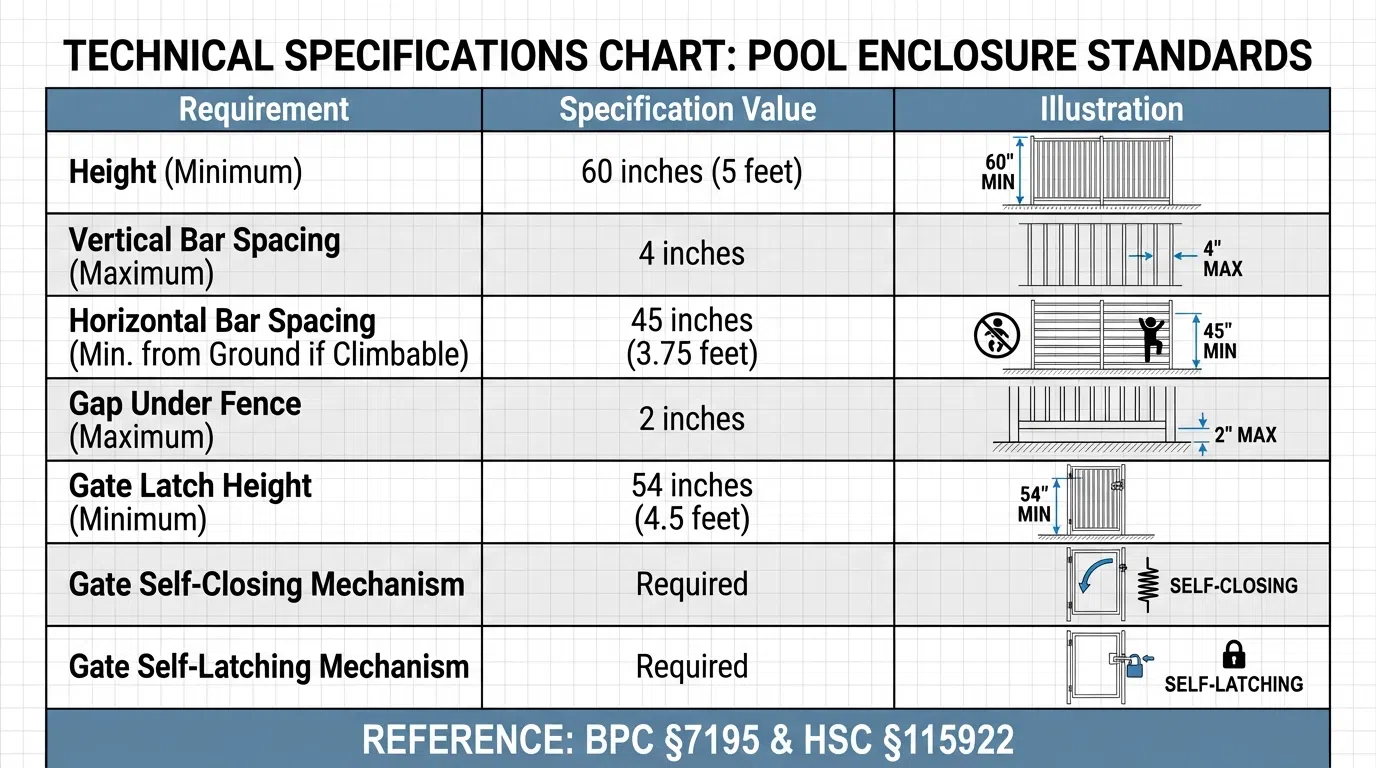
Pool enclosure standards and specifications reference diagram
Screen vs solid enclosures
Screen enclosures and solid enclosures each offer distinct advantages and disadvantages for California pool applications.
Screen enclosure characteristics
Screen enclosures, popular in Florida, are less common in California due to different climate patterns and aesthetic preferences. When used, they provide:
Advantages:
- Debris protection (leaves, insects, etc.) while maintaining ventilation
- UV protection reducing sun exposure
- Visual openness maintaining sight lines
- Potential barrier function if properly designed
Disadvantages:
- Limited weather protection (California needs less than humid climates)
- Screen material requires periodic replacement (5-10 years typical)
- Frame structure requires engineering for wind and seismic loads
- Higher cost than traditional fencing for barrier-only function
Screen enclosures meeting California barrier requirements must have:
- Rigid framing creating minimum 60-inch height
- Mesh small enough to prevent 4-inch sphere passage (most screen qualifies)
- Self-closing, self-latching access doors
- Secure anchoring preventing structural displacement
Solid enclosure characteristics
Solid enclosures (masonry walls, solid wood fencing, vinyl fencing) offer different benefits:
Advantages:
- Complete privacy from neighbors and street visibility
- Noise reduction from traffic or surrounding activities
- Wind protection creating comfortable pool environments
- Long-term durability (20-50+ years for masonry)
- Enhanced security preventing pool area observation
Disadvantages:
- Higher initial costs, especially for masonry construction
- Reduced airflow potentially creating still, hot pool environments
- Limited visibility preventing supervision of pool area from outside enclosure
- Solid surfaces can reflect heat, making pool areas hotter
Solid enclosures must meet the same height, spacing (irrelevant for solid walls), and gate requirements as open fencing.
Hybrid enclosure approaches
Many California pools use hybrid enclosures combining elements:
Solid Wall + Open Fence: Masonry walls on property lines for privacy with open fencing on dwelling sides maintaining visibility from indoor areas
Partial Screening: Screen structures over pool decks with traditional fencing around perimeter providing required barriers
Decorative Combinations: Mixing fence styles (solid lower sections with open pickets above) achieving both privacy and airflow
Hybrid approaches must ensure the entire perimeter meets all enclosure requirements continuously.
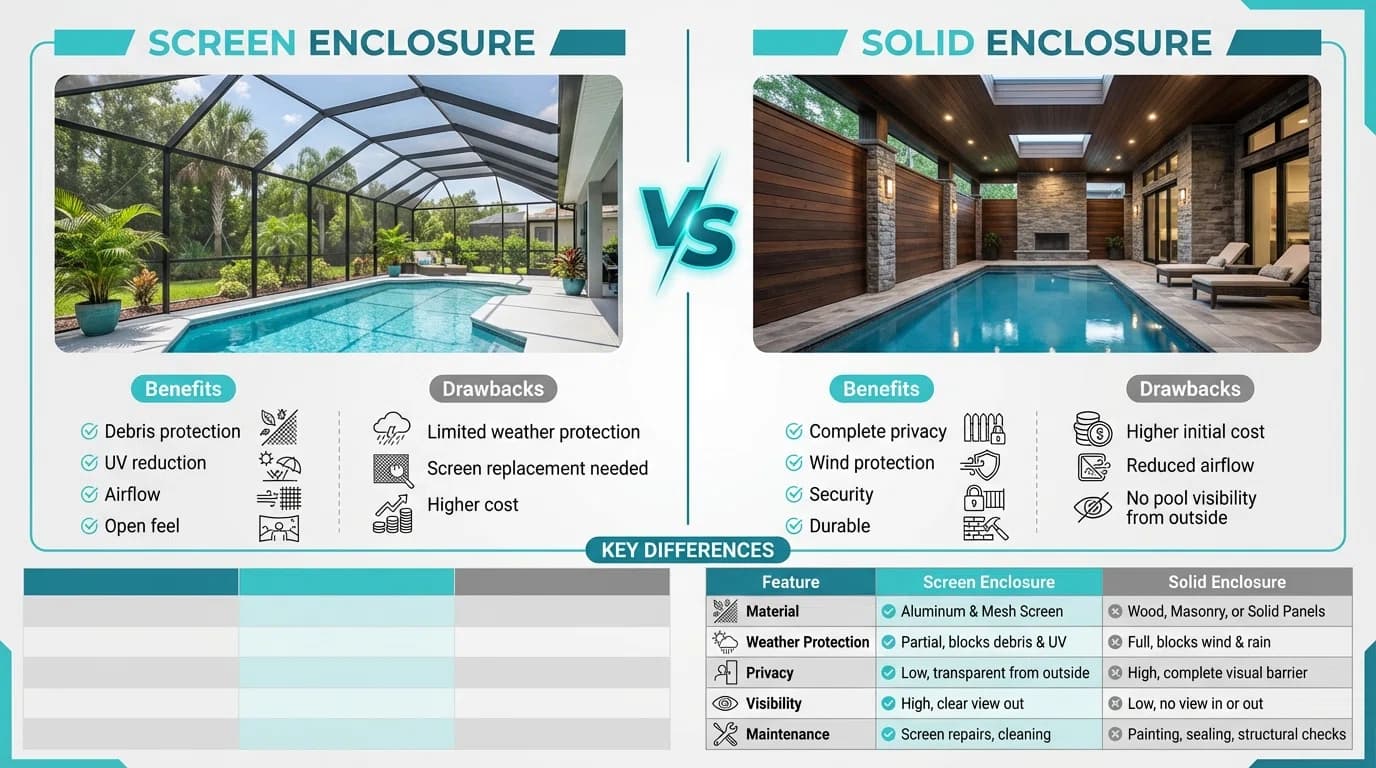
Comparison of screen enclosures vs solid enclosures showing advantages of each
Building permits for pool enclosures
Most California pool enclosure construction requires building permits ensuring code compliance and proper construction practices.
When permits are required
Building permits are typically required for:
New Pool Construction: Permits include enclosure/barrier as integral pool project component
Fence/Wall Installation: Installing new perimeter fencing or walls around existing pools
Enclosure Modifications: Raising fence heights, replacing gates, or substantial repairs
Screen Structure Installation: Building screen enclosures or covered structures over pools
When permits may not be required
Limited enclosure work might not require permits:
Minor Repairs: Replacing individual fence boards, repairing gates, or fixing loose pickets
Gate Hardware: Replacing latches or adjusting self-closing mechanisms
Finish Work: Painting, staining, or sealing existing compliant enclosures
Check with your local building department before assuming permits aren't needed—requirements vary significantly between jurisdictions.
Permit application process
Building permit applications for pool enclosures typically require:
- Site Plan: Showing pool location, enclosure perimeter, gate locations, and property boundaries
- Enclosure Details: Specifications for height, materials, spacing, and construction methods
- Gate Details: Hardware specifications, latch heights, and self-closing mechanisms
- Engineering: Structural calculations for masonry walls or complex screen structures
- Setback Compliance: Demonstrating enclosures meet property line setback requirements
Processing times vary from a few days for simple fence permits to several weeks for complex engineered enclosures.
Inspection requirements
Building departments typically inspect:
Foundation/Footing: For masonry walls or permanent fence post installation
Framing: For screen structures or complex fence systems
Final Inspection: Verifying completed enclosures meet all code requirements including height, spacing, gates, and latches
Final inspection approval is required before pools can be legally used. Professional pool inspections verify ongoing compliance after building department approvals.
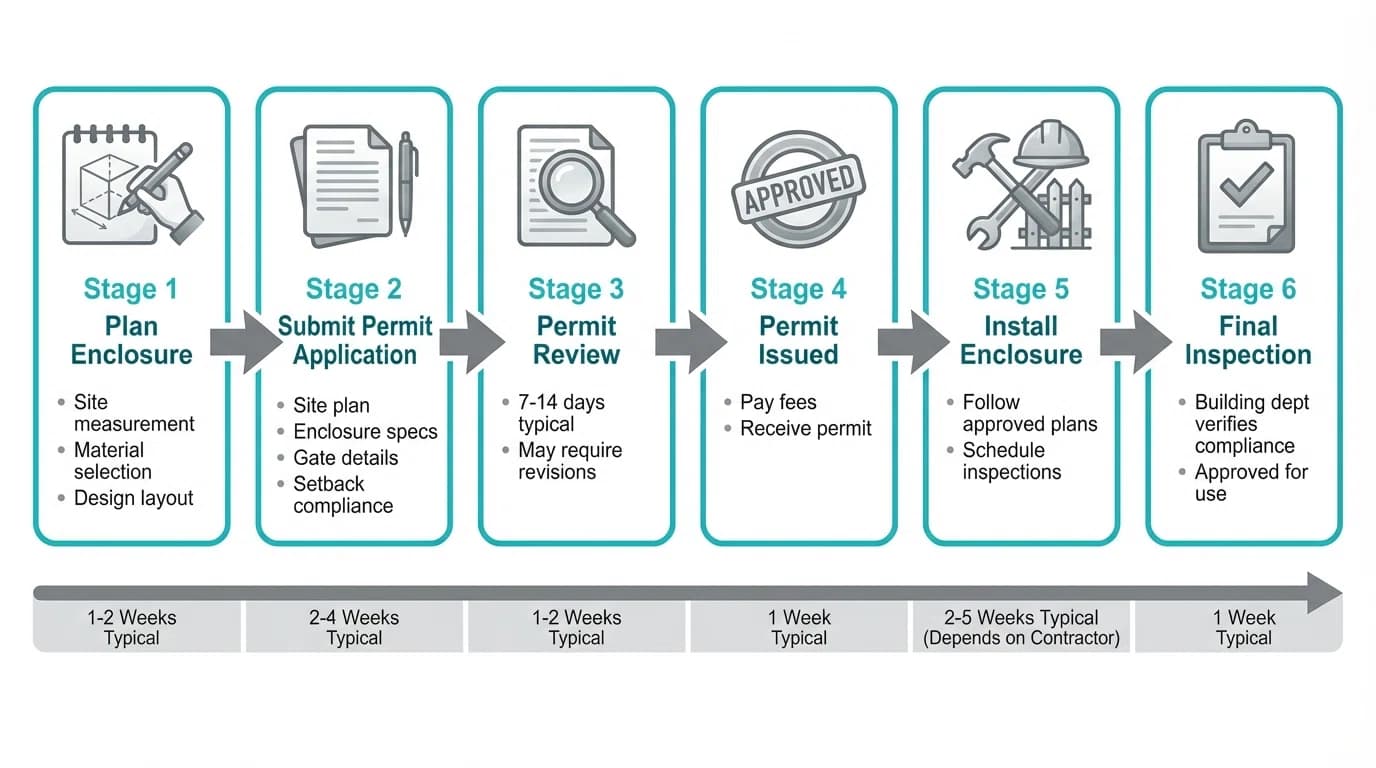
Building permit process flowchart for pool enclosure installation
Streamline pool enclosure inspections with PoolVerify
Document enclosure compliance with detailed measurements, multiple-angle photos, and automated report generation for building departments or property transfers.
Pool enclosure compliance inspection
Pool enclosure inspections verify barriers meet all California requirements whether during building department final inspections, property transfer inspections, or routine safety evaluations.
Inspection checklist
Professional pool enclosure inspections evaluate:
Height Verification: Measure enclosure height at multiple points around perimeter from grade on non-pool side, documenting compliance with 60-inch minimum
Spacing Assessment: Verify horizontal and vertical spacing between components doesn't exceed 4 inches, checking pickets, rails, and mesh openings
Surface Evaluation: Inspect pool side surfaces for handholds, footholds, or climbable features, checking horizontal rail spacing and decorative elements
Ground Clearance: Measure gaps between enclosure bottom and grade, ensuring 2-inch maximum clearance
Gate Functionality: Test self-closing and self-latching mechanisms, measure latch heights, verify opening direction, and check gap when closed
Structural Condition: Inspect for damage, deterioration, loose components, or instability requiring repair
Door/Window Compliance: When building walls serve as barriers, verify doors have required alarms or latches and windows meet height or guard requirements
Common enclosure violations
Frequent non-compliance issues include:
- Fence heights below 60 inches due to improper measurement or settling
- Horizontal rails on pool side spaced less than 45 inches apart creating climbing hazards
- Ground clearance exceeding 2 inches allowing children to crawl underneath
- Self-closing mechanisms failing due to worn hardware or improper adjustment
- Latch heights below 54 inches or latches not engaging automatically
- Gates with excessive gaps when closed (over 0.5 inches)
- Damaged or deteriorated enclosure components creating access points
Identifying violations during routine inspections allows corrections before property transfers or enforcement actions.
Documentation requirements
Thorough inspection documentation includes:
Photographs: Multiple angles showing enclosure perimeter, height measurements, gate details, and any violations
Measurements: Recorded heights at multiple points, spacing measurements, ground clearances, and latch heights
Functionality Testing: Video or photos demonstrating gate self-closing and self-latching operation
Violation Notes: Detailed descriptions of non-compliant conditions with specific locations
Recommendations: Repair or correction suggestions for identified deficiencies
Digital pool inspection software like PoolVerify streamlines documentation with integrated photo capture, measurement tools, and automated report generation.
Property transfer inspections
BPC §7195 inspections during property transfers must document enclosure status:
- Identify enclosure type and materials
- Verify height compliance at multiple measurement points
- Document gate and latch functionality
- Photograph overall enclosure condition
- Note any deficiencies requiring correction before closing
- Include enclosure as one of potential drowning prevention features
Complete property transfer inspection requirements are detailed in our pool inspection requirements for home sales guide.
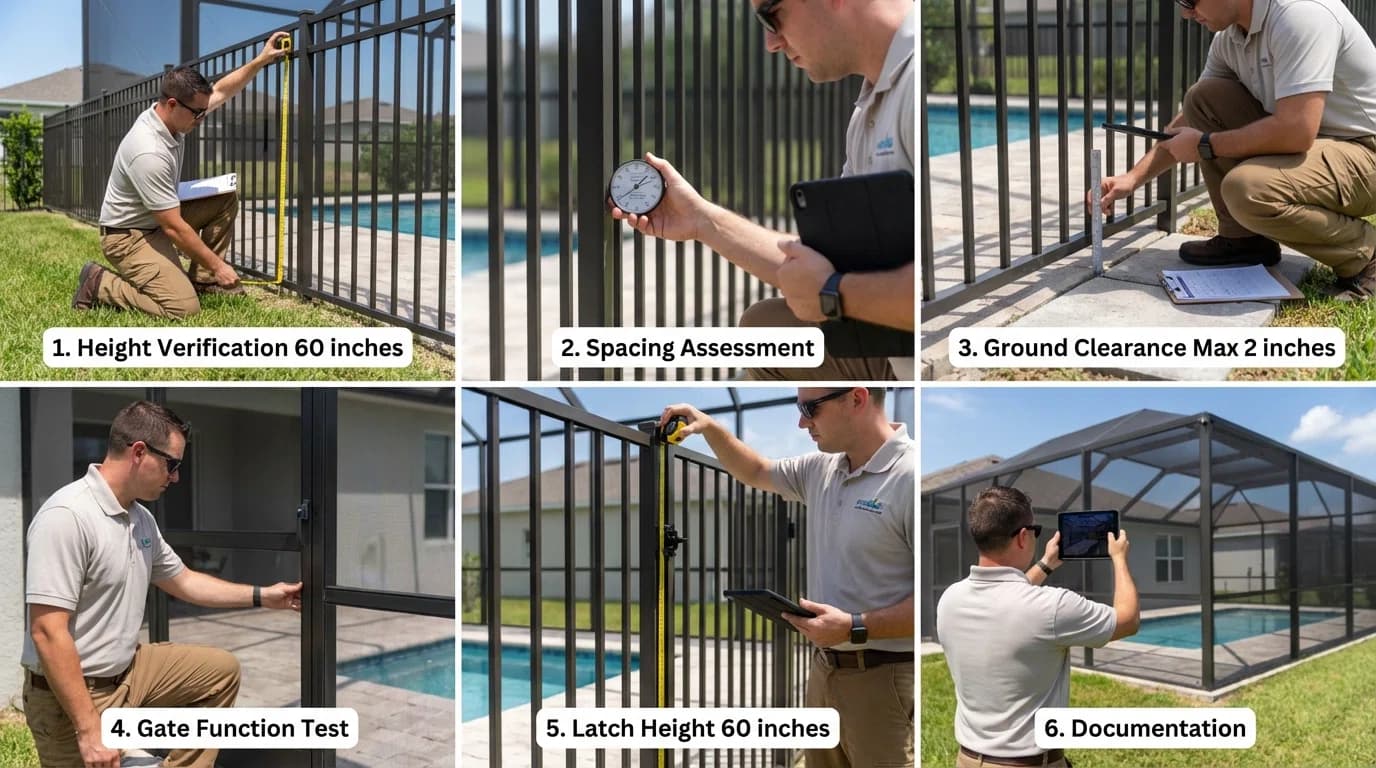
Pool enclosure inspection process showing measurement and documentation steps
Frequently asked questions
What's the difference between a pool enclosure and a pool fence?
In California pool safety codes, "enclosure" and "fence" are largely interchangeable—both refer to barriers completely surrounding pools preventing unauthorized access. "Enclosure" emphasizes completely surrounding the pool, while "fence" specifies a particular barrier type. Both must meet the same requirements: 60-inch minimum height, proper spacing, and self-closing/self-latching gates.
Do I need a pool enclosure if I have a pool cover?
Yes, unless your pool cover is a lockable safety cover meeting ASTM F1346 standards (supporting 485+ pounds) serving as one of the two required drowning prevention features, AND you have another compliant feature. For swimming pools, enclosures/barriers are almost always required. Spa/hot tub lockable covers can sometimes eliminate enclosure requirements, but most pools need both covers and barriers.
How much does a pool enclosure cost in California?
Pool enclosure costs vary widely by type and size: Basic chain link fencing runs $15-30 per linear foot; wood or vinyl fencing costs $25-75 per linear foot; wrought iron or aluminum ornamental fencing ranges $50-150 per linear foot; masonry block walls run $30-80 per linear foot; and screen enclosure structures cost $50-200+ per square foot. A typical pool might need 100-200 linear feet of barrier.
Can I use my house wall as part of the pool enclosure?
Yes, dwelling walls can serve as part of pool enclosures, but every door providing pool access must have a pool alarm (ASTM F2208), exit alarm with 54+ inch deactivation control, or be self-closing/self-latching with a 54+ inch release. Windows with sills less than 60 inches above grade must have guards or be designed to prevent child-sized openings.
Do pool enclosures require building permits in California?
Most pool enclosure construction requires building permits. New pool construction includes enclosure permits. Installing fencing or walls around existing pools typically requires permits. Minor repairs usually don't need permits, but complete fence replacement does. Permit requirements vary by jurisdiction—always check with your local building department before beginning enclosure work.
Conclusion
California pool enclosure requirements establish comprehensive barrier standards preventing unauthorized pool access and reducing child drowning risks. Whether planning new pool construction, evaluating existing enclosures, or conducting compliance inspections, understanding the legal definition of enclosures, acceptable types, detailed specifications, and permit requirements ensures full compliance.
Pool enclosures must meet precise height (60-inch minimum), spacing (4-inch maximum), surface (non-climbable), and gate requirements (self-closing/self-latching) regardless of whether they're traditional fencing, masonry walls, screen structures, or building walls. Regular inspections identify compliance issues before they become problems during property transfers or code enforcement actions.
Professional pool inspectors can streamline enclosure compliance verification with PoolVerify's specialized California inspection platform. Complete comprehensive enclosure inspections with integrated measurement tools, photo documentation from multiple angles, and instant PDF reports meeting BPC §7195 disclosure requirements. Start your free 14-day trial today.
Related posts
Frequently Asked Questions
What's the difference between a pool enclosure and a pool fence?
In California pool safety codes, enclosure and fence are largely interchangeable, both referring to barriers completely surrounding pools preventing unauthorized access. Enclosure emphasizes completely surrounding the pool, while fence specifies a particular barrier type. Both must meet the same 60-inch height and gate requirements.
Do I need a pool enclosure if I have a pool cover?
Yes, unless your pool cover is a lockable safety cover meeting ASTM F1346 standards supporting 485+ pounds serving as one of two required drowning prevention features. For swimming pools, enclosures are almost always required. Spa lockable covers can sometimes eliminate enclosure requirements.
How much does a pool enclosure cost in California?
Pool enclosure costs vary by type and size. Basic chain link fencing runs $15-30 per linear foot, wood or vinyl fencing costs $25-75 per linear foot, wrought iron ranges $50-150 per linear foot, and masonry walls run $30-80 per linear foot. A typical pool needs 100-200 linear feet of barrier.
Can I use my house wall as part of the pool enclosure?
Yes, dwelling walls can serve as part of pool enclosures, but every door providing pool access must have a pool alarm, exit alarm with 54+ inch deactivation control, or be self-closing and self-latching with a 54+ inch release. Windows below 60 inches must have guards preventing child passage.
Do pool enclosures require building permits in California?
Most pool enclosure construction requires building permits in California. New pool construction includes enclosure permits, and installing fencing or walls around existing pools typically requires permits. Minor repairs usually don't need permits, but complete fence replacement does. Requirements vary by jurisdiction.
Related Articles
Pool-compliance
California Pool Barrier Requirements: Complete 2026 Compliance Guide
Complete guide to California pool barrier requirements for 2026. Learn BPC §7195 and HSC §115922 specifications for height, spacing, gates, and materials.

Pool-compliance
Pool Barrier: Complete Requirements & Installation Guide [2026]
Complete guide to pool barrier requirements in California. Learn about BPC §7195 compliance, barrier types, height specifications, and installation guidelines.
![Swimming Pool Fence Requirements: California Compliance Guide [2026]](/_next/image?url=%2Fresources%2Fswimming-pool-fence-requirements-hero.webp&w=3840&q=75)
Compliance-safety
Swimming Pool Fence Requirements: California Compliance Guide [2026]
Complete guide to California swimming pool fence requirements under HSC 115922. Learn height requirements, gate specifications, safety features, inspection requirements, and compliance tips for pool barriers.