Pool Requirements for Residential Care Homes in California
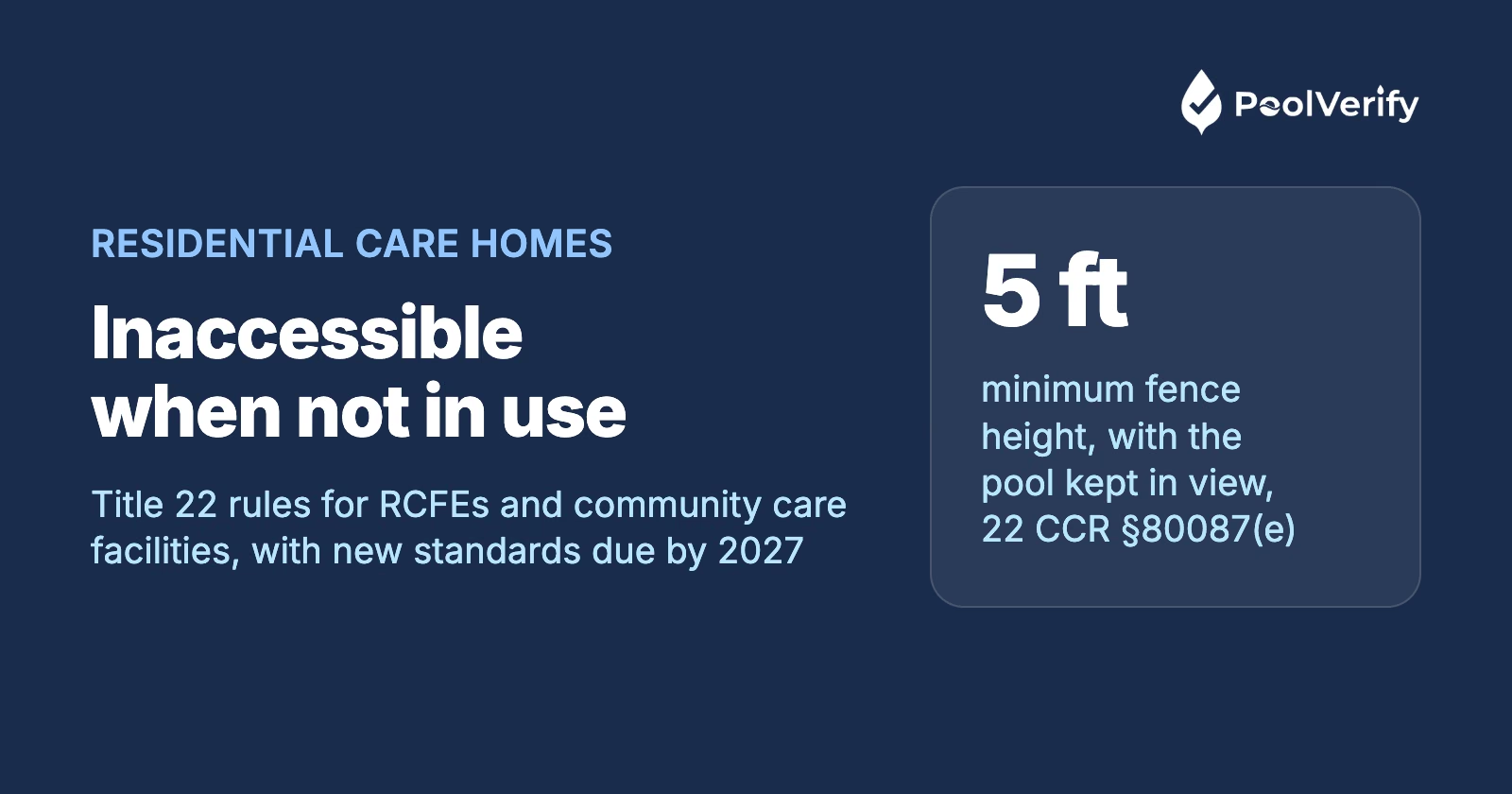
A licensed residential care facility for the elderly in California must keep fishponds, wading pools, hot tubs and swimming pools inaccessible through fencing, covering or other means when residents are not using them (22 CCR §87307). Community care facilities serving children or clients with physical handicaps, mental disorders or developmental disabilities follow 22 CCR §80087: a five foot fence that keeps the pool in view, or a locked cover that holds an adult. HSC §115926 requires Department of Social Services standards for all pools at facilities it regulates.
A licensed residential care facility for the elderly (RCFE) in California must keep its fishponds, wading pools, hot tubs, swimming pools and similar bodies of water inaccessible "through fencing, covering, or other means when not in active use by residents," under 22 CCR §87307(e)(2)(A). Community care facilities serving children or clients with disabilities follow 22 CCR §80087(e): a five foot fence that keeps the pool in view, or a locked cover that holds an adult.
This guide covers which rule applies to which home, what each requires, above-ground pools and filtration, supervision near smaller water features, the standards the Department of Social Services must adopt by January 1, 2027, and how the building permit and a sale fit in. Our family child care guide covers licensed daycares, which have their own statute.
Which rule applies to which home
The Department of Social Services licenses both kinds of home, under different chapters of Title 22.
Enclosure plus a cover or an in-water alarm, rescue equipment, and a daily inspection log
Under 22 CCR §80000, the general licensing requirements in Title 22, Division 6, Chapter 1 apply to the community care facilities governed by Chapters 4 through 6 and Chapter 9 of Division 6, except where specifically exempted. Check the facility's own chapter for anything it adds.
Residential care facilities for the elderly
The RCFE rule is short and flexible. 22 CCR §87307(e)(2) names "fishponds, wading pools, hot tubs, swimming pools, or similar larger bodies of water," and subdivision (e)(2)(A) says "the licensee shall ensure that the bodies of water specified above are inaccessible through fencing, covering, or other means when not in active use by residents."
What the rule does and does not say:
The method is the licensee's choice: a fence, a cover, or another means that makes the water inaccessible.
No numbers are written into it: no fence height, gate latch or cover strength.
It applies when the pool is not in active use by residents.
Smaller water features need supervision. Under §87307(f), the licensee supervises residents "as needed and as determined by the resident's appraisal" near birdbaths, fountains and similar smaller decorative water features.
Because the RCFE rule sets no numbers, the community care facility numbers below, or the enclosure numbers in HSC §115923 described in our enclosure guide, are a reasonable benchmark to show a licensing analyst how "inaccessible" was met.
Community care facilities serving children or clients with disabilities
The general licensing rule is specific. 22 CCR §80087(e) applies to "all licensees serving children or serving clients who have physical handicaps, mental disorders, or developmental disabilities," and requires them to ensure the inaccessibility of "pools, including swimming pools (in-ground and above-ground), fixed-in-place wading pools, hot tubs, spas, fish ponds or similar bodies of water."
Item
22 CCR §80087
Fence height
At least five feet
Fence visibility
Constructed so that the fence does not obscure the pool from view
Fence bottom and sides
Comply with Division 1, Appendix Chapter 4 of the 1994 Uniform Building Code
Gates
Swing away from the pool, self-close, self-latching device no more than six inches from the top of the gate
Cover, if used instead
Strong enough to completely support the weight of an adult; placed on the pool and locked while the pool is not in use
Above-ground pools
Made inaccessible when not in use by removing or making the ladder inaccessible, or by a barricade to the decking
Filtration
An operative pump and filtering system for all in-ground pools, and above-ground pools that cannot be emptied after each use
The regulation offers the two as alternatives, "through a pool cover or by surrounding the pool with a fence." The fence must leave the pool visible, which rules out a solid wall as the barrier, and a cover counts only if it holds an adult and is locked whenever the pool is not in use. Our safety cover guide explains the ASTM F1346 label that residential covers carry.
The standards due by January 1, 2027
The Title 22 sections are not the last word. HSC §115926, rewritten by AB 2866 (Stats. 2024, Ch. 745) effective January 1, 2025, says "the State Department of Social Services shall prescribe drowning prevention safety standards governing all swimming pools and other bodies of water located at facilities regulated by the department," and "the department shall adopt regulations required by this section by January 1, 2027." That reaches RCFEs and community care facilities as well as daycares. Check the department's Community Care Licensing Division for drafts and any written directive, because new standards may raise the numbers in this guide.
The building permit and a sale
Two other rules can reach the same pool. When a building permit is issued for a new or remodeled pool at a private single-family home, HSC §115922 requires two of seven drowning prevention safety features, inspected before final approval; whether a licensed facility in a house is treated as a private single-family home for that purpose is a question for the building department. And when the property is sold with a paid home inspection, BPC §7195 asks the report to identify which of the seven features the pool has. Our HSC §115922 guide covers both.
Documenting the pool
No section quoted here prescribes a log for these homes, unlike the daily log HSC §1596.814 requires of daycares. A dated record is still what answers a licensing visit or a complaint: the fence height with a tape in frame, the gate closing and latching, the cover locked, the ladder removed, the pump running, each photographed and dated. Our photo documentation guide gives the shot list.
A dated record of the pool, in minutes. PoolVerify's California checklist records the enclosure, gate and cover with condition, notes and up to 10 photos on each, and generates a dated PDF on a phone at the pool; on Professional, a custom checklist can add Title 22 items such as the ladder and filtration. PoolVerify does not file anything with the department. See the features.
Limitations
This guide is general information about California law, not legal or licensing advice. The current text of 22 CCR §80000, §80087 and §87307, HSC §115922, §115926 and §1596.814, and BPC §7195 controls, and each facility type's own chapter of Title 22 may add requirements this guide does not quote. The Department of Social Services' written directives and the regulations due by January 1, 2027 may change these rules. This guide does not cover supervision ratios, resident appraisals or staffing. PoolVerify is inspection software for California residential pool safety inspections; it does not perform inspections, certify facilities, or issue compliance certificates.
Frequently asked questions
Can a residential care facility for the elderly have a pool in California?
Yes. 22 CCR §87307(e)(2) lists fishponds, wading pools, hot tubs, swimming pools and similar larger bodies of water among the hazards an RCFE licensee manages, and requires the licensee to ensure they are inaccessible through fencing, covering or other means when not in active use by residents. The regulation does not set a fence height.
What pool fence does a California care home need?
Under 22 CCR §80087(e), a community care facility serving children or clients with physical handicaps, mental disorders or developmental disabilities uses a fence at least five feet high that does not obscure the pool from view, with gates that swing away from the pool, self-close and self-latch within six inches of the top, or a locked cover that holds an adult.
Does an RCFE pool need a fence or a cover?
Either, or another means. 22 CCR §87307(e)(2)(A) says the licensee shall ensure the bodies of water are inaccessible through fencing, covering, or other means when not in active use by residents. Unlike the community care facility rule, it does not specify a fence height, a gate latch or a cover strength.
Do care home pools need a filter system?
For community care facilities under 22 CCR §80087(f), all in-ground pools, and above-ground pools that cannot be emptied after each use, must have an operative pump and filtering system. The RCFE section quoted in this guide does not set a filtration rule; the county or the licensing agency may still ask about water quality.
Are new pool rules coming for licensed care facilities?
Yes. HSC §115926, rewritten by AB 2866 effective January 1, 2025, requires the Department of Social Services to prescribe drowning prevention safety standards governing all swimming pools and other bodies of water at the facilities it regulates, and to adopt the regulations by January 1, 2027. Check the department for drafts and written directives.
Does the Swimming Pool Safety Act apply to a care home in a house?
The Act's two-feature rule in HSC §115922 applies when a building permit is issued for a new or remodeled pool at a private single-family home. Whether a licensed facility operating in a house is treated as a private single-family home for that purpose is a question for the building department; the Title 22 rules apply either way.
Conclusion
A California RCFE keeps every pool, hot tub and pond inaccessible through fencing, covering or other means whenever residents are not using it. A community care facility serving children or clients with disabilities meets the specific rule: a five foot fence that keeps the pool in view with a self-latching gate, or a locked cover that holds an adult, plus ladder and filtration rules. Department of Social Services standards for all its facilities are due by January 1, 2027. Inspectors who document these pools can start a 14-day free trial of PoolVerify, no credit card to start.
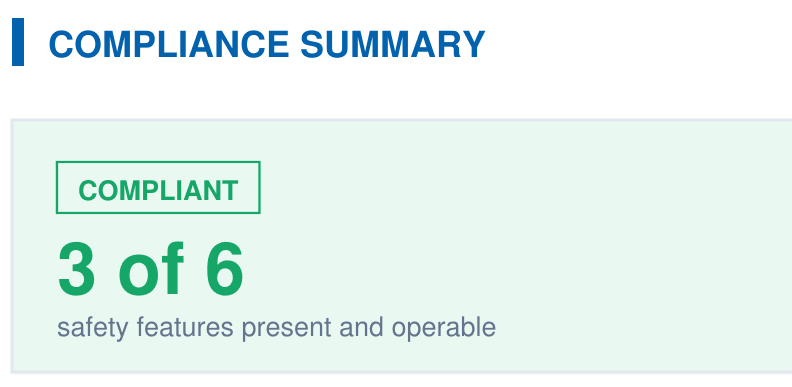
A branded PDF with the compliance summary, the feature table, each finding with its photos, and the signature, generated on‑site when the BPC §7195 and HSC §115922 checklist is complete.