Rental Property Pool Safety in California: Which Law Applies
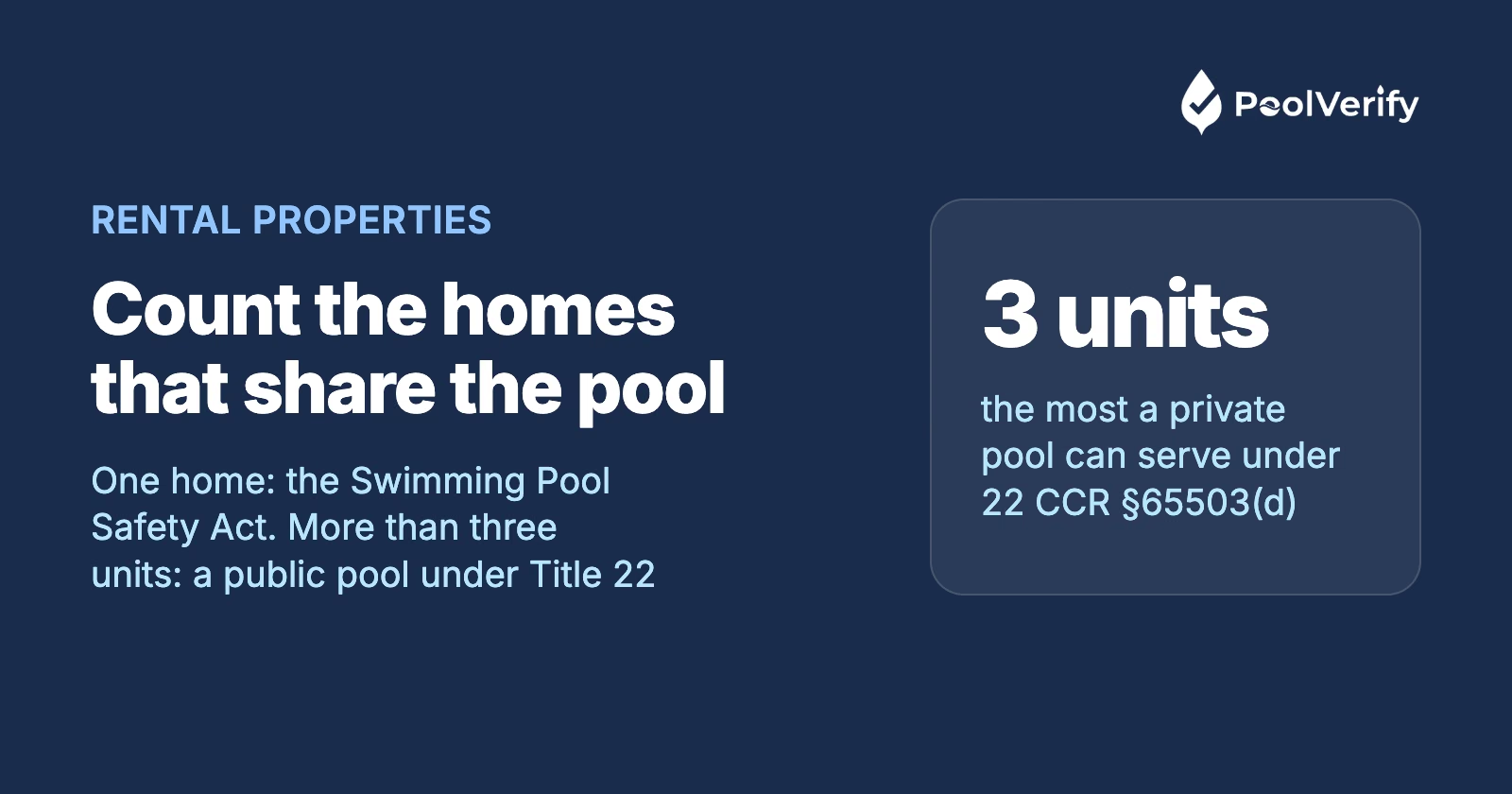
Which California pool law applies to a rental depends on how many homes share the pool. A single-family rental is inside the Swimming Pool Safety Act; HSC §115925(c) exempts an apartment complex or any residential setting other than a single-family home; a pool used by more than three residential units is a public pool under 22 CCR §65503. A property type table, the BPC §7195 report at a sale or lease-option, and a property manager's pool file.
Which California pool law applies to a rental depends on how many homes share the pool. A single-family rental is inside the Swimming Pool Safety Act, HSC §115925(c) exempts an apartment complex or any residential setting other than a single-family home, and a pool used by more than three residential units is a public pool under 22 CCR §65503. Being a rental does not change the law; the property type does.
This guide sets out the law for each property type, what the Act asks of a single-family rental and when, what happens at a sale or a lease with an option to buy, where the statutes disagree for two to four units, the public pool program for apartments, condos and HOAs, and the pool file a property manager keeps. Our HSC §115922 guide covers the Act clause by clause.
The law for each property type
Three rules draw three different lines, and a rental portfolio usually crosses all of them.
Property type
Swimming Pool Safety Act, HSC §115921 to §115929
Title 22 public pool rules, 22 CCR §65503
BPC §7195 pool section at a transfer
Single-family house, rented long term
Applies when a building permit is issued
Private pool: one residential unit
Applies, one dwelling unit
Single-family house, rented short term
Applies when a building permit is issued
One residential unit; ask the county whether it treats a rented pool as public
Applies
Duplex or triplex sharing one pool
Exempt: a residential setting other than a single-family home, HSC §115925(c)
Private pool: not more than three residential units
Applies, two or three units
Fourplex sharing one pool
Exempt, HSC §115925(c)
Not a private pool: more than three units
Applies, four units
Apartment complex, five or more units
Exempt, HSC §115925(c)
Public pool: apartment house pools are listed
Does not apply: more than four units
Condominium or HOA common pool
Exempt, HSC §115925(c)
Public pool: condominium and homeowner association pools are listed
The common pool is the association's, not the unit's
Two definitions sit behind the table. Title 22 says "a private pool is any constructed pool, permanent or portable, that is intended for use by occupants of not more than three residential units," and that private pools are not public pools for its chapter. BPC §7195(a)(1) defines a home inspection around "a residential dwelling of one to four units." Neither line matches the Act's line, which is the single-family home.
Single-family rentals: what the Act asks, and when
The Act acts at a building permit, not at a lease. HSC §115922(a) applies when a building permit is issued for the construction of a new swimming pool or spa, or the remodel of an existing one, at a private single-family home: the pool must then have at least two of the seven drowning prevention safety features, and under §115922(c) the local building official inspects them before final approval. A rented house is a private single-family home for that purpose.
What follows for a landlord:
Signing a lease triggers nothing under the Act. Neither does a change of tenant.
A remodel does. Replastering, re-equipping or reshaping the pool under a permit brings in the two-feature rule, the building official's inspection, and the suction outlet upgrade in HSC §115928.5.
The contractor must tell you. Under HSC §115924, anyone entering into an agreement to build a pool or spa, or to do permitted work on one, must give the consumer notice of the Act's requirements.
There is no fine in the Act. It sets no misdemeanor, fine or jail term, as our non-compliance guide explains; its enforcement is the final approval.
A local ordinance can add a barrier rule of its own, and a short-term rental ordinance can add pool conditions. Our Airbnb guide covers hosts, and the county requirements guide explains how local rules sit on top of the statute.
At a sale or a lease-option: the BPC §7195 pool section
A rental changes hands under the same statute as any home. BPC §7195(e) defines a transfer as "a transfer by sale, exchange, installment land sales contract, lease with an option to purchase, any other option to purchase, or ground lease coupled with improvements" of property with one to four dwelling units. A lease with an option to buy is a transfer; an ordinary lease is not.
When a home inspection is performed for a fee in connection with that transfer, BPC §7195(a)(2) includes a noninvasive examination of the pool or spa and dwelling to identify which of the seven HSC §115922(a) features it has, and §7195(c) requires the report to say whether those features are in place, in good repair, operable as designed and, if applicable, labeled, and to state specifically if there are fewer than two. That applies to a duplex, triplex or fourplex with a pool as much as to a house, even though the Act itself exempts them. Our BPC §7195 guide covers the report duty, and the seller's guide covers the sale.
Two to four units: where the statutes disagree
A pool shared by two, three or four units is where the three lines cross, and the statutes do not resolve it for you.
The Act exempts "an apartment complex, or any residential setting other than a single-family home," so by its words a duplex pool is outside it.
Title 22 treats a pool used by occupants of not more than three residential units as private, so a duplex or triplex pool is not a public pool under 22 CCR §65503, and a fourplex pool is not private.
HSC §116064.2, the anti-entrapment section for public pools, defines a public swimming pool to include one available to residents of "a multiunit apartment building, apartment complex, residential real estate development, or other multifamily residential area."
BPC §7195 still asks for the pool section when any of these properties is sold with a home inspection.
The practical answer is to ask the county environmental health department how it classifies the specific pool, in writing, and to keep the answer in the property file. A small multifamily pool that the county treats as private is still reported at a sale, and one it treats as public comes under the program below.
Apartments, condos and HOAs: the public pool program
A pool at an apartment complex, a condominium or an HOA common area is a public pool. 22 CCR §65503 lists apartment house pools, condominium pools and homeowner association pools among the public pools its chapter covers, together with the dressing rooms, fencing, pool decks, safety equipment and water treatment around them. The county environmental health department enforces that program, not the building official under the Act.
HSC §116064.2 adds an anti-entrapment rule for every public pool: safety systems meeting the ANSI/APSP-16 performance standard, and a compliance form filed with the local environmental health department within 30 days of construction or of receiving the department's form. Our commercial pool guide covers the public pool program, and the drain cover guide covers the covers themselves.
PoolVerify is built for the residential side of this line. Its California checklist follows HSC §115922 and BPC §7195, and it does not cover the public pool program.
A property manager's pool file
No statute requires a property manager to keep one, but the file is what answers a permit question, a sale, or a claim years later. What to keep for each pool:
Record
Why it matters
Property type and unit count
Decides which of the three rules applies
County classification, in writing, for two to four unit pools
Settles the private or public question for that pool
Permits and final approvals for the pool and any remodel
Show when the Act's two-feature rule attached and was inspected
The seven features, each present or not, with condition and photos
One checklist across the portfolio. PoolVerify's California checklist records the six physical HSC §115922(a) features with condition, notes and up to 10 photos on each, and generates the dated PDF on-site. Professional adds custom checklists, scheduling and viewer roles; Business adds unlimited team members, admin and owner roles, and team activity tracking. See the plans or the property manager page.
Limitations
This guide is general information about California law, not legal advice. The current text of HSC §115921 to §115929, HSC §116064.2, BPC §7195 and 22 CCR §65503 controls, and a county environmental health department or local building department decides how a specific pool is classified and what its local rules add. This guide does not cover landlord tort liability, lease terms or insurance. PoolVerify is inspection software for California residential pool safety inspections; it does not perform inspections, certify inspectors, or issue compliance certificates.
Frequently asked questions
Does California require a pool fence at a rental house?
Not a fence as such. When a building permit is issued for a new or remodeled pool or spa at a private single-family home, including a rented one, HSC §115922(a) requires at least two of seven drowning prevention safety features, and an enclosure is only one of them. A local ordinance can add its own barrier rule, so check with the city or county.
Are landlords required to have a pool inspected in California?
No state statute sets a periodic pool inspection for a single-family rental. The Swimming Pool Safety Act acts at a building permit, and BPC §7195 defines what a paid home inspection must report at a transfer. Many property managers still document the features at turnover, because a dated report with photos shows what was in place and working.
Does the Swimming Pool Safety Act apply to a duplex?
HSC §115925(c) says the Act does not apply to an apartment complex or any residential setting other than a single-family home, so a pool shared by a duplex falls outside it by that wording. Title 22 treats a pool used by occupants of not more than three residential units as a private pool, and HSC §116064.2 says multiunit buildings. Ask the county environmental health department.
Is an apartment pool a public pool in California?
Yes. 22 CCR §65503 lists apartment house pools, condominium pools and homeowner association pools among the public pools its chapter covers, and HSC §116064.2 includes pools for residents of a multiunit apartment building or complex in its definition. The county environmental health department enforces the public pool program; the residential Swimming Pool Safety Act does not apply.
Does a lease with an option to buy trigger the pool section of a home inspection?
It can. BPC §7195(e) defines a transfer to include a lease with an option to purchase, any other option to purchase, and a ground lease coupled with improvements, of property with one to four dwelling units. A home inspection performed for a fee in connection with that transfer includes the pool section, which identifies which of the seven features the pool has.
Do short-term rentals follow the same pool rules?
A single-family home rented by the night is still a single-family home under the Swimming Pool Safety Act, so the permit rule and the BPC §7195 report at a sale apply as they do to any house. Local short-term rental ordinances may add their own pool conditions. Our Airbnb pool safety guide covers what hosts face.
Conclusion
For a California rental, count the homes that share the pool. One home: the Swimming Pool Safety Act at every permit and the BPC §7195 report at a sale or lease-option. Two to four units: outside the Act, reported at a sale, and a question for the county. Apartments, condos and HOAs: the public pool program. A dated file of the seven features, with photos, answers each of them. PoolVerify's California checklist produces that file in minutes per property. Start your 14-day free trial, no credit card to start.
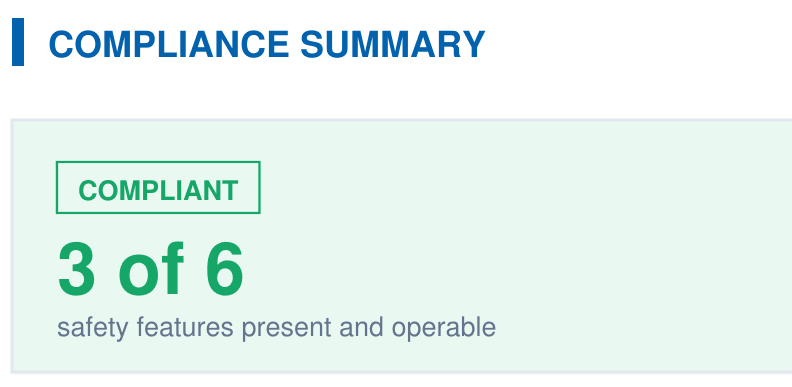
A branded PDF with the compliance summary, the feature table, each finding with its photos, and the signature, generated on‑site when the BPC §7195 and HSC §115922 checklist is complete.