Pool Safety Cover Requirements in California (ASTM F1346)
A pool safety cover is one of California's seven drowning prevention safety features when it is a manually operated or power-operated safety pool cover accompanied by a label verifying it meets ASTM F1346-23 (HSC §115922(a)(3)). Which covers qualify, why a cover and an in-water alarm do not add up to two, the locking cover exemption for spas, and what the BPC §7195 report records.
A pool safety cover counts as one of California's seven drowning prevention safety features when it is a manually operated or power-operated safety pool cover accompanied by a label verifying that it meets ASTM International F1346-23, under Health and Safety Code §115922(a)(3). A cover cannot be paired with an in-water alarm to reach the two features a permit requires, and a hot tub or spa with a locking cover complying with ASTM F1346 is outside the Act under HSC §115925(b).
This guide covers what the statute calls a safety pool cover, which covers are not the feature, how a cover counts toward the two features, the locking cover exemption for spas, what the federal Consumer Product Safety Commission recommends, how an inspector documents a cover, and what the BPC §7195 report says at a sale. Our HSC §115922 guide covers the Act clause by clause.
What the statute calls a safety pool cover
HSC §115922(a)(3) lists, as the third of seven features, "a manually operated or power-operated safety pool cover that is accompanied by a label verifying that the cover meets the specifications of the ASTM International F1346-23 standard." Three things in that sentence decide whether a cover is the feature.
What the paragraph asks
What it means at the pool
What the inspector records
Manually operated or power-operated
A cover the owner closes by hand or crank, or a motorized cover run from a switch, both qualify
Which type it is and that it closes completely
A safety pool cover
A cover built to hold a person out of the water, not a blanket that floats on it
The product and where its label sits
A label verifying ASTM F1346-23
The 2023 edition of ASTM F1346, the standard for safety covers and labeling requirements for all covers for swimming pools, spas and hot tubs, is named by edition
A photo of the label text
The edition matters because the Legislature wrote it in. SB 552 (Stats. 2024, Ch. 769), effective January 1, 2025, recast the cover paragraph so that the label, not a general claim of compliance, is what verifies the standard. The Consumer Product Safety Commission's barrier guidelines cite the same standard by its earlier designation, ASTM F1346-91, as the specification "for pool covers to protect young children from drowning."
The inspector does not test the cover against the standard. BPC §7195(c) says the pool section of a home inspection report does not require a determination as to whether a pool safety feature meets the ASTM International and American Society of Mechanical Engineers specifications. The label is the evidence; the report says whether it is there.
Covers that are not the feature
A cover without the label is not the HSC §115922(a)(3) feature, whatever it is sold as. The paragraph's test is the label verifying ASTM F1346-23, so these products fall outside it unless they carry that label:
Solar blankets, which float on the water to retain heat and hold no weight.
Winter and debris tarps and leaf nets, which keep the pool clean over a season.
Automatic covers with no label, or with a label that names a different standard or no edition.
Homemade or cut-down covers, which carry no manufacturer's label at all.
An unlabeled cover may still be a well-made safety cover, and the owner may be able to obtain documentation from the manufacturer. For the report, BPC §7195(c) asks whether each feature is "in place, in good repair, operable as designed, and, if applicable, appropriately labeled," so the inspector records the cover as present and operable but not labeled, photographs where the label would be, and lets the reader draw the conclusion. Our report writing guide covers the wording.
How a cover counts toward the two features
The Act is triggered by a building permit. When a permit is issued for a new pool or spa, or the remodel of an existing one, at a private single-family home, HSC §115922(a) requires at least two of the seven features, and under §115922(c) the local building official inspects them before final approval. A labeled safety cover is one of the two, but HSC §115922(b) names three pairs that do not satisfy the requirement, and one of them involves the cover.
Removable mesh fencing meeting ASTM F2286 with a self-closing, self-latching gate
Yes
Labeled safety cover
Exit alarms on the home's doors and windows with direct access
Yes
Labeled safety cover
Self-closing, self-latching door devices with the release at least 54 inches above the floor
Yes
Labeled safety cover
Other means, independently verified and labeled
Yes
Labeled safety cover
In-water alarm certified to ASTM F2208
No, HSC §115922(b)(3)
The rejected pair is the one owners most often assume: a cover for when the pool is closed and an alarm for when it is open. The statute treats them as one layer, not two. Our pool alarm guide covers the alarm side of that pair, and the contractor's final inspection guide covers what the building official looks for at final.
Hot tubs and spas: the locking cover exemption
HSC §115925 lists three things the Act does not apply to: public swimming pools; hot tubs or spas with locking safety covers that comply with the ASTM International F1346 standard; and an apartment complex or any residential setting other than a single-family home. The second item is the cover exemption, and it is narrower than it is often described.
It names hot tubs and spas only. A swimming pool with a locking cover is not exempt; the cover is one of its two features.
The cover must lock. A spa cover that complies with F1346 but has no lock, or a lock that no longer works, does not meet the wording of the exemption.
It removes the spa from the Act, not from the report. BPC §7195 is a separate code. At a transfer, the home inspection still includes the spa and the report still identifies which of the seven features it has. An inspector records the cover's label and whether the lock works, because the exemption turns on both.
What the Consumer Product Safety Commission says about covers
The CPSC's Safety Barrier Guidelines for Residential Pools are federal guidance, not California law, but they explain why the statute lists a cover among the features. The guidelines say power safety covers "can be installed on pools to serve as security barriers, especially when the house serves as the fourth wall or side of a barrier," and that they should conform to ASTM F1346. They add a maintenance rule the statute's "good repair" and "operable as designed" language mirrors: keep pool covers well-maintained and keep the control devices out of the reach of children.
The same document cites the CPSC's 2012 submersion report, under which nearly 300 children younger than 5 drown in swimming pools and spas each year, most of them aged 1 to 3. A cover that is left open, or a key switch a toddler can reach, is the failure mode the guidance is written against, and it is what an inspector photographs.
Inspecting and documenting a safety cover
The five steps in the summary above produce the four facts the report needs.
Find and photograph the label. It is usually on the cover fabric near an edge, on the housing of a power cover, or on the mechanism. Photograph the text that names ASTM F1346 and the edition. If there is none, photograph where it would be.
Close the cover completely. Operate it the way the owner does: by hand or crank for a manual cover, by the key switch for a power cover. A cover that stops short of the far edge, or that the owner cannot close alone, is not operable as designed.
Check the fastening. Every anchor, strap or track engages. On a spa cover relied on for the §115925(b) exemption, the lock works and the key is not left in it.
Inspect the condition. Torn or sagging fabric, missing anchors, damaged tracks, standing water on the cover, and a motor housing or switch within a child's reach are what "good repair" turns on.
Write the finding and count the pair. Record the cover as in place, in good repair, operable as designed and labeled, or say which of those it is not. Then name the second feature. If it is the in-water alarm, the pool has one feature for the statute's purposes, and the report says so.
The cover is a line on the checklist, with the label as its photo. PoolVerify's California checklist lists the safety pool cover as one of the six physical HSC §115922(a) items, takes up to 10 captioned photos on it, keeps the cover's condition separate from its presence, and prints the feature count on page 1 of the PDF with the fewer-than-two statement when it applies. See the checklist or download the sample report.
At a sale: the BPC §7195 pool section
When a home inspection is performed for a fee at the transfer of a one to four unit home with a pool or spa, BPC §7195(a)(2) includes a noninvasive examination of the pool or spa and the dwelling to identify which of the seven HSC §115922(a) features are present, and §7195(c) requires the report to say whether those features are in place, in good repair, operable as designed and, if applicable, appropriately labeled. Two more sentences follow for a pool whose only feature is a cover:
The report "shall specifically state if the pool or spa has fewer than two of the listed drowning prevention safety features."
The report includes the statement that a pool isolation fence, as described in HSC §115923, is the most studied and effective drowning prevention safety feature, as the American Academy of Pediatrics has found.
A labeled, operable cover plus an in-water alarm is, for the statute, a pool with fewer than two, and the report says so. Our BPC §7195 guide covers the report duty in full, the seller's guide covers what a fewer-than-two statement means at escrow, and the failed inspection guide covers the options after it.
Limitations
This guide is general information about California law, not legal advice. The current text of HSC §115921 to §115929 and BPC §7195 on leginfo.legislature.ca.gov controls. ASTM F1346 is a paid standard and this guide does not restate its test methods; the statute asks for the label, and the CPSC barrier guidelines are recommendations, not California requirements. Whether a cover is accepted at a permit is decided by the local building official under HSC §115922(c). PoolVerify is inspection software for California residential pool safety inspections; it does not perform inspections, certify inspectors, or issue compliance certificates.
Frequently asked questions
Is a pool safety cover required in California?
No single feature is required. When a building permit is issued for a new or remodeled pool or spa at a single-family home, HSC §115922(a) requires at least two of seven drowning prevention safety features, and a labeled safety pool cover is one of the seven. An existing pool without a permit has no duty under the Act, and at a sale the BPC §7195 report records which features the pool has.
Does a solar cover count as a safety cover in California?
Not unless it carries a label verifying that it meets ASTM F1346-23. HSC §115922(a)(3) describes a manually operated or power-operated safety pool cover accompanied by that label. A solar blanket, winter tarp or leaf net that has no such label is not the feature the paragraph describes, whatever the product is called, and an inspector records it as not labeled.
Can a safety cover and a pool alarm be the two features?
No. HSC §115922(b)(3) says the two-feature requirement is not satisfied by a safety pool cover together with the in-water alarm described in paragraph (6). A cover paired with an enclosure meeting HSC §115923, removable mesh fencing, exit alarms, self-closing door devices or an independently verified other means does count as two.
Does a hot tub with a locking cover need a fence in California?
Not under the Swimming Pool Safety Act. HSC §115925(b) says the Act does not apply to hot tubs or spas with locking safety covers that comply with ASTM F1346. The exemption names hot tubs and spas only, so a swimming pool with a locking cover stays inside the Act, and a local ordinance can still require a barrier. At a sale, the BPC §7195 report still identifies the features.
Does the home inspector have to verify that the cover meets ASTM F1346?
No. BPC §7195(c) says the pool section does not require a determination as to whether a pool safety feature meets the ASTM International and American Society of Mechanical Engineers specifications. The inspector reads the label the statute asks for, records whether the cover is in place, in good repair and operable as designed, and photographs what the report relies on.
What does the report say if the cover has no label?
BPC §7195(c) asks whether each feature is in place, in good repair, operable as designed and, if applicable, appropriately labeled, so the report records the cover as present and operable but not labeled, with a photo of where a label would be. If no second feature is present and operable, the report must specifically state that the pool has fewer than two.
Conclusion
A pool cover is one of California's seven features only when its label verifies ASTM F1346-23, it cannot be paired with an in-water alarm to make two, and a locking cover exempts a spa from the Act but not from the report. The inspector's job is the label, the closing, the fastening and the condition, each with a photo. PoolVerify's California checklist puts the cover on the list with the label as its photo and prints the count on page 1. Start your 14-day free trial, no credit card to start, or compare plans.
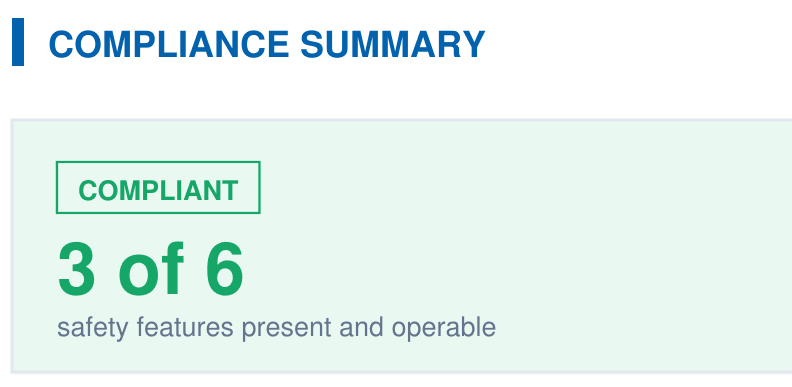
A branded PDF with the compliance summary, the feature table, each finding with its photos, and the signature, generated on‑site when the BPC §7195 and HSC §115922 checklist is complete.