California Pool Non-Compliance Penalties and Liability
Learn the real consequences of pool safety non-compliance in California, fines up to $5,000, personal liability exposure, insurance impacts, and real estate complications under BPC §7195 and HSC §115922.
Failing to comply with California pool safety laws can result in fines up to $5,000 per violation, personal liability exposure in drowning incidents, insurance claim denials, and stalled real estate transactions. Understanding the specific penalties under BPC §7195 and HSC §115922, and how enforcement actually works, helps pool owners avoid costly consequences.
California enforces pool safety through two primary laws: Business and Professions Code §7195 (property transfer inspection requirements) and Health and Safety Code §115922 (the Swimming Pool Safety Act requiring drowning prevention features). Violations of either law carry real financial and legal consequences.
The penalties aren't theoretical. County building departments issue citations, insurance companies deny claims, real estate deals fall through, and civil juries award millions in drowning-related lawsuits where non-compliance is proven. Here's exactly what you're facing if your pool doesn't meet California code, and how to fix it before penalties stack up.
Understanding California pool safety laws
Before examining penalties, it's important to understand what California actually requires. Two laws govern residential pool safety:
BPC §7195 requires a pool safety inspection during any property transfer (sale, lease, or title change) involving a residential pool or spa. The inspection must be conducted by a qualified inspector who evaluates barriers, gates, alarms, and other safety features. Non-compliance must be documented and disclosed.
HSC §115922 (the Swimming Pool Safety Act, strengthened by SB 442) requires all California residential pools and spas to have at least two of seven approved drowning prevention features:
Pool enclosure (fence/barrier meeting code requirements)
Safety pool cover (ASTM F1346 compliant)
Exit alarms on doors/windows leading to pool area
Self-closing, self-latching devices on home doors to the pool, release at least 54 inches above the floor
Removable mesh pool fencing (ASTM F2286 compliant)
Pool alarm (floating or subsurface wave detection)
Pool safety violations carry financial penalties at multiple levels, local, county, and state. The specific amounts depend on your jurisdiction and the nature of the violation.
Building code violation fines
Local building departments enforce pool barrier and safety feature requirements through the California Building Code (Title 24). When violations are identified:
First violation notice: Typically a written warning with a compliance deadline (30-90 days)
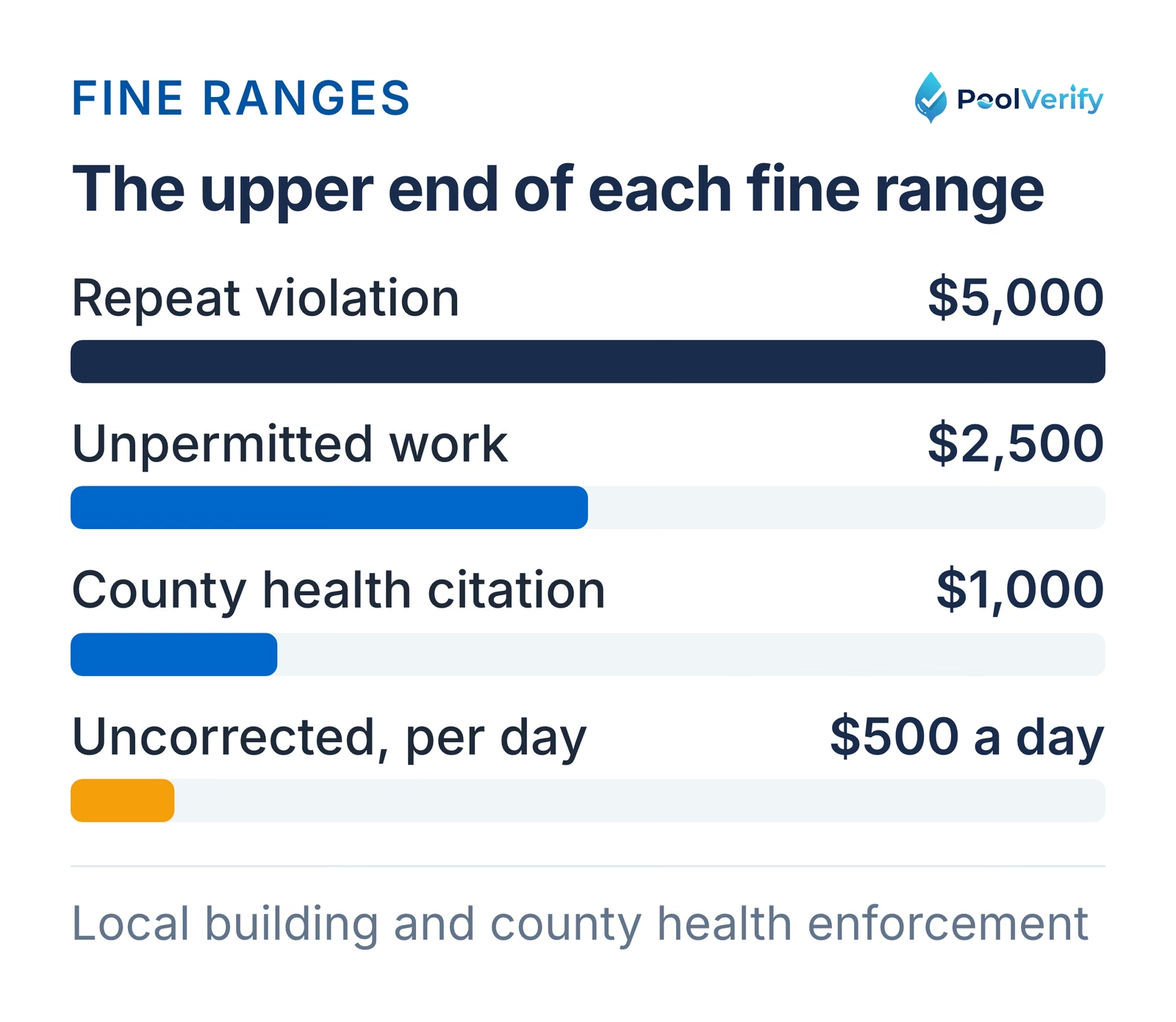
Failure to correct: Fines ranging from $100 to $500 per day the violation continues
Repeat violations: Penalties escalate to $1,000-$5,000 per violation
Willful non-compliance: Some jurisdictions impose daily penalties that accumulate until the violation is corrected
County health department fines
County health departments can issue citations for pool safety violations, particularly for:
Missing or non-compliant drain covers (VGB Act violations)
Insufficient drowning prevention features (HSC §115922)
Pools operating without required safety equipment
Fines vary by county but typically range from $100 to $1,000 for residential pools and significantly higher for commercial facilities.
Permit-related penalties
Unpermitted pool modifications, including fence replacements, barrier alterations, or equipment changes, can trigger additional fines:
Unpermitted work: $500-$2,500 in many California jurisdictions
Required retroactive permits: 2x-4x the normal permit fee
Mandatory inspections: Additional inspection fees for unpermitted work
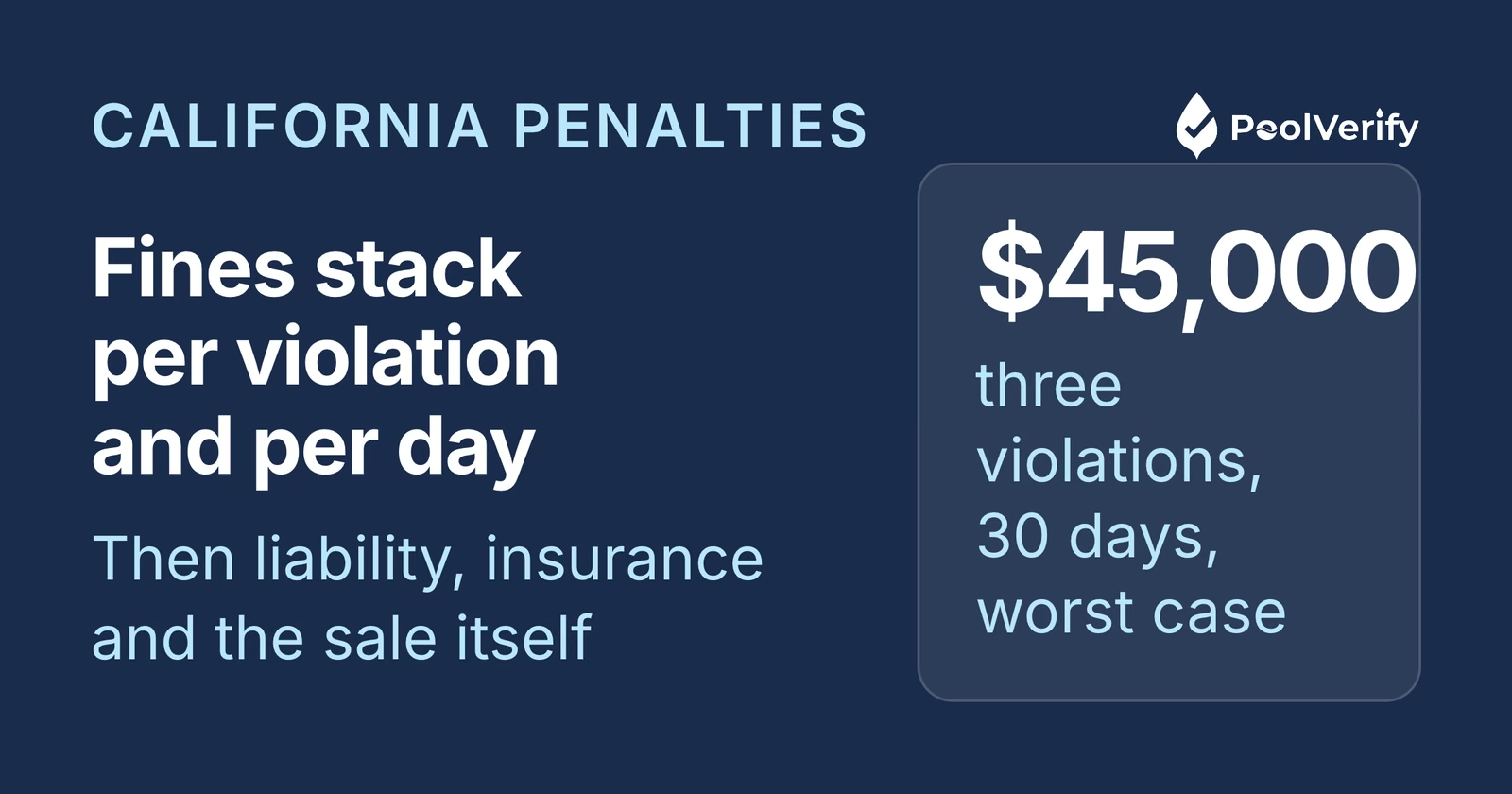
Key point: Fines are per-violation and per-day in many jurisdictions. A pool with three violations that goes uncorrected for 30 days could face cumulative penalties of $9,000-$45,000 in the most aggressive enforcement scenarios.
California pool fines reach $5,000 per repeat violation, $2,500 for unpermitted work, $1,000 per citation and $500 a day.
Personal liability and lawsuits
Financial fines are the smaller concern. Personal liability in drowning or injury cases represents the most significant consequence of pool non-compliance.
Civil liability exposure
California follows a negligence per se doctrine, violating a safety statute like BPC §7195 or HSC §115922 can be treated as automatic negligence in a civil lawsuit. This means:
No need to prove carelessness: The plaintiff only needs to show the pool violated code and the violation contributed to the injury
Presumption of negligence: The pool owner bears the burden of proving the violation didn't cause the injury
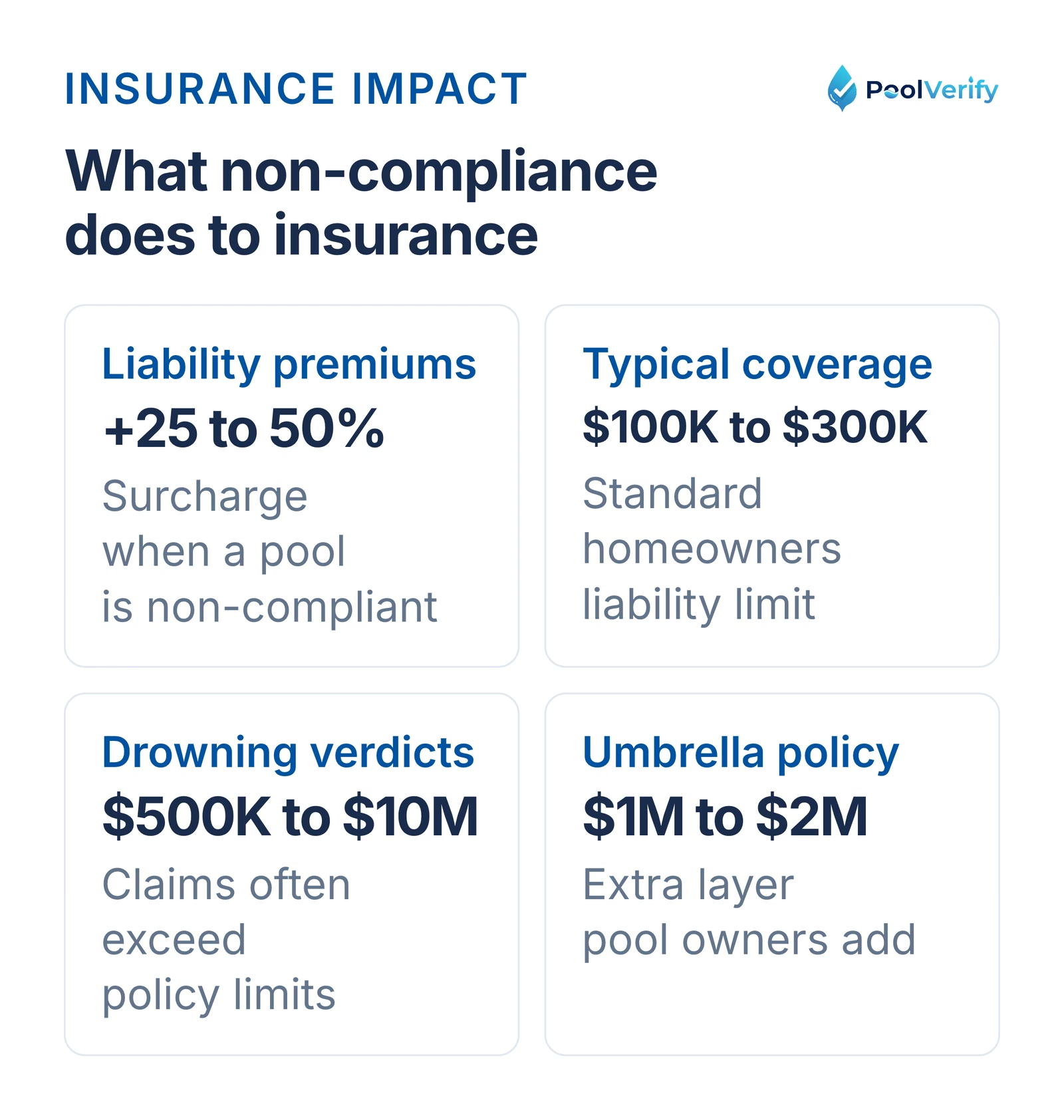
Damage awards: Drowning and near-drowning civil verdicts in California regularly range from $500,000 to over $10 million
Wrongful death claims
In fatal drowning cases involving non-compliant pools, surviving family members can file wrongful death claims. Key factors that increase liability:
Missing or inadequate barriers (the most common factor in child drowning lawsuits)
Non-functional gate self-closing mechanisms that allowed unsupervised access
Fewer than two drowning prevention features as required by HSC §115922
Known violations that the owner failed to correct
Previous warnings from inspectors, neighbors, or guests about safety issues
Criminal liability
While rare for residential pools, criminal charges can apply in extreme cases:
Child endangerment (California Penal Code §273a): If a child is injured due to willful neglect of known safety hazards
Involuntary manslaughter: In fatal cases where gross negligence is demonstrated
Building code criminal violations: Willful violation of building safety codes is a misdemeanor in California
According to the Consumer Product Safety Commission (CPSC), approximately 390 children under 15 drown in swimming pools each year nationally, and barrier and safety feature compliance reduces risk by up to 83% (CDC). Courts take non-compliance seriously because the safety measures are proven to prevent deaths.
Insurance consequences
Pool non-compliance affects your homeowners insurance in ways many property owners don't anticipate.
Claim denials
If an injury or drowning occurs in a non-compliant pool, your insurance company may:
Deny the entire claim based on policy exclusions for code-violating conditions
Invoke the "known hazard" exclusion if you were aware of the non-compliance
Subrogate against you: pay the claim but then seek reimbursement from you personally
Premium increases and cancellation
Insurance companies increasingly audit pool safety compliance:
Mandatory pool inspections: Some carriers require a safety inspection before issuing or renewing a pool liability policy
Premium surcharges: Non-compliant pools may face 25-50% higher liability premiums
Policy cancellation: Insurers can cancel your policy mid-term if they discover non-compliant conditions
Non-renewal: Many insurers refuse to renew policies for homes with documented pool safety issues
Coverage gaps
Standard homeowners policies typically include $100,000-$300,000 in personal liability coverage. Drowning claims frequently exceed these limits. Pool owners should consider:
Umbrella policies ($1-$2 million additional coverage)
Pool-specific liability riders
Ensuring compliance as the most cost-effective risk reduction
Bottom line: Maintaining pool compliance costs a fraction of what a single denied insurance claim or premium increase will cost over time.
Non-compliant pools face 25 to 50 percent higher premiums while drowning verdicts up to $10 million exceed typical limits.
Real estate transaction impacts
Pool non-compliance creates significant complications during California home sales, often at the worst possible time.
BPC §7195 inspection requirement
California law requires a pool safety inspection during property transfers. Here's what happens when violations are found:
Mandatory disclosure: The seller must disclose all known pool safety issues to the buyer
Inspection report documentation: The inspector documents every violation with code references and photos
Buyer negotiation leverage: Buyers can demand repairs, price reductions, or credits
Deal delays: Compliance repairs typically add 1-4 weeks to the closing timeline
Deal cancellation: Some buyers walk away rather than inherit pool safety issues
Financial impact on property value
Non-compliant pools affect home value in measurable ways:
Repair cost deductions: Buyers deduct estimated repair costs (often inflated) from their offer
Negotiation leverage: Non-compliance gives buyers a strong position to negotiate price reductions of $5,000-$15,000 or more
Appraisal complications: Non-compliant safety features can trigger appraisal conditions, affecting financing
Extended days on market: Properties with pool compliance issues typically take longer to sell
Seller strategies
Smart sellers address pool compliance before listing:
Pre-listing inspection: Schedule a BPC §7195 inspection before going on the market
Proactive repairs: Fix violations at wholesale cost rather than paying retail under buyer pressure
Compliance documentation: Provide buyers with a clean inspection report as a selling point
Cost savings: Proactive compliance typically costs 40-60% less than reactive repairs negotiated during escrow
County health inspections: routine for commercial pools, complaint-driven for residential
Real estate agent observations: agents who notice obvious safety issues during showings
Enforcement varies by county
California's 58 counties enforce pool safety with varying levels of aggressiveness:
High-enforcement counties (Los Angeles, Orange, San Diego, Sacramento): Active code enforcement, regular commercial inspections, responsive complaint investigation
Moderate-enforcement counties: Enforcement primarily through property transfers and building permits
Lower-enforcement counties: Enforcement mainly complaint-driven with limited proactive inspection
Regardless of enforcement intensity, the law applies equally everywhere in California. Low enforcement doesn't mean low risk, it means the consequences show up through lawsuits and insurance claims rather than code enforcement fines.
What happens when you get cited
The typical enforcement process for residential pools:
Notice of violation: Written notice identifying specific code violations with a compliance deadline (usually 30-90 days)
Compliance period: Time to correct violations, often with a follow-up inspection scheduled
Re-inspection: Inspector verifies corrections have been made
Administrative hearing: If violations aren't corrected, the case may go to an administrative hearing
Fines and penalties: Escalating financial penalties for continued non-compliance
Liens: Unpaid fines can become liens on the property
How to bring your pool into compliance
The good news: most pool safety violations are fixable within days, and the cost of compliance is a fraction of the potential penalties.
Step 1: Get a professional inspection
Start with a BPC §7195 pool safety inspection by a qualified inspector. This gives you a complete picture of what needs to be fixed. Inspectors using PoolVerify document every finding with photos, code references, and specific fix recommendations.
A typical inspection costs $150-$350 and takes 20-45 minutes.
Step 2: Prioritize violations by cost and impact
Not all violations carry equal urgency. Fix the cheapest and highest-impact items first:
For pool inspectors: PoolVerify helps you document violations accurately and generate professional compliance reports that protect both you and your clients. Start your 14-day free trial and deliver your first report in under 20 minutes.
Cost of compliance vs. cost of non-compliance
The math is straightforward. Here's what compliance costs compared to the potential consequences of ignoring pool safety requirements:
Scenario
Cost of Compliance
Cost of Non-Compliance
Basic compliance (alarms + latch fix)
$100-$400
Fines: $100-$5,000+
Full barrier + safety features
$1,000-$5,000
Lawsuit: $500K-$10M+
Professional inspection
$150-$350
Insurance denial: $100K-$300K+
Pre-sale compliance
$500-$3,000
Lost sale: $15,000-$50,000+ in value
Annual maintenance checks
$0-$200/year
Premium increase: 25-50% annually
The maximum cost of full compliance is typically less than the minimum penalty for a single violation. Pool safety compliance isn't just a legal requirement, it's the most cost-effective way to protect your family, your finances, and your property value.
Limitations
This guide is general information about pool safety law, not legal advice; the current text of HSC §115922 and BPC §7195 on leginfo.legislature.ca.gov controls, and local building departments add their own requirements. PoolVerify is inspection software for California residential pool safety inspections; it does not perform inspections, certify inspectors, or issue compliance certificates.
Frequently asked questions
What is the maximum fine for pool safety non-compliance in California?
California pool safety fines vary by jurisdiction, but penalties can reach $5,000 per violation per day under local building enforcement codes. County health departments issue fines ranging from $100 to $1,000 for residential pool violations. Commercial pool fines are significantly higher, often $500 to $5,000 per violation with immediate closure authority. The most costly scenario isn't the fine itself, it's the cumulative daily penalty for uncorrected violations, which can reach five figures within weeks.
Can I be sued if someone drowns in my non-compliant pool?
Yes, and California's negligence per se doctrine makes these lawsuits particularly damaging for non-compliant pool owners. When a pool violates BPC §7195 or HSC §115922, the violation itself can serve as proof of negligence in a civil lawsuit. Plaintiffs don't need to prove you were careless, only that the code was violated and contributed to the injury. Drowning and near-drowning verdicts in California regularly exceed $1 million, with some cases reaching $10 million or more.
Does homeowners insurance cover a non-compliant pool?
Many insurance policies exclude coverage for incidents involving code-violating conditions. If your pool doesn't meet California safety requirements and someone is injured, your insurer may deny the claim entirely, cancel your policy, or pay the claim and then seek reimbursement from you. Some carriers now require proof of pool safety compliance before issuing or renewing policies. The safest approach is to maintain compliance and keep your inspection reports on file.
Can a non-compliant pool stop a home sale in California?
Yes, pool non-compliance is one of the most common causes of real estate transaction delays in California. Under BPC §7195, a pool safety inspection is required during property transfers, and violations must be disclosed. Buyers can demand repairs, negotiate significant price reductions ($5,000-$15,000+), or cancel the deal entirely. Sellers who address compliance before listing typically save 40-60% compared to reactive repairs under buyer pressure. Read our guide on what to do when a pool inspection fails for step-by-step instructions.
How do I bring my pool into compliance to avoid penalties?
Start by scheduling a professional pool safety inspection to identify all violations. A BPC §7195 inspection costs $150-$350 and documents exactly what needs to be fixed. Most violations are affordable and fast to resolve, gate latches ($15-$100, 30 minutes), door alarms ($30-$150, 30 minutes each), and drain covers ($50-$200, 1-4 hours). More involved projects like barrier height corrections ($500-$3,000) may take 1-3 days. After repairs, schedule a re-inspection to verify compliance and get documentation for your records. PoolVerify helps inspectors document every finding and generate compliance reports instantly.
Protect yourself from pool non-compliance penalties
Pool safety compliance in California isn't optional, it's enforced through fines, civil liability, insurance consequences, and real estate requirements. The cost of compliance is always less than the cost of a single penalty, lawsuit, or denied insurance claim.
Whether you're a homeowner preparing for a sale, a property manager overseeing multiple pools, or a pool professional advising clients, the path forward is clear: get inspected, fix violations, and document compliance.
For pool inspectors, PoolVerify gives you California-compliant checklists, guided violation documentation, and instant PDF report generation, helping your clients understand exactly what needs to be fixed and why. Start your 14-day free trial and deliver professional compliance reports from day one.
Last updated: September 5, 2026
What the client receives
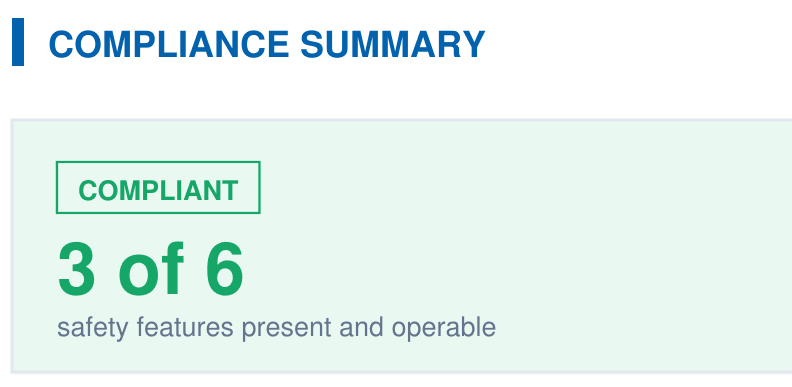
A branded PDF with the compliance summary, the feature table, each finding with its photos, and the signature, generated on‑site when the BPC §7195 and HSC §115922 checklist is complete.