10 Most Common Pool Safety Violations in California
Discover the 10 most common pool safety violations in California, why they fail inspections, and exactly how to fix each one to meet BPC §7195 compliance.
The 10 most common pool safety violations in California involve barrier height deficiencies, non-functional gate hardware, excessive fence gaps, missing alarms, and non-compliant drain covers. These violations account for over 80% of failed inspections under BPC §7195 and HSC §115922. Knowing what inspectors look for, and how to fix each issue, can save homeowners thousands in delays and re-inspection fees.
California has some of the strictest pool safety laws in the country, and for good reason. According to the Consumer Product Safety Commission (CPSC), drowning is the leading cause of unintentional death for children ages 1-4, and California's 1.8 million residential pools represent significant risk without proper safety measures (California Energy Commission).
Whether you're a pool inspector documenting violations, a homeowner preparing for a property transfer inspection, or a real estate agent navigating BPC §7195 requirements, understanding the most common pool safety violations helps you address issues before they become costly problems.
Digital inspection tools like PoolVerify help inspectors systematically check for every violation on this list using California-compliant BPC §7195 and HSC §115922 checklists, ensuring nothing gets missed.
1. Inadequate barrier height
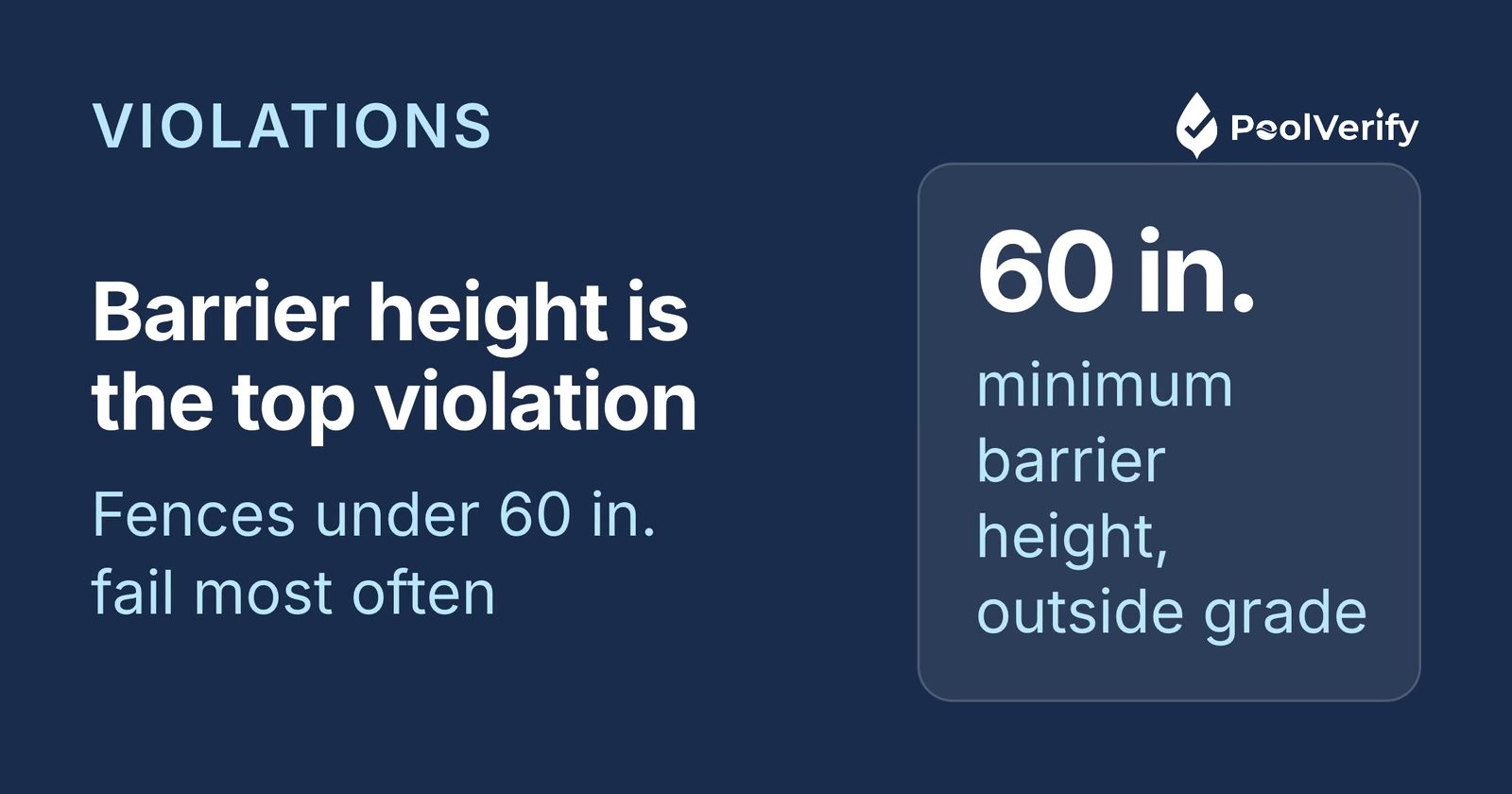
Pool barriers less than 60 inches tall are the single most common violation found during California pool safety inspections. BPC §7195 requires all pool enclosure barriers, including fences, walls, and building walls used as barriers, to be at least 60 inches (5 feet) from the exterior grade to the top of the barrier.
Many older California homes have pool fences installed at 48 inches, which met previous code requirements but falls short of the current 60-inch standard. Homes built before 2007 are especially prone to this violation.
How to identify it
Measure the barrier height from the finished grade on the exterior side (not the pool side)
Check for uneven ground that creates low spots below 60 inches
Verify retaining walls used as barriers meet the height requirement
How to fix it
Cost: $500-$3,000 depending on fence type and length
Difficulty: Moderate, typically requires a contractor
Options: Install fence extensions, replace fence panels, or add a solid barrier topper
Gates that don't close and latch automatically from every open position fail inspection under BPC §7195. This is the second most common violation, often caused by worn hinges, misaligned frames, or debris blocking the gate path.
According to pool safety research, gate failures are involved in approximately 65% of unsupervised child pool access incidents (National Drowning Prevention Alliance). A gate that works "most of the time" doesn't meet California's standard, it must close and latch reliably every time.
How to identify it
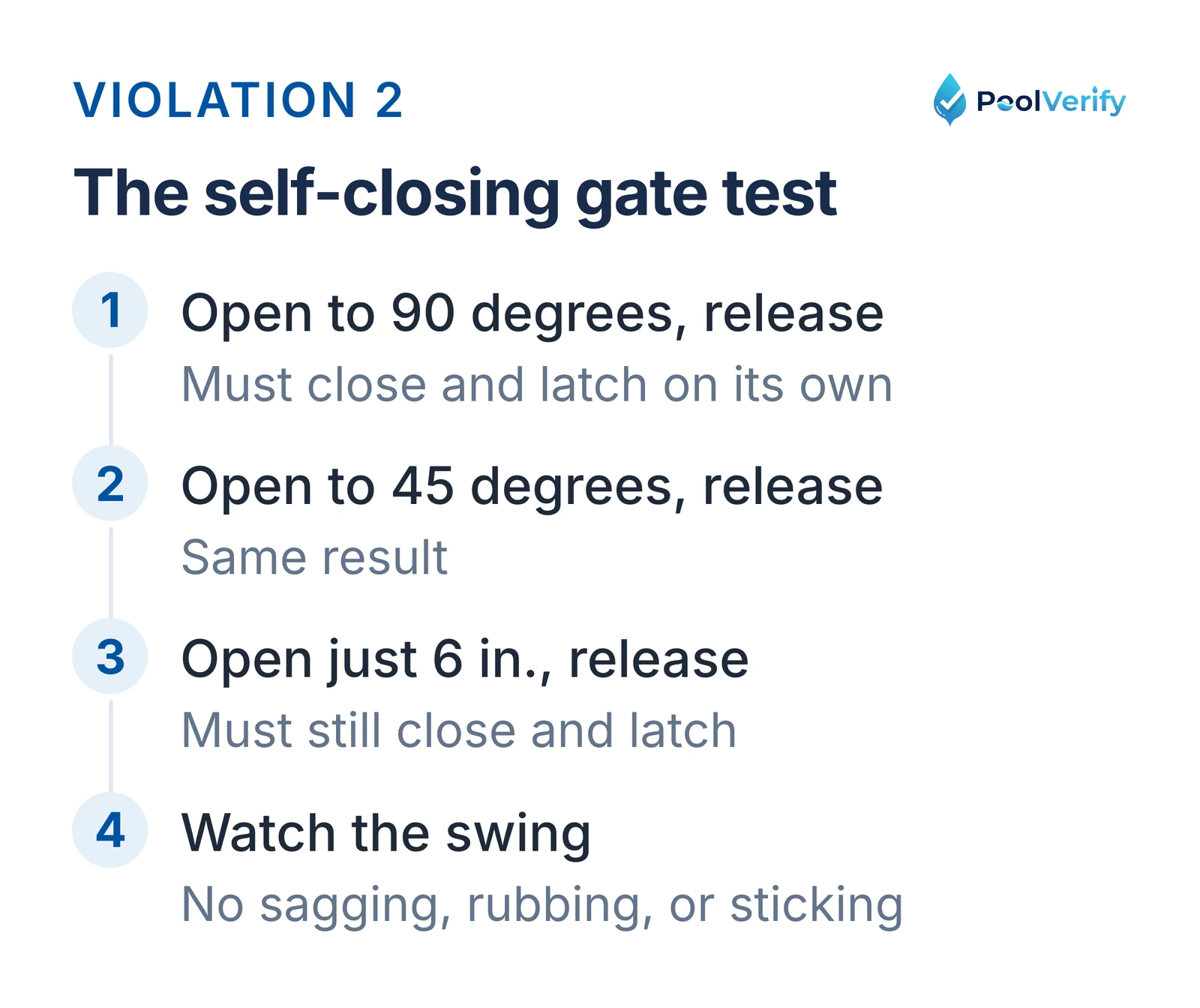
Open the gate to 90 degrees and release, it must close and latch
Open the gate to 45 degrees and release, it must close and latch
Open the gate just 6 inches and release, it must still close and latch
Check for sagging, rubbing, or sticking at any point during closure
How to fix it
Cost: $75-$300 for hardware replacement; $200-$800 for full gate replacement
Difficulty: Easy to moderate, most homeowners can replace hinges
Options: Install new self-closing hinges (spring-loaded or hydraulic), realign gate frame, clear obstruction path
Timeline: 1-4 hours for hardware; 1 day for full gate replacement
The three release positions a self-closing pool gate must close and latch from during an inspection.
3. Excessive barrier gaps
Any opening in a pool barrier that allows a 4-inch sphere to pass through is a violation under BPC §7195. This applies to gaps between fence pickets, under gates, between the barrier and the ground, and at connection points between barrier sections.
The 4-inch standard is based on the minimum head circumference of a toddler, if a child's head can fit through an opening, their body can follow. This violation is particularly common in:
Wrought iron fences where pickets have bent or loosened
Wood fences with warped or missing boards
Chain-link fences with stretched or damaged mesh
The gap between the bottom of a gate and the ground
How to identify it
Use a 4-inch diameter sphere (a standard softball works) to test every opening
Check the bottom gap: maximum 2 inches on hard surfaces, 4 inches on soft ground
Pay attention to where barrier sections connect, these joints often have wider gaps
Check gate-to-post gaps on both the hinge side and latch side
How to fix it
Cost: $50-$500 depending on the extent of damage
Difficulty: Easy, most gaps can be fixed DIY
Options: Add pickets, replace warped boards, install gap fillers, adjust fence rails, add a bottom rail or kickboard
Timeline: 1-4 hours for most repairs
4. Missing or non-functional door alarms
All doors and windows providing direct access from a dwelling to the pool area must have functioning alarms that sound within 7 seconds of opening, per California Building Code and BPC §7195 requirements. The alarm must produce an alert of at least 85 decibels.
This violation is extremely common in homes where:
Sliding glass doors lead directly to the pool area
Door alarms were installed but batteries have died
Renovations added new access points without alarms
Alarm bypass switches were used and never re-enabled
How to identify it
Test every door and window that opens to the pool area
Verify the alarm sounds within 7 seconds of opening
Use a decibel meter (smartphone apps work) to confirm 85+ dB output
Check for alarm bypass switches, they should have automatic re-arm features
How to fix it
Cost: $30-$150 per alarm unit
Difficulty: Easy, most are DIY-friendly with adhesive or screw mounting
Options: Battery-powered door alarms, wired alarm systems, smart alarm options with smartphone alerts
Timeline: 30 minutes per door or window
Ready to streamline your California pool safety inspections? PoolVerify helps you complete BPC §7195 inspections on any device and generate professional PDF reports instantly. Start Your Free Trial
5. Non-compliant gate latches
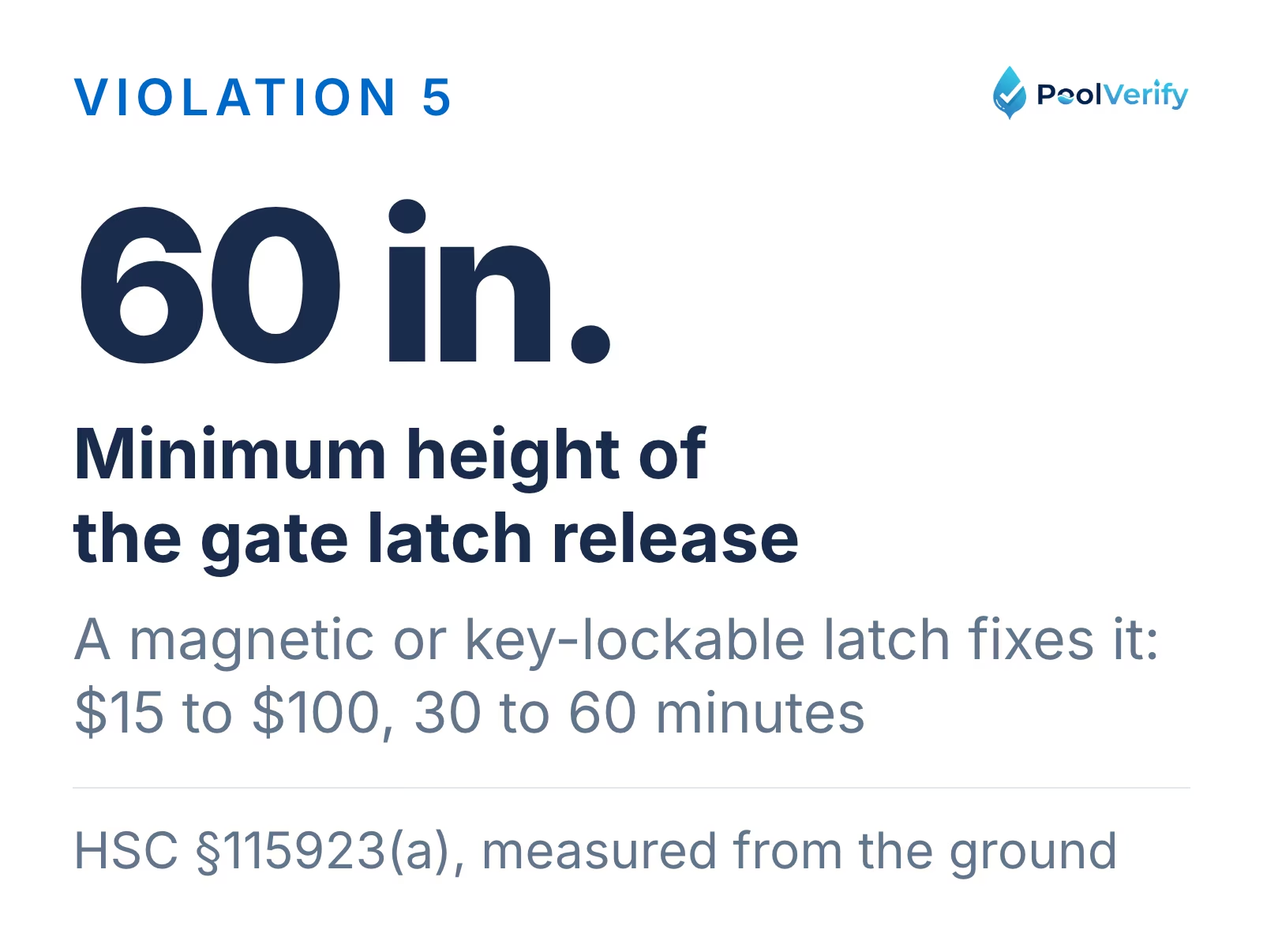
The self-latching device on a pool enclosure gate must be placed no lower than 60 inches above the ground (HSC §115923(a)), so that a small child cannot reach the release. Measure from the ground on the outside of the gate to the release. The 54-inch figure belongs to doors from the home that open to the pool (HSC §115922(a)(5)).
Common latch violations include:
Latch height below 60 inches: the most frequent latch issue
Latch accessible from outside: a child can reach over or through the gate to operate it
Gravity latches that don't reliably engage: worn mechanisms fail to catch
Thumb latches without child-resistant features: standard thumb latches are too easy for children to operate
How to identify it
Measure latch height from the ground on the pool side of the gate
Verify the latch engages positively every time the gate closes
Check if a small hand could reach through or over the gate to access the latch mechanism
Test the latch from the exterior side, it should require adult-level dexterity
How to fix it
Cost: $15-$100 for latch replacement
Difficulty: Easy, one of the simplest violations to fix
Options: Install a code-compliant magnetic latch, key-lockable latch, or Magna-Latch at the correct height
Timeline: 30-60 minutes
The 60-inch minimum height for a pool gate latch release and the cost of the fix.
6. Climbable barriers and footholds
Pool barriers must have no climbable features that could allow a child to scale them, even if the barrier meets the 60-inch height requirement. Horizontal rails, decorative elements, nearby furniture, and vegetation all create climbing opportunities.
BPC §7195 specifically addresses climbability, if any protrusion, indentation, or object within 4 feet of the barrier could serve as a foothold, the barrier fails inspection. This catches many homeowners off guard because their fence may be the correct height but still non-compliant.
Common climbable features include:
Horizontal fence rails (chain-link fences are the worst offenders)
Decorative scrollwork or lattice on iron fences
Tree branches within climbing distance
Outdoor furniture, planters, or equipment stored near the barrier
Retaining walls or raised beds adjacent to the fence
How to identify it
Walk the entire barrier perimeter looking for any protrusion larger than 1/4 inch within 45 inches of the top
Check for objects within 4 feet of the barrier that could be used as stepping aids
Look for vegetation (branches, vines) growing on or near the barrier
Inspect chain-link fences, most require privacy slats or replacement with vertical-picket alternatives
How to fix it
Cost: $100-$2,000+ depending on the issue
Difficulty: Varies, trimming trees is easy; replacing chain-link is a project
Options: Add privacy slats to chain-link, trim vegetation, relocate furniture and equipment, install climbing guards, replace horizontal-rail sections
Timeline: 1 hour to 3 days depending on scope
7. Non-compliant drain covers
All pool and spa drain covers must meet ASTM F1346-91 standards and be securely fastened, undamaged, and properly sized, per the Virginia Graeme Baker Pool and Spa Safety Act (VGB Act) and California Health and Safety Code. Non-compliant drain covers present an entrapment hazard that can cause serious injury or death.
Drain cover violations are particularly serious because entrapment incidents have an extremely high fatality rate. The CPSC reports that suction entrapment is responsible for an average of 5 deaths per year nationally, with hundreds of non-fatal entrapment injuries.
How to identify it
Check for the ASTM F1346 marking on every drain cover
Verify covers are not cracked, broken, or missing screws
Confirm the cover matches the drain size (oversized covers create entrapment gaps)
Check the manufacture date, drain covers have a maximum service life (typically 7-10 years)
Verify anti-entrapment systems (SVRS, safety vacuum release) are functional for single-drain configurations
How to fix it
Cost: $50-$200 per drain cover; $500-$2,000+ for SVRS installation
Difficulty: Moderate, drain covers are straightforward but SVRS requires a pool professional
Options: Replace with ASTM-compliant covers, install dual drains, add a safety vacuum release system
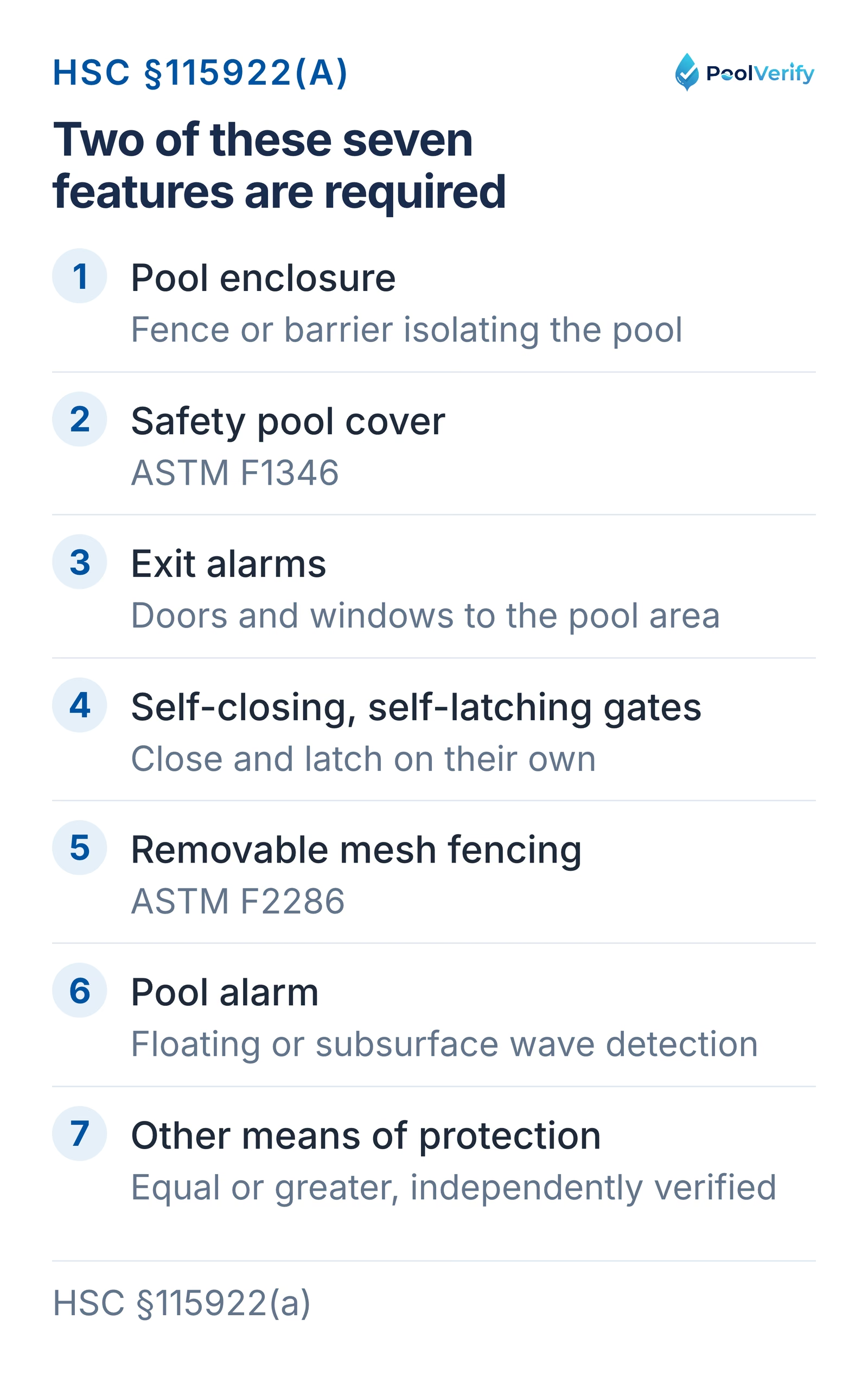
HSC §115922 requires every California residential pool to have at least two of seven approved drowning prevention safety features. Many homeowners mistakenly believe a fence alone is sufficient, it counts as only one feature.
The seven approved features under HSC §115922 are:
Pool enclosure (fence/barrier meeting BPC §7195 requirements)
Safety pool cover (ASTM F1346 compliant)
Exit alarms on doors/windows leading to pool area
Self-closing, self-latching devices on home doors to the pool with the release at least 54 inches above the floor
Removable mesh pool fencing (ASTM F2286 compliant)
Pool alarm (floating or subsurface wave detection)
Compliant suction outlet covers/fittings
How to identify it
Count how many of the seven features are present and fully functional
Verify each claimed feature actually meets the specific standards (e.g., a pool cover must be ASTM F1346, not just any cover)
Document which two features satisfy the requirement
How to fix it
Cost: $100-$500 to add a second feature (alarms are the most affordable option)
Difficulty: Easy, adding a pool alarm or door alarms is the fastest path to compliance
Options: Install a pool alarm ($100-$300), add door alarms ($30-$150 each), install removable mesh fencing ($1,500-$3,000)
Timeline: Same day for alarms; 1-2 days for mesh fencing
The seven HSC §115922(a) drowning prevention features; a pool needs at least two.
Pool safety covers used as a drowning prevention feature must meet ASTM F1346 standards and be capable of supporting the weight of a child and an adult rescuer. Standard winter covers, solar covers, and liquid solar blankets do not qualify.
This violation occurs when homeowners believe their existing pool cover satisfies the HSC §115922 safety feature requirement, but the cover doesn't meet the ASTM standard. A compliant safety cover must:
Support a minimum weight of 485 pounds
Prevent a child from accessing the water beneath it
Not have gaps larger than 4 inches at any edge
Be properly anchored and tensioned
How to identify it
Check for ASTM F1346 labeling on the cover
Verify the cover is properly anchored with no gaps exceeding 4 inches at edges
Confirm the cover type, only rigid mesh or solid safety covers with anchors qualify
Test tensioning, a compliant cover should not sag into the water
How to fix it
Cost: $1,200-$4,000 for an ASTM-compliant safety cover
Difficulty: Professional installation recommended
Options: Mesh safety covers (lighter, drain water through), solid safety covers (block all water and debris), automatic covers ($5,000-$15,000)
Timeline: 1-2 weeks for custom cover fabrication and installation
10. Damaged or deteriorated barriers
Barriers with structural damage, rot, rust, or deterioration that compromises their integrity fail inspection regardless of height or design compliance. A fence that meets every dimensional requirement but has rotted posts, rusted-through sections, or loose panels is non-compliant.
This is the violation that surprises homeowners most, their fence looks fine from a distance, but close inspection reveals structural issues:
Wood fences: Rot at post bases, warped panels, split rails, loose nails
Iron fences: Rust-weakened pickets, corroded welds, bent sections
Block walls: Cracked mortar, leaning sections, erosion at the base
Chain-link fences: Stretched mesh, bent posts, disconnected ties
How to identify it
Push firmly on barrier sections to test structural stability
Inspect post bases for rot or corrosion (probe wood posts with a screwdriver)
Check all connections, fasteners, and welds
Look for signs of leaning, settling, or ground erosion undermining the barrier
How to fix it
Cost: $100-$5,000+ depending on extent of damage
Difficulty: Varies, minor repairs are DIY; structural issues need a contractor
Options: Replace individual damaged sections, reinforce posts, treat and seal wood, repaint/re-coat metal
Timeline: 1 hour for spot repairs; 1-5 days for significant sections
Violation severity and cost summary
Here's a quick reference for all 10 violations, ranked by how frequently they appear in California pool inspections:
Rank
Violation
Frequency
Fix Cost
Difficulty
Fix Time
1
Barrier height below 60"
Very common
$500-$3,000
Moderate
1-3 days
2
Non-functional self-closing gates
Very common
$75-$800
Easy-Moderate
1-4 hours
3
Excessive barrier gaps (>4")
Common
$50-$500
Easy
1-4 hours
4
Missing/dead door alarms
Common
$30-$150/ea
Easy
30 min/ea
5
Gate latch below 60 in.
Common
$15-$100
Easy
30-60 min
6
Climbable barriers/footholds
Common
$100-$2,000
Varies
1 hr-3 days
7
Non-compliant drain covers
Moderate
$50-$2,000
Moderate
1-4 hours
8
<2 drowning prevention features
Moderate
$100-$500
Easy
Same day
9
Non-compliant pool cover
Less common
$1,200-$4,000
Professional
1-2 weeks
10
Damaged/deteriorated barriers
Moderate
$100-$5,000
Varies
1 hr-5 days
Key takeaway: Violations #4, #5, and #8 are the fastest and cheapest to fix. If you need to bring a pool into compliance quickly, especially before a property transfer, start with alarms and latch hardware, then work up to the more involved barrier projects.
PoolVerify's BPC §7195 inspection templates guide inspectors through every one of these violation checks systematically. Each checkpoint includes the specific code requirement, measurement criteria, and photo documentation prompts, making it nearly impossible to miss a violation during a pool safety inspection.
How to prepare for a California pool safety inspection
If you're a homeowner preparing for a property transfer inspection, or a pool professional conducting inspections, here's how to address these violations proactively:
Walk the full perimeter: Measure barrier height at every section, checking for low spots
Test every gate: Open to multiple angles and verify self-closing and latching function
Run the 4-inch sphere test: Check every gap, opening, and connection point
Test all alarms: Doors, windows, and pool alarms should all be functional
Check drain covers: Look for ASTM markings, damage, and proper fastening
Count safety features: Verify at least 2 of 7 HSC §115922 features are present
Document everything: Photograph all safety features and any issues found
For inspectors, PoolVerify automates this entire process with guided checklists, automatic photo timestamping, and instant PDF report generation. Inspectors complete BPC §7195 inspections in 15-20 minutes using PoolVerify compared to 30-45 minutes with paper forms.
This guide is general information about pool safety law, not legal advice; the current text of HSC §115922 and BPC §7195 on leginfo.legislature.ca.gov controls, and local building departments add their own requirements. PoolVerify is inspection software for California residential pool safety inspections; it does not perform inspections, certify inspectors, or issue compliance certificates.
Frequently asked questions
What is the most common pool safety violation in California?
Inadequate barrier height is the most common pool safety violation in California. BPC §7195 requires pool barriers to be at least 60 inches tall with no climbable features. Many older homes have fences that are only 48 inches or have horizontal rails, lattice, or vegetation that allows climbing. This single violation accounts for a significant percentage of inspection failures statewide.
How much does it cost to fix pool safety violations?
Pool safety violation repair costs range from $15 for a simple gate latch replacement to over $5,000 for a full barrier replacement. Most common fixes cost between $50 and $500. Gate hardware averages $75-$300, pool alarms cost $100-$300, and drain cover replacements run $50-$200. The cheapest path to compliance typically starts with alarms and latch hardware.
Can I sell my house with pool safety violations?
California law requires a pool safety inspection during property transfers under BPC §7195. If violations are found, they must be corrected before closing or negotiated as part of the sale agreement. Sellers must disclose all known pool safety issues to buyers. Working with an inspector who uses PoolVerify ensures thorough documentation that satisfies both buyer and seller requirements.
How many pool safety features does California require?
Under HSC §115922, California requires residential pools to have at least two of seven approved drowning prevention safety features. These include pool enclosures, safety covers, exit alarms, self-closing/self-latching gates, removable mesh fencing, pool alarms, and compliant suction fittings. A single fence is not sufficient, you need at least one additional feature.
What happens if my pool fails a safety inspection?
If your pool fails a safety inspection, you receive a non-compliance report listing all violations with the applicable code sections. You must correct each violation and schedule a re-inspection to verify compliance. For property transfers, the sale may be delayed until compliance is achieved. Repeat or willful violations can result in fines. Read our complete guide on what to do when a pool inspection fails for step-by-step instructions.
Take action on pool safety compliance
Pool safety violations aren't just inspection failures, they represent real risks to children and families. California's strict requirements exist because barrier and safety feature compliance demonstrably reduces drowning risk by up to 83% (CDC, 2024).
Whether you're fixing violations before a property sale, conducting inspections as a professional, or simply making your pool safer for your family, start with the quick wins (alarms, latches, gap fixes) and work toward the larger projects.
For pool inspectors, PoolVerify makes it easy to catch every violation with California-compliant checklists, document findings with timestamped photos, and deliver professional PDF reports to clients instantly. Start your 14-day free trial and complete your first inspection in under 20 minutes.
Last updated: September 9, 2026
What the client receives
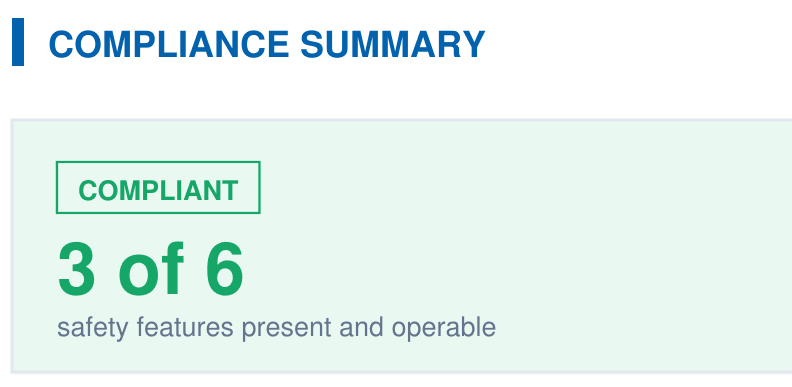
A branded PDF with the compliance summary, the feature table, each finding with its photos, and the signature, generated on‑site when the BPC §7195 and HSC §115922 checklist is complete.