Pool-safety
Pool Drain Safety: Suction Entrapment Prevention Guide [2026]
Complete guide to pool drain safety and suction entrapment prevention. Learn about VGB-compliant drain covers, anti-entrapment systems, inspection protocols, and California requirements.
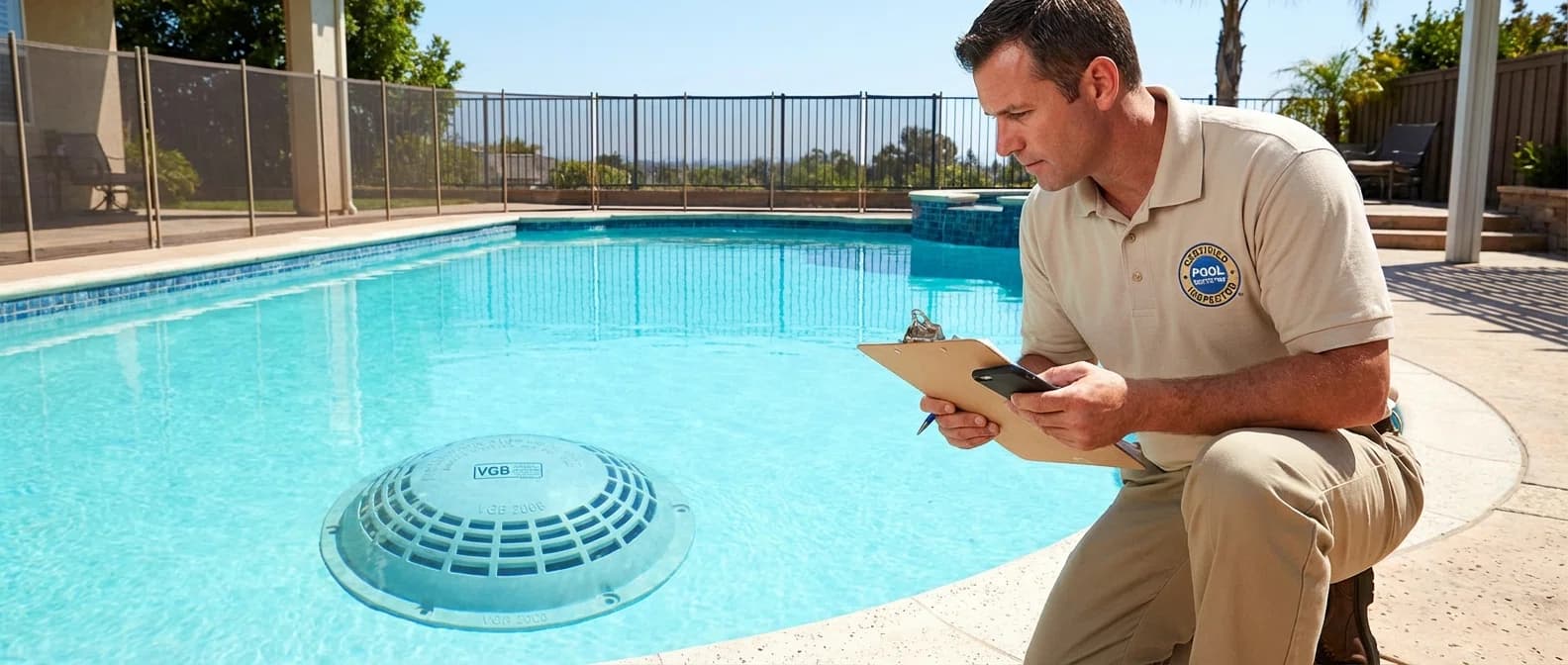
10 min read
Pool drain safety is one of the most critical yet often overlooked aspects of swimming pool maintenance and inspection. The powerful suction created by pool drains can cause severe injuries or death through suction entrapment, but proper drain covers and safety systems virtually eliminate this risk when correctly installed and maintained.
If you're a pool inspector, pool service professional, or property owner, understanding pool drain safety requirements is essential for protecting swimmers and ensuring compliance with the Virginia Graeme Baker Act and California HSC §115922.
Table of Contents
- Understanding pool drain hazards
- Suction entrapment risks and statistics
- VGB-compliant drain covers explained
- Anti-entrapment systems and devices
- Types of safety devices
- How inspectors test pool drains
- What to look for in drain inspections
- Drain cover replacement guidelines
- California drain safety requirements
- Frequently asked questions
Understanding pool drain hazards
Pool drains create powerful suction forces necessary for water circulation, but these same forces can trap swimmers against drain openings. Understanding how drain hazards occur is the first step in preventing suction entrapment incidents.
How pool circulation creates suction
Pool circulation systems use pumps to pull water through main drains and skimmers, filter it, and return it to the pool. The suction created at drain openings can generate forces ranging from 200 to over 700 pounds, depending on pump size and system configuration.
When a drain opening becomes blocked or covered, the suction force concentrates at that single point, creating an incredibly powerful hold. Even strong adults cannot break free from full suction force without help.

Diagram showing pool circulation system and suction forces at drain openings
Why drain safety matters
The consequences of suction entrapment can be catastrophic:
- Drowning: Trapped swimmers held underwater for even 2-3 minutes can suffer brain damage or death
- Evisceration injuries: Powerful suction can cause severe internal injuries, particularly to children
- Amputation: Limbs trapped in broken drain covers can suffer traumatic injuries
- Hair entrapment: Long hair pulled into drains can hold heads underwater
According to the Consumer Product Safety Commission, from 1999-2007 there were 74 reported suction entrapment incidents including 9 fatalities. Since the Virginia Graeme Baker Act took effect in 2008, fatalities from drain entrapment have been virtually eliminated in properly maintained pools.
Ensure comprehensive pool safety compliance
PoolVerify helps inspectors document drain safety alongside all California BPC §7195 requirements, with photo documentation and instant PDF reports.
Suction entrapment risks and statistics
Understanding the real-world risks of suction entrapment helps pool professionals prioritize drain safety in inspections and maintenance.
Pre-VGB Act statistics (1999-2007)
Before federal drain safety standards took effect, suction entrapment was a significant public health threat:
- 74 total incidents involving circulation/suction entrapment
- 9 fatalities from drowning or evisceration injuries
- Multiple serious injuries requiring hospitalization and surgery
- Children under 15 represented the majority of victims
The most vulnerable victims were young children in residential spas and pool settings where adults weren't immediately present to assist.
Post-VGB Act improvements (2008-present)
Since the Virginia Graeme Baker Act mandated compliant drain covers and safety systems:
- Zero fatalities from drain cover entrapment in compliant pools (2008-present)
- 11 total incidents reported from 2014-2018 (down from 74 in previous 9 years)
- Significant reduction in serious injuries from suction entrapment
This dramatic improvement demonstrates that proper drain safety measures work when implemented and maintained correctly.
Recent 2026 incident
Despite overall improvements, hazards remain in non-compliant pools. In early 2026, an eight-year-old girl tragically died in a suction entrapment incident at a hotel pool in Houston, highlighting that vigilant maintenance and compliance remain critical.
Additionally, TopHomer pool drain covers were recalled in 2026 for failing to meet VGB safety standards, demonstrating the importance of using only certified drain covers from reputable manufacturers.
High-risk scenarios
Pool inspectors should pay special attention to these high-risk situations:
- Single main drain configurations without SVRS or alternative safety systems
- Small spas and hot tubs where drain proximity increases entrapment risk
- Pools with damaged or missing drain covers creating immediate hazards
- Residential pools with uncertified drain covers purchased before 2008
- Commercial pools with deferred maintenance and outdated safety systems
For commercial pool inspections, drain safety verification is a mandatory component of health department compliance.
VGB-compliant drain covers explained
VGB-compliant drain covers are engineered to prevent suction entrapment while maintaining proper water circulation. Understanding what makes a drain cover compliant is essential for inspections and replacements.
ANSI/APSP-16 certification requirements
All VGB-compliant drain covers must meet the ANSI/APSP-16 performance standard, currently ANSI/APSP-16 2017. This certification ensures the cover has been tested and approved for entrapment prevention.
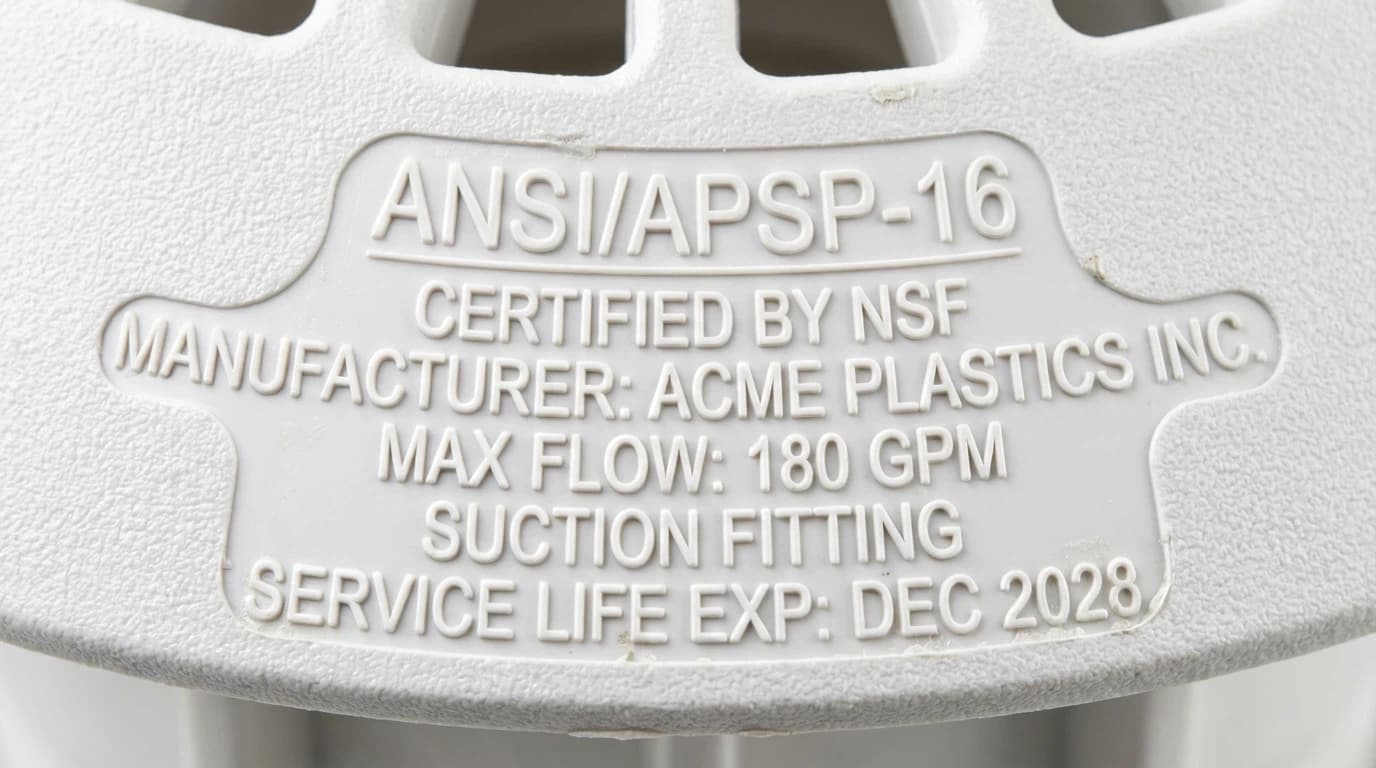
Close-up of VGB-compliant drain cover showing ANSI/APSP-16 certification marking
Required markings on compliant covers:
- ANSI/APSP-16 certification stamp
- Year of certification (2011, 2017, or later)
- Flow rating in gallons per minute (GPM)
- Manufacturer name and model number
- Testing laboratory certification mark
Anti-entrapment design features
VGB-compliant drain covers incorporate multiple safety features:
1. Increased surface area
Larger cover area distributes suction force across a wider space, making it impossible for a body to completely seal the opening.
2. Domed or raised profile
Curved or elevated cover designs prevent flat body surfaces from creating a complete seal against the drain.
3. Multiple openings
Numerous small openings instead of large gaps prevent limbs from entering the drain while maintaining water flow.
4. Rounded edges
Smooth, rounded edges eliminate sharp points that could catch hair, clothing, or jewelry.
5. Tamper-resistant fasteners
Covers require tools for removal, preventing unauthorized removal that would expose dangerous open drains.
Flow rating specifications
Each VGB-compliant drain cover is rated for a maximum flow rate, typically between 80-150 GPM for residential applications. The drain cover's flow rating must meet or exceed the pump's circulation capacity.
Critical matching requirements:
- Single drain: Cover must handle 100% of pump flow
- Dual drains: Each cover must handle 100% of pump flow (in case one becomes blocked)
- Variable-speed pumps: Cover must handle maximum pump speed setting
Inspectors use digital inspection tools like PoolVerify to document drain cover flow ratings and verify they match pump specifications.
Anti-entrapment systems and devices
Beyond compliant drain covers, additional safety systems provide redundant protection against suction entrapment, particularly for pools with single main drains.
Safety Vacuum Release Systems (SVRS)
SVRS devices are the most common secondary protection for single-drain pools. These systems automatically detect drain blockage and release the vacuum within 1-2 seconds.
How SVRS works:
- System continuously monitors suction pressure in the drain line
- When blockage is detected (pressure drop), the SVRS activates
- Pump shuts down or air is introduced into the suction line
- Vacuum is released, allowing trapped person to escape
SVRS certification requirements:
- Must meet ASME A112.19.17 or ASTM F2387 standards
- Must activate within specified time frame
- Must have audible/visible alarm when triggered
- Must require manual reset after activation

Safety vacuum release system installed on pool equipment with indicator lights
Suction-limiting vent systems
Vent systems provide an alternative to SVRS by introducing atmospheric air into the suction line when blockage occurs, breaking the vacuum seal.
Advantages:
- Passive system with no electronic components
- Works without electricity during power failures
- Lower maintenance requirements than SVRS
- Effective for various pool sizes and configurations
Limitations:
- Must be properly sized for the specific pool
- Requires clear air pathways to function
- Can be affected by debris or improper installation
Gravity drainage systems
Also called "unblockable drains," these systems use strategic drain placement and piping design so water continues draining by gravity even if the drain is completely sealed.
Design requirements:
- Drain must be below pool water level
- Piping must maintain continuous downward slope
- System must be engineered for specific pool configuration
- No check valves or other flow restrictions
These systems are most common in commercial pools and new construction where plumbing can be designed from the start.
Multiple drain configurations
The most widely used alternative to secondary safety systems is installing multiple main drains properly separated and balanced.
Multiple drain requirements:
- Minimum three feet separation between drain openings (measured any direction)
- Hydraulically balanced so flow divides equally
- Symmetrically plumbed through T-fittings
- Each drain covered with VGB-compliant cover rated for 100% of pump flow
When properly configured, if one drain becomes blocked, the other drain(s) break the suction seal, preventing entrapment.
For pool service companies managing multiple properties, documenting which pools have single versus multiple drain configurations helps prioritize safety system inspections.
Types of safety devices
Pool professionals should be familiar with the various safety devices used to prevent suction entrapment across different pool types and configurations.
Commercial SVRS systems
Leading manufacturers:
- Paramount PV3 - Industry-standard SVRS with remote monitoring
- Aquastar Sentinel - Dual-sensor system for large commercial pools
- Neptune-Benson VacAlert - Heavy-duty system for high-flow applications
These systems typically include:
- Digital pressure sensors
- Automatic pump shutoff relays
- Audible and visual alarms
- Remote monitoring capabilities
- Manual reset requirements
Residential SVRS options
Popular residential systems:
- Jandy Safety Turtle - Combined SVRS and child immersion alarm
- P&P Lifeguard - Compact SVRS for single-drain spas
- HydroTools VGB Safety Release - Affordable option for small pools
Residential systems are generally simpler and less expensive but must still meet ASME/ASTM certification standards.
Drain covers by pool type
Main drain covers:
- Square covers: 12"x12" to 24"x24" for pool floors
- Round covers: 8" to 18" diameter for spa applications
- Retrofit covers: Fit over existing non-compliant covers as temporary fix
Skimmer grate covers:
- Also require VGB compliance for suction outlets
- Must match skimmer make and model
- Typically need replacement every 5-7 years
Specialty applications:
- Wave pool drains with high-flow ratings
- Perimeter overflow systems
- Zero-entry beach drains

Comparison of different VGB-compliant drain cover types for various pool applications
When conducting pool safety inspections, inspectors should verify that the specific drain cover type matches the pool's application and flow requirements.
Streamline drain safety documentation
PoolVerify's California-specific templates include drain cover verification, photo capture, and compliance tracking for both residential and commercial pools.
How inspectors test pool drains
Professional pool inspectors follow systematic procedures to verify drain safety and identify potential hazards. Proper testing ensures comprehensive compliance assessment.
Visual inspection procedures
Step 1: Count and locate all suction outlets
- Main drains on pool floor
- Skimmer suction openings
- Vacuum port connections
- Any other suction points in the system
Step 2: Examine each drain cover
- Photograph showing certification markings
- Check for ANSI/APSP-16 stamp and date
- Verify flow rating marking is visible
- Note manufacturer and model information
Step 3: Assess physical condition
- Look for cracks, chips, or broken sections
- Check for UV damage (fading, brittleness, warping)
- Verify all fastening screws are present and flush
- Ensure no gaps between cover and drain sump
- Confirm covers cannot be removed by hand

Pool inspector photographing drain cover certification markings using digital inspection app
Functional testing methods
Testing drain separation (multiple-drain systems):
- Measure distance between drain centers using measuring tape
- Verify minimum 3-foot separation in all directions
- Document measurements in inspection report
- Photograph drain configuration showing separation
Testing SVRS function (single-drain systems):
- Locate SVRS unit on equipment pad
- Verify power connection and indicator lights
- Perform test activation if system has test mode
- Listen for alarm activation
- Confirm automatic reset prevention
- Document test results with photos
Flow observation testing:
- With pump running, observe flow pattern at each drain
- Look for excessive vortex formation (indicates potential hazard)
- Verify balanced flow to multiple drains
- Check for unusual suction sounds or vibrations
Advanced testing equipment
Professional inspectors may use specialized equipment:
Flow meters:
- Measure actual GPM at each suction outlet
- Verify flow doesn't exceed drain cover rating
- Document flow balance in multiple-drain systems
Pressure gauges:
- Monitor suction line pressure
- Detect abnormal pressure drops indicating blockage
- Verify SVRS activation at proper pressure differential
Suction force testers:
- Measure actual suction force at drain opening
- Compare to safety thresholds
- Identify potentially dangerous suction levels
Documentation requirements
Complete drain inspection documentation includes:
- Photo evidence: Each drain cover showing certification, condition, and any defects
- Measurements: Drain separation distances, flow readings if measured
- System identification: SVRS make/model, installation date if visible
- Compliance status: Pass/fail for each requirement
- Recommendations: Any needed repairs or replacements
PoolVerify's digital platform streamlines this documentation process with pre-built checklists, integrated photo capture, and automatic report generation including all California requirements.
What to look for in drain inspections
Experienced pool inspectors know the common issues that create drain safety hazards. Understanding what to look for helps ensure thorough inspections.
Critical safety violations
Missing or damaged drain covers
The most dangerous condition is exposed drain openings or severely damaged covers. These create immediate entrapment risk and require emergency pool closure until repaired.
Red flags:
- Drain cover completely missing
- Large cracks or broken sections exposing drain opening
- Cover so deteriorated it can be broken by hand
- Cover that has come loose and is sitting on drain
What inspectors do: Document with photos, recommend immediate pool closure, provide emergency repair recommendations.
Certification and compliance issues
Non-compliant or uncertified covers
Drain covers lacking proper ANSI/APSP-16 certification don't provide entrapment protection regardless of appearance.
Red flags:
- No visible certification marking on cover
- Certification date before 2011 (outdated standard)
- Certification marking that doesn't match ANSI/APSP-16 format
- Covers purchased from uncertified suppliers (common in online marketplaces)
What inspectors do: Note non-compliance, recommend replacement with certified covers, provide product specifications.

Side-by-side comparison of VGB-compliant versus non-compliant drain covers
Installation and condition problems
Improper installation
Even VGB-compliant covers can create hazards if improperly installed.
Red flags:
- Covers not fully seated in drain sump (gaps visible)
- Protruding screws creating mechanical entrapment points
- Wrong size cover for drain opening
- Cover installed upside-down or backwards
- Missing or loose fastening screws
UV and chemical damage
Pool chemicals and UV exposure degrade drain covers over time, compromising safety.
Red flags:
- Significant fading or discoloration
- Brittle plastic that cracks under pressure
- Warped or distorted cover shape
- Crazing (network of fine cracks) in plastic
- Certification markings worn off completely
General wear and tear
Normal use causes gradual deterioration requiring periodic replacement.
Red flags:
- Covers older than 7-10 years (even if undamaged)
- Rough or sharp edges from wear
- Hairline cracks beginning to form
- Loose fit in drain sump from shrinkage
System configuration issues
Single-drain pools without secondary protection
Pools with single main drains must have SVRS or alternative safety systems.
Red flags:
- Only one main drain visible
- No SVRS unit on equipment pad
- SVRS that's disconnected or bypassed
- No alternative safety system documented
Flow rate mismatches
Drain covers must be rated for the pump's flow capacity.
Red flags:
- Drain cover flow rating lower than pump capacity
- Multiple pumps exceeding combined drain rating
- Variable-speed pump capable of exceeding drain rating
- Illegible or missing flow rating markings
For pool service companies conducting regular maintenance, establishing annual drain inspection schedules helps catch these issues before they become safety hazards.
Drain cover replacement guidelines
Knowing when and how to replace drain covers is essential for maintaining pool safety. Proper replacement procedures ensure continued compliance and protection.
When to replace drain covers
Immediate replacement required:
- Any cracks, chips, or broken sections in the cover
- Missing drain covers (pool should be closed until replaced)
- Covers that can be removed by hand (fasteners failed)
- Protruding or missing screws creating entrapment points
- Covers failing VGB certification requirements
Scheduled replacement recommended:
- Drain covers 7-10 years old even if undamaged
- Significant UV fading or discoloration
- Certification markings becoming illegible
- Minor warping or shape distortion
- Rough edges from wear
Safety recalls:
- Any covers matching CPSC recall notices (like the 2026 TopHomer recall)
- Covers from manufacturers who lost certification
- Counterfeit or non-certified products discovered
Selecting replacement covers
Critical specifications to match:
- Flow rating: Must equal or exceed pump capacity (typically 100-150 GPM for residential)
- Drain size: Exact fit for drain sump opening (12"x12", 18"x18", etc.)
- ANSI/APSP-16 certification: Current standard (2017 or later)
- Cover type: Match pool application (main drain, skimmer, spa, etc.)
- Material: Same or compatible material with existing plumbing
Reputable manufacturers:
- Paramount Pool & Spa Systems
- Hayward Pool Products
- Pentair Aquatic Systems
- Zodiac Pool Systems
- SR Smith Pool Products
Where to purchase:
- Authorized pool supply dealers
- Direct from manufacturers
- Professional pool service suppliers
Avoid:
- Generic covers from non-certified suppliers
- Online marketplace sellers without certification proof
- Extremely low-cost imports without testing lab approval
- Any covers not clearly marked with ANSI/APSP-16 certification

Proper drain cover installation showing correct seating and flush fasteners
Professional installation procedures
While homeowners can replace drain covers, professional installation is strongly recommended:
Installation steps:
- Shut down pool circulation system completely
- Remove old drain cover using appropriate tools
- Clean drain sump thoroughly, remove debris
- Inspect drain sump for damage or deterioration
- Verify replacement cover matches flow rating and size specifications
- Seat new cover fully in drain sump (no gaps)
- Install all fasteners with proper torque (don't overtighten)
- Verify screws are flush with cover surface
- Test that cover cannot be removed by hand
- Document installation with photos and specifications
Post-installation testing:
- Run circulation system and observe flow pattern
- Check for leaks or unusual sounds
- Verify no vortex formation at drain
- Confirm SVRS function if applicable
- Document completion with installation date
Replacement cost considerations
Typical costs:
- Residential drain cover: $75-$200 per cover
- Commercial high-flow cover: $200-$500 per cover
- Professional installation: $100-$300 labor
- SVRS system installation: $1,500-$3,500 for new systems
Cost factors:
- Cover size and flow rating
- Number of drains requiring replacement
- Pool type (residential vs. commercial)
- Accessibility of drains (deep end more expensive)
- Whether SVRS or safety system installation is needed
For property management companies managing multiple pools, establishing relationships with certified pool service providers and maintaining drain replacement schedules helps control costs while ensuring safety.
California drain safety requirements
California has specific drain safety requirements that go beyond federal VGB Act standards, applying to both new construction and certain remodeling projects.
HSC §115922 requirements
California Health and Safety Code Section 115922 took effect on January 1, 2019, establishing state-specific suction outlet requirements for new pools and spas.
When HSC §115922 applies:
- New swimming pool or spa construction (building permit required)
- Swimming pool or spa remodeling projects (where permit is required)
- Both residential and commercial installations
Suction outlet configuration requirements (must meet one):
Option 1: Multiple suction outlets
- At least two circulation suction outlets per pump
- Hydraulically balanced through symmetrical plumbing
- Connected through one or more T-fittings
- Separated by at least three feet in any dimension
Option 2: Alternative systems
- Skimmer-only circulation (no main drain)
- Perimeter overflow systems
- SVRS conforming to ASME A112.19.17 or ASTM F2387
- Gravity drainage systems
- Other CPSC-approved anti-entrapment systems
All suction outlets must have:
- Anti-entrapment grates meeting ANSI/APSP-16 (or successor standard)
- Covers that cannot be removed without tools
- Proper flow ratings for the circulation system

California HSC 115922 compliance requirements diagram showing approved configurations
Integration with BPC §7195
California's drain safety requirements work alongside BPC §7195 pool safety inspection requirements for real estate transactions.
When conducting pool inspections for home sales, inspectors must verify:
- All seven drowning prevention safety features (BPC §7195)
- Drain cover compliance with VGB Act and HSC §115922
- Proper anti-entrapment systems for applicable pools
- Overall pool safety and code compliance
BPC §7195 inspection requirements:
- Enclosure barriers meeting height and spacing requirements
- Self-closing, self-latching gates
- Proper pool alarms or alternative safety features
- Compliant drain covers (part of overall safety assessment)
- Safety pool covers (if used as safety feature)
PoolVerify's California-specific inspection templates include comprehensive checklists covering both BPC §7195 and HSC §115922 requirements, ensuring inspectors document all compliance items efficiently.
Commercial pool regulations
Commercial and public pools in California face additional requirements from county health departments:
Regular inspection requirements:
- Annual health department inspections
- Monthly safety inspections by qualified personnel
- Daily operational checks of safety systems
- Documented maintenance logs
Drain-specific requirements:
- VGB-compliant drain covers on all suction outlets
- SVRS or alternative systems on single-drain pools
- Regular testing of SVRS function
- Immediate closure if drain covers are damaged or missing
Commercial pool inspections must document compliance with VGB Act, HSC §115922, and local health department regulations.
Simplify California pool compliance documentation
PoolVerify provides pre-built templates for BPC §7195 and HSC §115922 compliance, with photo documentation and instant PDF reports for residential and commercial inspections.
Frequently asked questions
How often should pool drain covers be replaced?
Pool drain covers should be inspected annually and replaced immediately if damaged. Even undamaged VGB-compliant covers should typically be replaced every 5-7 years due to UV degradation and normal wear. Any cracks, breaks, or deterioration requires immediate replacement, and pools should be closed until compliant covers are installed.
What does VGB-compliant mean for drain covers?
VGB-compliant means a drain cover meets the ANSI/APSP-16 performance standard for anti-entrapment protection as required by the Virginia Graeme Baker Pool and Spa Safety Act. Compliant covers have certification markings, flow ratings, anti-entrapment design features, and have been tested by approved laboratories to prevent suction entrapment.
Do I need an SVRS system for my pool?
An SVRS (Safety Vacuum Release System) is required for public pools with a single main drain. If your pool has multiple main drains properly separated by at least three feet and hydraulically balanced, an SVRS is not required. Residential pools are not federally required to have SVRS, but California's HSC §115922 requires new residential pools to have either multiple drains or an approved safety system.
How do I know if my drain covers are VGB-compliant?
Check for the ANSI/APSP-16 certification marking stamped on each drain cover. The marking should include the standard name, certification date (2011 or later), and flow rating. If covers don't have visible certification markings, are damaged, or were installed before 2008, they should be replaced with current VGB-compliant covers.
Can I buy VGB drain covers online?
Yes, but exercise caution. Only purchase from reputable suppliers selling covers with clear ANSI/APSP-16 certification. Avoid generic imports or extremely low-cost covers from unknown manufacturers. The CPSC issued a recall in 2026 for TopHomer drain covers sold on Amazon that didn't meet VGB standards, demonstrating the risks of uncertified products.
Conclusion
Pool drain safety is one of the most critical aspects of swimming pool safety, with properly installed and maintained VGB-compliant drain covers virtually eliminating suction entrapment fatalities. For California pool professionals, understanding both federal VGB Act requirements and California's HSC §115922 standards is essential for comprehensive safety compliance.
By conducting thorough drain inspections, verifying ANSI/APSP-16 certification, testing anti-entrapment systems, and following proper replacement guidelines, pool inspectors and service professionals protect swimmers while ensuring compliance with California's rigorous safety standards.
Ready to streamline your pool drain safety inspections? PoolVerify provides California-specific inspection templates covering VGB compliance, HSC §115922 requirements, and all BPC §7195 drowning prevention features, with integrated photo documentation and instant PDF reports. Start your free 14-day trial today.
Related posts
Frequently Asked Questions
How often should pool drain covers be replaced?
Pool drain covers should be inspected annually and replaced immediately if damaged. Even undamaged VGB-compliant covers should typically be replaced every 5-7 years due to UV degradation and chemical exposure. Any cracks, breaks, or significant wear requires immediate replacement, and the pool should be closed until compliant covers are installed.
What does VGB-compliant mean for drain covers?
VGB-compliant means a drain cover meets the ANSI/APSP-16 performance standard for anti-entrapment protection as required by the Virginia Graeme Baker Pool and Spa Safety Act. Compliant covers have certification markings, flow ratings, anti-entrapment design features like domed profiles, and have been tested by approved laboratories to prevent suction entrapment.
Do I need an SVRS system for my pool?
An SVRS is required for public pools with a single main drain. Pools with multiple main drains properly separated by at least three feet and hydraulically balanced do not need SVRS. California's HSC 115922 requires new residential pools to have either multiple drains or an approved safety system like SVRS.
How do I know if my drain covers are VGB-compliant?
Check for the ANSI/APSP-16 certification marking stamped on each drain cover. The marking should include the standard name, certification date of 2011 or later, and a flow rating in GPM. If covers lack visible certification markings, are damaged, or were installed before 2008, they should be replaced with current VGB-compliant covers.
Can I buy VGB drain covers online?
Yes, but exercise caution. Only purchase from reputable suppliers selling covers with clear ANSI/APSP-16 certification. Avoid generic imports or extremely low-cost covers from unknown manufacturers. The CPSC recalled TopHomer drain covers in 2026 for violating VGB standards, demonstrating the risks of purchasing uncertified products online.
Related Articles
Pool-safety
Suction Entrapment: What It Is & How to Prevent It [2026]
Complete guide to suction entrapment in swimming pools. Learn what suction entrapment is, types of entrapment, prevention devices, California requirements, and emergency procedures.

Pool-compliance
Virginia Graeme Baker Act: Complete Compliance Guide [2026]
Complete guide to the Virginia Graeme Baker Pool and Spa Safety Act. Learn about federal drain safety requirements, suction entrapment prevention, and California HSC §115922 compliance.
Pool-compliance
Pool Drain Cover Requirements: VGB Act Compliance Guide [2026]
Complete guide to pool drain cover requirements under the VGB Act and California law. Learn about ANSI/APSP-16 standards, SVRS systems, and inspection compliance.