Top Challenges Pool Inspectors Face (and How to Solve Them)
Explore the biggest challenges pool inspectors face in 2026, from scheduling bottlenecks and inconsistent documentation to evolving regulations and client disputes, plus proven solutions for each.
Pool inspectors face a unique set of professional challenges, from time-consuming documentation and scheduling bottlenecks to evolving regulations and client disputes over findings. Understanding these challenges and implementing proven solutions is the difference between an inspector who completes 3-4 inspections a day and one who completes 6-8 while delivering better results.
The pool inspection industry in California has grown significantly since BPC §7195 strengthened property transfer requirements. More demand means more opportunity, but also more operational challenges for inspectors trying to maintain quality while scaling their business.
We surveyed working pool inspectors and analyzed industry data to identify the most impactful challenges facing pool professionals. For each challenge, we provide practical solutions that inspectors are using right now to work faster, earn more, and deliver better service.
1. Time-consuming documentation and reporting
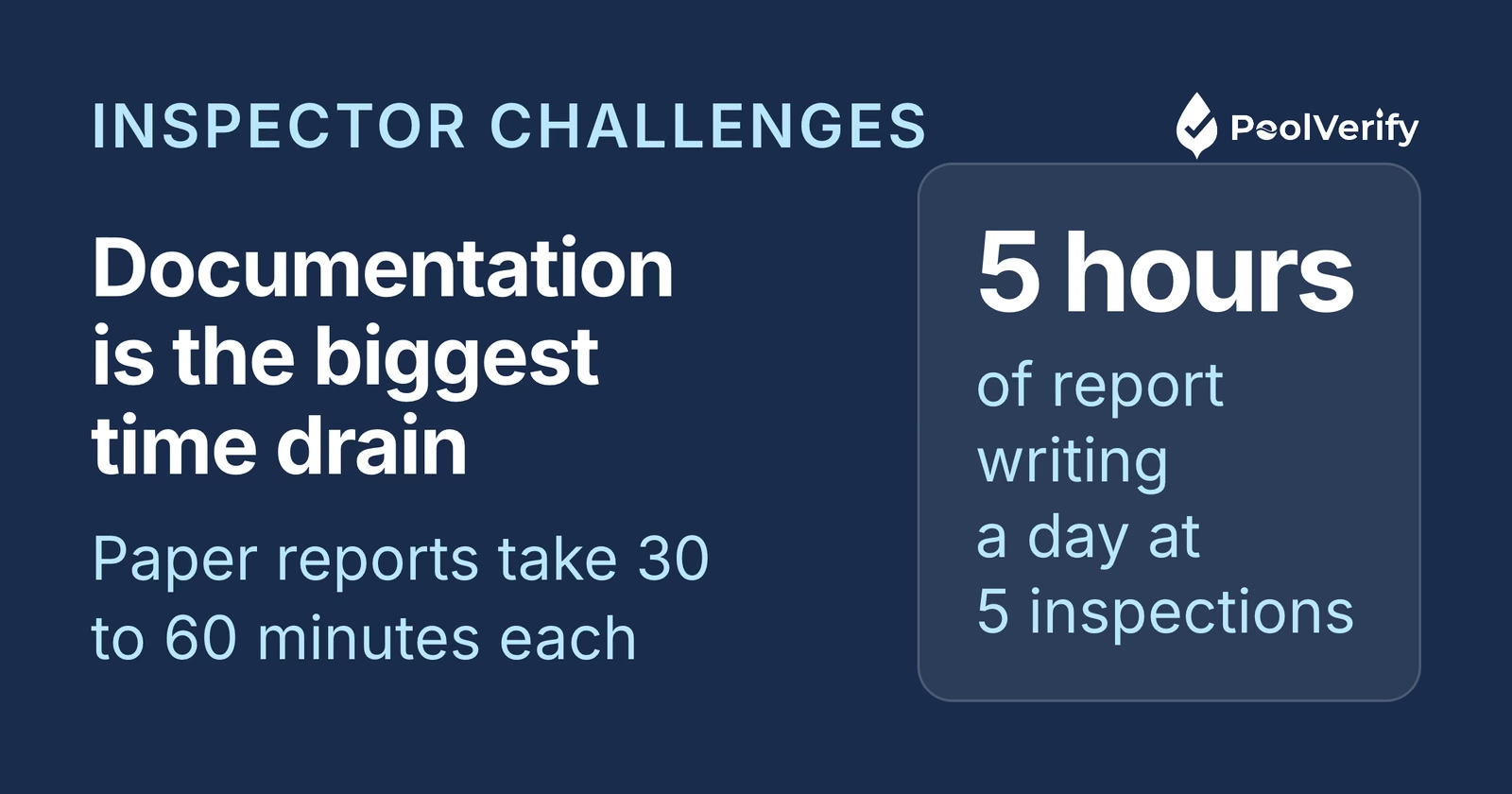
The single biggest time drain in pool inspection work isn't the inspection itself, it's the documentation that follows. Inspectors using paper forms or manual processes spend 30-60 minutes per inspection creating reports, organizing photos, and formatting documents for clients.
For a typical inspector completing 5 inspections per day, that's 2.5-5 hours of report writing, time that could be spent on additional revenue-generating inspections.
The specific pain points
Photo management: Sorting, labeling, and inserting dozens of photos into a report template
Code reference lookup: Finding and citing the correct BPC §7195 or HSC §115922 section for each finding
Report formatting: Creating professional-looking PDFs that clients and real estate agents expect
Data entry duplication: Writing the same property details, client information, and boilerplate text for every report
The solution
Digital inspection platforms eliminate 70-80% of documentation time. Tools like PoolVerify automate the entire report creation process:
Photos are captured and organized in real-time during the inspection
BPC §7195 compliance items are pre-built into guided checklists
Professional PDF reports generate instantly when the inspection is complete
Client information auto-populates across all documents
Inspectors who switch from paper to digital consistently report completing inspections in 15-20 minutes compared to 30-45 minutes with manual methods. Over a full day of inspections, that's 1-2 additional inspections worth of reclaimed time. For more on this transition, see our paper forms vs digital inspection software comparison.
2. Scheduling and route inefficiency
Poor scheduling costs inspectors an average of 1-2 hours per day in unnecessary drive time. When inspections aren't geographically clustered, inspectors spend more time in the car than at the pool.
The specific pain points
Scattered appointments: Bookings come in randomly, creating zigzag routes across a service area
Last-minute cancellations: A canceled inspection mid-route wastes the entire time slot
Real estate deadline pressure: Agents need inspections completed within days, forcing inspectors to accept inconvenient scheduling
No-shows: Arriving at a property where the homeowner forgot or isn't prepared
The solution
Geographic clustering and scheduling discipline transform inspection efficiency:
Batch by area: Dedicate specific days to specific zones in your service area. If Monday is the west side and Tuesday is the east side, decline bookings that don't fit the zone (or push them to the right day)
Buffer scheduling: Leave 30-minute buffers between inspections to absorb delays without cascading impacts
Confirmation systems: Send automated reminders 24 hours and 2 hours before each inspection
Cancellation policies: Implement a 24-hour cancellation policy with a rebooking fee to reduce no-shows
Fill-on-the-fly: Keep a short-notice client list for same-day slots opened by cancellations
Professional inspectors who implement geographic batching report completing 1-2 additional inspections per day simply by reducing windshield time.
3. Keeping up with regulatory changes
California pool safety regulations change more frequently than most inspectors realize, and falling behind creates both compliance risk and liability exposure.
The specific pain points
Code updates: California updates building codes on a regular cycle, and pool safety provisions change with each update
Local variations: Different counties and cities may have additional requirements beyond state minimums
New legislation: Bills like SB 442 fundamentally changed inspection requirements
Interpretation differences: Building officials in different jurisdictions sometimes interpret the same code differently
Continuing education: Staying current requires time and money that cuts into productive inspection hours
The solution
Build regulatory awareness into your workflow rather than treating it as a separate activity:
Use updated inspection templates: Software with California-specific compliance checklists that are updated when codes change ensures you're always inspecting to the current standard
Join professional associations: Organizations like PHTA (Pool & Hot Tub Alliance) and state licensing boards distribute regulatory updates to members
Subscribe to state alerts: California's Division of Occupational Safety and Health publishes regulatory changes that affect pool safety professionals
Peer networks: Connect with other inspectors who can share insights on how local building officials are interpreting new regulations
4. Client disputes and pushback on findings
Client disagreements are one of the most stressful aspects of pool inspection work, particularly when findings affect a real estate transaction. Homeowners who believe their pool is "fine" or sellers who see violations as deal-killers can become confrontational.
The specific pain points
Emotional reactions: Homeowners take findings personally, viewing them as criticism of their property
Cost shock: Hearing that barrier corrections could cost $3,000+ triggers defensive responses
"It's been fine for years" arguments: Owners cite years of incident-free pool ownership as evidence that compliance doesn't matter
Agent pressure: Real estate agents sometimes pressure inspectors to minimize findings to keep deals on track
DIY disputes: Homeowners who made their own modifications insist their work is compliant
The solution
Objective, well-documented findings are your best defense against pushback:
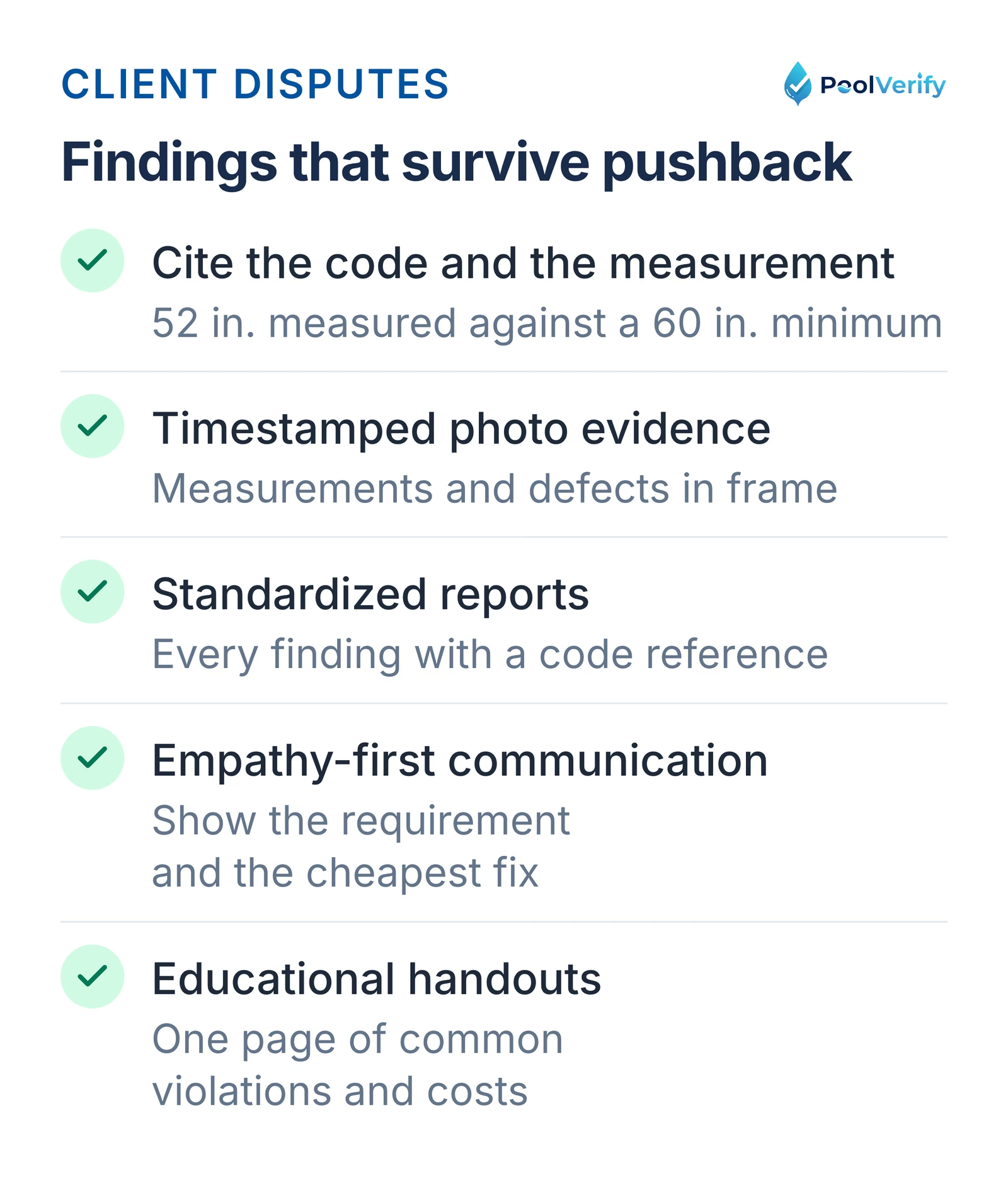
Reference specific code sections: Instead of "the fence is too short," say "the barrier measures 52 inches, which is below the 60-inch minimum required by BPC §7195." Specificity makes findings indisputable
Photo evidence: Timestamp-stamped photos showing measurements, defects, and code-relevant details eliminate "he said, she said" disputes
Standardized reports: Professional reports from digital inspection tools that consistently document every finding with code references carry more weight than handwritten notes
Empathy-first communication: Lead with "I understand this is frustrating, let me show you exactly what the code requires and the most affordable way to fix it." Position yourself as a problem-solver, not a problem-creator
Five ways inspectors defend findings: cited measurements, timestamped photos, standard reports, empathy, and handouts.
5. Inconsistent inspection quality
Consistency is the hallmark of a professional inspection operation, but maintaining it across hundreds of inspections (or multiple team members) is genuinely difficult.
The specific pain points
Inspector fatigue: After the fourth or fifth inspection of the day, attention to detail drops
Memory reliance: Without a systematic checklist, inspectors sometimes forget items, particularly less-common checks like drain cover expiration dates or alarm decibel levels
Team variability: When multiple inspectors work under one company, each may emphasize different aspects or document findings differently
Rushed inspections: Time pressure leads to shortcuts, particularly on items that "almost always pass"
Guided digital checklists: Inspection software that walks through every BPC §7195 and HSC §115922 requirement in a fixed order prevents skipped items. PoolVerify's compliance templates don't let you move forward until each item is addressed
Mandatory photo documentation: Require a minimum number of photos per inspection, this forces the inspector to physically verify each feature, not just check a box from memory
Standard operating procedures: Document your inspection process step by step. New team members should follow the same sequence every time
Quality audits: Randomly review completed reports for completeness, accuracy, and documentation quality
Peer review for teams: Have senior inspectors periodically review newer inspectors' reports and provide feedback
Consistency protects you legally, builds your reputation, and generates referrals from agents and homeowners who know they can count on thorough work every time.
Complete your California pool inspections with confidence. PoolVerify's guided BPC §7195 checklists ensure every required safety feature is checked, every time. Start Your Free Trial
6. Weather and access issues
California's climate is generally inspection-friendly, but weather and access problems still cause significant scheduling disruptions.
The specific pain points
Rain delays: Even light rain makes pool deck surfaces slippery and unsafe for inspections, and wet conditions obscure some visual findings
Heat exhaustion: Summer inspections in inland California (Sacramento Valley, Inland Empire, Central Valley) regularly hit 100°F+, creating health risks during extended outdoor work
Equipment access: Gates locked with unknown codes, overgrown vegetation blocking barriers, or unprepared properties waste time on arrival
Vacant properties: Inspections at vacant homes may lack power (no alarm testing), water (no drain flow testing), or clear access to pool equipment
Pet interference: Dogs in the backyard prevent safe inspection until the homeowner secures them
The solution
Weather policy: Establish a clear weather policy, inspections proceed in light drizzle but reschedule in steady rain. Communicate this to clients upfront
Heat management: Schedule inland inspections for early morning (before 10 AM) during summer months. Carry water, electrolytes, and a cooling towel. Build in rest breaks between inspections
Pre-inspection checklist: Send clients a preparation email 24 hours before: unlock all gates, secure pets, ensure utilities are on, clear access to pool equipment areas
Property prep confirmation: Call or text the morning of the inspection to confirm the property is ready. One 30-second call prevents one 30-minute wasted trip
Vacant property protocol: Confirm utility status with the listing agent before scheduling. Bring a flashlight, basic tools, and document any items that couldn't be tested due to access limitations
7. Liability and insurance concerns
Pool inspectors carry significant professional liability, a missed safety hazard could lead to injury, lawsuits, and career-ending consequences.
The specific pain points
Errors and omissions risk: Missing a non-compliant drain cover or gate latch that later contributes to an incident exposes the inspector to E&O claims
Insurance costs: Professional liability insurance for pool inspectors ranges from $1,500-$4,000+ annually, and premiums increase with claims history
Documentation requirements: Insurers require detailed inspection records that demonstrate thoroughness
Scope creep: Clients sometimes ask inspectors to evaluate items outside the BPC §7195 scope (water quality, equipment age, structural integrity), creating liability for opinions beyond the inspector's expertise
The solution
Thorough documentation: The best liability protection is a complete, timestamped, photo-documented inspection report that shows exactly what was evaluated and what was found. Digital reports with automatic timestamps provide a defensible record
Scope of work agreement: Use a written agreement that clearly defines what the inspection covers (BPC §7195 safety features) and what it does not cover. Have the client sign before the inspection begins
Continuing education: Stay current on code requirements so your inspections reflect the latest standards. Outdated practices increase liability
Know your limits: Decline to evaluate items outside your expertise. If a client asks about pool equipment age or pump efficiency, recommend they consult a pool service professional
Professional insurance: Maintain adequate E&O coverage and review your policy annually. Consider an umbrella policy if your inspection volume is high
Scaling from solo inspector to multi-inspector operation introduces management challenges that pure inspection skill doesn't prepare you for.
The specific pain points
Hiring quality inspectors: Finding inspectors who are both technically competent and professionally presentable
Training consistency: Ensuring new hires inspect to the same standard as the founder
Scheduling complexity: Coordinating multiple inspectors across overlapping service areas
Quality control: Reviewing reports and maintaining standards as volume increases
Client relationship management: Maintaining the personal touch that built the business while delegating inspection work
The solution
Documented SOPs: Write down every process, from how to answer the phone to how to photograph a gate latch. SOPs are the foundation of scalable quality
Team management tools: Use inspection platforms with team management features that allow role-based access, report review workflows, and centralized scheduling
Gradual growth: Add one inspector at a time. Shadow them for 10-15 inspections before letting them work independently
Client communication systems: Automated confirmation emails, report delivery, and follow-up surveys maintain the client experience without your personal involvement in every interaction
Performance metrics: Track inspections per day, average inspection time, report completeness scores, and client feedback for each inspector
Many experienced pool inspectors resist switching from paper to digital tools, even when the efficiency gains are clear. This challenge is particularly common among inspectors who have been working successfully with their current system for years.
The specific pain points
Learning curve anxiety: Concern that learning new software will slow them down during the transition period
Cost concerns: Monthly software subscriptions feel like an added expense rather than an investment
Reliability fears: Worry about phone batteries dying, apps crashing, or losing data mid-inspection
"My system works": Resistance to change when the current paper-based approach has been adequate
Client perception: Concern that using a phone or tablet during an inspection looks unprofessional
The solution
Start with low-risk adoption: Use digital tools alongside your existing paper process for the first 5-10 inspections. Compare the results and time investment before fully switching
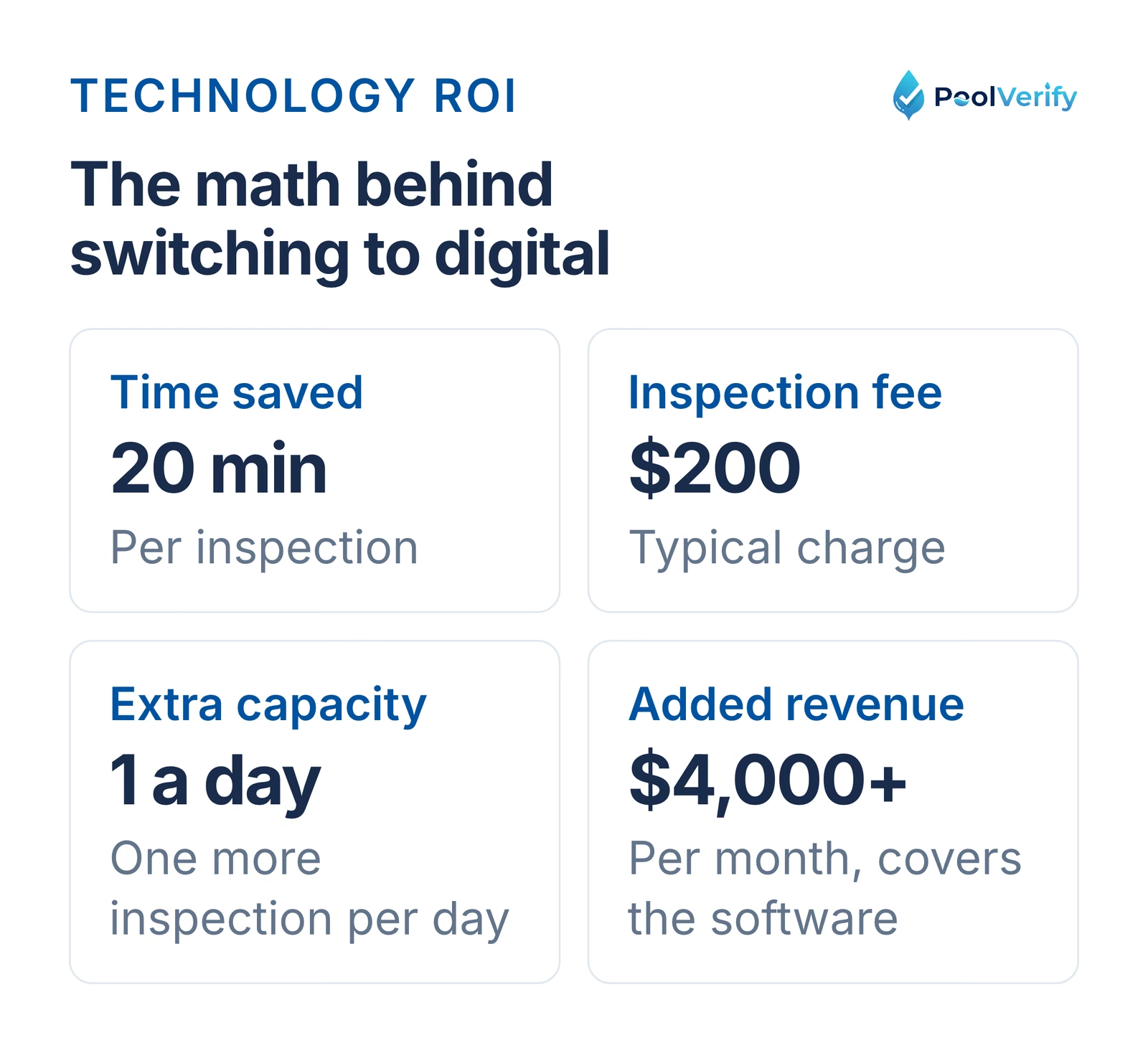
Calculate the ROI: If digital tools save you 20 minutes per inspection and you charge $200/inspection, completing just one additional inspection per day covers the software cost and adds $4,000+/month in revenue. See our paper forms vs. digital comparison for detailed ROI analysis
Choose reliable tools: Web-based platforms like PoolVerify work on any device with a browser and save every answer as you go, no app downloads, no platform lock-in
Reframe the perception: Clients and agents increasingly expect digital reports. Using professional inspection software signals competence, not distraction
Leverage cloud backup: Digital records are safer than paper files. Cloud storage means you'll never lose an inspection record to water damage, fire, or a misplaced folder
Saving 20 minutes per inspection at $200 each adds one inspection a day and $4,000 or more a month.
10. Competition and pricing pressure
As California's pool inspection market grows, more inspectors enter the field, creating price competition that threatens profit margins.
The specific pain points
Race to the bottom: New inspectors undercut established prices to win clients, dragging market rates down
Agent-driven pricing: Real estate agents who order dozens of inspections per year negotiate aggressive discounts
Commoditization: When clients see inspection as a checkbox rather than a professional service, price becomes the primary differentiator
Review manipulation: Some competitors solicit reviews aggressively, making it harder for quality-focused inspectors to stand out organically
Free/cheap alternatives: DIY inspection tools and templates make some homeowners question why they need a professional
The solution
Differentiate on quality and speed: Compete on value, not price. Faster turnaround (same-day reports), more thorough documentation, and professional presentation justify premium pricing
Specialize: Position yourself as a California pool safety compliance specialist, not a general inspector. Specialization commands higher rates
Build referral relationships: Cultivate relationships with real estate agents, property managers, and escrow companies who value reliability over price. A single agent sending you 3-5 inspections per month is more valuable than any marketing campaign
Package services: Offer tiered service levels, basic BPC §7195 compliance inspection, enhanced inspection with detailed photo reports, and premium packages that include compliance consultation and fix-cost estimates
Invest in your brand: Professional reports, a clean website, Google reviews, and timely communication differentiate you from the competition more effectively than pricing alone. See our guide on how to price pool inspections for data-backed pricing strategies
Challenge impact and solution summary
Here's a quick reference ranking each challenge by how much it affects inspector productivity and income:
Rank
Challenge
Impact
Best Solution
Time Saved
1
Documentation & reporting
Very high
Digital inspection platform
20-30 min/inspection
2
Scheduling & routes
High
Geographic batching
1-2 hrs/day
3
Regulatory changes
High
Updated digital templates
Ongoing compliance
4
Client disputes
High
Photo-documented reports
15-30 min/dispute
5
Inconsistent quality
High
Guided checklists
Prevents rework
6
Weather & access
Moderate
Pre-inspection preparation
30 min/wasted trip
7
Liability concerns
Moderate
Thorough documentation
Risk reduction
8
Business growth
Moderate
SOPs + team tools
Scalable operations
9
Technology adoption
Moderate
Phased transition
Long-term efficiency
10
Competition & pricing
Moderate
Differentiation + specialization
Revenue protection
The top four challenges all share a common solution thread: better documentation. Whether it's speeding up reports, preventing client disputes, maintaining quality, or protecting against liability, the inspectors who document thoroughly and efficiently outperform those who don't.
Limitations
This guide is general information about pool safety law, not legal advice; the current text of HSC §115922 and BPC §7195 on leginfo.legislature.ca.gov controls, and local building departments add their own requirements. PoolVerify is inspection software for California residential pool safety inspections; it does not perform inspections, certify inspectors, or issue compliance certificates.
Frequently asked questions
What is the biggest challenge pool inspectors face?
The biggest challenge pool inspectors report is time-consuming documentation. Creating detailed inspection reports with photos, measurements, and code references takes 30-60 minutes per inspection using paper forms. Digital inspection tools like PoolVerify reduce this to 15-20 minutes by automating report generation, photo organization, and compliance checklists, allowing inspectors to complete 1-2 additional inspections per day.
How do pool inspectors handle difficult clients who disagree with findings?
Professional inspectors handle client disagreements by referencing specific code sections and providing photo evidence. Instead of subjective language, inspectors cite BPC §7195 or HSC §115922 requirements with exact measurements. Digital reports with timestamped photos are particularly effective at preventing disputes because they provide objective, verifiable evidence of each finding. Leading with empathy and positioning yourself as a problem-solver rather than a critic also defuses tension.
How do inspectors keep up with changing pool safety regulations?
Inspectors stay current through a combination of continuing education, professional associations, and updated inspection tools. Organizations like PHTA and state licensing boards distribute regulatory updates. Inspection software with regularly updated California compliance templates ensures inspectors are always checking against current code. California has updated pool safety codes multiple times, most recently with SB 442, making it critical to verify your inspection process reflects the latest requirements.
What tools help pool inspectors work more efficiently?
Digital inspection platforms provide the biggest efficiency gains for pool inspectors. Tools like PoolVerify offer guided BPC §7195 checklists, automated photo documentation with timestamps, instant PDF report generation, digital signatures, and cloud storage. Inspectors using digital tools typically complete inspections 40-50% faster than paper-based methods while producing more thorough and professional reports.
How many inspections can a pool inspector complete per day?
Most full-time pool inspectors complete 4-8 inspections per day, depending on travel distance, pool complexity, and documentation method. Inspectors using digital tools average 6-8 inspections daily compared to 3-5 with paper forms, primarily because digital tools eliminate post-inspection report writing. Geographic route batching further increases daily capacity by reducing windshield time. For more on optimizing your inspection workflow, see our pool inspection workflow guide.
Turn challenges into competitive advantages
Every challenge on this list is an opportunity to differentiate yourself from inspectors who haven't solved these problems. The inspectors who invest in efficient workflows, thorough documentation, and professional client communication don't just survive in a competitive market, they thrive.
For pool inspectors ready to solve the documentation, consistency, and efficiency challenges, PoolVerify provides California-compliant BPC §7195 checklists, guided inspection workflows, instant PDF reports, and digital signatures, all on any device without app downloads. Start your 14-day free trial and complete your first inspection in under 20 minutes.
Last updated: September 9, 2026
What the client receives
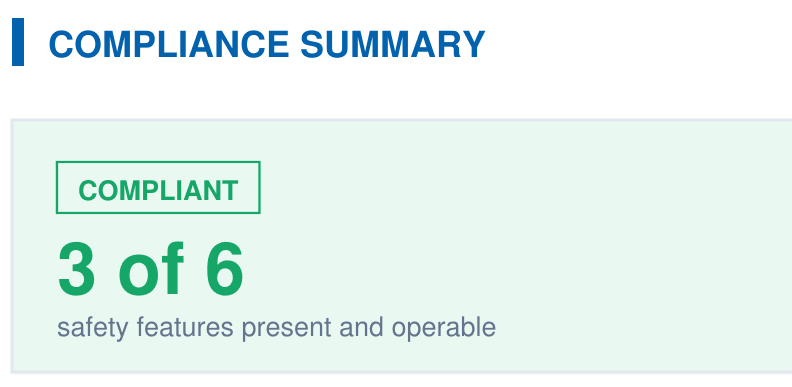
A branded PDF with the compliance summary, the feature table, each finding with its photos, and the signature, generated on‑site when the BPC §7195 and HSC §115922 checklist is complete.