Above-Ground Pool Safety Requirements in California
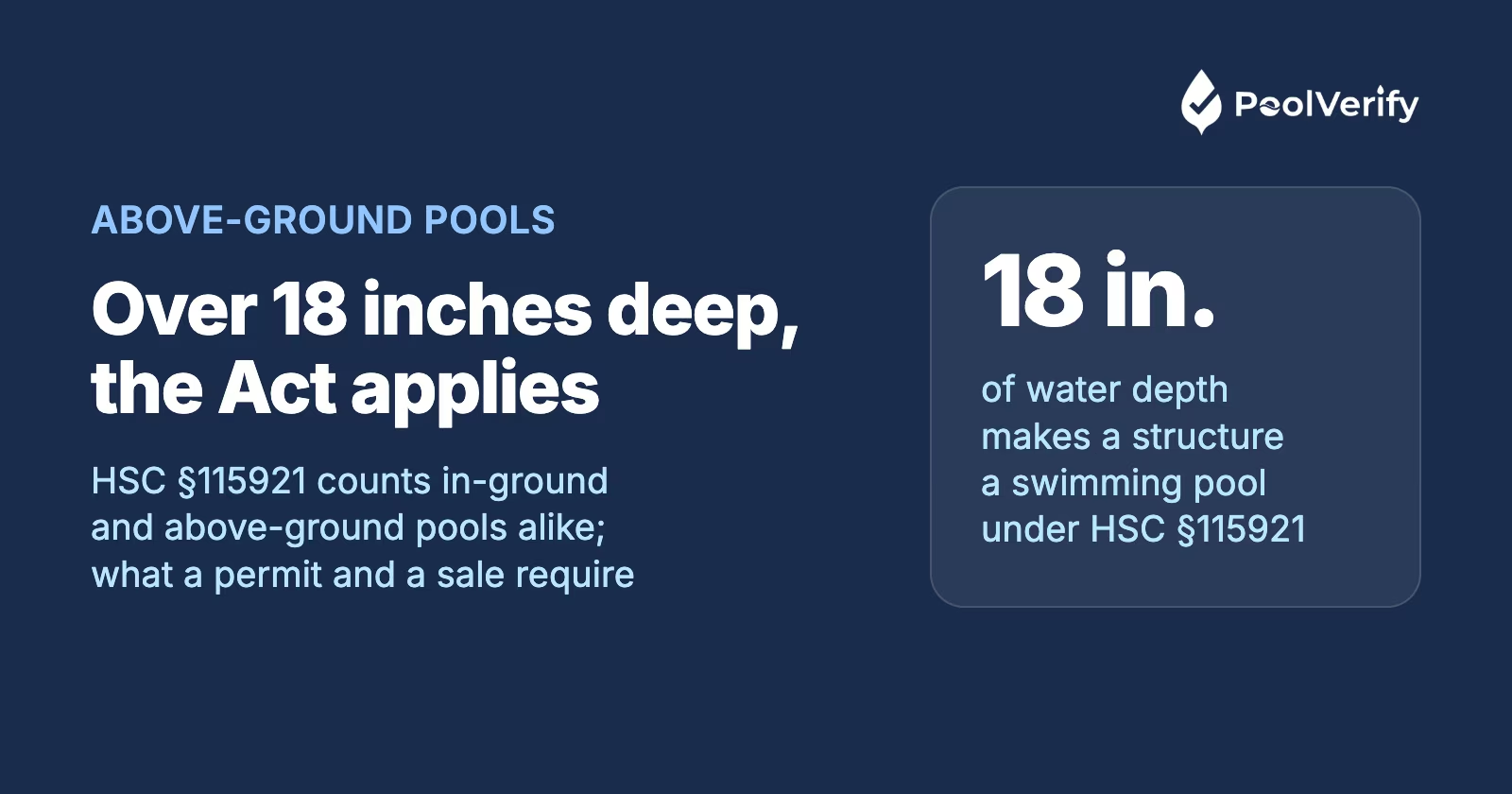
California's Swimming Pool Safety Act covers above-ground pools: HSC §115921 defines a swimming pool as any structure intended for swimming or recreational bathing that contains water over 18 inches deep, in-ground or above-ground. What the Act requires when a permit is issued, what the pool wall and ladder do and do not count for, the suction outlet rules, and what the BPC §7195 report says at a sale.
California's Swimming Pool Safety Act covers above-ground pools because Health and Safety Code §115921 defines a swimming pool as any structure intended for swimming or recreational bathing that contains water over 18 inches deep, in-ground or above-ground, and names hot tubs, spas, portable spas and nonportable wading pools. Height off the ground changes nothing; water depth does.
This guide covers what counts as a pool, when the Act's requirements attach, how the seven safety features apply to an above-ground pool, what the pool wall and the ladder do and do not count for, the suction outlet rules at a permit, what the BPC §7195 report says at a sale, and temporary pools. Our HSC §115922 guide covers the Act clause by clause.
What counts as a pool
The definitions in HSC §115921 decide everything that follows, and none of them mentions how the pool was built.
Term
Definition in HSC §115921
For an above-ground pool
Swimming pool or pool
Any structure intended for swimming or recreational bathing that contains water over 18 inches deep, in-ground or above-ground, including hot tubs, spas, portable spas and nonportable wading pools
A steel-wall, resin or soft-sided pool over 18 inches deep is a pool; a wading pool under 18 inches is not
Enclosure
A fence, wall or other barrier that isolates a swimming pool from access to the home
The barrier must isolate the water from the house; the pool's own wall is not named
Suction outlet
A fitting or fixture typically located at the bottom or on the sides of a swimming pool that conducts water to a recirculating pump
The main drain or wall fitting the pump draws from, where the pool has one
HSC §115925 then removes three settings from the Act: public pools, a hot tub or spa with a locking safety cover that complies with ASTM F1346, and apartment complexes or any residential setting other than a single-family home. An above-ground pool at a single-family home is inside the Act.
When the Act's requirements attach
The Act is triggered by a building permit, not by owning a pool. HSC §115922(a) applies when a building permit is issued for the construction of a new swimming pool or spa, or the remodeling of an existing one, at a private single-family home: the pool shall then be equipped with at least two of seven drowning prevention safety features, and under §115922(c) the local building official inspects those features before final approval.
Whether an above-ground pool needs a building permit at all is a question the Act does not answer; it is decided by the city or county building department and the codes it has adopted. Two consequences follow:
With a permit, the two-feature rule, the building official's inspection and the suction outlet rules in HSC §115928 all apply, exactly as for an in-ground pool. HSC §115924 also requires anyone contracting to build the pool or do the permitted work to give the consumer notice of the Act's requirements.
Without a permit, the Act imposes no duty on the pool. A local ordinance may still require a barrier, and at a sale the BPC §7195 report will record which features the pool has either way.
Ask the building department before the pool goes up; our county requirements guide explains how local rules sit on top of the state statute.
The seven features on an above-ground pool
The seven features in HSC §115922(a) are the same list for every pool. Each is read below against the shape of an above-ground pool.
60 inches high, no more than 2 inches under, no opening that passes a 4 inch sphere, no handholds or footholds outside, gates opening away from the pool, self-closing and self-latching with the release no lower than 60 inches above the ground
A fence around the pool area or between the house and the pool, measured on the outside; the pool wall is not named as an enclosure
(2) Removable mesh fencing
ASTM F2286, with a gate that self-closes, self-latches and can be locked with a key
Installed around the pool or on a deck built against it
(3) Safety pool cover
Labeled to ASTM F1346-23
Covers made for above-ground pools exist; the label is what the inspector reads
(4) Exit alarms
On the home's doors and windows with direct access to the pool, sounding continuously or repeating a verbal warning when the opening is used
Same as any pool where the yard gives direct access
(5) Self-closing, self-latching door devices
Release at least 54 inches above the floor, on doors with direct access
Same as any pool
(6) In-water alarm
Independently certified to ASTM F2208; a wearable alarm does not qualify
Installed in the pool; the certification mark is what the inspector reads
(7) Other means
Equal or greater protection, independently verified by an approved testing laboratory, and labeled
Documented from its label
Two combinations do not add up to two, under HSC §115922(b): an exit alarm and a self-closing, self-latching device on the same door, an exit alarm and a door latch on separate doors, and a safety cover with an in-water alarm. A cover plus an enclosure, or an enclosure plus door devices, are valid pairs.
The pool wall and the ladder
Owners of above-ground pools often assume the wall is the barrier and a removable or lockable ladder is the gate. The statute does not say either thing.
The wall. HSC §115921 defines an enclosure as a fence, wall or other barrier that isolates the pool from access to the home, and HSC §115923 gives that barrier a gate that opens away from the pool, self-closes and self-latches with its release at least 60 inches above the ground. A pool wall has no gate, so the ladder or steps would have to serve that role, and the statute does not describe a ladder. Whether a building official accepts a wall and ladder as an enclosure is a decision to ask for before the permit, not to assume at final.
The deck. A deck built against the pool with steps from the yard makes the deck the route to the water. A gate at the top or bottom of those steps, meeting the §115923 gate rules, is what an inspector can measure.
The other six features do not depend on the wall. A safety cover labeled to ASTM F1346-23, an in-water alarm certified to ASTM F2208, exit alarms and door devices on the house all count on an above-ground pool exactly as on an in-ground one, and none of them raises the question the wall raises.
Our enclosure guide has every §115923 number with how to measure it, and the gate latch guide covers the 60 inch gate rule and the 54 inch door rule it is confused with.
The same checklist, whatever the pool sits on. PoolVerify's California checklist lists the six physical HSC §115922(a) features as items with the measurement or label each one asks for, records the seventh in notes, takes up to 10 photos per item and generates the PDF with the count on page 1, on a phone at an above-ground pool as at any other. See the checklist.
Suction outlets at a permit
When a building permit is issued for a new pool or spa, HSC §115928 requires either at least two circulation suction outlets per pump, hydraulically balanced and symmetrically plumbed and separated by at least three feet in any dimension, or a design that uses alternatives to suction outlets, including skimmers or perimeter overflow systems, to conduct water to the pump. Many above-ground pools draw through a skimmer and a wall return rather than a floor drain, which is one of the alternatives the section names; where a floor or wall suction outlet exists, its cover and the outlet arrangement are what the inspector photographs. Our drain cover guide covers the section and its remodel counterpart, HSC §115928.5.
At a sale: the BPC §7195 pool section
When a home inspection is performed for a fee at the transfer of a one to four unit home, BPC §7195(a)(2) includes a noninvasive examination of the pool or spa and the dwelling to identify which of the seven HSC §115922(a) features the pool has, in good repair, operable as designed and, if applicable, appropriately labeled, and §7195(c) requires the report to name them, to state specifically if there are fewer than two, and to include the isolation fence statement. An above-ground pool over 18 inches deep is a pool for this purpose, permit or no permit.
The inspector's walk at an above-ground pool follows the five steps in the summary above: confirm the depth, map the routes to the water including the ladder and any deck, identify each of the seven features, measure and test what is present, and write the section with all seven named. Our report writing guide covers the wording and the seller's guide covers what follows a report that says fewer than two.
Temporary and inflatable pools
An inflatable or frame pool that holds water over 18 inches deep and is intended for swimming or recreational bathing fits the HSC §115921 definition while it stands. The Act's construction requirements attach only when a building permit is issued, so the practical questions for a seasonal pool are local: whether the jurisdiction requires a permit or a barrier for it, and what the homeowner's insurer asks. The Act sets no fine, misdemeanor or jail term for any pool; our non-compliance guide covers what the law does and does not penalize.
Limitations
This guide is general information about California law, not legal advice. The current text of HSC §115921 to §115929 and BPC §7195 on leginfo.legislature.ca.gov controls, and whether an above-ground pool needs a permit, or whether its wall is accepted as a barrier, is decided by the local building department under the codes it has adopted; this guide does not describe those local codes. PoolVerify is inspection software for California residential pool safety inspections; it does not perform inspections, certify inspectors, or issue compliance certificates.
Frequently asked questions
Does California's pool safety law apply to above-ground pools?
Yes. HSC §115921 defines a swimming pool as any structure intended for swimming or recreational bathing that contains water over 18 inches deep, in-ground or above-ground, and names hot tubs, spas, portable spas and nonportable wading pools. The Swimming Pool Safety Act's requirements attach to that definition, not to how the pool was built.
Do you need a fence around an above-ground pool in California?
Not always, and not because of the pool's height. When a building permit is issued for a new or remodeled pool at a single-family home, HSC §115922(a) requires at least two of seven safety features, and an enclosure meeting HSC §115923 is one option, not a mandate. Without a permit the Act imposes no duty, and a local ordinance or the building department may still require a barrier.
Does the wall of an above-ground pool count as the enclosure?
The statute does not say. HSC §115921 defines an enclosure as a fence, wall or other barrier that isolates the pool from access to the home, and HSC §115923 specifies 60 inches of height, no more than 2 inches under, no opening that passes a 4 inch sphere, no handholds or footholds, and a gate that self-closes and self-latches. A pool wall has no gate, so ask the building official before relying on it.
Does an above-ground pool need a building permit in California?
That is a local question. The Swimming Pool Safety Act does not say which pools need permits; it says what a permitted pool must have. Whether a given above-ground pool requires a permit depends on the city or county building department and its adopted codes, so ask before installing. If a permit is issued, HSC §115922 and §115928 apply at final approval.
Is an above-ground pool inspected when a house is sold?
Yes, if a home inspection is performed for a fee at the transfer. BPC §7195(a)(2) includes a noninvasive examination of the pool or spa to identify which of the seven HSC §115922(a) features it has, and §7195(c) requires the report to name them, their condition, and to state specifically if there are fewer than two. An above-ground pool over 18 inches deep is a pool for this purpose.
What about an inflatable or temporary pool?
If it holds water over 18 inches deep and is intended for swimming or recreational bathing, it fits the HSC §115921 definition while it is set up. The Act's construction requirements attach only when a building permit is issued, so for a temporary pool the practical questions are local: whether the jurisdiction requires a permit or a barrier for it. At a sale, an inspector records whatever pool is present on the day.
Conclusion
An above-ground pool in California is a swimming pool the moment its water is over 18 inches deep. With a building permit it needs two of the seven features, the building official's inspection and the suction outlet rules; without one the Act imposes no duty, though local rules may; and at a sale the BPC §7195 report names which of the seven it has. The wall is not the enclosure the statute describes, so the cover, alarms and door devices are where most above-ground pools find their two.
PoolVerify puts the seven features on a checklist with a photo on every item and generates the report on-site. Start your 14-day free trial, no credit card to start.
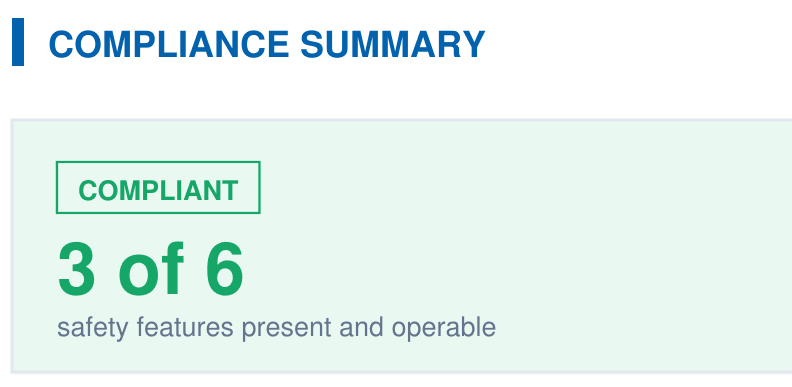
A branded PDF with the compliance summary, the feature table, each finding with its photos, and the signature, generated on‑site when the BPC §7195 and HSC §115922 checklist is complete.