Complete guide to spa and hot tub inspections in California. Learn BPC §7195 requirements, safety features, inspection checklist, and compliance differences from pool inspections.
California property transfers involving spas and hot tubs require specialized safety inspections that go beyond standard pool inspections. While spas fall under the same BPC §7195 drowning prevention requirements, they present unique safety considerations including higher water temperatures, specialized electrical systems, and distinctive entrapment risks. Understanding these spa-specific requirements is essential for pool inspectors, property owners, and real estate professionals navigating California compliance.
This comprehensive guide covers everything you need to know about spa and hot tub inspections in California, from regulatory requirements to detailed inspection checklists and common compliance issues.
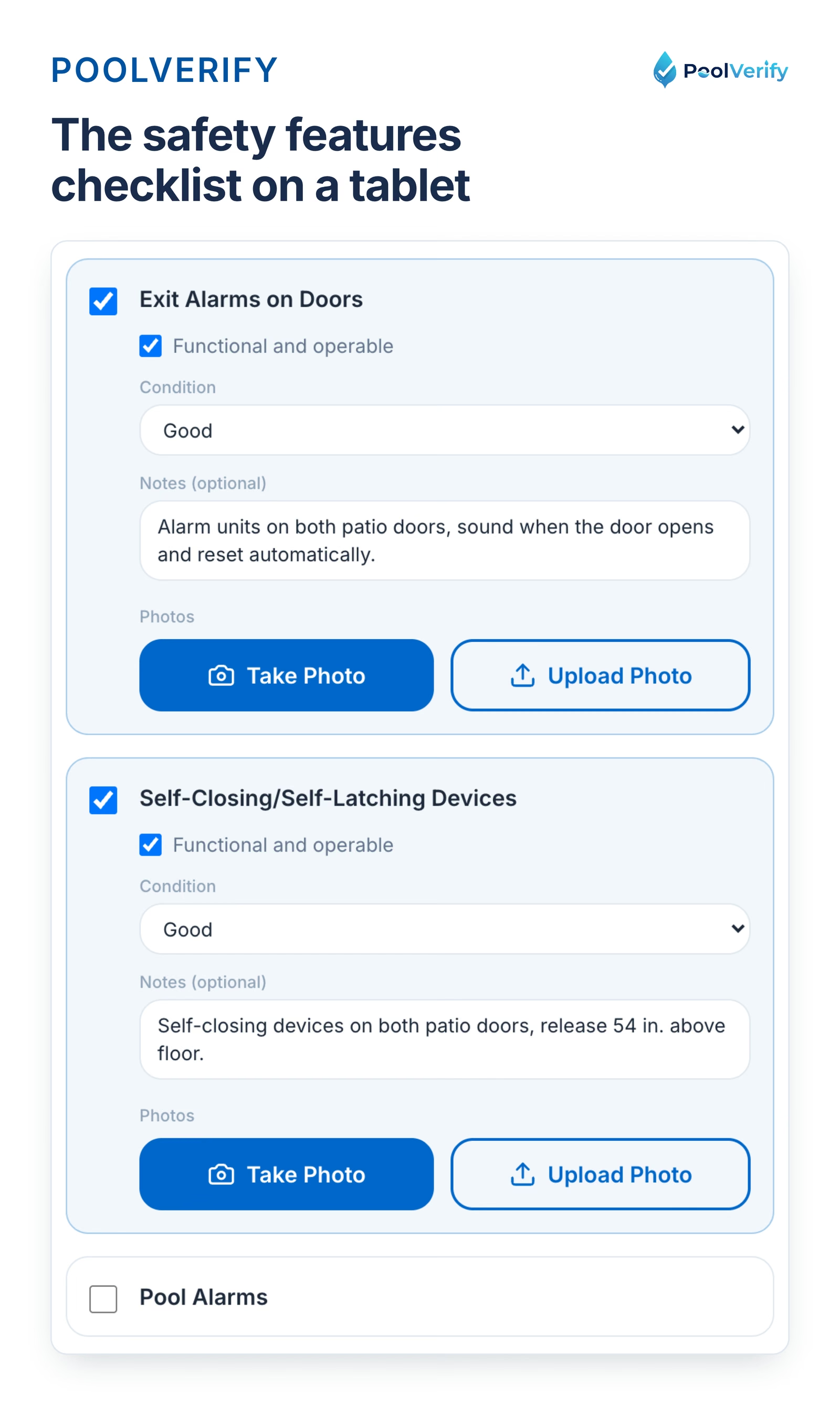
The PoolVerify safety features checklist on a tablet, one row per HSC §115922 item with photo buttons.
California Spa Inspection Requirements
California law mandates safety inspections for spas and hot tubs during property transfers under BPC §7195. The statute applies equally to swimming pools and spas, requiring identification of drowning prevention safety features before property can change hands.
According to the California Department of Public Health's Public Pool and Spa Safety Act, both public and private spas must meet specific safety standards. While commercial facilities have additional requirements, residential spas must comply with the same fundamental drowning prevention standards as pools.
The inspection requirement applies to:
Built-in spas and hot tubs (in-ground or above-ground)
Portable hot tubs and spa units
Combination pool-spa installations
Swim spas and exercise pools
Any permanently installed water feature capable of holding more than 18 inches of water
Ready to streamline your California spa safety inspections? PoolVerify provides spa-specific inspection templates that comply with BPC §7195 and HSC §115922 requirements. Complete inspections on any device and generate professional PDF reports instantly. Start Your Free Trial
BPC §7195 and Spa Compliance
Business and Professions Code Section 7195 requires that property transfer inspections identify which of the seven drowning prevention safety features are present at the spa or hot tub. The statute specifically states: "In connection with the transfer of real property with a swimming pool or spa, an appropriate inspection shall include a noninvasive physical examination of the pool or spa."
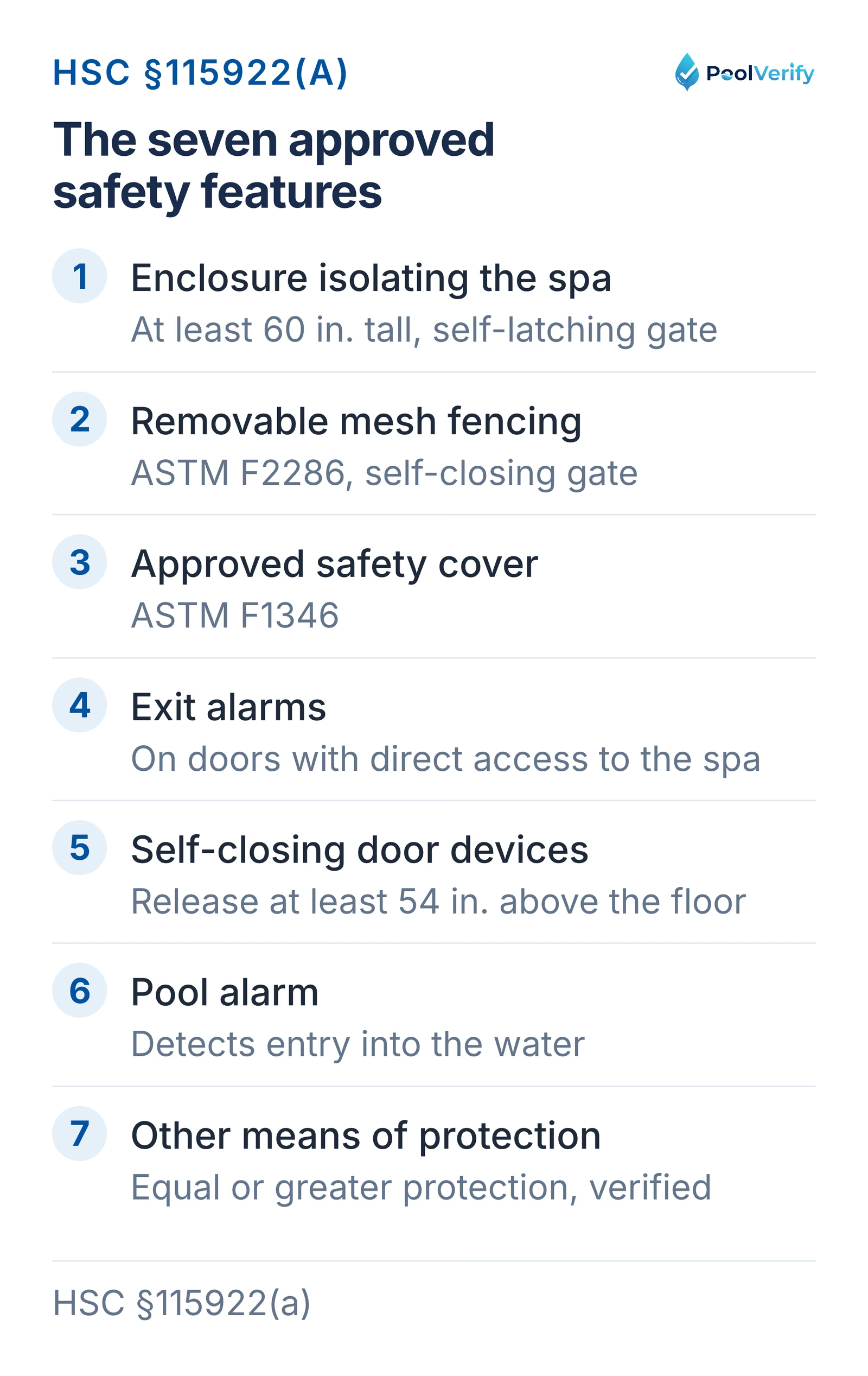
The seven drowning prevention safety features listed in HSC §115922(a).
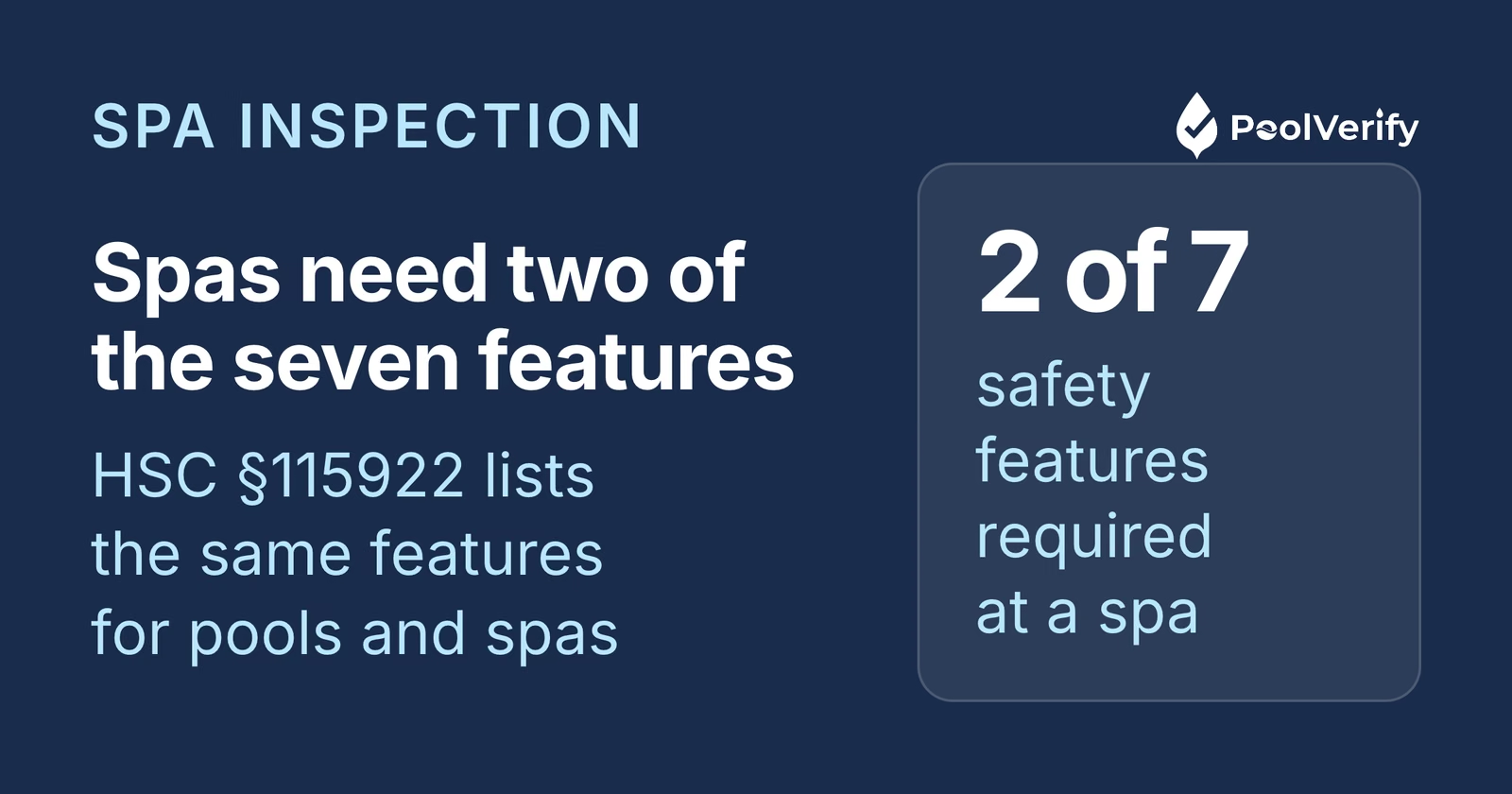
The law requires residential spas to have at least two of the seven approved drowning prevention safety features listed in Health and Safety Code Section 115922. Importantly, the inspection report must clearly state if the spa has fewer than two of these safety features.
A critical aspect of BPC §7195 compliance for spas is that inspectors are not required to determine whether features meet ASTM International specifications: they simply identify which features are present. This makes spa inspections accessible to various qualified professionals.
The statute also specifies that inspections must be completed within the transfer timeline, and the inspection report becomes part of the property disclosure documents. Failure to provide a compliant inspection report can delay or prevent property transfer.
For spas that share space with pools (common in many California properties), the inspection must address both the pool and spa components separately, as they may have different safety feature configurations.
Key Differences: Spa vs Pool Inspections
While spas fall under the same California safety regulations as pools, several critical differences exist in inspection protocols and safety considerations:
Temperature and Scalding Risk
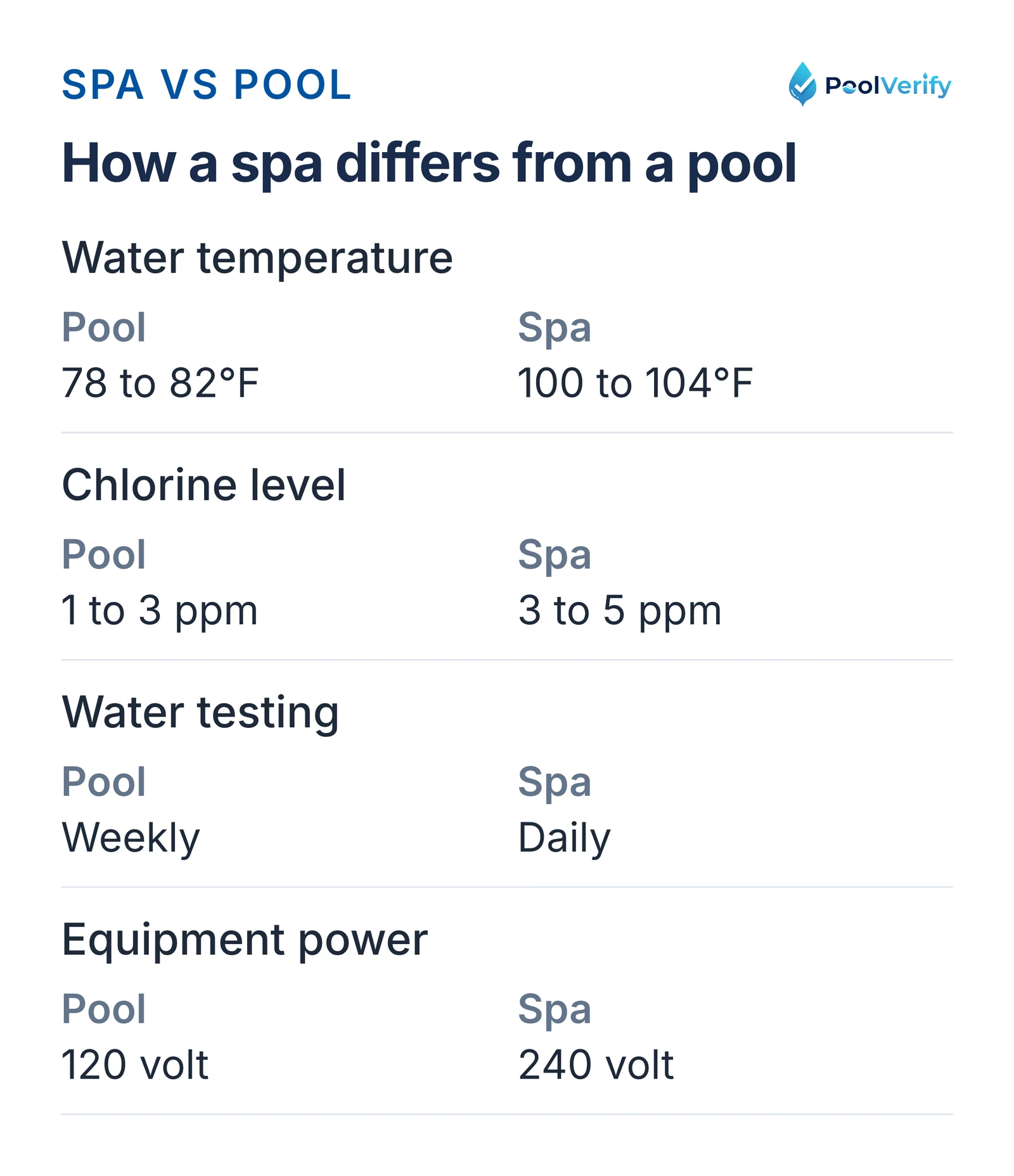
Spas operate at significantly higher temperatures than pools (typically 100-104°F vs 78-82°F). Inspectors must verify:
Temperature controls function properly and limit maximum temperature
Thermostats are accurate and calibrated
Warning labels about temperature limits are present and legible
Timer systems prevent extended high-temperature exposure
The smaller water volume in spas creates unique safety dynamics:
Faster chemical concentration changes requiring more frequent testing
Quicker temperature fluctuations affecting bather safety
Higher bather density relative to water volume
More rapid water quality degradation
Seating and Entry Configurations
Unlike pools, spas typically feature:
Built-in seating with jet systems
Steps or ladders requiring different safety assessments
Raised spa walls that may serve as barriers themselves
Cover systems that function as both safety features and insulation
Water temperature, chlorine level, testing frequency, and equipment voltage for a pool compared with a spa.
Electrical System Complexity
Spas have more complex electrical requirements than pools:
240-volt power systems (vs 120-volt for most pool equipment)
GFCI protection requirements within specific distances
Control panel systems with multiple circuits
Lighting systems in closer proximity to bathers
Maintenance and Chemical Management
Spa maintenance differs significantly from pool maintenance:
Higher sanitizer levels required (3-5 ppm chlorine vs 1-3 ppm for pools)
More frequent water testing (daily vs weekly)
Faster pH fluctuations due to smaller water volume
Specialized chemicals for high-temperature water
Understanding these differences is essential for accurate spa inspections and proper safety assessments.
Seven Drowning Prevention Safety Features for Spas
HSC §115922 requires at least two of the following seven drowning prevention safety features for residential spas and hot tubs:
1. Enclosure That Isolates the Spa from the Home
A permanent barrier that completely surrounds the spa and has no direct access from the dwelling. The enclosure must meet specific requirements:
Minimum height of 60 inches measured from grade
No openings greater than 4 inches in any dimension
No vertical openings greater than 1.75 inches wide
Includes a self-closing, self-latching gate
For spas, this often means fencing around an elevated deck or patio area where the spa is located. The barrier must prevent unsupervised access from the home.
2. Removable Mesh Fencing with Self-Closing Gate
Temporary mesh fencing that meets ASTM F2286 standards. This option is popular for spas because:
Can be removed when spa is in active use
Less permanent than fixed fencing
Meets code when properly installed
Must be at least 48 inches high with self-closing, self-latching gate
Mesh fencing must be reinstalled after each use to maintain compliance.
3. Approved Safety Pool Cover
For spas, this is typically a hard cover that locks in place and meets ASTM F1346 standards. The cover must:
Support at least 485 pounds across the entire surface
Lock securely to prevent unauthorized removal by children
Be specifically rated for spa use (temperature tolerance)
Be kept closed and locked when spa is not in active use
Many modern spas come with integrated locking safety covers that meet this requirement.
4. Exit Alarms on All Doors Providing Direct Access
If the dwelling has doors providing direct access to the spa area, approved exit alarms must be installed. Requirements include:
Minimum 85-decibel alarm sound
Alarm sounds when door is opened
Must be UL or ETL certified
Keypad or switch for authorized access
For spa installations on decks or patios, sliding glass doors are common access points requiring alarm installation.
5. Self-Closing, Self-Latching Device on All Doors
Door hardware that automatically closes and latches, preventing unsupervised access. Specifications include:
Latch at least 60 inches above the ground (HSC §115923(a))
Self-closes from any open position
Self-latches without manual assistance
Properly adjusted tension for reliable operation
This is often the most practical solution for spas near dwelling access points.
6. Pool Alarm System
An approved alarm that detects water entry and sounds when a person or object enters the spa. California-approved spa alarms must:
Alarms on all windows providing access to the spa area, meeting the same specifications as door exit alarms. This is typically used in combination with other features rather than as a standalone solution.
Pro Tip for Inspectors: Document not just the presence of safety features, but also their condition and proper operation. A locked spa cover that's damaged or a self-closing gate that doesn't latch doesn't meet compliance requirements, even if it's technically "present."
Spa-Specific Safety Features
Beyond the seven drowning prevention features required by BPC §7195, California spas must have additional safety features specific to hot tub operation:
Locking Safety Covers
Most residential spas use locking hard covers as their primary safety feature. According to California's Swimming Pool Safety Act, these covers must:
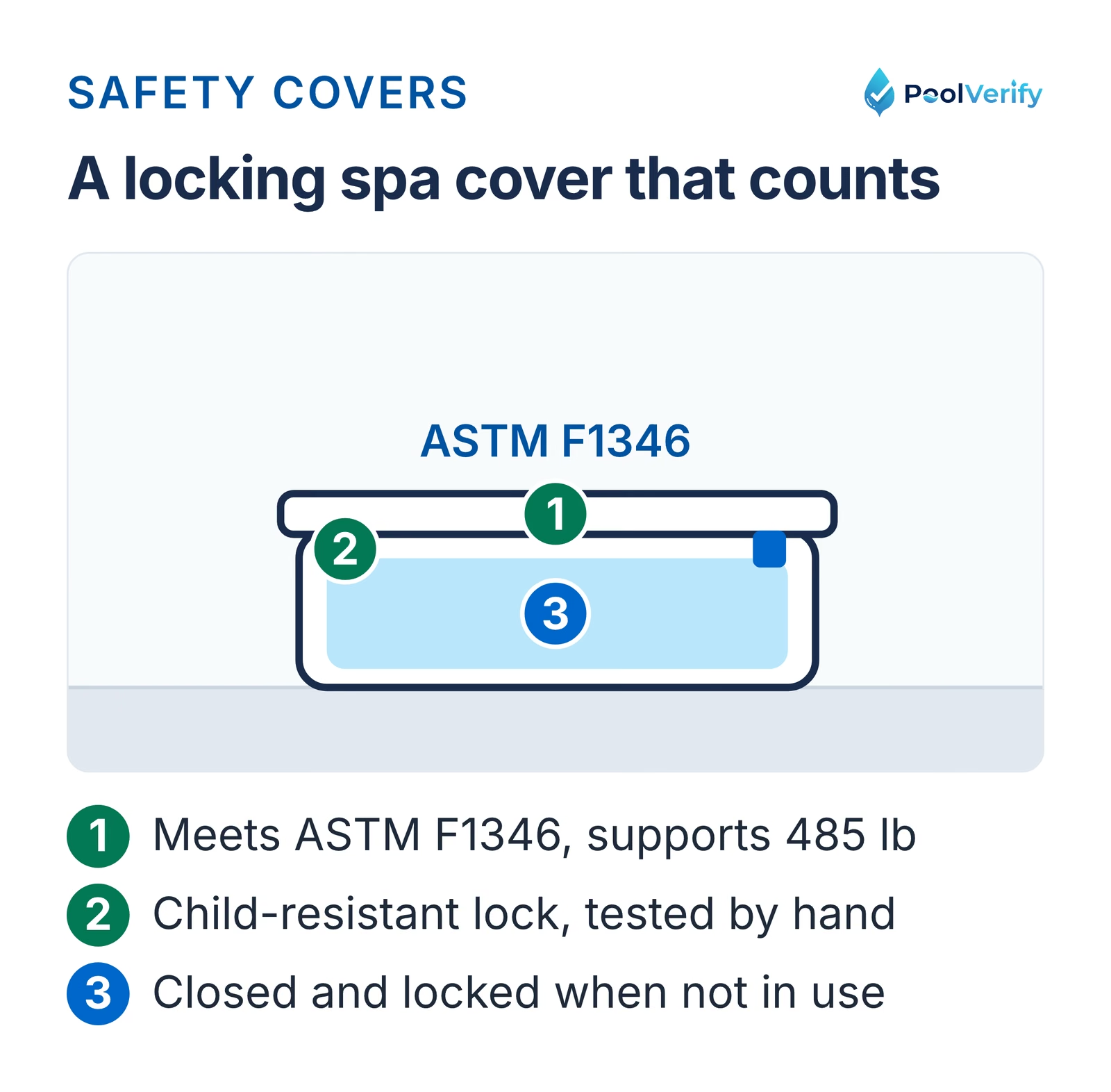
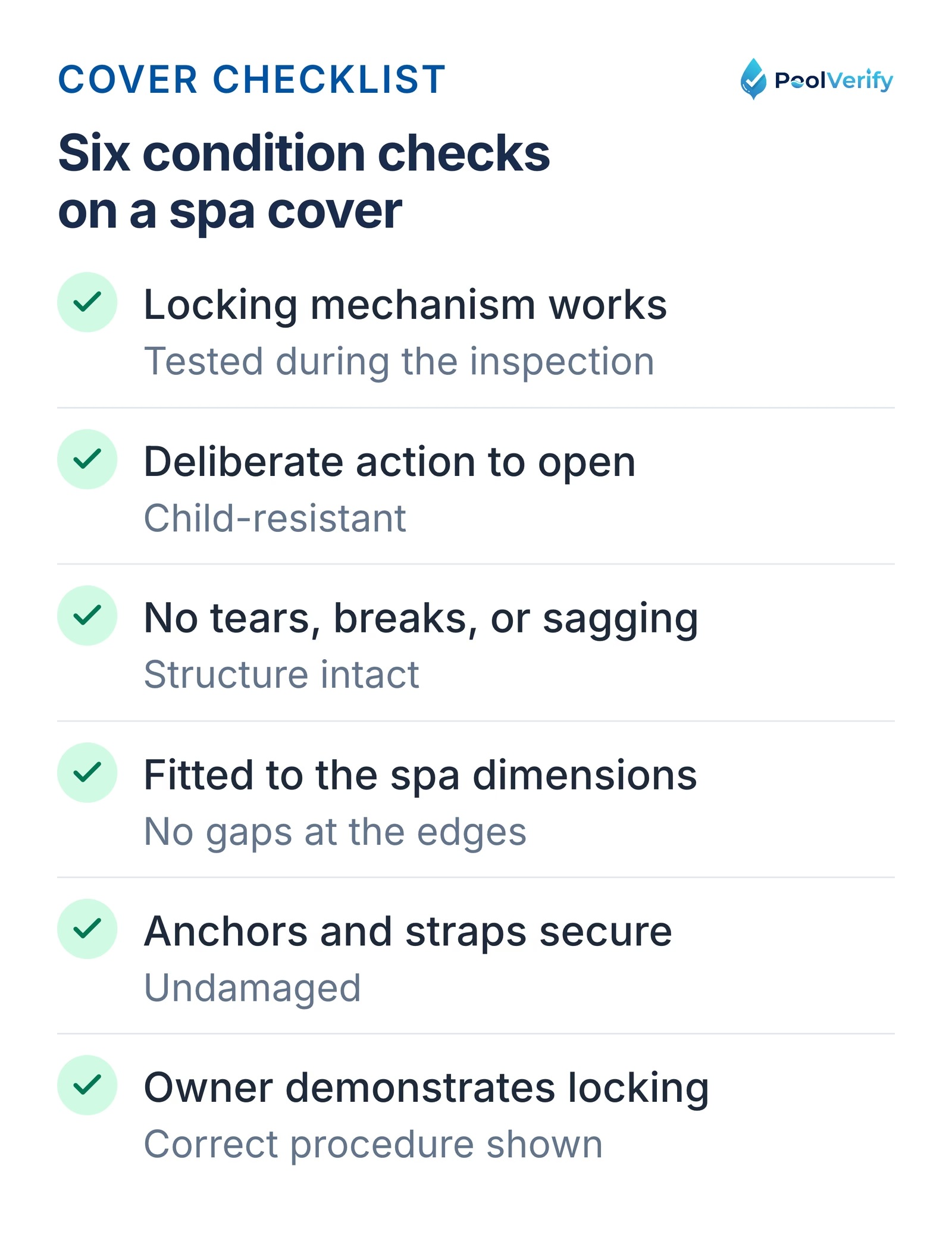
Meet ASTM F1346-91 standards for spa safety covers
Support 485 pounds distributed across the cover surface
Lock securely with child-resistant locking mechanisms
Maintain structural integrity at elevated temperatures
Be properly fitted to the spa dimensions
The locking mechanism is critical, covers that simply rest in place without locking systems do not meet safety requirements. Inspectors should physically test the locking function during inspections.
A spa safety cover that counts as a safety feature: ASTM F1346, a child-resistant lock, and locked when not in use.
Temperature Limiting Controls
California requires spa temperature control systems that prevent excessive heat exposure. Inspectors should verify:
Maximum temperature limit of 104°F (40°C) for residential spas
All spas must have accessible emergency shut-off capabilities:
Air switch or button within reach of spa occupants
Clearly marked "Emergency Stop" or similar labeling
Instantly cuts power to pump and jets
Located within 10 feet of spa edge but at least 5 feet away
Protected from weather in weatherproof enclosure
This feature can be life-saving in entrapment emergencies or medical situations.
Slip-Resistant Surfaces
Spa deck areas and steps require slip-resistant surfaces due to wet conditions and elevated temperatures affecting balance. California standards require:
Textured or slip-resistant finish on all walking surfaces
Minimum DCOF (Dynamic Coefficient of Friction) rating of 0.42
Adequate lighting improves safety for nighttime spa use. While not always code-required for residential spas, best practices include:
Illumination of steps and entry points
Low-voltage or LED lighting systems
Properly installed with GFCI protection
Minimum 12-foot clearance for overhead fixtures (10 feet if GFCI-protected)
Suction Entrapment Prevention for Spas
Suction entrapment is the spa hazard with the most searches and the least margin for error; our suction entrapment guide explains the five CPSC entrapment types and the emergency response. The checks below are the ones that belong in a spa inspection.
Suction entrapment is a critical safety concern for spas due to powerful pump systems in relatively small water volumes. California's implementation of HSC §115922 and the federal Virginia Graeme Baker Pool and Spa Safety Act establishes strict requirements.
Drain Cover Requirements
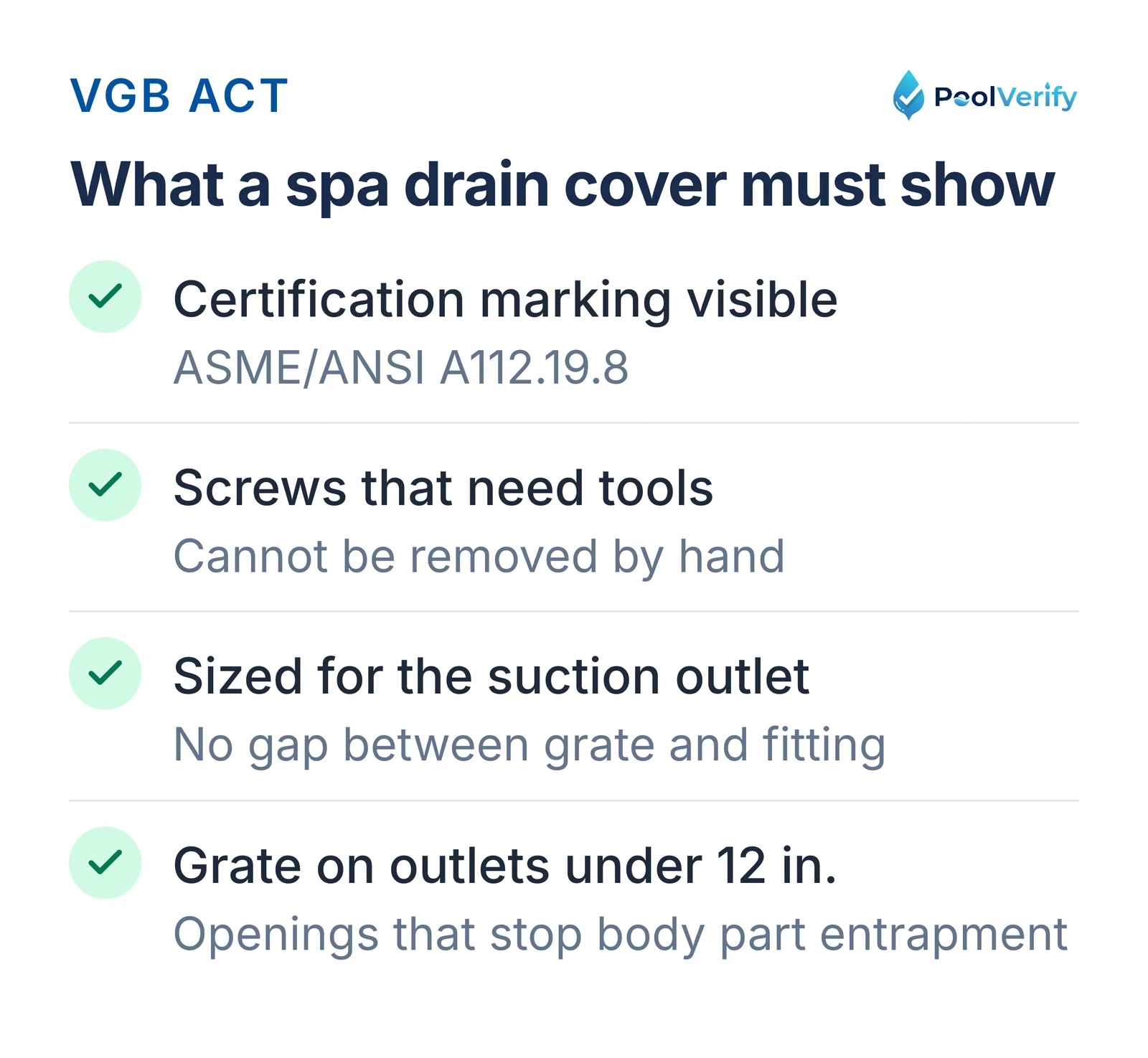
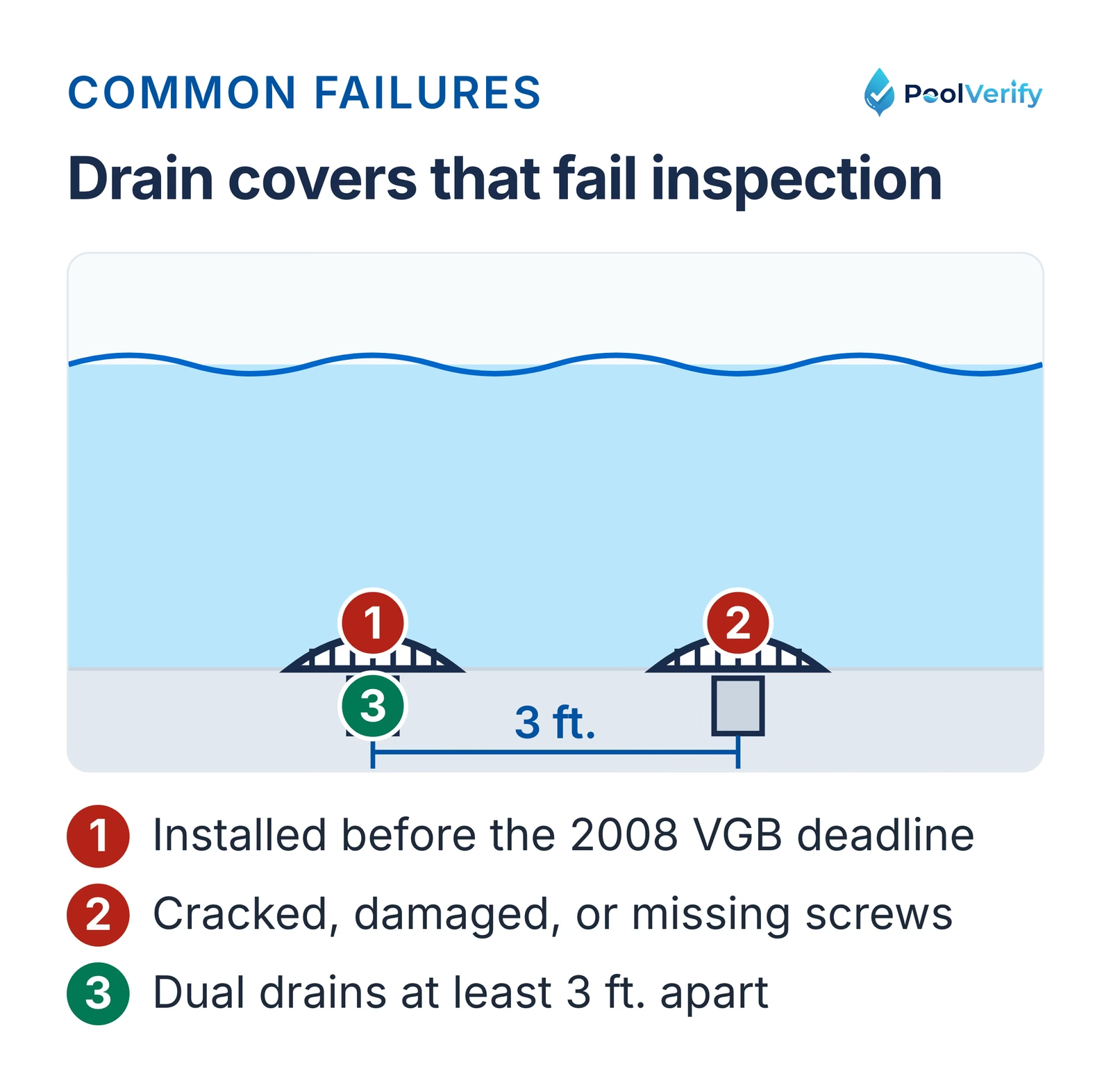
All spa suction outlets must have anti-entrapment drain covers meeting ASME/ANSI A112.19.8 standards. Specific requirements include:
VGB-compliant drain covers (certified after December 2008)
Covers secured with screws requiring tools for removal
Electrical safety is paramount in spa inspections due to the combination of water, elevated temperatures, and high-voltage systems. California enforces strict electrical standards based on the National Electrical Code (NEC) Article 680.
All 120-volt circuits: Must be GFCI protected regardless of distance
240-volt equipment: Requires GFCI protection for pumps, heaters, and controls
Underwater lighting: Must have GFCI protection on dedicated circuits
Receptacles within 20 feet: Mandatory GFCI protection for all outlets
The code requires GFCI protection for electrical equipment located 5 to 10 feet from the water's edge, with stricter requirements for closer installations.
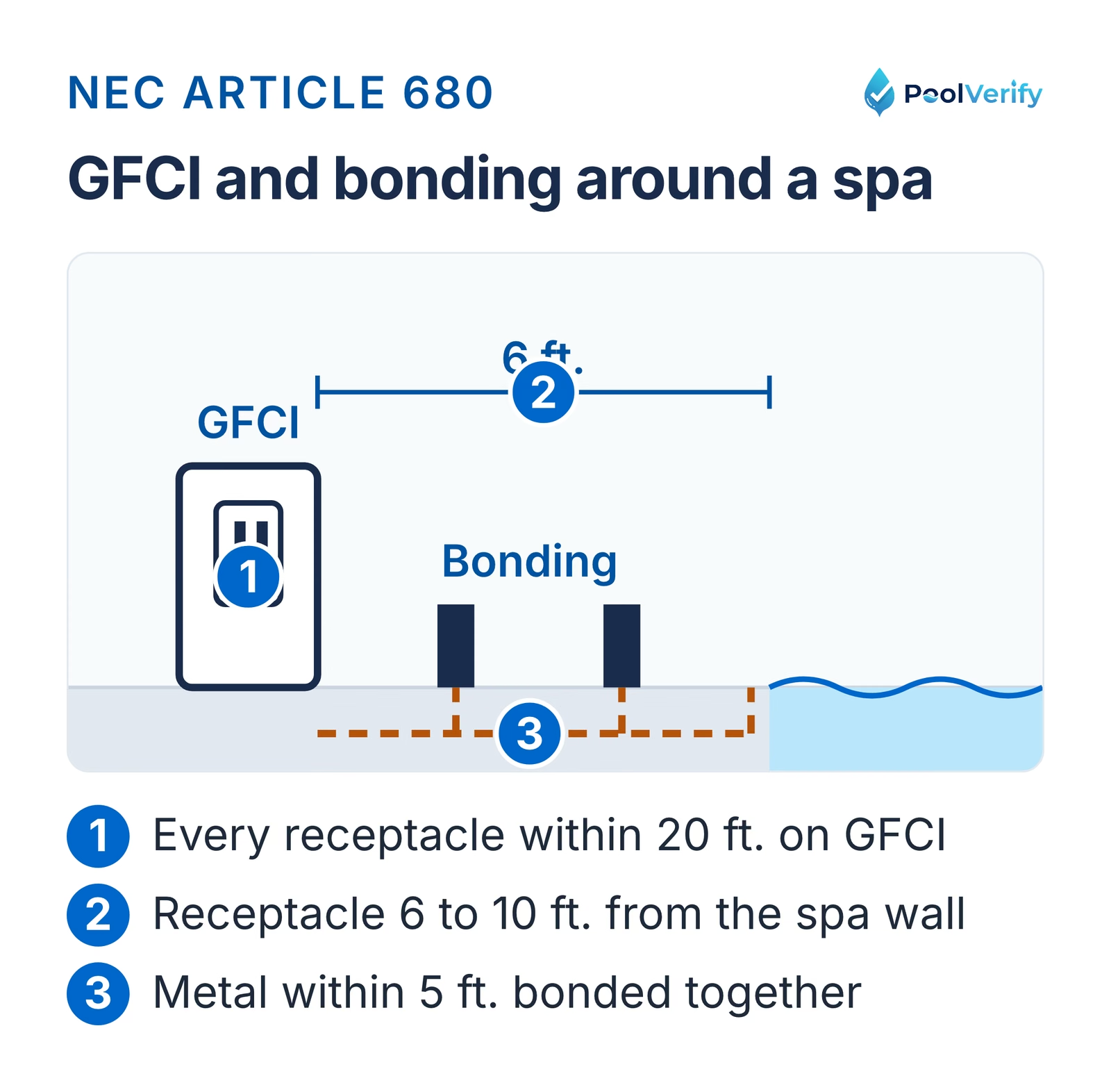
GFCI protection, receptacle distance, and bonding around a residential spa under NEC Article 680.
Receptacle Placement and Distance
California mandates specific receptacle placement relative to the spa:
Required Receptacle:
At least one 125-volt convenience receptacle
Located between 6 and 10 feet from inside spa wall
Must be GFCI protected
In weatherproof enclosure if outdoors
Prohibited Placement:
No receptacles closer than 6 feet from spa edge
Exception: Receptacles closer than 6 feet require special barriers
All receptacles within 20-foot perimeter require GFCI
Electrical fixtures and equipment above spas have strict clearance requirements:
Overhead Lighting:
Minimum 12 feet above maximum water level
May be reduced to 10 feet if GFCI-protected
Must be suitable for damp/wet locations
LED and low-voltage systems preferred
Power Lines:
Utility lines require greater clearances
Consult local jurisdiction for specific requirements
Never locate spas under power lines
Bonding Requirements
All metallic components within 5 feet of the spa must be bonded together and to the spa equipment:
Required Bonding:
Spa equipment (pumps, heaters, controls)
Metal handrails and ladders
Metal deck framing
Metal fencing and gates
Metal doors and windows within 5 feet
Electrical conduit and boxes
Bonding creates electrical continuity to eliminate voltage differences that could create shock hazards. This is separate from grounding, which provides a path to earth.
Safety Note: Never operate a spa with a tripped GFCI. This indicates a ground fault condition that could be life-threatening. The electrical system must be repaired by a licensed electrician before use.
Water Quality and Chemical Safety
Spa water quality standards differ significantly from swimming pool standards due to higher temperatures, smaller water volumes, and higher bather loads relative to water capacity.
Note that spa chlorine levels (3-5 ppm) are higher than pool requirements (1-3 ppm) due to elevated temperatures and bather load.
Testing Requirements
Commercial Spas:
Water chemistry tested minimum once daily
High-usage facilities require more frequent testing
Test results logged and available for health department inspection
Automated monitoring systems increasingly common
Residential Spas:
Test before each use recommended
Weekly testing minimum for maintained spas
After heavy use or parties, immediate testing required
After refilling or major chemical adjustments
Chemical Storage and Handling
California requires safe chemical storage for residential spas:
Store in cool, dry location away from direct sunlight
Keep acids and bases separated
Child-resistant containers and locked storage
Proper ventilation in storage areas
Never mix different chemical types
Maintain Safety Data Sheets (SDS) for all chemicals
Temperature Effects on Water Chemistry
High spa temperatures (100-104°F) significantly affect water chemistry:
Accelerated chlorine dissipation requiring more frequent dosing
Faster pH fluctuations needing closer monitoring
Increased sanitizer demand due to organic breakdown
Greater potential for bacteria growth in warm water
Enhanced chemical off-gassing requiring ventilation
Inspection Considerations
While BPC §7195 inspections focus on drowning prevention features rather than water quality, inspectors should note:
Presence of water testing equipment (strips or meters)
Chemical storage conditions if visible
Signs of poor water maintenance (cloudy water, scaling, staining)
Functional filtration and circulation systems
Access to spa manual and chemical handling instructions
Poor water quality may indicate neglected maintenance affecting other safety systems.
Equipment and Mechanical Inspections
Spa mechanical systems are complex and require thorough inspection to ensure safe operation. According to InterNACHI Pool and Spa Inspection Standards, inspectors should examine all accessible components.
Pump and Circulation Systems
The spa pump is the heart of the circulation and jet system. Inspectors should check:
Pump Condition:
No unusual noise, vibration, or overheating
Proper mounting and secure installation
Access panel secure and undamaged
Shaft seal not leaking (wet spots indicate problems)
This comprehensive checklist covers all essential components of a California spa safety inspection. Professional inspectors can use digital inspection software like PoolVerify to streamline the process and ensure nothing is missed.
Pre-Inspection Preparation
Review property disclosure documents
Verify spa type (portable, in-ground, spa-pool combo)
Identify manufacturer and model if possible
Note weather conditions and water temperature
Confirm power is on and spa operational
Gather necessary inspection tools and equipment
Seven Drowning Prevention Safety Features (BPC §7195)
Mark which features are present (minimum 2 required):
Feature 1: Enclosure isolating spa from home (60" minimum height)
Feature 2: Removable mesh fencing with self-closing gate (ASTM F2286)
Covers secured with screws (tool removal required)
No cracks, damage, or missing cover components
No visible gaps between cover and outlet
Dual drains separated by minimum 3 feet, OR
Alternative anti-entrapment system present (SVRS, etc.)
Main drain visible and unobstructed
Suction outlet openings meet size requirements
Electrical Safety Inspection
GFCI protection on all circuits tested and functional
Required convenience receptacle present (6-10 feet from spa)
All receptacles within 20 feet GFCI protected
Receptacles in weatherproof enclosures if outdoors
No receptacles closer than 6 feet without special barriers
Emergency shut-off accessible and clearly marked
Service disconnect present and properly labeled
Overhead clearances meet code (12' minimum, 10' if GFCI)
Bonding of metallic components within 5 feet verified
Proper conduit installation and protection
Control panel undamaged and functional
All electrical work by licensed contractor (verify if recent)
Temperature and Control Systems
Temperature display accurate and functional
Temperature control sets properly
Maximum temperature limited to 104°F
High-limit safety cutoff operational
Warning labels about temperature hazards present
Timer function works properly (if equipped)
All control buttons responsive
Pump and Filtration Equipment
Pump runs smoothly without unusual noise
No leaks from pump seals or connections
Pump properly mounted and secure
Filter appropriate type and size for spa
Filter access cover secure
Pressure gauge reading in normal range
Circulation flows through all jets
Skimmer(s) operational (if present)
Heating System
Heater operational and heating water
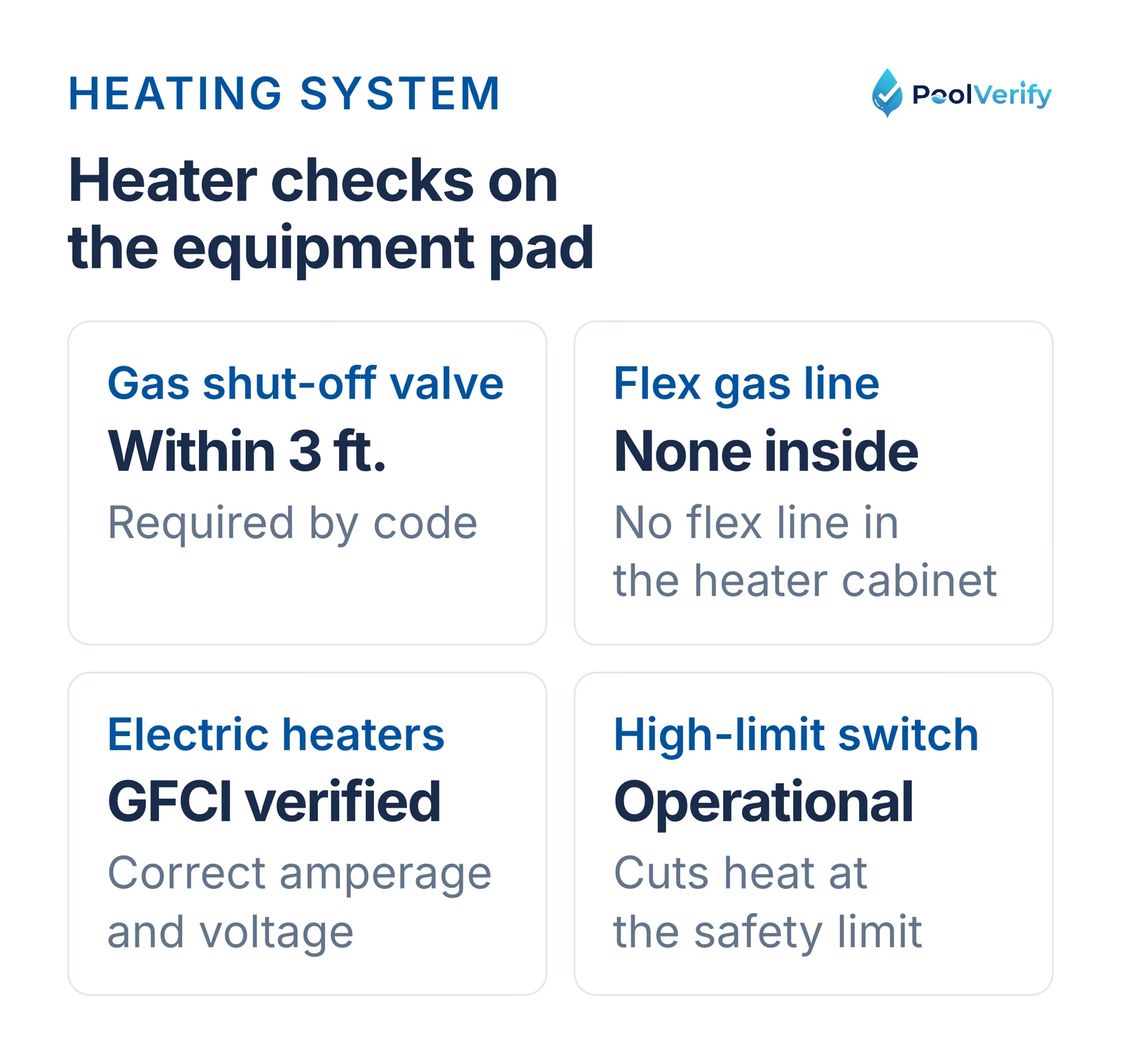
Gas shut-off valve within 3 feet (gas heaters)
No flex gas line inside heater (gas heaters)
GFCI protection verified (electric heaters)
Proper venting and combustion air (gas heaters)
No signs of overheating or damage
Manufacturer's clearances maintained
Heater controls function properly
Jets and Air Systems
All jets present and undamaged
Jets adjustable and directional
Even water pressure across all jets
Air controls function properly
Blower operational (if equipped)
No unusual vibration or noise
Plumbing and Structural
No visible leaks at unions or fittings
Piping properly supported
Valves operate smoothly
No freeze damage or cracking
Spa shell structural integrity intact
No significant cracks or damage to spa body
Steps or entry secure and undamaged
Handrails secure (if present)
Deck and Surface Safety
Spa deck slip-resistant surface
Adequate drainage around spa
No trip hazards or uneven surfaces
Deck structurally sound
Steps with slip-resistant finish
Lighting and Visibility
Underwater lighting functional (if equipped)
GFCI protection on lighting circuits
Adequate area lighting for nighttime use
Warning signs and instruction labels legible
Documentation and Signage
Warning signs posted (temperature, health warnings)
Emergency procedures visible
Depth markers present (if applicable)
No diving signs if appropriate
Chemical warning labels present
General Safety Assessment
Access to spa unobstructed
Chemical storage safe and appropriate
Water testing equipment available
Owner's manual accessible
Spa maintenance records available (if provided)
Overall spa condition and cleanliness
Report Documentation
Photograph all safety features
Document which of 7 features are present
Note any deficiencies or safety concerns
Provide recommendations for corrections
Include equipment serial numbers and model information
Note date of inspection and inspector information
Obtain property owner signature if required
Using digital inspection software like PoolVerify allows inspectors to work through this checklist systematically with automatic photo documentation and instant PDF report generation.
Common Spa Inspection Failures
Understanding the most frequent spa inspection failures helps property owners prepare for inspections and guides inspectors to focus on high-risk areas.
Insufficient Safety Features
The Problem: The most common failure is having fewer than two of the required seven drowning prevention safety features under BPC §7195.
Typical Scenarios:
Portable spa with only manufacturer's cover (not ASTM F1346 compliant)
In-ground spa with non-locking cover
Spa on deck with direct house access and no barriers or alarms
Electrical connections not to code (extension cords, wrong receptacle type)
Placed on decks with direct house access requiring additional safety features
Cover damaged from UV exposure or weather
Title 20 Energy Requirements: According to California's Title 20 Section 1602, portable electric spas must meet energy efficiency standards including:
Improved insulation requirements
Efficient circulation pumps
Automatic covers that reduce heat loss
Maximum standby power consumption limits
While not part of BPC §7195 drowning prevention inspections, energy compliance is required for new installations and may be relevant for home inspectors conducting comprehensive assessments.
In-Ground Spa Inspection Considerations
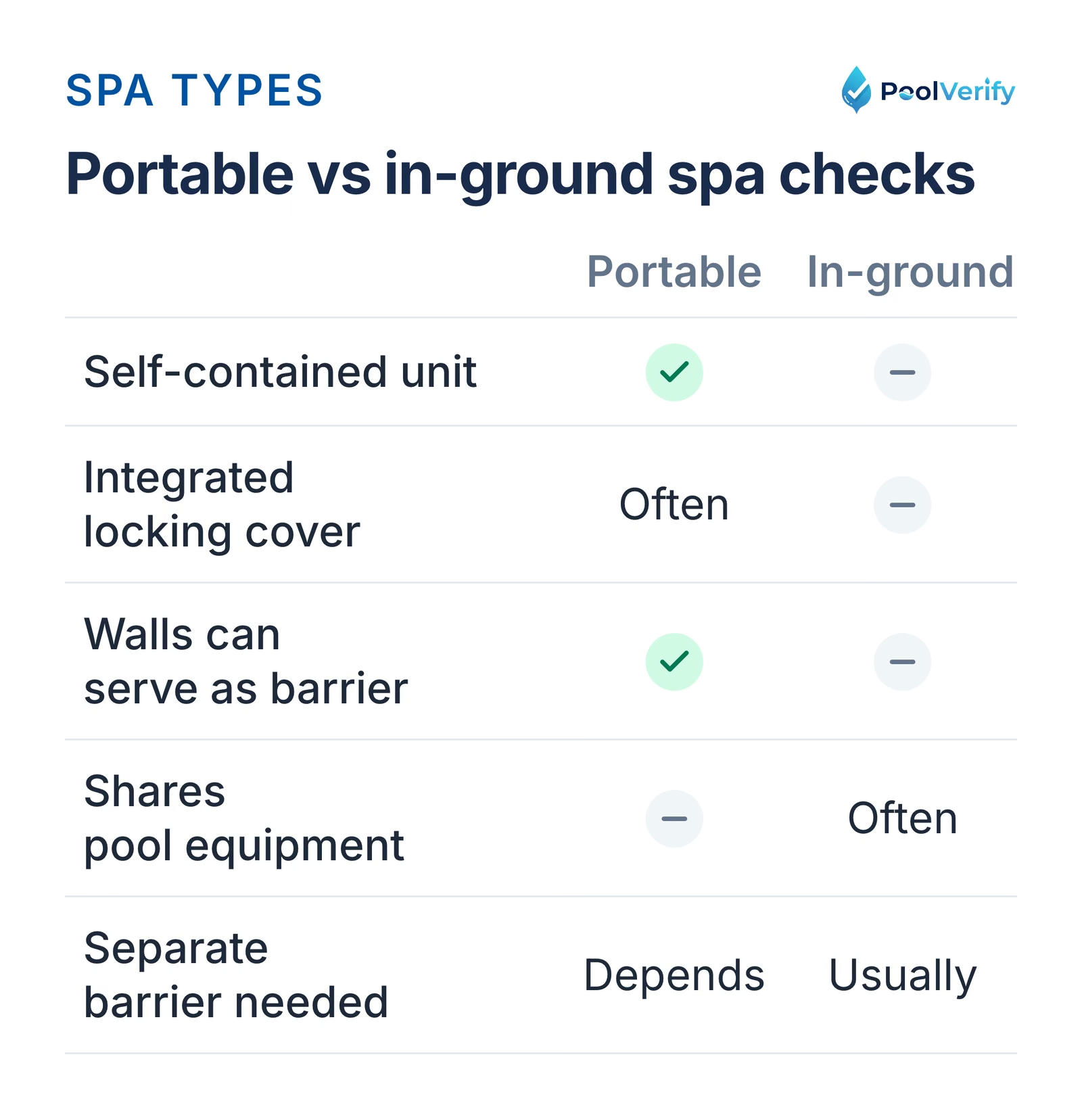
In-ground spas are permanently installed, usually constructed with gunite, concrete, or fiberglass, similar to swimming pool construction.
Inspection Complexity:
More permanent structure requiring detailed assessment
Often integrated with pool systems (shared equipment)
May have custom features affecting safety requirements
Typically requires separate barrier or safety feature installation
Critical Inspection Areas:
Permanent barrier requirements (usually fencing)
Drain configuration and anti-entrapment systems
Electrical bonding of metallic components
Deck surfaces and drainage
Equipment pad installation and clearances
Integration with pool systems (if applicable)
Common In-Ground Spa Challenges:
No integrated safety cover (requires separate installation)
Direct access from house without barriers
Shared pool-spa barrier not isolating spa from home
Complex plumbing increasing leak potential
Older installations may predate current safety standards
Combination Pool-Spa Systems
Many California properties have spas integrated with swimming pools, creating unique inspection scenarios.
Inspection Considerations:
Spa may share pool's safety features (single barrier system)
Separate equipment or shared filtration/heating
Spillover spa configurations affect drainage and barriers
Raised spa with pool access requires assessment of both
Key Questions:
Can the spa be independently isolated from the pool?
Does the barrier system meet requirements for both pool and spa?
Are there separate controls and safety features?
Is the spa identified separately in inspection documentation?
Compliance Strategy:
Shared barrier may count as one safety feature for both pool and spa
Spa-specific features (like locking cover) may be required separately
Document both pool and spa features distinctly in inspection report
Ensure suction entrapment protection adequate for spa section
How portable and in-ground spas differ on covers, barriers, and shared equipment.
Swim Spas and Exercise Pools
Swim spas blur the line between pools and spas, combining features of both.
Classification Factors:
Size and volume (typically larger than traditional spas)
Temperature (may be lower than typical spa temperatures)
Primary use (exercise vs relaxation)
Equipment configuration (more similar to small pools)
Inspection Approach: Swim spas generally follow pool inspection protocols with spa-specific attention to:
Temperature control and limits
Powerful jet systems and suction outlets
Combination swim current and hot tub functions
Size-appropriate safety features
Consult local jurisdiction for specific classification and requirements, as swim spas may be treated as pools, spas, or a hybrid category.
Digital Spa Inspection Tools
Modern inspection technology streamlines spa safety inspections, improves documentation, and ensures compliance with California BPC §7195 requirements.
Benefits of Digital Inspection Software
Efficiency and Speed:
Complete inspections 40-60% faster than paper forms
Pre-loaded checklists ensure nothing is missed
Instant report generation eliminates post-inspection data entry
Mobile-friendly interfaces work on any device
Documentation Quality:
Photo documentation integrated into inspection workflow
Automatic timestamp and location data
Photo annotation tools highlight specific issues
Cloud storage prevents lost documentation
Compliance Assurance:
Updated templates reflect current California regulations
Automated verification of required elements
Digital signatures for property owner acknowledgment
Audit trail for professional liability protection
PoolVerify for Spa Inspections
PoolVerify is California's leading pool and spa inspection software, built specifically for BPC §7195 and HSC §115922 compliance.
Transform Your Spa Inspections with PoolVerify Join hundreds of California pool and spa inspectors who've modernized their inspection business with PoolVerify. Complete BPC §7195 inspections faster, ensure compliance, and deliver professional reports that impress clients. Start Your 14-Day Free Trial
Limitations
This guide is general information about pool safety law, not legal advice; the current text of HSC §115922 and BPC §7195 on leginfo.legislature.ca.gov controls, and local building departments add their own requirements. PoolVerify is inspection software for California residential pool safety inspections; it does not perform inspections, certify inspectors, or issue compliance certificates.
Frequently Asked Questions
Do spas require the same safety inspections as swimming pools in California?
Yes, California's BPC §7195 applies equally to both swimming pools and spas. The statute requires identification of which of the seven drowning prevention safety features are present during property transfers. Spas must have at least two of the seven approved features, just like swimming pools.
However, spa inspections involve additional considerations including specialized electrical requirements, suction entrapment prevention in smaller water volumes, temperature controls, and spa-specific equipment. The core drowning prevention requirements are the same, but spa inspections require knowledge of hot tub-specific safety systems.
What qualifications do I need to perform spa inspections in California?
California does not require specific licensing to perform BPC §7195 pool and spa inspections for property transfers. The statute allows "appropriate inspection" by qualified individuals. Many home inspectors, pool service professionals, and pool contractors conduct these inspections.
However, inspectors should have comprehensive knowledge of:
California pool and spa safety regulations (BPC §7195 and HSC §115922)
Suction entrapment prevention requirements
Electrical safety standards for spas
Equipment operation and safety systems
Water chemistry and sanitizer requirements
Professional liability insurance is strongly recommended for anyone conducting spa inspections. Consider additional training through organizations like InterNACHI or the California Pool and Spa Association.
How much does a spa safety inspection cost in California?
California spa safety inspection costs typically range from $125 to $300, depending on several factors:
Pricing Variables:
Spa only: $125-$175 for standalone spa inspection
Spa with pool: $250-$350 for combined pool and spa inspection
Location: Higher costs in major metropolitan areas
Complexity: Elaborate installations or multiple spas increase cost
Rush service: Expedited inspections for quick-closing escrow periods
The inspection fee typically includes:
Complete safety feature assessment
Identification of seven drowning prevention features
Equipment and mechanical examination
Photo documentation
Written inspection report suitable for property transfer
Some inspectors charge separately for follow-up re-inspections after corrections are made. For detailed pricing information, see our pool inspection cost guide.
Can a portable spa with a locking cover pass inspection without additional safety features?
It depends on the spa's location and accessibility. A portable spa with a compliant locking safety cover (meeting ASTM F1346 standards) technically has one of the seven drowning prevention features. However, BPC §7195 requires at least two of the seven features.
Scenarios:
May Pass with Cover Only:
Spa located in enclosed patio accessible only through house doors with self-closing, self-latching devices (Feature 1 + Feature 5 = 2 features)
Needs Additional Feature:
Spa on open deck with standard sliding door access (only has cover = 1 feature)
Solution: Add exit alarm on door, or add self-closing/self-latching device to door, or install barrier fencing
The locking cover must be locked when the spa is not in active use for it to count as a safety feature. Inspectors should verify the locking mechanism functions properly and the cover is in good condition.
What's the difference between a spa safety cover and a regular spa cover?
The critical difference is whether the cover meets ASTM F1346 safety standards and has a child-resistant locking mechanism.
Safety Cover (Compliant):
Meets ASTM F1346 standard for spa safety covers
Locks securely with child-resistant mechanism
Rated to support 485 pounds across the cover surface
Cannot be removed by young children
Prevents accidental spa entry when locked
Counts as drowning prevention safety feature
Regular Cover (Non-Compliant):
Designed only for heat retention and cleanliness
Simply rests on spa edge or clips in place
Can be easily removed by children
Not rated for weight support
Does NOT meet BPC §7195 safety requirements
Does not count as safety feature for inspections
Many portable spas come with covers that look secure but don't have true locking mechanisms. Inspectors must verify the locking function and ASTM certification. The cover must be in good condition, damaged, torn, or deteriorated covers don't meet safety requirements even if they once locked properly.
Are hot tub drain covers the same as pool drain covers?
Yes, spa and hot tub drain covers must meet the same federal Virginia Graeme Baker Pool and Spa Safety Act requirements as swimming pool drain covers. All must comply with ASME/ANSI A112.19.8 standards and display VGB certification.
However, spa drain covers have some unique considerations:
Spa-Specific Factors:
Often smaller diameter than pool drains
May experience higher suction force relative to size
Exposed to higher water temperatures
Frequently integrated into spa floor or seats
Inspection Requirements:
Must display ASME/ANSI A112.19.8 certification marking
Secured with screws requiring tools for removal
No cracks, damage, or missing components
Proper fit for the specific suction outlet size
Manufactured after December 2008 (VGB Act effective date)
Spa drain covers deteriorate faster than pool covers due to higher temperatures and chemical concentrations. Inspectors should carefully examine spa drain covers for any signs of damage, as the smaller water volume in spas creates more concentrated suction forces.
Do I need a permit for a new spa installation in California?
Yes, nearly all spa installations in California require building permits, regardless of whether the spa is portable or in-ground. Requirements vary by jurisdiction but generally include:
Typical Permit Requirements:
Building permit for spa installation
Electrical permit for 240-volt service
Plumbing permit for water supply and drainage
Gas permit if installing gas heater
Inspection Sequence:
Pre-installation plan review
Rough-in inspection (electrical, plumbing, gas)
Final inspection after installation
When Permits Are Required:
In-ground spa construction (always)
Portable spa requiring new electrical service (usually)
Spa installation with new deck or structure (always)
Gas line installation for heater (always)
Possible Exceptions:
Some jurisdictions exempt portable spas plugged into existing compliant receptacles
Small above-ground units under certain conditions (verify with local building department)
Installing a spa without required permits can result in:
Fines and penalties
Required removal or modification
Problems during property sale
Insurance coverage issues
Safety hazards from improper installation
According to Mountain View, CA building requirements, electrical work must be performed by licensed C-10 contractors and inspected by local building departments before use.
Always check with your local building department before spa installation to understand specific permit requirements for your area.
How often should residential spas be inspected?
Property Transfer Inspections: Required by BPC §7195 whenever property changes ownership. This is the only legally mandated inspection for residential spas.
Recommended Maintenance Inspections: While not legally required, professional spa inspections are recommended:
Annual: Comprehensive safety and equipment inspection
Seasonal: Pre-summer check for heavy-use season
After Major Repairs: Following equipment replacement or repairs
Pre-Purchase: Before buying property with existing spa
Insurance: Some policies require periodic professional inspections
Owner Self-Inspections: Between professional inspections, spa owners should regularly check:
Before Each Use: Water temperature, clarity, and chemical levels
Weekly: Test GFCI devices, verify safety cover locks properly
Monthly: Inspect drain covers for damage, check equipment operation
Quarterly: Test emergency shut-off, verify barrier and gate function
For detailed self-inspection guidance, see our pool safety checklist, which applies equally to spas.
Commercial and public spas have much more stringent inspection requirements including daily water quality testing and regular health department inspections.
Conclusion: Ensuring California Spa Safety Compliance
Spa and hot tub inspections in California require specialized knowledge beyond standard pool inspections. While both fall under BPC §7195 drowning prevention requirements, spas present unique safety considerations including higher temperatures, specialized electrical systems, concentrated suction forces, and complex equipment configurations.
Professional spa inspectors must understand the seven drowning prevention safety features required by California law, verify compliance with federal VGB Act suction entrapment standards, assess electrical safety according to NEC Article 680, and evaluate spa-specific equipment including heating, filtration, and control systems.
Property owners preparing for spa inspections should ensure at least two of the seven required safety features are present and functional, verify VGB-compliant drain covers are in good condition, test GFCI protection on all electrical circuits, confirm safety covers lock properly, and maintain equipment according to manufacturer specifications.
For pool and spa inspectors, digital inspection tools like PoolVerify streamline the inspection process, ensure complete documentation, and generate professional reports that meet California compliance requirements. The software's spa-specific templates, integrated photo documentation, and instant PDF generation help inspectors work more efficiently while maintaining thorough safety assessments.
Whether you're a professional inspector, property owner, or real estate professional, understanding California's spa safety requirements protects children, ensures legal compliance, and facilitates smooth property transfers.
Ready to conduct professional California spa inspections?Start your free PoolVerify trial today and complete BPC §7195-compliant spa inspections in half the time with twice the professionalism.
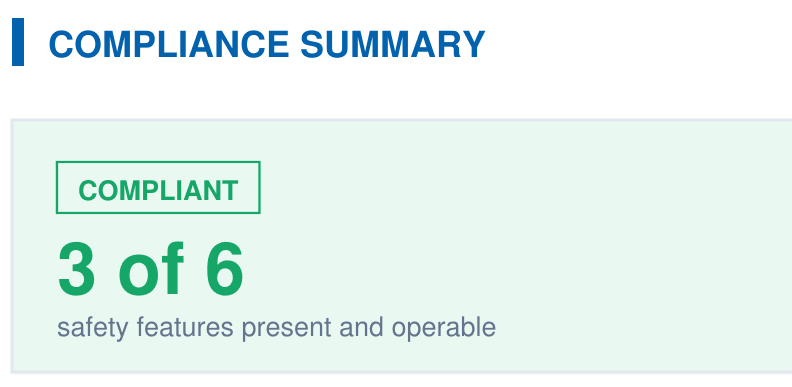
A branded PDF with the compliance summary, the feature table, each finding with its photos, and the signature, generated on‑site when the BPC §7195 and HSC §115922 checklist is complete.