Real Estate Agents: The Pool Section at a California Home Sale
BPC §7195 makes a noninvasive examination of the pool or spa part of every paid home inspection at a California transfer, and defines what the report must say about the seven HSC §115922(a) safety features. What the agent owes under Civil Code §2079, what the statutes do not require, how to read the pool section, what to do when it shows fewer than two features, and how to brief the inspector.
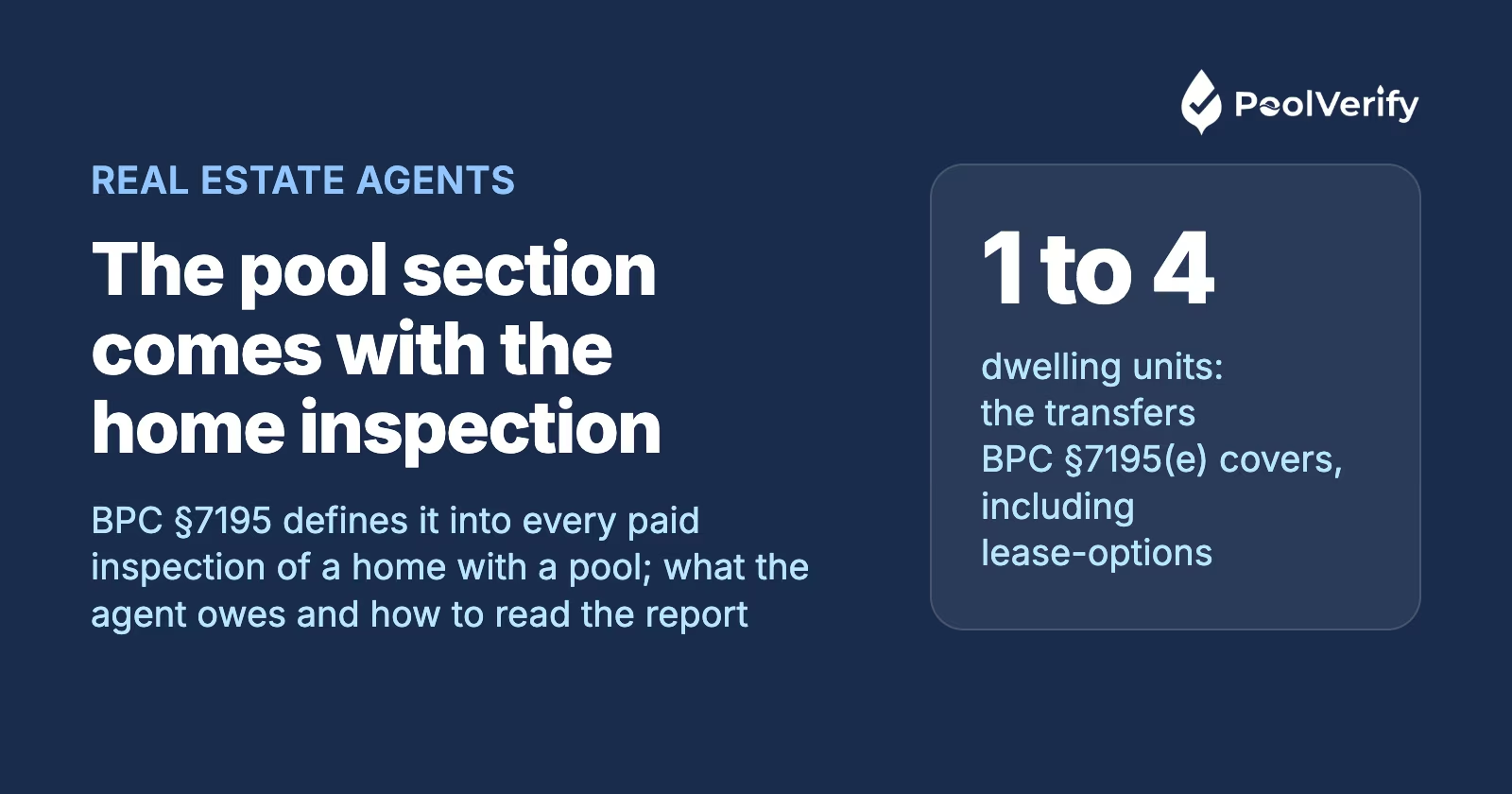
A California real estate agent does not order the pool inspection, but the pool section arrives with every paid home inspection of a home that has a pool or spa. Business and Professions Code §7195 defines a home inspection at a transfer of a one to four unit dwelling to include a noninvasive examination of the pool or spa, and defines the report to include which of the seven HSC §115922(a) drowning prevention safety features the pool has, their condition, and a specific statement if there are fewer than two.
This guide covers what the statute makes part of the inspection, the agent's own duties around the pool, what the statutes do not require, how to read the pool section, what to do when it shows fewer than two features, how to brief the inspector, and how the report reaches you. Our seller's guide covers the same sale from the seller's side.
What BPC §7195 makes part of the home inspection
The pool duties sit inside definitions, so they apply whenever the defined thing happens: a home inspection performed for a fee in connection with a transfer.
BPC §7195
What it says
What it means at your sale
(a)(1)
A home inspection is a noninvasive, physical examination, performed for a fee in connection with a transfer of real property, of the mechanical, electrical or plumbing systems or the structural and essential components of a residential dwelling of one to four units, designed to identify material defects
The pool section is part of the paid inspection, not a separate service the buyer opts into
(a)(2)
An appropriate inspection includes a noninvasive physical examination of the pool or spa and the dwelling to identify which of the seven HSC §115922(a) drowning prevention safety features the pool or spa is equipped with, in good repair, operable as designed and, if applicable, appropriately labeled
The inspector walks the enclosure, tests gates and doors, and reads labels
(c)
The report shall identify which of the seven features the pool or spa has, shall specifically state if it has fewer than two, whether the features are in place, in good repair, operable as designed and labeled, and shall include the isolation fence statement
A seven-row table, a count, a sentence when the count is below two
(d)
A home inspector is any individual who performs a home inspection
There is no license to check; there is a duty of care under §7196 and four years of exposure under §7199
(e)
A transfer is a transfer by sale, exchange, installment land sales contract, lease with an option to purchase, any other option to purchase, or ground lease coupled with improvements, of real property or a residential stock cooperative of one to four dwelling units
Lease-options and installment contracts are transfers too
The seven features themselves are in HSC §115922(a): an enclosure meeting §115923 that isolates the pool from the home, removable mesh fencing to ASTM F2286 with a self-closing, self-latching, key-lockable gate, a safety cover labeled to ASTM F1346-23, exit alarms on doors and windows with direct pool access, self-closing, self-latching devices on such doors with the release at least 54 inches above the floor, an in-water alarm certified to ASTM F2208, and other means independently verified and labeled. Our BPC §7195 guide covers the section clause by clause.
The agent's own duties around the pool
Three rules sit on the agent's side of the transaction.
Rule
Source
What it means
Visual inspection and disclosure
Civil Code §2079(a): a listing broker or salesperson, and a cooperating broker, owes a prospective buyer of a one to four unit property a reasonably competent and diligent visual inspection and disclosure of all facts materially affecting value or desirability that the inspection would reveal
A pool with no enclosure, a gate that stands open, or a report that says fewer than two is a fact to disclose once you know it
No referral compensation
BPC §7197(a)(3): a home inspector, or the inspector's company, may not offer or deliver any compensation, inducement or reward to the owner, the broker or the agent for the referral of business
You can recommend inspectors; you cannot be paid by them for it
No contingent fee
BPC §7197(a)(4): the inspector may not accept an engagement whose fee depends on the conclusions, preestablished findings or the close of escrow
An inspection billed only at closing, or discounted if the pool passes, is an unfair business practice by the inspector
The seller's disclosure duties under the Transfer Disclosure Statement, Civil Code §1102 and following, continue alongside: known conditions of the pool are the seller's to disclose whatever the inspection finds.
What the statutes do not require
Four things agents ask for do not exist in California law, and knowing that saves a transaction a week of searching.
No pool safety certificate. Neither BPC §7195 nor HSC §115922 creates one, and no agency issues one. The document is the inspection report.
No inspector license.BPC §7195(d) defines a home inspector as any individual who performs a home inspection. CREIA and InterNACHI are voluntary; our license guide has the detail.
No repair order. The report states the count. Nothing in Chapter 9.3 requires the seller to add a feature, and the two-feature rule in HSC §115922(a) attaches to a building permit for a new or remodeled pool at a single-family home, not to a sale. HSC §115925 exempts apartment complexes and any residential setting other than a single-family home, and a hot tub or spa with a locking ASTM F1346 cover.
No fine. The Swimming Pool Safety Act sets no fine, misdemeanor or jail term; our non-compliance guide covers what the law does and does not penalize.
Reading the pool section
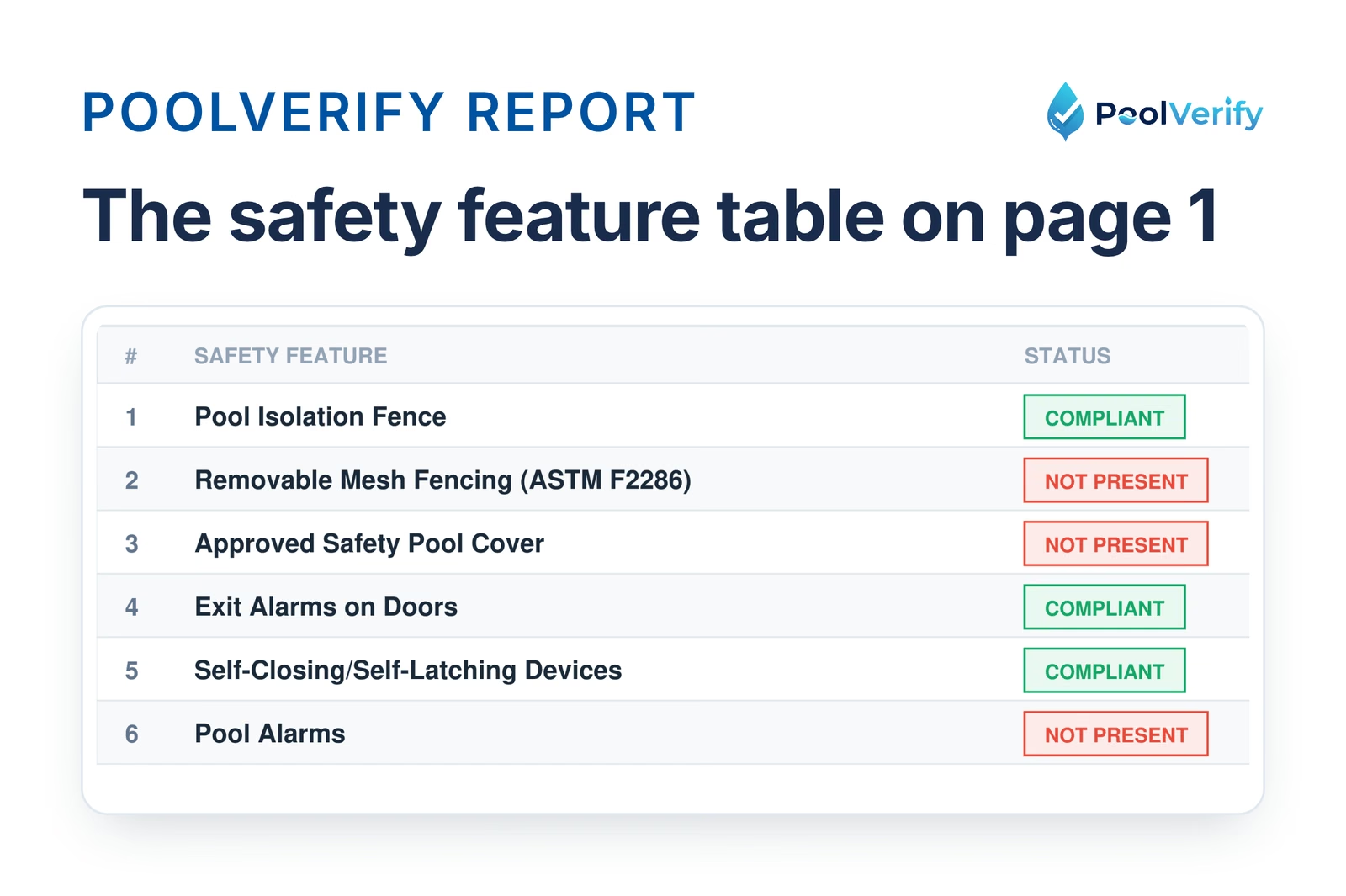
The safety feature table on page 1 of a PoolVerify report, with a compliant or not present status per feature.
A pool section that meets BPC §7195(c) reads in a fixed order, and the agent reads it the same way:
All seven features named. A feature the pool lacks is recorded as not present, not left out. If the section lists three features, ask where the other four are.
The count. Present and operable features, added up. Then check it against the three pairs HSC §115922(b) rejects: an exit alarm and a door device on the same door, an exit alarm and a door latch on separate doors, and a safety cover with an in-water alarm each count as one.
Condition separated from presence. An enclosure present with a gate that does not latch from a partly open position is present and not operable as designed. The gate latch guide explains the 60 inch gate rule and the 54 inch door rule the report will cite.
The fewer-than-two sentence. When the count is below two, the section says so specifically, in a sentence of its own.
What was not tested. An in-water alarm the seller would not let the inspector trigger is recorded as not tested, not as operable.
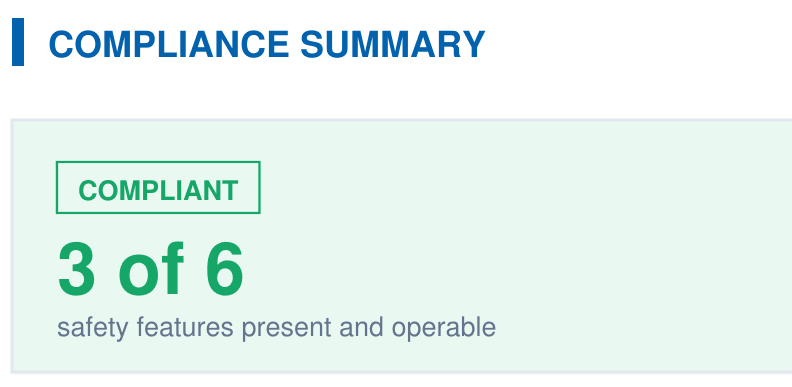
The sample report shows the format PoolVerify generates: a page 1 verdict card with the count, the six-row feature table, then a photo card per feature; our report example guide walks it page by page.
When the section shows fewer than two
The statement is a disclosure, not an order. What follows it is negotiated between buyer and seller, and the agent's job is to keep the options in view:
Option
What it involves
Repairs before closing
A licensed contractor installs or repairs a feature; the inspector who wrote the report may not do the work for a fee within 12 months under BPC §7197(a)(1)
A credit
The buyer takes the pool as found and the price reflects the work
Acceptance
The buyer accepts the pool as it is, with the report in the file
A report you can hand to the buyer's agent. PoolVerify's California checklist gives the inspector the six physical HSC §115922(a) features as items with the measurement or label each one asks for, a photo on each, the seventh in notes, and a branded PDF generated on-site with the count and the fewer-than-two statement on page 1. Professional and Business accounts can give an agent read-only viewer access. See the sample report.
Briefing the inspector
Five questions, asked at booking, decide whether the pool section arrives complete:
Is there a pool or spa? Any structure holding water over 18 inches deep counts under HSC §115921, including a hot tub or a portable spa.
Will the report identify all seven features? Not the ones present; all seven, with the fewer-than-two statement and the isolation fence statement.
Will the measurements be photographed? The enclosure height, the gate latch height and the door release height with the tape in frame; our photo documentation guide is the shot list.
When does the PDF arrive? Software-generated reports exist when the inspection ends; a report retyped that evening arrives the next day.
Who else can see it? A read-only link or viewer access for the other side saves a chain of forwarded attachments.
How the report reaches you
Step
Paper and Word
PoolVerify
The walk
A form on a clipboard, photos on the phone
The California checklist on the phone or tablet, a photo on each item
The report
Retyped that evening, assembled in Word, exported
Generated in seconds on-site from the checklist
The signature
Printed, signed, scanned
The inspector's ESIGN-compliant signature on the certification page
Delivery
An attachment the next day
Emailed from the app; read-only viewer access on Professional and Business
Four years later
Whatever survived the laptop
Stored with the inspection, 256-bit encryption, backed up
PoolVerify is inspection software for the inspector's side of the transaction, at $39 a month on annual billing for Starter; the pricing page has the plans, and the real estate page covers what agents receive.
Limitations
This guide is general information about California law, not legal advice, and it does not cover an agent's duties under the Real Estate Law or the Transfer Disclosure Statement beyond the sections cited. The current text of BPC §7195 to §7199, Civil Code §2079 and HSC §115922 on leginfo.legislature.ca.gov controls. PoolVerify is inspection software for California residential pool safety inspections; it does not perform inspections, certify inspectors, or issue compliance certificates.
Frequently asked questions
Is a pool inspection required to sell a house in California?
No statute requires a pool inspection to sell. What BPC §7195 does is define the home inspection: when one is performed for a fee at a transfer of a one to four unit home with a pool or spa, it includes a noninvasive examination of the pool, and the report must identify which of the seven HSC §115922(a) safety features the pool has and state if there are fewer than two.
Can a real estate agent accept a referral fee from a pool inspector?
No. BPC §7197(a)(3) makes it an unfair business practice for a home inspector, or the inspector's company, to offer or deliver any compensation, inducement or reward to the owner of the inspected property, the broker or the agent for the referral of business. BPC §7197(a)(4) also bars any engagement whose fee depends on the findings or on the close of escrow.
Does the seller have to add safety features if the report shows fewer than two?
Not under BPC §7195 or HSC §115922. The report must state the count; it does not order repairs, and the Swimming Pool Safety Act attaches its two-feature rule to a building permit for a new or remodeled pool, not to a sale. What happens next is negotiated: repairs before closing, a credit, or the buyer accepting the pool as it is.
What does the agent have to disclose about the pool?
Civil Code §2079(a) requires a listing broker or salesperson, and a cooperating broker, to conduct a reasonably competent and diligent visual inspection of a one to four unit property and disclose to the prospective buyer all facts materially affecting value or desirability that the inspection would reveal. A pool with no enclosure or a gate that does not latch is such a fact once known.
Is there a pool safety certificate in California?
No. Neither BPC §7195 nor HSC §115922 creates a certificate, and California issues no pool inspector or home inspector license. The document that exists at a sale is the home inspection report with its pool section, written by the inspector, which BPC §7195(d) defines as any individual who performs a home inspection.
How does a PoolVerify report reach the agent?
The inspector generates the branded PDF on-site from the California checklist and emails it from the app, and the sample at poolverify.io/sample-report.pdf shows the format: a page 1 verdict with the count, a six-row feature table, a photo card per feature and the inspector's signed certification. Professional and Business accounts can also give an agent read-only viewer access to the report.
Conclusion
The pool section is part of the home inspection by definition, the agent's duty is the visual inspection and disclosure in Civil Code §2079 and clean hands under BPC §7197, and the statutes create no certificate, no repair order and no fine. What the agent controls is the brief to the inspector and the reading of the report: all seven features, the count against the rejected pairs, condition separated from presence, and the fewer-than-two sentence where it belongs.
PoolVerify gives the inspector that report, generated on-site with a photo on every feature. See the sample report, or send your inspector to the free trial, no credit card to start.
A branded PDF with the compliance summary, the feature table, each finding with its photos, and the signature, generated on‑site when the BPC §7195 and HSC §115922 checklist is complete.