PoolVerify
FeaturesPricingResourcesCompanyLoginStart Free Trial
  1. Home
  2. Resources
  3. Pool Code Requirements: California Compliance Guide
Pool-compliance

Pool Code Requirements: California Compliance Guide

Complete guide to California pool code requirements including BPC §7195, HSC §115922, building codes, electrical, plumbing, barriers, and enforcement.

California pool code compliance documentation with building codes and safety requirements
February 1, 2026
12 min read

California has some of the nation's most comprehensive pool safety codes, designed to prevent drowning incidents and ensure safe pool construction and operation. Understanding these overlapping code requirements is essential for pool contractors, inspectors, property owners, and anyone involved in pool installation or compliance verification.

This complete guide breaks down every major California pool code requirement, from the foundational BPC §7195 inspection law to detailed building, electrical, and plumbing standards. Professional pool inspectors using specialized California inspection software can ensure compliance across all applicable codes.

Table of Contents

  • California pool code overview
  • BPC §7195 breakdown
  • HSC §115922 breakdown
  • California Building Code pool requirements
  • Electrical code requirements
  • Plumbing code requirements
  • Fence and barrier code requirements
  • Code enforcement and penalties
  • Recent California pool code changes
  • Frequently asked questions

California pool code overview

California pool regulations come from multiple code sources that work together to establish comprehensive safety and construction standards. The primary codes include Business and Professions Code §7195 (inspection requirements), Health and Safety Code §115922 (drowning prevention features), California Building Code Chapter 31 (construction standards), California Electrical Code Article 680 (electrical safety), and California Plumbing Code Chapter 10 (plumbing systems).

These codes apply to residential swimming pools and spas, defined as any structure containing water over 18 inches deep intended for swimming or recreational bathing. Both permanent and portable pools may be subject to these requirements depending on depth and installation.

Hierarchy of pool codes

California pool codes exist in a hierarchy where state codes establish minimum standards, but local jurisdictions can impose stricter requirements. County and municipal building departments frequently adopt additional safety measures beyond state minimums.

State-Level Codes: Apply uniformly across California establishing baseline requirements

County Codes: May add requirements specific to county conditions or priorities

Municipal Codes: Cities can impose the strictest standards within their jurisdictions

HOA Regulations: Homeowner associations may require additional safety features

Always verify requirements with your local building department, as pool compliance standards can vary significantly between jurisdictions even within the same county.

California pool code hierarchy diagram showing state, county, and municipal requirements

California pool code hierarchy diagram showing state, county, and municipal requirements

Ensure complete code compliance with PoolVerify

Our inspection platform includes all California state requirements plus customizable checklists for local jurisdiction variations.

Start Your Free Trial →

BPC §7195 breakdown

Business and Professions Code Section 7195 establishes pool safety inspection requirements for property transfers in California. Enacted to reduce child drowning deaths, this law requires professional evaluation of drowning prevention safety features during real estate transactions.

When BPC §7195 applies

BPC §7195 inspections are required whenever a property with a swimming pool or spa transfers ownership. This includes traditional home sales, transfers to family members, foreclosures, and estate transfers. The inspection must be completed before or as a contingency of the sale.

The law applies specifically to private single-family home pools and spas. Commercial pools, multi-family residential pools, and community pools fall under different regulatory frameworks managed by local health departments.

Required inspection elements

Home inspectors conducting BPC §7195 inspections must perform a noninvasive physical examination identifying which of the seven approved drowning prevention safety features are present. The inspection verifies features are in good repair, operable as designed, and appropriately labeled where required.

Inspectors must specifically document:

  • Which drowning prevention features are present (minimum two required)
  • Operational status of each identified feature
  • Compliance with applicable standards (ASTM, ANSI/APSP, etc.)
  • Any defects, damage, or non-compliant conditions
  • Recommendations for repairs or improvements

BPC §7195 reporting requirements

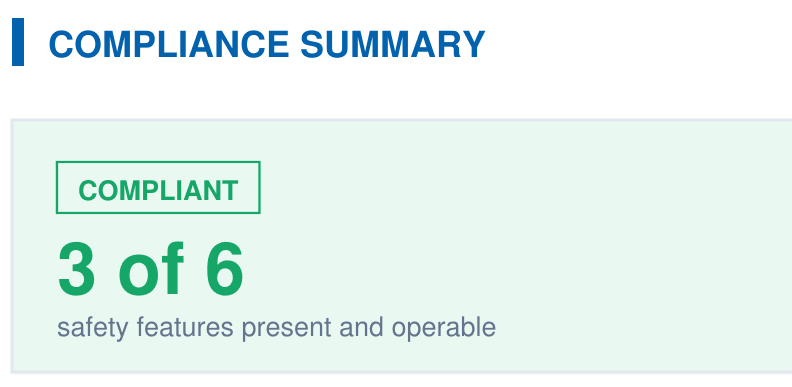
The inspection report must clearly state the number of drowning prevention safety features present and whether they meet minimum requirements. If fewer than two features are present, this must be explicitly noted in the report.

Professional inspectors using digital pool inspection software can generate compliant BPC §7195 reports instantly, ensuring all required disclosure elements are included. PoolVerify's inspection platform automatically formats reports to meet California legal requirements.

BPC 7195 inspection report sample showing required safety feature documentation

BPC 7195 inspection report sample showing required safety feature documentation

Inspector qualifications

BPC §7195 allows licensed home inspectors, pool contractors, and other qualified professionals to conduct pool safety inspections. Inspectors must understand California drowning prevention requirements and be capable of evaluating safety feature compliance.

The law does not establish a separate pool inspector license, but inspectors should have training in California pool safety requirements and drowning prevention feature evaluation. Many inspectors complete specialized pool safety training to ensure competent evaluations.

HSC §115922 breakdown

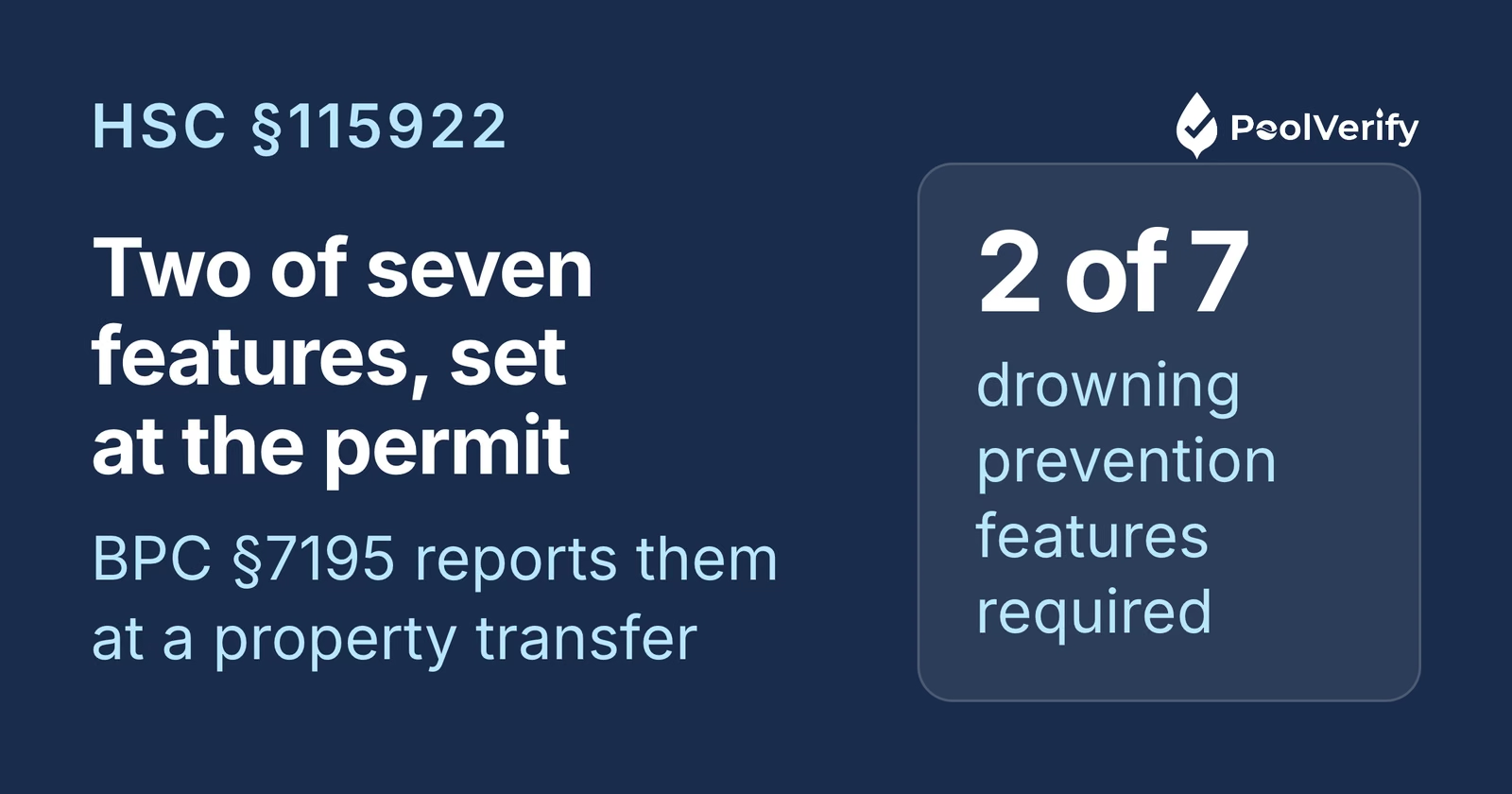
Health and Safety Code Section 115922, part of the California Swimming Pool Safety Act, establishes the seven drowning prevention safety features required for new pool construction and major remodels. This law creates the foundation for what BPC §7195 inspections evaluate.

The seven drowning prevention safety features

When building permits are issued for new pool construction or substantial pool remodels at private single-family homes, the pool must be equipped with at least two of these seven features:

  1. Enclosure barriers that meet Section 115923 requirements and isolate the pool from the dwelling
  2. Removable mesh fencing meeting ASTM F2286 standards with self-closing, self-latching gates that accommodate key locks
  3. Approved safety pool covers meeting ASTM F1346 standards
  4. Exit alarms on doors providing direct pool access, with deactivation controls positioned 54+ inches above floor
  5. Self-closing, self-latching doors with release mechanisms 54+ inches above floor on doors providing pool access
  6. Pool alarms meeting ASTM F2208 standards that detect surface disturbance
  7. VGBA-compliant suction fittings on all pool suction outlets to prevent entrapment

Each feature must meet specific performance standards detailed in referenced ASTM or ANSI standards. Understanding these drowning prevention requirements is essential for compliance.

Seven drowning prevention safety features required under HSC 115922

Seven drowning prevention safety features required under HSC 115922

When HSC §115922 applies

HSC §115922 requirements apply when building permits are issued for new pool construction or remodeling existing pools at private single-family residences. The law does not retroactively require existing pools to add features unless substantial remodeling occurs.

"Substantial remodel" typically includes replastering, equipment replacement, structural modifications, or improvements valued over 50% of pool replacement cost. Minor repairs like filter replacements or tile repairs generally don't trigger HSC §115922 requirements.

Compliance demonstration

Building permit applicants must indicate on permit applications which two drowning prevention features will be installed. Final building inspections verify the indicated features are present and functional before permit closure.

Contractors installing pools benefit from detailed compliance checklists ensuring all required features are properly installed and documented during building inspection.

Complete pool compliance inspections in 15 minutes

PoolVerify includes pre-built checklists for BPC §7195 and HSC §115922 compliance with automatic report generation.

See How It Works →

California Building Code pool requirements

The California Building Code (CBC), based on the International Building Code with California amendments, establishes comprehensive construction standards for pool enclosures, barriers, and related structures. Chapter 31, Section 3109 specifically addresses swimming pool enclosures.

Barrier construction standards (CBC 3109.4)

Pool barriers must meet precise construction specifications ensuring they effectively prevent young children from accessing pool areas. These requirements apply to fences, walls, gates, and building walls serving as pool barriers.

Height Requirements: Minimum 60 inches measured from finished grade on the side facing away from the pool. Measurement point matters—barriers must meet height requirements at all points around the perimeter.

Spacing Requirements: Horizontal and vertical spacing between barrier components cannot exceed 4 inches, preventing children from squeezing through. Mesh fencing must have maximum 1-inch openings.

Ground Clearance: Maximum 2 inches between bottom of barrier and grade prevents crawling underneath. Solid barriers on grade can have slightly larger gaps at expansion joints if designed to prevent passage.

Surface Requirements: Pool side of barriers must be smooth without handholds, footholds, or climbable features. Decorative elements cannot facilitate climbing by children under age 5.

Horizontal member restrictions (CBC 3109.4.1)

When barriers include horizontal components like rails or cross-members, specific spacing rules prevent children from climbing. Horizontal members on pool side must be spaced minimum 45 inches apart. If spacing is less than 45 inches, vertical picket/slat spacing must be maximum 1.75 inches.

Chain link fencing must use maximum 1.75-inch mesh with bottom edge within 2 inches of grade. Decorative horizontal elements cannot create a "ladder effect" enabling climbing.

Building walls as barriers (CBC 3109.4.3)

When dwelling walls serve as part of the pool barrier, doors providing pool access must meet specific requirements. Each door must have either a pool alarm meeting ASTM F2208, an exit alarm with 54+ inch deactivation control, or the door must be self-closing/self-latching with 54+ inch release height.

Windows providing potential pool access must have sills positioned 60+ inches above adjacent walking surfaces or must be equipped with approved window guards preventing opening large enough for child passage.

Building wall serving as pool barrier with compliant door and window placement

Building wall serving as pool barrier with compliant door and window placement

Gate requirements (CBC 3109.4.2)

Gates in pool barriers must be self-closing from any position and self-latching when released from any position. Gates must open outward away from pool area to prevent inward entry.

Latch release mechanisms must be located minimum 54 inches above grade measured from the pool side. If the release is less than 54 inches from the gate top, it must be positioned on pool side, accessible only by reaching over the gate top.

Detailed gate and latch requirements are covered in our pool gate requirements guide and self-closing gate requirements.

Electrical code requirements

The California Electrical Code (CEC), based on the National Electrical Code with California amendments, establishes safety standards for pool electrical systems. Article 680 specifically addresses swimming pools, spas, hot tubs, and similar installations.

GFCI protection requirements (CEC 680.5)

All electrical outlets and equipment associated with pool operation must have ground-fault circuit interrupter (GFCI) protection. This includes pool pumps, lighting, heaters, and electrical receptacles within 20 feet of pool edges.

GFCI devices must trip within 4-6 milliamps of current leakage, protecting swimmers from electrical shock hazards. Regular GFCI testing (monthly recommended) ensures continued protection.

Equipment grounding and bonding (CEC 680.26)

All metallic components associated with pool structures must be bonded together and grounded. This includes metal pool shells, metal fittings, pump motors, metal conduits, metal fences within 5 feet of pool edge, diving stands, ladders, handrails, and reinforcing steel.

Bonding creates a common electrical potential preventing voltage gradients that could shock swimmers. An 8 AWG or larger solid copper bonding conductor creates the equipotential bonding grid.

Underwater lighting (CEC 680.23)

Underwater pool lights must be specifically listed for pool use and installed according to manufacturer instructions. Lights must operate at 150 volts or less to ground, with most modern installations using 12-volt low-voltage systems.

Light niche assemblies must be properly bonded and grounded. Wet-niche lights require GFCI protection and must be installed with proper grounding of niche shells.

Clearances and spacing (CEC 680.8)

Overhead electrical lines must maintain minimum clearances from pool water and surrounding areas. Receptacles, switches, and panelboards require specific separation distances from pool edges ensuring electrical safety.

Receptacles between 6-20 feet from pool edge must be GFCI protected. At least one GFCI-protected receptacle must be located 6-20 feet from pool edge for maintenance equipment use.

Pool electrical code compliance diagram showing GFCI, bonding, and clearance requirements

Pool electrical code compliance diagram showing GFCI, bonding, and clearance requirements

Plumbing code requirements

The California Plumbing Code (CPC), based on the Uniform Plumbing Code with California amendments, establishes standards for pool plumbing systems, drainage, water supply, and waste management. Chapter 10 addresses swimming pool, spa, and hot tub requirements.

Pool circulation systems (CPC 1006)

Pool circulation systems must be designed to completely turn over pool water volume within specified time periods. Residential pools typically require 8-12 hour turnover rates depending on pool size and use.

Circulation piping must be properly sized to handle design flow rates without excessive pressure loss. Pump sizing must match pool volume and circulation requirements.

Suction outlet requirements (CPC 1007)

Following the federal Virginia Graeme Baker Pool and Spa Safety Act, California requires VGBA-compliant drain covers on all suction outlets. Drain covers must meet ANSI/APSP-16 standards and match sump size and configuration.

Multiple main drains must be separated by minimum 3 feet, or pools must employ alternative anti-entrapment systems like gravity drainage or automatic pump shut-off. These requirements prevent suction entrapment incidents.

Complete drain safety information is available in our pool drain cover requirements guide.

Pool water supply (CPC 1003)

Pool fill water must come from approved potable water sources with proper backflow prevention. Air gaps or approved backflow prevention devices protect public water supplies from pool water contamination.

Automatic water leveling devices must include vacuum breakers or other approved backflow prevention appropriate for the hazard level.

Waste water disposal (CPC 1005)

Pool backwash water, filter cleaning waste, and pool drainage must discharge to approved waste disposal systems. Many jurisdictions prohibit pool drainage to storm drains, requiring connection to sanitary sewers or on-site disposal systems.

Chemical content of waste water may require pH neutralization before discharge. Local wastewater treatment facilities establish discharge requirements for chlorinated pool water.

Pool plumbing code compliance showing circulation, drainage, and backflow prevention

Pool plumbing code compliance showing circulation, drainage, and backflow prevention

Digital inspections ensure complete code compliance

PoolVerify helps inspectors verify all applicable code requirements with customizable checklists and detailed photo documentation.

Start Free Trial →

Fence and barrier code requirements

Fence and barrier codes combine elements from multiple code sources creating comprehensive enclosure requirements. Understanding these overlapping standards ensures complete compliance.

Barrier height measurement

Height requirements (60 inches minimum) must be measured from grade on the side facing away from the pool. Grade measurement points include:

  • Finished grade at the barrier location (not original grade)
  • Highest point within 3 feet of barrier exterior
  • Walking surface adjacent to barrier if elevated above grade

Sloped terrain requires measurement at the highest point within the 3-foot measurement zone. Barriers cannot be shorter than 60 inches at any point around the pool perimeter.

Barrier materials and construction

Acceptable barrier materials include wood fencing, metal fencing (wrought iron, aluminum, chain link), masonry walls, vinyl fencing, composite materials, tempered safety glass, and removable mesh fencing meeting ASTM F2286.

Material durability matters—barriers must withstand normal weathering and resist deterioration. Temporary or easily displaced barriers don't meet code requirements.

Pool barrier exceptions

Limited exceptions exist for certain pool configurations:

Above-Ground Pools: If pool structure walls are minimum 60 inches high with non-climbable surfaces and approved ladder/stair removal, the pool structure may serve as the barrier without separate fencing.

Spa/Hot Tub Covers: Lockable safety covers meeting ASTM F1346 may serve as barriers if they support minimum 485 pounds and lock in place preventing unauthorized removal.

These exceptions don't eliminate safety requirements—alternative features must provide equivalent protection.

Gate hardware and automation

Self-closing and self-latching mechanisms must function consistently without adjustment or maintenance. Hydraulic closers, spring-loaded hinges, and gravity-based systems all meet requirements if properly adjusted.

Automated gates must include manual operation capability and safety features preventing gate closure on obstructions. Electric gate operators must meet UL 325 standards for entrapment protection.

Complete barrier requirements are covered in our California pool barrier requirements and swimming pool fence requirements guides.

Pool fence and barrier code compliance showing height, spacing, and gate requirements

Pool fence and barrier code compliance showing height, spacing, and gate requirements

Code enforcement and penalties

California pool code enforcement involves multiple agencies at different governmental levels. Understanding enforcement processes helps ensure compliance and avoid penalties.

Building department enforcement

Local building departments enforce California Building Code, Electrical Code, and Plumbing Code requirements through permit review and inspection processes. New pool construction requires building permits with inspections at multiple construction stages.

Building inspectors verify code compliance before issuing final approvals. Unpermitted pool construction can result in enforcement actions requiring retroactive permits, compliance corrections, and potential fines.

Health department oversight

County health departments regulate public and semi-public pools including commercial pools, multi-family pools, hotel pools, and community pools. Health department inspectors enforce water quality standards, operational requirements, and safety equipment regulations.

Health department jurisdiction typically doesn't extend to private single-family home pools, which fall under building department oversight.

Real estate disclosure requirements

BPC §7195 creates enforcement through real estate transaction disclosure requirements. Sellers must provide pool safety inspection reports to buyers documenting compliance with drowning prevention requirements.

Failure to provide required inspections can delay closings, create liability issues, or provide grounds for buyer recission of purchase agreements.

Violation penalties

Code violation penalties vary by jurisdiction and violation severity:

Building Code Violations: Fines typically $100-$500 per violation per day until corrected. Serious violations may result in pool closure orders until compliance achieved.

Electrical Violations: Electrical code violations pose immediate safety hazards and may result in pool power disconnection until corrections are completed.

Permit Violations: Unpermitted pool construction may require retroactive permits at increased costs (often double standard permit fees) plus correction of all code deficiencies.

Liability Issues: Non-compliant pools create significant liability exposure if drowning incidents occur. Property owners may face civil litigation and potential criminal negligence charges.

Self-inspection and correction

Pool owners discovering code violations should document issues and develop correction plans. Voluntary disclosure and correction of violations typically results in more favorable treatment than violations discovered during complaint investigations.

Professional pool safety inspections identify compliance issues before they become enforcement matters, allowing planned corrections.

Code enforcement process flowchart showing inspection, violation, and correction procedures

Code enforcement process flowchart showing inspection, violation, and correction procedures

Recent California pool code changes

California pool codes evolve to address emerging safety concerns and incorporate new technologies. Staying current with code changes ensures ongoing compliance.

2024-2025 code updates

The 2024 California Building Code, Electrical Code, and Plumbing Code include updates to pool safety requirements. Recent changes emphasize improved anti-entrapment protection, enhanced electrical safety, and clearer barrier specifications.

Notable updates include clarified measurement standards for barrier heights, enhanced GFCI requirements for pool equipment, updated VGBA compliance for drain covers, and revised pool alarm standards matching current ASTM specifications.

Proposed legislation

California legislators continue introducing pool safety bills addressing specific hazards or clarifying existing requirements. Recent legislative proposals have addressed pool alarm standards, inspector training requirements, and enhanced real estate disclosure.

SB 736 and similar bills have expanded pool safety inspection requirements and clarified inspector qualifications. Monitoring legislative developments helps anticipate future compliance requirements.

Local code adoptions

Cities and counties continuously update local pool ordinances, often implementing stricter standards than state minimums. Recent local adoptions include enhanced barrier requirements in drought-prone areas, additional water conservation measures, and expanded inspection requirements.

Always verify current local requirements before pool construction or remodeling. Local building departments maintain current code adoptions and can clarify jurisdiction-specific requirements.

Technology and standard updates

Professional organizations like ASTM International regularly update safety standards for pool equipment and drowning prevention features. Pool alarm standards (ASTM F2208), safety cover standards (ASTM F1346), and mesh fencing standards (ASTM F2286) undergo periodic revision.

California codes incorporate these updated standards through code adoption cycles. Equipment must meet current standards at installation time, though existing equipment meeting prior standards typically remains compliant through grandfathering provisions.

Stay informed about code changes through professional associations, pool inspection software updates, and local building department notifications.

Frequently asked questions

What's the difference between BPC §7195 and HSC §115922?

BPC §7195 establishes pool safety inspection requirements for property transfers, requiring professional evaluation of drowning prevention features during home sales. HSC §115922 establishes which drowning prevention features must be installed when new pools are built or substantially remodeled. BPC §7195 inspections verify compliance with HSC §115922 requirements plus any features added by owners.

Do I need a building permit for pool fence repairs?

Minor fence repairs like replacing boards or hardware typically don't require building permits. Complete fence replacement, fence height increases, or new fence installation usually require permits and building department approval. Contact your local building department to determine permit requirements for your specific project. Permitted work ensures code compliance and avoids future issues.

Can I install my own pool fence to save money?

California doesn't prohibit homeowner-installed pool fences, but installation must meet all applicable building codes. Poorly installed fences may fail inspections during property transfers, requiring costly corrections. Professional installation ensures code compliance and may be required by local jurisdictions for certain fence types. Check local building department policies before proceeding with DIY fence installation.

How do pool codes differ between California counties?

California state codes establish minimum requirements applicable statewide, but counties and cities can adopt stricter local ordinances. Coastal counties may have additional requirements related to saltwater exposure. Urban areas often have enhanced barrier requirements. Always verify local code requirements with your city or county building department before pool construction or modifications.

What happens if my pool doesn't meet current codes?

Existing pools installed under prior codes typically remain legally compliant through "grandfathering" provisions. Codes generally don't require retroactive updates unless substantial remodeling occurs or safety hazards exist. However, property transfers may reveal code deficiencies requiring correction before sale completion. Pool safety inspections identify compliance issues allowing planned corrections.

Conclusion

California pool code requirements create comprehensive safety standards protecting children from drowning hazards while ensuring proper pool construction and operation. Understanding the interplay between BPC §7195, HSC §115922, Building Code, Electrical Code, and Plumbing Code requirements is essential for complete compliance.

Pool contractors, inspectors, and property owners must navigate multiple code sources and verify local jurisdiction requirements beyond state minimums. Regular pool safety inspections identify compliance issues before they become enforcement matters or create liability during property transfers.

Professional pool inspectors can streamline code compliance verification with PoolVerify, the only inspection platform built exclusively for California pool safety requirements. Complete comprehensive inspections in 15 minutes with pre-built BPC §7195 checklists, integrated photo documentation, and instant PDF reports meeting all legal disclosure requirements.


Related posts

  • Pool Safety Requirements: Complete California List
  • California Pool Compliance: Complete Guide
  • California Pool Barrier Requirements
  • Pool Inspection Requirements: Home Sales California
  • Swimming Pool Fence Requirements California

In this article

Table of ContentsCalifornia pool code overviewBPC §7195 breakdownHSC §115922 breakdownCalifornia Building Code pool requirementsElectrical code requirementsPlumbing code requirementsFence and barrier code requirementsCode enforcement and penaltiesRecent California pool code changesFrequently asked questionsConclusion+ more sections below

Share

TwitterLinkedIn

Streamline inspections?

Professional reports in minutes.

Start Free Trial

Frequently Asked Questions

What is the difference between BPC §7195 and HSC §115922?

BPC §7195 establishes pool safety inspection requirements for property transfers, requiring professional evaluation of drowning prevention features during home sales. HSC §115922 establishes which drowning prevention features must be installed when new pools are built or substantially remodeled. BPC §7195 inspections verify HSC §115922 compliance.

Do I need a building permit for pool fence repairs?

Minor fence repairs like replacing boards or hardware typically do not require building permits. Complete fence replacement, fence height increases, or new fence installation usually require permits and building department approval. Contact your local building department to determine permit requirements for your specific project.

How do pool codes differ between California counties?

California state codes establish minimum requirements applicable statewide, but counties and cities can adopt stricter local ordinances. Coastal counties may have additional requirements related to saltwater exposure, and urban areas often have enhanced barrier requirements. Always verify with your local building department.

What happens if my pool does not meet current California codes?

Existing pools installed under prior codes typically remain legally compliant through grandfathering provisions. Codes generally do not require retroactive updates unless substantial remodeling occurs or safety hazards exist. However, property transfers may reveal code deficiencies requiring correction before sale.

Can I install my own pool fence to meet California code requirements?

California does not prohibit homeowner-installed pool fences, but installation must meet all applicable building codes including 60-inch height and proper gate mechanisms. Poorly installed fences may fail inspections during property transfers, requiring costly corrections. Professional installation is recommended.

Related Articles

California pool laws compliance guide showing residential pool with safety barriers and legal requirements documentation
Pool-compliance

California Pool Laws: Complete 2026 Compliance Guide

Complete guide to California pool laws including BPC §7195, HSC §115922, AB 3205, and SB 552. Learn requirements for new construction, existing pools, rental properties, enforcement, and penalties.

California BPC 7195 pool inspection documentation showing safety features checklist and compliance report
Pool-compliance

California BPC §7195: Complete Pool Inspection Guide for Home Inspectors & Property Owners

Complete guide to California Business & Professions Code §7195 pool inspection requirements for property transfers. Learn inspection procedures, reporting requirements, penalties, training, and compliance for 2026.

California pool safety requirements checklist showing all mandatory safety features
Pool-safety

Pool Safety Requirements: Complete California List

Complete list of all California pool safety requirements including barriers, gates, latches, alarms, covers, drains, when they apply, and enforcement.

Previous
Pool Business Software: Complete Guide for Pool Companies
Next
Pool Company Software: Solutions for Pool Contractors
500+ Inspectors
5+ Hrs Saved/Week

Ready to Transform YourPool Inspection Business?

Join California's fastest-growing inspection platform. Create professional reports in minutes, not hours.

Start Free Trial
14-day free trialFull feature accessCancel anytime
PoolVerify

The modern pool inspection platform built for California professionals. Complete BPC §7195 compliance, built in.

support@poolverify.io

256-bit SSL

Encrypted

CA Compliant

BPC §7195

Product

  • Features
  • Pricing
  • Resources

Free Tools

  • Compliance Checker
  • Cost Calculator
  • Salary Estimator

Compare

  • vs Spectora
  • vs HappyCo
  • vs HomeGauge
  • vs ISN
  • vs Pool Inspector App
  • vs Pro Pool Inspectors
  • vs SafetyCulture

Solutions

  • Pool Inspection Software
  • For Real Estate
  • For Property Managers
  • Free Trial

Resources

  • Pool Report Writing
  • CA AB 3205 Guide
  • Free Checklist Download
  • ROI Calculator
  • Case Studies

Locations

  • Fresno
  • Anaheim
  • Oakland
  • San Jose
  • San Diego
  • Sacramento
  • Long Beach
  • Los Angeles
  • Orange County
  • San Francisco Bay Area

Company

  • About
  • Security
  • Contact

Legal

  • Privacy
  • Terms
  • Do Not Sell

© 2026 PoolVerify, Inc. All rights reserved.

Built for California Pool Inspectors