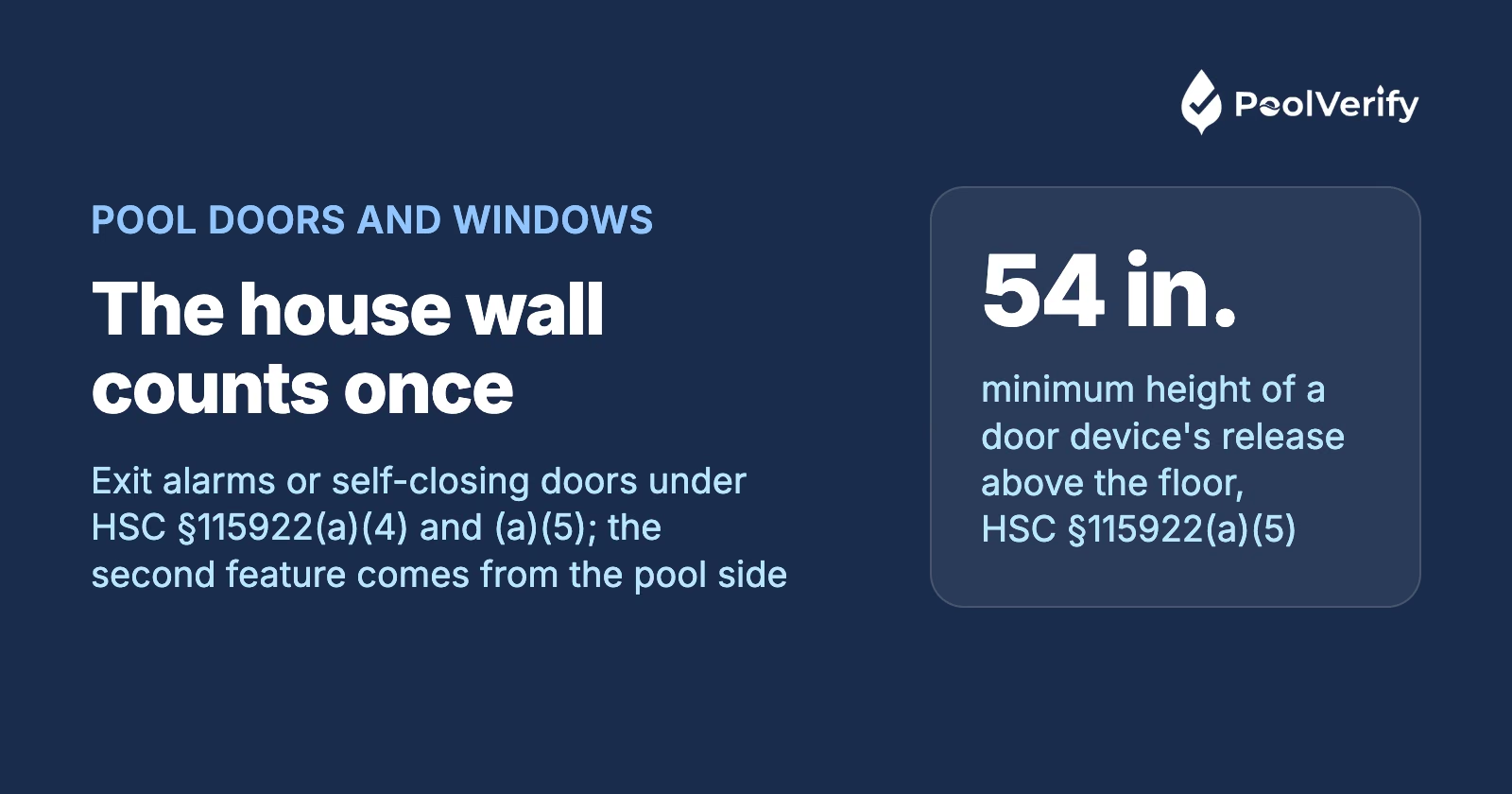
California counts the doors of the house as two of seven drowning prevention safety features: exit alarms on doors and windows with direct access to the pool (HSC §115922(a)(4)) and self-closing, self-latching devices with the release no lower than 54 inches above the floor (HSC §115922(a)(5)). Since 2025 HSC §115922(b) lets the doors supply only one of the two features a permit requires.
California counts the doors of the house as two of its seven drowning prevention safety features: exit alarms on the home's doors and windows that provide direct access to the pool, under Health and Safety Code §115922(a)(4), and a self-closing, self-latching device with its release no lower than 54 inches above the floor, under §115922(a)(5). Since January 1, 2025, HSC §115922(b) lets the house doors supply only one of the two features a permit requires.
This guide covers what the statute says about doors and windows, which openings have direct access, why the doors count once, what an exit alarm must do, what a door device must do, what the federal Consumer Product Safety Commission recommends, how an inspector documents the house wall, and what the BPC §7195 report says at a sale. Our pool alarm guide covers the in-water alarm, a different feature.
What the statute says about doors and windows
Two of the seven features in HSC §115922(a) are on the house, not at the pool.
Feature
The statute's words
What it covers
What the inspector records
(4) Exit alarms
"Exit alarms on the private single-family home's doors and windows that provide direct access to the swimming pool or spa without any intervening enclosure"
Every door and every window with direct access
Each opening tested: the alarm sounds when it is opened or left ajar
(5) Door devices
"A self-closing, self-latching device with a release mechanism placed no lower than 54 inches above the floor on the private single-family home's doors providing direct access to the swimming pool or spa"
Doors with direct access; windows are not named
Each door closes and latches on its own; the release height from the floor
Both features apply when a building permit is issued for a new pool or spa, or the remodel of an existing one, at a private single-family home: the pool then needs at least two of the seven, and under §115922(c) the local building official inspects them before final approval. SB 552 (Stats. 2024, Ch. 769), effective January 1, 2025, added windows to the exit alarm paragraph, allowed a repeating verbal warning, and added the pairs in §115922(b).
Which doors and windows have direct access
The exit alarm paragraph answers the question itself: an opening has direct access when it leads to the pool or spa "without any intervening enclosure." An enclosure, under HSC §115921, is a fence, wall or other barrier that isolates the pool from access to the home, so a house whose pool sits behind an enclosure meeting HSC §115923 has no doors with direct access on that side.
Where there is no such enclosure, the openings to check are the ones a child could walk or climb through to reach the water:
Hinged and French doors from the house to the yard or deck the pool is in.
Sliding glass doors onto the pool area. The statute does not distinguish door types.
Windows that open onto the pool area. They are named in the exit alarm paragraph since 2025; the door device paragraph names doors only.
Pet doors. The statute does not mention them. The CPSC's Safety Barrier Guidelines for Residential Pools say never to have a pet or doggy door if the door leads directly to a pool, and that locking these doors is not sufficient.
An inspector who maps the house wall first, before testing anything, avoids the most common incomplete finding: an alarmed patio door beside an unalarmed window.
The doors count once
HSC §115922(b) lists three pairs that do not satisfy the two-feature requirement, and two of them are about the house doors.
First feature
Second feature
Counts as two?
Exit alarm
Self-closing, self-latching device on the same door
No, HSC §115922(b)(1)
Exit alarm
Door latch on a separate door
No, HSC §115922(b)(2)
Exit alarms or door devices
Enclosure meeting HSC §115923
Yes
Exit alarms or door devices
Removable mesh fencing meeting ASTM F2286
Yes
Exit alarms or door devices
Safety pool cover labeled to ASTM F1346-23
Yes
Exit alarms or door devices
In-water alarm certified to ASTM F2208
Yes
The effect is that the house wall supplies at most one feature, however many devices are on it. The second has to come from the pool side: an enclosure, mesh fencing, a labeled cover, an in-water alarm, or an independently verified other means. Our guides to enclosures, removable mesh fencing and safety covers cover those.
Exit alarms: what they must do
The statute sets the behavior, not the hardware. Under HSC §115922(a)(4), "whenever any door or window is opened or left ajar, exit alarms shall make either an audible, continuous alarm sound or a repeating verbal warning, such as a notification that 'the door to the pool is open.'" A chime that sounds once and stops does not describe that behavior.
The statute sets no loudness, delay or bypass. The CPSC's barrier guidelines, which are federal recommendations and not California law, recommend that door alarms meet UL 2017, Section 77, and:
CPSC recommendation
The figure
Sound duration
30 seconds or more, starting within 7 seconds after the door is opened
Loudness
At least 85 dBA measured 10 feet from the alarm
Sound
Distinct from other household sounds such as the telephone, doorbell and smoke alarm
Adult bypass
An automatic reset that deactivates the alarm for up to 15 seconds so an adult can pass
Bypass switch location
At least 54 inches above the threshold, out of the reach of children
An inspector can record these as the CPSC's recommendations. The report does not fail an alarm for missing one of them, because the statute does not ask for them.
Self-closing, self-latching doors: what they must do
A door device must close the door and latch it without a hand on it, from any open position, with its release no lower than 54 inches above the floor. That is the same idea as a pool gate with a different number: the self-latching device on an enclosure gate sits no lower than 60 inches above the ground under HSC §115923(a). Our gate latch guide sets the two rules side by side.
Measure from the floor, not the threshold or the ground outside.
Test from several positions, including barely open. A closer that stops an inch short leaves a door that is present but not operable as designed.
Every door with direct access. A device on the main patio door and none on the side door is an incomplete feature.
The CPSC guidelines add that self-closing doors with self-latching devices could be used together with door alarms. California's §115922(b)(1) still counts that combination on one door as one feature, not two.
Inspecting and documenting the house wall
The five steps in the summary above produce what the report needs.
Map every opening with direct access. List each door and window that opens onto the pool area without an enclosure in between, and photograph the house wall so the reader can see the list is complete.
Test each exit alarm. Open each opening and leave it ajar. Record whether the alarm sounds continuously or repeats a verbal warning.
Test each door device. Open each door to several positions and let go. Record whether it closes and latches every time.
Measure the release. Photograph the tape from the floor to the release mechanism of each device, with the reading in frame.
Write the finding and count the doors once. Record each feature as in place, in good repair and operable as designed, name every opening that lacks it, and count the house doors as at most one of the two.
Two lines on the checklist for the house wall. PoolVerify's California checklist lists exit alarms and self-closing, self-latching devices as separate items among the six physical HSC §115922(a) features, takes up to 10 captioned photos on each, keeps condition separate from presence, and prints the feature count on page 1 of the PDF with the fewer-than-two statement when it applies. See the checklist or download the sample report.
At a sale: the BPC §7195 pool section
When a home inspection is performed for a fee at the transfer of a one to four unit home with a pool or spa, BPC §7195(a)(2) includes a noninvasive examination of the pool or spa and the dwelling to identify which of the seven features it has. The word "dwelling" is why the inspector tests the house doors and windows. BPC §7195(c) then requires the report to say whether each feature is in place, in good repair, operable as designed and, if applicable, labeled, to state specifically if there are fewer than two, and to include the isolation fence statement.
A house whose only protection is alarms and self-closing hardware on the patio doors has one feature for the statute's purposes, and the report says so. Our BPC §7195 guide covers the report duty, and the buyer's guide covers what a fewer-than-two statement means to the person buying the house.
Limitations
This guide is general information about California law, not legal advice. The current text of HSC §115921 to §115929 and BPC §7195 on leginfo.legislature.ca.gov controls. The CPSC barrier guidelines are federal recommendations, not California requirements, and UL 2017 is a paid standard this guide does not restate. Whether a particular alarm, closer or latch is accepted at a permit is decided by the local building official under HSC §115922(c). PoolVerify is inspection software for California residential pool safety inspections; it does not perform inspections, certify inspectors, or issue compliance certificates.
Frequently asked questions
Are pool door alarms required in California?
Not on their own. Exit alarms on the home's doors and windows with direct access to the pool are one of seven drowning prevention safety features in HSC §115922(a). When a building permit is issued for a new or remodeled pool or spa at a single-family home, the pool needs at least two of the seven, and exit alarms can be one of them.
Do windows need pool alarms in California?
When exit alarms are the feature, yes. Since January 1, 2025, HSC §115922(a)(4) describes exit alarms on the home's doors and windows that provide direct access to the pool or spa without any intervening enclosure. A window that opens onto the pool area is part of the feature, so an alarmed door beside an unalarmed window is an incomplete feature.
How high must the latch be on a door to the pool?
No lower than 54 inches above the floor. HSC §115922(a)(5) describes a self-closing, self-latching device with its release mechanism at that height on the home's doors providing direct access to the pool or spa. The 60 inch figure belongs to the self-latching device on an enclosure gate under HSC §115923, measured from the ground.
Can an exit alarm and a self-closing door count as two features?
No. HSC §115922(b)(1) says an exit alarm and a self-closing, self-latching device on the same door do not satisfy the two-feature requirement, and §115922(b)(2) says the same of an exit alarm and a door latch on separate doors. The house doors supply at most one feature, so the second must come from an enclosure, mesh fencing, a cover, an in-water alarm or other means.
Does a sliding glass door count as a door with direct access?
The statute does not distinguish door types. HSC §115922(a)(4) and (a)(5) refer to the home's doors providing direct access to the pool or spa, so a sliding door that opens onto the pool area is one of them. Whether a particular sliding door's closer and latch are accepted is decided by the local building official at the permit.
What does an exit alarm have to do when the door opens?
Whenever any door or window is opened or left ajar, HSC §115922(a)(4) says the exit alarm must make either an audible, continuous alarm sound or a repeating verbal warning, such as a notification that the door to the pool is open. The statute sets no decibel level; the CPSC's barrier guidelines recommend one.
Conclusion
The house wall is two of California's seven features and counts as one: exit alarms on every door and window with direct access, sounding continuously or repeating a warning, or self-closing, self-latching devices on every such door with the release at least 54 inches above the floor. The second feature has to come from the pool side. The inspector's job is the map of openings, the test of each one, and the measurement, each with a photo. PoolVerify's California checklist has both door features as items and prints the count on page 1. Start your 14-day free trial, no credit card to start, or compare plans.
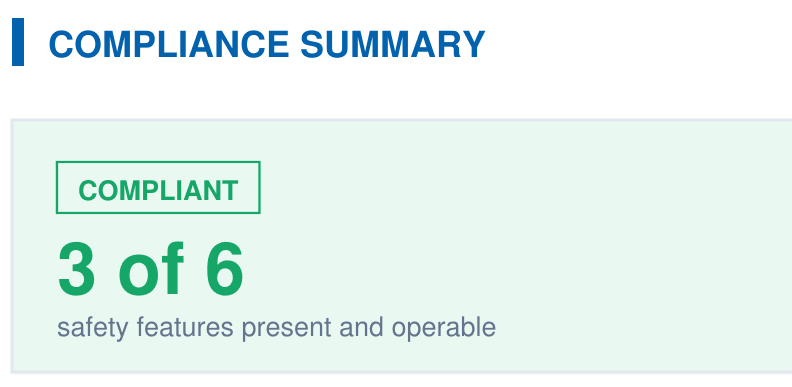
A branded PDF with the compliance summary, the feature table, each finding with its photos, and the signature, generated on‑site when the BPC §7195 and HSC §115922 checklist is complete.