Removable Mesh Pool Fence Requirements in California (ASTM F2286)
Removable mesh pool fencing is one of California's seven drowning prevention safety features when it meets ASTM F2286 and is used with a gate that is self-closing and self-latching and can accommodate a key lockable device (HSC §115922(a)(2)). How it differs from a permanent enclosure under HSC §115923, what the CPSC recommends, how it counts toward two features, and what the BPC §7195 report records.
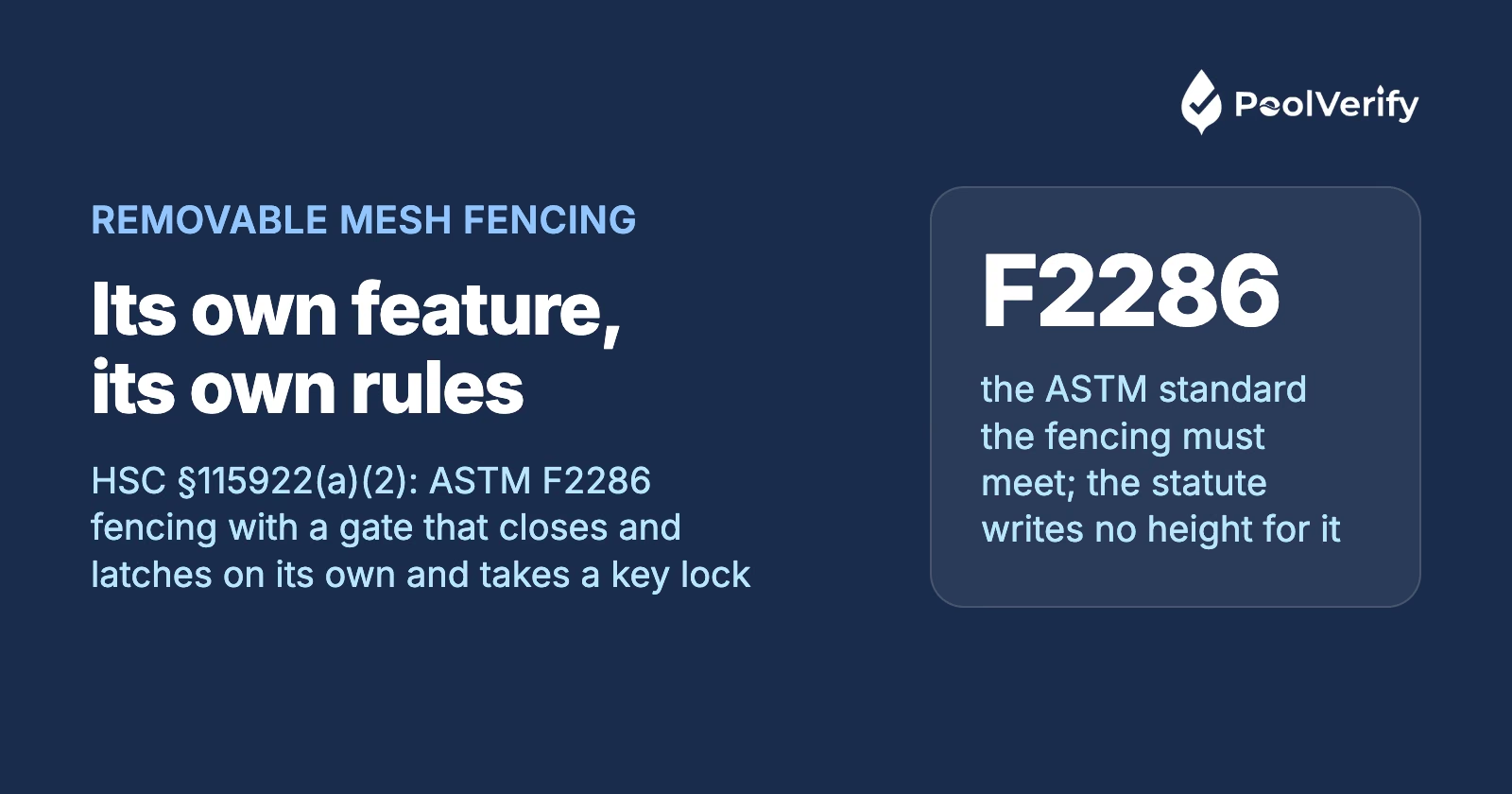
Removable mesh pool fencing is one of California's seven drowning prevention safety features when it meets the ASTM International F2286 standard and is used with a gate that is self-closing and self-latching and can accommodate a key lockable device, under Health and Safety Code §115922(a)(2). It is a separate feature from a permanent enclosure under HSC §115923, so that section's 60 inch height and 60 inch latch rules are not written into the mesh fence paragraph; the ASTM standard and the gate are.
This guide covers what the statute says about mesh fencing, how it differs from a permanent enclosure, what the federal Consumer Product Safety Commission recommends for mesh fences, how the feature counts toward the two a permit requires, what "removable" means for a report, how an inspector documents it, and what the BPC §7195 report says at a sale. Our HSC §115922 guide covers the Act clause by clause.
What the statute says about mesh fencing
HSC §115922(a)(2) lists, as the second of seven features, "removable mesh fencing that meets the ASTM International F2286 standard in conjunction with a gate that is self-closing and self-latching and can accommodate a key lockable device." The sentence has three parts, and an inspector records each one.
What the paragraph asks
What it means at the pool
What the inspector records
Meets ASTM F2286
The standard design and performance specifications for removable mesh fencing for swimming pools, hot tubs and spas; the statute names the standard, not an edition
The manufacturer's label or marking, photographed
A gate that is self-closing and self-latching
Released from any open position, the gate swings shut and the latch engages without a hand on it
The gate tested from several positions
Can accommodate a key lockable device
The gate has a place for a key lock, whether or not one is fitted or engaged
Whether the provision is there
Unlike the cover paragraph, which names ASTM F1346-23 by edition, the mesh fence paragraph names F2286 without a year. And as with every feature, BPC §7195(c) says the report does not require a determination as to whether a feature meets the ASTM specifications: the inspector reads the label the manufacturer applied and records whether it is there.
Mesh fencing versus a permanent enclosure
The two fence features sit in different paragraphs and are measured against different documents. An enclosure under HSC §115922(a)(1) must meet the five rules of HSC §115923; removable mesh fencing under §115922(a)(2) must meet ASTM F2286 and have the gate the paragraph describes.
Rule
Permanent enclosure, HSC §115923
Removable mesh fencing, HSC §115922(a)(2)
Governing document
The statute itself
ASTM F2286, by reference
Height
Minimum 60 inches
Not stated in the statute
Clearance at the bottom
Maximum 2 inches from the ground to the bottom of the enclosure
Not stated in the statute
Gaps
None that pass a sphere of 4 inches or more
Not stated in the statute
Outside surface
Free of protrusions, cavities or other handholds or footholds a child under five could climb
Not stated in the statute
Gate
Opens away from the pool, self-closing, self-latching device no lower than 60 inches above the ground
Self-closing, self-latching, can accommodate a key lockable device; no height stated
Where the numbers come from
Measured on site with a tape
Read from the manufacturer's label
The distinction matters in one more place. BPC §7195(c) requires every report to include the statement that a pool isolation fence, as described in HSC §115923, is the most studied and effective drowning prevention safety feature, as the American Academy of Pediatrics has found. That sentence names the permanent enclosure. A mesh fence that isolates the pool is still one of the seven; the report identifies it under paragraph (2) and includes the statement as written. Our enclosure guide has every §115923 number with how to measure it, and the pool gate requirements guide sets the two gates side by side.
What the Consumer Product Safety Commission recommends for mesh fences
The CPSC's Safety Barrier Guidelines for Residential Pools are federal guidance, not California law, and they are the only public document that gives numbers for a mesh fence. Under "Removable Mesh Fences" the guidelines recommend:
Height: like other pool fences, "a minimum of 48 inches in height." The guidelines note elsewhere that "some states, counties or municipalities require pool barriers of 60 inches," which is what California writes for a permanent enclosure.
Posts: the removable vertical support posts "should extend a minimum of 3 inches below grade and they should be spaced no greater than 40 inches apart."
Bottom: the bottom of the mesh barrier "should not be more than 1 inch above the deck or installed surface."
Removability: the safest mesh pool fences "are locked into the deck so that they cannot be removed without the extensive use of tools."
Gates: pedestrian gates should open out from the pool and be self-closing and self-latching, with a locking device; where the latch release is less than 54 inches from the bottom of the gate, the release should sit at least 3 inches below the top of the gate on the pool side.
The guidelines then point to ASTM F2286 for the full specification. An inspector can cite these numbers as the CPSC's recommendations and photograph against them; the report does not fail a mesh fence for missing one, because the statute does not.
How mesh fencing counts toward the two features
When a building permit is issued for a new pool or spa, or the remodel of an existing one, at a private single-family home, HSC §115922(a) requires at least two of the seven features, and under §115922(c) the local building official inspects them before final approval. HSC §115922(b) rejects three pairs, and none of them involves mesh fencing.
First feature
Second feature
Counts as two?
Mesh fencing meeting ASTM F2286, with its gate
Enclosure meeting HSC §115923
Yes
Mesh fencing meeting ASTM F2286, with its gate
Safety pool cover labeled to ASTM F1346-23
Yes
Mesh fencing meeting ASTM F2286, with its gate
Exit alarms on the home's doors and windows with direct access
Yes
Mesh fencing meeting ASTM F2286, with its gate
Self-closing, self-latching door devices with the release at least 54 inches above the floor
Yes
Mesh fencing meeting ASTM F2286, with its gate
In-water alarm certified to ASTM F2208
Yes
Mesh fencing meeting ASTM F2286, with its gate
Other means, independently verified and labeled
Yes
The three pairs the statute rejects are an exit alarm and a self-closing, self-latching device on the same door, an exit alarm and a door latch on separate doors, and a safety cover with the in-water alarm. Mesh fencing is the feature that pairs with anything. Our pool alarm guide and safety cover guide cover the two features that do not pair with each other, and the contractor's final inspection guide covers what the building official looks for at final.
Removable means it can be absent
The feature is named for what makes it different: it comes down. That is a convenience for the owner and a question for the report, because BPC §7195(c) asks whether each feature is "in place, in good repair, operable as designed, and, if applicable, appropriately labeled."
In place means installed around the water on the day of the inspection. A fence rolled up in the garage, with the deck sleeves capped, is not in place, however new it is.
In good repair means the mesh is intact, the posts are straight and seated, and the sections join without a gap.
Operable as designed means the gate closes and latches on its own, and its provision for a key lockable device is intact.
Labeled means the ASTM F2286 marking is on the fence or gate.
At a permit, the building official inspects the fence installed: the two-feature requirement in HSC §115922(a) attaches when the permit is issued and is checked before final approval, and the Act sets no fine or penalty for any pool. At a sale, the report simply records what is there. Our non-compliance guide covers what the Act does and does not penalize.
Inspecting and documenting mesh fencing
The five steps in the summary above produce the four facts the report needs.
Find and photograph the marking. The label or marking is usually on a fence section near a post, or on the gate. Photograph the text that names ASTM F2286. If there is none, photograph where it would be and note it.
Walk the whole run. Every section is installed and joined, every post is seated in its deck sleeve, and the fence isolates the water from the house and the yard with no open end. Photograph any gap where sections meet or at the bottom, with a tape in frame.
Test the gate. Open it to several positions, including barely open, and let go. It must close and latch on its own each time. Confirm it has a place for a key lockable device.
Inspect the condition. Torn mesh, bent or loose posts, and worn or missing latch parts are what "good repair" turns on.
Write the finding and count the pair. Record the fencing as in place, in good repair, operable as designed and labeled, or say which of those it is not. Then name the second feature; any of the other six pairs with mesh fencing.
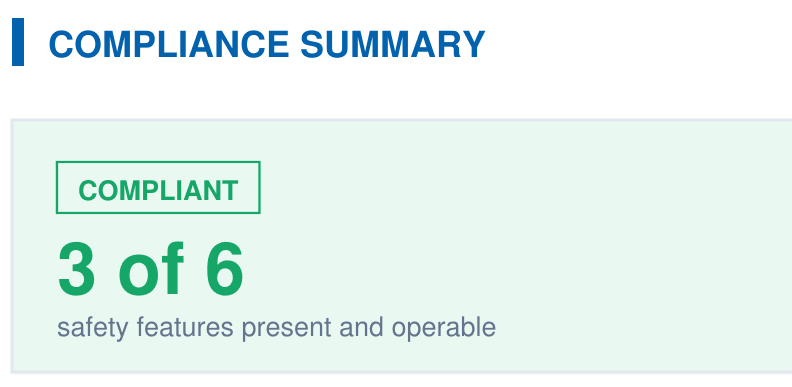
The fence is a line on the checklist, with the marking and the gate test as its photos. PoolVerify's California checklist lists removable mesh fencing (ASTM F2286) as one of the six physical HSC §115922(a) items, takes up to 10 captioned photos on it, keeps the fence's condition separate from its presence, and prints the feature count on page 1 of the PDF with the fewer-than-two statement when it applies. See the checklist or download the sample report.
At a sale: the BPC §7195 pool section
When a home inspection is performed for a fee at the transfer of a one to four unit home with a pool or spa, BPC §7195(a)(2) includes a noninvasive examination of the pool or spa and the dwelling to identify which of the seven HSC §115922(a) features are present, and §7195(c) requires the report to identify them, to say whether they are in place, in good repair, operable as designed and labeled, to state specifically if the pool has fewer than two, and to include the isolation fence statement.
For a pool whose fence is mesh, the report names it under paragraph (2), records the label and the gate test, and names the second feature. Our BPC §7195 guide covers the report duty in full, the report writing guide covers the wording, and the seller's guide covers what a fewer-than-two statement means at escrow.
Limitations
This guide is general information about California law, not legal advice. The current text of HSC §115921 to §115929 and BPC §7195 on leginfo.legislature.ca.gov controls. ASTM F2286 is a paid standard and this guide does not restate its dimensions or test methods; the numbers quoted above are the CPSC barrier guidelines' recommendations, not California requirements. Whether a mesh fence is accepted at a permit is decided by the local building official under HSC §115922(c), and a city or county may adopt barrier rules of its own; our county requirements guide explains how those sit on top of the statute. PoolVerify is inspection software for California residential pool safety inspections; it does not perform inspections, certify inspectors, or issue compliance certificates.
Frequently asked questions
Is a removable mesh pool fence legal in California?
Yes. HSC §115922(a)(2) lists removable mesh fencing that meets the ASTM International F2286 standard, in conjunction with a gate that is self-closing and self-latching and can accommodate a key lockable device, as one of the seven drowning prevention safety features. A permitted new or remodeled pool at a single-family home needs two of the seven, and the local building official accepts them at final.
How tall does a mesh pool fence have to be in California?
The statute states no height for removable mesh fencing; HSC §115922(a)(2) points to the ASTM F2286 standard instead. The 60 inch minimum in HSC §115923 belongs to a permanent enclosure, a separate feature. The federal CPSC barrier guidelines recommend that mesh pool fences be at least 48 inches high, and note that some jurisdictions require 60 inch barriers.
Does a mesh pool fence gate need a lock in California?
The gate must be self-closing and self-latching and must be able to accommodate a key lockable device, under HSC §115922(a)(2). The statute does not say the gate must be locked at all times, and it states no latch height for this gate; the 60 inch latch rule applies to a permanent enclosure gate under HSC §115923(a).
Can a mesh fence and a pool alarm be the two features?
Yes. HSC §115922(b) rejects only three pairs: an exit alarm and a self-closing, self-latching device on the same door; an exit alarm and a door latch on separate doors; and a safety pool cover with the in-water alarm. None of them involves mesh fencing, so mesh fencing pairs with any of the other six features, including the alarm and the cover.
Is removable mesh fencing the same as an enclosure under HSC §115923?
No. They are separate paragraphs of HSC §115922(a): an enclosure under paragraph (1) must meet the five rules in HSC §115923, and removable mesh fencing under paragraph (2) must meet ASTM F2286 and have the gate the paragraph describes. The report identifies which of the seven the pool has; it does not need to decide whether a mesh fence would also pass §115923.
What if the mesh fence is taken down when the house is sold?
Then it is not in place. BPC §7195(c) asks whether each feature is in place, in good repair, operable as designed and labeled, so a fence rolled up in the garage is recorded as not in place, with a photo of the empty deck sleeves. If no two features are present and operable, the report must specifically state that the pool has fewer than two.
Conclusion
Removable mesh fencing is its own feature under HSC §115922(a)(2): ASTM F2286 by reference, a gate that closes and latches on its own and can take a key lock, and no height or latch height written in the statute. It pairs with any of the other six features, and it counts only while it is up. The inspector's job is the marking, the run, the gate and the condition, each with a photo. PoolVerify's California checklist puts the mesh fence on the list with the marking as its photo and prints the count on page 1. Start your 14-day free trial, no credit card to start, or compare plans.
A branded PDF with the compliance summary, the feature table, each finding with its photos, and the signature, generated on‑site when the BPC §7195 and HSC §115922 checklist is complete.